Speech and
Communication
Objectives
At the end of this topic, as a pre- service
teacher you should be able to:
✦ determine the meaning of different
important concepts on speech and
communication;
✦ recognize the significance of knowing how
each term contributes to speech as art; and
✦ express holistic understanding of the
lesson and its applications by doing the
tasks provided. 2
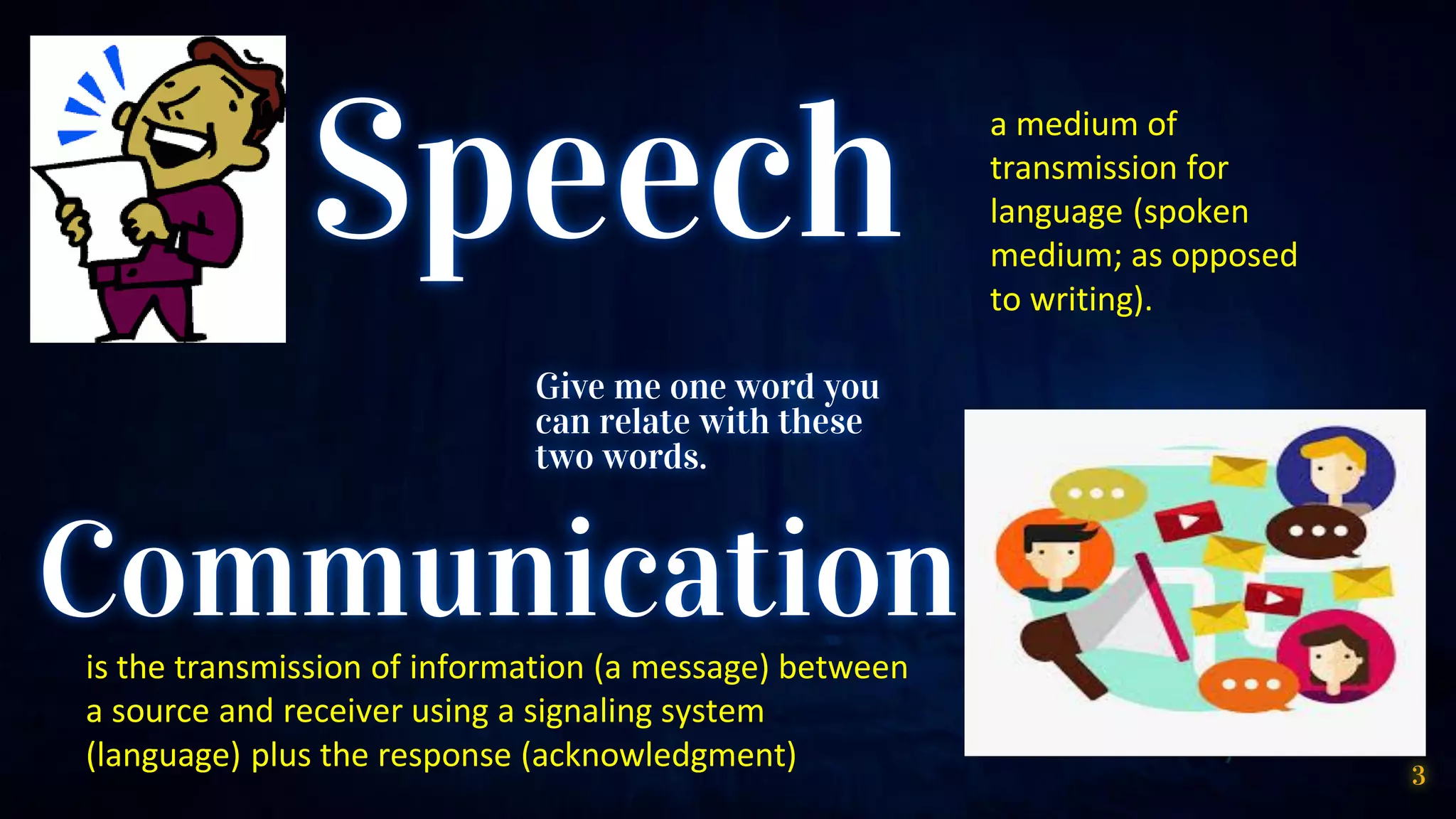
Speech
3
Communication
Give me one word you
can relate with these
two words.
a medium of
transmission for
language (spoken
medium; as opposed
to writing).
is the transmission of information (a message) between
a source and receiver using a signaling system
(language) plus the response (acknowledgment)
4
1.
Major Concepts
Context
❖ Linguistic
❖ Social
❖ Speech
6
7
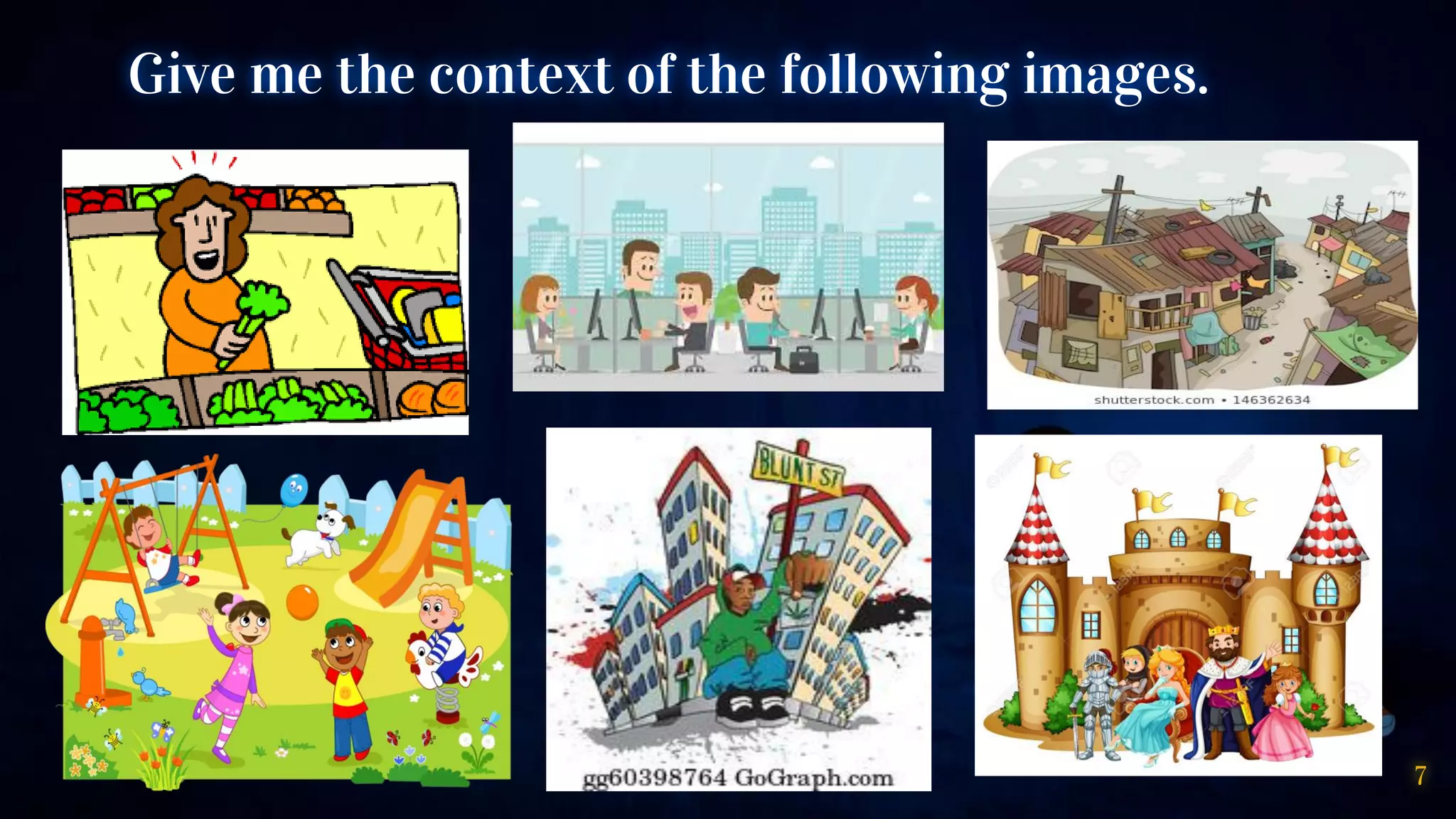
Give me the context of the following images.
Mode
❖ Spoken
❖ Written
8
Suprasegmental
❖ Pitch
❖ Stress
❖ Juncture Pattern
9
2.
Tools for Speech and
Theater (Vocal
Characteristics)
Stress
The degree of force
used in producing a
syllable.
11
12
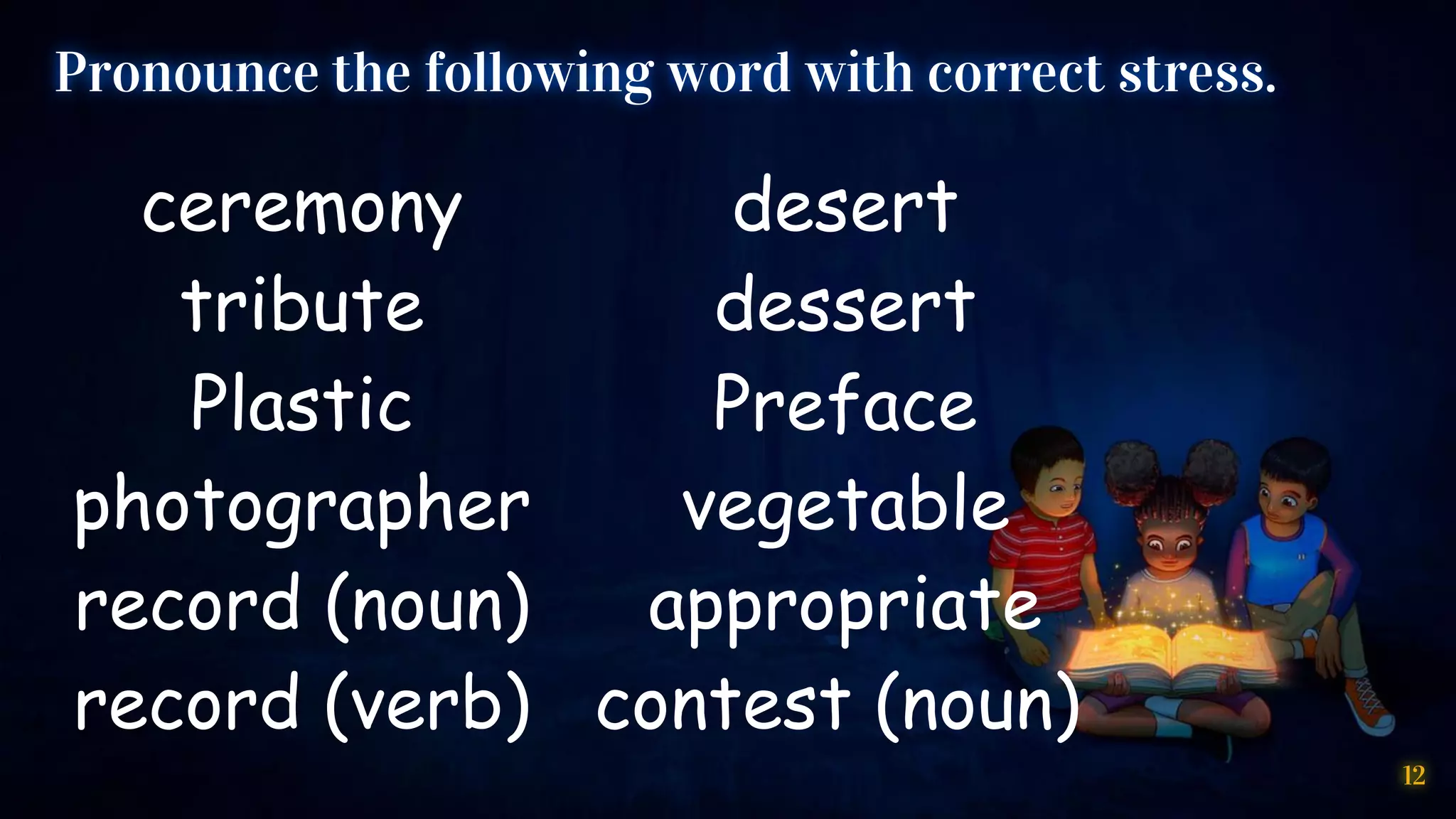
Pronounce the following word with correct stress.
ceremony
tribute
Plastic
photographer
record (noun)
record (verb)
desert
dessert
Preface
vegetable
appropriate
contest (noun)
Pitch
The degree of highness
or lowness of voice.
13
14
Say the following statement with appropriate pitch.
•Oh?
•Oh.
•Really?
•Really.
•Okay?
•Okay.
•Today?
•Today.
•What?
•What?!
•Huh?
•Huh.
•Hmm?
•Hmm.
•Please?
•Please.
Volume
The degree of
loudness and softness
of sounds.
15
16
Give an example statement
which uses loud voice.
How about for soft
one?
17
Wilbur Schramm’s Diagram of Field
Experience
✦ Speech communication involves the
production and perception of
sounds used in spoken language.
✦ It involves not only VERBAL but also
NON- VERBAL which includes
facial expressions, body language,
voice quality, speaking style,
rhythm, intonation, and stress.
✦ INTRAPERSONAL
COMMUNICATION involves the self
--- thoughts, beliefs, and feelings.
✦ INTERPERSONAL
COMMUNICATION involves an
exchange between a sender and a
receiver of a message.
✦ It may be direct or indirect.
Modes of Communication
1. 1. Verbal- involves the words we speak
1. 2. Nonverbal- non- linguistic symbols
(paralanguage) such as the facial expressions,
body language, voice quality, speaking style.
- It involves prosodic features such as
rhythm, intonation, and stress.
24
How can we
practice our
speech and way of
communication?
25
26
27
Did you like my powerpoint?
I offer some educational services like:
-powerpoint presentation maker
-grammarian
-content creator
-layout designer
If you are interested, you may email me at
flippedchannel27@gmail.com
28
Thanks!
Crystal, D. (1991). A Dictionary of Linguistics and
Phonetics. Blackwell Publishers.
Gonong, G.O. (2013). A Reviewer for the Licensure
Examination for Teachers: English. Philippine Normal
University.
Balgos, A.R.G. & Sipacio, P.J.F. (2016). Oral
Communication in Context for Senior High School. C &
E Publishing, Inc.
References:
29

Speech and Communication

  • 1.
  • 2.
    Objectives At the endof this topic, as a pre- service teacher you should be able to: ✦ determine the meaning of different important concepts on speech and communication; ✦ recognize the significance of knowing how each term contributes to speech as art; and ✦ express holistic understanding of the lesson and its applications by doing the tasks provided. 2
  • 3.
    Speech 3 Communication Give me oneword you can relate with these two words. a medium of transmission for language (spoken medium; as opposed to writing). is the transmission of information (a message) between a source and receiver using a signaling system (language) plus the response (acknowledgment)
  • 4.
  • 5.
  • 6.
  • 7.
    7 Give me thecontext of the following images.
  • 8.
  • 9.
  • 10.
    2. Tools for Speechand Theater (Vocal Characteristics)
  • 11.
    Stress The degree offorce used in producing a syllable. 11
  • 12.
    12 Pronounce the followingword with correct stress. ceremony tribute Plastic photographer record (noun) record (verb) desert dessert Preface vegetable appropriate contest (noun)
  • 13.
    Pitch The degree ofhighness or lowness of voice. 13
  • 14.
    14 Say the followingstatement with appropriate pitch. •Oh? •Oh. •Really? •Really. •Okay? •Okay. •Today? •Today. •What? •What?! •Huh? •Huh. •Hmm? •Hmm. •Please? •Please.
  • 15.
    Volume The degree of loudnessand softness of sounds. 15
  • 16.
    16 Give an examplestatement which uses loud voice. How about for soft one?
  • 17.
  • 21.
    Wilbur Schramm’s Diagramof Field Experience
  • 22.
    ✦ Speech communicationinvolves the production and perception of sounds used in spoken language. ✦ It involves not only VERBAL but also NON- VERBAL which includes facial expressions, body language, voice quality, speaking style, rhythm, intonation, and stress.
  • 23.
    ✦ INTRAPERSONAL COMMUNICATION involvesthe self --- thoughts, beliefs, and feelings. ✦ INTERPERSONAL COMMUNICATION involves an exchange between a sender and a receiver of a message. ✦ It may be direct or indirect.
  • 24.
    Modes of Communication 1.1. Verbal- involves the words we speak 1. 2. Nonverbal- non- linguistic symbols (paralanguage) such as the facial expressions, body language, voice quality, speaking style. - It involves prosodic features such as rhythm, intonation, and stress. 24
  • 25.
    How can we practiceour speech and way of communication? 25
  • 26.
  • 27.
    27 Did you likemy powerpoint? I offer some educational services like: -powerpoint presentation maker -grammarian -content creator -layout designer If you are interested, you may email me at flippedchannel27@gmail.com
  • 28.
  • 29.
    Crystal, D. (1991).A Dictionary of Linguistics and Phonetics. Blackwell Publishers. Gonong, G.O. (2013). A Reviewer for the Licensure Examination for Teachers: English. Philippine Normal University. Balgos, A.R.G. & Sipacio, P.J.F. (2016). Oral Communication in Context for Senior High School. C & E Publishing, Inc. References: 29