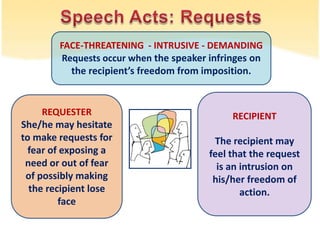
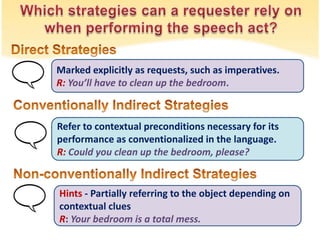
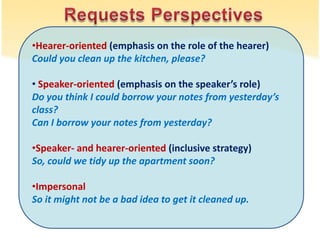
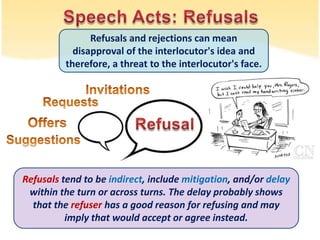
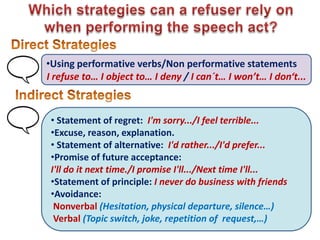
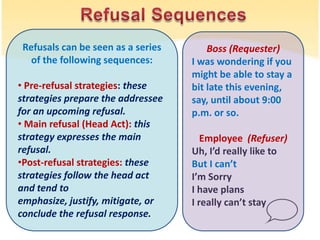
Requests can threaten a recipient's freedom and independence, making them feel imposed upon. Requests range from direct imperatives to indirect hints. Refusals are also often indirect to mitigate face threats. Common refusal strategies include expressing regret, providing excuses or explanations, promising future acceptance, or avoiding a direct refusal. Refusals typically follow a sequence of pre-refusal preparation, the main refusal, and post-refusal justification or conclusion. For example, an employee might hesitate in response to a request to stay late, apologize while explaining an evening plan, and reinforce their inability to stay.