What is DRAMA?
•A drama, or play, is a piece of writing
that is presented almost exclusively
through dialogue. The word drama
comes from Greek word “dran”
meaning “to act or to do.”
What is DRAMA?
•Hence, drama like other forms of
literature which imitates life.
What is DRAMA?
•It is a form of literature which is
played in a theatre, in which actors/
actresses take the roles of the
characters, perform the action, and
express the written dialogue.
What is DRAMA?
•Drama generally takes the form of the
theatre performance but it can as
easily be transferred broadcasting to a
home television screen, or to the
printed page.
What is DRAMA?
•Finally, drama mirrors the life,
customs, manner and general living
habits of the people.
•was born in New York City.
He began his artistic
pursuits by directing theatre
productions with a mixture
of modern and classical
playwrights, as well as
writing and staging his own
original material.
•After many years of working
in theatre, Joseph has since
taken his directing mainly
unto film, having had his
productions screened at
notable film festivals
worldwide.
•The films he has directed
explore self-reflection,
involving characters who
tend to confront their past.
•Joseph Arnone is the founder
and CEO of Monologue
Blogger, an online
entertainment publication
and platform, which has
grown a significantly large
worldwide audience.
Crashing In My Ears
Joseph Arnone
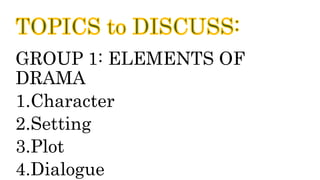
GROUP 1: ELEMENTS OF
DRAMA
1.Character
2.Setting
3.Plot
4.Dialogue
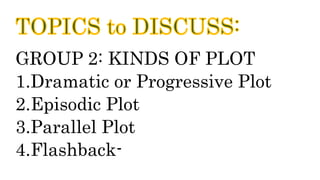
GROUP 2: KINDS OF PLOT
1.Dramatic or Progressive Plot
2.Episodic Plot
3.Parallel Plot
4.Flashback-
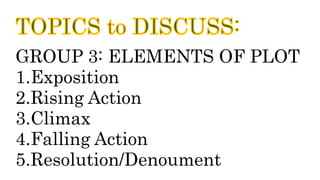
GROUP 3: ELEMENTS OF PLOT
1.Exposition
2.Rising Action
3.Climax
4.Falling Action
5.Resolution/Denoument
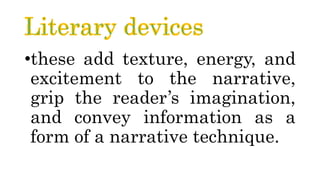
•these add texture, energy, and
excitement to the narrative,
grip the reader’s imagination,
and convey information as a
form of a narrative technique.
•denotes the way in which texts
gain meaning through their
referencing or evocation of
other texts.
•a poststructuralist, developed the
term intertextuality, in the 1960’s.
Since then, this has been widely
accepted by postmodern literary
critics and theoreticians.
Basically, when writers borrow
from previous texts, their work
acquires layers of meaning.
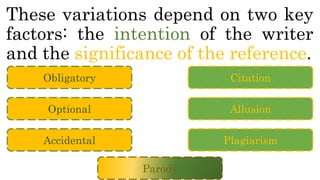
These variations depend on two key
factors: the intention of the writer
and the significance of the reference.
Obligatory
Optional
Accidental
Citation
Allusion
Plagiarism
Parody
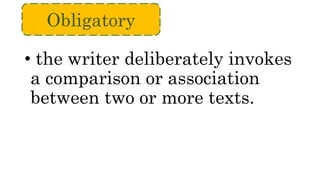
• the writer deliberately invokes
a comparison or association
between two or more texts.
Obligatory
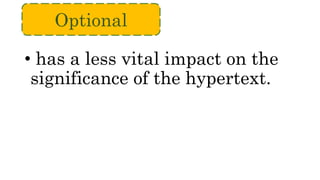
• has a less vital impact on the
significance of the hypertext.
Optional
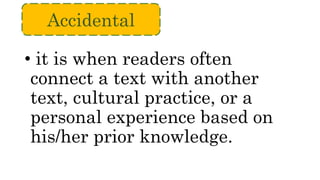
• it is when readers often
connect a text with another
text, cultural practice, or a
personal experience based on
his/her prior knowledge.
Accidental
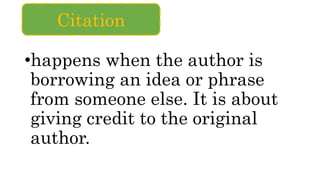
•happens when the author is
borrowing an idea or phrase
from someone else. It is about
giving credit to the original
author.
Citation
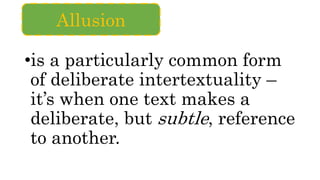
•is a particularly common form
of deliberate intertextuality –
it’s when one text makes a
deliberate, but subtle, reference
to another.
Allusion
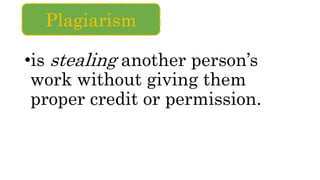
•is stealing another person’s
work without giving them
proper credit or permission.
Plagiarism
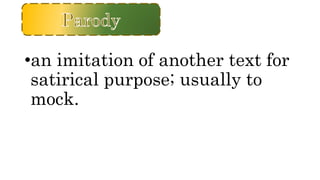
•an imitation of another text for
satirical purpose; usually to
mock.

Elements, Techniques and Literary Devices in Drama.pptx

  • 6.
    What is DRAMA? •Adrama, or play, is a piece of writing that is presented almost exclusively through dialogue. The word drama comes from Greek word “dran” meaning “to act or to do.”
  • 7.
    What is DRAMA? •Hence,drama like other forms of literature which imitates life.
  • 8.
    What is DRAMA? •Itis a form of literature which is played in a theatre, in which actors/ actresses take the roles of the characters, perform the action, and express the written dialogue.
  • 9.
    What is DRAMA? •Dramagenerally takes the form of the theatre performance but it can as easily be transferred broadcasting to a home television screen, or to the printed page.
  • 10.
    What is DRAMA? •Finally,drama mirrors the life, customs, manner and general living habits of the people.
  • 11.
    •was born inNew York City. He began his artistic pursuits by directing theatre productions with a mixture of modern and classical playwrights, as well as writing and staging his own original material.
  • 12.
    •After many yearsof working in theatre, Joseph has since taken his directing mainly unto film, having had his productions screened at notable film festivals worldwide.
  • 13.
    •The films hehas directed explore self-reflection, involving characters who tend to confront their past.
  • 14.
    •Joseph Arnone isthe founder and CEO of Monologue Blogger, an online entertainment publication and platform, which has grown a significantly large worldwide audience.
  • 15.
    Crashing In MyEars Joseph Arnone
  • 18.
    GROUP 1: ELEMENTSOF DRAMA 1.Character 2.Setting 3.Plot 4.Dialogue
  • 19.
    GROUP 2: KINDSOF PLOT 1.Dramatic or Progressive Plot 2.Episodic Plot 3.Parallel Plot 4.Flashback-
  • 20.
    GROUP 3: ELEMENTSOF PLOT 1.Exposition 2.Rising Action 3.Climax 4.Falling Action 5.Resolution/Denoument
  • 22.
    •these add texture,energy, and excitement to the narrative, grip the reader’s imagination, and convey information as a form of a narrative technique.
  • 24.
    •denotes the wayin which texts gain meaning through their referencing or evocation of other texts.
  • 25.
    •a poststructuralist, developedthe term intertextuality, in the 1960’s. Since then, this has been widely accepted by postmodern literary critics and theoreticians. Basically, when writers borrow from previous texts, their work acquires layers of meaning.
  • 27.
    These variations dependon two key factors: the intention of the writer and the significance of the reference. Obligatory Optional Accidental Citation Allusion Plagiarism Parody
  • 28.
    • the writerdeliberately invokes a comparison or association between two or more texts. Obligatory
  • 29.
    • has aless vital impact on the significance of the hypertext. Optional
  • 30.
    • it iswhen readers often connect a text with another text, cultural practice, or a personal experience based on his/her prior knowledge. Accidental
  • 31.
    •happens when theauthor is borrowing an idea or phrase from someone else. It is about giving credit to the original author. Citation
  • 32.
    •is a particularlycommon form of deliberate intertextuality – it’s when one text makes a deliberate, but subtle, reference to another. Allusion
  • 33.
    •is stealing anotherperson’s work without giving them proper credit or permission. Plagiarism
  • 34.
    •an imitation ofanother text for satirical purpose; usually to mock.