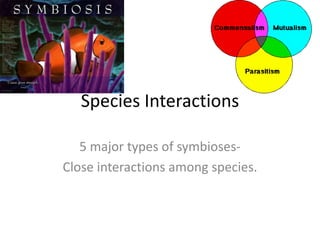
Species Interactions

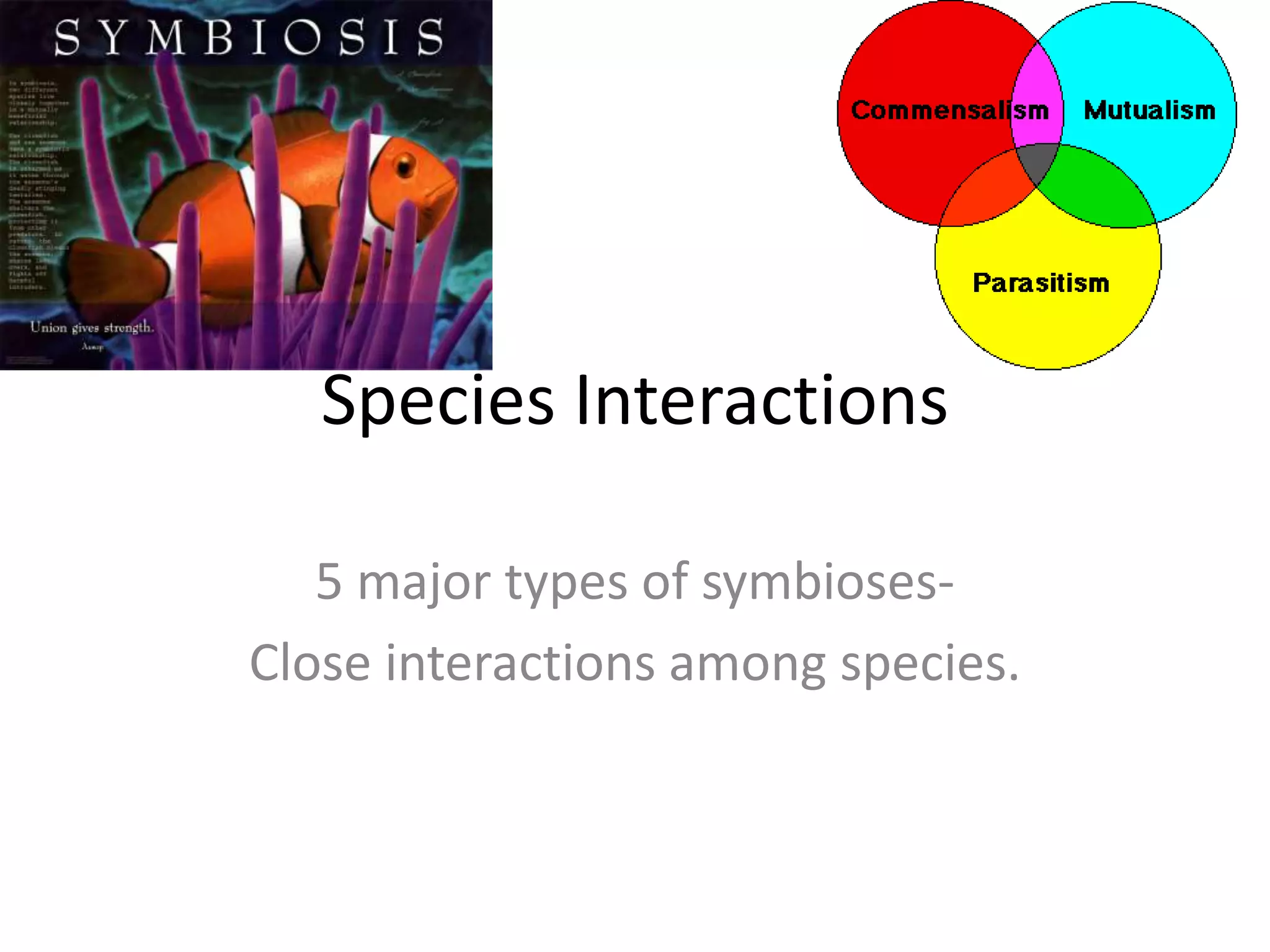
   5 major types of symbioses-
Close interactions among species.
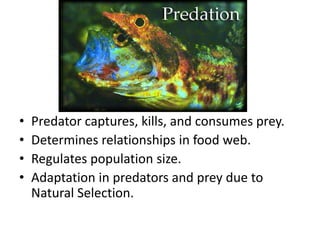
•   Predator captures, kills, and consumes prey.
•   Determines relationships in food web.
•   Regulates population size.
•   Adaptation in predators and prey due to
    Natural Selection.
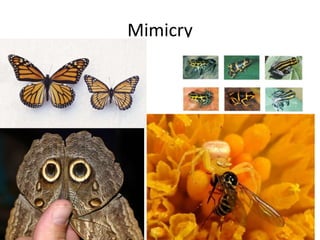
Mimicry
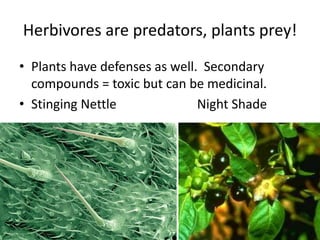
Herbivores are predators, plants prey!
• Plants have defenses as well. Secondary
  compounds = toxic but can be medicinal.
• Stinging Nettle              Night Shade
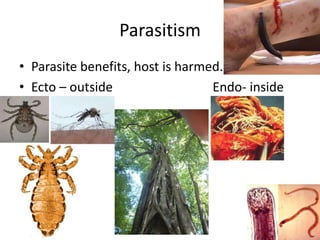
Parasitism
• Parasite benefits, host is harmed.
• Ecto – outside                  Endo- inside
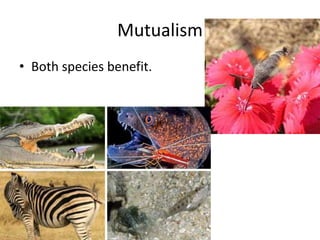
Mutualism
• Both species benefit.
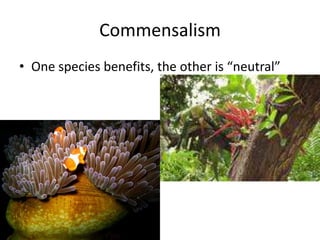
Commensalism
• One species benefits, the other is “neutral”
Competition
• Results from niche overlap- use of same
  limited resource by 2 or more SPECIES.
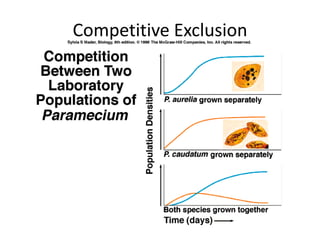
• Competitive Exclusion – 1 species uses
  resource and other is eliminated (NS)
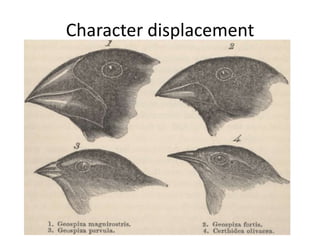
• Character Displacement – Evolution of
  anatomical differences that reduce
  competition between similar species.
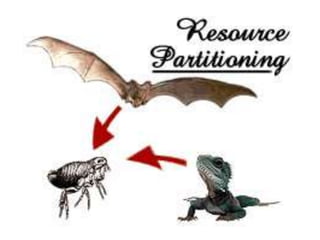
• Resource Partitioning- reduced competition.
Competitive Exclusion
Character displacement
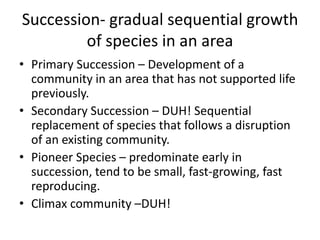
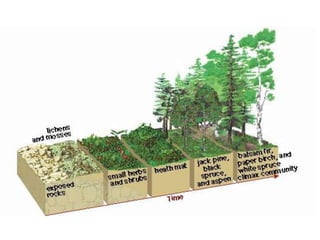
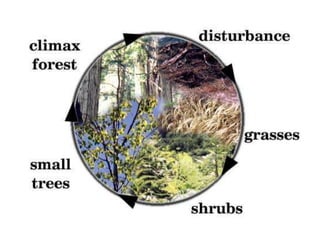
Succession- gradual sequential growth
         of species in an area
• Primary Succession – Development of a
  community in an area that has not supported life
  previously.
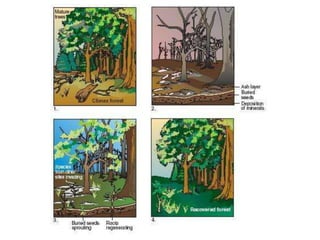
• Secondary Succession – DUH! Sequential
  replacement of species that follows a disruption
  of an existing community.
• Pioneer Species – predominate early in
  succession, tend to be small, fast-growing, fast
  reproducing.
• Climax community –DUH!
Species interactions

Species interactions

  • 1.
    Species Interactions 5 major types of symbioses- Close interactions among species.
  • 2.
    Predator captures, kills, and consumes prey. • Determines relationships in food web. • Regulates population size. • Adaptation in predators and prey due to Natural Selection.
  • 3.
  • 4.
    Herbivores are predators,plants prey! • Plants have defenses as well. Secondary compounds = toxic but can be medicinal. • Stinging Nettle Night Shade
  • 5.
    Parasitism • Parasite benefits,host is harmed. • Ecto – outside Endo- inside
  • 6.
  • 7.
    Commensalism • One speciesbenefits, the other is “neutral”
  • 8.
    Competition • Results fromniche overlap- use of same limited resource by 2 or more SPECIES. • Competitive Exclusion – 1 species uses resource and other is eliminated (NS) • Character Displacement – Evolution of anatomical differences that reduce competition between similar species. • Resource Partitioning- reduced competition.
  • 9.
  • 10.
  • 12.
    Succession- gradual sequentialgrowth of species in an area • Primary Succession – Development of a community in an area that has not supported life previously. • Secondary Succession – DUH! Sequential replacement of species that follows a disruption of an existing community. • Pioneer Species – predominate early in succession, tend to be small, fast-growing, fast reproducing. • Climax community –DUH!