Dr. G.KALAISELVI
DPV(M)17002(ABT)
PART TIME Ph.D SCHOLAR
DEPARTMENT OF ANIMAL BIOTECHNOLOGY
MADRAS VETERINARY COLLEGE, CHENNAI-7
1
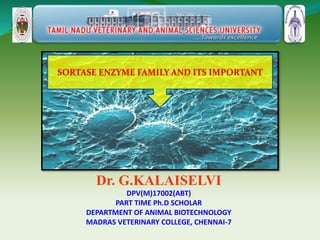
SORTASE ENZYME FAMILY AND ITS IMPORTANT
2
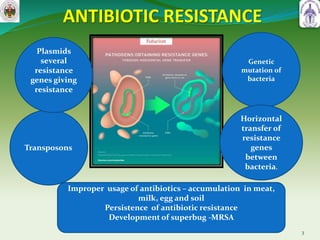
ANTIBIOTIC RESISTANCE
3
Transposons
Genetic
mutation of
bacteria
Horizontal
transfer of
resistance
genes
between
bacteria.
Plasmids
several
resistance
genes giving
resistance
Improper usage of antibiotics – accumulation in meat,
milk, egg and soil
Persistence of antibiotic resistance
Development of superbug -MRSA
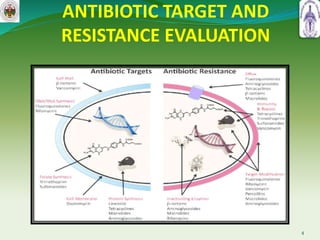
ANTIBIOTIC TARGET AND
RESISTANCE EVALUATION
4
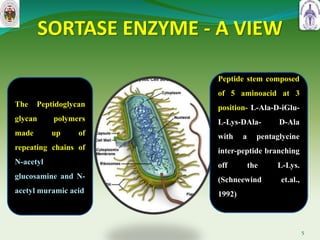
SORTASE ENZYME - A VIEW
5
The Peptidoglycan
glycan polymers
made up of
repeating chains of
N-acetyl
glucosamine and N-
acetyl muramic acid
Peptide stem composed
of 5 aminoacid at 3
position- L-Ala-D-iGlu-
L-Lys-DAla- D-Ala
with a pentaglycine
inter-peptide branching
off the L-Lys.
(Schneewind et.al.,
1992)
SORTASE ENZYME - A VIEW
6
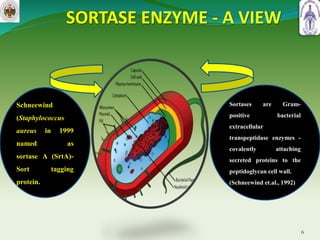
Sortases are Gram-
positive bacterial
extracellular
transpeptidase enzymes -
covalently attaching
secreted proteins to the
peptidoglycan cell wall.
(Schneewind et.al., 1992)
Schneewind
(Staphylococcus
aureus in 1999
named as
sortase A (SrtA)-
Sort tagging
protein.
FUNCTIONS OF CELL WALL PROTEINS
7
ROLE OF SURFACE PROTEIN
8
MECHANISM OF ACTION OF SORTASE ENZYME
9
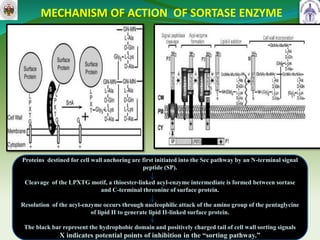
Proteins destined for cell wall anchoring are first initiated into the Sec pathway by an N-terminal signal
peptide (SP).
Cleavage of the LPXTG motif, a thioester-linked acyl-enzyme intermediate is formed between sortase
and C-terminal threonine of surface protein.
Resolution of the acyl-enzyme occurs through nucleophilic attack of the amino group of the pentaglycine
of lipid II to generate lipid II-linked surface protein.
The black bar represent the hydrophobic domain and positively charged tail of cell wall sorting signals
X indicates potential points of inhibition in the “sorting pathway.”
MICROBIAL SURFACE PROTEIN
10
Microbial Surface Components Recognizing Adhesive Matrix
Molecules (MSCRAMMs ) (Mazmanian et.al., 2001)
Clostridium
difficile
SPXTG or
PPXTG
instead of
LPXTG
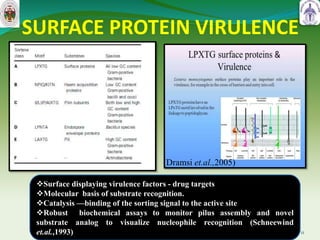
SURFACE PROTEIN VIRULENCE
11
(Dramsi et.al.,2005)
Surface displaying virulence factors - drug targets
Molecular basis of substrate recognition.
Catalysis —binding of the sorting signal to the active site
Robust biochemical assays to monitor pilus assembly and novel
substrate analog to visualize nucleophile recognition (Schneewind
et.al.,1993)
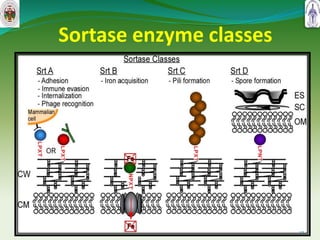
Sortase enzyme classes
12
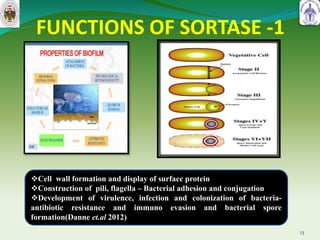
FUNCTIONS OF SORTASE -1
13
Cell wall formation and display of surface protein
Construction of pili, flagella – Bacterial adhesion and conjugation
Development of virulence, infection and colonization of bacteria-
antibiotic resistance and immuno evasion and bacterial spore
formation(Danne et.al 2012)
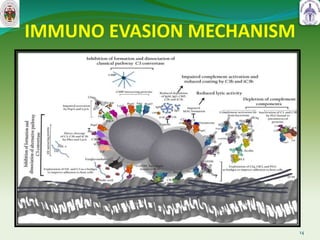
IMMUNO EVASION MECHANISM
14
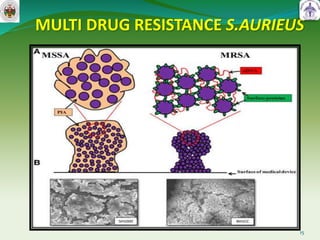
MULTI DRUG RESISTANCE S.AURIEUS
15
16
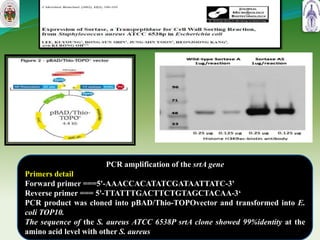
PCR amplification of the srtA gene
Primers detail
Forward primer ===5'-AAACCACATATCGATAATTATC-3'
Reverse primer === 5'-TTATTTGACTTCTGTAGCTACAA-3‘
PCR product was cloned into pBAD/Thio-TOPOvector and transformed into E.
coli TOP10.
The sequence of the S. aureus ATCC 6538P srtA clone showed 99%identity at the
amino acid level with other S. aureus
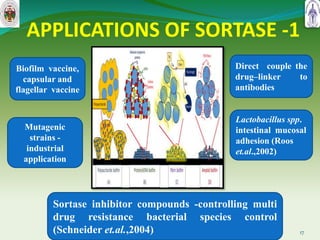
APPLICATIONS OF SORTASE -1
17
Biofilm vaccine,
capsular and
flagellar vaccine
Mutagenic
strains -
industrial
application
Direct couple the
drug–linker to
antibodies
Lactobacillus spp.
intestinal mucosal
adhesion (Roos
et.al.,2002)
Sortase inhibitor compounds -controlling multi
drug resistance bacterial species control
(Schneider et.al.,2004)
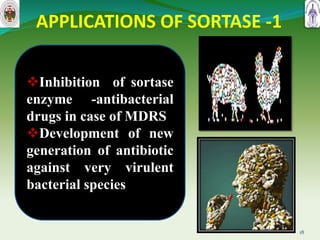
APPLICATIONS OF SORTASE -1
18
Inhibition of sortase
enzyme -antibacterial
drugs in case of MDRS
Development of new
generation of antibiotic
against very virulent
bacterial species
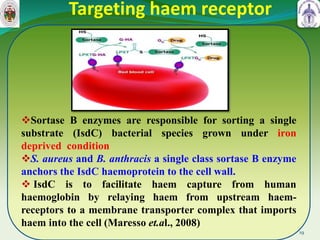
Targeting haem receptor
Sortase B enzymes are responsible for sorting a single
substrate (IsdC) bacterial species grown under iron
deprived condition
S. aureus and B. anthracis a single class sortase B enzyme
anchors the IsdC haemoprotein to the cell wall.
 IsdC is to facilitate haem capture from human
haemoglobin by relaying haem from upstream haem-
receptors to a membrane transporter complex that imports
haem into the cell (Maresso et.al., 2008)
19
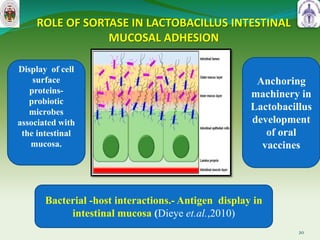
ROLE OF SORTASE IN LACTOBACILLUS INTESTINAL
MUCOSAL ADHESION
20
Anchoring
machinery in
Lactobacillus
development
of oral
vaccines
Display of cell
surface
proteins-
probiotic
microbes
associated with
the intestinal
mucosa.
Bacterial -host interactions.- Antigen display in
intestinal mucosa (Dieye et.al.,2010)
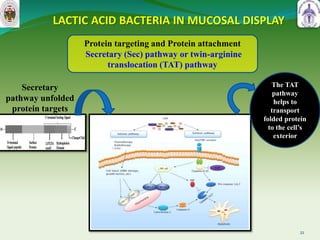
LACTIC ACID BACTERIA IN MUCOSAL DISPLAY
21
Protein targeting and Protein attachment
Secretary (Sec) pathway or twin-arginine
translocation (TAT) pathway
Secretary
pathway unfolded
protein targets
The TAT
pathway
helps to
transport
folded protein
to the cell’s
exterior
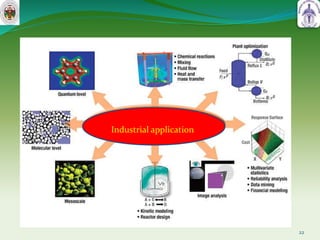
Industrial application
22
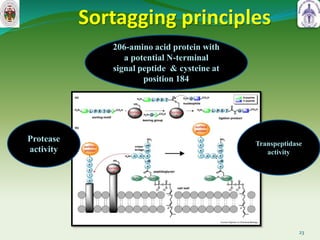
Sortagging principles
23
206-amino acid protein with
a potential N-terminal
signal peptide & cysteine at
position 184
Protease
activity
Transpeptidase
activity
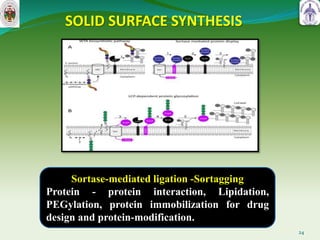
SOLID SURFACE SYNTHESIS
24
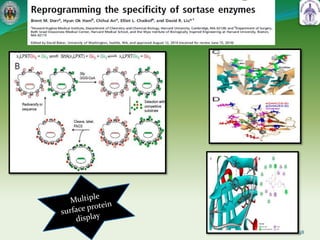
Sortase-mediated ligation -Sortagging
Protein - protein interaction, Lipidation,
PEGylation, protein immobilization for drug
design and protein-modification.
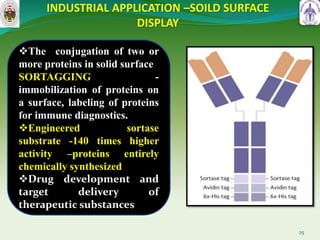
INDUSTRIAL APPLICATION –SOILD SURFACE
DISPLAY
25
The conjugation of two or
more proteins in solid surface
SORTAGGING -
immobilization of proteins on
a surface, labeling of proteins
for immune diagnostics.
Engineered sortase
substrate -140 times higher
activity –proteins entirely
chemically synthesized
Drug development and
target delivery of
therapeutic substances
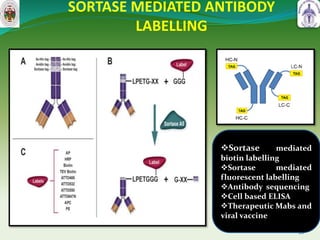
SORTASE MEDIATED ANTIBODY
LABELLING
26
Sortase mediated
biotin labelling
Sortase mediated
fluorescent labelling
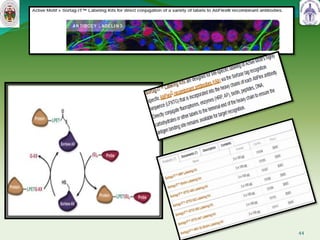
Antibody sequencing
Cell based ELISA
Therapeutic Mabs and
viral vaccine
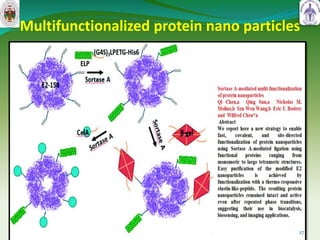
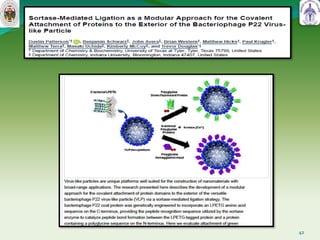
Multifunctionalized protein nano particles
27
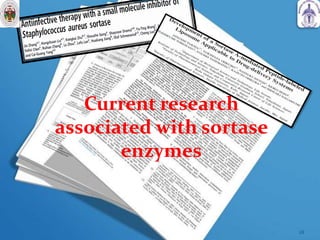
Current research
associated with sortase
enzymes
28
29
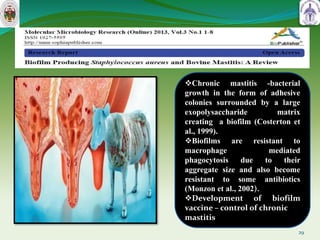
Chronic mastitis -bacterial
growth in the form of adhesive
colonies surrounded by a large
exopolysaccharide matrix
creating a biofilm (Costerton et
al., 1999).
Biofilms are resistant to
macrophage mediated
phagocytosis due to their
aggregate size and also become
resistant to some antibiotics
(Monzon et al., 2002).
Development of biofilm
vaccine – control of chronic
mastitis
30
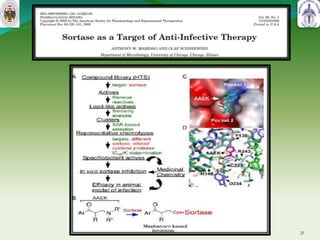
31
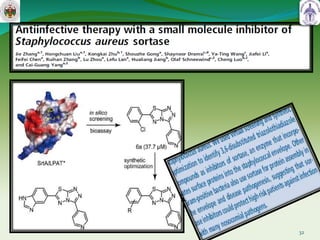
32
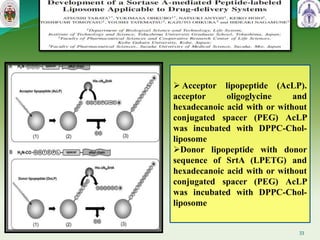
33
 Acceptor lipopeptide (AcLP).
acceptor oligoglycine and
hexadecanoic acid with or without
conjugated spacer (PEG) AcLP
was incubated with DPPC-Chol-
liposome
Donor lipopeptide with donor
sequence of SrtA (LPETG) and
hexadecanoic acid with or without
conjugated spacer (PEG) AcLP
was incubated with DPPC-Chol-
liposome
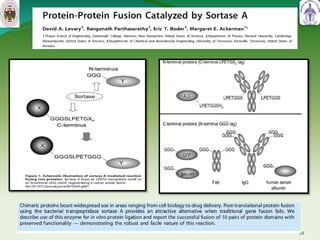
34
35
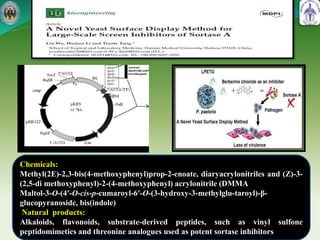
Chemicals:
Methyl(2E)-2,3-bis(4-methoxyphenyl)prop-2-enoate, diaryacrylonitriles and (Z)-3-
(2,5-di methoxyphenyl)-2-(4-methoxyphenyl) acrylonitrile (DMMA
Maltol-3-O-(4′-O-cis-p-cumaroyl-6′-O-(3-hydroxy-3-methylglu-taroyl)-β-
glucopyranoside, bis(indole)
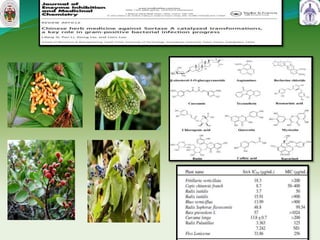
Natural products:
Alkaloids, flavonoids, substrate-derived peptides, such as vinyl sulfone
peptidomimetics and threonine analogues used as potent sortase inhibitors
36
37
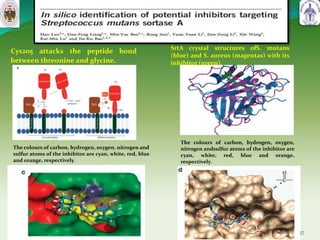
Cys205 attacks the peptide bond
between threonine and glycine.
SrtA crystal structures ofS. mutans
(blue) and S. aureus (magentas) with its
inhibitor (green).
The colours of carbon, hydrogen, oxygen, nitrogen and
sulfur atoms of the inhibitor are cyan, white, red, blue
and orange, respectively.
The colours of carbon, hydrogen, oxygen,
nitrogen andsulfur atoms of the inhibitor are
cyan, white, red, blue and orange,
respectively.
38
39
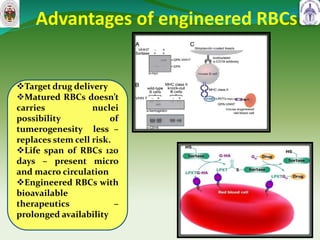
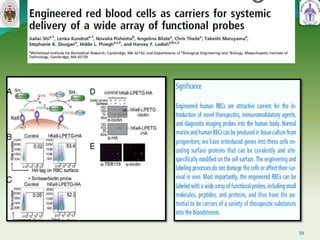
Advantages of engineered RBCs
40
Target drug delivery
Matured RBCs doesn’t
carries nuclei
possibility of
tumerogenesity less –
replaces stem cell risk.
Life span of RBCs 120
days – present micro
and macro circulation
Engineered RBCs with
bioavailable
therapeutics –
prolonged availability
41
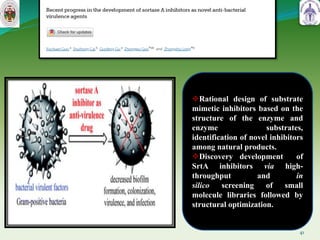
Rational design of substrate
mimetic inhibitors based on the
structure of the enzyme and
enzyme substrates,
identification of novel inhibitors
among natural products.
Discovery development of
SrtA inhibitors via high-
throughput and in
silico screening of small
molecule libraries followed by
structural optimization.
42
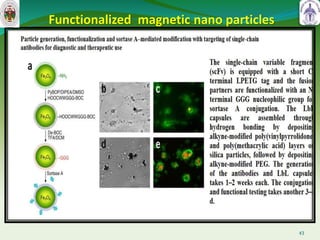
Functionalized magnetic nano particles
43
44
CONCLUSION
45
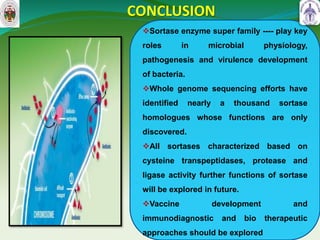
Sortase enzyme super family ---- play key
roles in microbial physiology,
pathogenesis and virulence development
of bacteria.
Whole genome sequencing efforts have
identified nearly a thousand sortase
homologues whose functions are only
discovered.
All sortases characterized based on
cysteine transpeptidases, protease and
ligase activity further functions of sortase
will be explored in future.
Vaccine development and
immunodiagnostic and bio therapeutic
approaches should be explored
FUTURISM OF SORTASE
ENZYME RESEARCH
46
 Further Structure -function
studies needed to identify enzyme
determinants that control substrate
specificity.
 Applications of sortagging
activity of sortase enzymes to be an
extremely useful and versatile
molecular biology tool but very
minimum research work carried out
in related to sortase enzymes in
world wide
Antibiotic resistance threats has
to be focused more in India but
not much research work yet to be
carried related sortase enzyme
PATHOGENS
47
48
Presentation always
complete with
QUESTION???

Sortase enzyme family

  • 1.
    Dr. G.KALAISELVI DPV(M)17002(ABT) PART TIMEPh.D SCHOLAR DEPARTMENT OF ANIMAL BIOTECHNOLOGY MADRAS VETERINARY COLLEGE, CHENNAI-7 1 SORTASE ENZYME FAMILY AND ITS IMPORTANT
  • 2.
  • 3.
    ANTIBIOTIC RESISTANCE 3 Transposons Genetic mutation of bacteria Horizontal transferof resistance genes between bacteria. Plasmids several resistance genes giving resistance Improper usage of antibiotics – accumulation in meat, milk, egg and soil Persistence of antibiotic resistance Development of superbug -MRSA
  • 4.
  • 5.
    SORTASE ENZYME -A VIEW 5 The Peptidoglycan glycan polymers made up of repeating chains of N-acetyl glucosamine and N- acetyl muramic acid Peptide stem composed of 5 aminoacid at 3 position- L-Ala-D-iGlu- L-Lys-DAla- D-Ala with a pentaglycine inter-peptide branching off the L-Lys. (Schneewind et.al., 1992)
  • 6.
    SORTASE ENZYME -A VIEW 6 Sortases are Gram- positive bacterial extracellular transpeptidase enzymes - covalently attaching secreted proteins to the peptidoglycan cell wall. (Schneewind et.al., 1992) Schneewind (Staphylococcus aureus in 1999 named as sortase A (SrtA)- Sort tagging protein.
  • 7.
    FUNCTIONS OF CELLWALL PROTEINS 7
  • 8.
    ROLE OF SURFACEPROTEIN 8
  • 9.
    MECHANISM OF ACTIONOF SORTASE ENZYME 9 Proteins destined for cell wall anchoring are first initiated into the Sec pathway by an N-terminal signal peptide (SP). Cleavage of the LPXTG motif, a thioester-linked acyl-enzyme intermediate is formed between sortase and C-terminal threonine of surface protein. Resolution of the acyl-enzyme occurs through nucleophilic attack of the amino group of the pentaglycine of lipid II to generate lipid II-linked surface protein. The black bar represent the hydrophobic domain and positively charged tail of cell wall sorting signals X indicates potential points of inhibition in the “sorting pathway.”
  • 10.
    MICROBIAL SURFACE PROTEIN 10 MicrobialSurface Components Recognizing Adhesive Matrix Molecules (MSCRAMMs ) (Mazmanian et.al., 2001) Clostridium difficile SPXTG or PPXTG instead of LPXTG
  • 11.
    SURFACE PROTEIN VIRULENCE 11 (Dramsiet.al.,2005) Surface displaying virulence factors - drug targets Molecular basis of substrate recognition. Catalysis —binding of the sorting signal to the active site Robust biochemical assays to monitor pilus assembly and novel substrate analog to visualize nucleophile recognition (Schneewind et.al.,1993)
  • 12.
  • 13.
    FUNCTIONS OF SORTASE-1 13 Cell wall formation and display of surface protein Construction of pili, flagella – Bacterial adhesion and conjugation Development of virulence, infection and colonization of bacteria- antibiotic resistance and immuno evasion and bacterial spore formation(Danne et.al 2012)
  • 14.
  • 15.
  • 16.
    16 PCR amplification ofthe srtA gene Primers detail Forward primer ===5'-AAACCACATATCGATAATTATC-3' Reverse primer === 5'-TTATTTGACTTCTGTAGCTACAA-3‘ PCR product was cloned into pBAD/Thio-TOPOvector and transformed into E. coli TOP10. The sequence of the S. aureus ATCC 6538P srtA clone showed 99%identity at the amino acid level with other S. aureus
  • 17.
    APPLICATIONS OF SORTASE-1 17 Biofilm vaccine, capsular and flagellar vaccine Mutagenic strains - industrial application Direct couple the drug–linker to antibodies Lactobacillus spp. intestinal mucosal adhesion (Roos et.al.,2002) Sortase inhibitor compounds -controlling multi drug resistance bacterial species control (Schneider et.al.,2004)
  • 18.
    APPLICATIONS OF SORTASE-1 18 Inhibition of sortase enzyme -antibacterial drugs in case of MDRS Development of new generation of antibiotic against very virulent bacterial species
  • 19.
    Targeting haem receptor SortaseB enzymes are responsible for sorting a single substrate (IsdC) bacterial species grown under iron deprived condition S. aureus and B. anthracis a single class sortase B enzyme anchors the IsdC haemoprotein to the cell wall.  IsdC is to facilitate haem capture from human haemoglobin by relaying haem from upstream haem- receptors to a membrane transporter complex that imports haem into the cell (Maresso et.al., 2008) 19
  • 20.
    ROLE OF SORTASEIN LACTOBACILLUS INTESTINAL MUCOSAL ADHESION 20 Anchoring machinery in Lactobacillus development of oral vaccines Display of cell surface proteins- probiotic microbes associated with the intestinal mucosa. Bacterial -host interactions.- Antigen display in intestinal mucosa (Dieye et.al.,2010)
  • 21.
    LACTIC ACID BACTERIAIN MUCOSAL DISPLAY 21 Protein targeting and Protein attachment Secretary (Sec) pathway or twin-arginine translocation (TAT) pathway Secretary pathway unfolded protein targets The TAT pathway helps to transport folded protein to the cell’s exterior
  • 22.
  • 23.
    Sortagging principles 23 206-amino acidprotein with a potential N-terminal signal peptide & cysteine at position 184 Protease activity Transpeptidase activity
  • 24.
    SOLID SURFACE SYNTHESIS 24 Sortase-mediatedligation -Sortagging Protein - protein interaction, Lipidation, PEGylation, protein immobilization for drug design and protein-modification.
  • 25.
    INDUSTRIAL APPLICATION –SOILDSURFACE DISPLAY 25 The conjugation of two or more proteins in solid surface SORTAGGING - immobilization of proteins on a surface, labeling of proteins for immune diagnostics. Engineered sortase substrate -140 times higher activity –proteins entirely chemically synthesized Drug development and target delivery of therapeutic substances
  • 26.
    SORTASE MEDIATED ANTIBODY LABELLING 26 Sortasemediated biotin labelling Sortase mediated fluorescent labelling Antibody sequencing Cell based ELISA Therapeutic Mabs and viral vaccine
  • 27.
  • 28.
  • 29.
    29 Chronic mastitis -bacterial growthin the form of adhesive colonies surrounded by a large exopolysaccharide matrix creating a biofilm (Costerton et al., 1999). Biofilms are resistant to macrophage mediated phagocytosis due to their aggregate size and also become resistant to some antibiotics (Monzon et al., 2002). Development of biofilm vaccine – control of chronic mastitis
  • 30.
  • 31.
  • 32.
  • 33.
    33  Acceptor lipopeptide(AcLP). acceptor oligoglycine and hexadecanoic acid with or without conjugated spacer (PEG) AcLP was incubated with DPPC-Chol- liposome Donor lipopeptide with donor sequence of SrtA (LPETG) and hexadecanoic acid with or without conjugated spacer (PEG) AcLP was incubated with DPPC-Chol- liposome
  • 34.
  • 35.
    35 Chemicals: Methyl(2E)-2,3-bis(4-methoxyphenyl)prop-2-enoate, diaryacrylonitriles and(Z)-3- (2,5-di methoxyphenyl)-2-(4-methoxyphenyl) acrylonitrile (DMMA Maltol-3-O-(4′-O-cis-p-cumaroyl-6′-O-(3-hydroxy-3-methylglu-taroyl)-β- glucopyranoside, bis(indole) Natural products: Alkaloids, flavonoids, substrate-derived peptides, such as vinyl sulfone peptidomimetics and threonine analogues used as potent sortase inhibitors
  • 36.
  • 37.
    37 Cys205 attacks thepeptide bond between threonine and glycine. SrtA crystal structures ofS. mutans (blue) and S. aureus (magentas) with its inhibitor (green). The colours of carbon, hydrogen, oxygen, nitrogen and sulfur atoms of the inhibitor are cyan, white, red, blue and orange, respectively. The colours of carbon, hydrogen, oxygen, nitrogen andsulfur atoms of the inhibitor are cyan, white, red, blue and orange, respectively.
  • 38.
  • 39.
  • 40.
    Advantages of engineeredRBCs 40 Target drug delivery Matured RBCs doesn’t carries nuclei possibility of tumerogenesity less – replaces stem cell risk. Life span of RBCs 120 days – present micro and macro circulation Engineered RBCs with bioavailable therapeutics – prolonged availability
  • 41.
    41 Rational design ofsubstrate mimetic inhibitors based on the structure of the enzyme and enzyme substrates, identification of novel inhibitors among natural products. Discovery development of SrtA inhibitors via high- throughput and in silico screening of small molecule libraries followed by structural optimization.
  • 42.
  • 43.
  • 44.
  • 45.
    CONCLUSION 45 Sortase enzyme superfamily ---- play key roles in microbial physiology, pathogenesis and virulence development of bacteria. Whole genome sequencing efforts have identified nearly a thousand sortase homologues whose functions are only discovered. All sortases characterized based on cysteine transpeptidases, protease and ligase activity further functions of sortase will be explored in future. Vaccine development and immunodiagnostic and bio therapeutic approaches should be explored
  • 46.
    FUTURISM OF SORTASE ENZYMERESEARCH 46  Further Structure -function studies needed to identify enzyme determinants that control substrate specificity.  Applications of sortagging activity of sortase enzymes to be an extremely useful and versatile molecular biology tool but very minimum research work carried out in related to sortase enzymes in world wide Antibiotic resistance threats has to be focused more in India but not much research work yet to be carried related sortase enzyme
  • 47.
  • 48.