Cubism XX century (between 1907 and 1919)
The main features of the Cubism are: The use of elementary geometrical forms.
It's a reflection on the form.
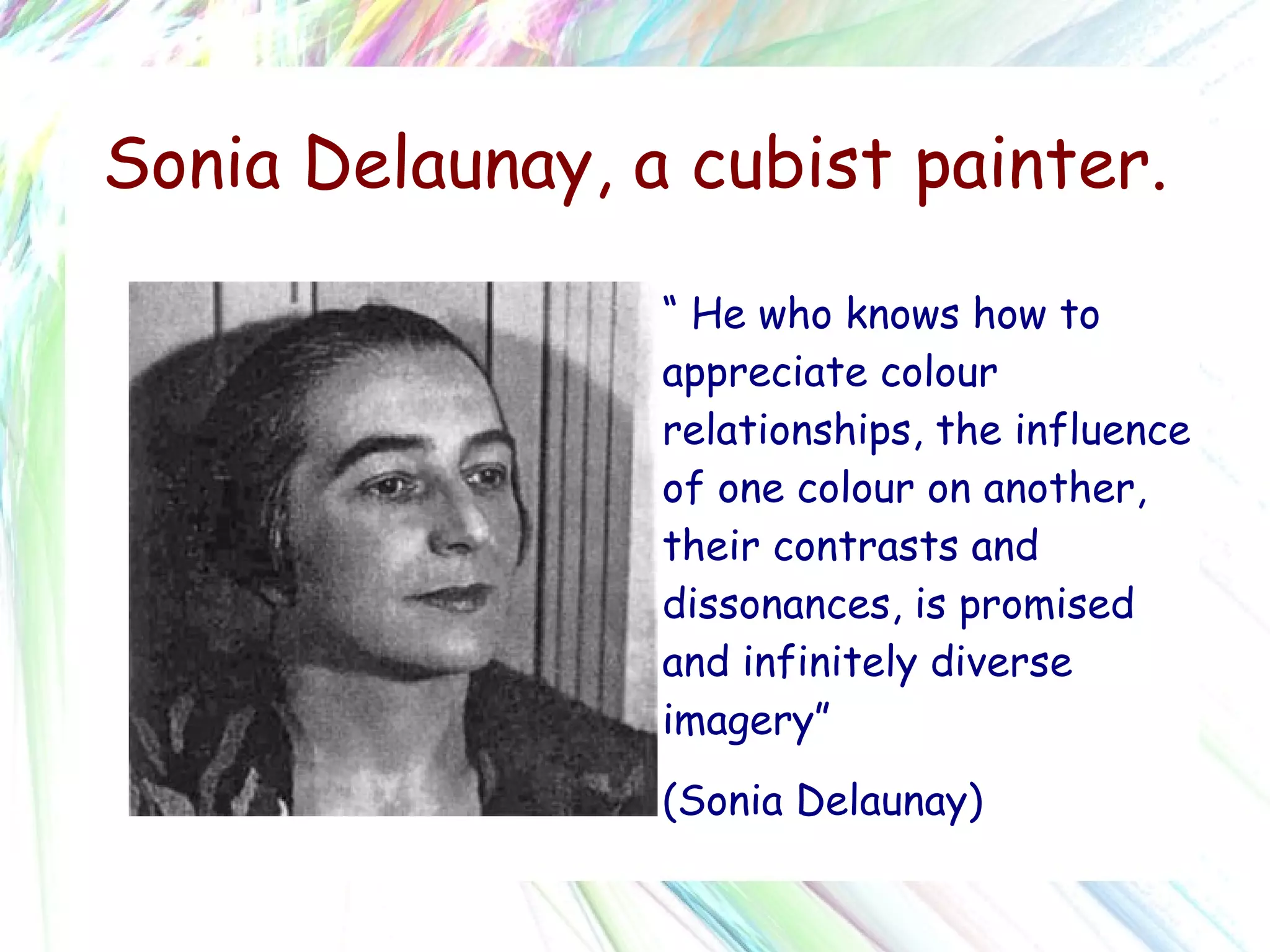
Sonia Delaunay, a cubist painter. “  He who knows how to appreciate colour relationships, the influence of one colour on another, their contrasts and dissonances, is promised and infinitely diverse imagery” (Sonia Delaunay)
She was born in Gradizhske in the Ukraine. But she moved to St Petersburg early lo live with her uncle, Henry Terk, an important Jewish lawyer.
They spent their summers in Finland and traveled in Europe. She knew art museums and galleries.
When she was 18, at her teacher's suggestion, she was sent to art school in Germany. And she moved to Paris in 1905
She married Robert Delaunay in 1909. He was a regular visitor at Uhde's gallery (The gallery of her 1 st  husband)
In 1911, she made a patchwork quilt for Charles' crib, her son. This quilt was created spontaneously and it evoqued her cubist conceptions: she used geometry and colour
In 1914, they travelled to the Iberian Peninsula, while the First World War raged in Europe. The most important work from that period is the Market at Minho
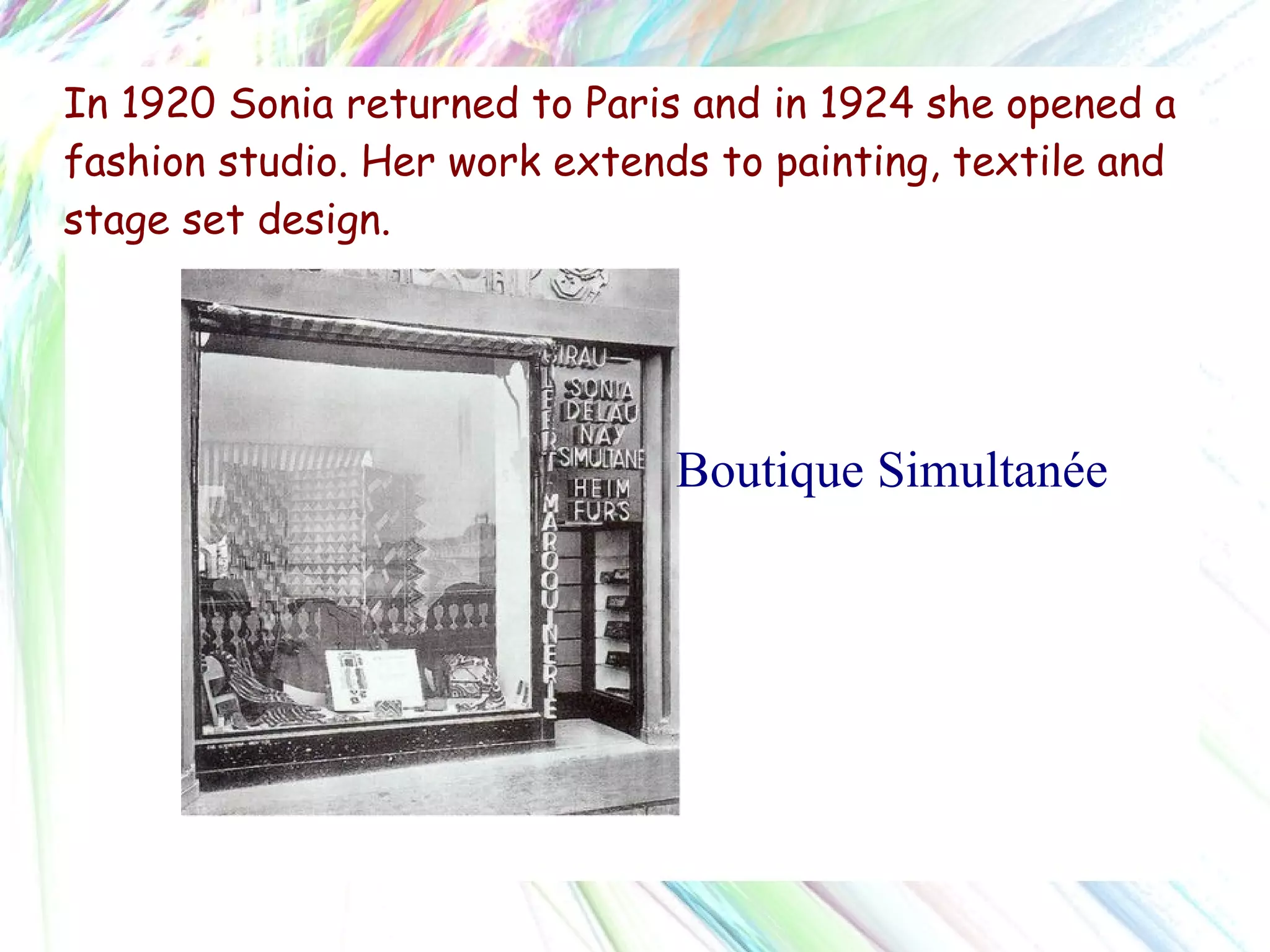
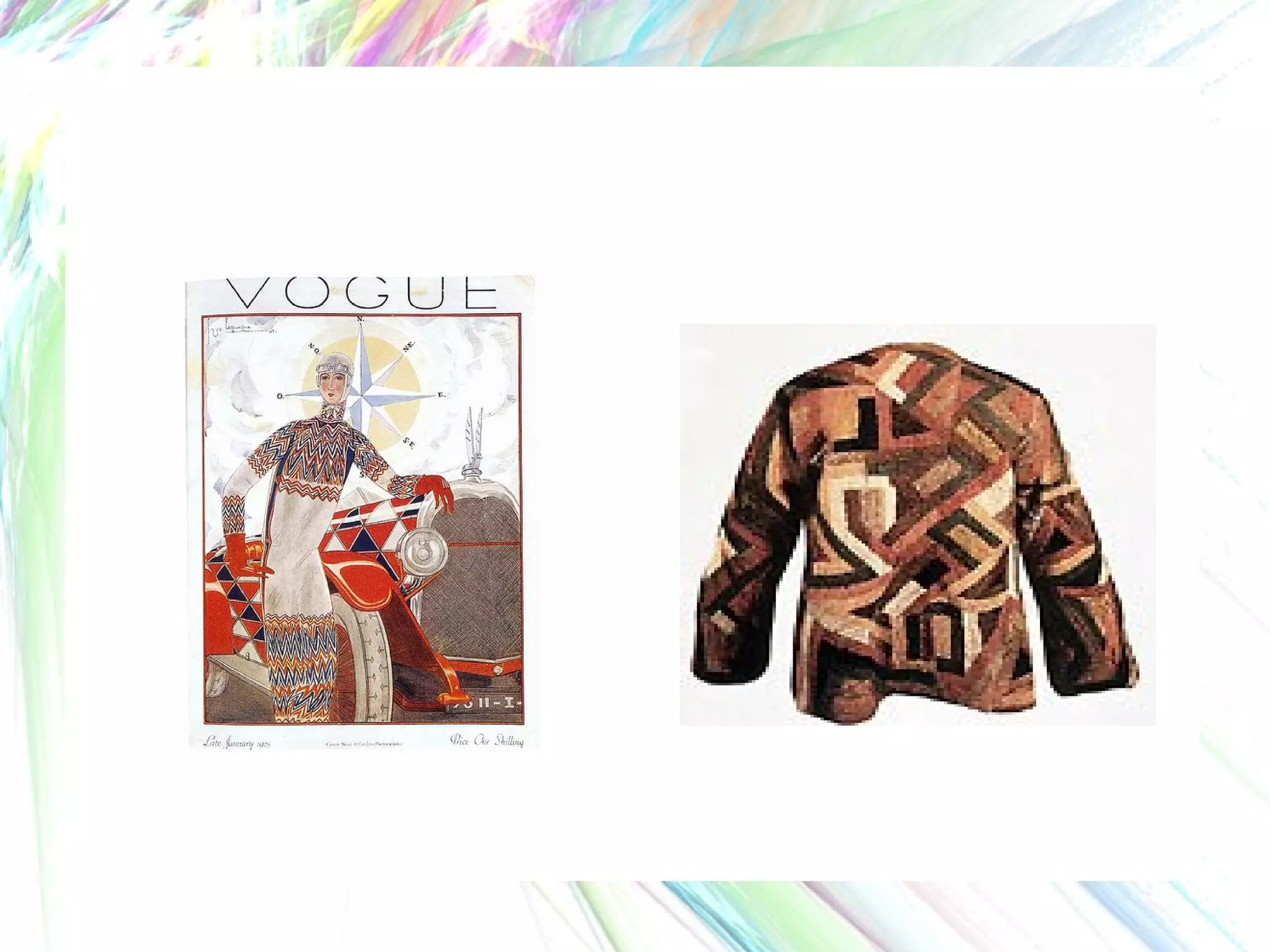
In 1920 Sonia returned to Paris and in 1924 she opened a fashion studio. Her work extends to painting, textile and stage set design. Boutique Simultanée
She designed the wardrobe for the Russian ballet. Shawls for “Cleopatra” from Diaghilev (1918)
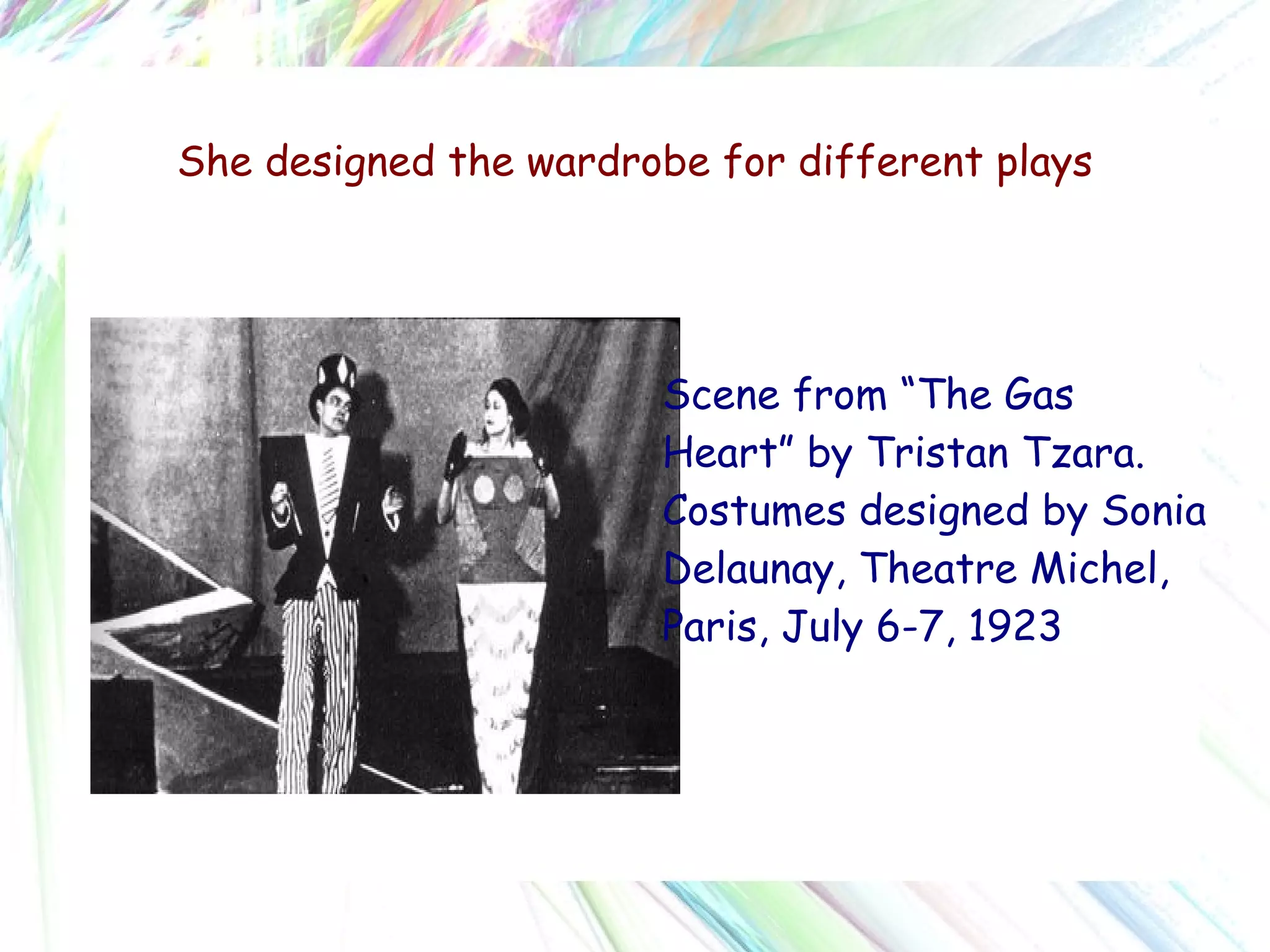
She designed the wardrobe for different plays Scene from “The Gas Heart” by Tristan Tzara. Costumes designed by Sonia Delaunay, Theatre Michel, Paris, July 6-7, 1923
She died in 1979 in Paris. She was the first woman to have a retrospective exhibition at the Louvre in 1964 and in 1975 was named an officer of the French Legion of Honor.
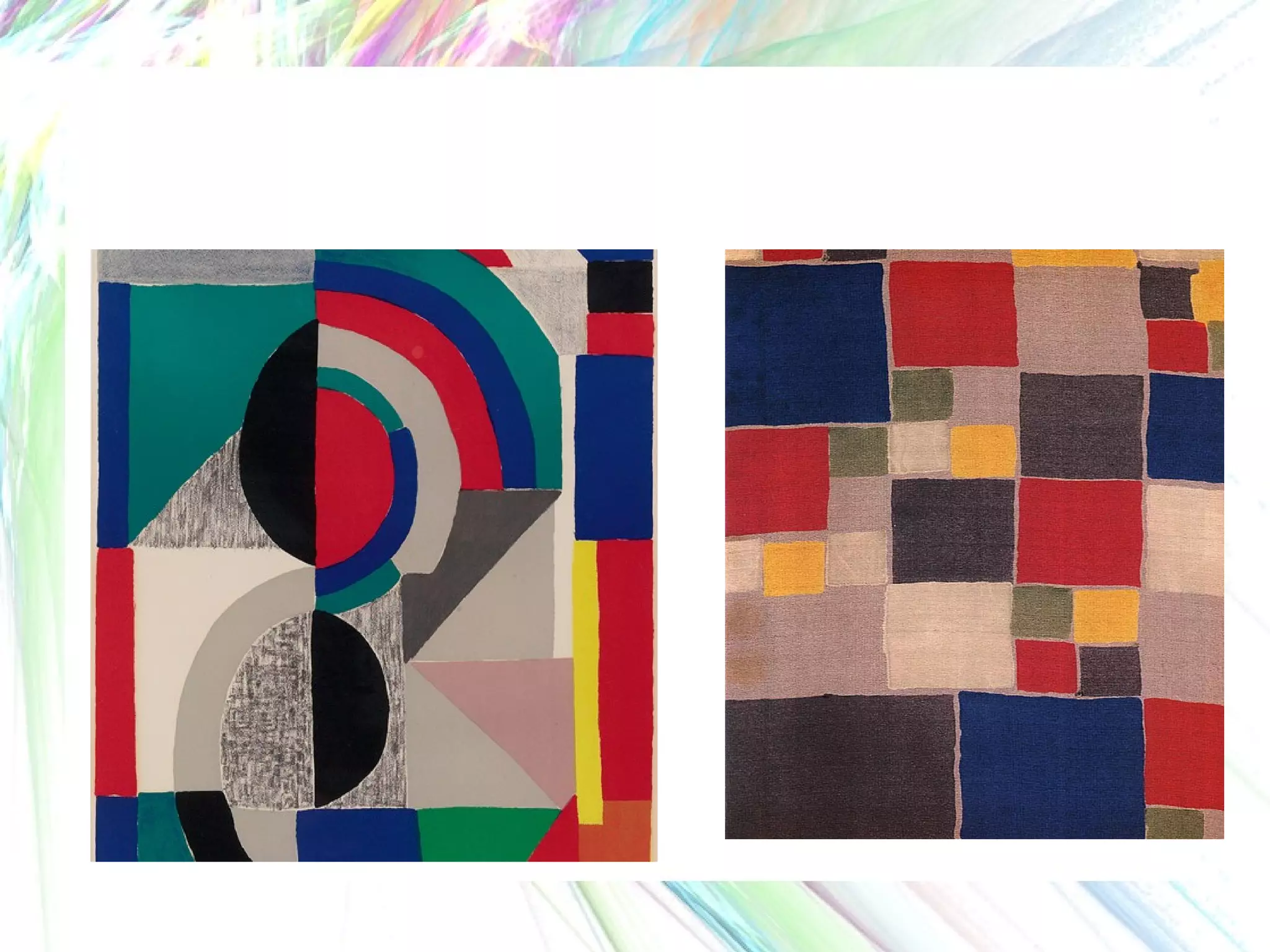
Her work in modern design included the use of geometrical abstraction and the integration of furniture, fabrics, wall coverings and clothing. These are some of her works:
Untitled Composition aux disques
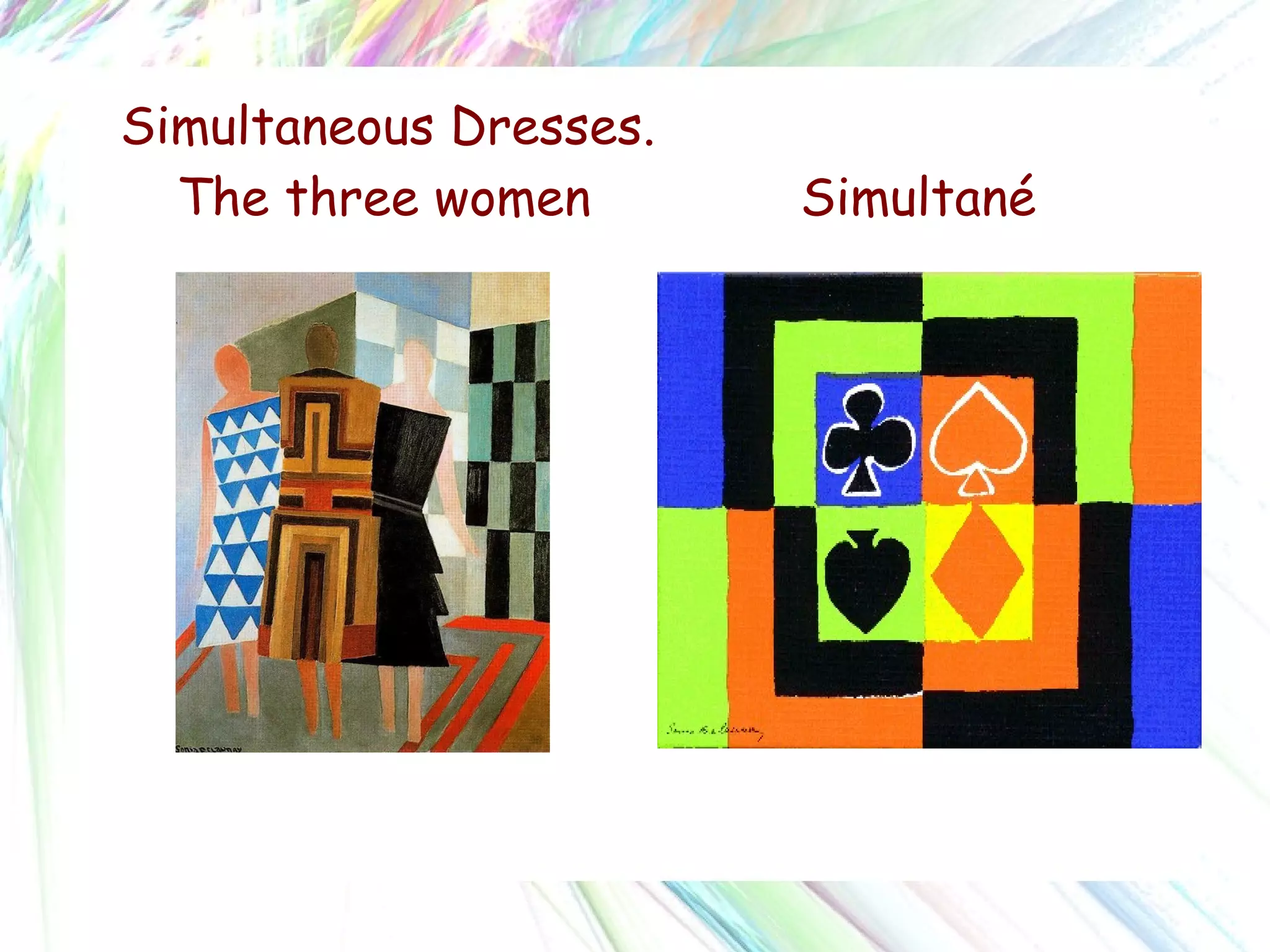
Simultaneous Dresses. The three women Simultané


Sonia Delaunay

  • 1.
    Cubism XX century(between 1907 and 1919)
  • 2.
    The main featuresof the Cubism are: The use of elementary geometrical forms.
  • 3.
    It's a reflectionon the form.
  • 4.
    Sonia Delaunay, acubist painter. “ He who knows how to appreciate colour relationships, the influence of one colour on another, their contrasts and dissonances, is promised and infinitely diverse imagery” (Sonia Delaunay)
  • 5.
    She was bornin Gradizhske in the Ukraine. But she moved to St Petersburg early lo live with her uncle, Henry Terk, an important Jewish lawyer.
  • 6.
    They spent theirsummers in Finland and traveled in Europe. She knew art museums and galleries.
  • 7.
    When she was18, at her teacher's suggestion, she was sent to art school in Germany. And she moved to Paris in 1905
  • 8.
    She married RobertDelaunay in 1909. He was a regular visitor at Uhde's gallery (The gallery of her 1 st husband)
  • 9.
    In 1911, shemade a patchwork quilt for Charles' crib, her son. This quilt was created spontaneously and it evoqued her cubist conceptions: she used geometry and colour
  • 10.
    In 1914, theytravelled to the Iberian Peninsula, while the First World War raged in Europe. The most important work from that period is the Market at Minho
  • 11.
    In 1920 Soniareturned to Paris and in 1924 she opened a fashion studio. Her work extends to painting, textile and stage set design. Boutique Simultanée
  • 12.
    She designed thewardrobe for the Russian ballet. Shawls for “Cleopatra” from Diaghilev (1918)
  • 13.
    She designed thewardrobe for different plays Scene from “The Gas Heart” by Tristan Tzara. Costumes designed by Sonia Delaunay, Theatre Michel, Paris, July 6-7, 1923
  • 14.
    She died in1979 in Paris. She was the first woman to have a retrospective exhibition at the Louvre in 1964 and in 1975 was named an officer of the French Legion of Honor.
  • 15.
    Her work inmodern design included the use of geometrical abstraction and the integration of furniture, fabrics, wall coverings and clothing. These are some of her works:
  • 16.
  • 17.
    Simultaneous Dresses. Thethree women Simultané
  • 18.
  • 19.
  • 20.
  • 21.
  • 22.
  • 23.
  • 24.