Shudhanshu Agarwal
B.tech (EC-2011)
Roll no.-1101421102
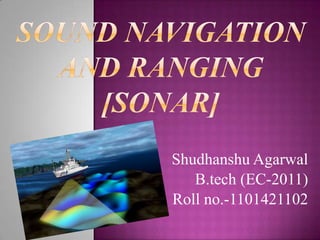
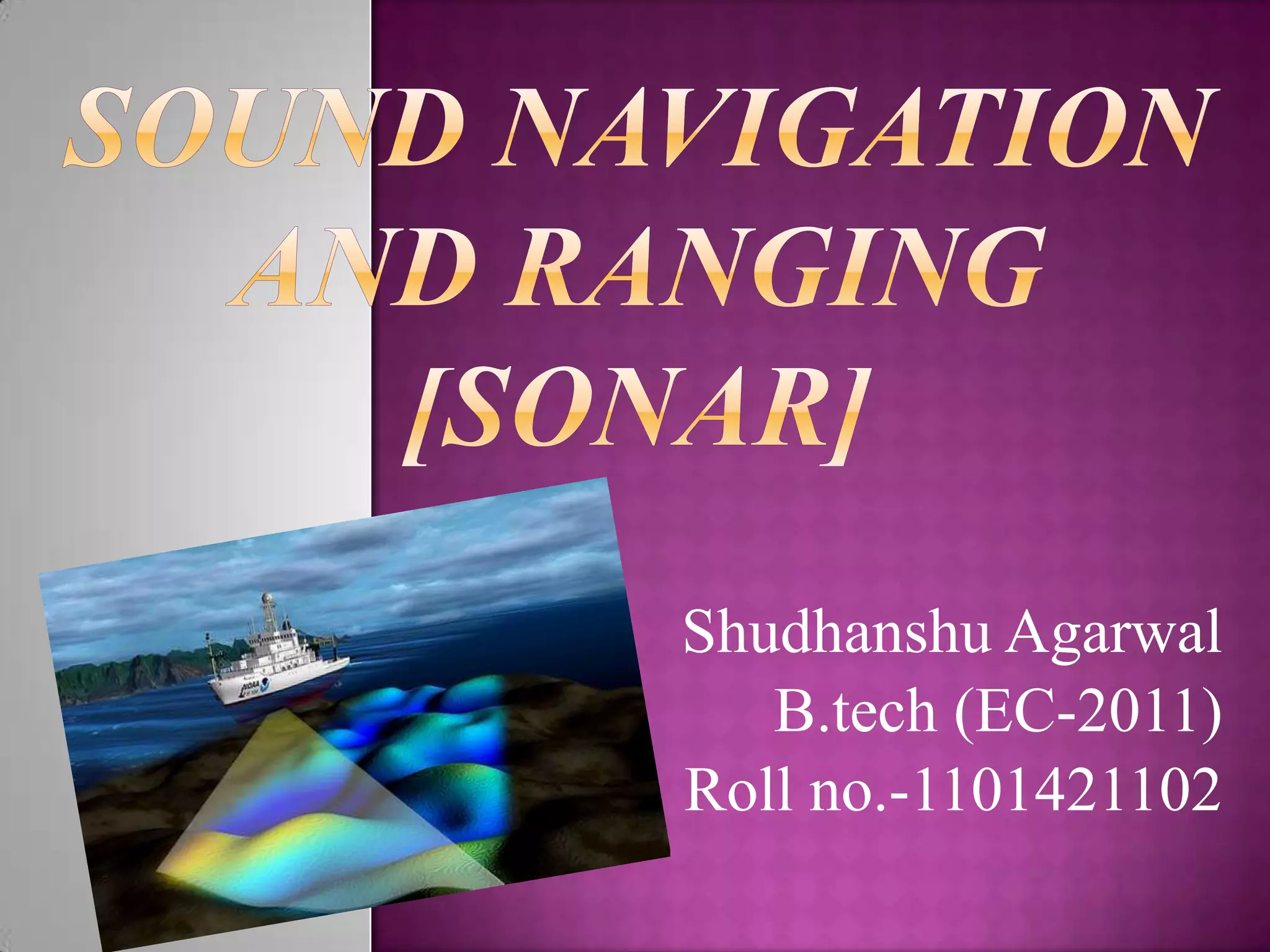
 SONAR is originally an acronym for Sound
Navigation and Ranging.
 It is a technique that uses sound propagation
to navigate and detect the objects located
under the surface of water
 The term SONAR is also used for device that
generates and receives sound.
 The acoustic frequencies vary from very
low(infrasonic) to extremely high(ultrasonic)
frequencies.
For millions of years , its use by
humans was initially recorded by
Leonardo da Vinci in 1490.
In 19th century, it was used as an
ancillary to provide warning of
hazards.
Sonar was first patented by Lewis
Richardson and German physicist
Alexander Behm in 1913.
During world war I the need to
detect submarines prompted
more research into this
technology.
During1930,american engineers
developed their underwater
sound detection technology and
they began to call it SONAR
coined as equivalent to RADAR
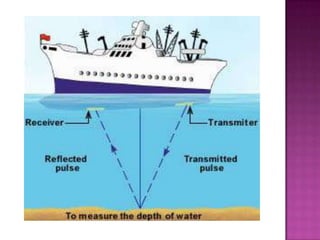
 Sonar is a device that is used to detect
underwater objects using sound waves.
 In this system a sound pulse is generated and
sent underwater through a transmitter.
 sound waves are reflected by the underwater
object which are received at receiver.
 The time taken by sound wave to come back
is recorded.
 And by knowing the speed of sound wave in
water the distance can be easily calculated
by formula.
 Distance = speed x time
Sonar systems are of two
types:
Active Sonar
Passive sonar
 It operates in three modes:
 Monocratic mode
 Biostatic mode
 Multistate mode
 Most sonars are used in monostatic mode
with same array often being used for
transmission and reception.
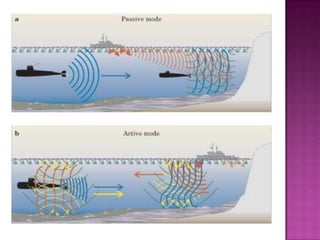
Active sonar creates a pulse of sound
often called as ping and then listens
for echo of the pulse.
This sound is generated by sonar
projector consisting of signal generator
, power amplifier, electro-acoustic
array.
To measure the distance of object the
time from transmission of pulse to
reception of pulse is measured and
converted into range by knowing the
sped of sound
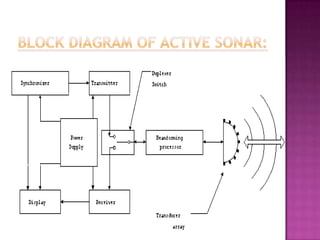
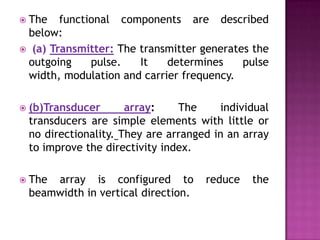
 The functional components are described
below:
 (a) Transmitter: The transmitter generates the
outgoing pulse. It determines pulse
width, modulation and carrier frequency.
 (b)Transducer array: The individual
transducers are simple elements with little or
no directionality. They are arranged in an array
to improve the directivity index.
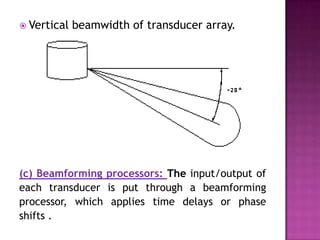
 The array is configured to reduce the
beamwidth in vertical direction.
 Vertical beamwidth of transducer array.
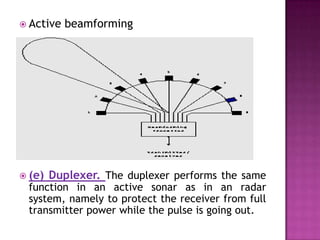
(c) Beamforming processors: The input/output of
each transducer is put through a beamforming
processor, which applies time delays or phase
shifts .
 Active beamforming
 (e) Duplexer. The duplexer performs the same
function in an active sonar as in an radar
system, namely to protect the receiver from full
transmitter power while the pulse is going out.
 Synchronizer: perform same function
as the synchronizers in radar. Provides
overall coordination and timing for
system reset the display for each new
pulse.
 Receiver. Collects the received
energy the receiver compares the
power level of noise with a threshold
SNR (DT) .If the DT is set too low there
will be many false alarms. If it is too
high, some detection capability will be
lost.
 (h) Display: Puts all the detection
information into a visual format.
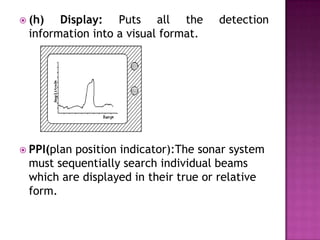
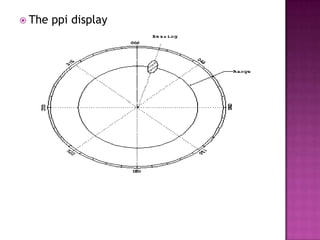
 PPI(plan position indicator):The sonar system
must sequentially search individual beams
which are displayed in their true or relative
form.
 The ppi display
Passive sonar listens without
transmitting
It has a wide variety of techniques to
identify the source of sound.
It can help in findinf nationality as
most european submarines use 50hz
power systems and U.S. vessels
operates at 60hz a.c power systems.
Passive sonar less used due to noise
generated by them
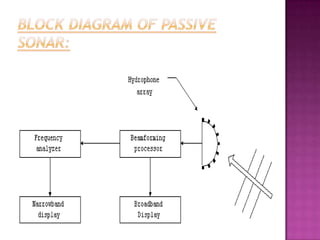
Hydrophone array :these are the
sensitive elements which detect the
acoustic energy emitted from
target.
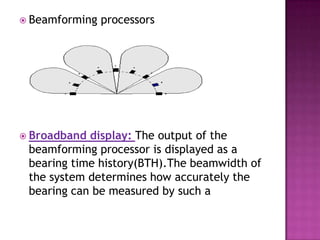
Beamforming processor: the passive
system must listen to all angles at
all times. This requires very wide
beamwidth.at the same time, a
narrow beamwidth is required
.These two objectives are achieved
simultaneously by the passive
beamforming processor.
 Beamforming processors
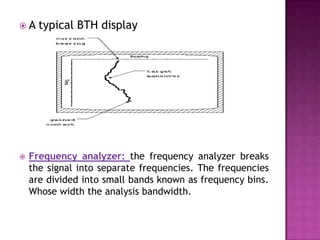
 Broadband display: The output of the
beamforming processor is displayed as a
bearing time history(BTH).The beamwidth of
the system determines how accurately the
bearing can be measured by such a
 A typical BTH display
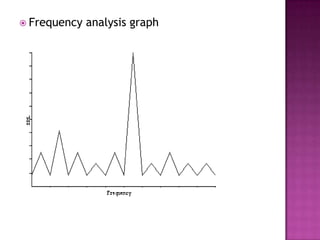
 Frequency analyzer: the frequency analyzer breaks
the signal into separate frequencies. The frequencies
are divided into small bands known as frequency bins.
Whose width the analysis bandwidth.
 Frequency analysis graph
 Sound propagation:
 Sonar operation is affected by variations in sound
speed .The speed is determined by:
 Speed = 4388 + (11.25 × temperature (in °F)) + (0.0182
× depth (in feet)) + salinity (in parts-per-
thousand).
 Scattering:
 When active sonar is used, scattering occurs from
small objects in the sea as well as from the bottom
and surface. This can be a major source of
interference.
The main uses of Sonar is as ahead:
It is used to find the actual depth of
the sea.
Sonar systems are used to find lost
ships and submarines.
These are used in ocean surveillance
systems.
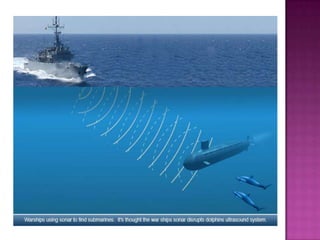
They are used by navy to detect the
locations of enemy submarines.
It has an adverse effects on marine
animals like dolphins and whales
,that also use sound waves for their
navigation.
It leads whales to painful and often
fatal decompression sickness.
The sonar systems generate lot of
noise
SONAR

SONAR

  • 1.
  • 2.
     SONAR isoriginally an acronym for Sound Navigation and Ranging.  It is a technique that uses sound propagation to navigate and detect the objects located under the surface of water  The term SONAR is also used for device that generates and receives sound.  The acoustic frequencies vary from very low(infrasonic) to extremely high(ultrasonic) frequencies.
  • 3.
    For millions ofyears , its use by humans was initially recorded by Leonardo da Vinci in 1490. In 19th century, it was used as an ancillary to provide warning of hazards. Sonar was first patented by Lewis Richardson and German physicist Alexander Behm in 1913.
  • 4.
    During world warI the need to detect submarines prompted more research into this technology. During1930,american engineers developed their underwater sound detection technology and they began to call it SONAR coined as equivalent to RADAR
  • 5.
     Sonar isa device that is used to detect underwater objects using sound waves.  In this system a sound pulse is generated and sent underwater through a transmitter.  sound waves are reflected by the underwater object which are received at receiver.  The time taken by sound wave to come back is recorded.  And by knowing the speed of sound wave in water the distance can be easily calculated by formula.  Distance = speed x time
  • 7.
    Sonar systems areof two types: Active Sonar Passive sonar
  • 8.
     It operatesin three modes:  Monocratic mode  Biostatic mode  Multistate mode  Most sonars are used in monostatic mode with same array often being used for transmission and reception.
  • 9.
    Active sonar createsa pulse of sound often called as ping and then listens for echo of the pulse. This sound is generated by sonar projector consisting of signal generator , power amplifier, electro-acoustic array. To measure the distance of object the time from transmission of pulse to reception of pulse is measured and converted into range by knowing the sped of sound
  • 11.
     The functionalcomponents are described below:  (a) Transmitter: The transmitter generates the outgoing pulse. It determines pulse width, modulation and carrier frequency.  (b)Transducer array: The individual transducers are simple elements with little or no directionality. They are arranged in an array to improve the directivity index.  The array is configured to reduce the beamwidth in vertical direction.
  • 12.
     Vertical beamwidthof transducer array. (c) Beamforming processors: The input/output of each transducer is put through a beamforming processor, which applies time delays or phase shifts .
  • 13.
     Active beamforming (e) Duplexer. The duplexer performs the same function in an active sonar as in an radar system, namely to protect the receiver from full transmitter power while the pulse is going out.
  • 14.
     Synchronizer: performsame function as the synchronizers in radar. Provides overall coordination and timing for system reset the display for each new pulse.  Receiver. Collects the received energy the receiver compares the power level of noise with a threshold SNR (DT) .If the DT is set too low there will be many false alarms. If it is too high, some detection capability will be lost.
  • 15.
     (h) Display:Puts all the detection information into a visual format.  PPI(plan position indicator):The sonar system must sequentially search individual beams which are displayed in their true or relative form.
  • 16.
     The ppidisplay
  • 17.
    Passive sonar listenswithout transmitting It has a wide variety of techniques to identify the source of sound. It can help in findinf nationality as most european submarines use 50hz power systems and U.S. vessels operates at 60hz a.c power systems. Passive sonar less used due to noise generated by them
  • 19.
    Hydrophone array :theseare the sensitive elements which detect the acoustic energy emitted from target. Beamforming processor: the passive system must listen to all angles at all times. This requires very wide beamwidth.at the same time, a narrow beamwidth is required .These two objectives are achieved simultaneously by the passive beamforming processor.
  • 20.
     Beamforming processors Broadband display: The output of the beamforming processor is displayed as a bearing time history(BTH).The beamwidth of the system determines how accurately the bearing can be measured by such a
  • 21.
     A typicalBTH display  Frequency analyzer: the frequency analyzer breaks the signal into separate frequencies. The frequencies are divided into small bands known as frequency bins. Whose width the analysis bandwidth.
  • 22.
  • 24.
     Sound propagation: Sonar operation is affected by variations in sound speed .The speed is determined by:  Speed = 4388 + (11.25 × temperature (in °F)) + (0.0182 × depth (in feet)) + salinity (in parts-per- thousand).  Scattering:  When active sonar is used, scattering occurs from small objects in the sea as well as from the bottom and surface. This can be a major source of interference.
  • 25.
    The main usesof Sonar is as ahead: It is used to find the actual depth of the sea. Sonar systems are used to find lost ships and submarines. These are used in ocean surveillance systems. They are used by navy to detect the locations of enemy submarines.
  • 27.
    It has anadverse effects on marine animals like dolphins and whales ,that also use sound waves for their navigation. It leads whales to painful and often fatal decompression sickness. The sonar systems generate lot of noise