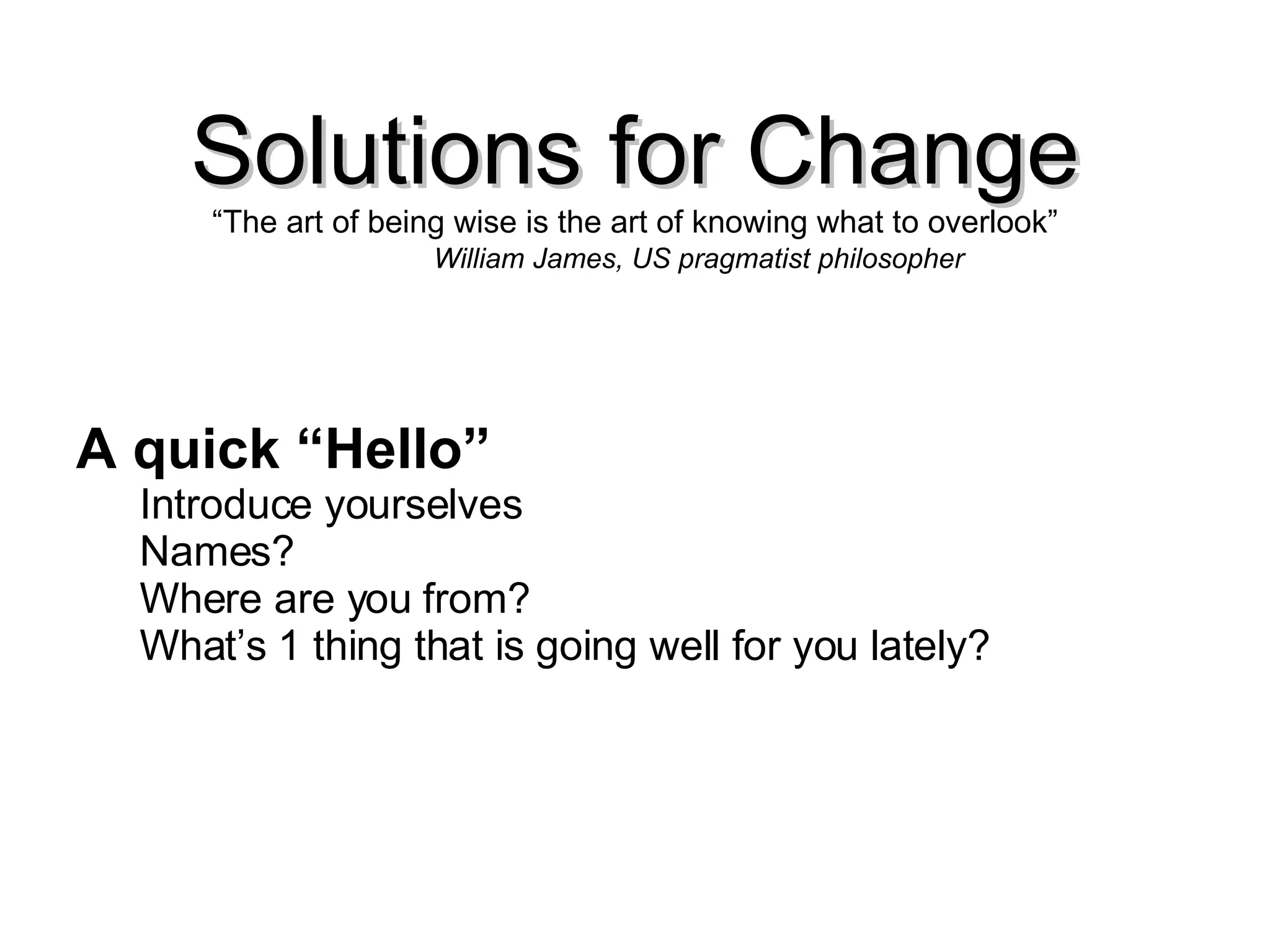
Solutions for Change “ The art of being wise is the art of knowing what to overlook” William James, US pragmatist philosopher A quick “Hello” Introduce yourselves Names? Where are you from? What’s 1 thing that is going well for you lately?
 
Sparkling Moments Finding counters Decide who is A and B A asks B Think of a personal “sparkling moment” involving change, a time when you were handling change very well. You were proud of your contribution. How come? What was it about that moment that made it sparkle for you? What else? Get as much detail as possible! Listen carefully and note what your partner says – you’ll need that in a moment
Sparkling Moments Affirm Now think about what this discussion has told you about your partner’s skills, qualities and attitudes – their “resources” Prepare to give feedback about at least 2 of these in a moment Watch for the reaction …
Sparkling Moments Choosing small actions Based on the discussion you have so far … A asks B What would you like to develop in this workshop? What questions do you have? Then change over – B asks A
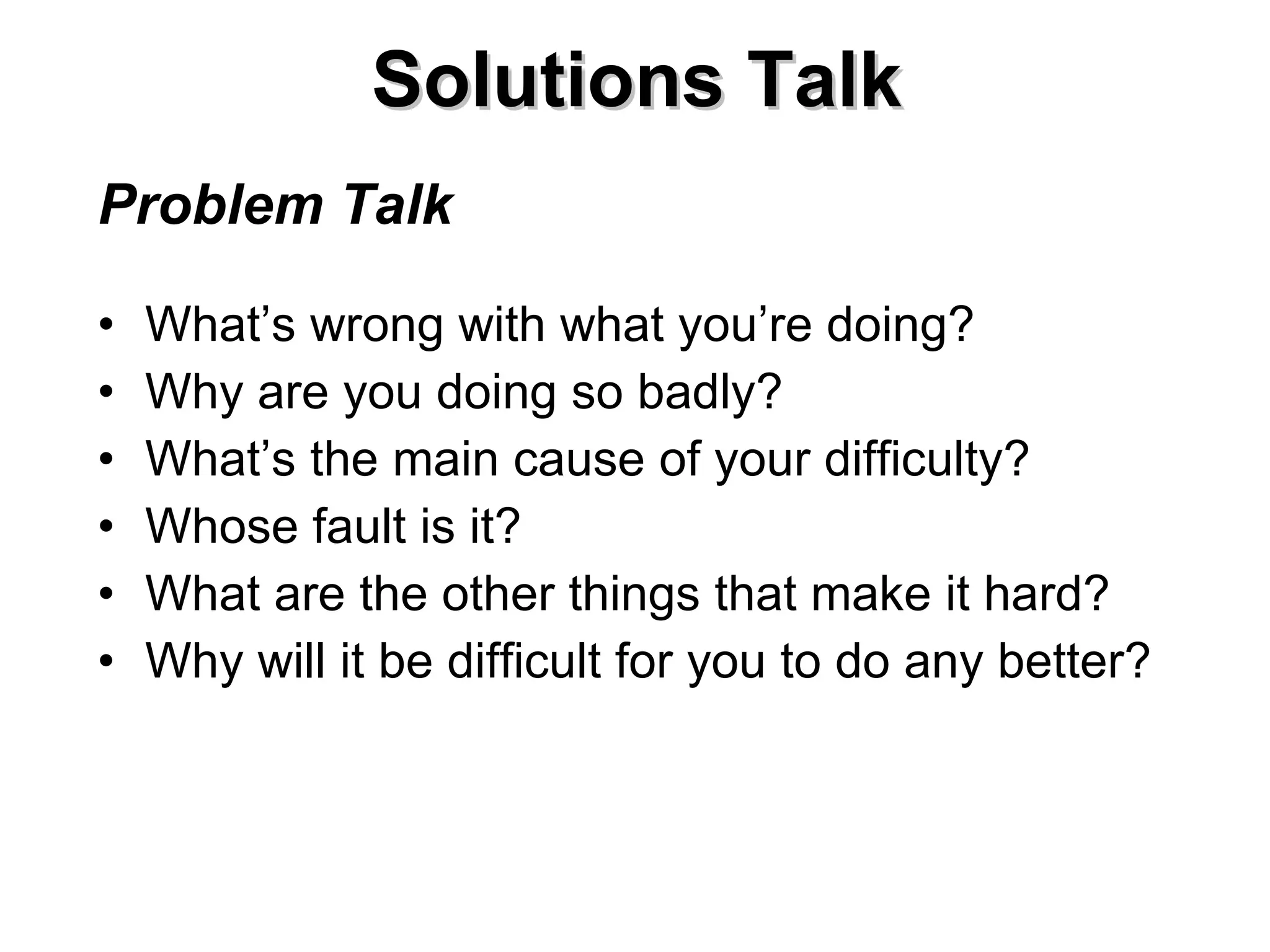
Solutions Talk Problem Talk What’s wrong with what you’re doing? Why are you doing so badly? What’s the main cause of your difficulty? Whose fault is it? What are the other things that make it hard? Why will it be difficult for you to do any better?
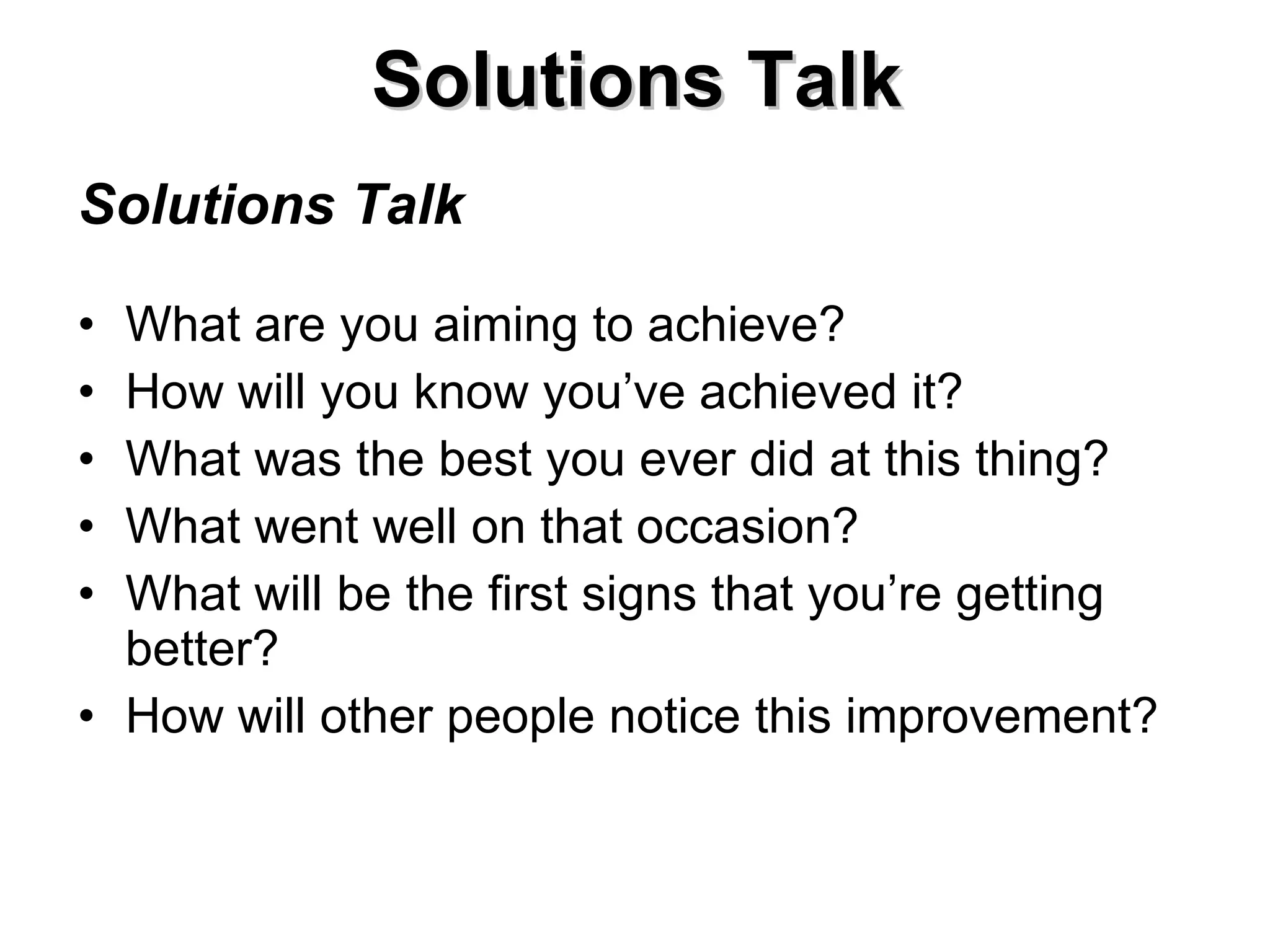
Solutions Talk Solutions Talk What are you aiming to achieve? How will you know you’ve achieved it? What was the best you ever did at this thing? What went well on that occasion? What will be the first signs that you’re getting better? How will other people notice this improvement?
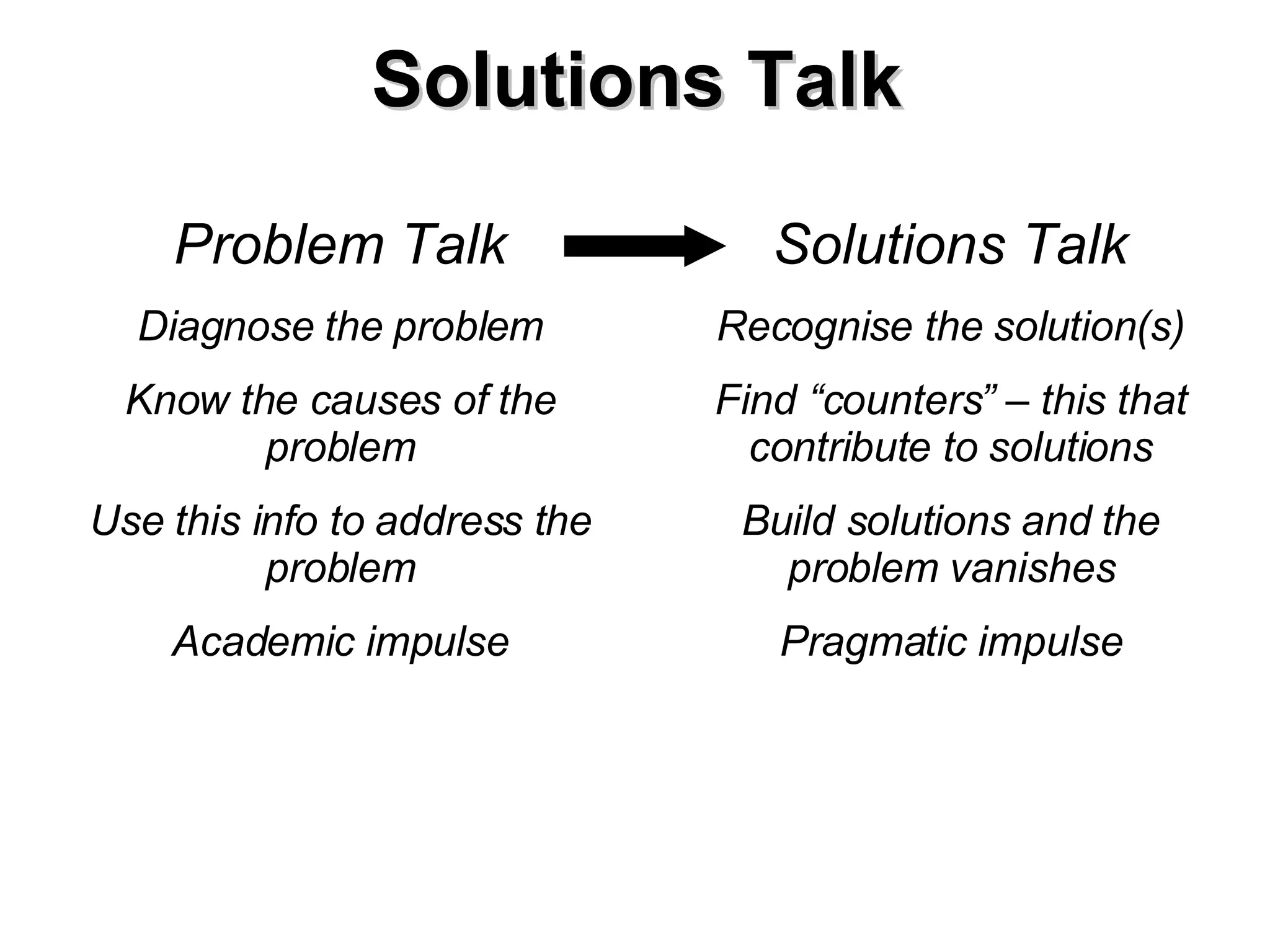
Solutions Talk Problem Talk Diagnose the problem Know the causes of the problem Use this info to address the problem Academic impulse Solutions Talk Recognise the solution(s) Find “counters” – this that contribute to solutions Build solutions and the problem vanishes Pragmatic impulse
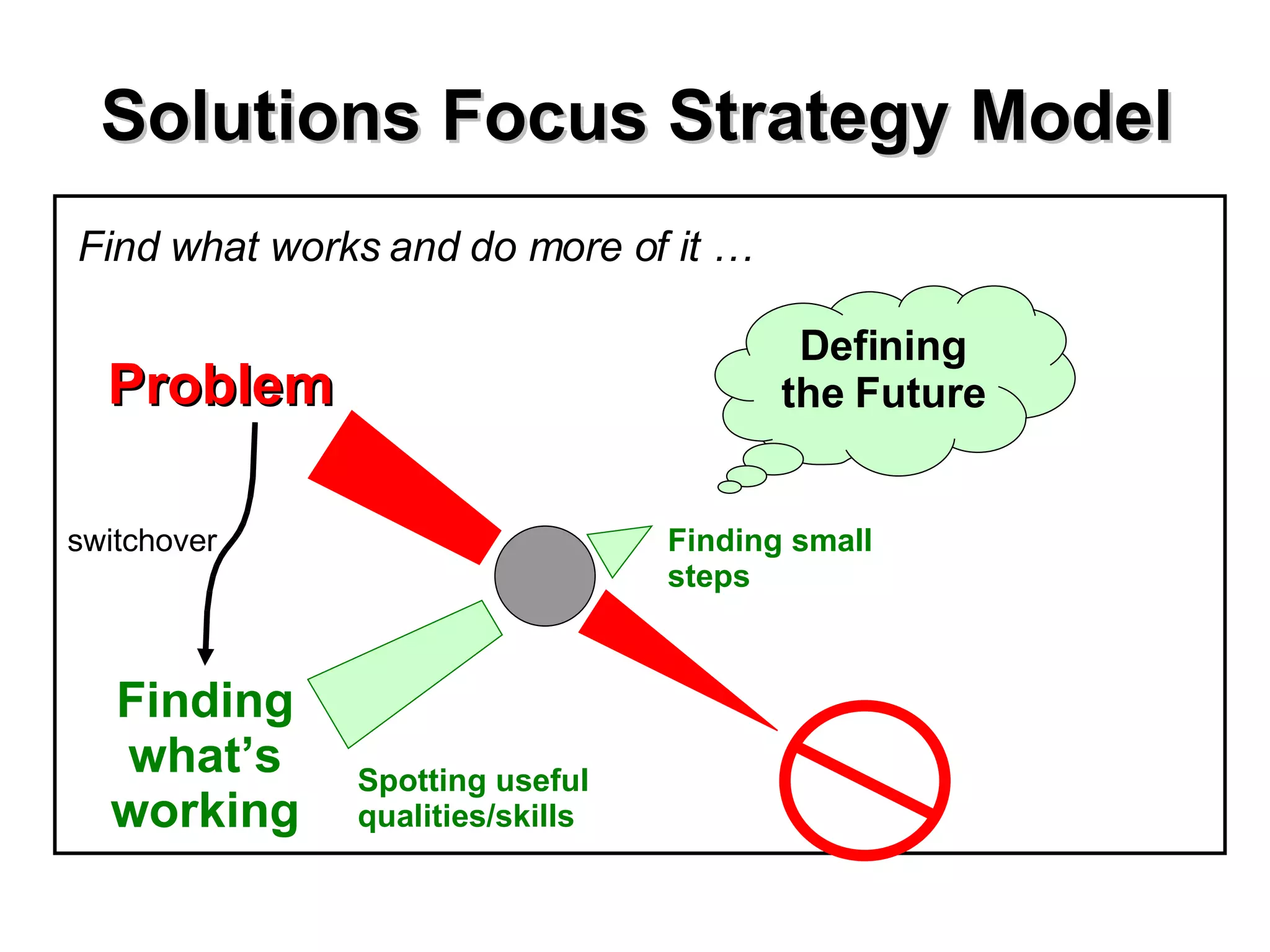
Solutions Focus Strategy Model Find what works and do more of it … Problem Defining the Future Finding what’s working Spotting useful qualities/skills Finding small steps switchover
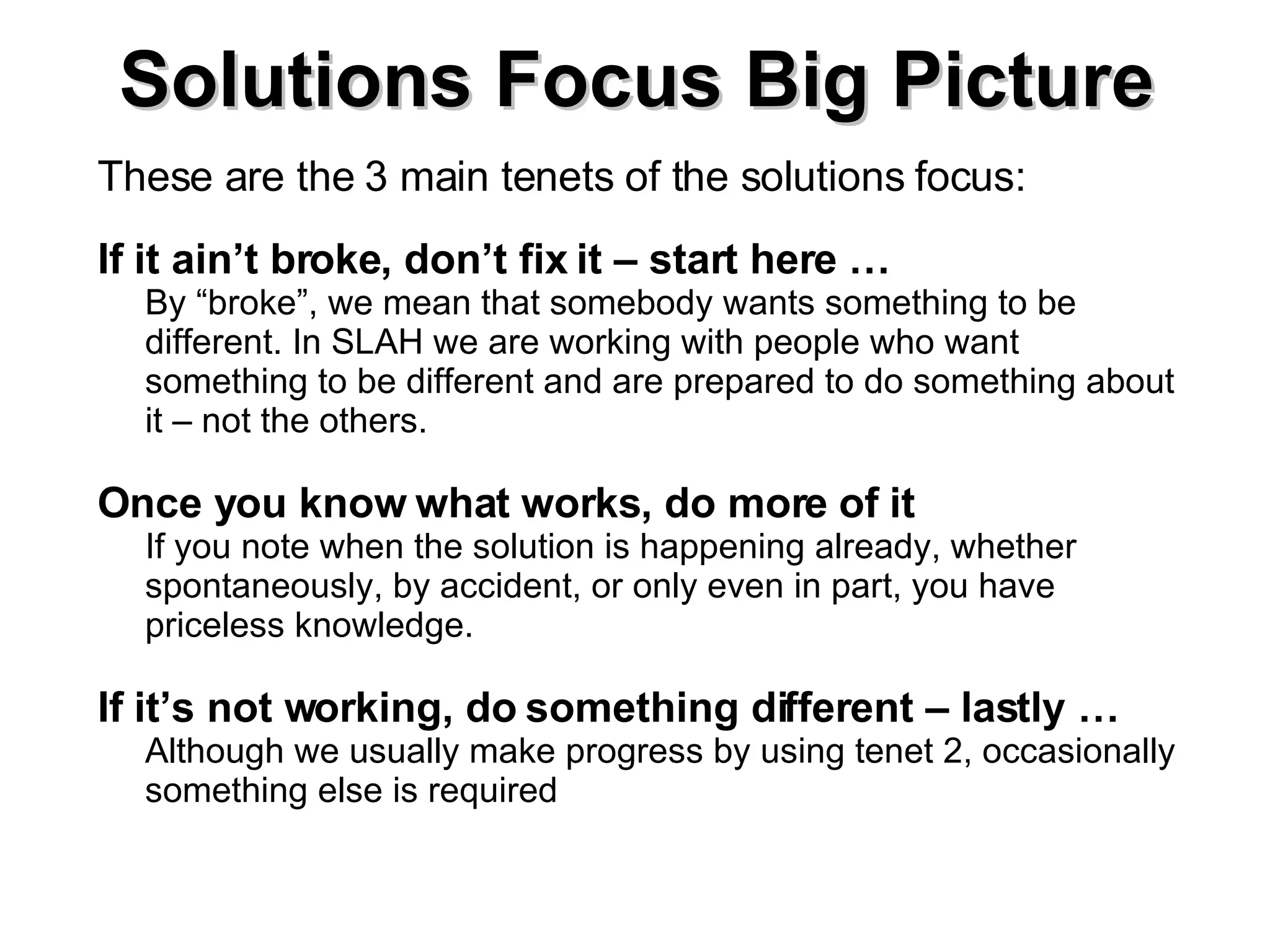
Solutions Focus Big Picture These are the 3 main tenets of the solutions focus: If it ain’t broke, don’t fix it – start here … By “broke”, we mean that somebody wants something to be different. In SLAH we are working with people who want something to be different and are prepared to do something about it – not the others. Once you know what works, do more of it If you note when the solution is happening already, whether spontaneously, by accident, or only even in part, you have priceless knowledge. If it’s not working, do something different – lastly … Although we usually make progress by using tenet 2, occasionally something else is required
Solutions Focus Model 10 5 0 S C A L E 1 st  Platform Problem 2 nd  Future Perfect Counters Affirm Small Actions

Solutions Focus

  • 1.
    Solutions for Change“ The art of being wise is the art of knowing what to overlook” William James, US pragmatist philosopher A quick “Hello” Introduce yourselves Names? Where are you from? What’s 1 thing that is going well for you lately?
  • 2.
  • 3.
    Sparkling Moments Findingcounters Decide who is A and B A asks B Think of a personal “sparkling moment” involving change, a time when you were handling change very well. You were proud of your contribution. How come? What was it about that moment that made it sparkle for you? What else? Get as much detail as possible! Listen carefully and note what your partner says – you’ll need that in a moment
  • 4.
    Sparkling Moments AffirmNow think about what this discussion has told you about your partner’s skills, qualities and attitudes – their “resources” Prepare to give feedback about at least 2 of these in a moment Watch for the reaction …
  • 5.
    Sparkling Moments Choosingsmall actions Based on the discussion you have so far … A asks B What would you like to develop in this workshop? What questions do you have? Then change over – B asks A
  • 6.
    Solutions Talk ProblemTalk What’s wrong with what you’re doing? Why are you doing so badly? What’s the main cause of your difficulty? Whose fault is it? What are the other things that make it hard? Why will it be difficult for you to do any better?
  • 7.
    Solutions Talk SolutionsTalk What are you aiming to achieve? How will you know you’ve achieved it? What was the best you ever did at this thing? What went well on that occasion? What will be the first signs that you’re getting better? How will other people notice this improvement?
  • 8.
    Solutions Talk ProblemTalk Diagnose the problem Know the causes of the problem Use this info to address the problem Academic impulse Solutions Talk Recognise the solution(s) Find “counters” – this that contribute to solutions Build solutions and the problem vanishes Pragmatic impulse
  • 9.
    Solutions Focus StrategyModel Find what works and do more of it … Problem Defining the Future Finding what’s working Spotting useful qualities/skills Finding small steps switchover
  • 10.
    Solutions Focus BigPicture These are the 3 main tenets of the solutions focus: If it ain’t broke, don’t fix it – start here … By “broke”, we mean that somebody wants something to be different. In SLAH we are working with people who want something to be different and are prepared to do something about it – not the others. Once you know what works, do more of it If you note when the solution is happening already, whether spontaneously, by accident, or only even in part, you have priceless knowledge. If it’s not working, do something different – lastly … Although we usually make progress by using tenet 2, occasionally something else is required
  • 11.
    Solutions Focus Model10 5 0 S C A L E 1 st Platform Problem 2 nd Future Perfect Counters Affirm Small Actions