Downloaded 317 times


Solid geometry describes three-dimensional space and includes two main types of solids: polyhedra and non-polyhedra. Polyhedra are solids made of flat surfaces that are polygons, such as cubes, pyramids, and spheres. Non-polyhedra have curved surfaces, such as cylinders, cones, and toruses. Solid geometry examines properties of three-dimensional shapes, including their dimensions, parts, and distinguishing characteristics.
Solid geometry involves the study of three-dimensional space, exploring the properties of solids.
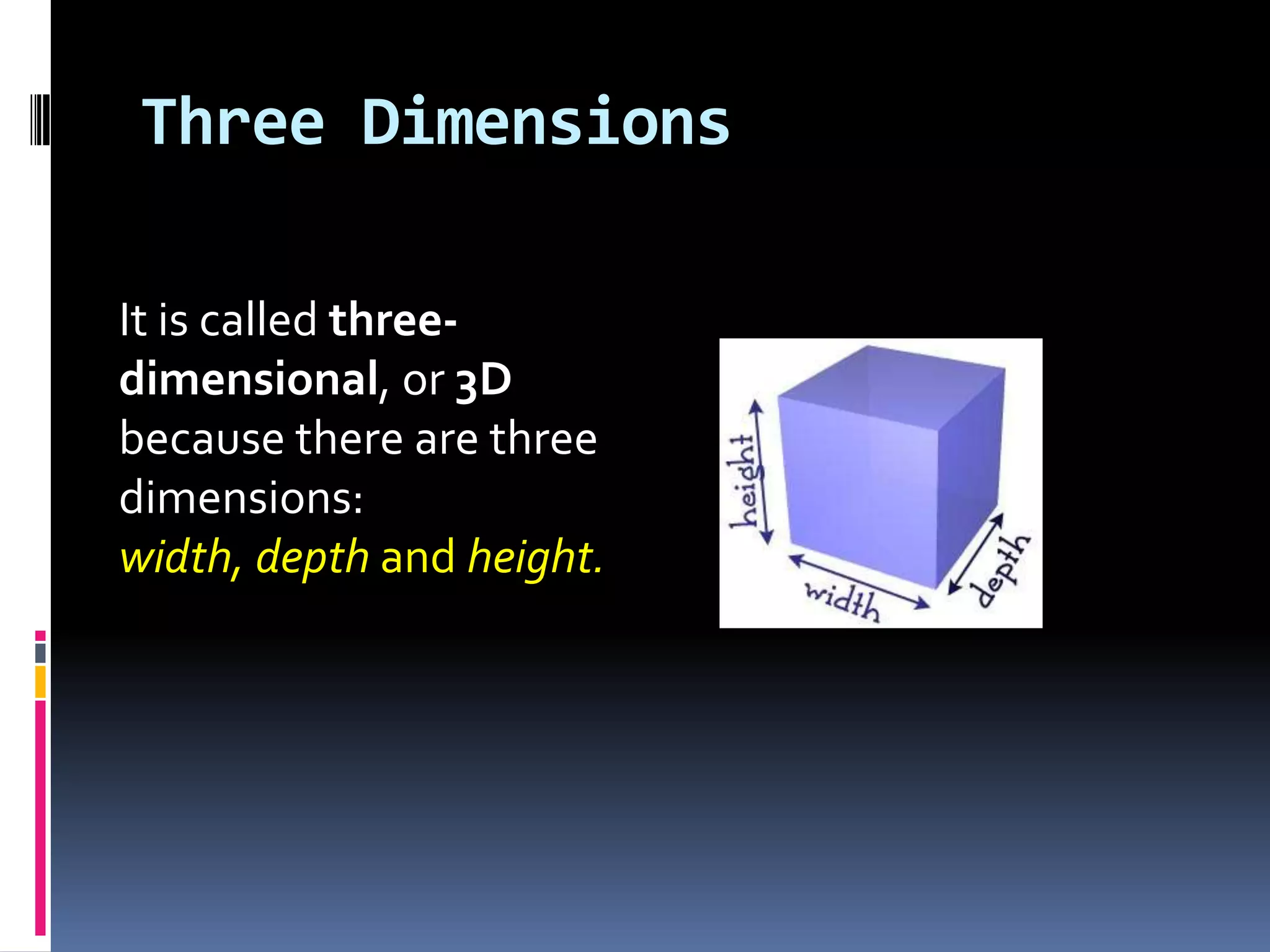
Three-dimensional space includes width, depth, and height, fundamental characteristics of solids.
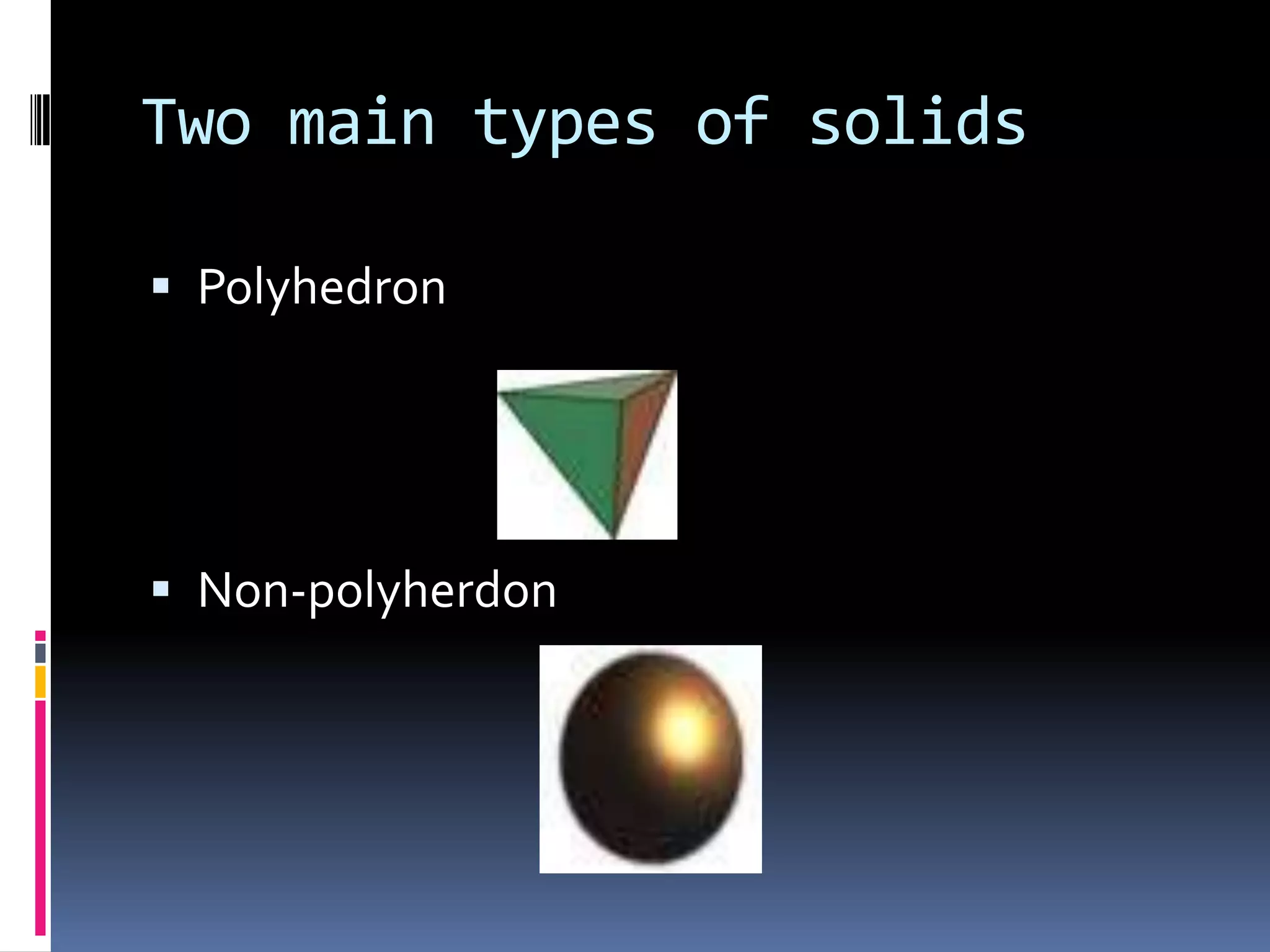
Solids are categorized into two main types: polyhedra and non-polyhedra, based on surface types.
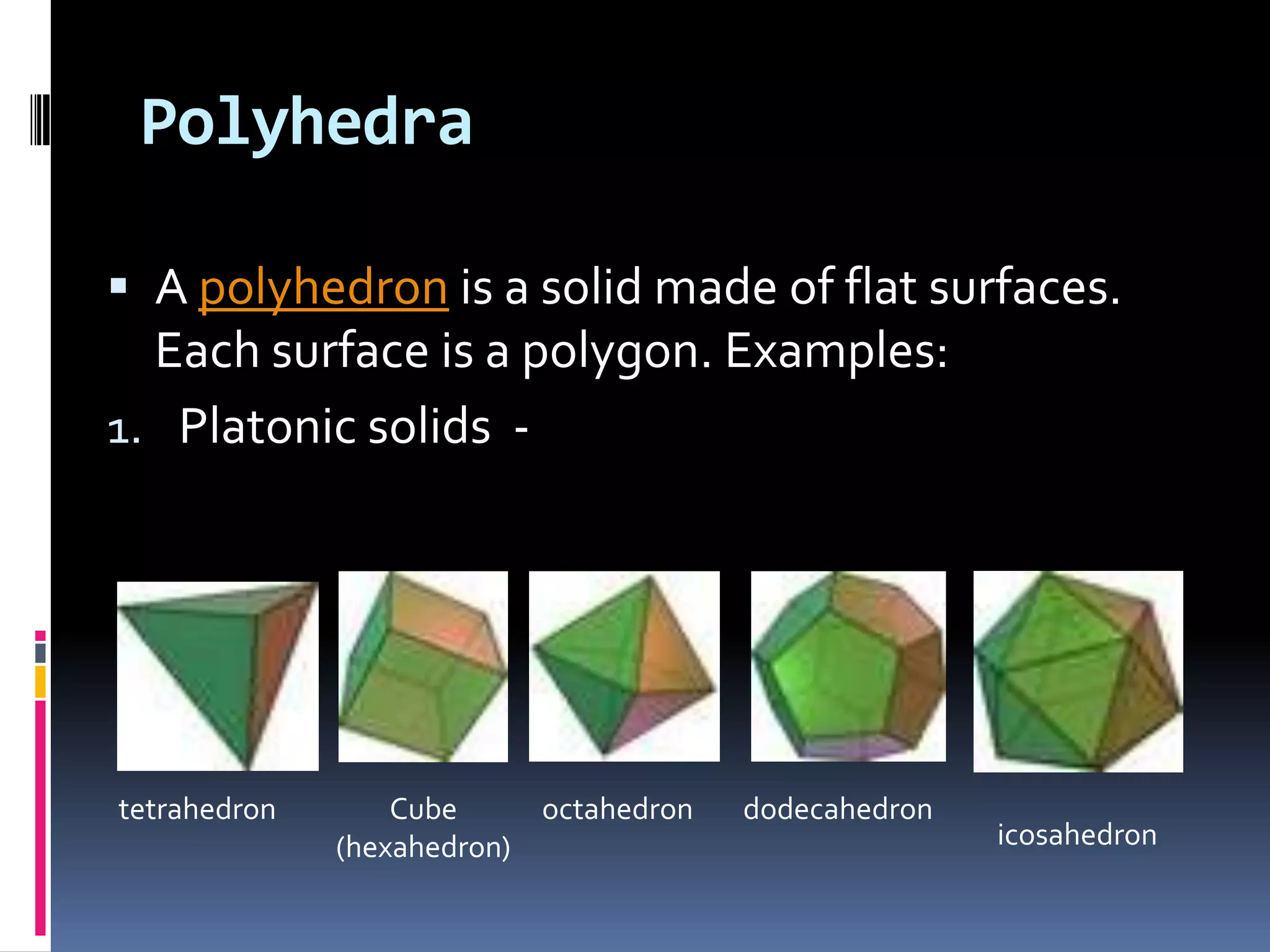
Polyhedra consist of flat polygon surfaces. Examples include Platonic solids like cubes and tetrahedra.
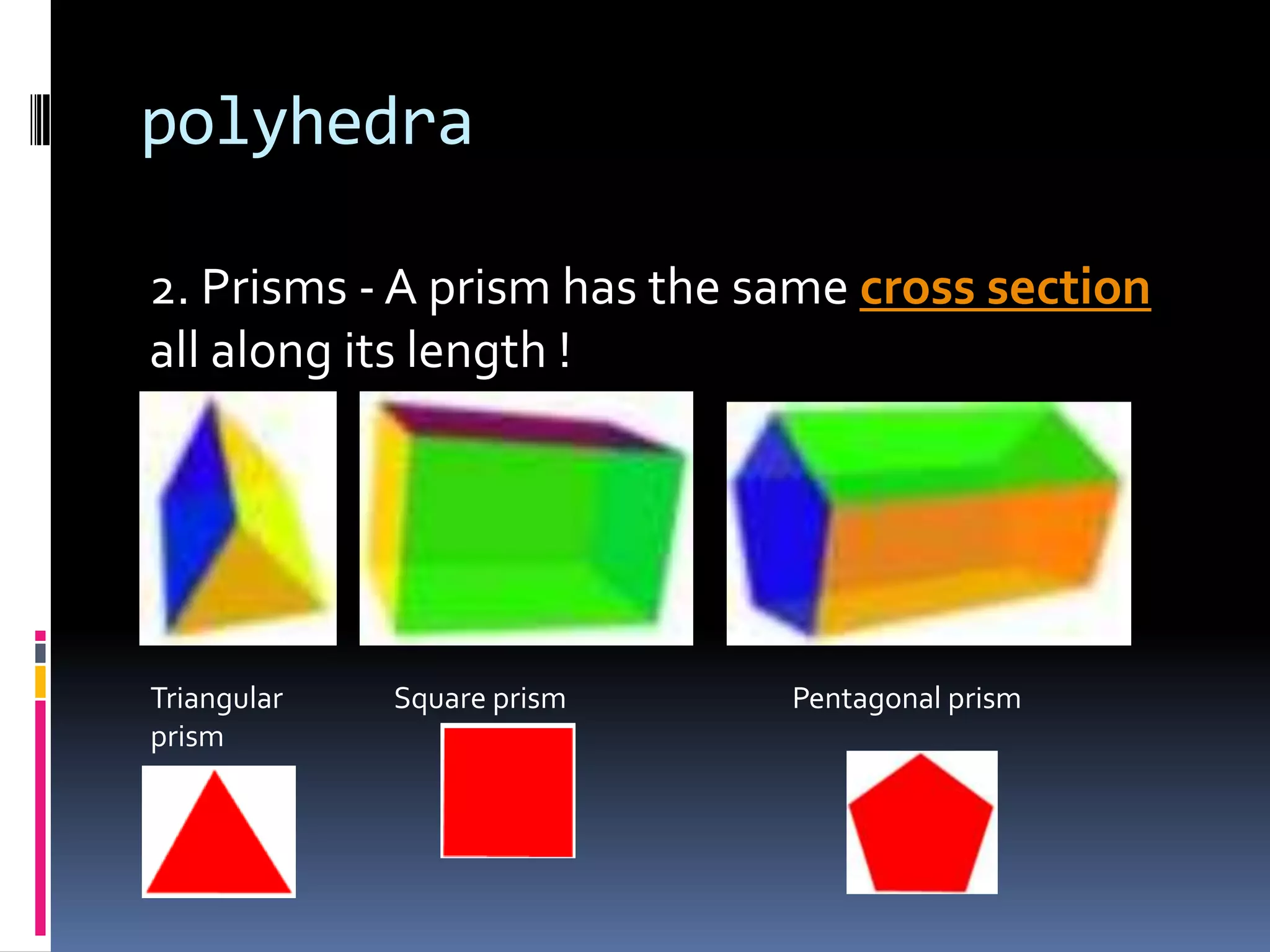
Prisms maintain a consistent cross-section along their length, with examples like square and triangular prisms.
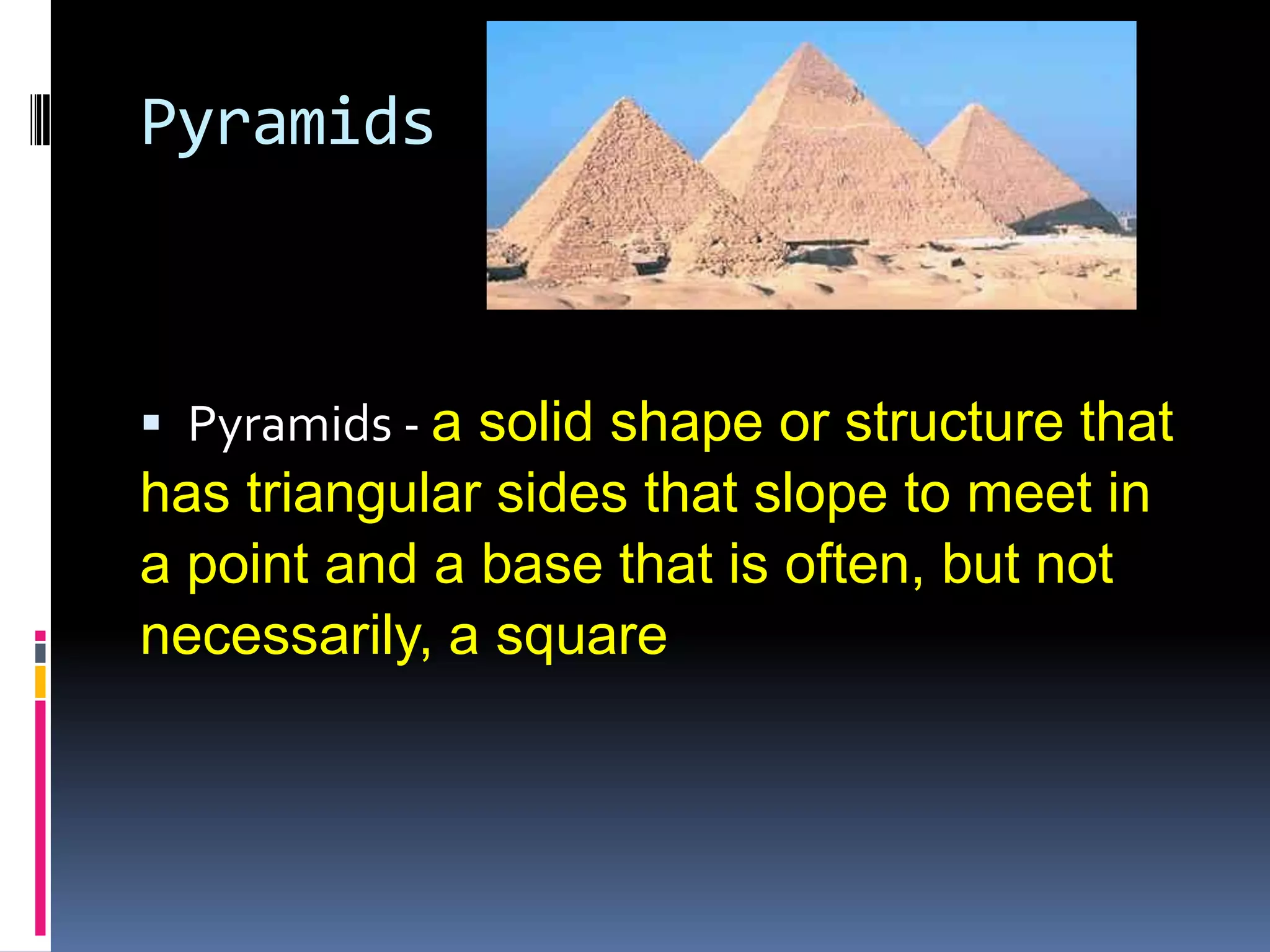
Pyramids have sloping triangular sides that converge at a point with a base, can vary in shape.
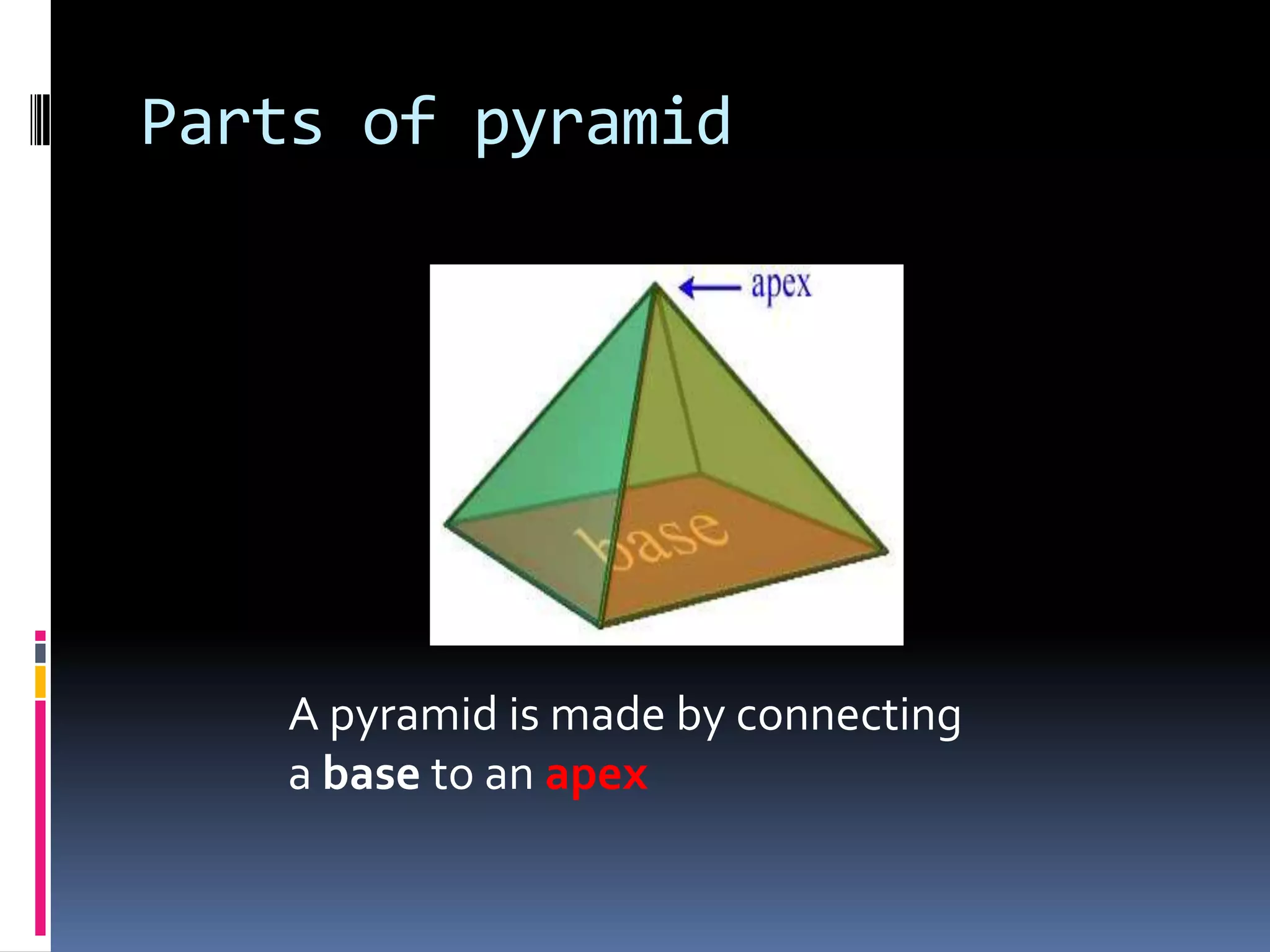
A pyramid is formed by connecting a base to an apex, defining its structure.
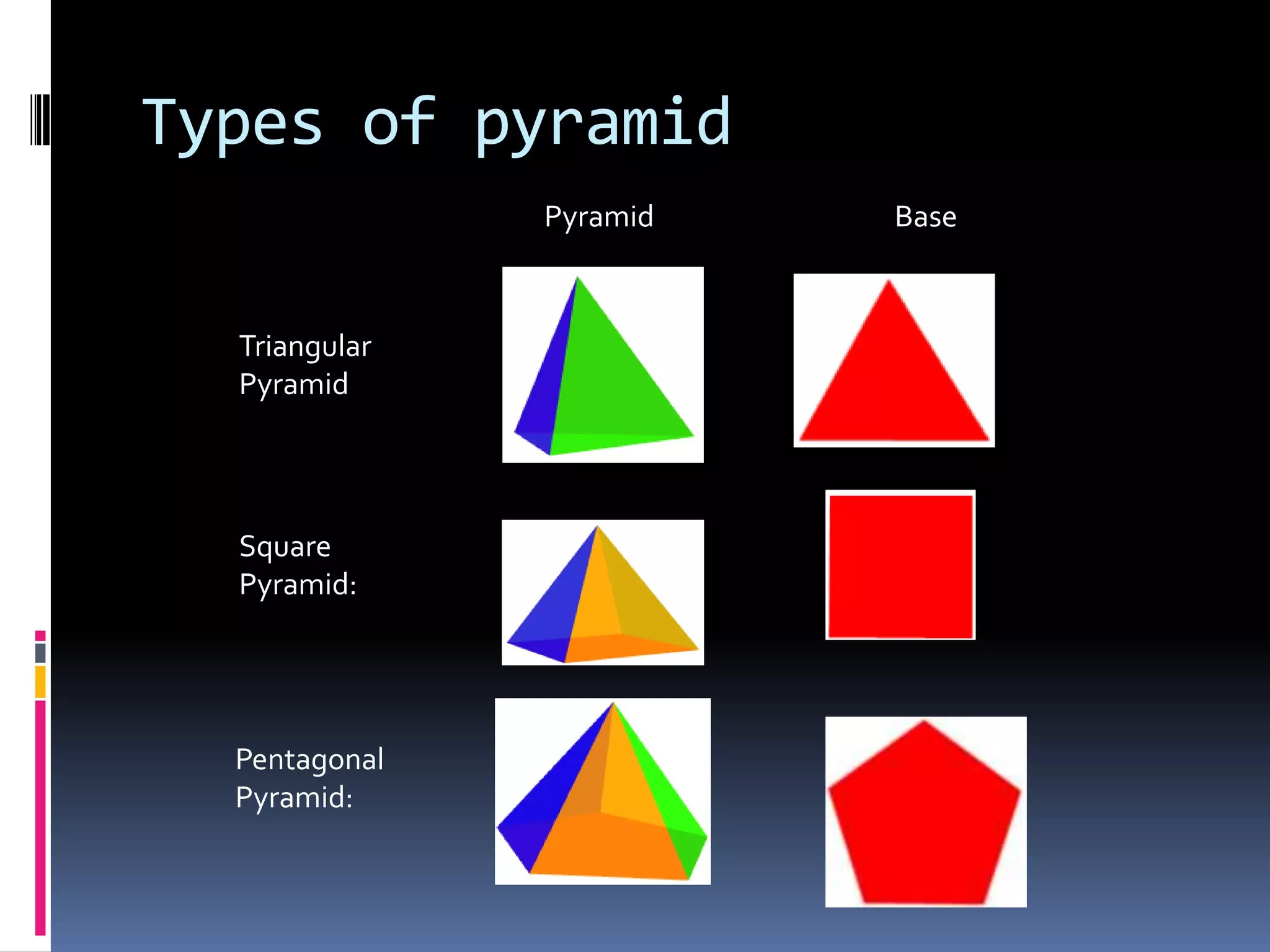
Different types of pyramids include triangular and square pyramids, distinguished by their base shapes.
Non-polyhedra have curved or mixed surfaces. Examples include spheres, cylinders, and cones.
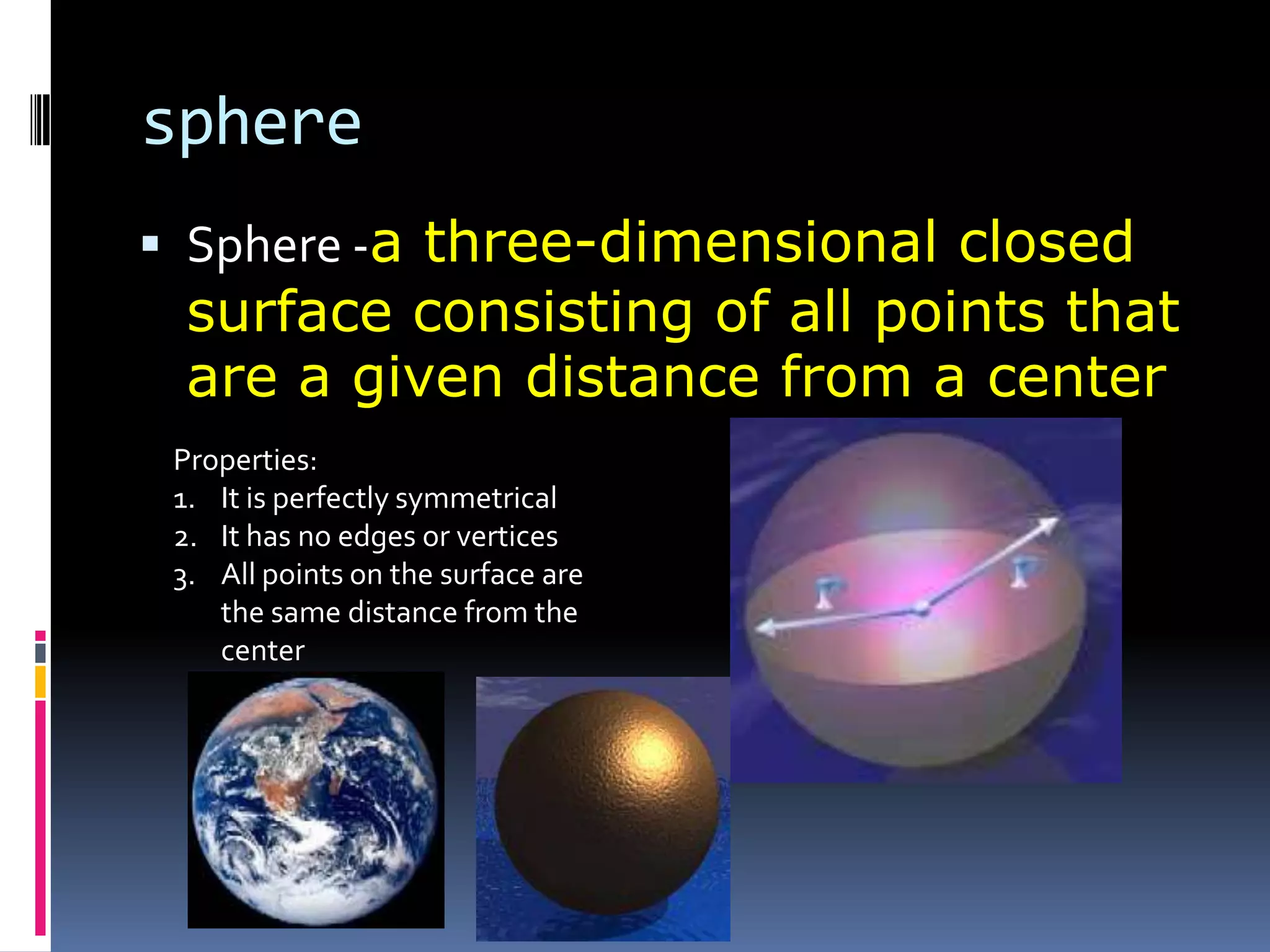
A sphere is a symmetrical three-dimensional shape with no edges or vertices, all points equidistant from the center.
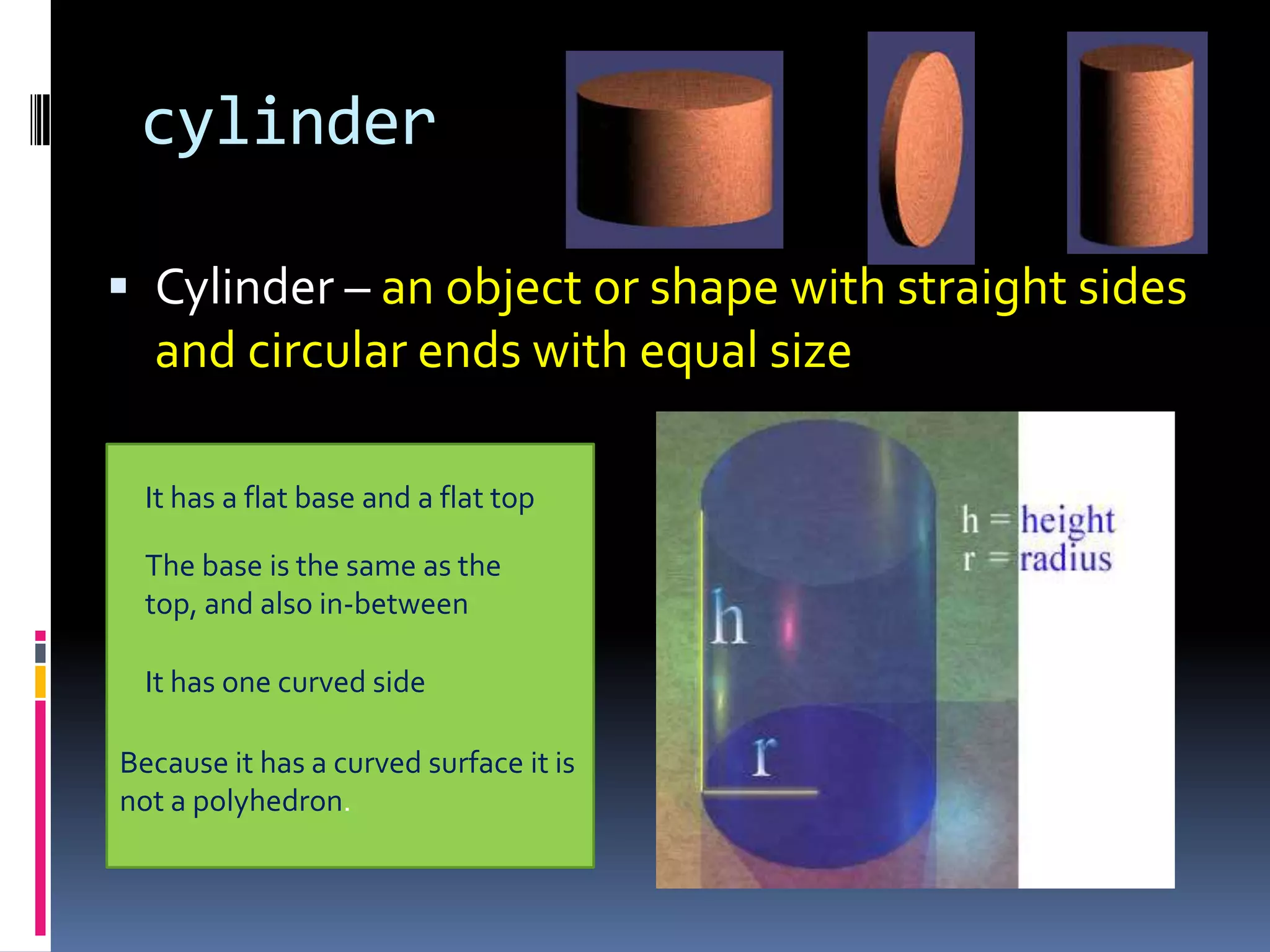
A cylinder has straight sides and circular ends, featuring a flat base and a single curved side.
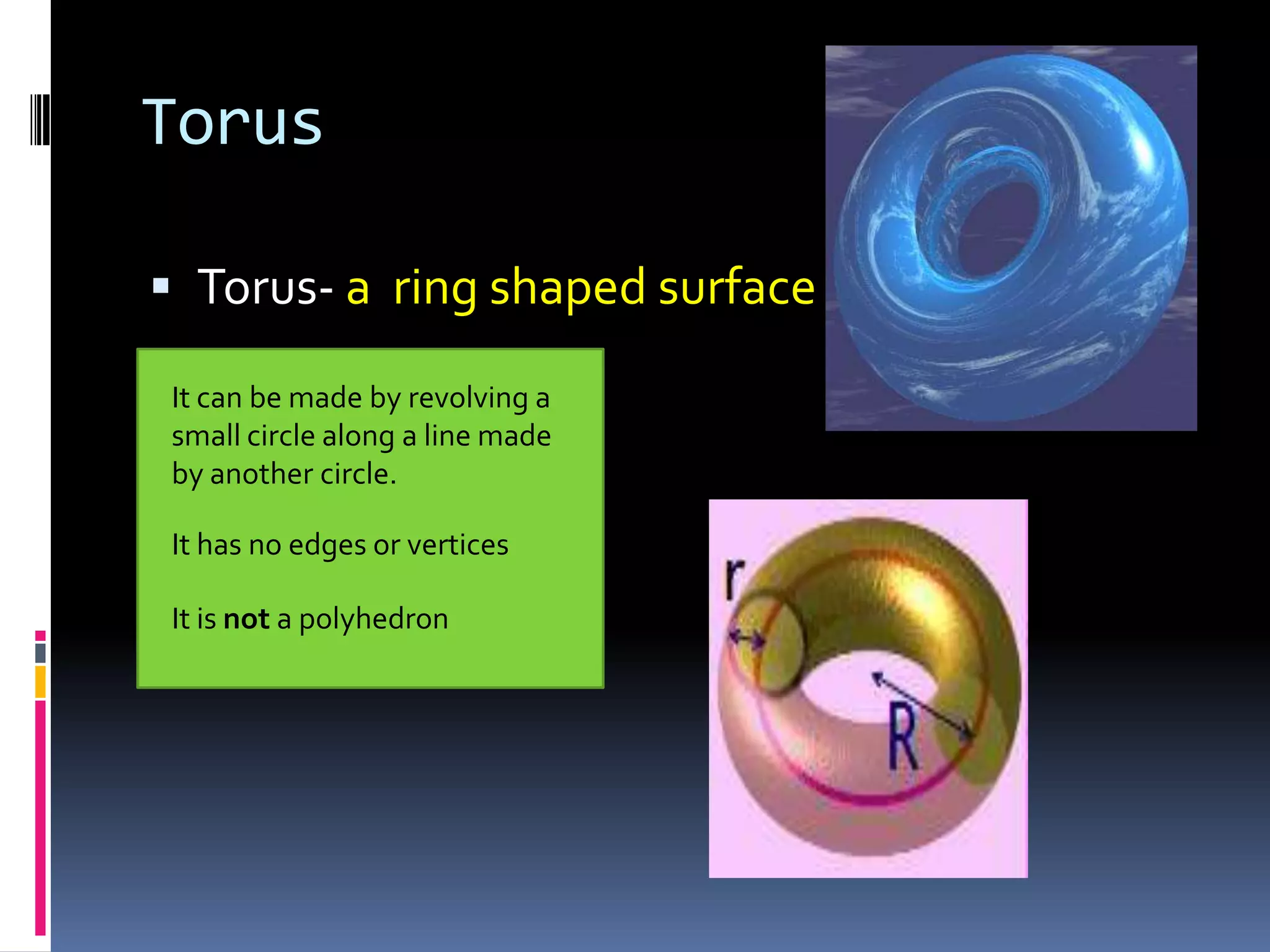
A torus is a ring-shaped surface, generated by revolving a small circle along a line made by another circle.
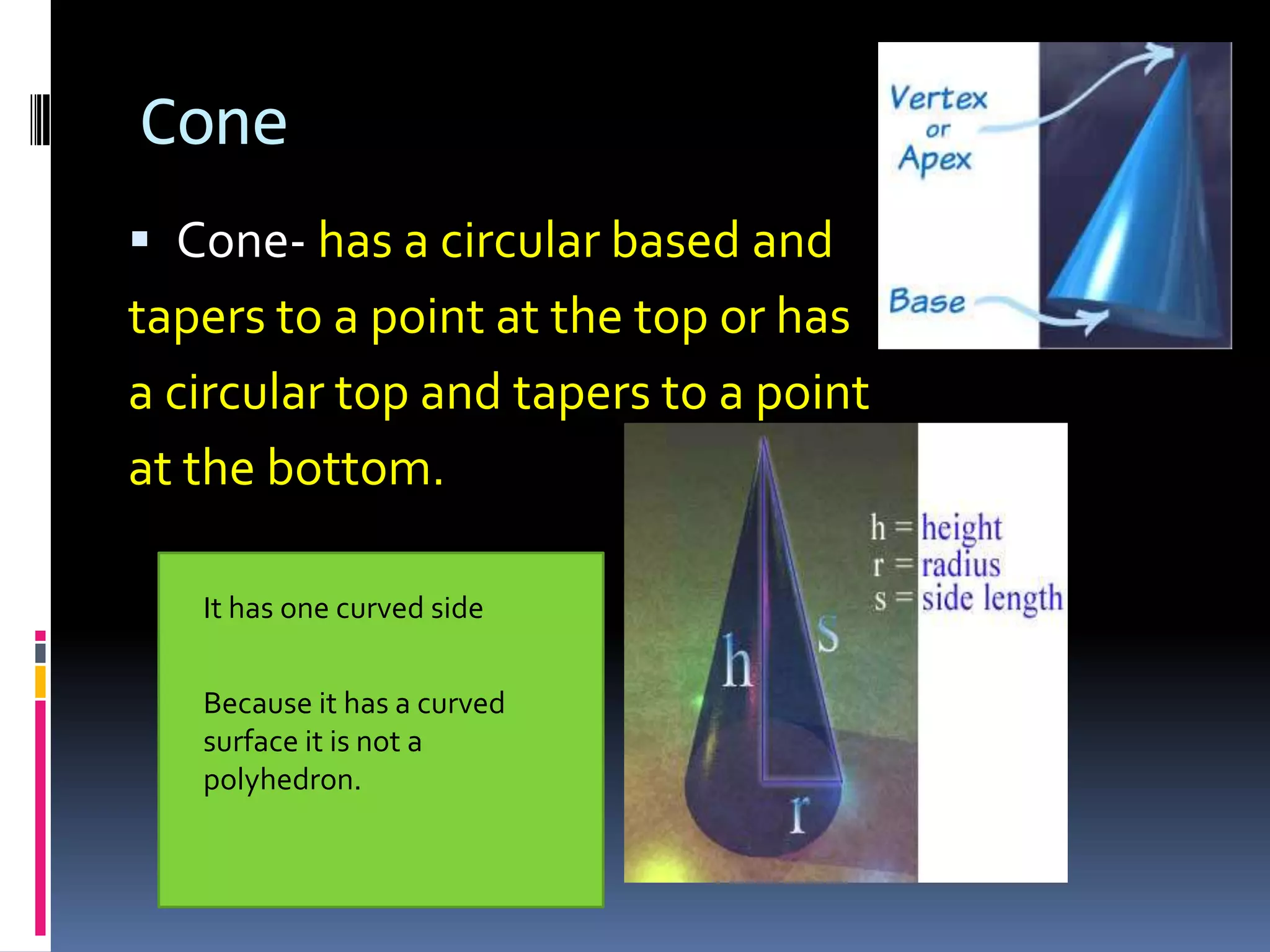
A cone has a circular base tapering to a point, with one curved side, and is not a polyhedron.
Presented by Neil B. Memita from San Isidro High School, highlighting the educational context of the material.


