Downloaded 1,110 times

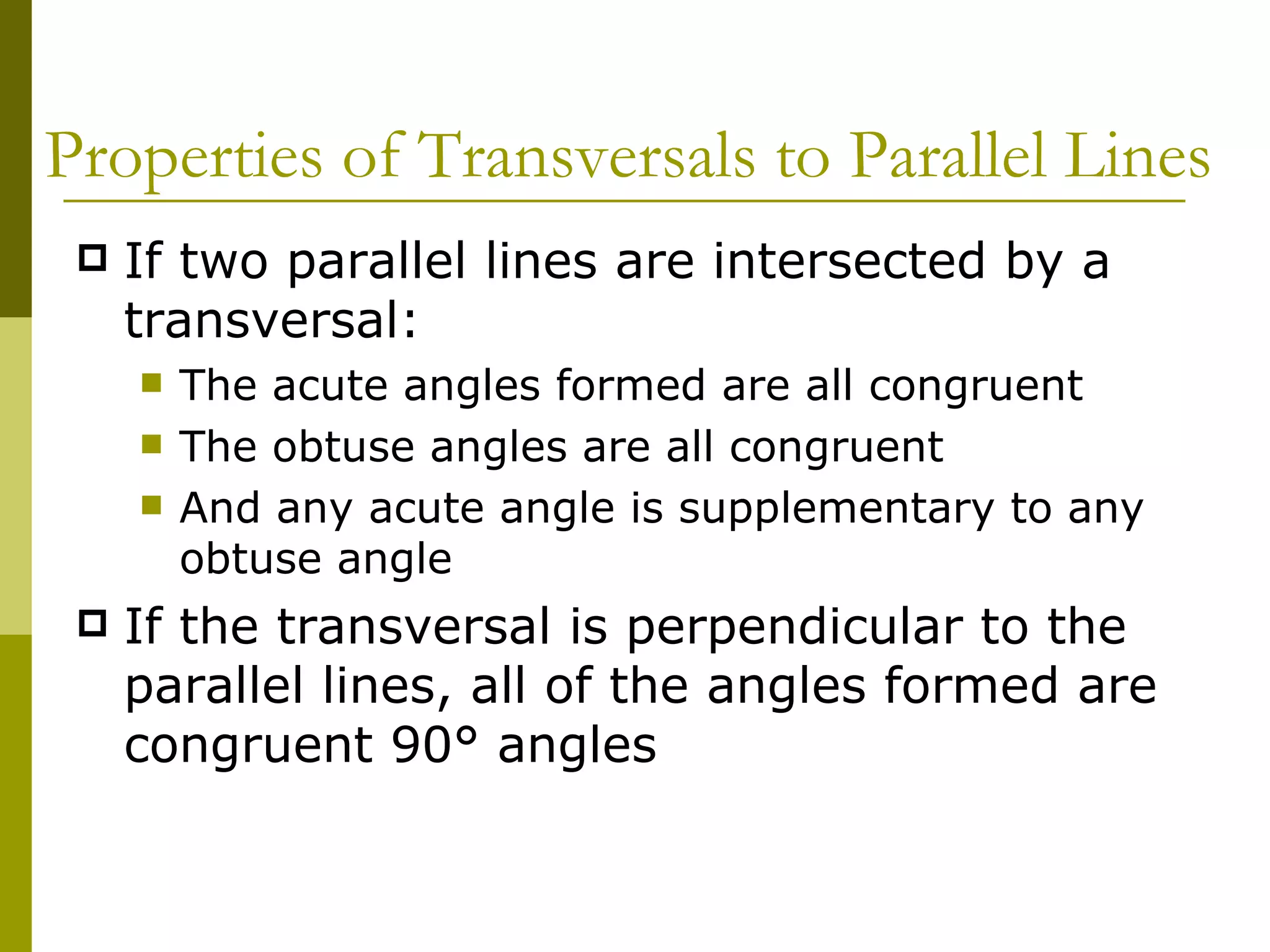











This document provides an overview of key concepts in plane geometry covered in Chapter 5, including points, lines, planes, angles, parallel and perpendicular lines, triangles, polygons, coordinate geometry, congruence, transformations, and tessellations. Specific topics discussed include classifying angles, properties of parallel lines cut by a transversal, the triangle sum theorem, types of triangles and polygons, finding total angle measures of polygons, and using coordinate geometry. Homework problems are provided at the end of sections for additional practice.
Overview of Plane Geometry topics: Points, Lines, Planes, Angles, Triangles, Polygons, Congruence and their geometric transformations.
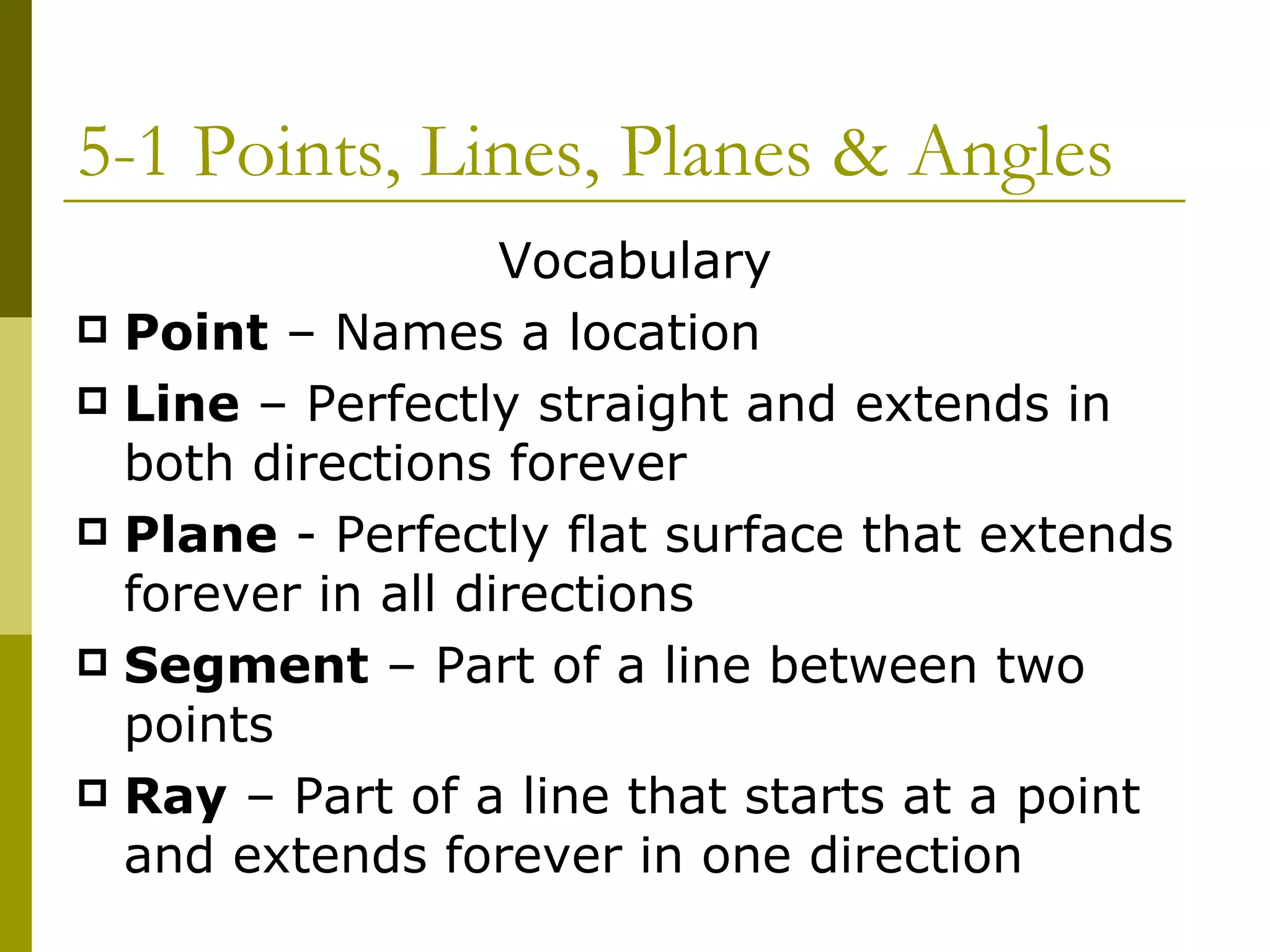
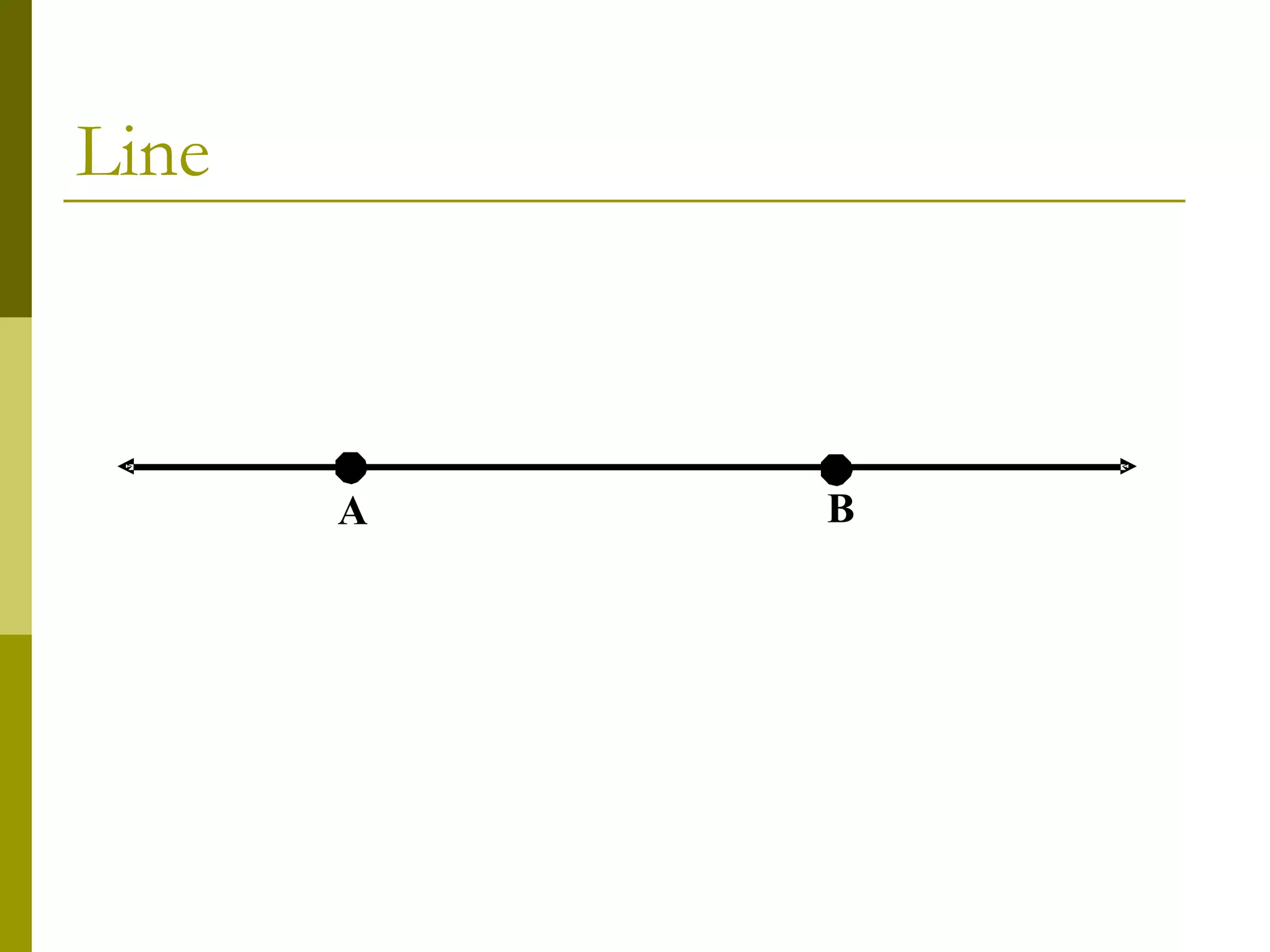
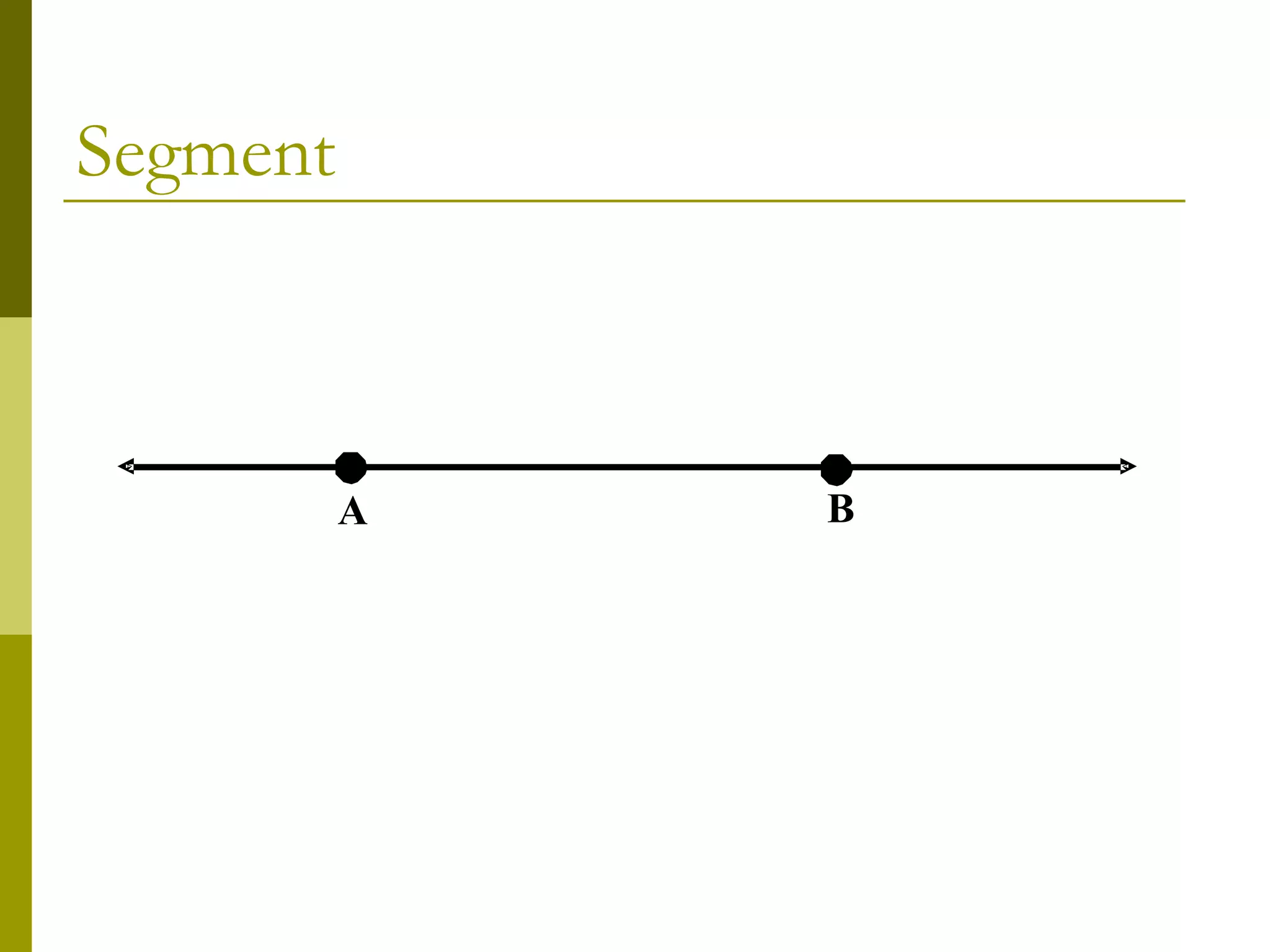
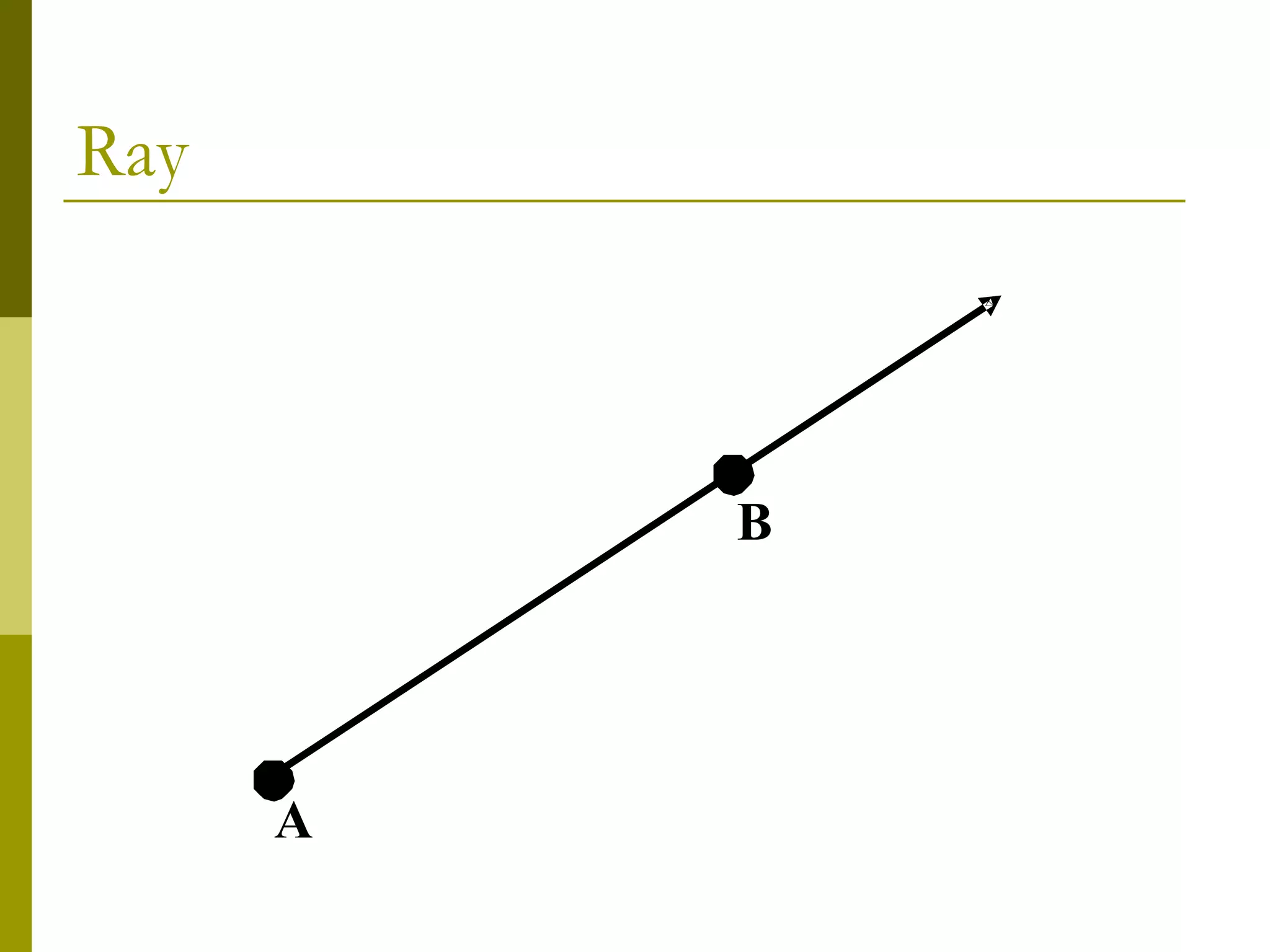
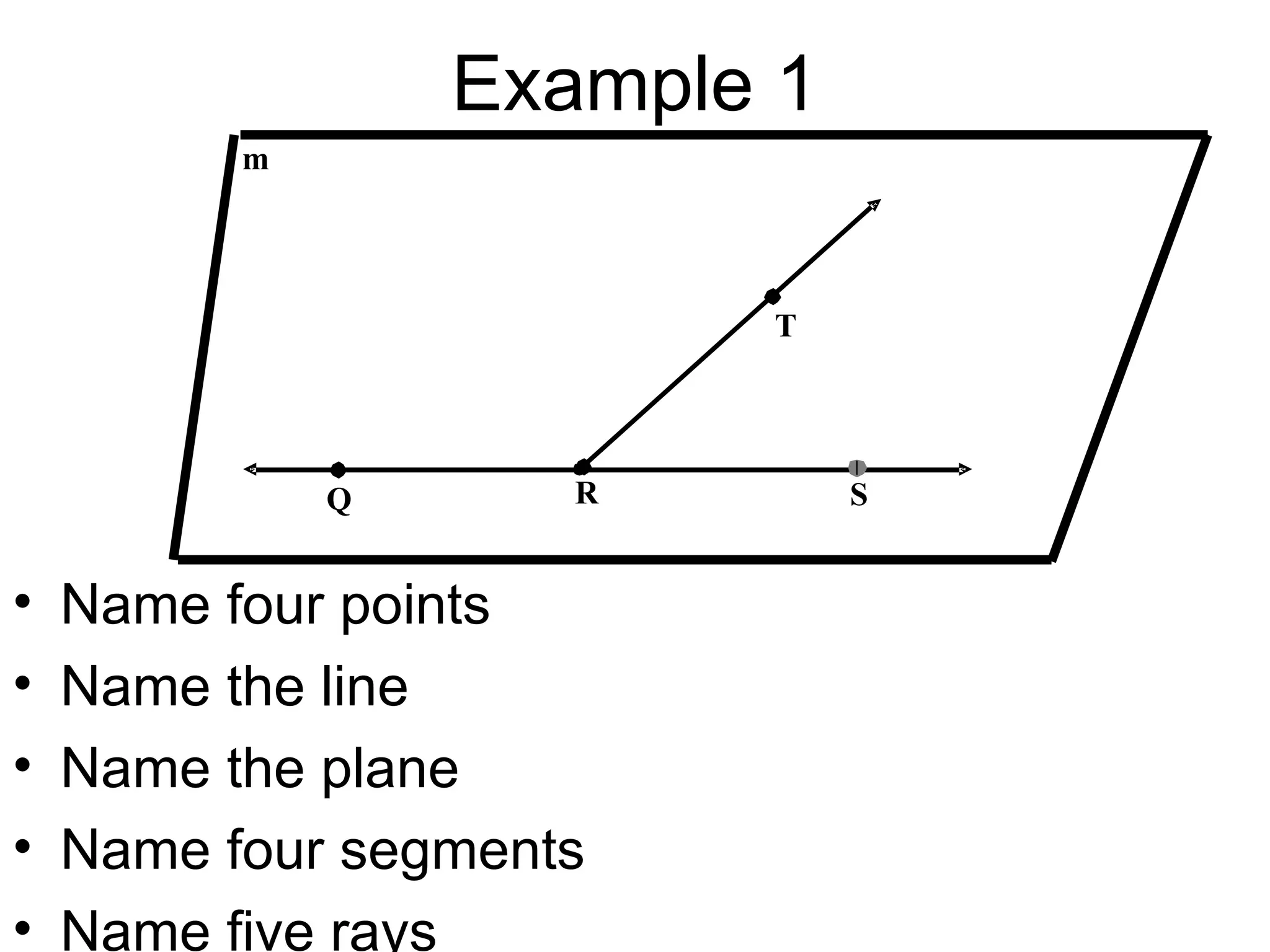
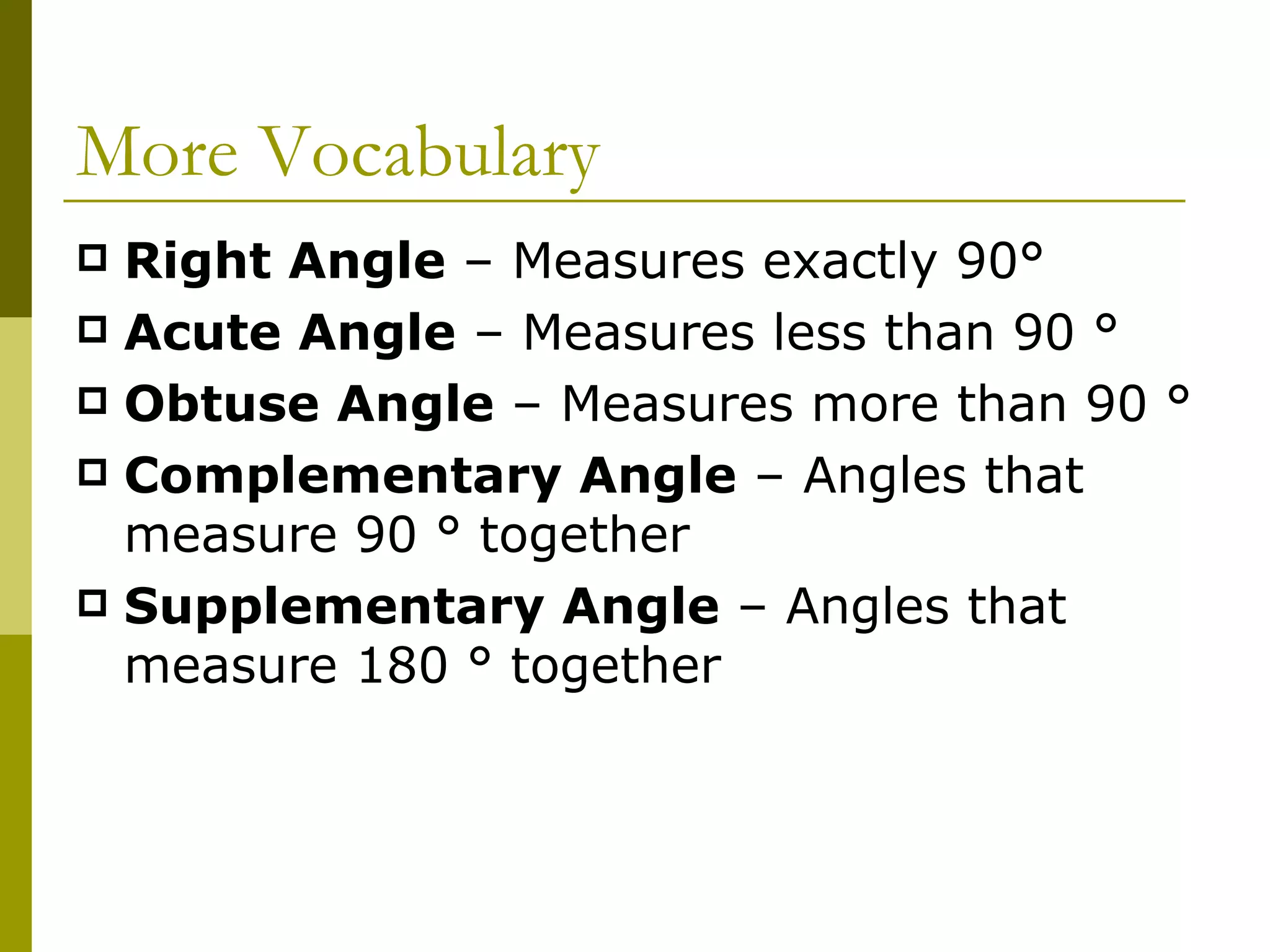
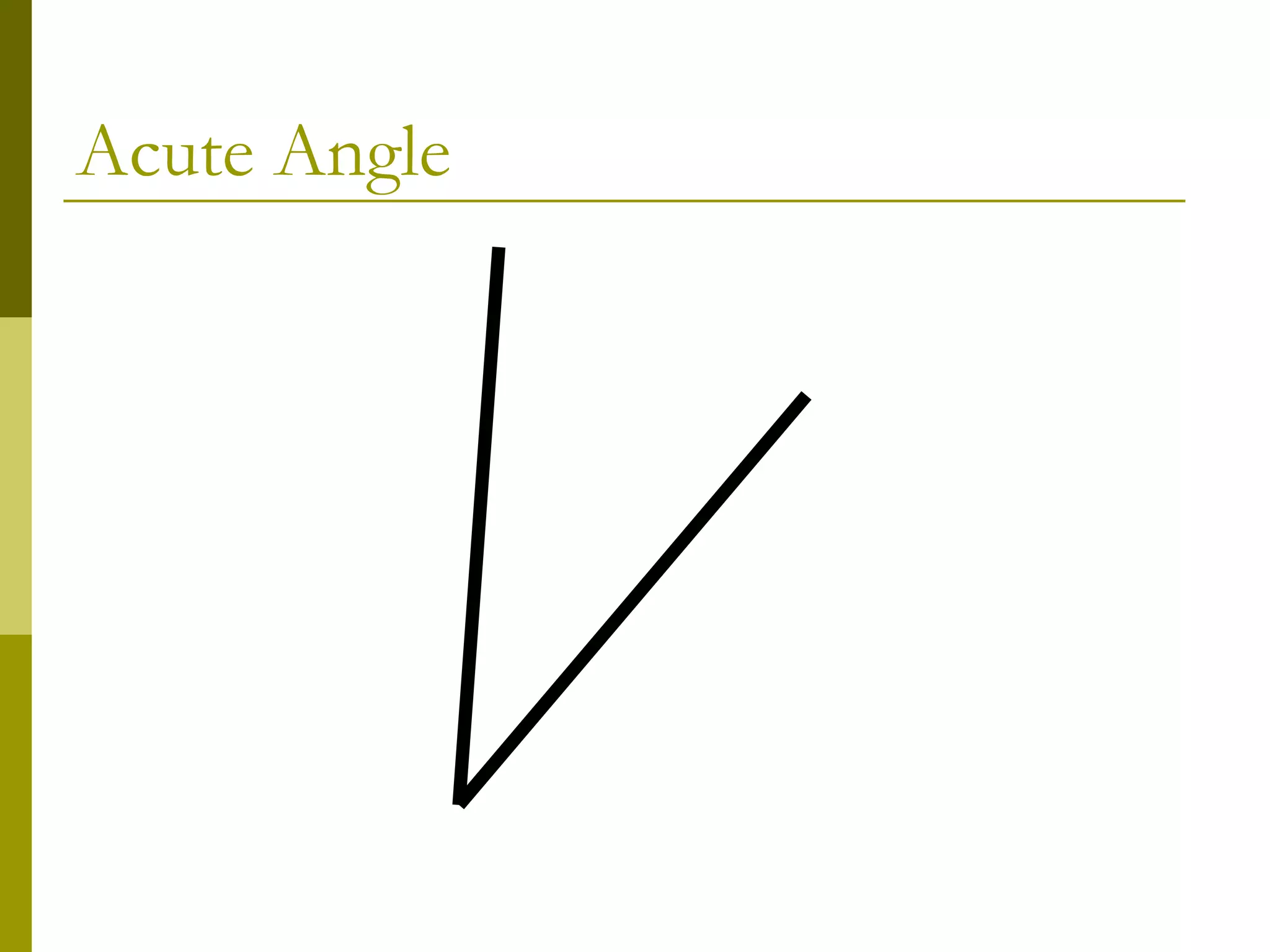
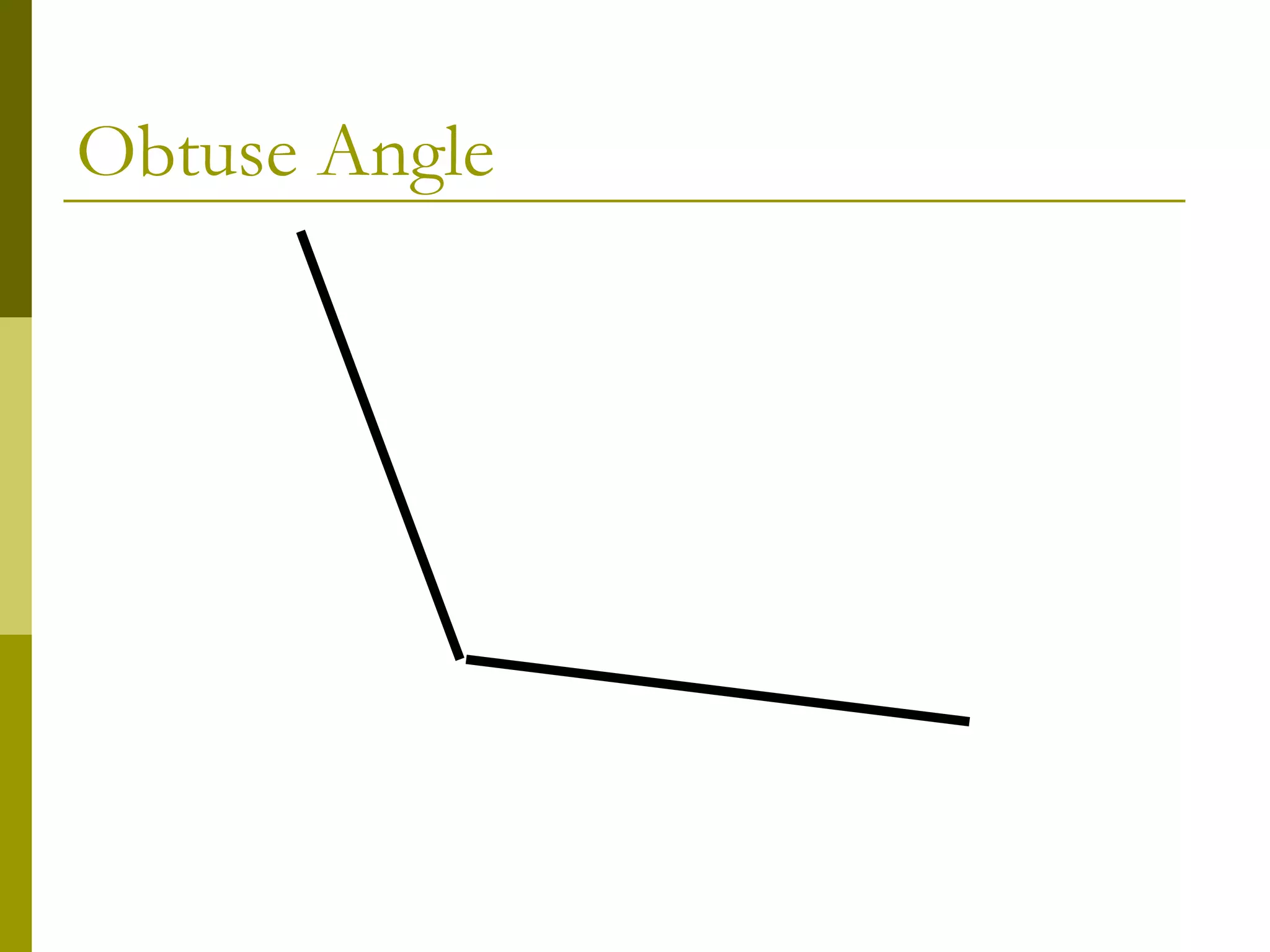
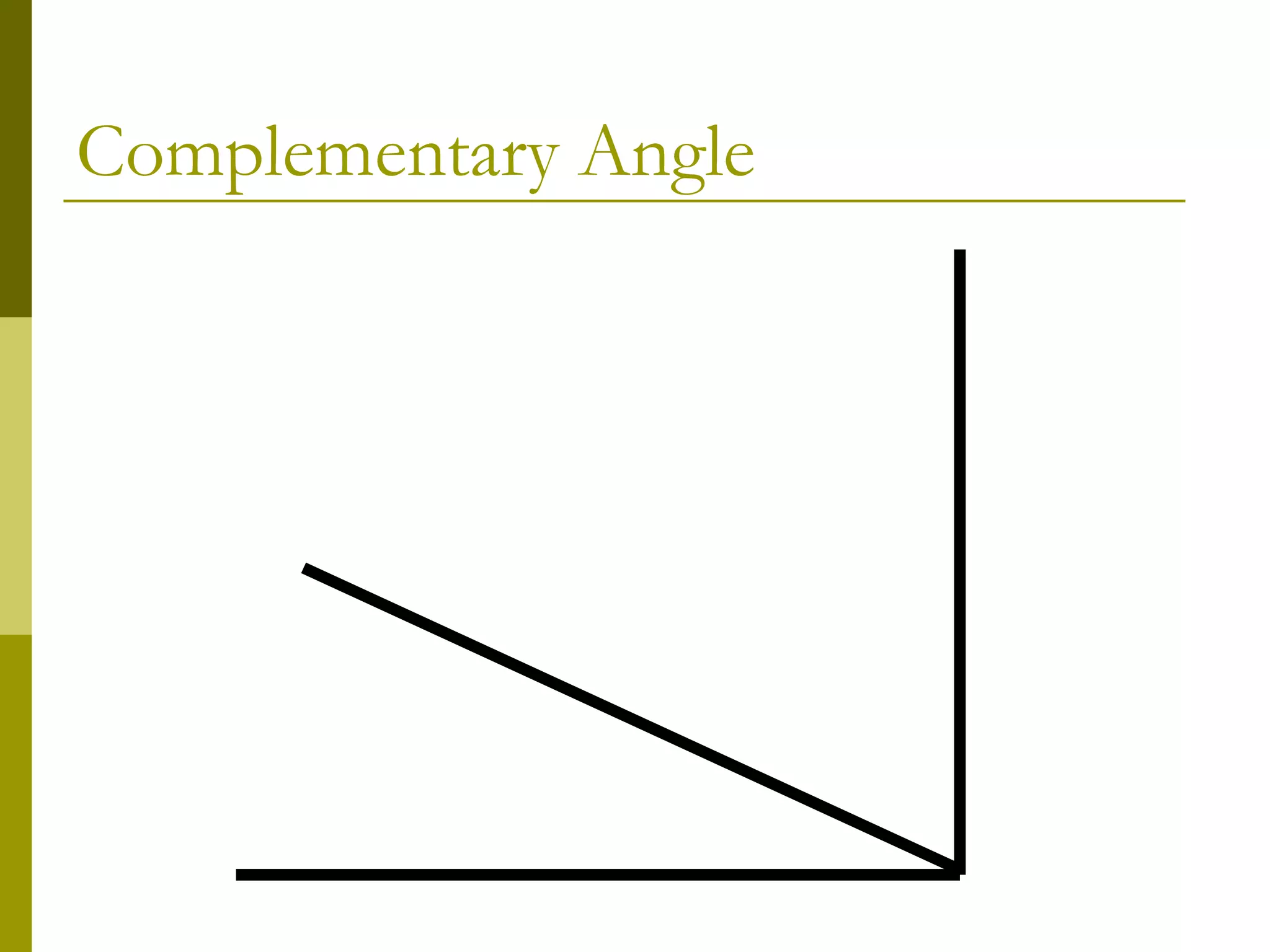
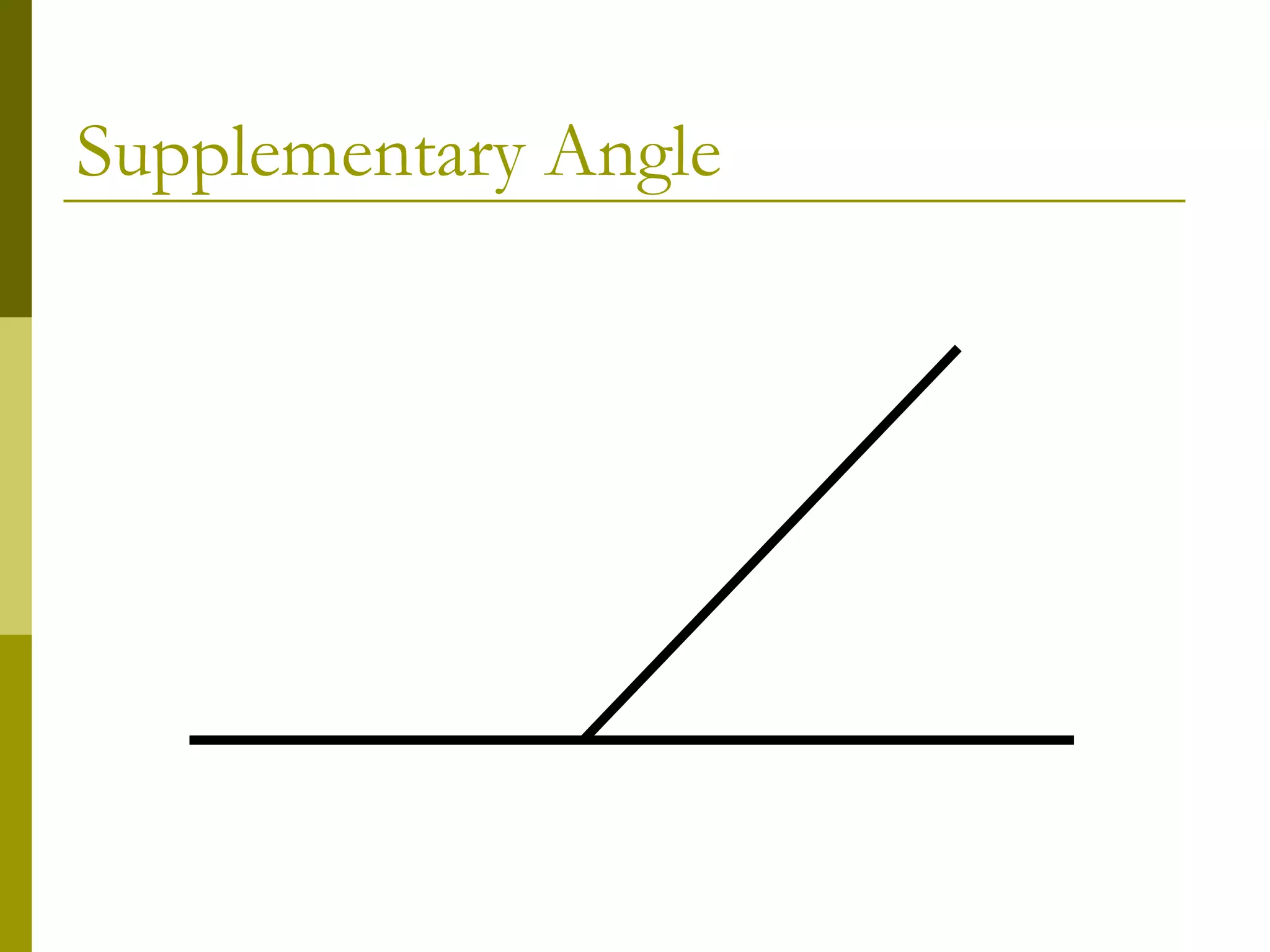
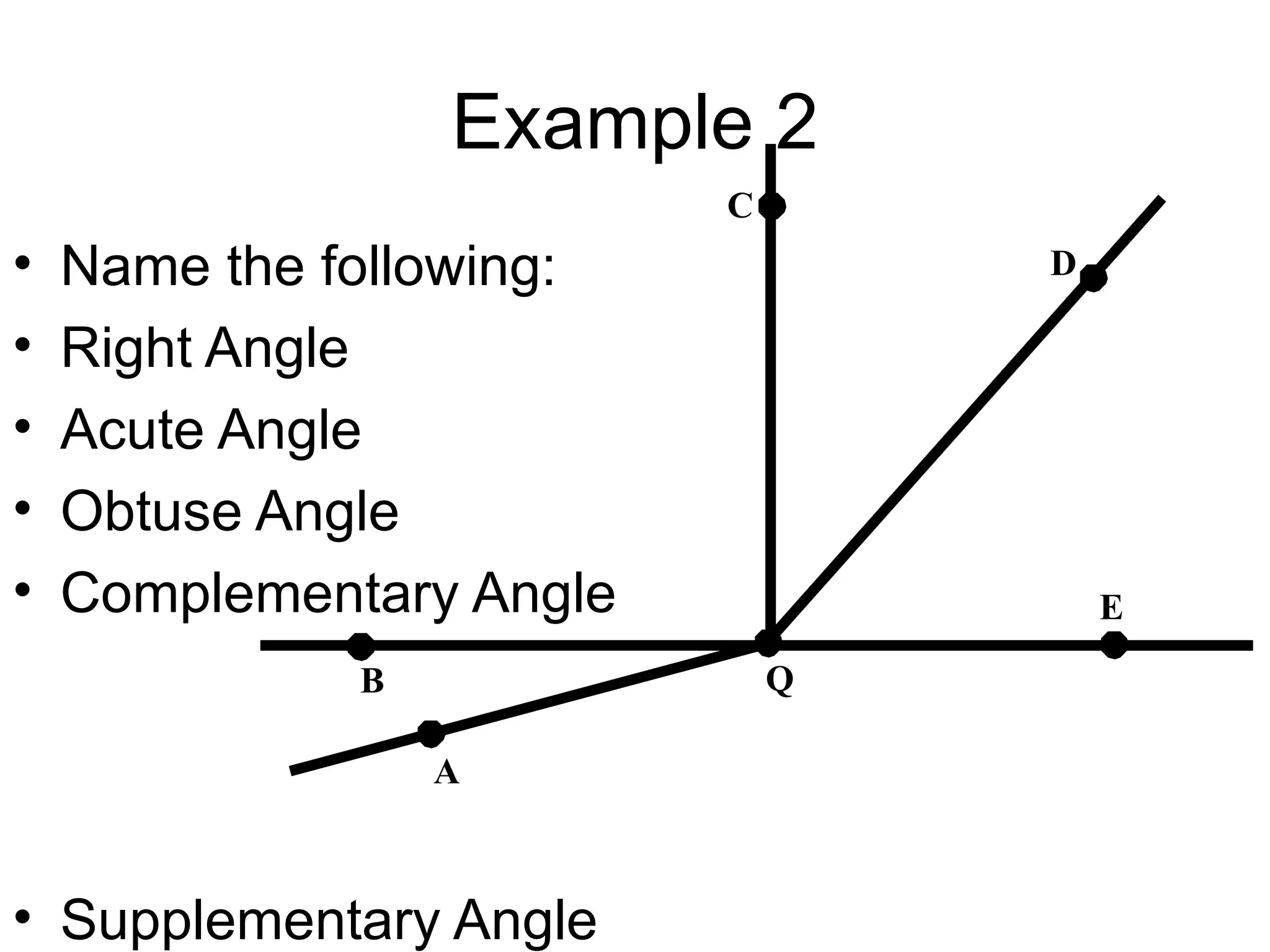
Definitions of basic geometric terms: Points, Lines, Segments, Rays, Right, Acute, Obtuse, Complementary, and Supplementary Angles.
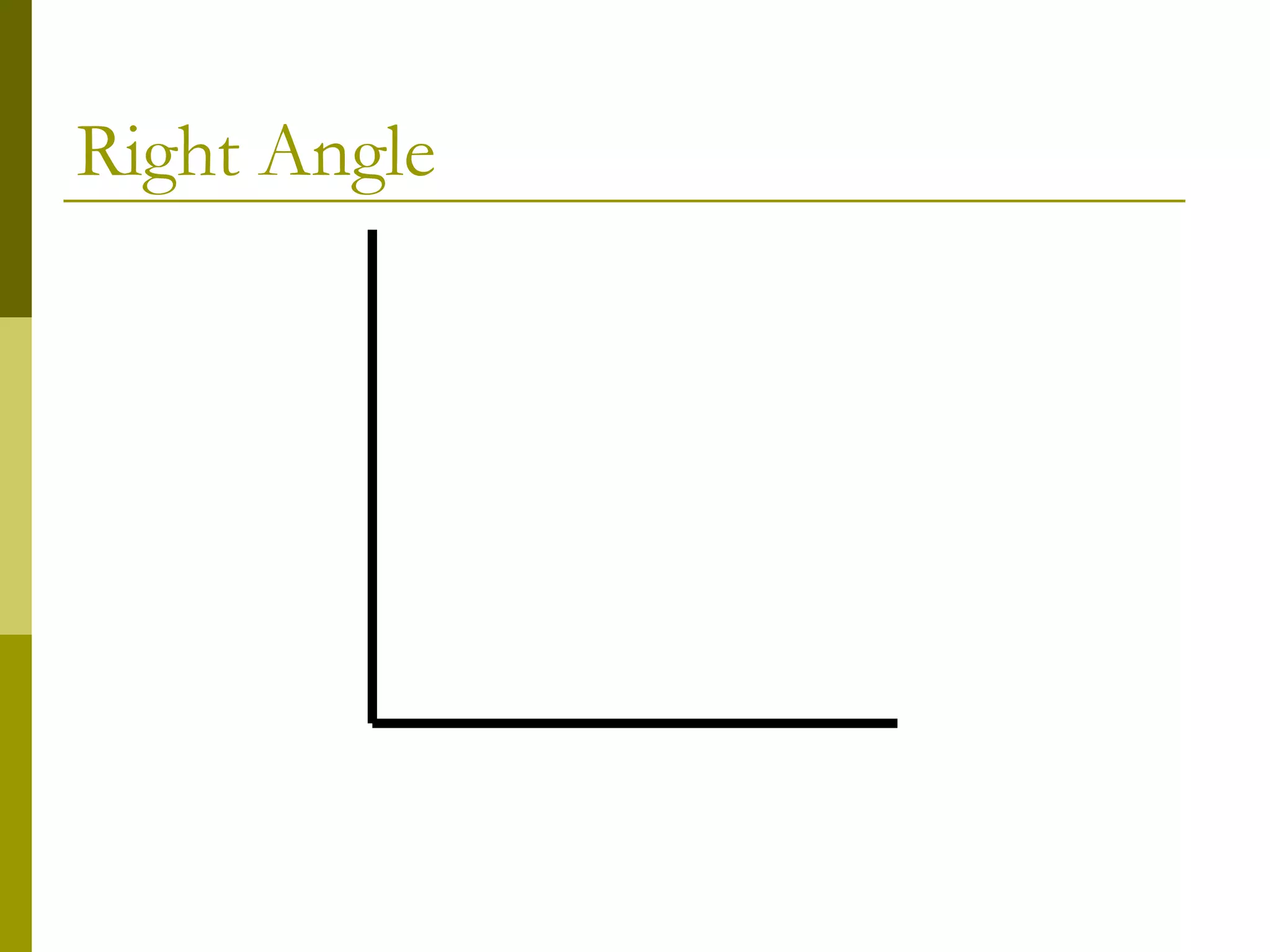
Identification and properties of angles: Right, Acute, Obtuse, Complementary, and Supplementary angles with examples.
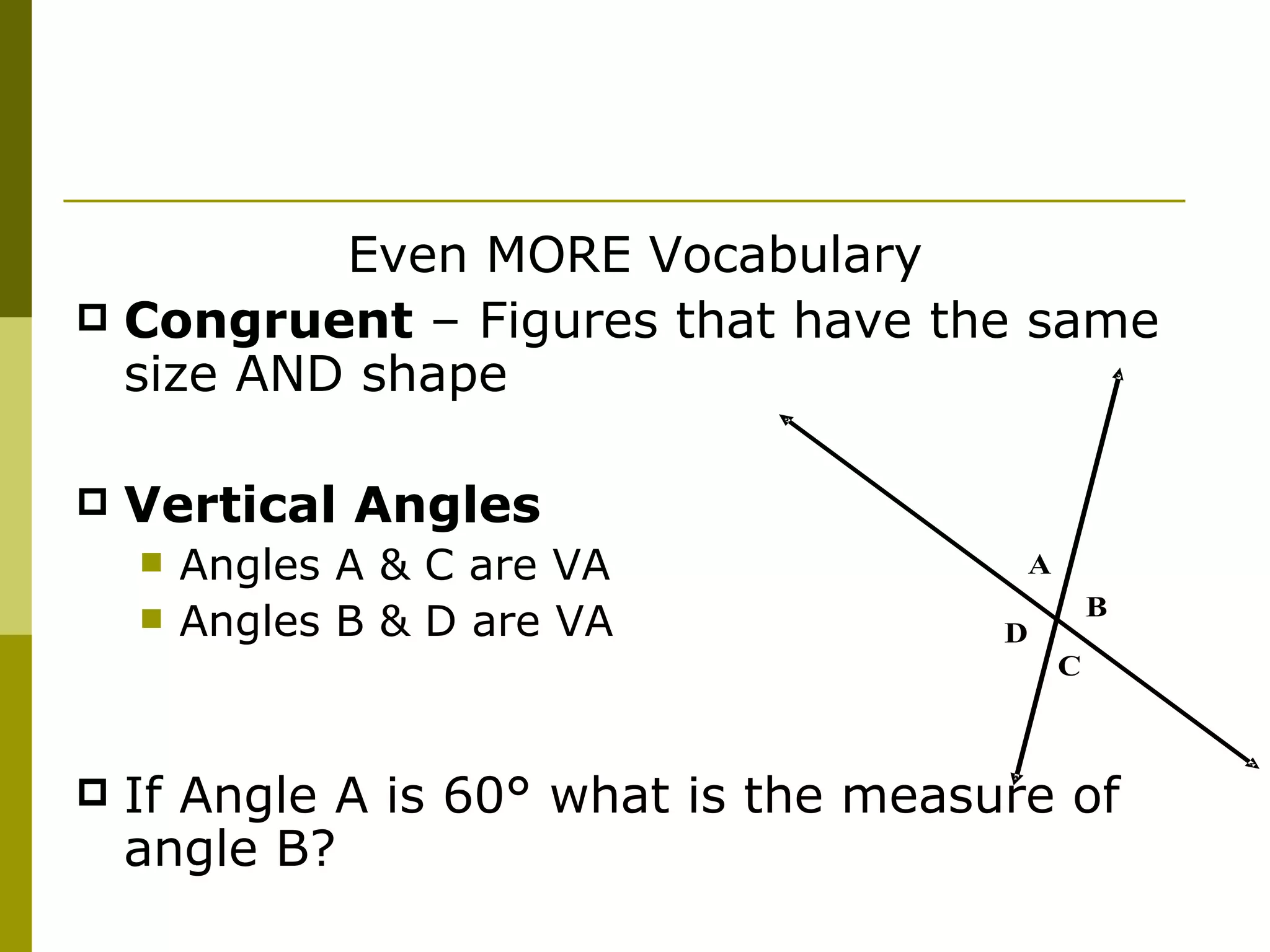
Understanding congruent angles and vertical angles, including example problems to determine angle measures.
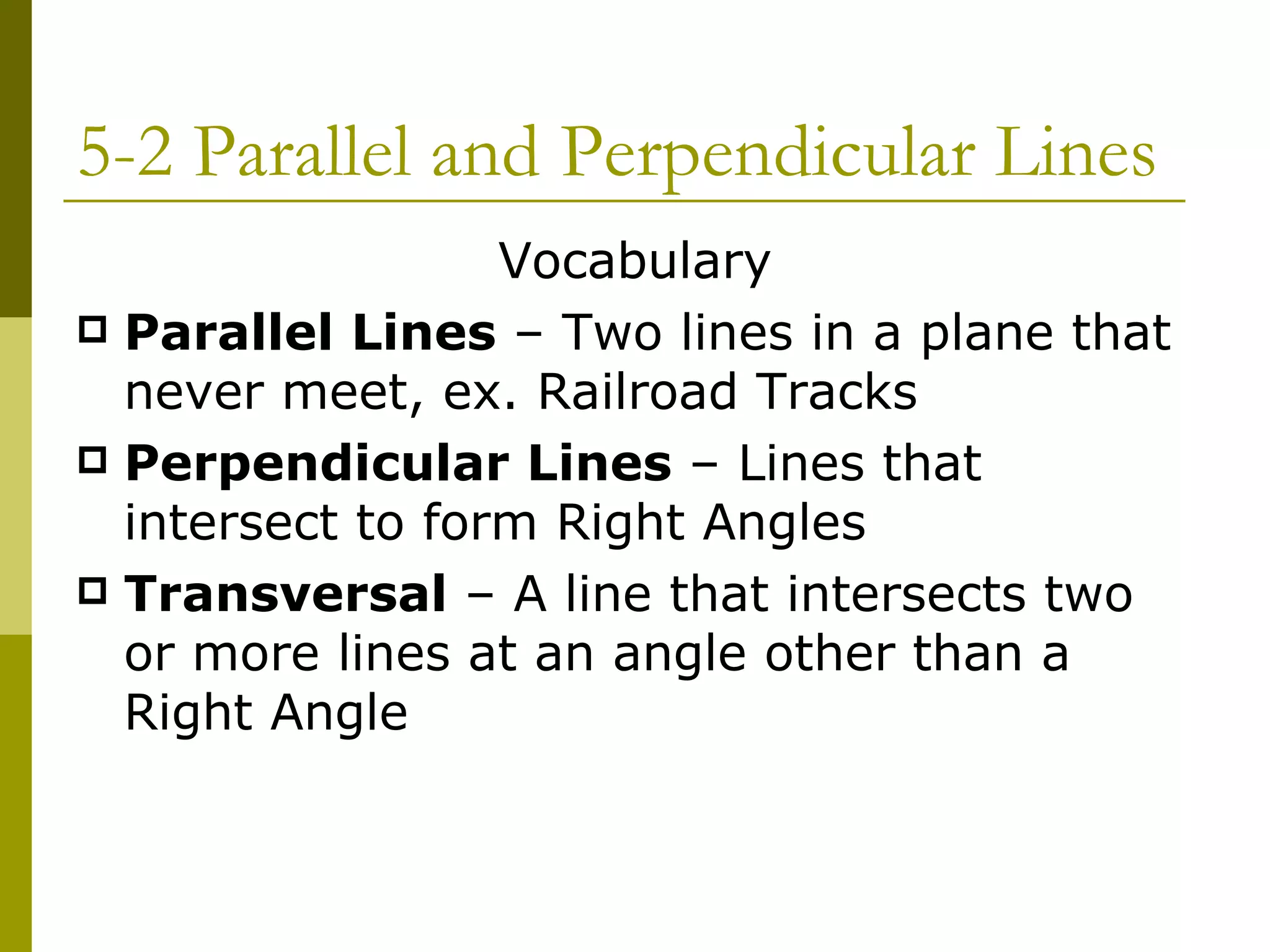
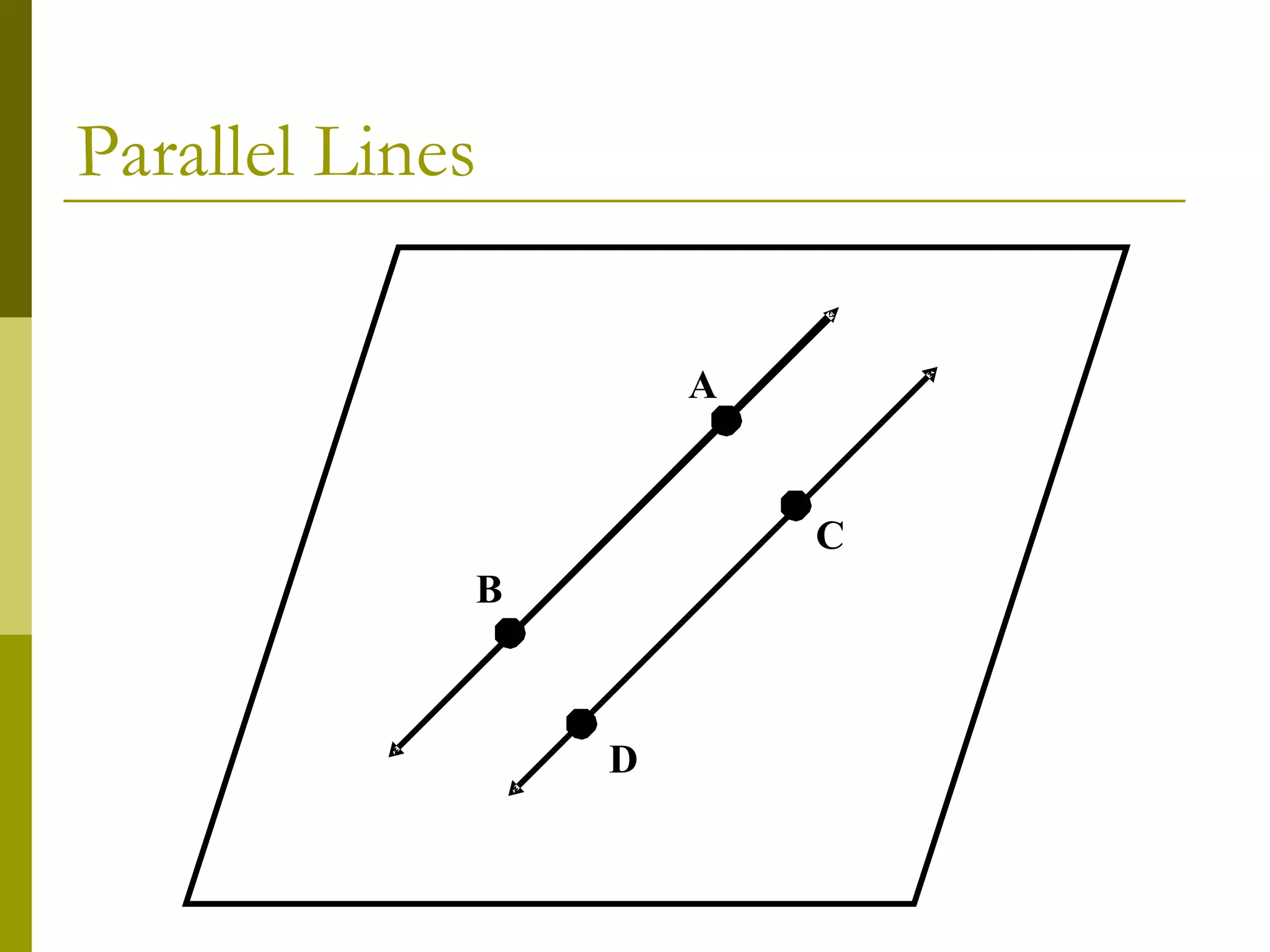
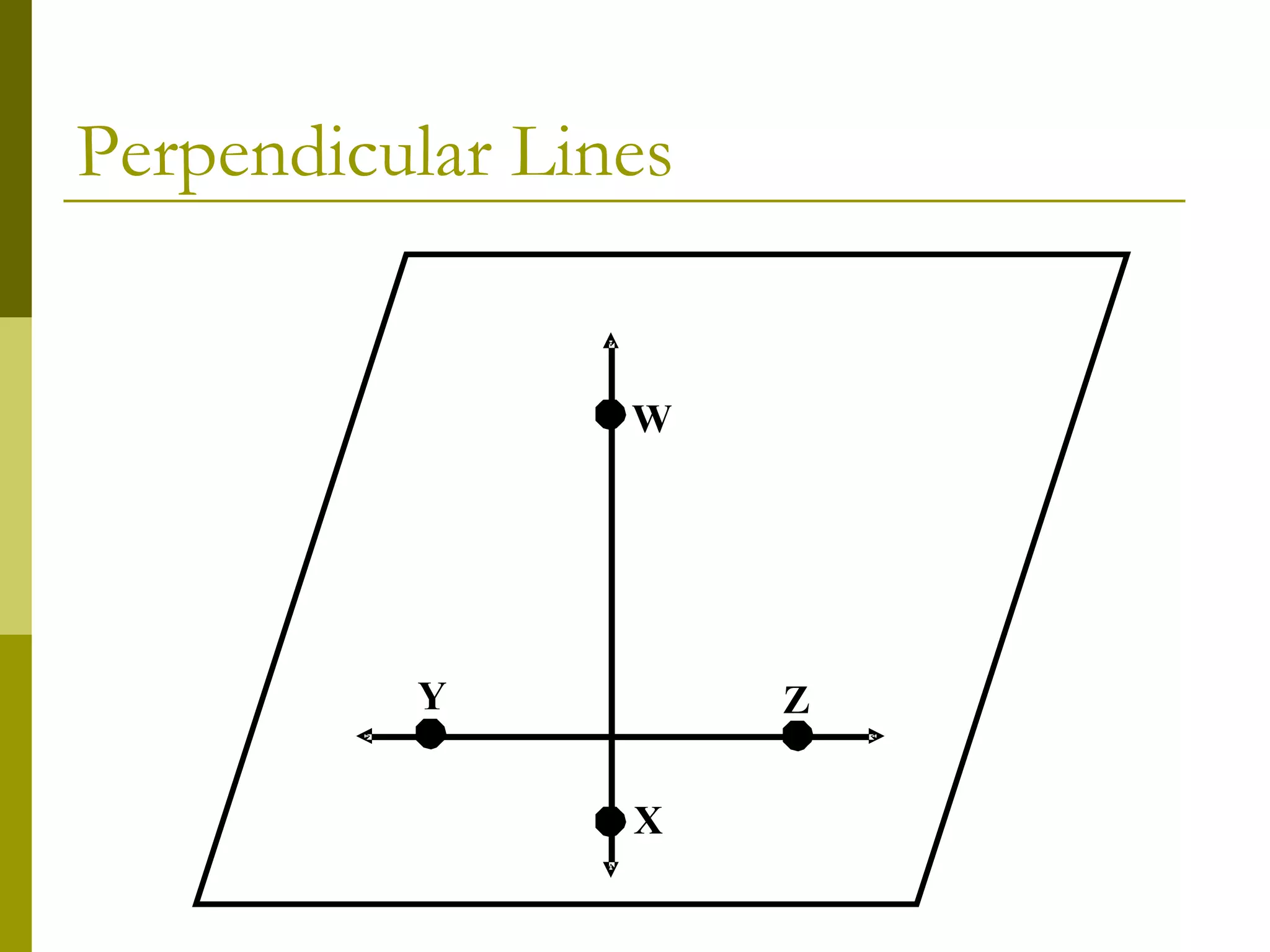
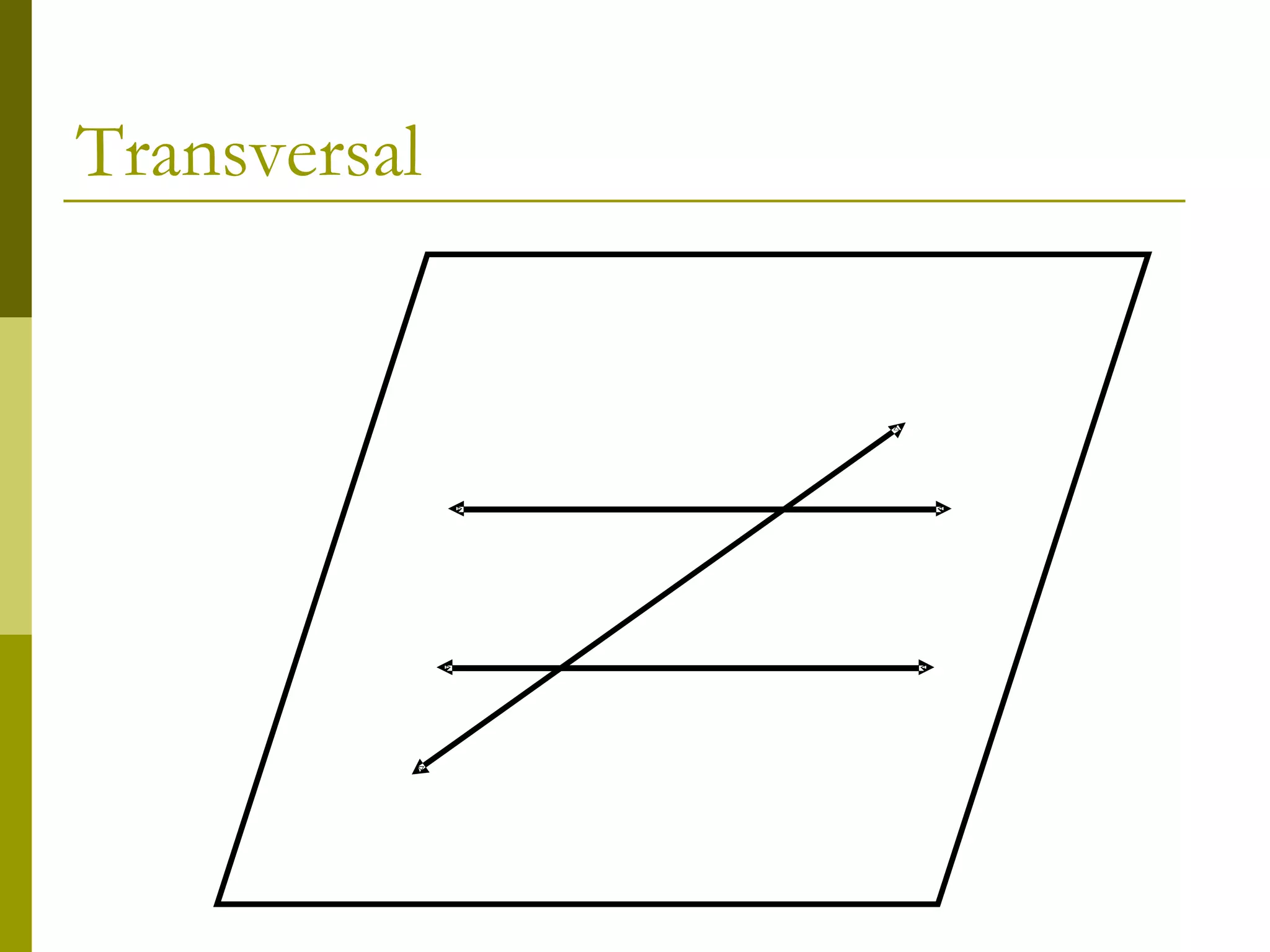
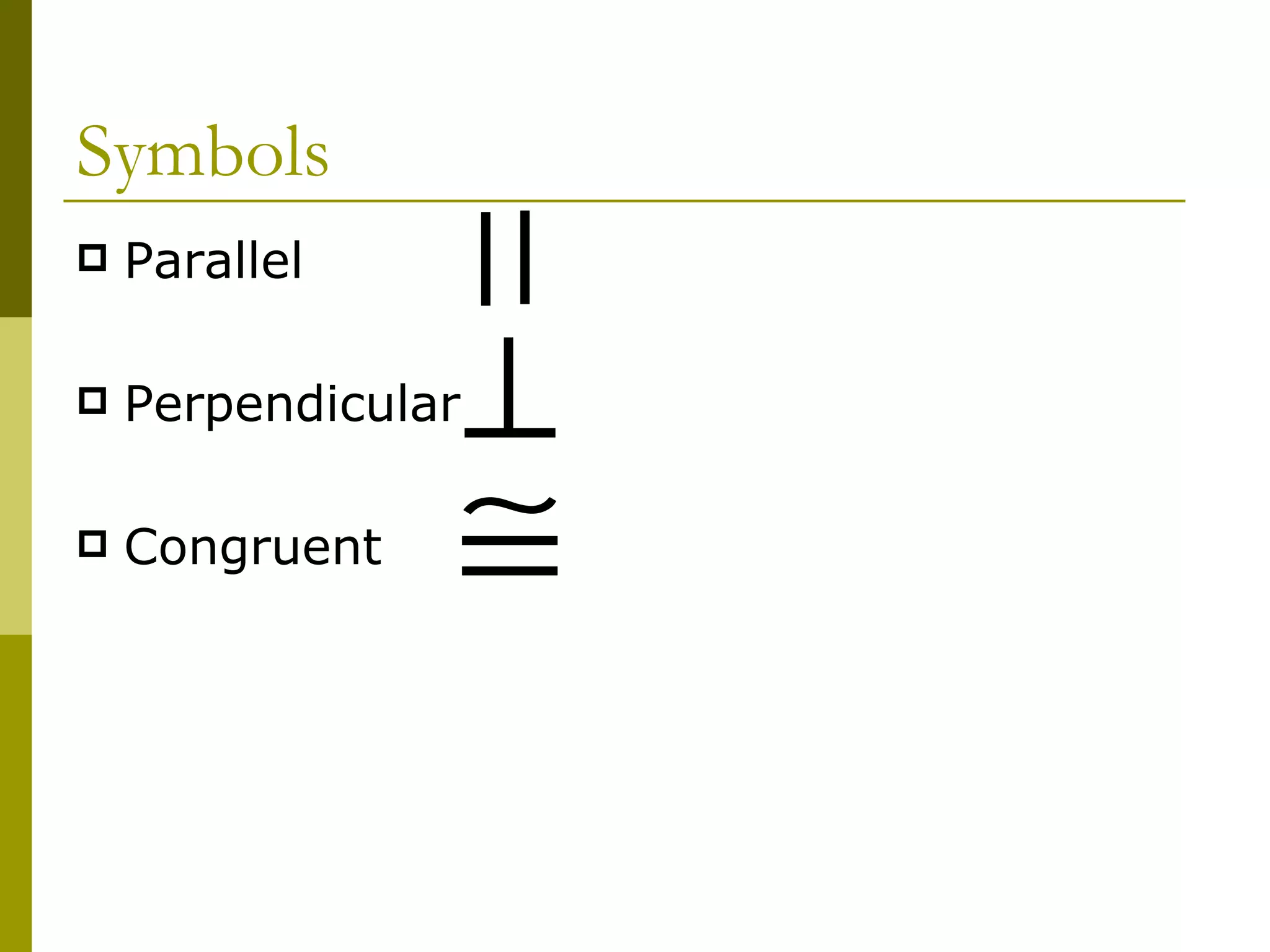
Concepts of Parallel and Perpendicular lines, the definition of Transversal, and properties derived from them.
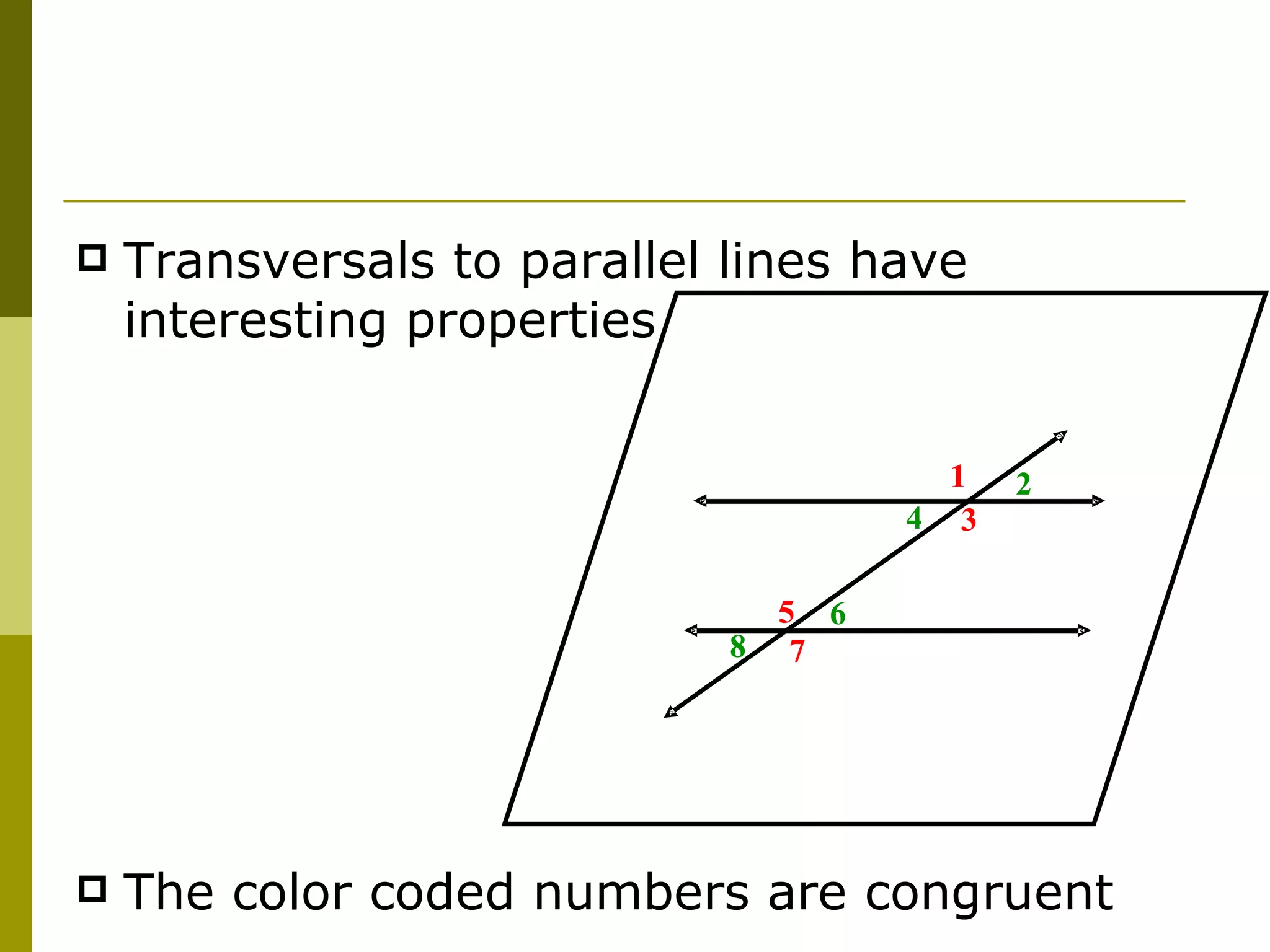
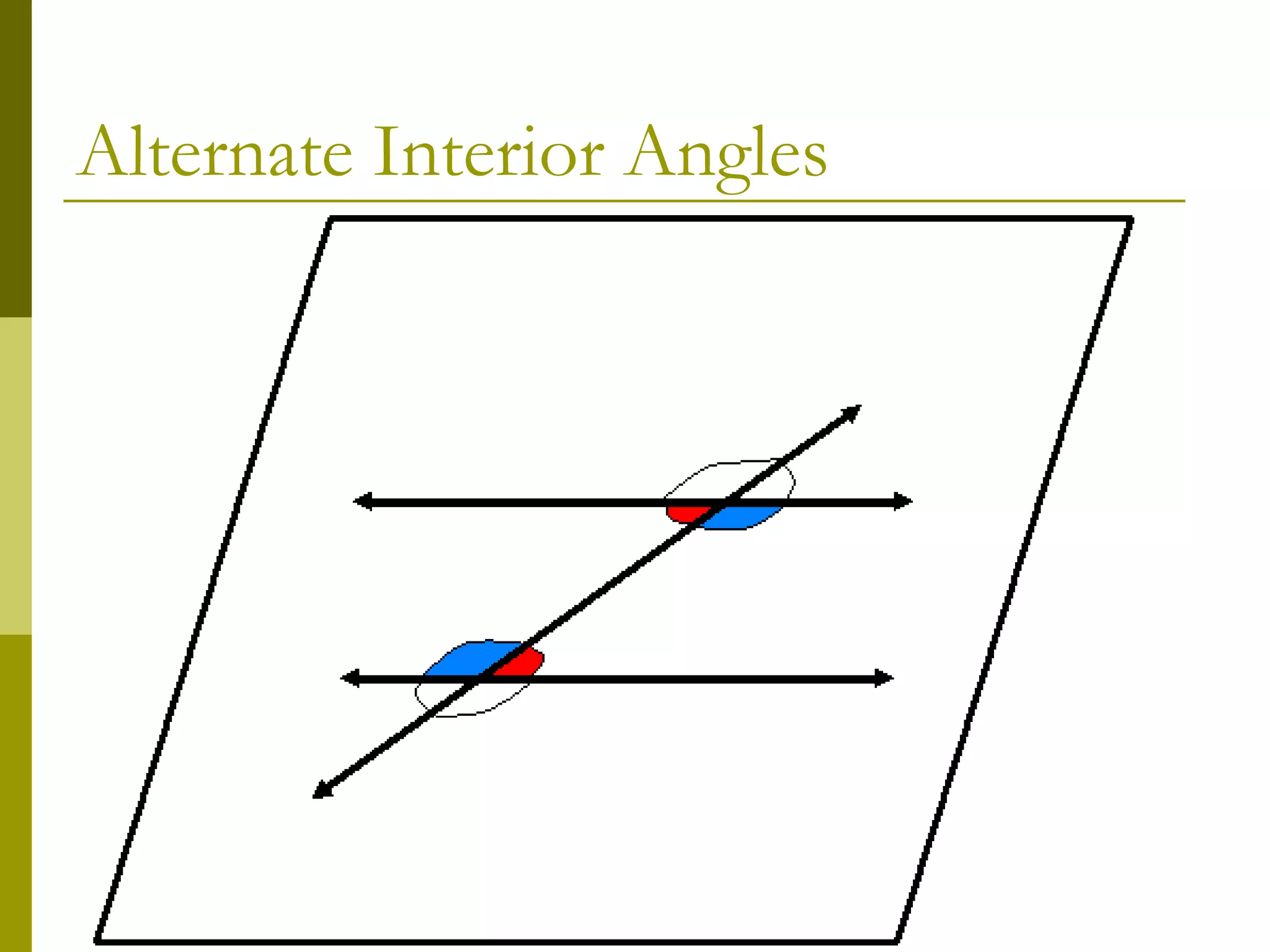
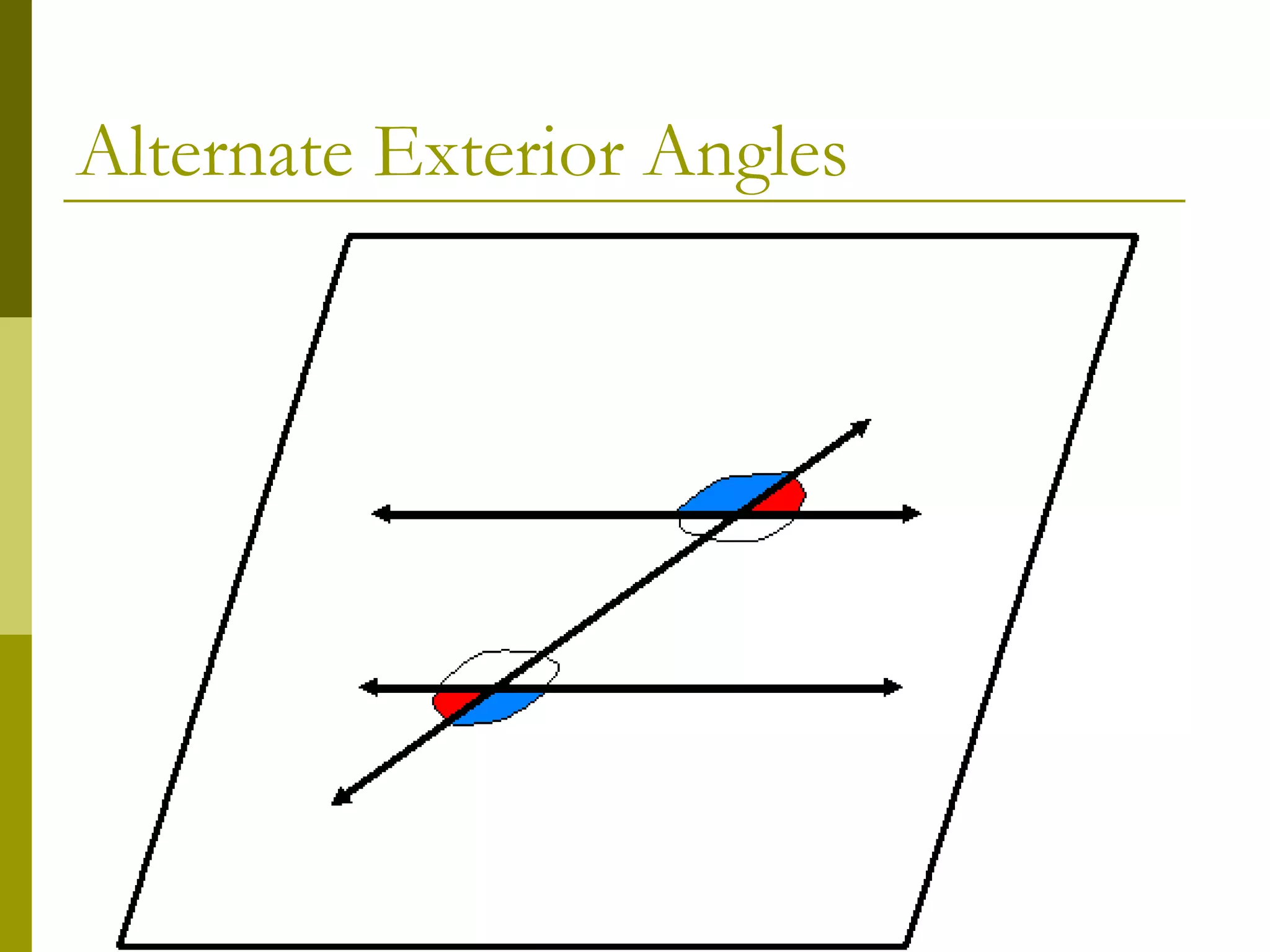
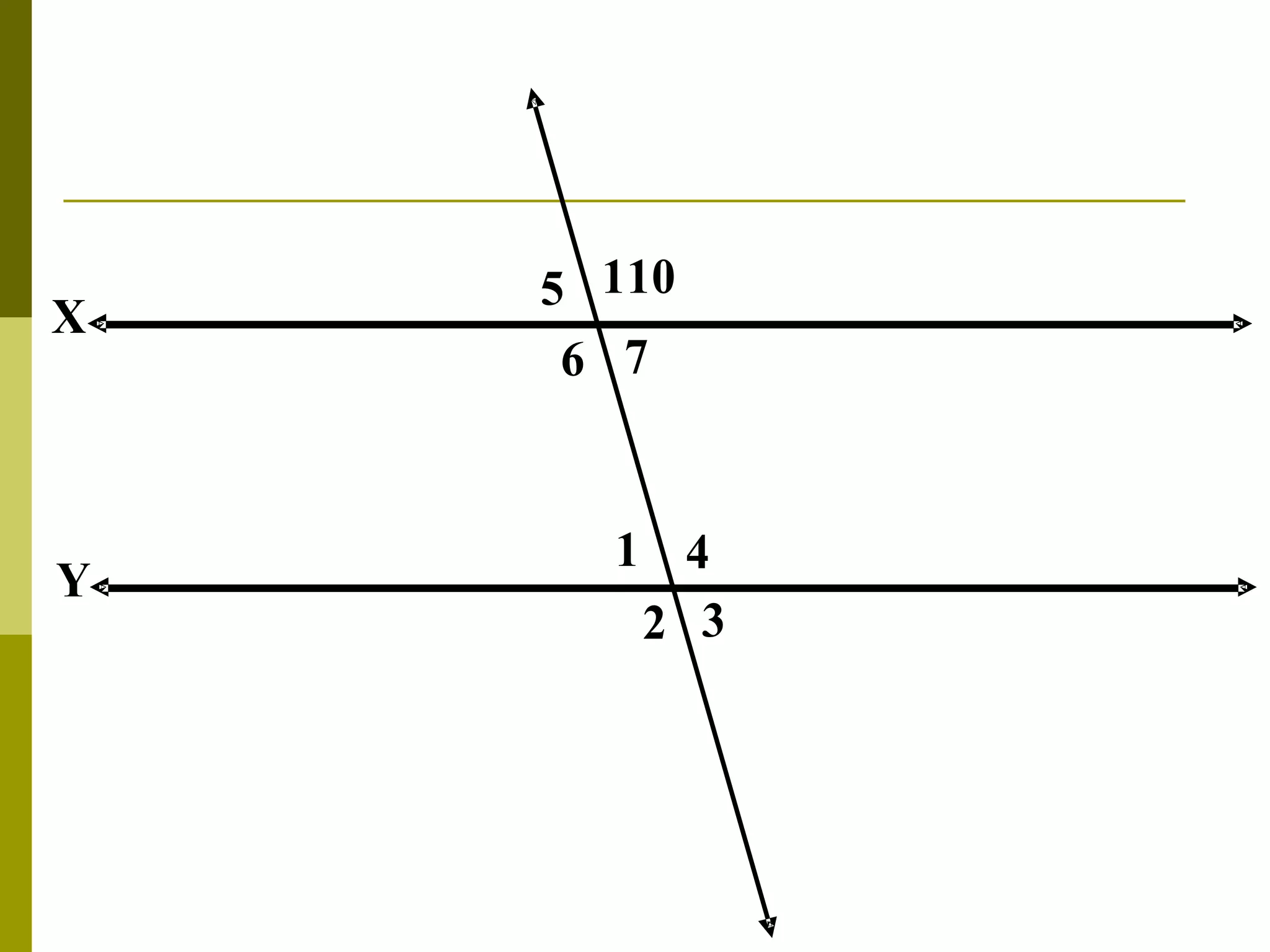
Exploring properties of angles formed by a transversal intersecting parallel lines including alternate and corresponding angles.
Practice problems for finding angle measures with a focus on parallel lines and transversals.
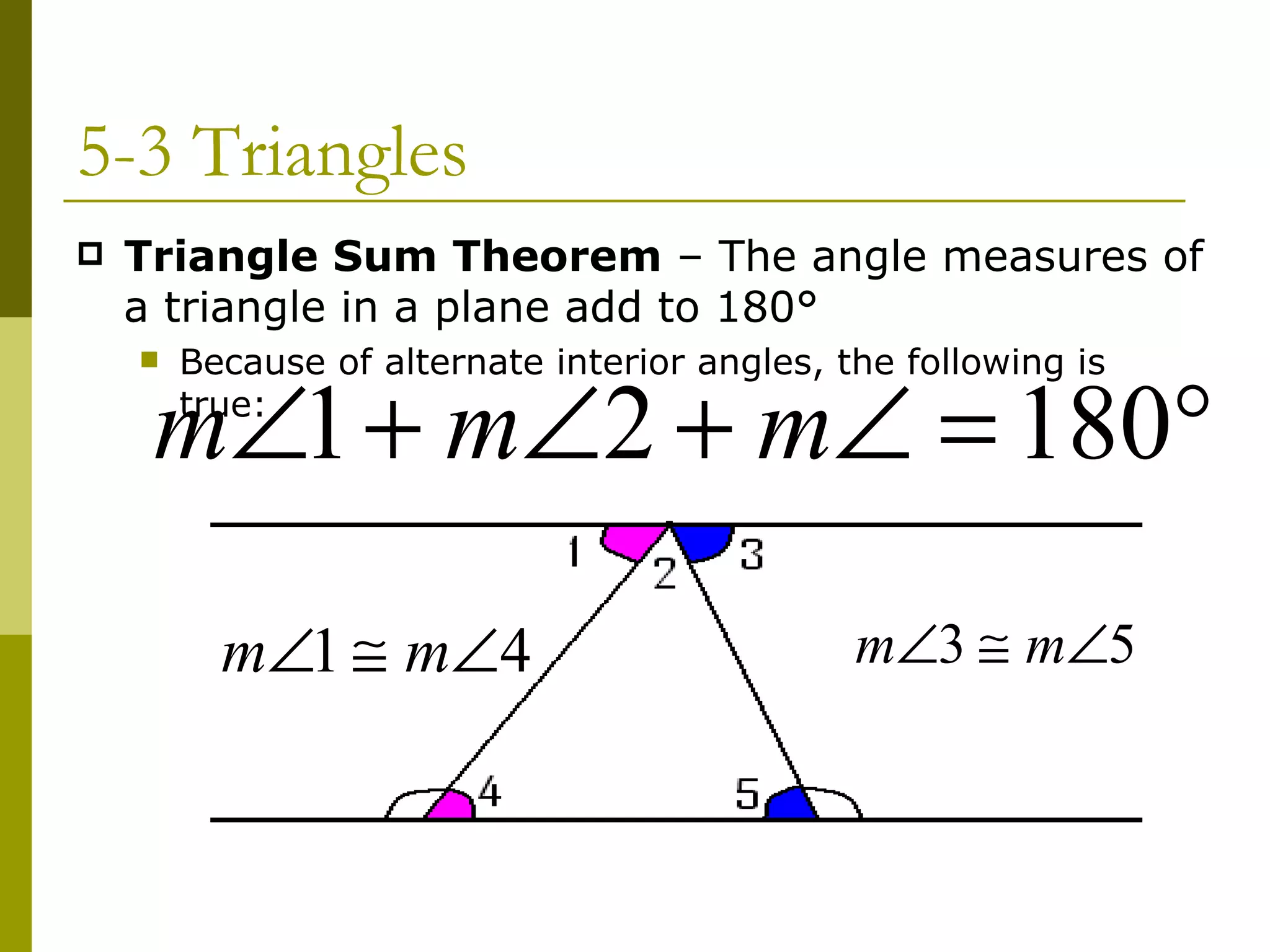
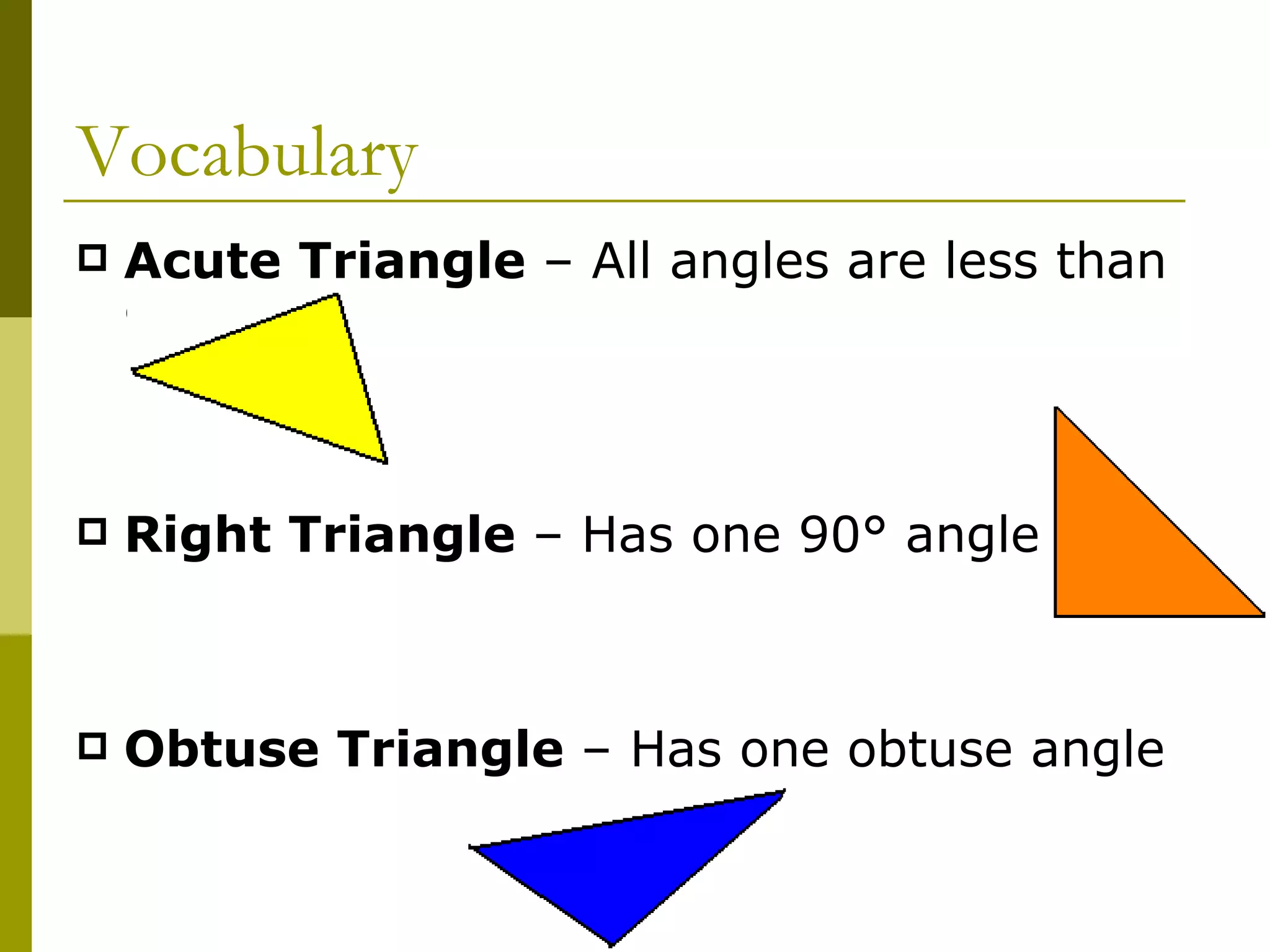
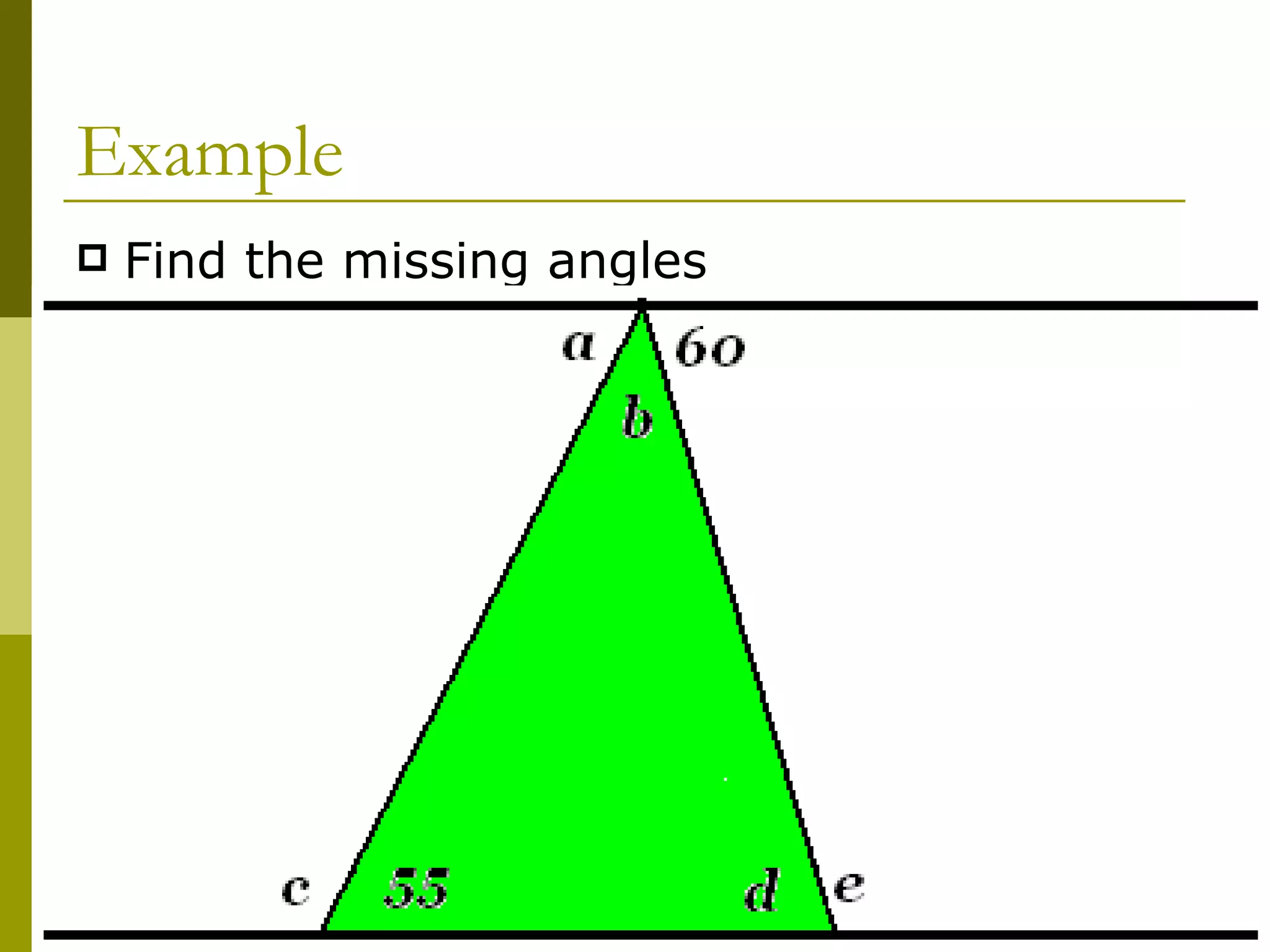
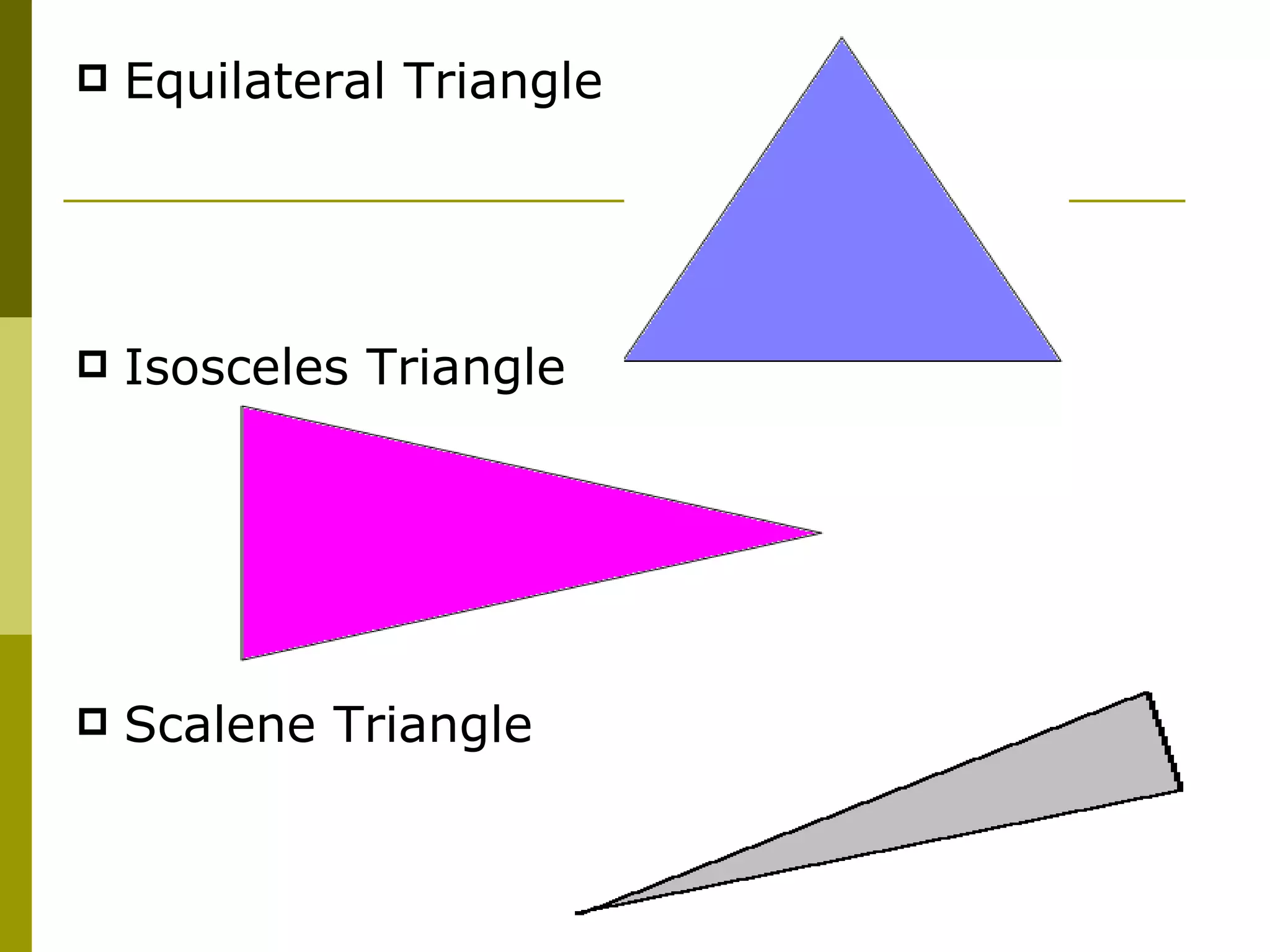
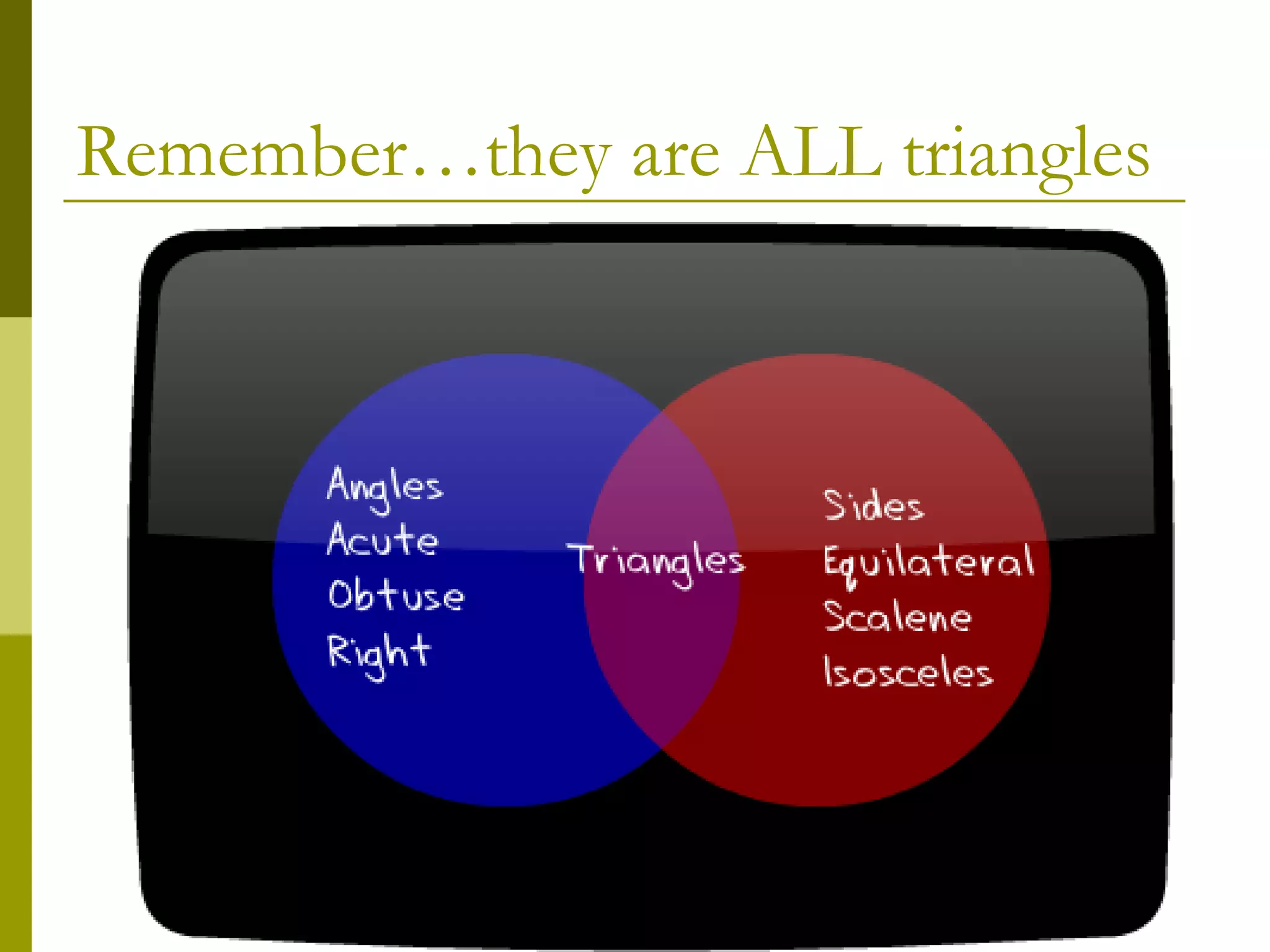
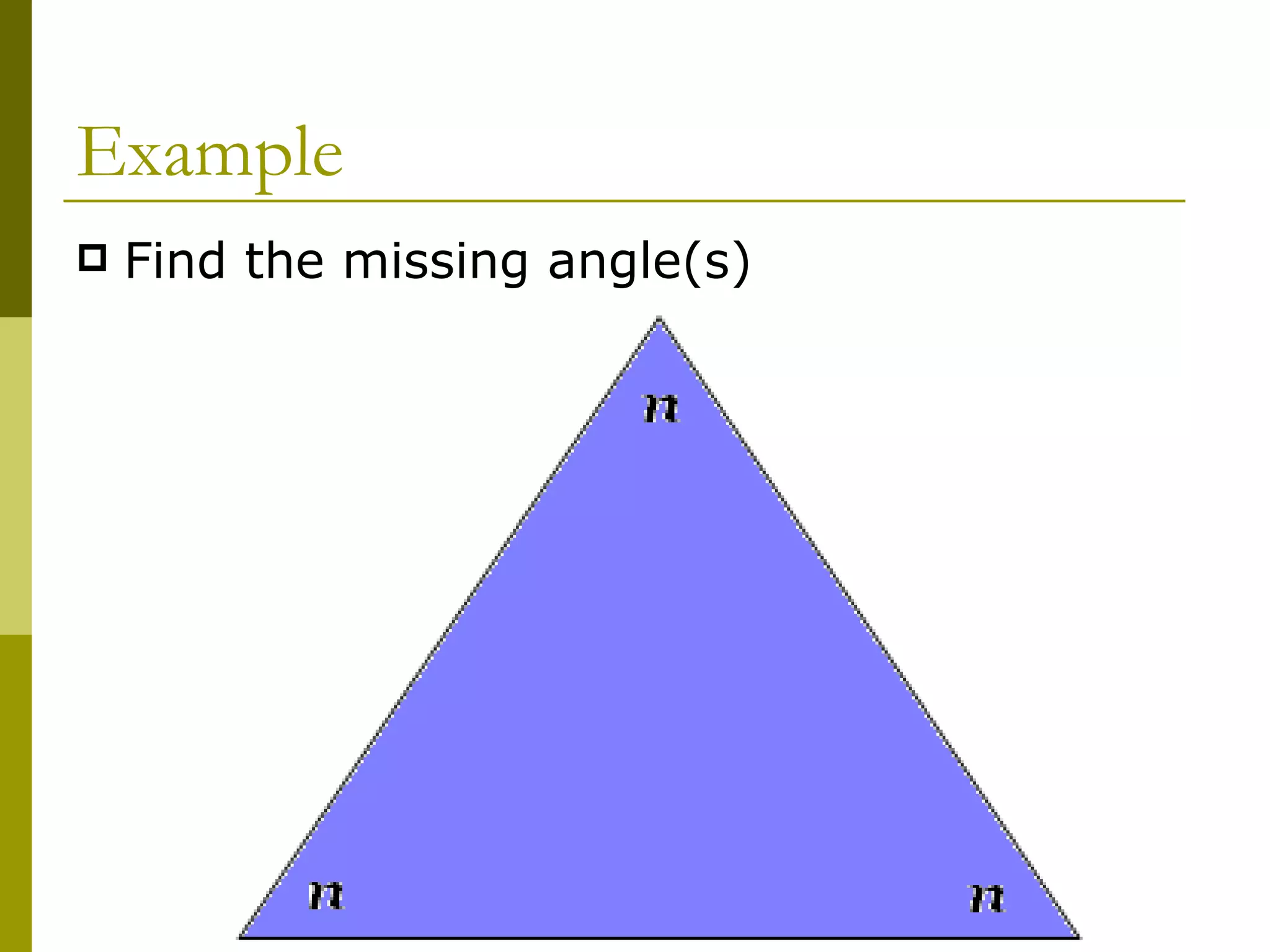
Triangle Sum Theorem (angles sum to 180°) and types of triangles: acute, right, obtuse, equilateral, isosceles, and scalene.
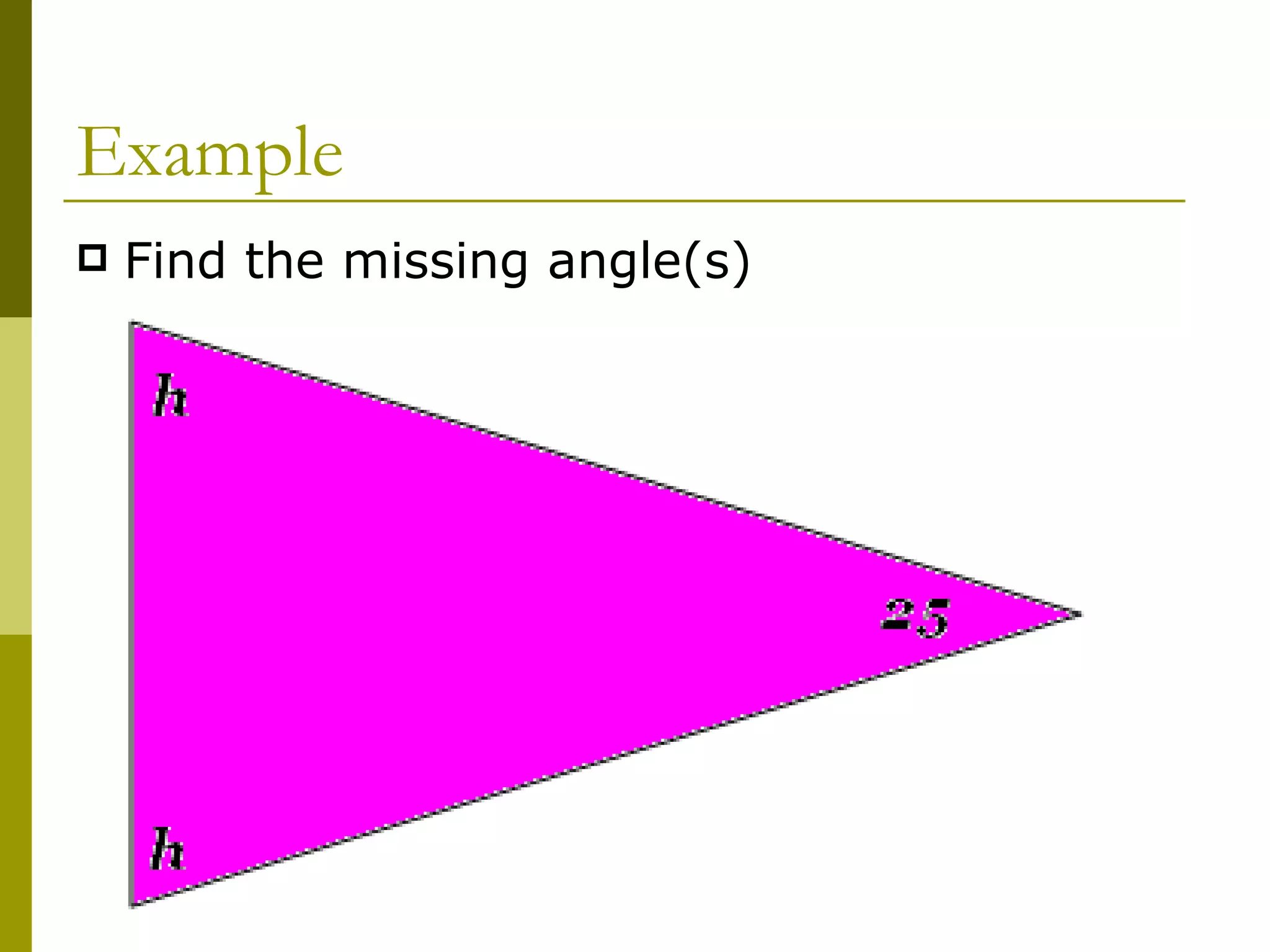
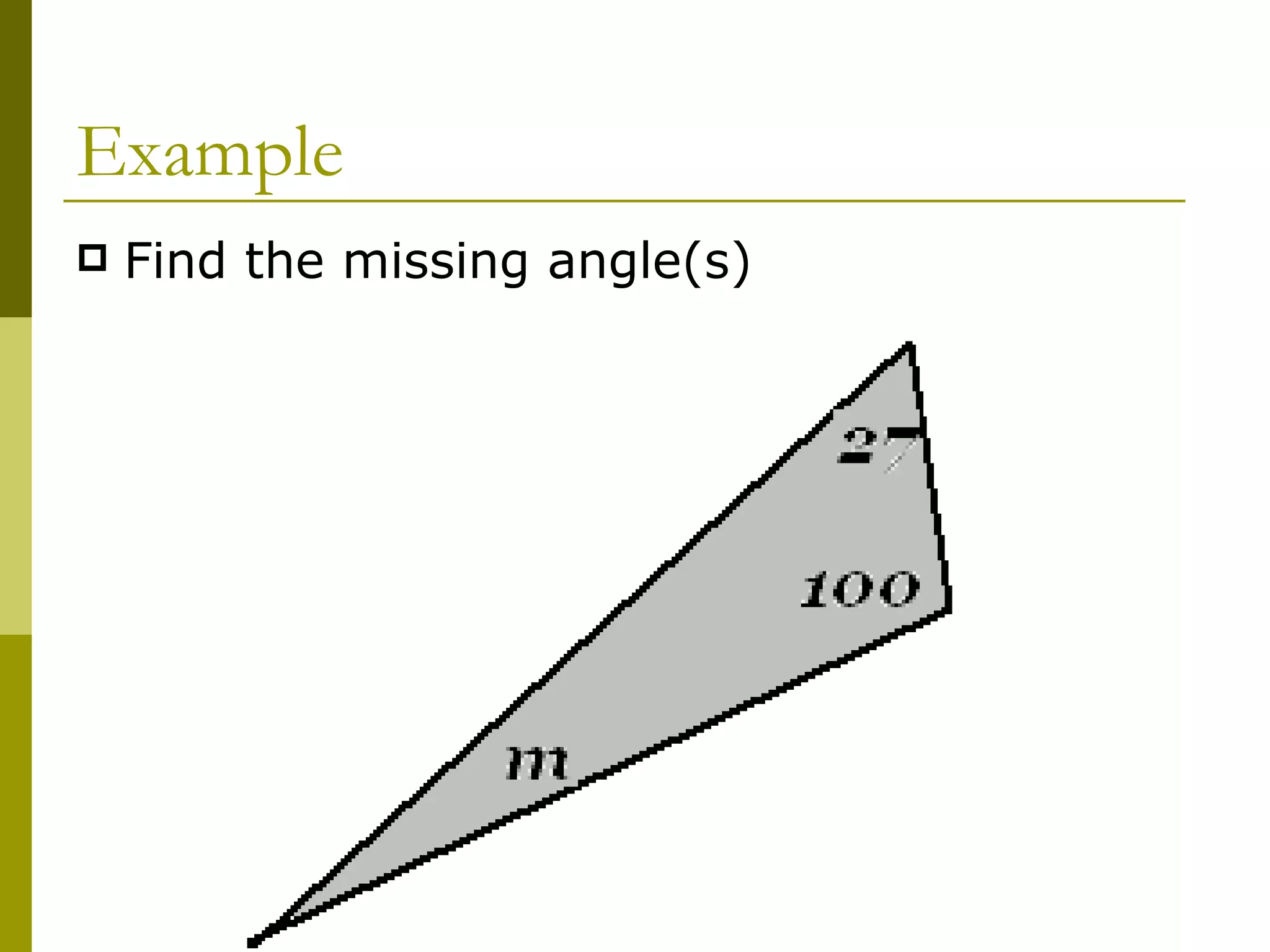
Examples for calculating missing angles in various triangle types, applying the Triangle Sum Theorem.
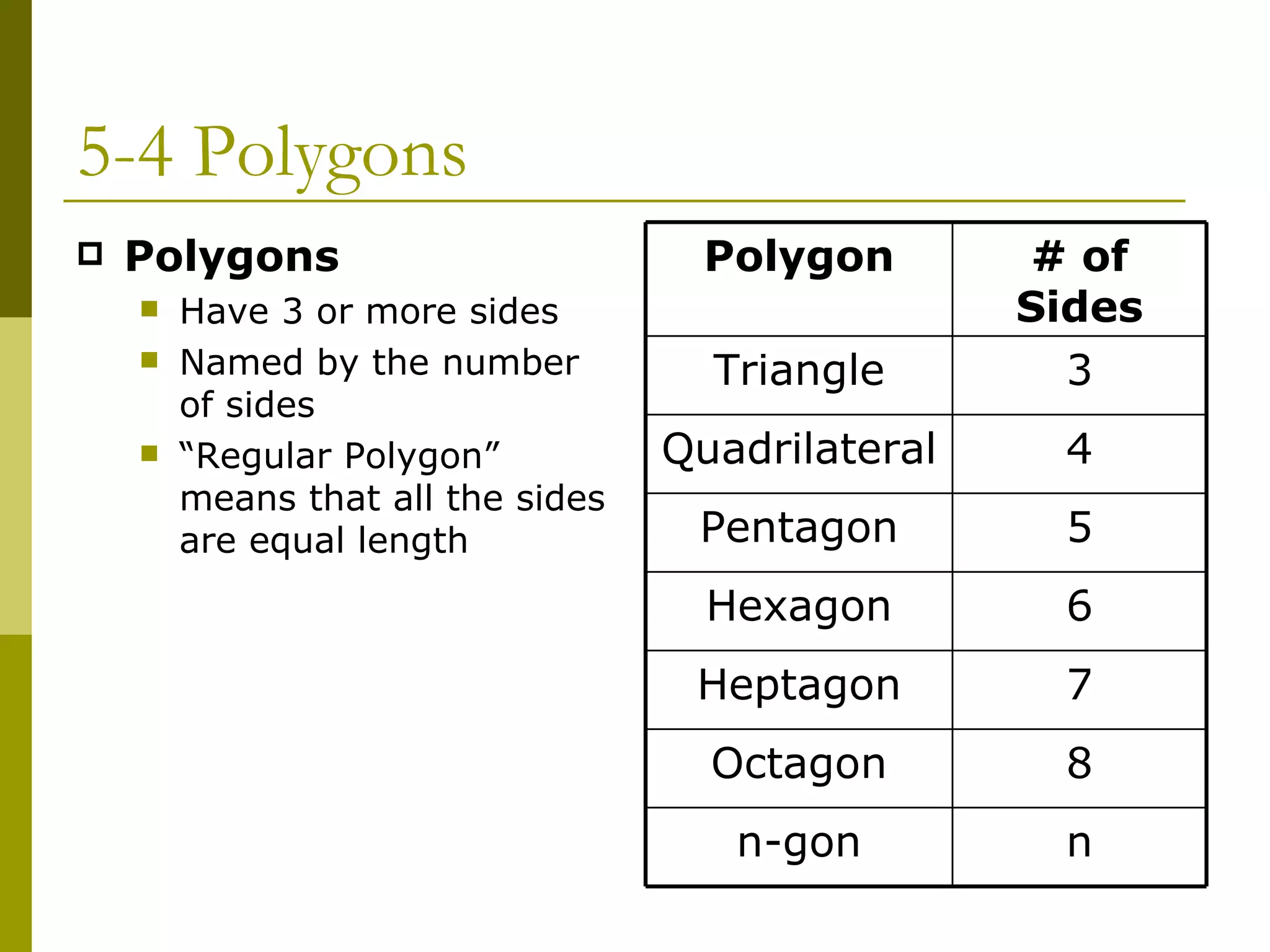
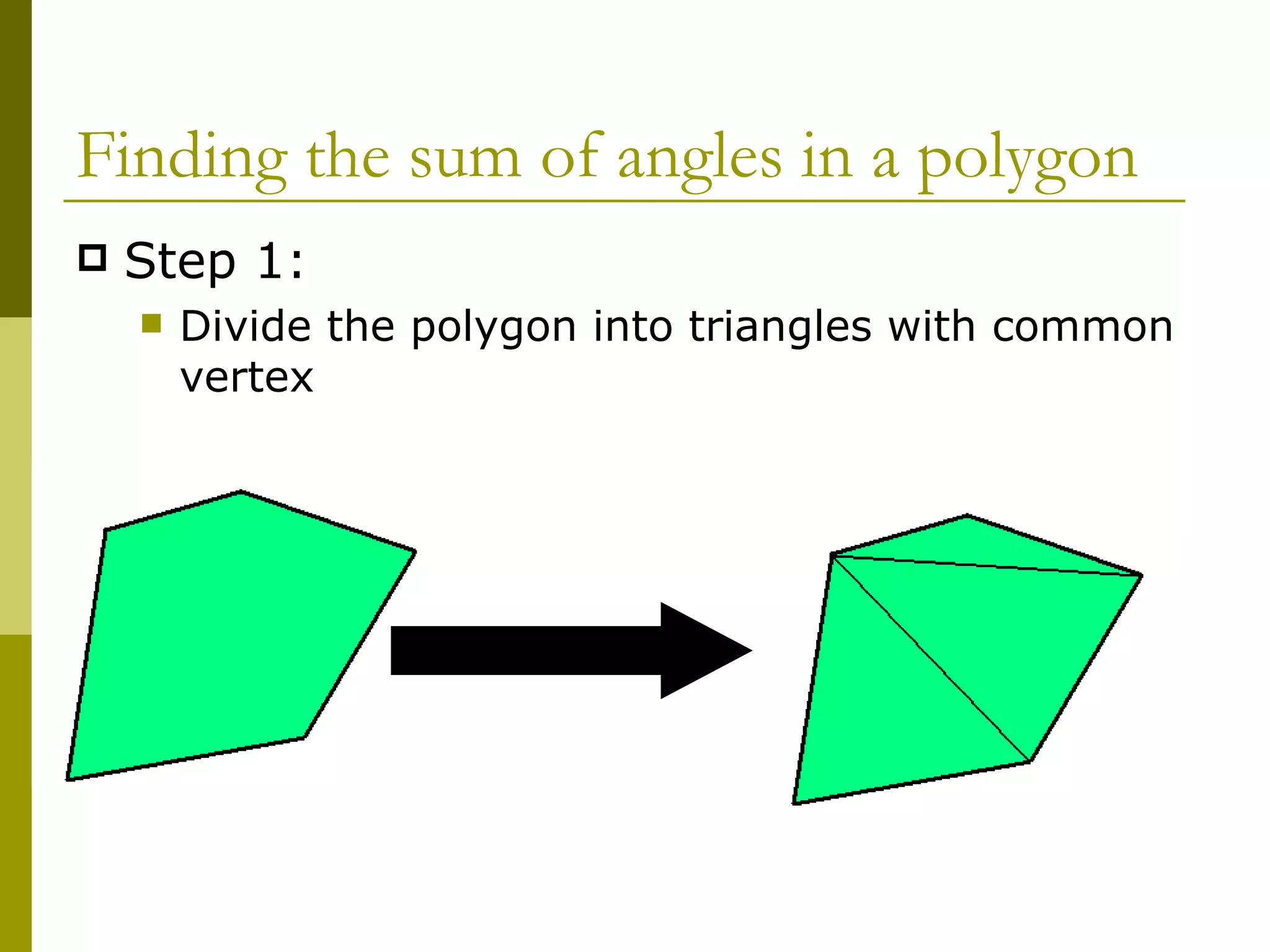
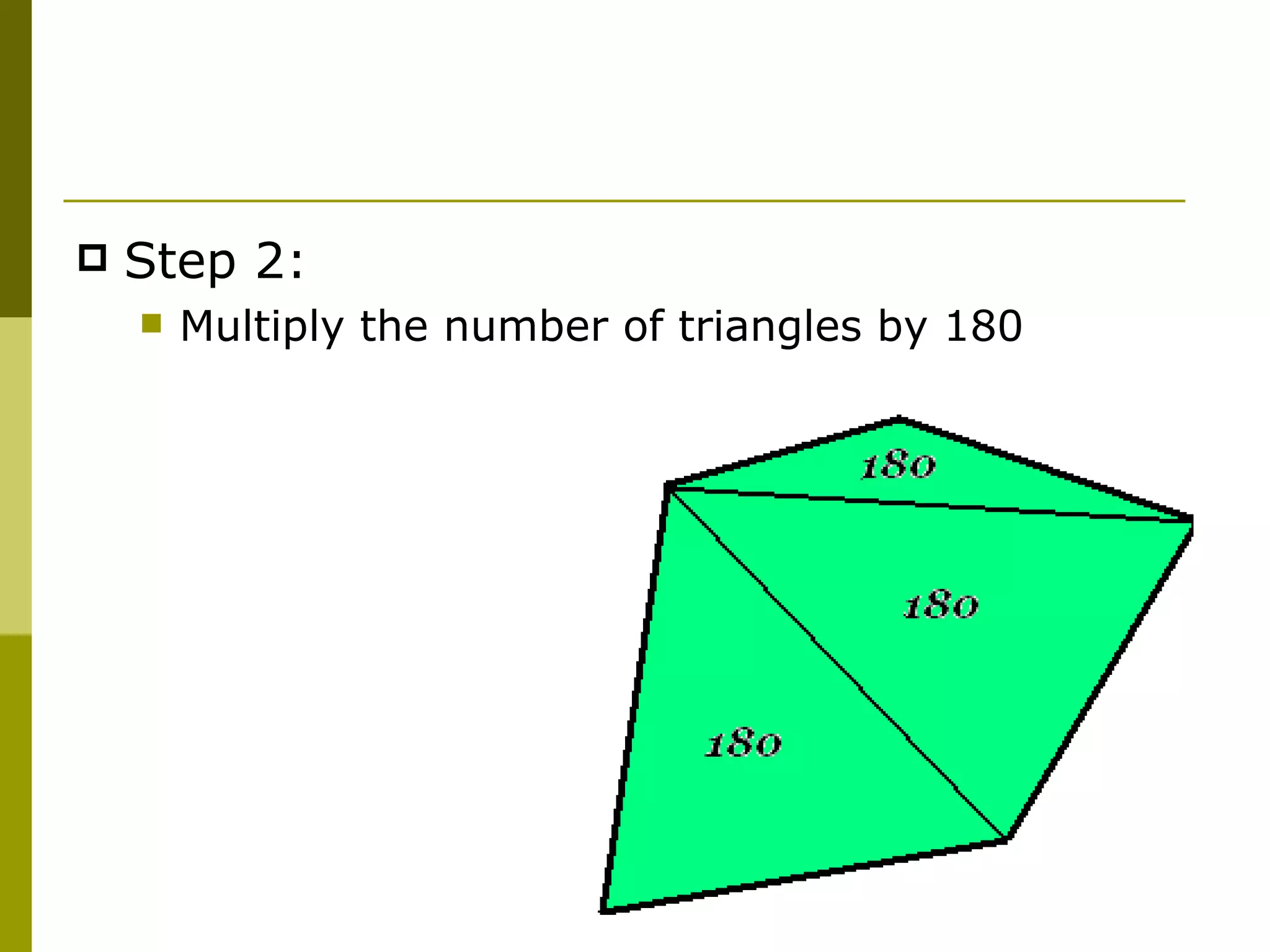
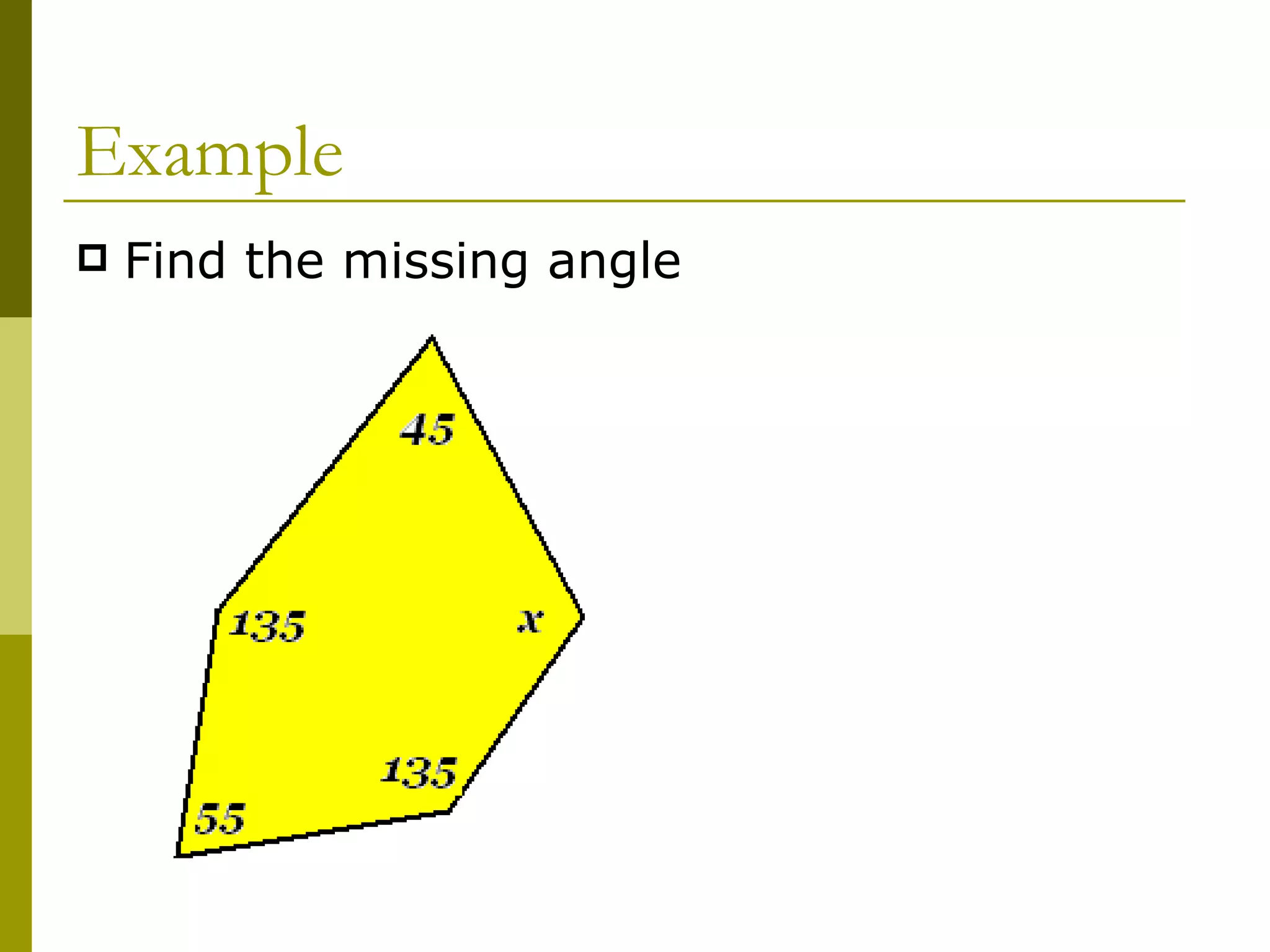
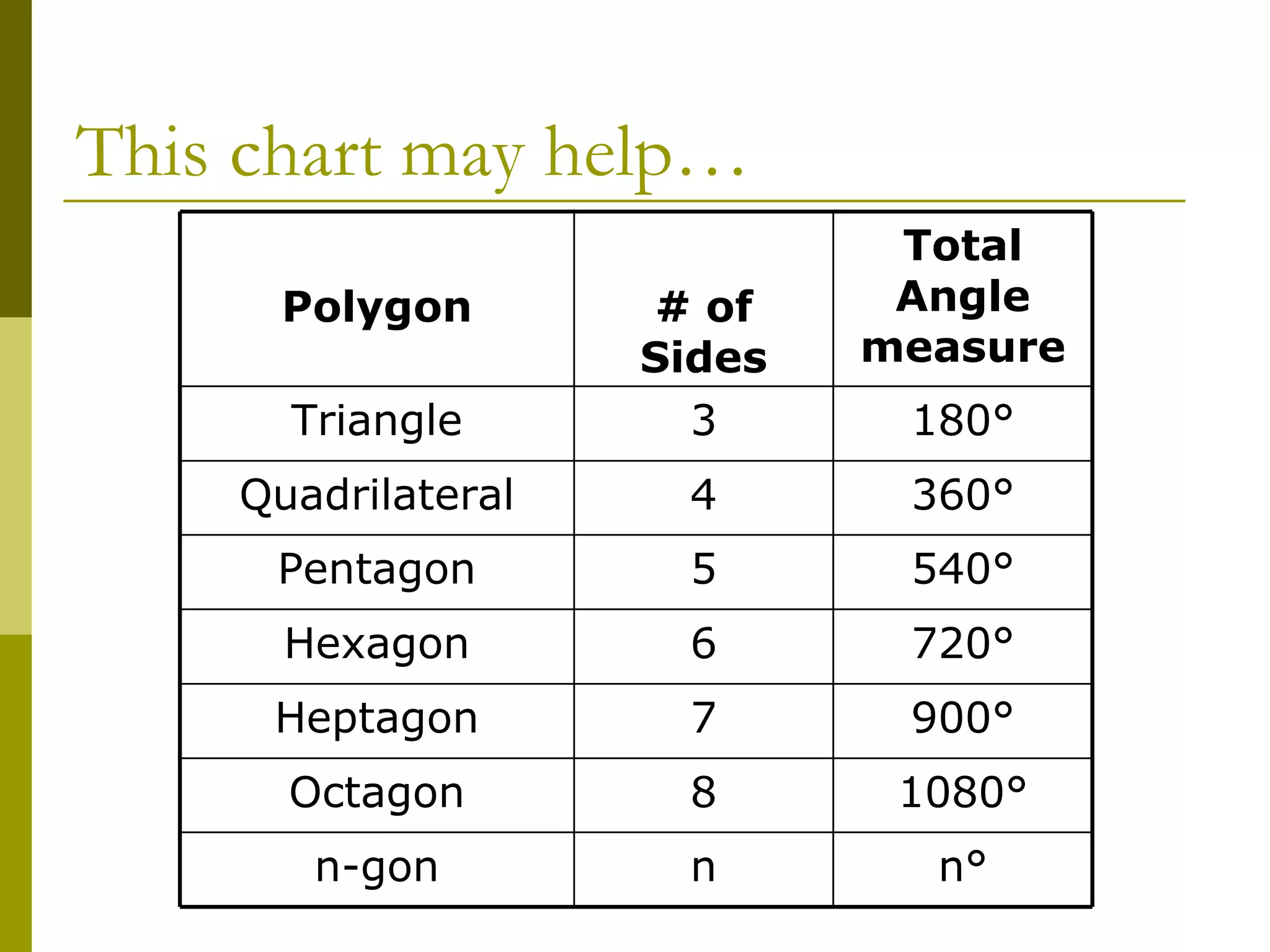
Definition of polygons, types based on sides, methods to calculate angle sums, and an angle measure chart for various n-gons.


![Angle Relations Comp & Supple Vertical Adjacent (Teacher) [Autosaved].pptx](https://cdn.slidesharecdn.com/ss_thumbnails/anglerelationscompsuppleverticaladjacentteacherautosaved-241209052056-6677bf45-thumbnail.jpg?width=640&height=640&fit=bounds)


