SOIL FOOD WEB AND ITS UTILITY
FOR ECOLOGY
Presented by
Ishwar Prakash Sharma
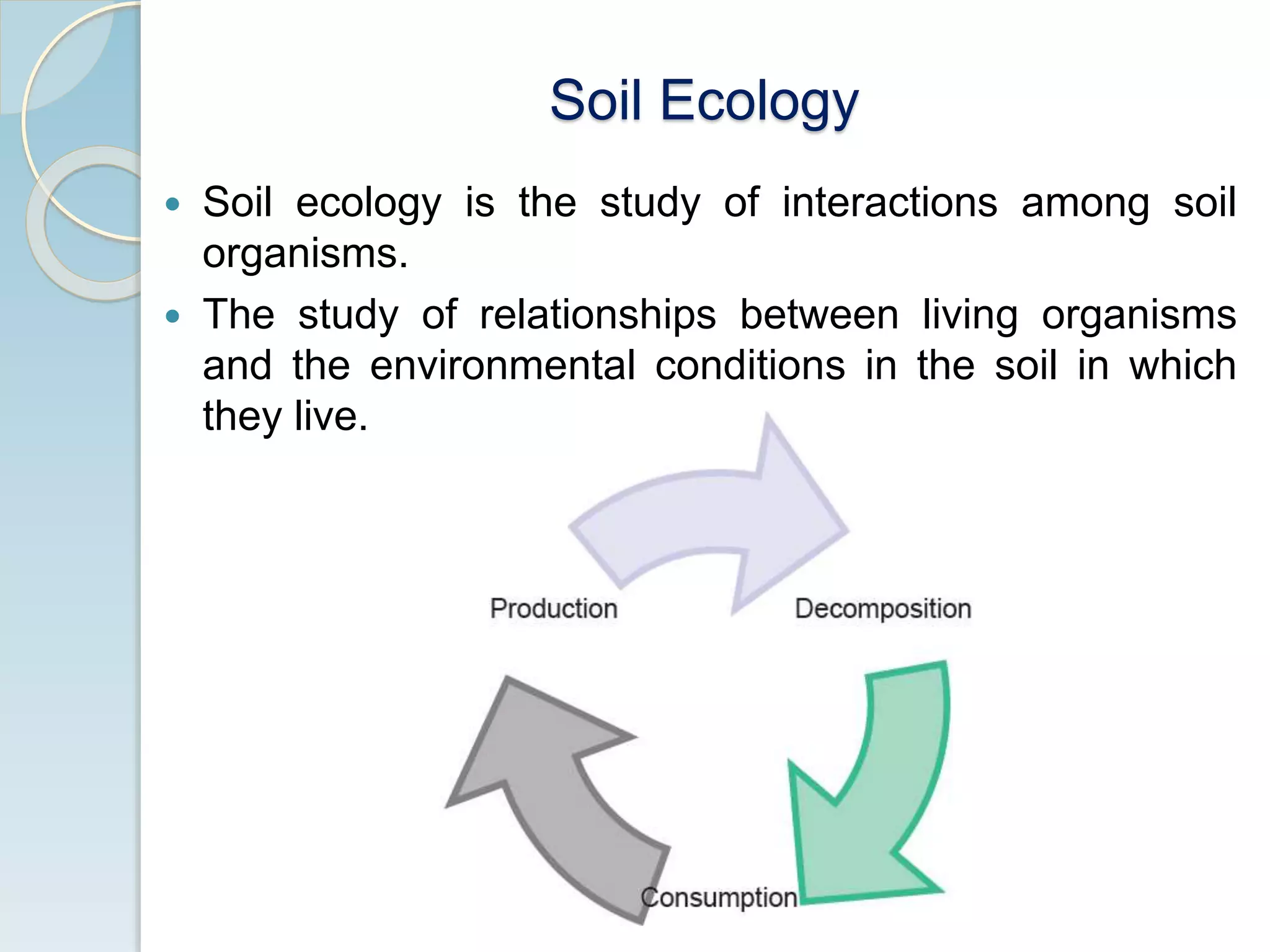
Soil Ecology
 Soil ecology is the study of interactions among soil
organisms.
 The study of relationships between living organisms
and the environmental conditions in the soil in which
they live.
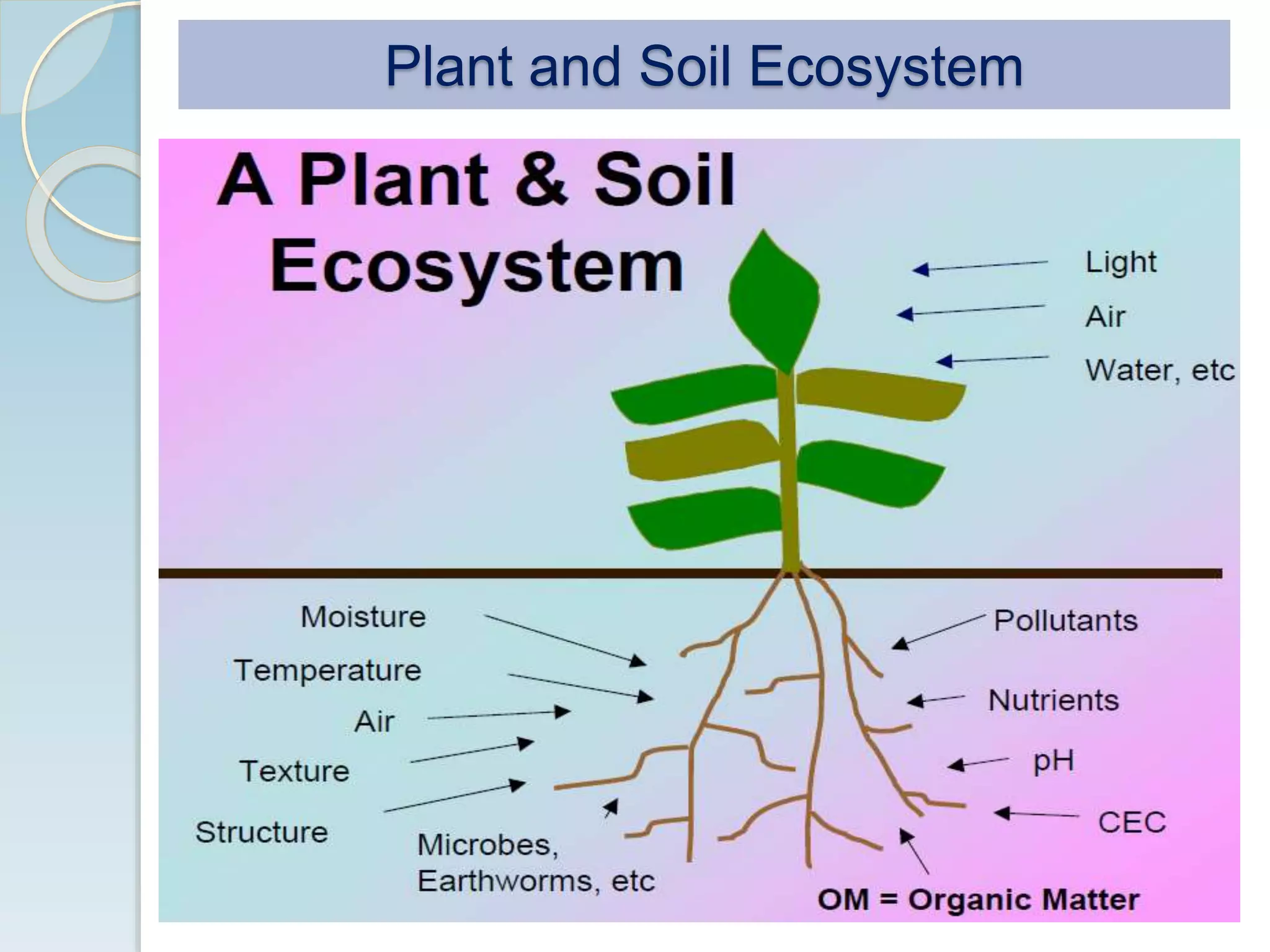
Plant and Soil Ecosystem
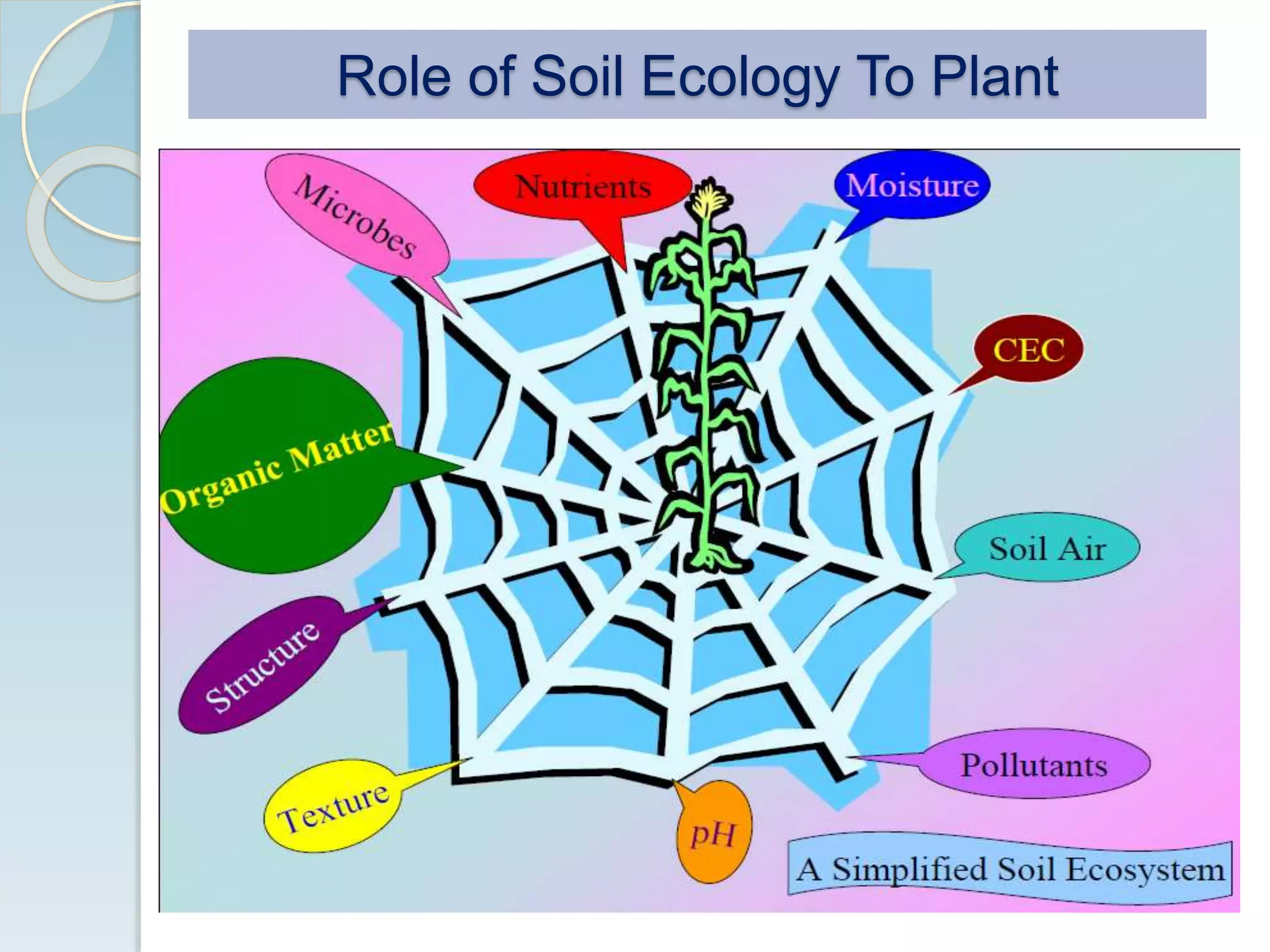
Role of Soil Ecology To Plant
Soil Food Web
 "An assemblage of populations of plants, animals, bacteria
and fungi that live in an environment and interact with one
another, forming together a distinctive living system with its
own composition, structure, environmental relations,
development and function" R. Whittaker (1975).
 "A collection of organisms in an environment" J. Emlen
(1977).
 "Organisms that interact in a given area" P. Price (1984).
 "Associations of plants and animals that are spatially
delimited and that are dominated by one or more prominent
species or by a physical characterisitic" R. Ricklefs (1990).
 "The species that occur together in space and time" Begon,
Harper, and Townsend (1996).
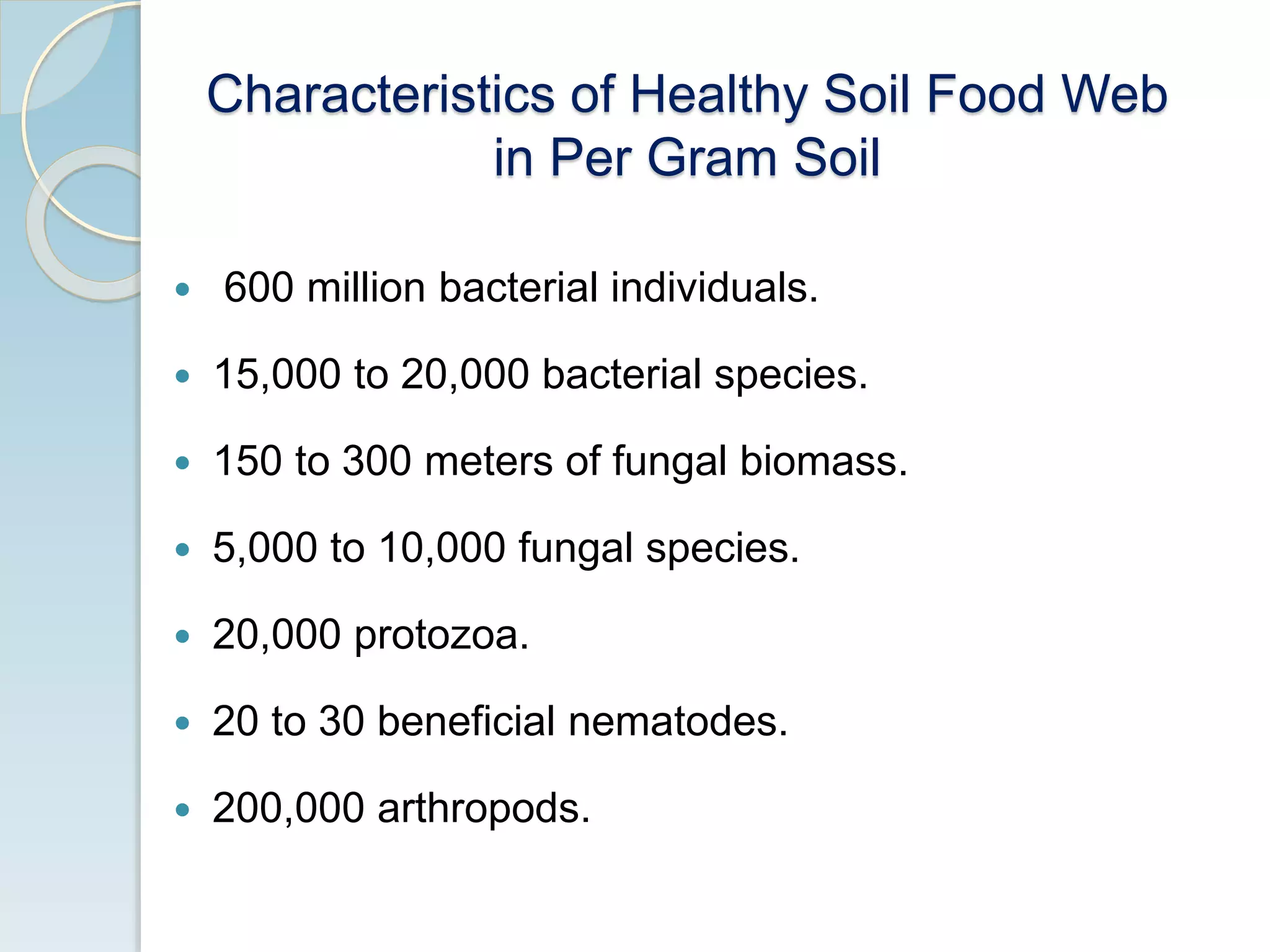
Characteristics of Healthy Soil Food Web
in Per Gram Soil
 600 million bacterial individuals.
 15,000 to 20,000 bacterial species.
 150 to 300 meters of fungal biomass.
 5,000 to 10,000 fungal species.
 20,000 protozoa.
 20 to 30 beneficial nematodes.
 200,000 arthropods.
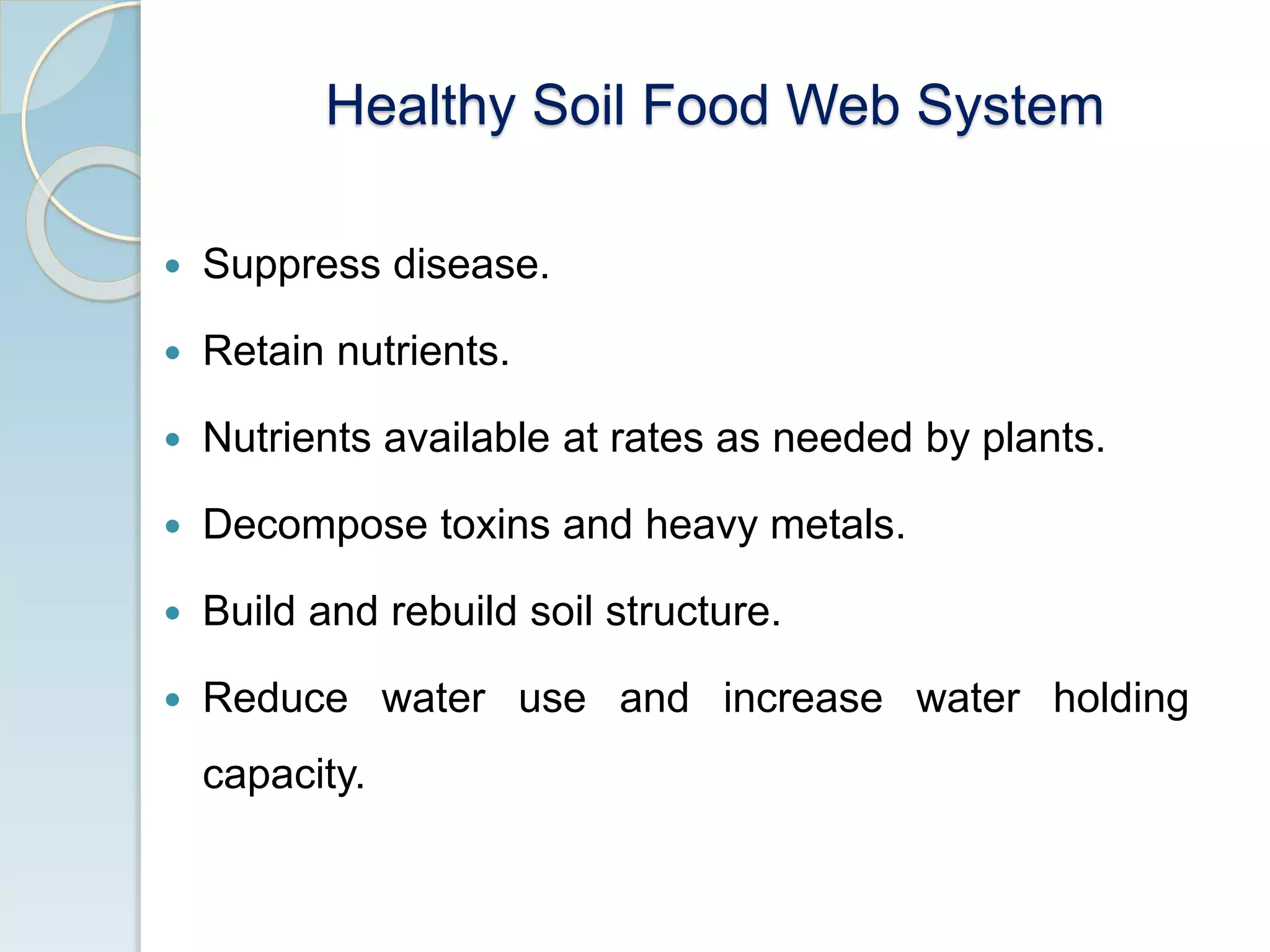
Healthy Soil Food Web System
 Suppress disease.
 Retain nutrients.
 Nutrients available at rates as needed by plants.
 Decompose toxins and heavy metals.
 Build and rebuild soil structure.
 Reduce water use and increase water holding
capacity.
Soil Food Web
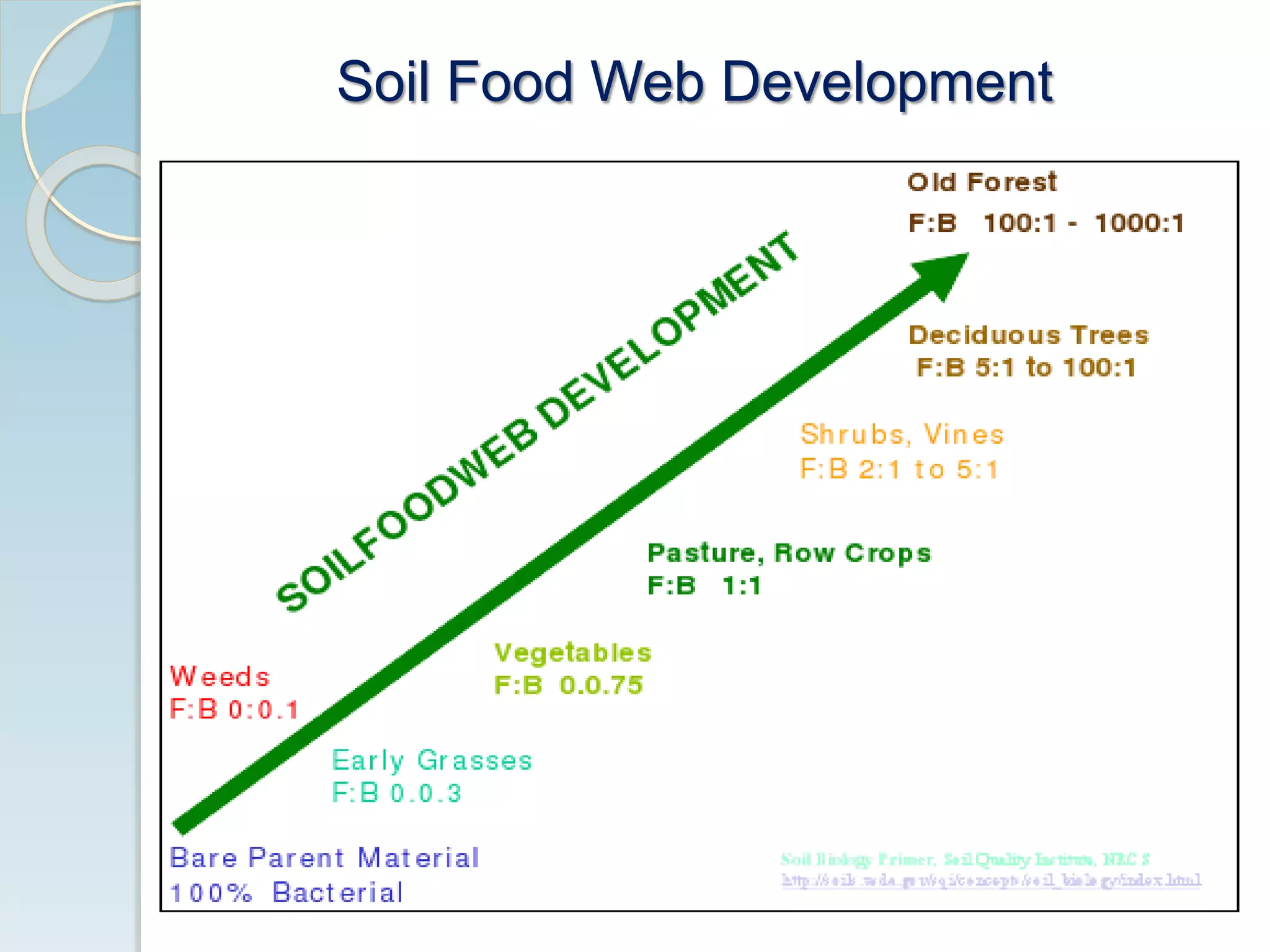
Soil Food Web Development
Why We Need a Soil Food Web?
 Plants depend on beneficial soil organisms.
 Soil organisms create a living, dynamic system.
 Beneficial microscopic organisms of various kinds that
perform vital functions.
 Nutrient cycling and productivity increases.
A Highly Populated and Balanced Soil Food
Web
1. Create humus by decomposing organic matter.
2. Improve soil structure by binding particles together
and creating micro aggregates.
3. Protect roots from diseases and parasites.
4. Retain nitrogen and other plant nutrients.
5. Slowly release retained nutrients to the plant.
6. Produce enzymes and hormones that help plants
grow and resist stress.
7. Decompose pollutants that enter the soil.
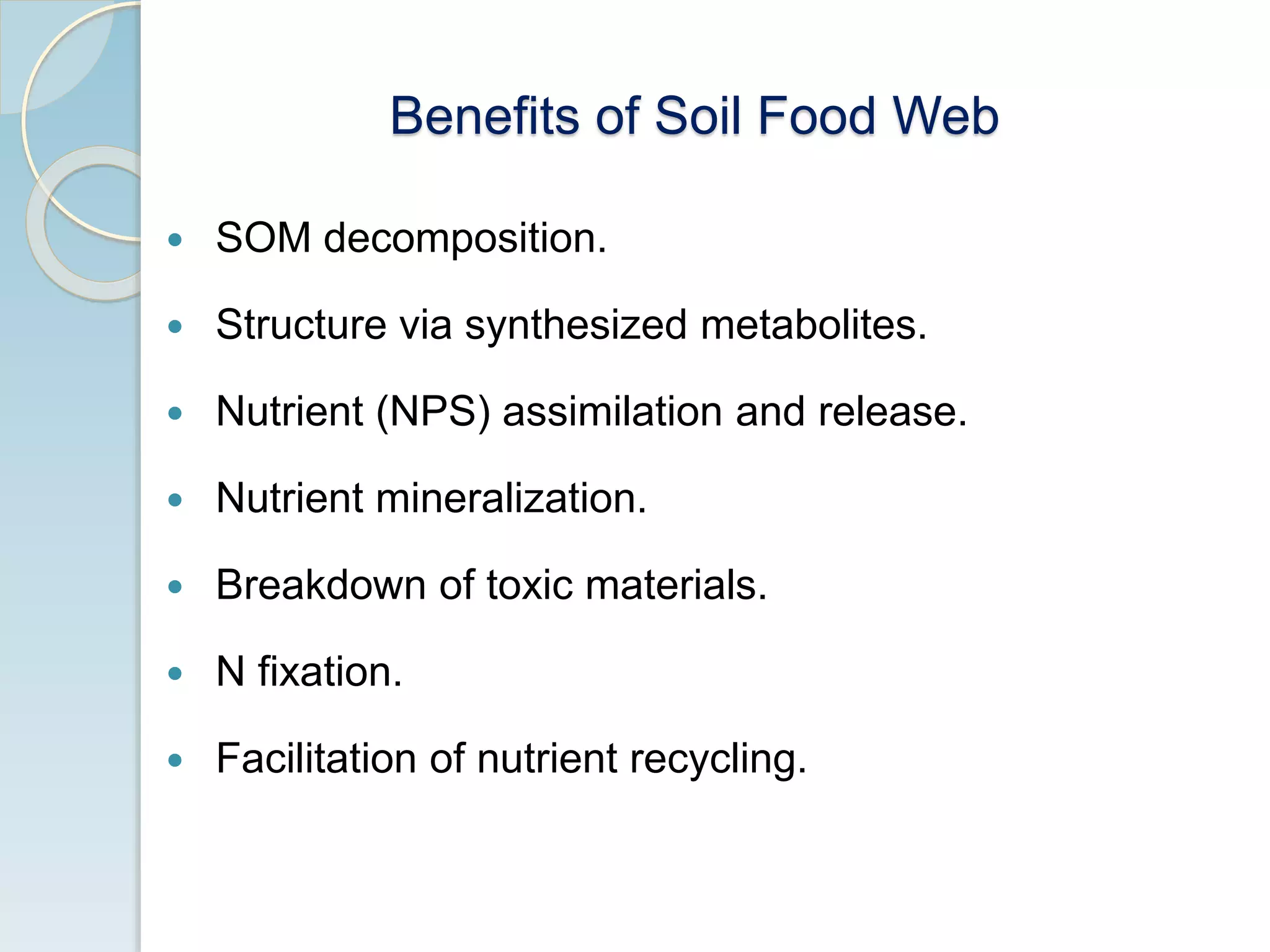
Benefits of Soil Food Web
 SOM decomposition.
 Structure via synthesized metabolites.
 Nutrient (NPS) assimilation and release.
 Nutrient mineralization.
 Breakdown of toxic materials.
 N fixation.
 Facilitation of nutrient recycling.
What Happens to Plants Without a
Functioning Soil Food Web?
 The loss of symbiosis with soil microorganisms.
 Plant growth affected.
 Reduced resistance.
Create Functional Biodiversity
 Provide Diverse Food: Organic Matter
 Provide Diverse Habitat
Soil Fertility
“The ability of a soil to provide a physical, chemical and
biological environment for the plant that is health
sustaining”.
Principles to Maintain Soil Fertility
1. Maintain a Proper Air to Water Balance.
2. Maintain Soil Tilth.
3. Prevent Erosion.
4. Maintain Soil Organic Matter Levels.
5. Maintain Biological Diversity.
6. Maintain a Proper Soil pH.
7. Maintain a Balance of Nutrients.
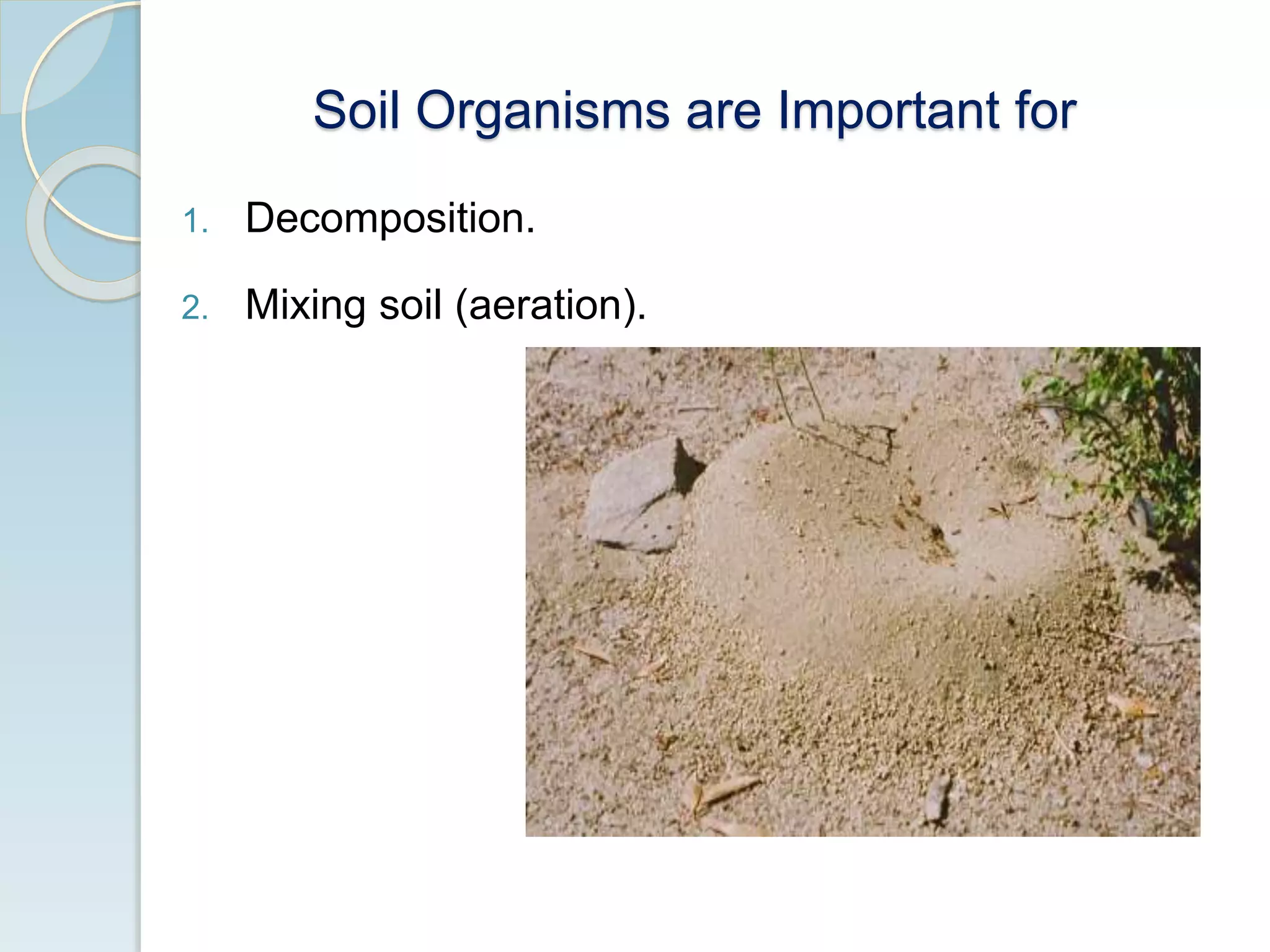
Soil Organisms are Important for
1. Decomposition.
2. Mixing soil (aeration).
CO2
Carbohydrate
s
and
Proteins
Carbohydrates
and
Amino acids
Bacteria
Nematodes
Fungi
CO2
NH3
NO3
Protozoa
Nematodes
Nematodes
Arthropods
Fungi
Arthropods
Nematodes
NH3
Other
Organism
s
NH3
CO2 CO2
THE SOIL ECOSYSTEM IS STRONGLY AFFECTED BY TYPE AND FREQUENCY
OF CARBON AND ENERGY INPUT
CONCLUSION
 Diversity has been thought to be a prerequisite for the
maintenance of stability, resistance and resilience for ecosystem
properties.
 Plants characteristic strongly influenced by interactions with
aboveground and belowground trophic levels.
 Soil microbial interactions can significantly alter plant productivity
and diversity.
 Plants are the major part of the soil diversity.
 In the below ground diversity mainly the soil microbes includes.
Other then soil microbes the soil arthropods, nematodes, annelids
etc.
 In detritus based food webs there is strong potential for ‘top-down
effect” at low trophic levels and ‘bottom-up effect’ at high trophic
levels.
References
 Deyn G.B.D., and Putten W.H.V. (2005) Linking aboveground
and belowground diversity. TRENDS in Ecology and Evolution
Vol.20 No.11.
 Putten W.H.P., Vet L.E.M., Harvey J.A. and Wäckers F.L.
(2001) Linking above- and belowground multitrophic interactions
of plants, herbivores, pathogens, and their antagonists.
TRENDS in Ecology & Evolution Vol.16 No.10.
 Copyright 2005 Living Proof with ASAP www.asapsupplier.com
www.footprintdirections.com.
 Benefits of the Soil Food web soil microbiology explained (2005)
sustainability.
THANK YOU

Soil food web and its utility for ecology

  • 1.
    SOIL FOOD WEBAND ITS UTILITY FOR ECOLOGY Presented by Ishwar Prakash Sharma
  • 2.
    Soil Ecology  Soilecology is the study of interactions among soil organisms.  The study of relationships between living organisms and the environmental conditions in the soil in which they live.
  • 3.
    Plant and SoilEcosystem
  • 4.
    Role of SoilEcology To Plant
  • 5.
    Soil Food Web "An assemblage of populations of plants, animals, bacteria and fungi that live in an environment and interact with one another, forming together a distinctive living system with its own composition, structure, environmental relations, development and function" R. Whittaker (1975).  "A collection of organisms in an environment" J. Emlen (1977).  "Organisms that interact in a given area" P. Price (1984).  "Associations of plants and animals that are spatially delimited and that are dominated by one or more prominent species or by a physical characterisitic" R. Ricklefs (1990).  "The species that occur together in space and time" Begon, Harper, and Townsend (1996).
  • 6.
    Characteristics of HealthySoil Food Web in Per Gram Soil  600 million bacterial individuals.  15,000 to 20,000 bacterial species.  150 to 300 meters of fungal biomass.  5,000 to 10,000 fungal species.  20,000 protozoa.  20 to 30 beneficial nematodes.  200,000 arthropods.
  • 7.
    Healthy Soil FoodWeb System  Suppress disease.  Retain nutrients.  Nutrients available at rates as needed by plants.  Decompose toxins and heavy metals.  Build and rebuild soil structure.  Reduce water use and increase water holding capacity.
  • 8.
  • 9.
    Soil Food WebDevelopment
  • 10.
    Why We Needa Soil Food Web?  Plants depend on beneficial soil organisms.  Soil organisms create a living, dynamic system.  Beneficial microscopic organisms of various kinds that perform vital functions.  Nutrient cycling and productivity increases.
  • 11.
    A Highly Populatedand Balanced Soil Food Web 1. Create humus by decomposing organic matter. 2. Improve soil structure by binding particles together and creating micro aggregates. 3. Protect roots from diseases and parasites. 4. Retain nitrogen and other plant nutrients. 5. Slowly release retained nutrients to the plant. 6. Produce enzymes and hormones that help plants grow and resist stress. 7. Decompose pollutants that enter the soil.
  • 12.
    Benefits of SoilFood Web  SOM decomposition.  Structure via synthesized metabolites.  Nutrient (NPS) assimilation and release.  Nutrient mineralization.  Breakdown of toxic materials.  N fixation.  Facilitation of nutrient recycling.
  • 13.
    What Happens toPlants Without a Functioning Soil Food Web?  The loss of symbiosis with soil microorganisms.  Plant growth affected.  Reduced resistance.
  • 14.
    Create Functional Biodiversity Provide Diverse Food: Organic Matter  Provide Diverse Habitat
  • 15.
    Soil Fertility “The abilityof a soil to provide a physical, chemical and biological environment for the plant that is health sustaining”. Principles to Maintain Soil Fertility 1. Maintain a Proper Air to Water Balance. 2. Maintain Soil Tilth. 3. Prevent Erosion. 4. Maintain Soil Organic Matter Levels. 5. Maintain Biological Diversity. 6. Maintain a Proper Soil pH. 7. Maintain a Balance of Nutrients.
  • 16.
    Soil Organisms areImportant for 1. Decomposition. 2. Mixing soil (aeration).
  • 17.
  • 18.
    CONCLUSION  Diversity hasbeen thought to be a prerequisite for the maintenance of stability, resistance and resilience for ecosystem properties.  Plants characteristic strongly influenced by interactions with aboveground and belowground trophic levels.  Soil microbial interactions can significantly alter plant productivity and diversity.  Plants are the major part of the soil diversity.  In the below ground diversity mainly the soil microbes includes. Other then soil microbes the soil arthropods, nematodes, annelids etc.  In detritus based food webs there is strong potential for ‘top-down effect” at low trophic levels and ‘bottom-up effect’ at high trophic levels.
  • 19.
    References  Deyn G.B.D.,and Putten W.H.V. (2005) Linking aboveground and belowground diversity. TRENDS in Ecology and Evolution Vol.20 No.11.  Putten W.H.P., Vet L.E.M., Harvey J.A. and Wäckers F.L. (2001) Linking above- and belowground multitrophic interactions of plants, herbivores, pathogens, and their antagonists. TRENDS in Ecology & Evolution Vol.16 No.10.  Copyright 2005 Living Proof with ASAP www.asapsupplier.com www.footprintdirections.com.  Benefits of the Soil Food web soil microbiology explained (2005) sustainability.
  • 20.