M.Sc. Agronomy
Intercropping and Integrated Nutrient
Management In Pulses
R.K. Doutaniya
DEPARTMENT OF AGRONOMY
School of Agriculture,
OPJS University, Churu (Rajasthan)
Course seminar
On
Supervisor
Prof.Y.K. Ghilotia
Mr. Rajesh Kumar
Doutaniya
Reg.No.-R16150001
INTERCROPPING AND INTEGRATED
NUTRIENT MANAGEMENT IN
PULSES
Contents
 Introduction
 Intercropping ; it benefits and practices
 Current Scenario of INM
 Integrated Nutrient Management
 Constraints
 Conclusion
INTRODUCTION
Types of intercropping practices :
1. Multi-intercropping :
2. Relay intercropping :
3. Row intercropping :
4. Strip intercropping :
Intercropping :
Benefits of Intercropping :
 Reduces the insect pest populations and
diseases.
 Reduces soil erosion.
 Reduces the weed population
 Conservation of soil moisture
 Utilizes the farm area more efficiently
 Provides two or more different food crops
 Use of space between main crop
 Improve the soil fertility
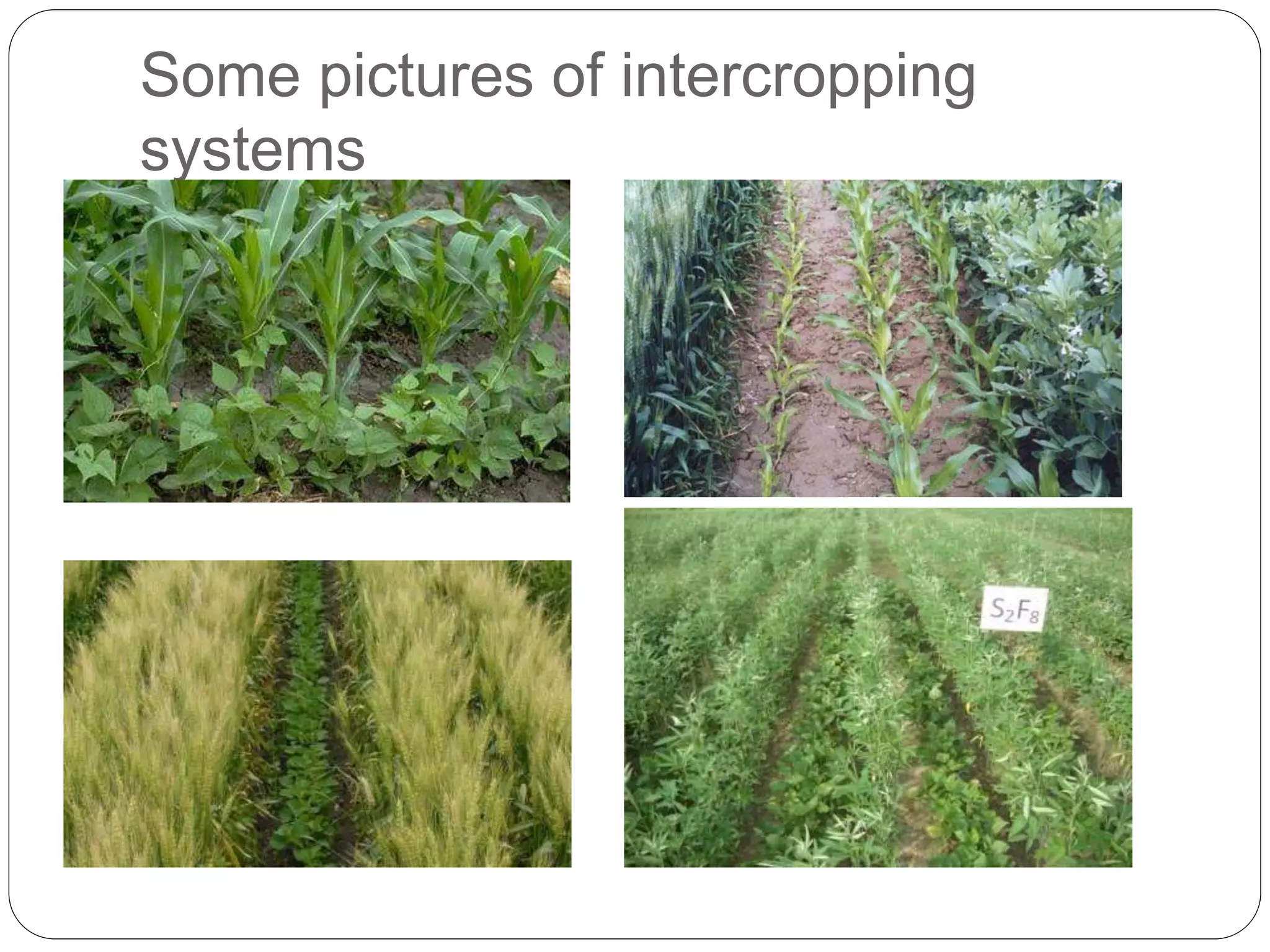
Some pictures of intercropping
systems
Scenario of INM
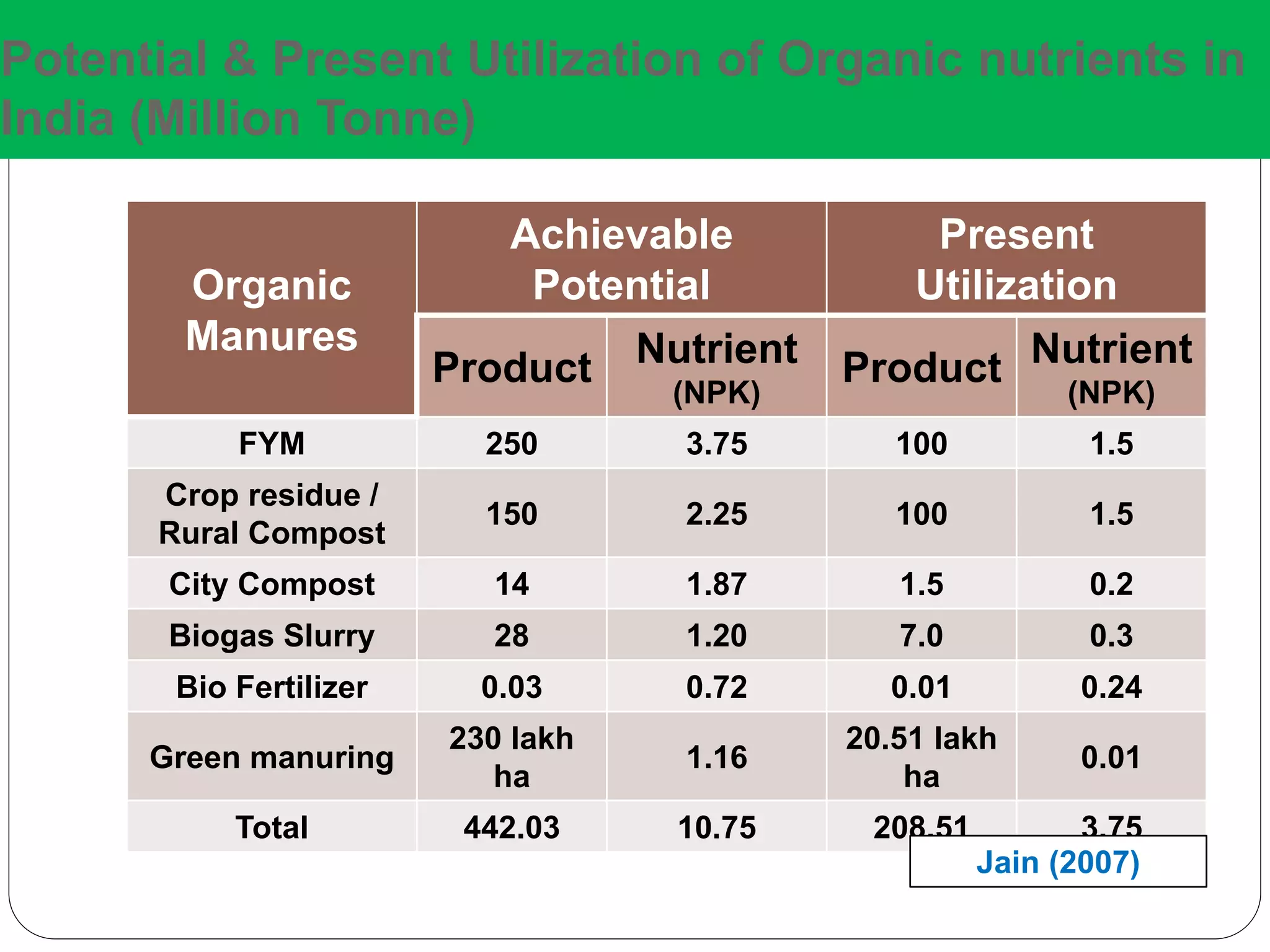
Potential & Present Utilization of Organic nutrients in
India (Million Tonne)
Organic
Manures
Achievable
Potential
Present
Utilization
Product Nutrient
(NPK)
Product Nutrient
(NPK)
FYM 250 3.75 100 1.5
Crop residue /
Rural Compost
150 2.25 100 1.5
City Compost 14 1.87 1.5 0.2
Biogas Slurry 28 1.20 7.0 0.3
Bio Fertilizer 0.03 0.72 0.01 0.24
Green manuring
230 lakh
ha
1.16
20.51 lakh
ha
0.01
Total 442.03 10.75 208.51 3.75
Jain (2007)
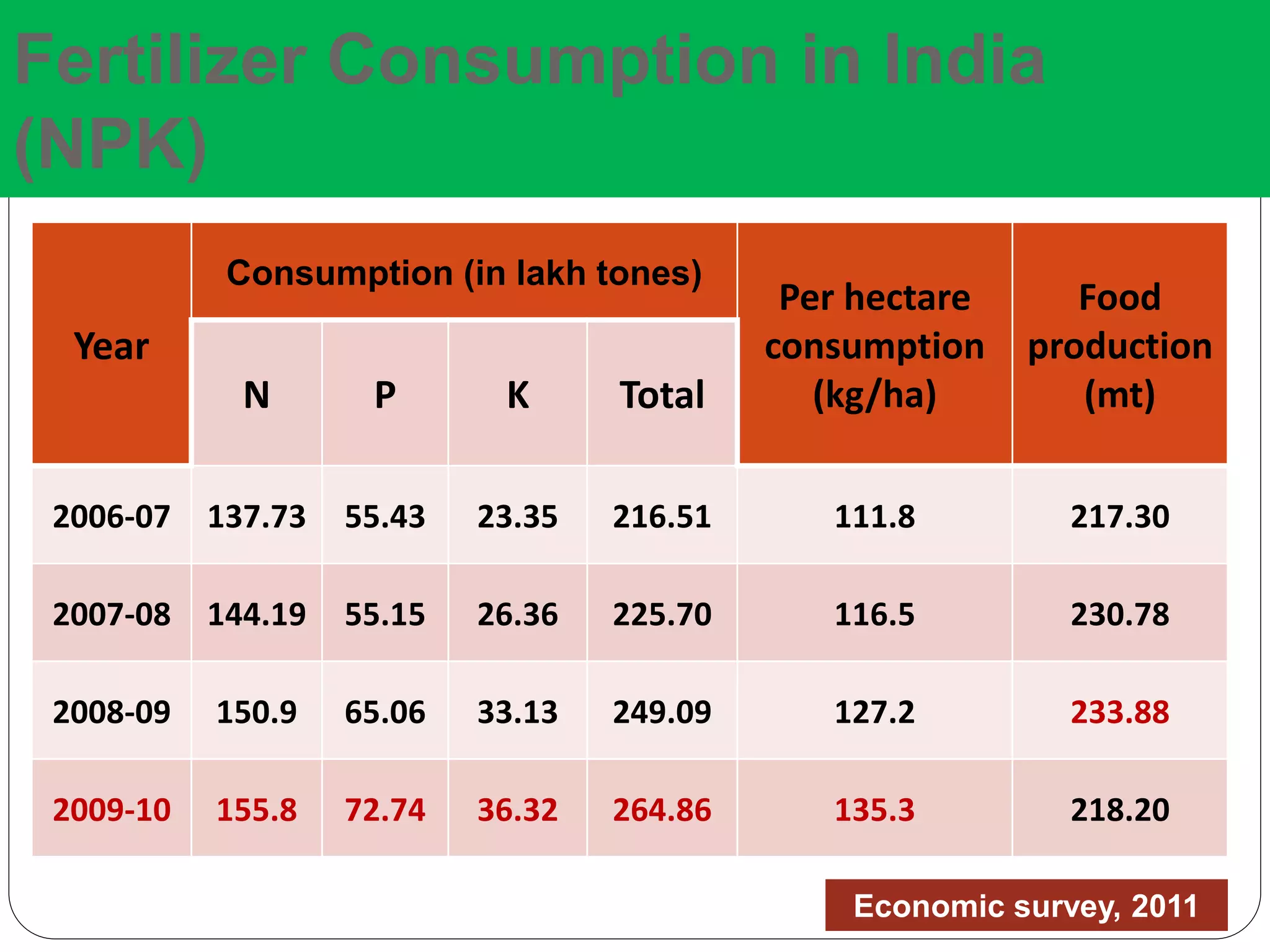
Fertilizer Consumption in India
(NPK)
Year
Consumption (in lakh tones)
Per hectare
consumption
(kg/ha)
Food
production
(mt)N P K Total
2006-07 137.73 55.43 23.35 216.51 111.8 217.30
2007-08 144.19 55.15 26.36 225.70 116.5 230.78
2008-09 150.9 65.06 33.13 249.09 127.2 233.88
2009-10 155.8 72.74 36.32 264.86 135.3 218.20
Economic survey, 2011
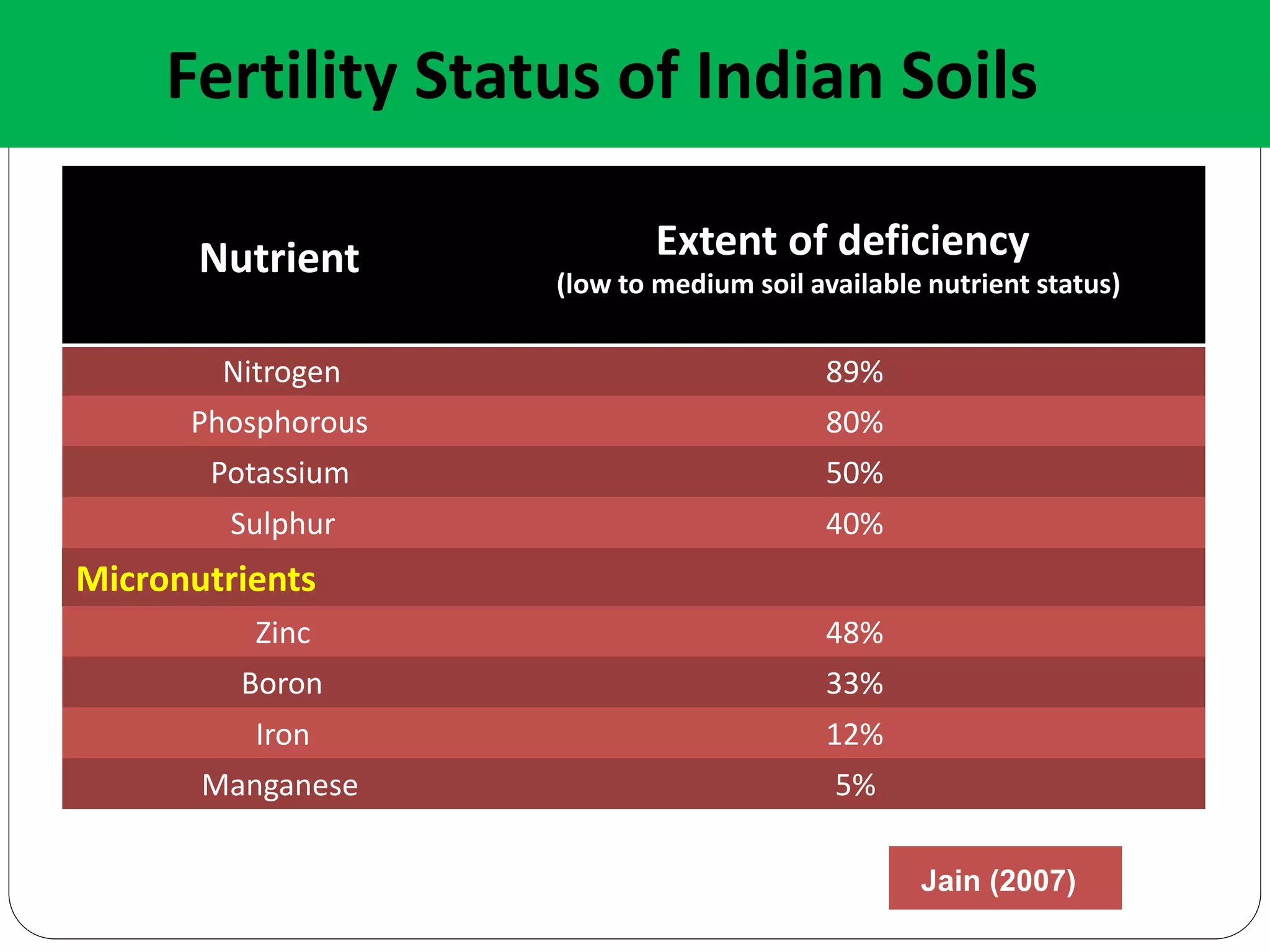
Fertility Status of Indian Soils
Nutrient Extent of deficiency
(low to medium soil available nutrient status)
Nitrogen 89%
Phosphorous 80%
Potassium 50%
Sulphur 40%
Micronutrients
Zinc 48%
Boron 33%
Iron 12%
Manganese 5%
Jain (2007)
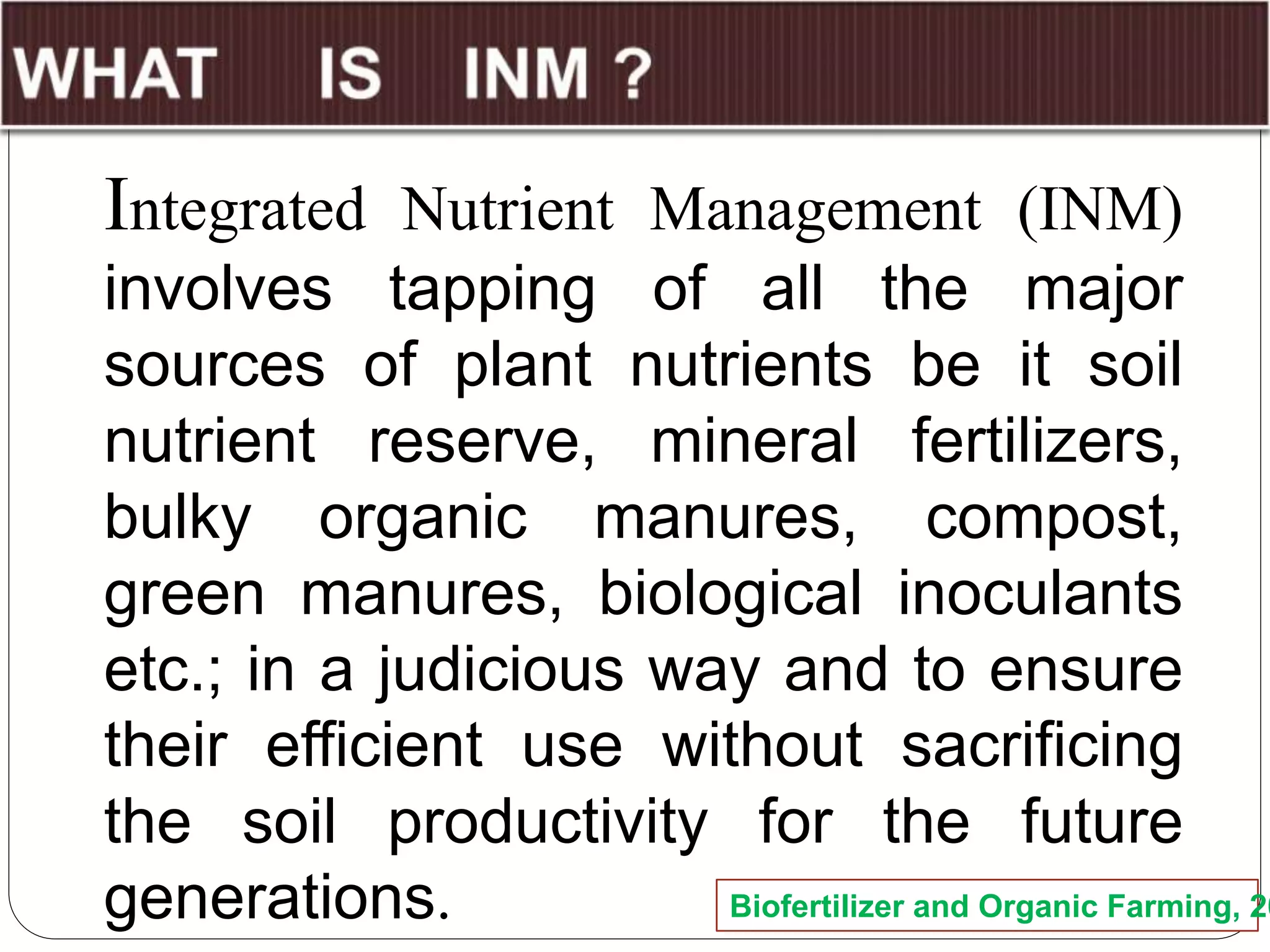
Integrated Nutrient Management (INM)
involves tapping of all the major
sources of plant nutrients be it soil
nutrient reserve, mineral fertilizers,
bulky organic manures, compost,
green manures, biological inoculants
etc.; in a judicious way and to ensure
their efficient use without sacrificing
the soil productivity for the future
generations. Biofertilizer and Organic Farming, 20
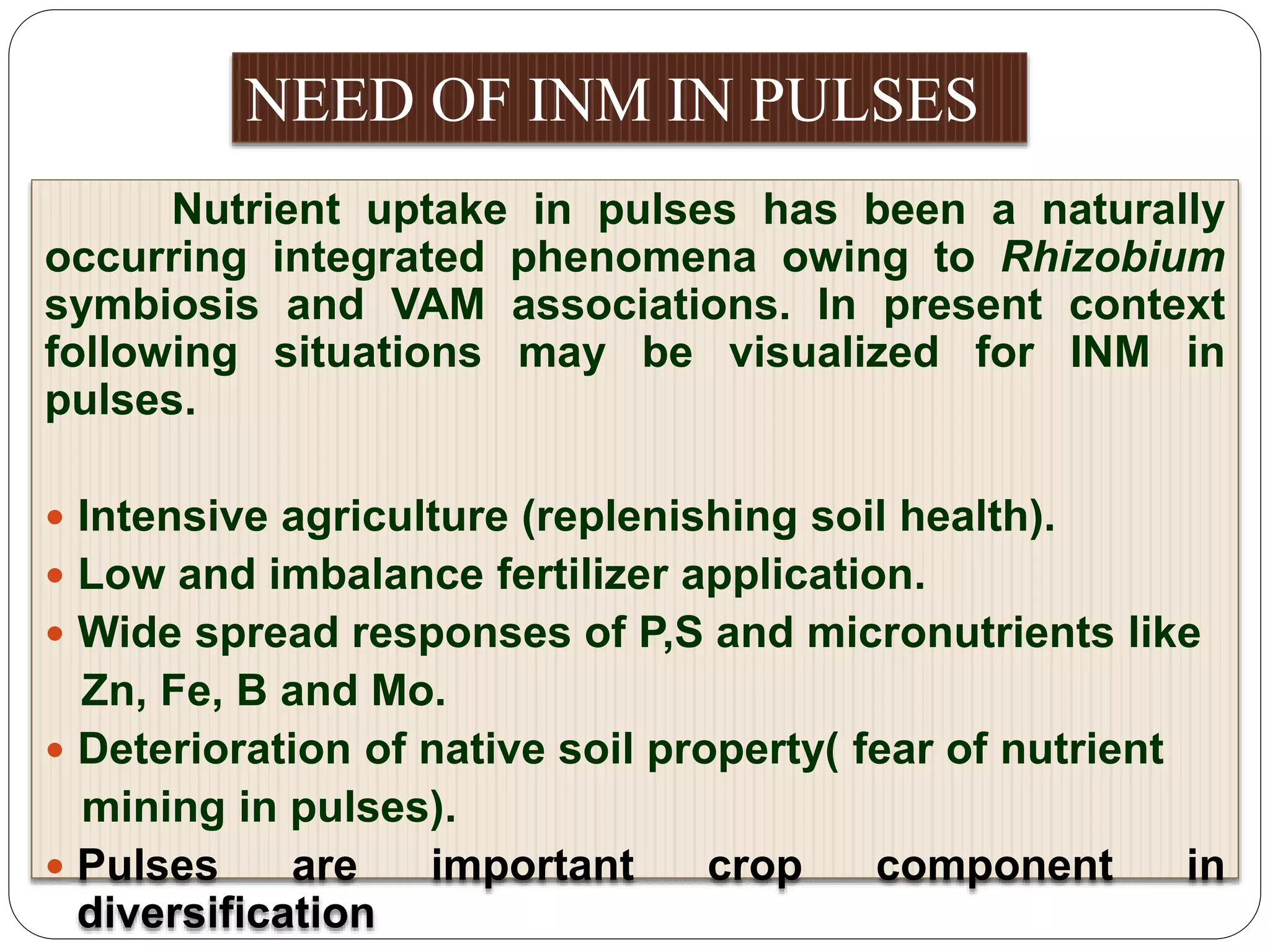
NEED OF INM IN PULSES
Nutrient uptake in pulses has been a naturally
occurring integrated phenomena owing to Rhizobium
symbiosis and VAM associations. In present context
following situations may be visualized for INM in
pulses.
 Intensive agriculture (replenishing soil health).
 Low and imbalance fertilizer application.
 Wide spread responses of P,S and micronutrients like
Zn, Fe, B and Mo.
 Deterioration of native soil property( fear of nutrient
mining in pulses).
 Pulses are important crop component in
diversification
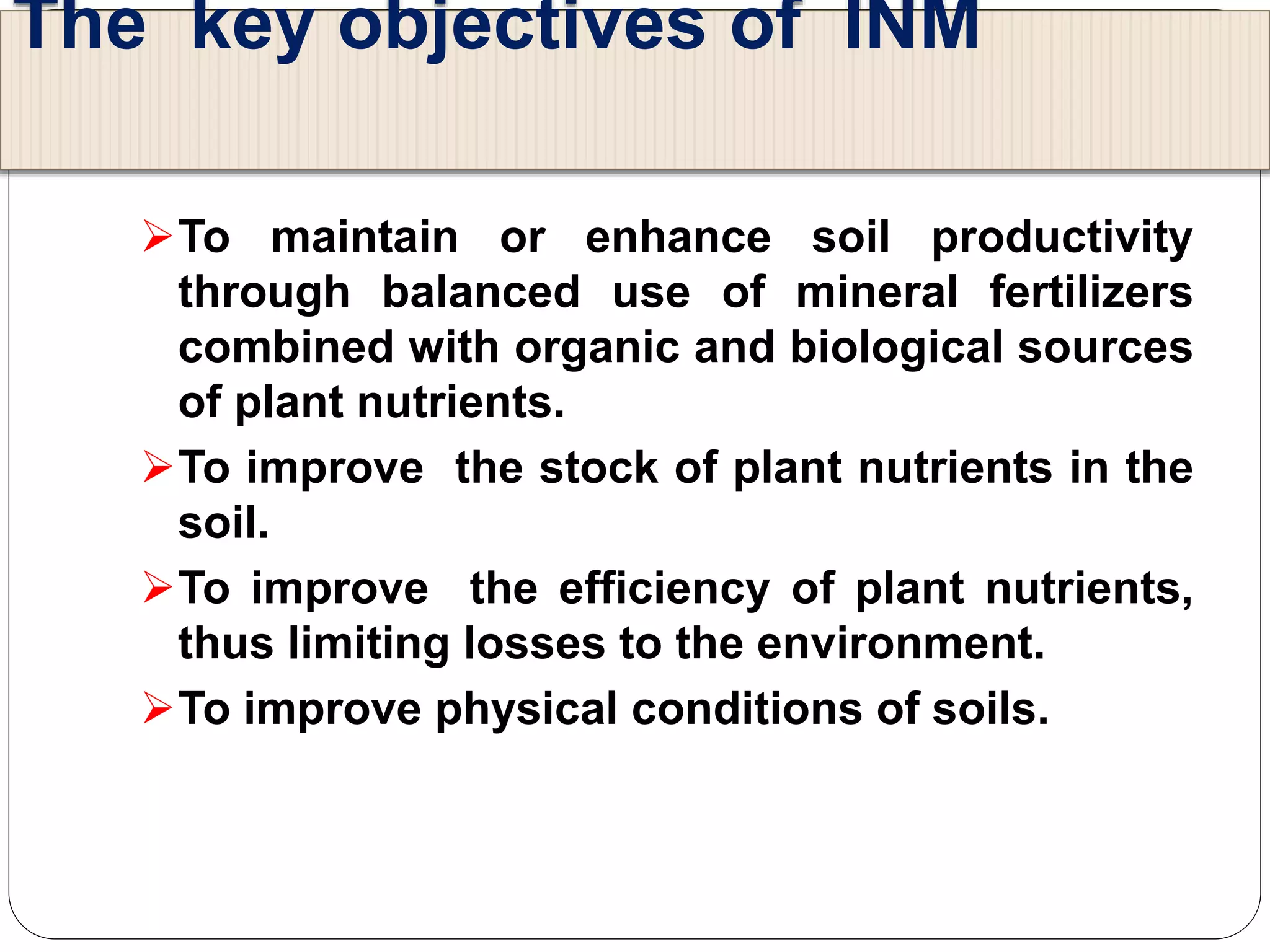
The key objectives of INM
To maintain or enhance soil productivity
through balanced use of mineral fertilizers
combined with organic and biological sources
of plant nutrients.
To improve the stock of plant nutrients in the
soil.
To improve the efficiency of plant nutrients,
thus limiting losses to the environment.
To improve physical conditions of soils.
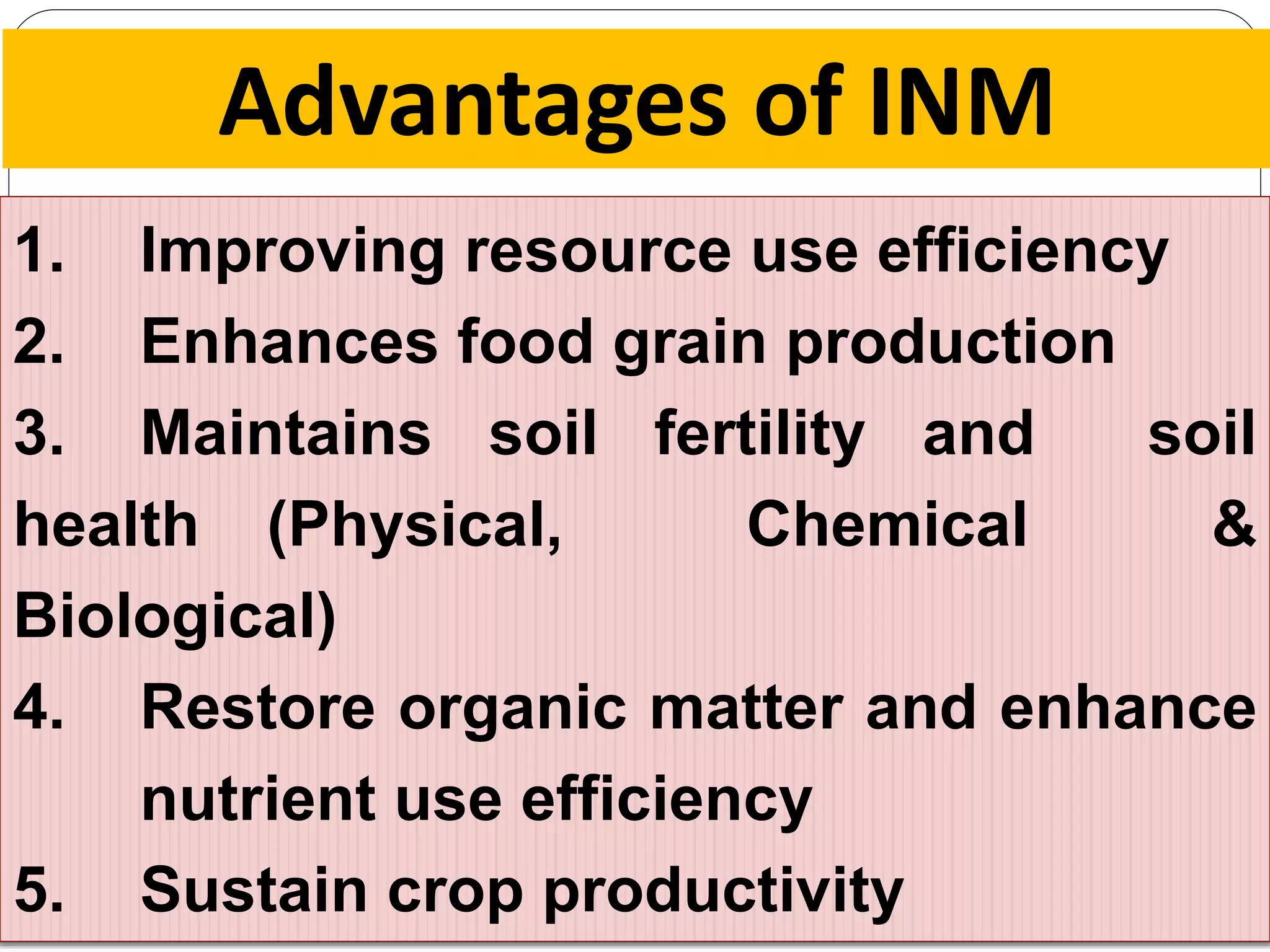
Advantages of INM
1. Improving resource use efficiency
2. Enhances food grain production
3. Maintains soil fertility and soil
health (Physical, Chemical &
Biological)
4. Restore organic matter and enhance
nutrient use efficiency
5. Sustain crop productivity
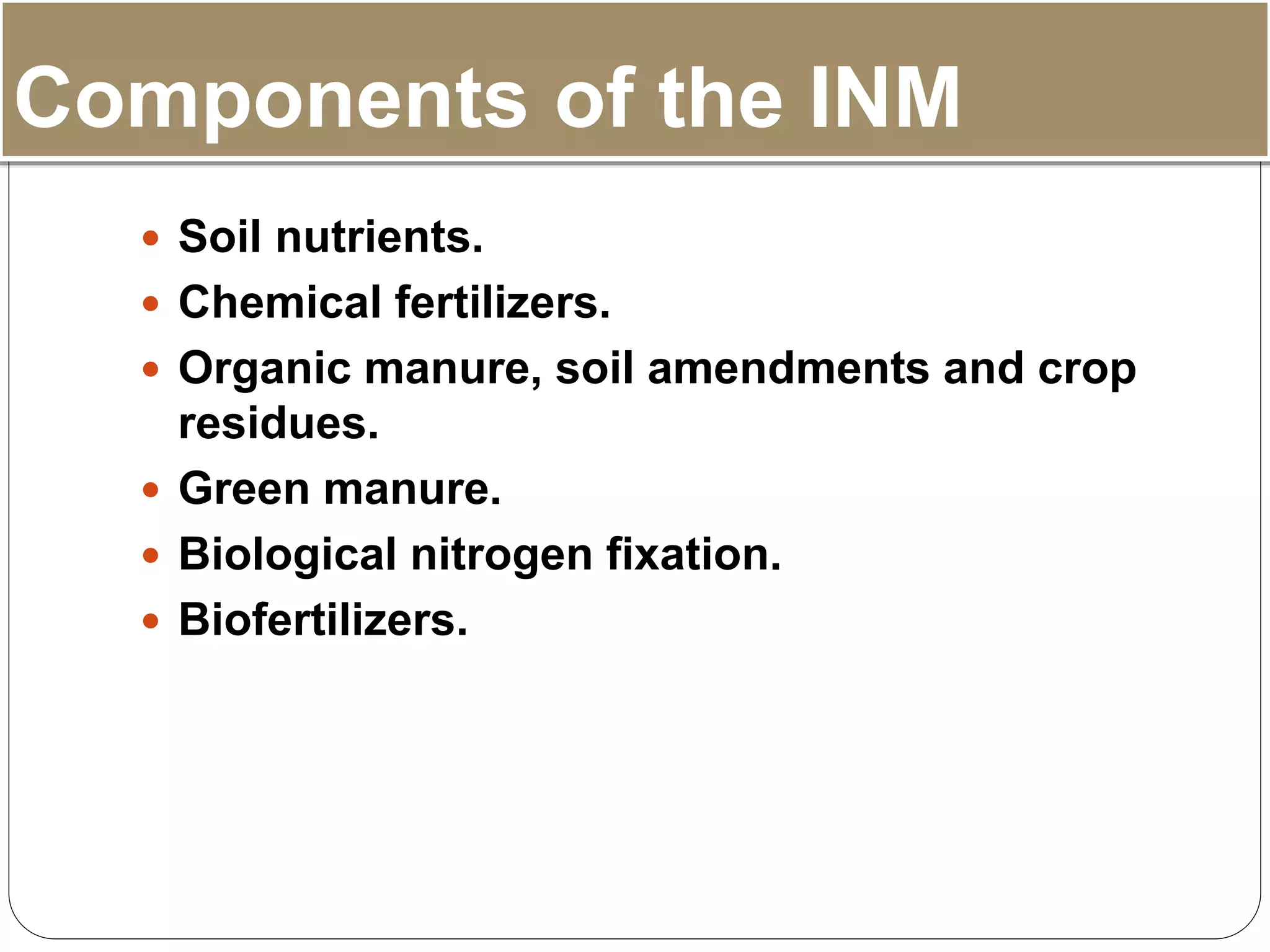
Components of the INM
 Soil nutrients.
 Chemical fertilizers.
 Organic manure, soil amendments and crop
residues.
 Green manure.
 Biological nitrogen fixation.
 Biofertilizers.
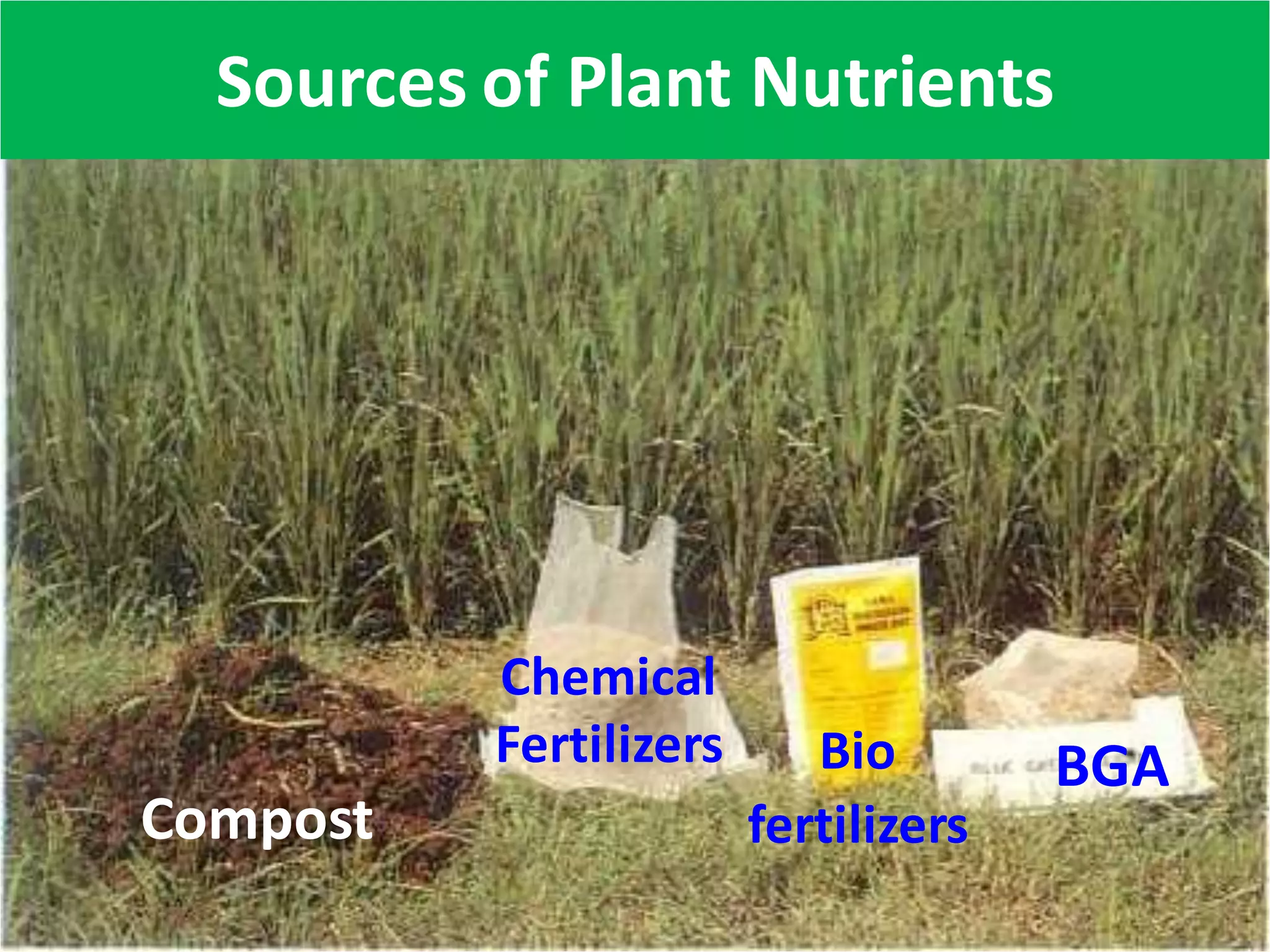
Compost
Chemical
Fertilizers Bio
fertilizers
BGA
Sources of Plant Nutrients
Constraints
Common constraints encountered by the
farmers in adoption of INM technology
are as follows
• Non-availability of FYM
• Difficulties in growing green manure crops
• Non-availability of biofertilizers
• Non-availability of soil testing facilities
• High cost of chemical fertilizers
• Non-availability of water
• Lack of knowledge and poor advisory services
• Non-availability of improved seeds
• Soil conditions
CONCLUSION
 Scientific approach of intercropping increases
the total productivity per unit area and time,
besides equitable and judicious utilization of land
resources and farming inputs including labour.
One of the main reason for higher yield in
intercropping is that the component crops are able
to use natural resources more than grown
separately.
 Integrated nutrient management (INM)
improves the growth, yield and quality of pulses
along with increasing nutrient uptake and its
availability in soil and also giving better economic
return. There is an urgent need to demonstrate the
technology, strengthening extension, distribution
channels and administrative manageability for the
successful promotion of the technology under
Rajesh seminar intercropping and INM

Rajesh seminar intercropping and INM

  • 1.
    M.Sc. Agronomy Intercropping andIntegrated Nutrient Management In Pulses R.K. Doutaniya
  • 2.
    DEPARTMENT OF AGRONOMY Schoolof Agriculture, OPJS University, Churu (Rajasthan) Course seminar On Supervisor Prof.Y.K. Ghilotia Mr. Rajesh Kumar Doutaniya Reg.No.-R16150001 INTERCROPPING AND INTEGRATED NUTRIENT MANAGEMENT IN PULSES
  • 3.
    Contents  Introduction  Intercropping; it benefits and practices  Current Scenario of INM  Integrated Nutrient Management  Constraints  Conclusion
  • 4.
  • 5.
    Types of intercroppingpractices : 1. Multi-intercropping : 2. Relay intercropping : 3. Row intercropping : 4. Strip intercropping : Intercropping :
  • 6.
    Benefits of Intercropping:  Reduces the insect pest populations and diseases.  Reduces soil erosion.  Reduces the weed population  Conservation of soil moisture  Utilizes the farm area more efficiently  Provides two or more different food crops  Use of space between main crop  Improve the soil fertility
  • 7.
    Some pictures ofintercropping systems
  • 8.
  • 9.
    Potential & PresentUtilization of Organic nutrients in India (Million Tonne) Organic Manures Achievable Potential Present Utilization Product Nutrient (NPK) Product Nutrient (NPK) FYM 250 3.75 100 1.5 Crop residue / Rural Compost 150 2.25 100 1.5 City Compost 14 1.87 1.5 0.2 Biogas Slurry 28 1.20 7.0 0.3 Bio Fertilizer 0.03 0.72 0.01 0.24 Green manuring 230 lakh ha 1.16 20.51 lakh ha 0.01 Total 442.03 10.75 208.51 3.75 Jain (2007)
  • 10.
    Fertilizer Consumption inIndia (NPK) Year Consumption (in lakh tones) Per hectare consumption (kg/ha) Food production (mt)N P K Total 2006-07 137.73 55.43 23.35 216.51 111.8 217.30 2007-08 144.19 55.15 26.36 225.70 116.5 230.78 2008-09 150.9 65.06 33.13 249.09 127.2 233.88 2009-10 155.8 72.74 36.32 264.86 135.3 218.20 Economic survey, 2011
  • 11.
    Fertility Status ofIndian Soils Nutrient Extent of deficiency (low to medium soil available nutrient status) Nitrogen 89% Phosphorous 80% Potassium 50% Sulphur 40% Micronutrients Zinc 48% Boron 33% Iron 12% Manganese 5% Jain (2007)
  • 12.
    Integrated Nutrient Management(INM) involves tapping of all the major sources of plant nutrients be it soil nutrient reserve, mineral fertilizers, bulky organic manures, compost, green manures, biological inoculants etc.; in a judicious way and to ensure their efficient use without sacrificing the soil productivity for the future generations. Biofertilizer and Organic Farming, 20
  • 13.
    NEED OF INMIN PULSES Nutrient uptake in pulses has been a naturally occurring integrated phenomena owing to Rhizobium symbiosis and VAM associations. In present context following situations may be visualized for INM in pulses.  Intensive agriculture (replenishing soil health).  Low and imbalance fertilizer application.  Wide spread responses of P,S and micronutrients like Zn, Fe, B and Mo.  Deterioration of native soil property( fear of nutrient mining in pulses).  Pulses are important crop component in diversification
  • 14.
    The key objectivesof INM To maintain or enhance soil productivity through balanced use of mineral fertilizers combined with organic and biological sources of plant nutrients. To improve the stock of plant nutrients in the soil. To improve the efficiency of plant nutrients, thus limiting losses to the environment. To improve physical conditions of soils.
  • 15.
    Advantages of INM 1.Improving resource use efficiency 2. Enhances food grain production 3. Maintains soil fertility and soil health (Physical, Chemical & Biological) 4. Restore organic matter and enhance nutrient use efficiency 5. Sustain crop productivity
  • 16.
    Components of theINM  Soil nutrients.  Chemical fertilizers.  Organic manure, soil amendments and crop residues.  Green manure.  Biological nitrogen fixation.  Biofertilizers.
  • 17.
  • 18.
  • 19.
    Common constraints encounteredby the farmers in adoption of INM technology are as follows • Non-availability of FYM • Difficulties in growing green manure crops • Non-availability of biofertilizers • Non-availability of soil testing facilities • High cost of chemical fertilizers • Non-availability of water • Lack of knowledge and poor advisory services • Non-availability of improved seeds • Soil conditions
  • 20.
    CONCLUSION  Scientific approachof intercropping increases the total productivity per unit area and time, besides equitable and judicious utilization of land resources and farming inputs including labour. One of the main reason for higher yield in intercropping is that the component crops are able to use natural resources more than grown separately.  Integrated nutrient management (INM) improves the growth, yield and quality of pulses along with increasing nutrient uptake and its availability in soil and also giving better economic return. There is an urgent need to demonstrate the technology, strengthening extension, distribution channels and administrative manageability for the successful promotion of the technology under