System Performance
And
Feasibility Study
System Performance
A system’s required performance is defined by
describing its output in a user-acceptable format and at
a higher level of detail than what was described in the
initial investigation. This involves 3 steps :
1. Statement of constraints.
2. Identification of specific system objectives.
3. Description of outputs.
Statement of constraints
Constraints are factors that limit the solution
of the problem. Some constraints are
identified during the initial investigation and
are discussed with the user.
Identification of Specific System
Objectives
After finding the factors that limit the
solution, the analyst proceeds to identify
systems specific objectives. These
objectives are derived at the end of initial
investigation.
Description of Outputs
The final step describing the outputs
required by the user. An actual sketch of
the format and contents of the reports are
prepared here.
Feasibility Study
Feasibility Study can be considered as
preliminary investigation that helps the
management to take decision about
whether study of system should be
feasible for development or not.
1. Economic Feasibility
2. Technical Feasibility
3. Behavioral Feasibility
Types of Feasibilities
Steps in Feasibility Analysis
1. Form a project team and appoint a project leader.
2. Develop system flowcharts.
3. Identify the deficiencies of current system and set
goals.
4. Enumerate the alternative solution or potential
candidate system to meet goals.
Steps in Feasibility Analysis
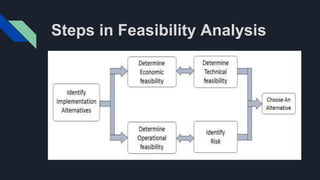
5. Determine the feasibility of each alternative such
as technical feasibility, operational feasibility, etc.
6. Weight the performance and cost effectiveness of
each candidate system.
7. Rank the other alternatives and select the best
candidate system.
8. Prepare a system proposal of final project directive
to management for approval.
Steps in Feasibility Analysis
Thank You

System Performance and Feasibility Study

  • 1.
  • 2.
    System Performance A system’srequired performance is defined by describing its output in a user-acceptable format and at a higher level of detail than what was described in the initial investigation. This involves 3 steps : 1. Statement of constraints. 2. Identification of specific system objectives. 3. Description of outputs.
  • 3.
    Statement of constraints Constraintsare factors that limit the solution of the problem. Some constraints are identified during the initial investigation and are discussed with the user.
  • 4.
    Identification of SpecificSystem Objectives After finding the factors that limit the solution, the analyst proceeds to identify systems specific objectives. These objectives are derived at the end of initial investigation.
  • 5.
    Description of Outputs Thefinal step describing the outputs required by the user. An actual sketch of the format and contents of the reports are prepared here.
  • 6.
    Feasibility Study Feasibility Studycan be considered as preliminary investigation that helps the management to take decision about whether study of system should be feasible for development or not.
  • 7.
    1. Economic Feasibility 2.Technical Feasibility 3. Behavioral Feasibility Types of Feasibilities
  • 8.
    Steps in FeasibilityAnalysis 1. Form a project team and appoint a project leader. 2. Develop system flowcharts. 3. Identify the deficiencies of current system and set goals. 4. Enumerate the alternative solution or potential candidate system to meet goals.
  • 9.
    Steps in FeasibilityAnalysis 5. Determine the feasibility of each alternative such as technical feasibility, operational feasibility, etc. 6. Weight the performance and cost effectiveness of each candidate system. 7. Rank the other alternatives and select the best candidate system. 8. Prepare a system proposal of final project directive to management for approval.
  • 10.
  • 11.