INFORNATIO
N
TECHNOLOG
Y FOR
MANAGERS
SYSTEM DEVELOPMENT LIFE CYCLE
PRESENTED BY
MANTESH S.B.
RAKSHITH K.R.
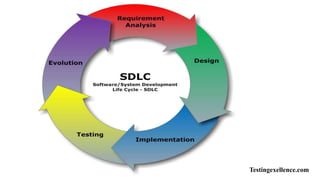
SDLC is a process followed for a
software project, within a software organization.
It consists of a detailed plan describing how to
develop, maintain, replace and alter or enhance
specific software. The life cycle defines a
methodology for improving the quality of
software and the overall development process.
WHAT IS SDLC?
Testingexellence.com
RECOGNITION
OF NEED
• It can be environmental based or organizational
Based.
• Ideas are generated to advance technology.
• User originated ideas prompt initial
investigation.
FEASIBILITY
STUDY
• Economic: cost benefit analysis.
• Technical: we need to check whether existing
computer can support the system.
• Behavioral: an estimate should be made of
how strong a reaction the user staff is likely to
have toward the development of a
computerized system.
FEASIBILITY
STUDY
(STEPS)
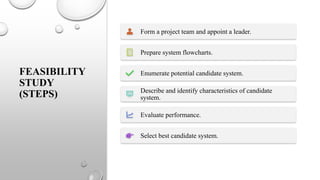
Form a project team and appoint a leader.
Prepare system flowcharts.
Enumerate potential candidate system.
Describe and identify characteristics of candidate
system.
Evaluate performance.
Select best candidate system.
ANALYSIS
• In the analysis stage an in-depth analysis is
performed to obtain a detailed understanding of
the business needs.
• Tools used : DFD’s, interviews, on-site
observation, questionnaire etc.
• Training, experience and common sense are
required for collecting information to do
anlaysis.
DESIGN
• It is the most creative and challenging phase of
SDLC.
• It defines the final system and refers to the
technical specifications.
• DFD’s are used to show the flow of system.
• Two phases: 1. Logical design and physical design
• Logical design: specifies user needs.
• Physical design: tells the programmer what the
candidate system must do.
IMPLEMENTATION
• Less creative then designing phase.
• It is of 3 types:
1. Implementation of a computer system to replace a
manual system.
2. Implementation of a new computer system to
replace an existing one.
3. Implementation of a modified application to
replace existing one on same computer.
TESTING
• Testing is the last phase of the software development
life cycle before the software is delivered to
customers. During testing, experienced testers start
to test the system against the requirements.
• The testers aim to find defects within the system as
well as verifying whether the application behaves as
expected and according to what was documented in
the requirements analysis phase.
• This cycle is repeated until all requirements have
been tested and all the defects have been fixed and
the software is ready to be shipped.
MAINTENANCE
• The emphasis during this phase is to ensure that
needs continue to be met and that the system
continues to perform according to specifications.
• Routine hardware and software maintenance and
upgrades are performed to ensure effective system
operations.
• User training continues during this phase, as
needed, to acquaint new users to the system or to
introduce new features to current users.
CONCLUSION
• All the stages in the software development life
cycle defined above are applicable to any
software development methodology, but the
duration and the activities in each phase depend
on whether you follow the V model
development methodology
REFERENCES
• Https://www.Testingexcellence.Com/software-development-life-
cycle-sdlc-phases
• Https://www.Slideshare.Net
THANK YOU

Software development life cycle

  • 1.
    INFORNATIO N TECHNOLOG Y FOR MANAGERS SYSTEM DEVELOPMENTLIFE CYCLE PRESENTED BY MANTESH S.B. RAKSHITH K.R.
  • 2.
    SDLC is aprocess followed for a software project, within a software organization. It consists of a detailed plan describing how to develop, maintain, replace and alter or enhance specific software. The life cycle defines a methodology for improving the quality of software and the overall development process. WHAT IS SDLC?
  • 3.
  • 4.
    RECOGNITION OF NEED • Itcan be environmental based or organizational Based. • Ideas are generated to advance technology. • User originated ideas prompt initial investigation.
  • 5.
    FEASIBILITY STUDY • Economic: costbenefit analysis. • Technical: we need to check whether existing computer can support the system. • Behavioral: an estimate should be made of how strong a reaction the user staff is likely to have toward the development of a computerized system.
  • 6.
    FEASIBILITY STUDY (STEPS) Form a projectteam and appoint a leader. Prepare system flowcharts. Enumerate potential candidate system. Describe and identify characteristics of candidate system. Evaluate performance. Select best candidate system.
  • 7.
    ANALYSIS • In theanalysis stage an in-depth analysis is performed to obtain a detailed understanding of the business needs. • Tools used : DFD’s, interviews, on-site observation, questionnaire etc. • Training, experience and common sense are required for collecting information to do anlaysis.
  • 8.
    DESIGN • It isthe most creative and challenging phase of SDLC. • It defines the final system and refers to the technical specifications. • DFD’s are used to show the flow of system. • Two phases: 1. Logical design and physical design • Logical design: specifies user needs. • Physical design: tells the programmer what the candidate system must do.
  • 9.
    IMPLEMENTATION • Less creativethen designing phase. • It is of 3 types: 1. Implementation of a computer system to replace a manual system. 2. Implementation of a new computer system to replace an existing one. 3. Implementation of a modified application to replace existing one on same computer.
  • 10.
    TESTING • Testing isthe last phase of the software development life cycle before the software is delivered to customers. During testing, experienced testers start to test the system against the requirements. • The testers aim to find defects within the system as well as verifying whether the application behaves as expected and according to what was documented in the requirements analysis phase. • This cycle is repeated until all requirements have been tested and all the defects have been fixed and the software is ready to be shipped.
  • 11.
    MAINTENANCE • The emphasisduring this phase is to ensure that needs continue to be met and that the system continues to perform according to specifications. • Routine hardware and software maintenance and upgrades are performed to ensure effective system operations. • User training continues during this phase, as needed, to acquaint new users to the system or to introduce new features to current users.
  • 12.
    CONCLUSION • All thestages in the software development life cycle defined above are applicable to any software development methodology, but the duration and the activities in each phase depend on whether you follow the V model development methodology
  • 13.