Software Copyright 
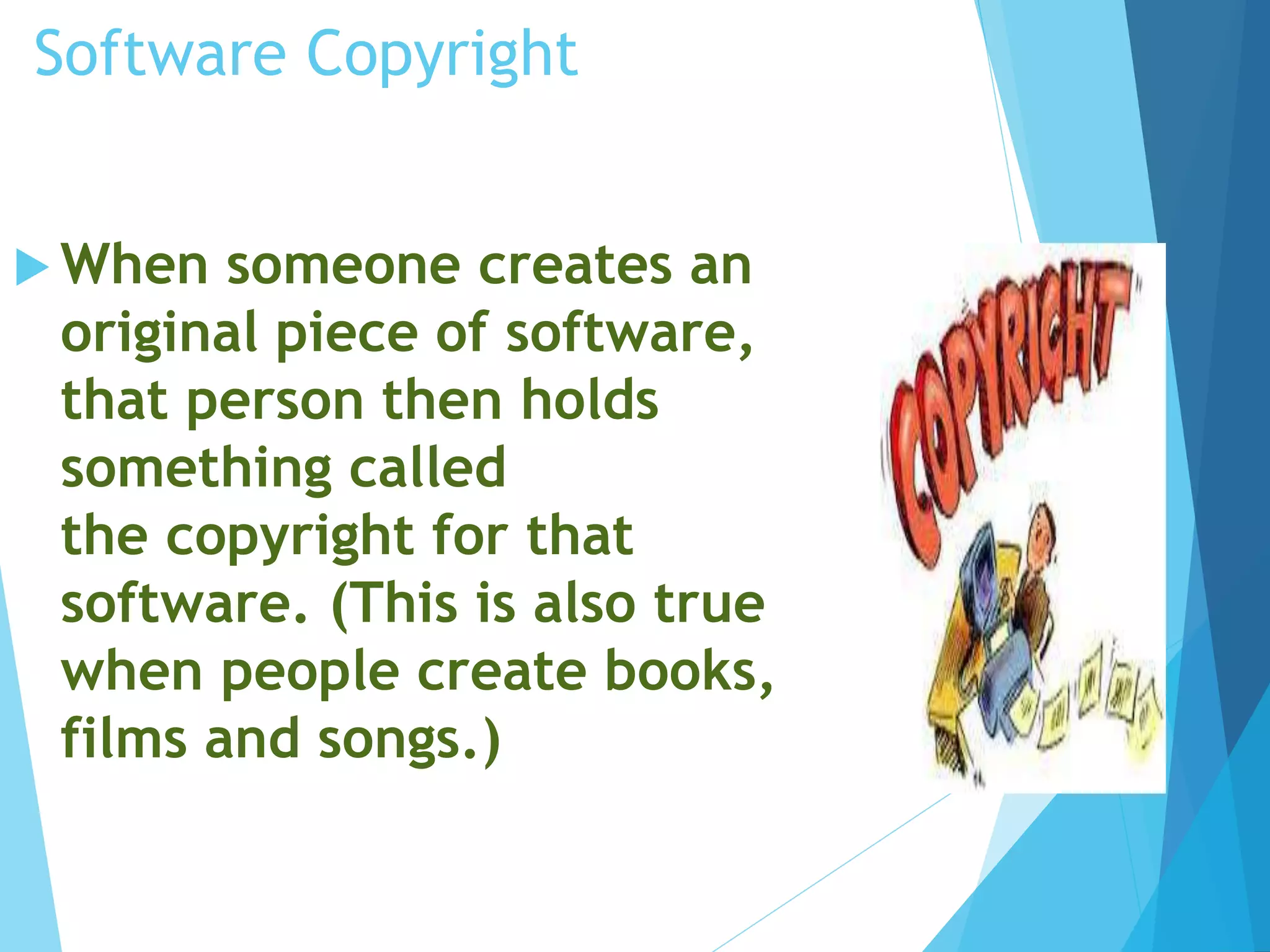
When someone creates an 
original piece of software, 
that person then holds 
something called 
the copyright for that 
software. (This is also true 
when people create books, 
films and songs.)
General Information about Fair Use 
 Copyright law protects certain 
exclusive rights of copyright holders. 
 However, copyright law does allow 
limited copying, distribution, and 
display of copyrighted works 
without the author's permission. 
2
Copyright Infringement 
 An increasing number of Internet users are 
making illegal copies of music. 
 Rationalizations that copyright violators use: 
 “It’s OK to download MP3 files if I only keep 
them for 24 hours.” 
 “It’s free advertising for the band.” 
 “It’s legal because I don’t charge any money 
for sharing them.” 
Slide 
3
What Can We Use? 
 Freeware (not shareware) 
 Most Government materials 
 Facts 
 Ideas, processes, methods, and 
systems described in copyrighted 
materials
 Under copyright law, people must not: 
Copy the software for other people 
 Lend the software to other people 
 Rent the software to other people 
 Install the software on a network when 
other users can access it (unless it is a 
special ‘network’ version) 
If someone breaks the copyright, 
they can be punished by fines or 
even by imprisonment.
How to register a copyright? 
 Copyright registration is a simple 
process. First, you fill out a brief 
application form, which requires 
some basic information about the 
work, including: 
 the title of the work 
 who created the work and when, 
and 
 who owns the copyright. 
 Then, send the application, a small 
fee, and one or two copies of all or 
part of the software program to 
the Copyright Office..
Uses of copyright registeration 
 Registration Allows You to Sue 
Infringers:- 
If you want to stop someone from 
using your work, you must sue the 
infringer in federal court. However, in 
order to do so, you must first have 
registered the copyright with the 
Copyright Office 
 Registration Gets You Statutory 
Damages:- 
 Registration May Keep You Out of 
Court:-
Examples Of Software 
Copyright 
 Windows 
 IOS 
Virtually all software is protected by 
copyright--even Linux (Linux just has 
a really broad license). There is also a 
program called Official Copyright 
Software that helps creators through 
the process of registering their works.
Advantages Of Software 
Copyright 
 Right to Produce/Reproduce - 
Copyright gives the creator of a 
piece of intellectual property not 
ideas) the sole right to produce and 
reproduce their work.
 Protection - Copyright prevents your 
work from being stolen or misused 
by others. 
 Moral Rights - Copyright allows the 
holder of the copyright to object to 
uses of their work that they find 
morally objectionable.
Disadvantages of Software 
Copyright 
 Inability to Share Work - Copyrights 
key advantage is also it's primary 
disadvantage. Copyright does not 
allow you to openly permit others 
to use your work or to distribute it, 
even if they are not doing it for 
profit. This can mean that your 
work is disseminated slowly or not 
at all.
THANK YOU

Software copyright

  • 1.
    Software Copyright Whensomeone creates an original piece of software, that person then holds something called the copyright for that software. (This is also true when people create books, films and songs.)
  • 2.
    General Information aboutFair Use  Copyright law protects certain exclusive rights of copyright holders.  However, copyright law does allow limited copying, distribution, and display of copyrighted works without the author's permission. 2
  • 3.
    Copyright Infringement An increasing number of Internet users are making illegal copies of music.  Rationalizations that copyright violators use:  “It’s OK to download MP3 files if I only keep them for 24 hours.”  “It’s free advertising for the band.”  “It’s legal because I don’t charge any money for sharing them.” Slide 3
  • 4.
    What Can WeUse?  Freeware (not shareware)  Most Government materials  Facts  Ideas, processes, methods, and systems described in copyrighted materials
  • 5.
     Under copyrightlaw, people must not: Copy the software for other people  Lend the software to other people  Rent the software to other people  Install the software on a network when other users can access it (unless it is a special ‘network’ version) If someone breaks the copyright, they can be punished by fines or even by imprisonment.
  • 6.
    How to registera copyright?  Copyright registration is a simple process. First, you fill out a brief application form, which requires some basic information about the work, including:  the title of the work  who created the work and when, and  who owns the copyright.  Then, send the application, a small fee, and one or two copies of all or part of the software program to the Copyright Office..
  • 7.
    Uses of copyrightregisteration  Registration Allows You to Sue Infringers:- If you want to stop someone from using your work, you must sue the infringer in federal court. However, in order to do so, you must first have registered the copyright with the Copyright Office  Registration Gets You Statutory Damages:-  Registration May Keep You Out of Court:-
  • 8.
    Examples Of Software Copyright  Windows  IOS Virtually all software is protected by copyright--even Linux (Linux just has a really broad license). There is also a program called Official Copyright Software that helps creators through the process of registering their works.
  • 9.
    Advantages Of Software Copyright  Right to Produce/Reproduce - Copyright gives the creator of a piece of intellectual property not ideas) the sole right to produce and reproduce their work.
  • 10.
     Protection -Copyright prevents your work from being stolen or misused by others.  Moral Rights - Copyright allows the holder of the copyright to object to uses of their work that they find morally objectionable.
  • 11.
    Disadvantages of Software Copyright  Inability to Share Work - Copyrights key advantage is also it's primary disadvantage. Copyright does not allow you to openly permit others to use your work or to distribute it, even if they are not doing it for profit. This can mean that your work is disseminated slowly or not at all.
  • 12.