What Is a Trade Secret?
Other Forms of Intellectual Property (We’ll Get
to Trade Secrets on the Next Slide)
 A Trademark is anything that identifies and distinguishes the
source of the goods or services of one party from those of
others.
 A Patent for an invention is the grant of a property right to the
inventor.
 Copyright protects original works of authorship, including
literary, dramatic, musical, and artistic works. Copyright law
protects the form of expression - the underlying ideas are not
copyrightable.
OK, So What’s a Trade Secret?
 A Trade Secret is a piece of information, not generally known
or reasonably ascertainable, that gives a business an economic
advantage over its competitors.
 Trade Secret protection requires reasonable efforts to maintain
secrecy.
 Some of the most famous Trade Secrets include:
 Recipes (Coca-Cola)
 Formulas (WD-40)
 Algorithms (Google Search)
 For most businesses – may include customer lists, internal specs
and best practices guides.
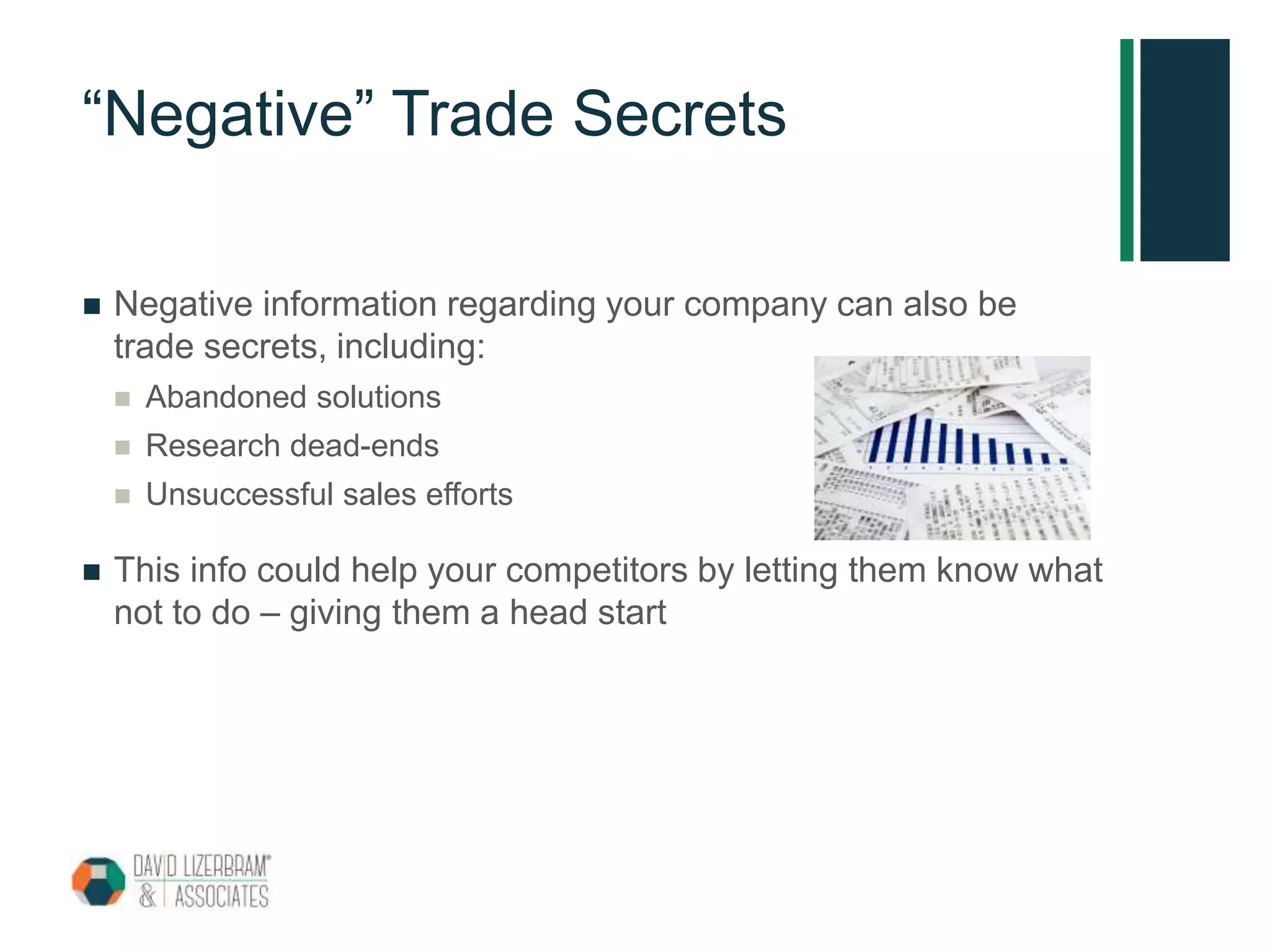
“Negative” Trade Secrets
 Negative information regarding your company can also be
trade secrets, including:
 Abandoned solutions
 Research dead-ends
 Unsuccessful sales efforts
 This info could help your competitors by letting them know what
not to do – giving them a head start
How Long Do Trade Secrets Last?
 Potentially forever - if the information continues to meet the
qualifications (remember: a piece of information, not generally
known or reasonably ascertainable, that gives a business an
economic advantage over its competitors), and it’s not
revealed, it remains a trade secret.
 This indefinite life span means that trade secrets can be very
valuable assets for your company.
 However: rights in a Trade Secret only exist as long as the
secret is maintained.
 If you broadcast it to the world, you’re out of luck.
Legal Protection for Trade Secrets
 Trade Secrets are governed in the U.S. by State and Federal
Laws including the Uniform Trade Secrets Act (adopted by
most states in various forms.)
 Misappropriation by Improper Means is punishable:
 May include theft, bribery, misrepresentation, breach of duty to
maintain secrecy, or espionage
 In 2016, Congress passed the Defend Trade Secrets Act,
creating a Federal right of action for Trade Secret
Misappropriation.
 However: you can’t prevent others from independently
discovering or reverse engineering your trade secrets.
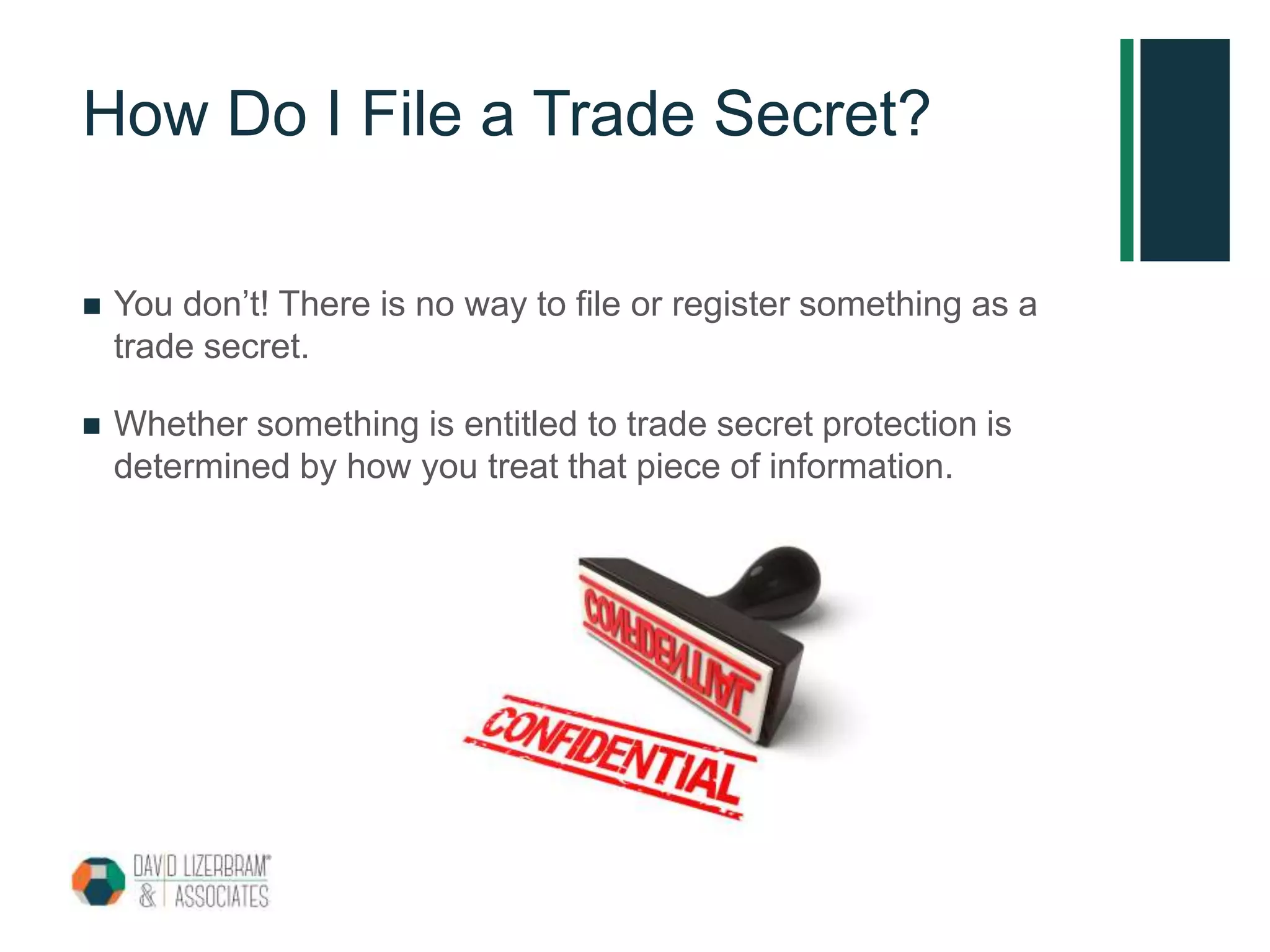
How Do I File a Trade Secret?
 You don’t! There is no way to file or register something as a
trade secret.
 Whether something is entitled to trade secret protection is
determined by how you treat that piece of information.
How to Protect Trade Secrets
 Employ multiple means of security
 Physical security for docs & prototypes
 Best Practices: Don’t talk about or publicize
your trade secrets
 Contract: Confidentiality or “Non-Disclosure”
Agreements
 For employees and 3rd parties
Common Trade Secret
Security Procedures
 Restricting access to “need to know” individuals
 Marking docs or security areas “Proprietary and Confidential”
 Keeping info under lock and key or imposing password
protection
 Monitoring access to info through log-in procedures & sign-in
sheets
 Shredding or destroying copies
 Exit interviews and agreements for departing employees
The Inevitable Disclosure Doctrine
 Courts may prevent former employees from working for a
competitor when disclosure of trade secrets would be inevitable
 Factors considered include whether:
 The new employer is a direct competitor
 The new position is nearly identical to the old one, such that the
employee could not reasonably be expected to fulfill the new job
responsibilities without utilizing trade secrets of former employer
 The trade secrets at issue are highly valuable to both the former and
the new employer
 Warning: Don’t rely on this approach– not all states &
jurisdictions have adopted this doctrine. This is a last resort!
What Happens When a
Trade Secret is Breached?
 Legal remedies available may include:
 Monetary damages
 Injunctive relief (temporary restraining order) – preventing imminent
disclosure
 Accounting for profits
 Destruction of wrongfully made goods
 Catch-22: Legal enforcement may require disclosure of the
trade secret
 Courts may impose a “protective order” to prevent the general public
gaining this information
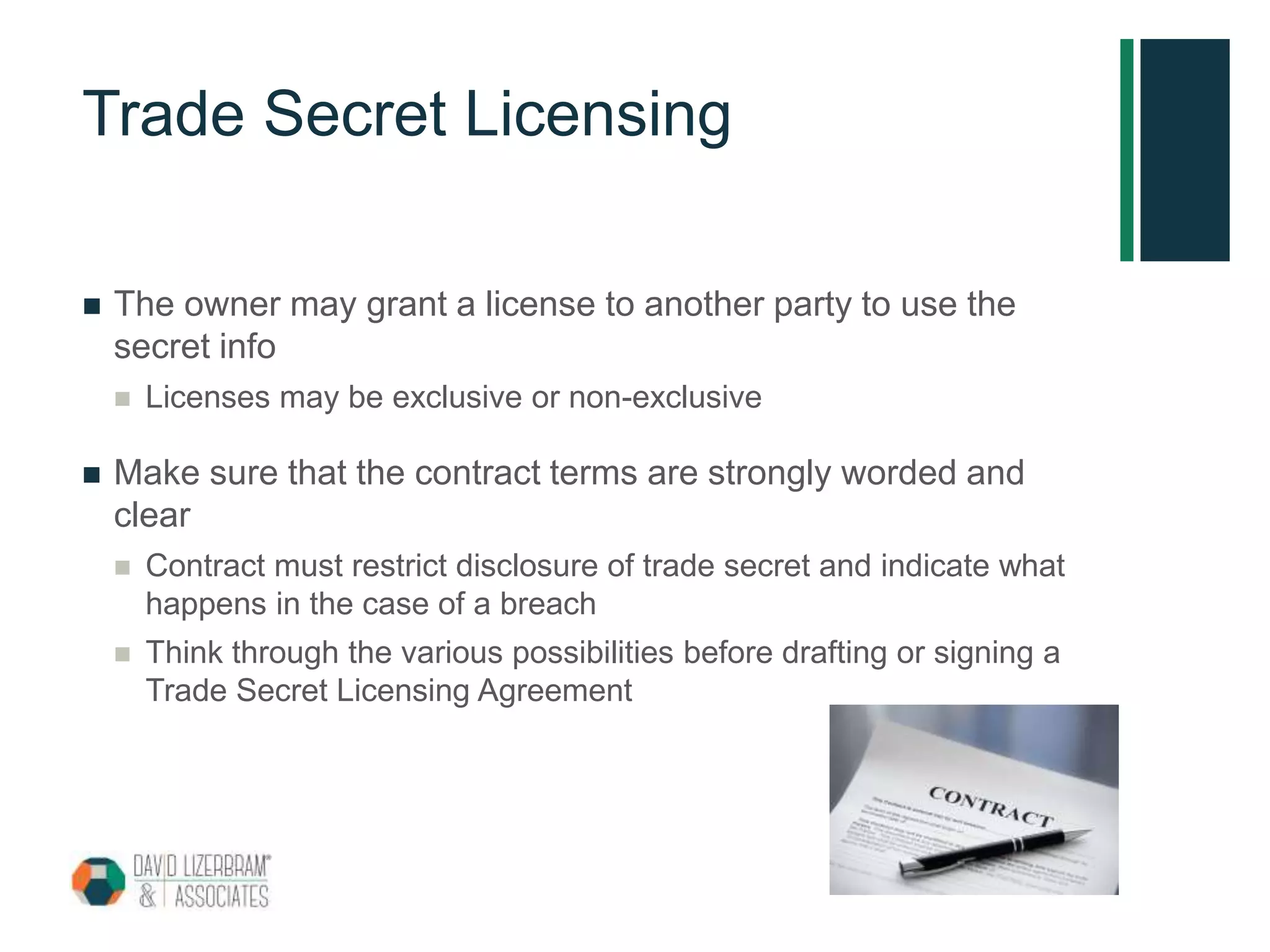
Trade Secret Licensing
 The owner may grant a license to another party to use the
secret info
 Licenses may be exclusive or non-exclusive
 Make sure that the contract terms are strongly worded and
clear
 Contract must restrict disclosure of trade secret and indicate what
happens in the case of a breach
 Think through the various possibilities before drafting or signing a
Trade Secret Licensing Agreement
Prepared and Presented By:
David Lizerbram
David Lizerbram & Associates®
www.LizerbramLaw.com
Twitter: @DavidLizerbram
Direct Phone: (619) 517-2272
3180 University Avenue, Suite 260
San Diego, California 92104
Final Note: This Presentation is Not
Legal Advice
I am not your attorney. Nothing in this presentation should be
taken as legal advice. This is simply general information that may
be helpful. Consult an attorney if you have any specific questions
or concerns.

What Is a Trade Secret?

  • 1.
    What Is aTrade Secret?
  • 2.
    Other Forms ofIntellectual Property (We’ll Get to Trade Secrets on the Next Slide)  A Trademark is anything that identifies and distinguishes the source of the goods or services of one party from those of others.  A Patent for an invention is the grant of a property right to the inventor.  Copyright protects original works of authorship, including literary, dramatic, musical, and artistic works. Copyright law protects the form of expression - the underlying ideas are not copyrightable.
  • 3.
    OK, So What’sa Trade Secret?  A Trade Secret is a piece of information, not generally known or reasonably ascertainable, that gives a business an economic advantage over its competitors.  Trade Secret protection requires reasonable efforts to maintain secrecy.  Some of the most famous Trade Secrets include:  Recipes (Coca-Cola)  Formulas (WD-40)  Algorithms (Google Search)  For most businesses – may include customer lists, internal specs and best practices guides.
  • 4.
    “Negative” Trade Secrets Negative information regarding your company can also be trade secrets, including:  Abandoned solutions  Research dead-ends  Unsuccessful sales efforts  This info could help your competitors by letting them know what not to do – giving them a head start
  • 5.
    How Long DoTrade Secrets Last?  Potentially forever - if the information continues to meet the qualifications (remember: a piece of information, not generally known or reasonably ascertainable, that gives a business an economic advantage over its competitors), and it’s not revealed, it remains a trade secret.  This indefinite life span means that trade secrets can be very valuable assets for your company.  However: rights in a Trade Secret only exist as long as the secret is maintained.  If you broadcast it to the world, you’re out of luck.
  • 6.
    Legal Protection forTrade Secrets  Trade Secrets are governed in the U.S. by State and Federal Laws including the Uniform Trade Secrets Act (adopted by most states in various forms.)  Misappropriation by Improper Means is punishable:  May include theft, bribery, misrepresentation, breach of duty to maintain secrecy, or espionage  In 2016, Congress passed the Defend Trade Secrets Act, creating a Federal right of action for Trade Secret Misappropriation.  However: you can’t prevent others from independently discovering or reverse engineering your trade secrets.
  • 7.
    How Do IFile a Trade Secret?  You don’t! There is no way to file or register something as a trade secret.  Whether something is entitled to trade secret protection is determined by how you treat that piece of information.
  • 8.
    How to ProtectTrade Secrets  Employ multiple means of security  Physical security for docs & prototypes  Best Practices: Don’t talk about or publicize your trade secrets  Contract: Confidentiality or “Non-Disclosure” Agreements  For employees and 3rd parties
  • 9.
    Common Trade Secret SecurityProcedures  Restricting access to “need to know” individuals  Marking docs or security areas “Proprietary and Confidential”  Keeping info under lock and key or imposing password protection  Monitoring access to info through log-in procedures & sign-in sheets  Shredding or destroying copies  Exit interviews and agreements for departing employees
  • 10.
    The Inevitable DisclosureDoctrine  Courts may prevent former employees from working for a competitor when disclosure of trade secrets would be inevitable  Factors considered include whether:  The new employer is a direct competitor  The new position is nearly identical to the old one, such that the employee could not reasonably be expected to fulfill the new job responsibilities without utilizing trade secrets of former employer  The trade secrets at issue are highly valuable to both the former and the new employer  Warning: Don’t rely on this approach– not all states & jurisdictions have adopted this doctrine. This is a last resort!
  • 11.
    What Happens Whena Trade Secret is Breached?  Legal remedies available may include:  Monetary damages  Injunctive relief (temporary restraining order) – preventing imminent disclosure  Accounting for profits  Destruction of wrongfully made goods  Catch-22: Legal enforcement may require disclosure of the trade secret  Courts may impose a “protective order” to prevent the general public gaining this information
  • 12.
    Trade Secret Licensing The owner may grant a license to another party to use the secret info  Licenses may be exclusive or non-exclusive  Make sure that the contract terms are strongly worded and clear  Contract must restrict disclosure of trade secret and indicate what happens in the case of a breach  Think through the various possibilities before drafting or signing a Trade Secret Licensing Agreement
  • 13.
    Prepared and PresentedBy: David Lizerbram David Lizerbram & Associates® www.LizerbramLaw.com Twitter: @DavidLizerbram Direct Phone: (619) 517-2272 3180 University Avenue, Suite 260 San Diego, California 92104
  • 14.
    Final Note: ThisPresentation is Not Legal Advice I am not your attorney. Nothing in this presentation should be taken as legal advice. This is simply general information that may be helpful. Consult an attorney if you have any specific questions or concerns.