Intellectual Property
Lecture 5
Syed Saqib Raza Rizvi
Index
• What is Intellectual Property??
• Categories of IP??
• When it Started??
• Why Promote and Protect IP??
• The Average Person Benefit??
• Five Main Types Of IP Rights??
• Trade Secreats??
• Protections for Software – Software Copyrights??
• Violations of Software Copyrights??
• Open-Source: Consequences of Proprietary Software??
• Open Source Definition??
• Beneficial Consequences of Open-Source Software??
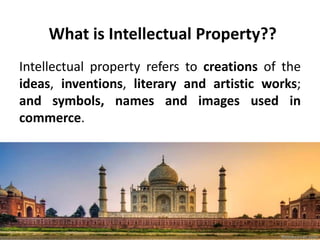
What is Intellectual Property??
Intellectual property refers to creations of the
ideas, inventions, literary and artistic works;
and symbols, names and images used in
commerce.
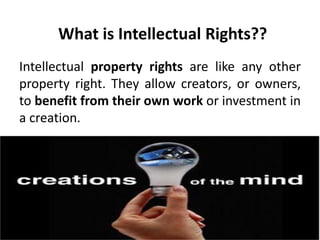
What is Intellectual Rights??
Intellectual property rights are like any other
property right. They allow creators, or owners,
to benefit from their own work or investment in
a creation.
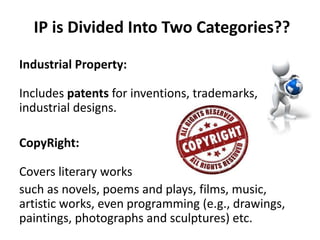
IP is Divided Into Two Categories??
Industrial Property:
Includes patents for inventions, trademarks,
industrial designs.
CopyRight:
Covers literary works
such as novels, poems and plays, films, music,
artistic works, even programming (e.g., drawings,
paintings, photographs and sculptures) etc.
When it Started??
The importance of intellectual property was first
recognized in the Paris Convention for the
Protection of Industrial Property (1883) and the
Berne Convention for the Protection of Literary
and Artistic Works (1886). Both treaties are
administered by the World Intellectual Property
Organization (WIPO).
Why Promote and Protect IP??
First, the progress and well-being of humanity
depends upon capacity to create and invent new
works in the areas of technology and culture.
Second, the legal protection of new creations
encourages the commitment of additional
resources for further innovation.
Third, the promotion and protection of intellectual
property makes economic growth, creates new
jobs and industries.
The Average Person Benefit??
Some Examples:
The multibillion dollar film, recording, publishing and
software industries, would not exist without copyright
protection??
Without the rewards provided to researchers and
inventors would have little incentive to continue
producing better and more efficient products for
consumers??
Consumers would have no means to confidently buy
products or services without reliable, international
trademark protection and enforcement mechanisms
to discourage counterfeiting and piracy??
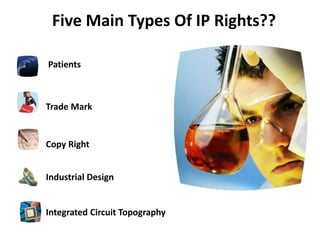
Five Main Types Of IP Rights??
Patients
Trade Mark
Copy Right
Industrial Design
Integrated Circuit Topography
What is a Patent??
“Invention in Documented form”
A patent is an exclusive right granted for an
invention – a product or process that provides a
new way of doing something, or that offers a new
technical solution to a problem.
A product or process that provides a new way of
doing something, or that offers a new technical
solution to a problem.
Protection Do Patents Offer?
Patent protection means an invention cannot be
commercially made, used, distributed or sold
without the patent owner’s consent. Patent rights
are usually enforced in courts that, in most
systems, hold the authority to stop patent
infringement. Conversely, a court can also declare
a patent invalid upon a successful challenge by a
third party.
What is a Patent??
New inventions or any new and useful improvement of
an existing invention
• Novel: must be new, first in the world
• Useful: functional and operative
• Inventive: must show ingenuity and innovative
Rights Do Patent Owners Have?
A patent owner has the right to decide who may
or may not use the patented invention for the
period during which it is protected. Patent owners
may give permission to, or license, other parties to
use their inventions on mutually agreed terms.
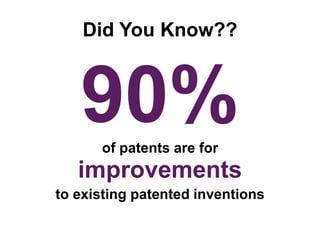
Did You Know??
90%of patents are for
improvements
to existing patented inventions
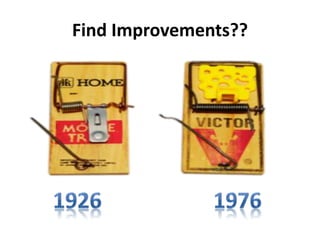
Find Improvements??
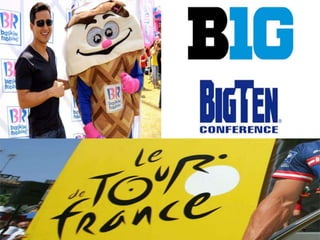
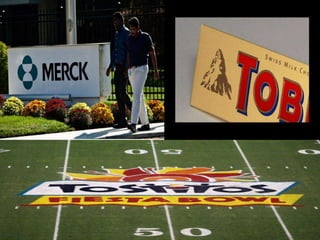
What is a trademark?
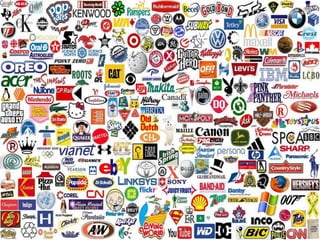
A trademark is a distinctive sign that identifies
certain goods or services produced or provided
by an individual or a company.
What is a trademark?
• In this Act a “trade mark” means any sign
capable of being
• Represented graphically which is capable of
distinguishing goods or services
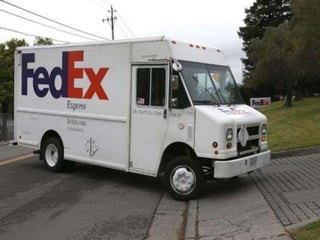
• A trade mark may, in particular, consist of
words (including personal names), designs,
letters, numerals or the shape of goods or
their packaging
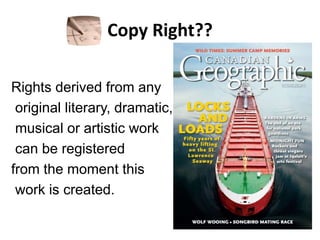
Copy Right??
Rights derived from any
original literary, dramatic,
musical or artistic work
can be registered
from the moment this
work is created.
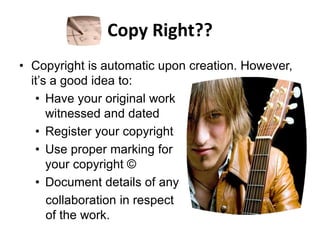
Copy Right??
• Copyright is automatic upon creation. However,
it’s a good idea to:
• Have your original work
witnessed and dated
• Register your copyright
• Use proper marking for
your copyright ©
• Document details of any
collaboration in respect
of the work.
What Rights do Copyright and Related
Rights Provide?
The creators of works protected by
copyright, and their heirs and successors
(generally referred to as “right holders”),
have certain basic rights under copyright
law. They hold the exclusive right to use or
authorize others to use the work on agreed
terms.
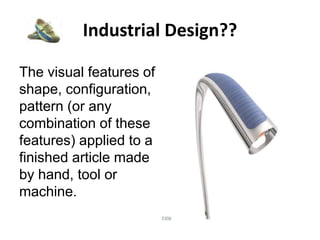
Industrial Design??
The visual features of
shape, configuration,
pattern (or any
combination of these
features) applied to a
finished article made
by hand, tool or
machine.
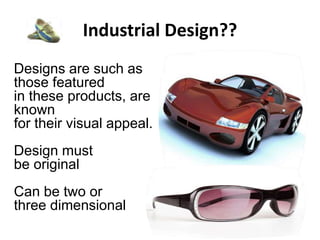
Industrial Design??
Designs are such as
those featured
in these products, are
known
for their visual appeal.
Design must
be original
Can be two or
three dimensional
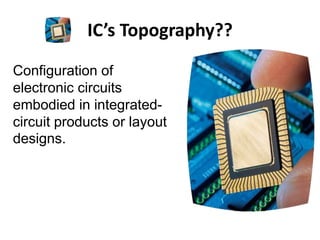
IC’s Topography??
Configuration of
electronic circuits
embodied in integrated-
circuit products or layout
designs.
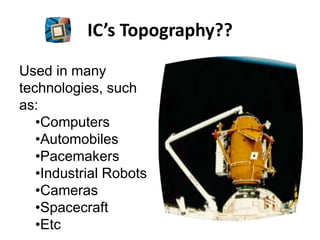
IC’s Topography??
Used in many
technologies, such
as:
•Computers
•Automobiles
•Pacemakers
•Industrial Robots
•Cameras
•Spacecraft
•Etc
The World Intellectual Property
Organization (WIPO)
Confidential piece of intellectual property that gives
company a competitive advantage
Employees are asked to make confidentiality agreement
Examples:
Formulas, customers’ lists, strategic plans, proprietary
design
• Reverse engineering allowed (buying a can of Coca-
Cola and trying to figure out it’s formula is legal)
• May be compromised when employees leave firm
Protections for Software – Software
Copyrights??
Copyright protection began
1964
What gets copyrighted?
Expression of idea, not idea itself
Object program (.exe), not source program
• Because source codes are secrets
• Companies deliver .exe
Companies treat source code as a trade secret
Violations of Software Copyrights
Copying a program to give
or sell to someone else
Preloading a program onto the
hard disk of a computer being
sold
Distributing a program
over the Internet
Safe Software Development
Reverse engineering okay
Companies must protect against unconscious
copying
Making the same duplicate of a program because
programmers move from firm to another
Solution: “open source” software development
strategy
Open-Source Software:
Consequences of Proprietary Software
Open-Source Software:
Consequences of Proprietary Software
Increasingly harsh measures being taken to
enforce copyrights (infringe our liberties)
This act was created in an era with difficulties to
make copies. This is not the case NOW.
Copyrights are not serving their purpose of
promoting progress.
They make authors wealthy
It is wrong to allow someone to “own” a piece of
intellectual property
Cooperation is more important than copyright,
Open Source Definition
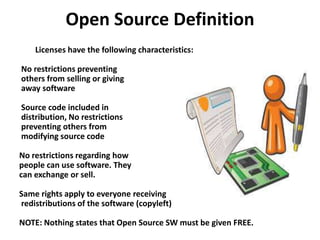
Licenses have the following characteristics:
No restrictions preventing
others from selling or giving
away software
Source code included in
distribution, No restrictions
preventing others from
modifying source code
No restrictions regarding how
people can use software. They
can exchange or sell.
Same rights apply to everyone receiving
redistributions of the software (copyleft)
NOTE: Nothing states that Open Source SW must be given FREE.
Beneficial Consequences of Open-
Source Software
• Gives everyone opportunity to improve program
• New versions of programs appear more frequently
• Eliminates tension between obeying law and helping
others
• Programs belong to entire community
• Shifts focus from manufacturing to service
Buying Open Source SW with easy installation steps
Providing great manuals
Providing support after sales
Introduction to Intellectual Property

Introduction to Intellectual Property

  • 1.
  • 2.
    Index • What isIntellectual Property?? • Categories of IP?? • When it Started?? • Why Promote and Protect IP?? • The Average Person Benefit?? • Five Main Types Of IP Rights?? • Trade Secreats?? • Protections for Software – Software Copyrights?? • Violations of Software Copyrights?? • Open-Source: Consequences of Proprietary Software?? • Open Source Definition?? • Beneficial Consequences of Open-Source Software??
  • 3.
    What is IntellectualProperty?? Intellectual property refers to creations of the ideas, inventions, literary and artistic works; and symbols, names and images used in commerce.
  • 4.
    What is IntellectualRights?? Intellectual property rights are like any other property right. They allow creators, or owners, to benefit from their own work or investment in a creation.
  • 5.
    IP is DividedInto Two Categories?? Industrial Property: Includes patents for inventions, trademarks, industrial designs. CopyRight: Covers literary works such as novels, poems and plays, films, music, artistic works, even programming (e.g., drawings, paintings, photographs and sculptures) etc.
  • 6.
    When it Started?? Theimportance of intellectual property was first recognized in the Paris Convention for the Protection of Industrial Property (1883) and the Berne Convention for the Protection of Literary and Artistic Works (1886). Both treaties are administered by the World Intellectual Property Organization (WIPO).
  • 7.
    Why Promote andProtect IP?? First, the progress and well-being of humanity depends upon capacity to create and invent new works in the areas of technology and culture. Second, the legal protection of new creations encourages the commitment of additional resources for further innovation. Third, the promotion and protection of intellectual property makes economic growth, creates new jobs and industries.
  • 8.
    The Average PersonBenefit?? Some Examples: The multibillion dollar film, recording, publishing and software industries, would not exist without copyright protection?? Without the rewards provided to researchers and inventors would have little incentive to continue producing better and more efficient products for consumers?? Consumers would have no means to confidently buy products or services without reliable, international trademark protection and enforcement mechanisms to discourage counterfeiting and piracy??
  • 9.
    Five Main TypesOf IP Rights?? Patients Trade Mark Copy Right Industrial Design Integrated Circuit Topography
  • 10.
    What is aPatent?? “Invention in Documented form” A patent is an exclusive right granted for an invention – a product or process that provides a new way of doing something, or that offers a new technical solution to a problem. A product or process that provides a new way of doing something, or that offers a new technical solution to a problem.
  • 11.
    Protection Do PatentsOffer? Patent protection means an invention cannot be commercially made, used, distributed or sold without the patent owner’s consent. Patent rights are usually enforced in courts that, in most systems, hold the authority to stop patent infringement. Conversely, a court can also declare a patent invalid upon a successful challenge by a third party.
  • 12.
    What is aPatent?? New inventions or any new and useful improvement of an existing invention • Novel: must be new, first in the world • Useful: functional and operative • Inventive: must show ingenuity and innovative
  • 13.
    Rights Do PatentOwners Have? A patent owner has the right to decide who may or may not use the patented invention for the period during which it is protected. Patent owners may give permission to, or license, other parties to use their inventions on mutually agreed terms.
  • 14.
    Did You Know?? 90%ofpatents are for improvements to existing patented inventions
  • 15.
  • 16.
    What is atrademark? A trademark is a distinctive sign that identifies certain goods or services produced or provided by an individual or a company.
  • 17.
    What is atrademark? • In this Act a “trade mark” means any sign capable of being • Represented graphically which is capable of distinguishing goods or services • A trade mark may, in particular, consist of words (including personal names), designs, letters, numerals or the shape of goods or their packaging
  • 23.
    Copy Right?? Rights derivedfrom any original literary, dramatic, musical or artistic work can be registered from the moment this work is created.
  • 24.
    Copy Right?? • Copyrightis automatic upon creation. However, it’s a good idea to: • Have your original work witnessed and dated • Register your copyright • Use proper marking for your copyright © • Document details of any collaboration in respect of the work.
  • 25.
    What Rights doCopyright and Related Rights Provide? The creators of works protected by copyright, and their heirs and successors (generally referred to as “right holders”), have certain basic rights under copyright law. They hold the exclusive right to use or authorize others to use the work on agreed terms.
  • 26.
    Industrial Design?? The visualfeatures of shape, configuration, pattern (or any combination of these features) applied to a finished article made by hand, tool or machine.
  • 27.
    Industrial Design?? Designs aresuch as those featured in these products, are known for their visual appeal. Design must be original Can be two or three dimensional
  • 28.
    IC’s Topography?? Configuration of electroniccircuits embodied in integrated- circuit products or layout designs.
  • 29.
    IC’s Topography?? Used inmany technologies, such as: •Computers •Automobiles •Pacemakers •Industrial Robots •Cameras •Spacecraft •Etc
  • 30.
    The World IntellectualProperty Organization (WIPO)
  • 31.
    Confidential piece ofintellectual property that gives company a competitive advantage Employees are asked to make confidentiality agreement Examples: Formulas, customers’ lists, strategic plans, proprietary design • Reverse engineering allowed (buying a can of Coca- Cola and trying to figure out it’s formula is legal) • May be compromised when employees leave firm
  • 32.
    Protections for Software– Software Copyrights?? Copyright protection began 1964 What gets copyrighted? Expression of idea, not idea itself Object program (.exe), not source program • Because source codes are secrets • Companies deliver .exe Companies treat source code as a trade secret
  • 33.
    Violations of SoftwareCopyrights Copying a program to give or sell to someone else Preloading a program onto the hard disk of a computer being sold Distributing a program over the Internet
  • 34.
    Safe Software Development Reverseengineering okay Companies must protect against unconscious copying Making the same duplicate of a program because programmers move from firm to another Solution: “open source” software development strategy
  • 35.
  • 36.
    Open-Source Software: Consequences ofProprietary Software Increasingly harsh measures being taken to enforce copyrights (infringe our liberties) This act was created in an era with difficulties to make copies. This is not the case NOW. Copyrights are not serving their purpose of promoting progress. They make authors wealthy It is wrong to allow someone to “own” a piece of intellectual property Cooperation is more important than copyright,
  • 37.
    Open Source Definition Licenseshave the following characteristics: No restrictions preventing others from selling or giving away software Source code included in distribution, No restrictions preventing others from modifying source code No restrictions regarding how people can use software. They can exchange or sell. Same rights apply to everyone receiving redistributions of the software (copyleft) NOTE: Nothing states that Open Source SW must be given FREE.
  • 38.
    Beneficial Consequences ofOpen- Source Software • Gives everyone opportunity to improve program • New versions of programs appear more frequently • Eliminates tension between obeying law and helping others • Programs belong to entire community • Shifts focus from manufacturing to service Buying Open Source SW with easy installation steps Providing great manuals Providing support after sales