The “Soft” Skills of Success


    Strategies to Get Hired, Stay
      Hired and Get Promoted
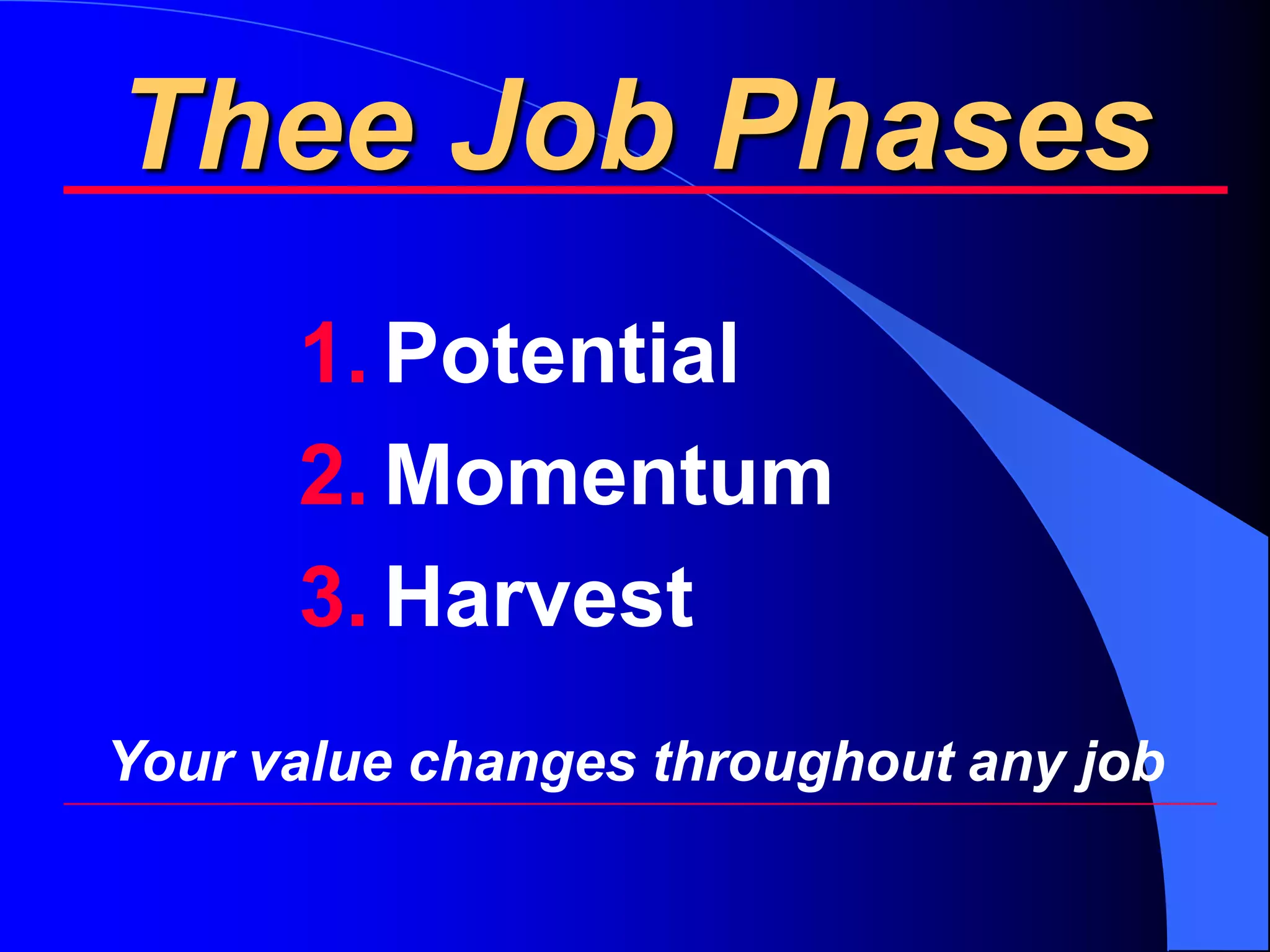
Thee Job Phases
      1. Potential
      2. Momentum
      3. Harvest
Your value changes throughout any job
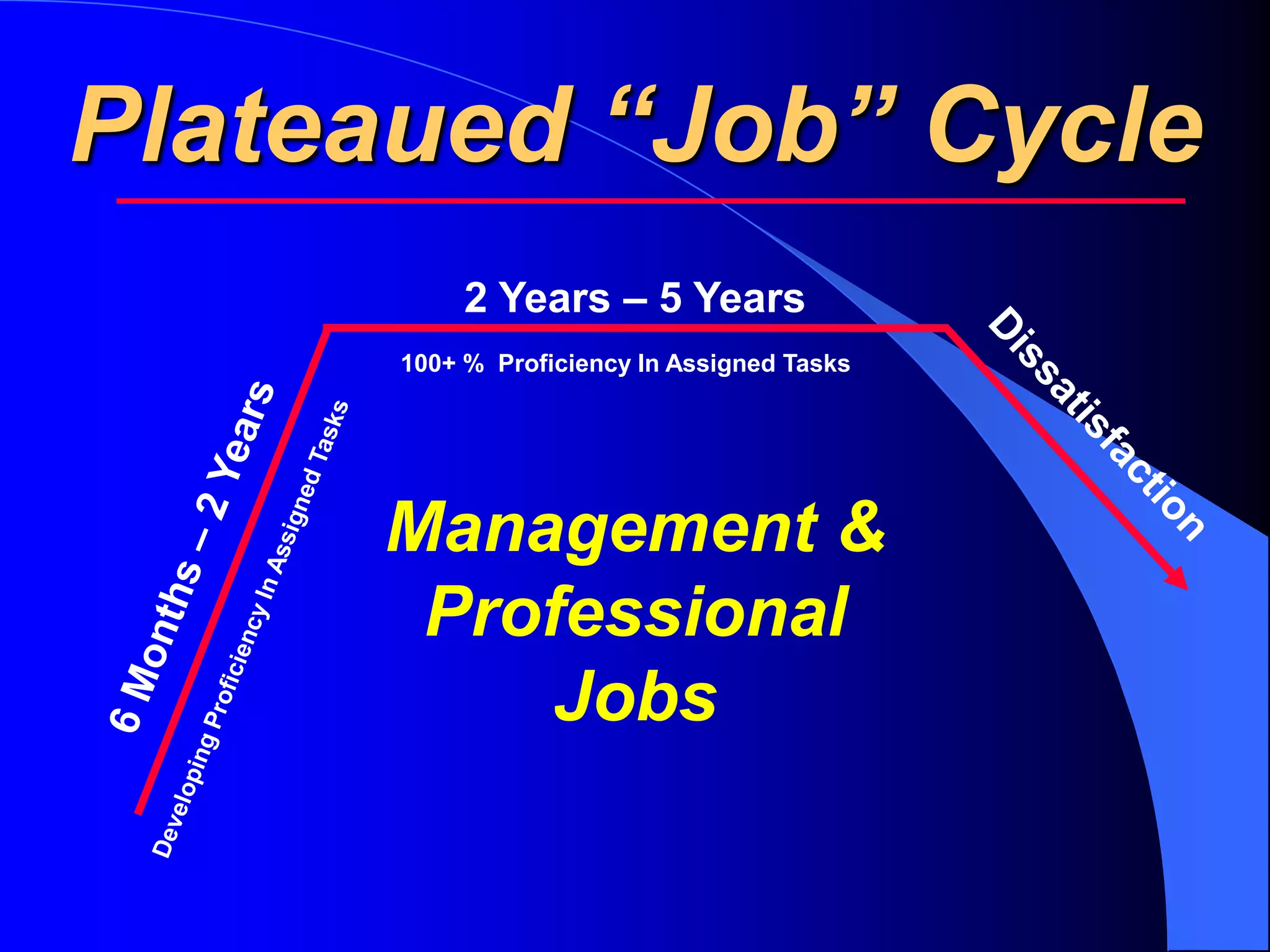
Plateaued “Job” Cycle
           2 Years – 5 Years
      100+ % Proficiency In Assigned Tasks


     Management &
      Professional
          Jobs
Sustainers
 Hard Work
 Education
 Technical Skills
 Merit Is Its Own
  Reward
 Do It On Their Own
 Fair World Mentality
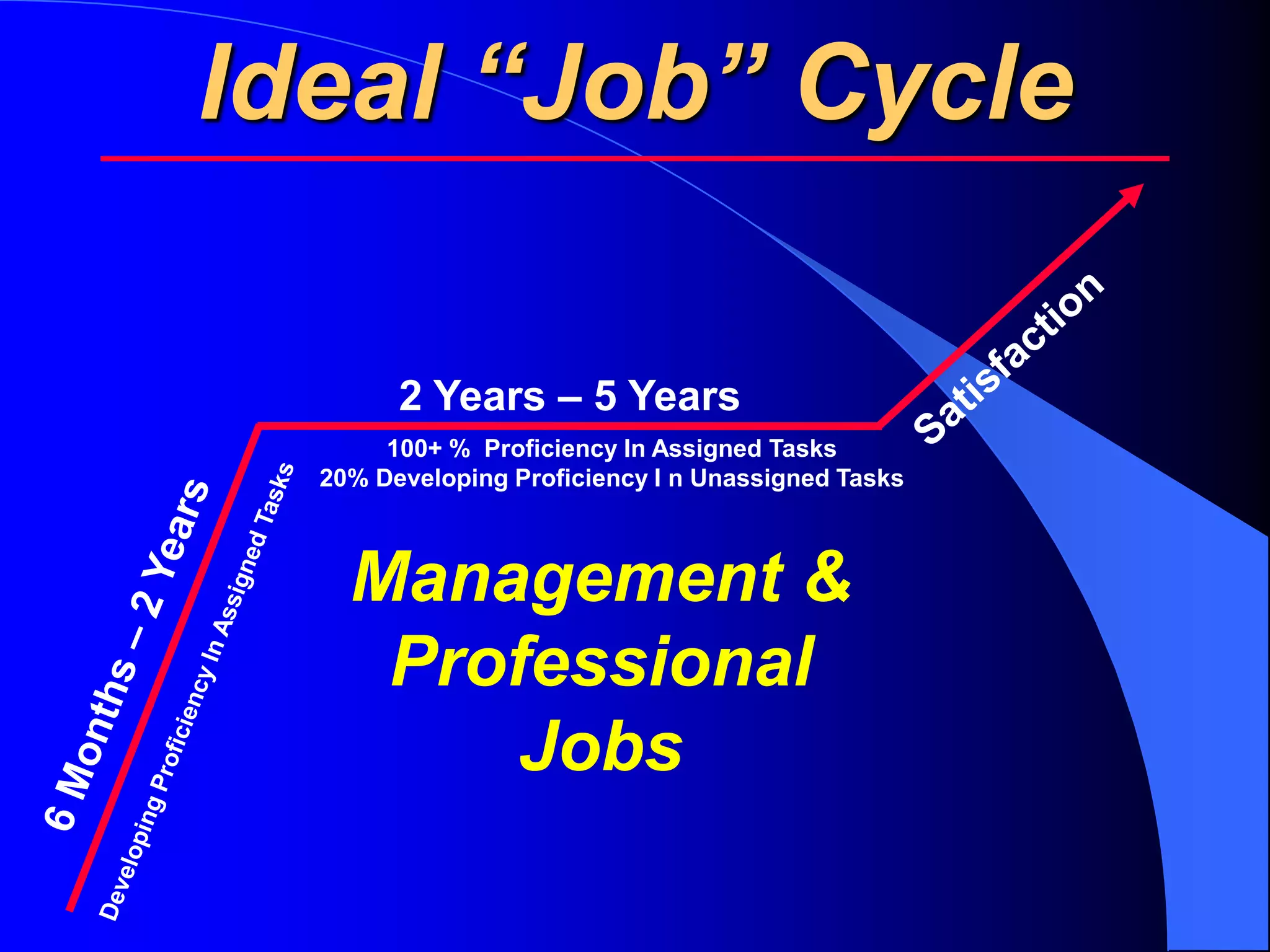
Ideal “Job” Cycle

        2 Years – 5 Years
       100+ % Proficiency In Assigned Tasks
  20% Developing Proficiency I n Unassigned Tasks


    Management &
     Professional
         Jobs
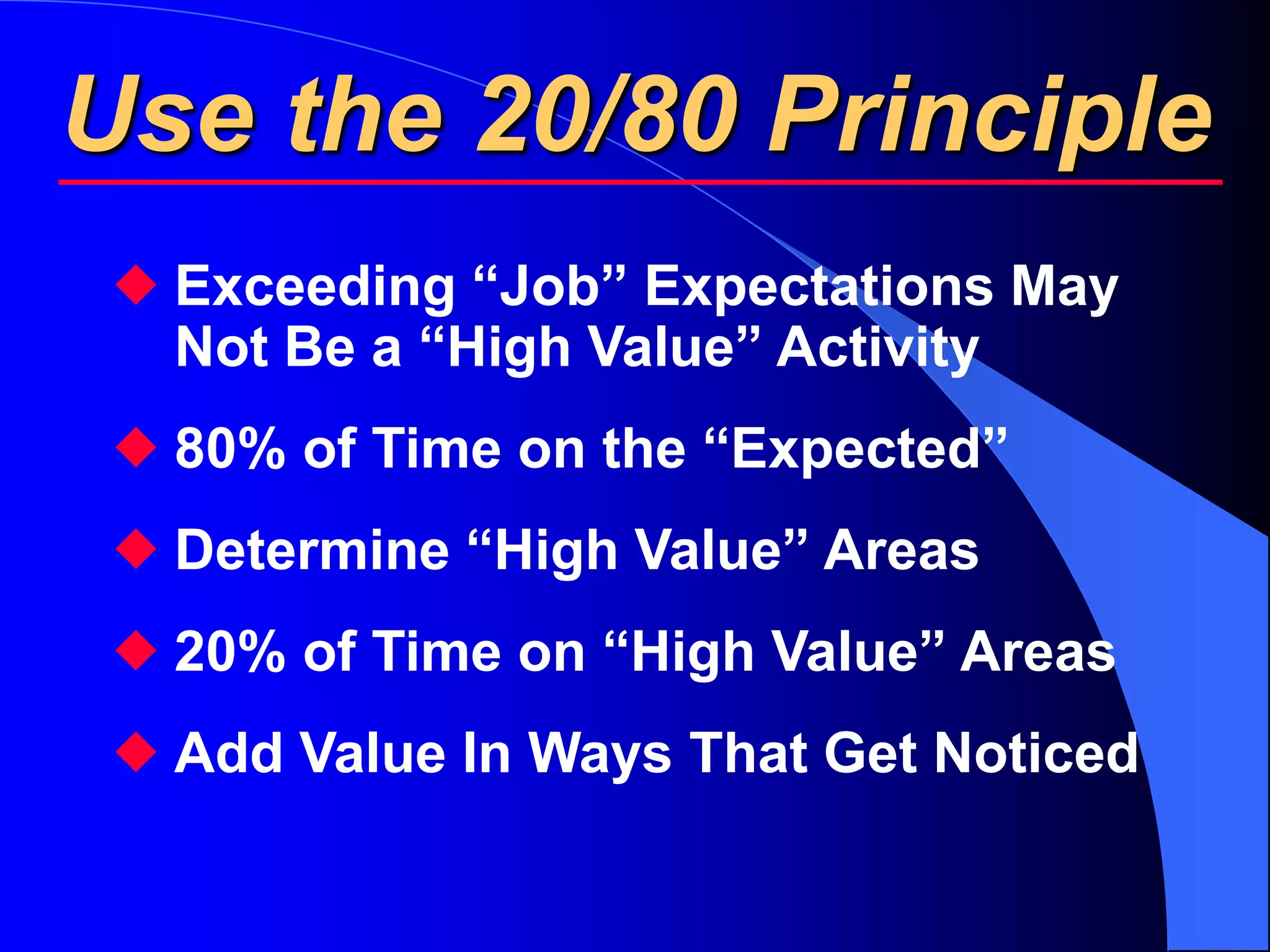
Use the 20/80 Principle
  Exceeding “Job” Expectations May
   Not Be a “High Value” Activity
  80% of Time on the “Expected”
  Determine “High Value” Areas
  20% of Time on “High Value” Areas
  Add Value In Ways That Get Noticed
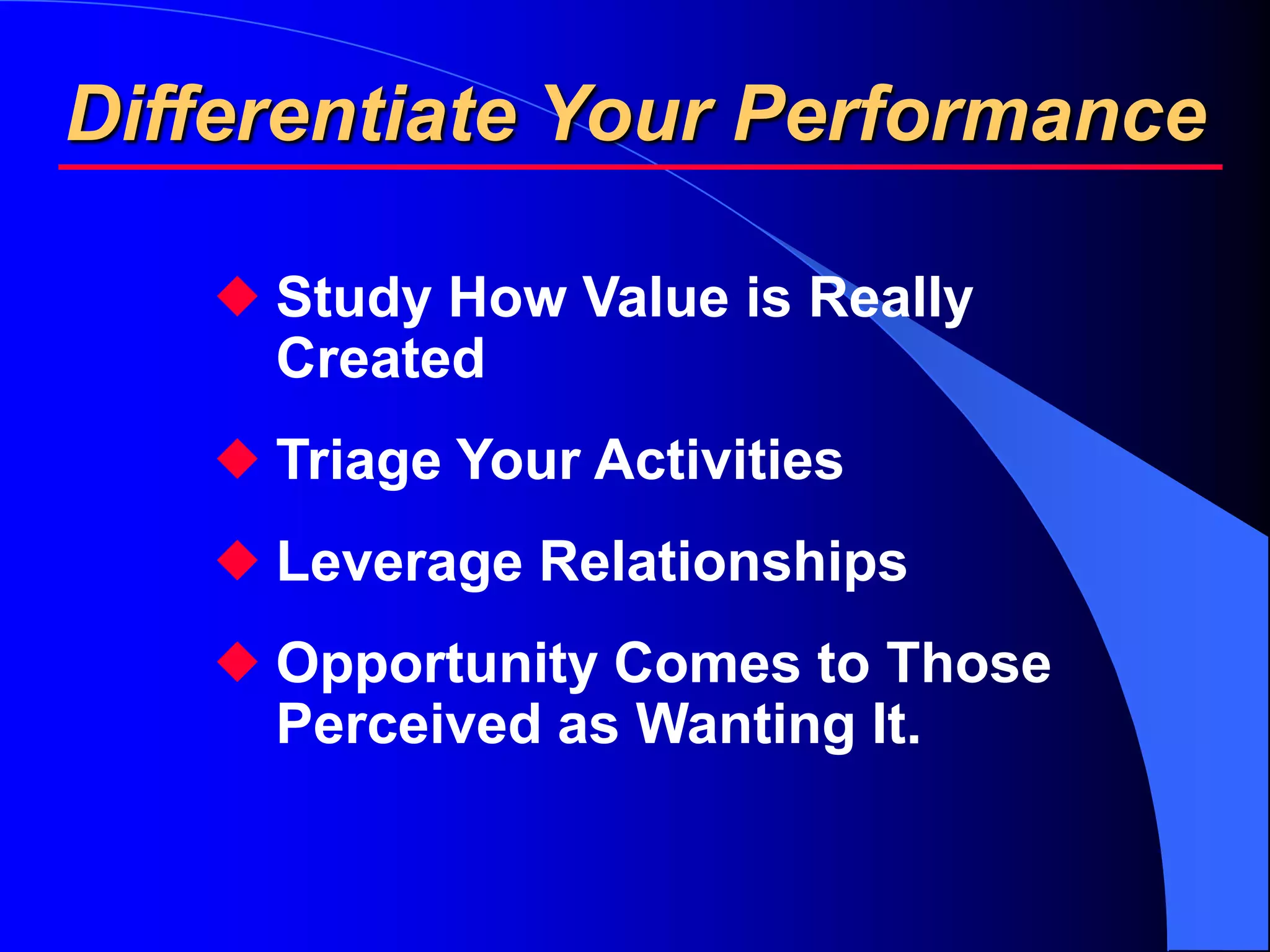
Differentiate Your Performance

    Study How Value is Really
     Created
    Triage Your Activities
    Leverage Relationships
    Opportunity Comes to Those
     Perceived as Wanting It.
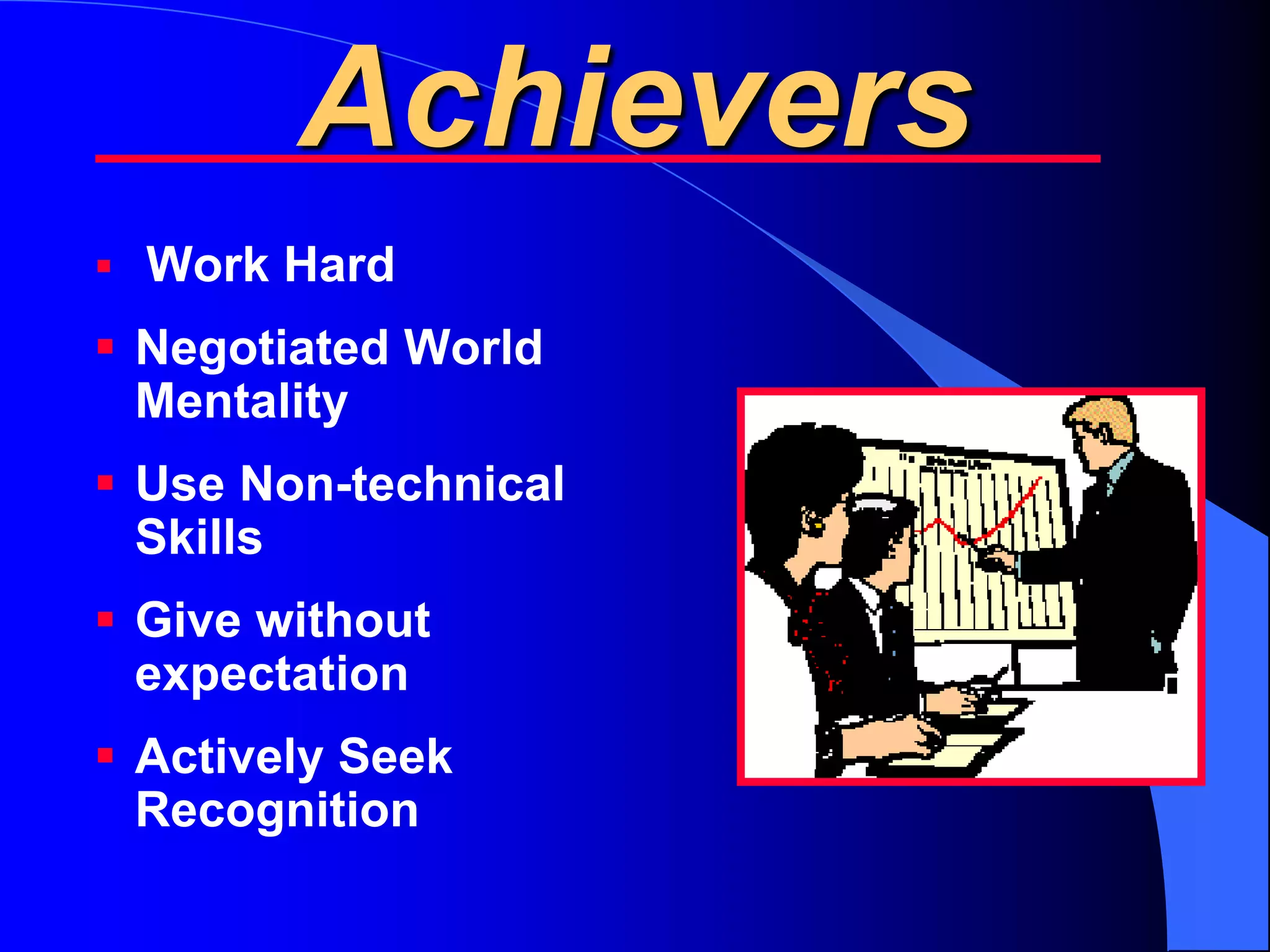
Achievers
 Work Hard
 Negotiated World
  Mentality
 Use Non-technical
  Skills
 Give without
  expectation
 Actively Seek
  Recognition
Career Competencies
 Experience Doing
 Risk Linking
 Show Belonging
 Exhibit Specializing
 Catapulting

 Magnify
  Accomplishing
The Seven Habits
             Don’t Gamble With Your Future

1. Be Proactive
2. Begin With The End In Mind
3. Put First Things First
4. Think Win-Win
5. Seek First To Understand,
   Then To Be Understood
6. Synergize
7. Sharpen The Saw
Interpersonal Skills
 Thank-you
  Notes
 Recognition
 Help Others
 Give Credit
Emotional Intelligence

 “The capacity for recognizing
 our own feelings and those of
     others, for motivating
   ourselves, for managing
  emotions well in ourselves
   and in our relationships.”
                     Daniel Goleman
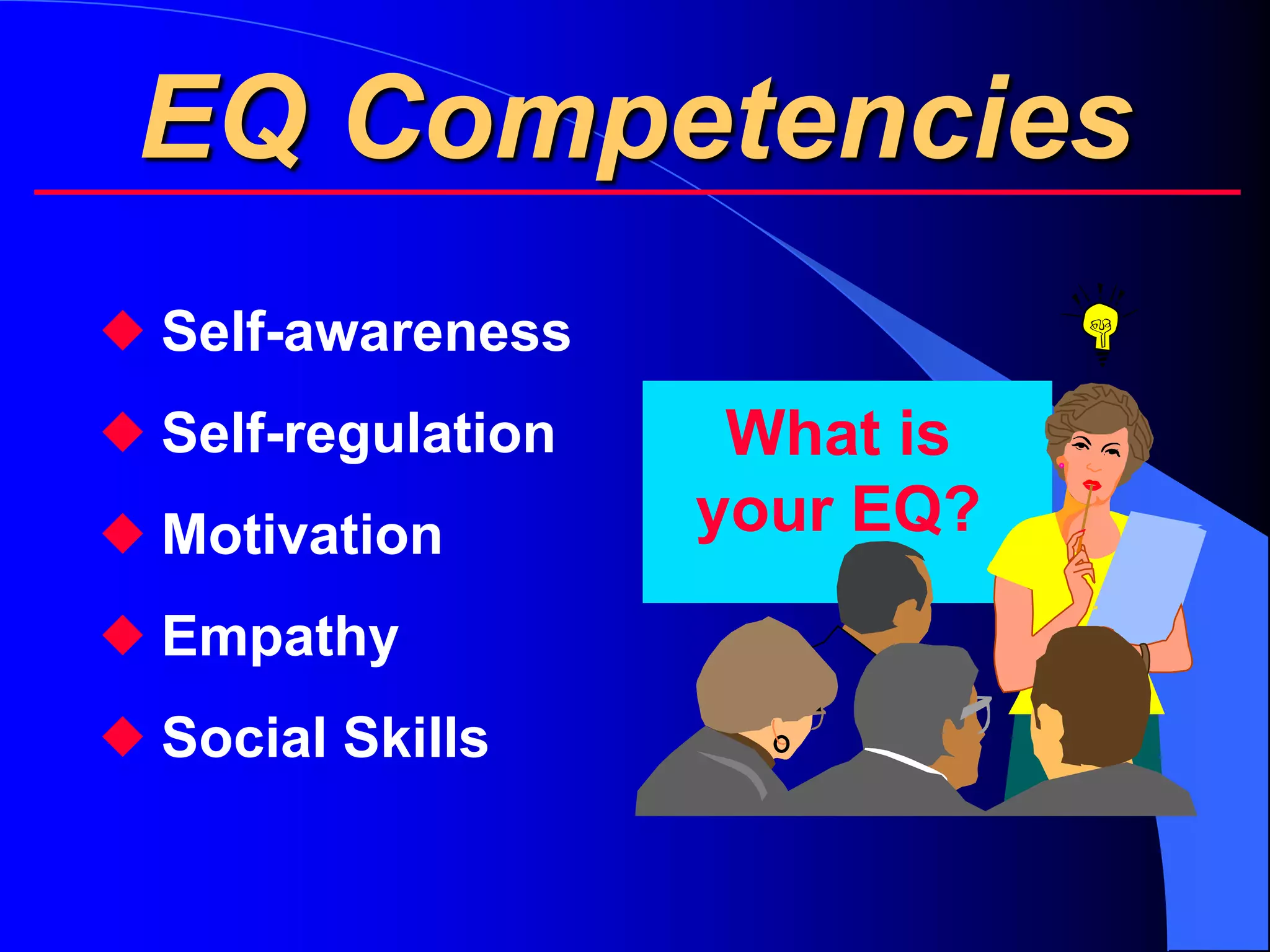
EQ Competencies
 Self-awareness
 Self-regulation    What is
 Motivation        your EQ?
 Empathy
 Social Skills
What We Know About IQ
  Predicts Grades In School
  Does Not Predict Success In Life
  Predicts 6% of Job Success
  Peaks In Late Teens
  Is Static
  Culture Bound
What We Know About EQ
  80% of a Managers Success Is
   Related to EQ
  Overall 67% of Abilities Essential for
   Success Relate to EQ
  The Primary De-railer of Top
   Executives Is a Lack of Impulse
   Control
  EQ Skills Can Be Learned At Any
   Age
Two Minds In One Body
IQ: Thinks                 EQ: Feels
Intellectual capability,   90% of the difference
knowledge, and             between outstanding
technical expertise        and average leaders is
are threshold              related to EQ.
competencies.              EQ is two times as
                           important as IQ and
                           technical expertise
                           combined.
EQ and Technical Success

  “Computer programmers in the
  top 10% of EQ competency
  develop effective software
  three times faster than those
  with lower EQ skills.”
                       Hay Group

             Why?
Sources
Citrin, James and Smith, Richard. The 5 Patterns of
Extraordinary Careers. New Your: Crown Business, 2003

Covey, Stephen. The Seven Habits of Highly Effective People.
New York, Simon & Schuster 1989

Goleman, Daniel. Working With Emotional Intelligence. New
York. Bantam Books. 1998

Scheele, Adele. Skills for Success. William Marrow and
Company, 1981
That’s All
 Folks!!

Soft Skills of Success

  • 1.
    The “Soft” Skillsof Success Strategies to Get Hired, Stay Hired and Get Promoted
  • 2.
    Thee Job Phases 1. Potential 2. Momentum 3. Harvest Your value changes throughout any job
  • 3.
    Plateaued “Job” Cycle 2 Years – 5 Years 100+ % Proficiency In Assigned Tasks Management & Professional Jobs
  • 4.
    Sustainers  Hard Work Education  Technical Skills  Merit Is Its Own Reward  Do It On Their Own  Fair World Mentality
  • 5.
    Ideal “Job” Cycle 2 Years – 5 Years 100+ % Proficiency In Assigned Tasks 20% Developing Proficiency I n Unassigned Tasks Management & Professional Jobs
  • 6.
    Use the 20/80Principle  Exceeding “Job” Expectations May Not Be a “High Value” Activity  80% of Time on the “Expected”  Determine “High Value” Areas  20% of Time on “High Value” Areas  Add Value In Ways That Get Noticed
  • 7.
    Differentiate Your Performance  Study How Value is Really Created  Triage Your Activities  Leverage Relationships  Opportunity Comes to Those Perceived as Wanting It.
  • 8.
    Achievers  Work Hard Negotiated World Mentality  Use Non-technical Skills  Give without expectation  Actively Seek Recognition
  • 9.
    Career Competencies  ExperienceDoing  Risk Linking  Show Belonging  Exhibit Specializing  Catapulting  Magnify Accomplishing
  • 10.
    The Seven Habits Don’t Gamble With Your Future 1. Be Proactive 2. Begin With The End In Mind 3. Put First Things First 4. Think Win-Win 5. Seek First To Understand, Then To Be Understood 6. Synergize 7. Sharpen The Saw
  • 11.
    Interpersonal Skills  Thank-you Notes  Recognition  Help Others  Give Credit
  • 12.
    Emotional Intelligence “Thecapacity for recognizing our own feelings and those of others, for motivating ourselves, for managing emotions well in ourselves and in our relationships.” Daniel Goleman
  • 13.
    EQ Competencies  Self-awareness Self-regulation What is  Motivation your EQ?  Empathy  Social Skills
  • 14.
    What We KnowAbout IQ  Predicts Grades In School  Does Not Predict Success In Life  Predicts 6% of Job Success  Peaks In Late Teens  Is Static  Culture Bound
  • 15.
    What We KnowAbout EQ  80% of a Managers Success Is Related to EQ  Overall 67% of Abilities Essential for Success Relate to EQ  The Primary De-railer of Top Executives Is a Lack of Impulse Control  EQ Skills Can Be Learned At Any Age
  • 16.
    Two Minds InOne Body IQ: Thinks EQ: Feels Intellectual capability, 90% of the difference knowledge, and between outstanding technical expertise and average leaders is are threshold related to EQ. competencies. EQ is two times as important as IQ and technical expertise combined.
  • 17.
    EQ and TechnicalSuccess “Computer programmers in the top 10% of EQ competency develop effective software three times faster than those with lower EQ skills.” Hay Group Why?
  • 18.
    Sources Citrin, James andSmith, Richard. The 5 Patterns of Extraordinary Careers. New Your: Crown Business, 2003 Covey, Stephen. The Seven Habits of Highly Effective People. New York, Simon & Schuster 1989 Goleman, Daniel. Working With Emotional Intelligence. New York. Bantam Books. 1998 Scheele, Adele. Skills for Success. William Marrow and Company, 1981
  • 19.