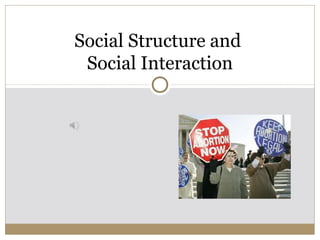
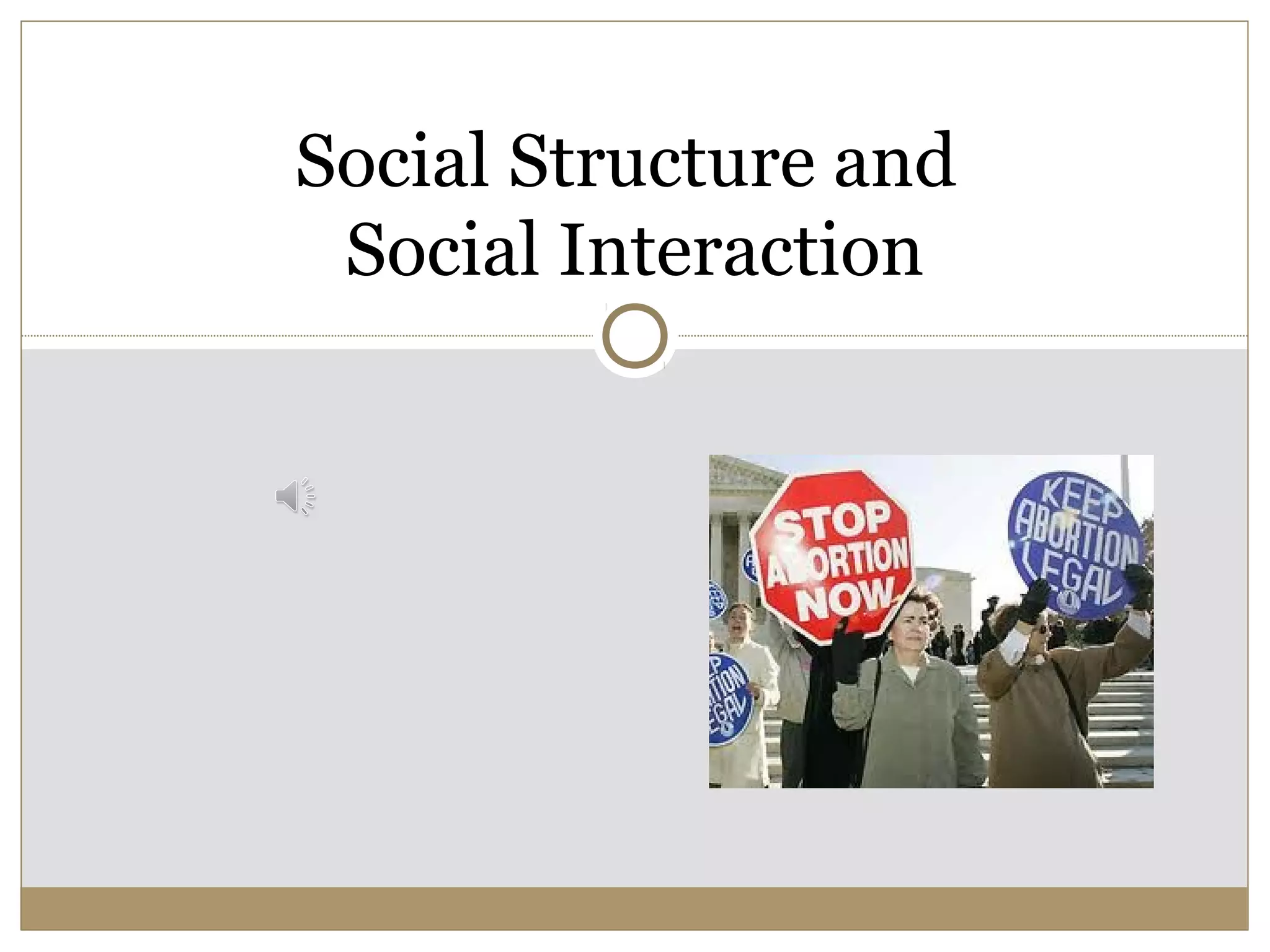


Social Structure and
 Social Interaction
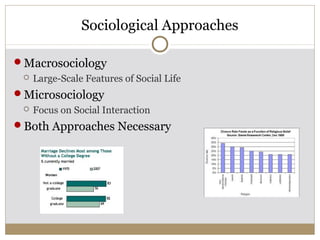
Sociological Approaches

Macrosociology
    Large-Scale Features of Social Life
Microsociology
    Focus on Social Interaction
Both Approaches Necessary
The Macrosociological Perspective

Examine the framework of society – how all the
 pieces fit together
Social Structure
    Our guide for interactions
    Our location, our place, guides our behavior
        Culture
        Social Class - http://youtu.be/UxB-H6f3crY Snickers?
        Social Status – ascribed, achieved, master, and status symbols
        Roles
        Groups
        Social Institutions
Social Institutions

Sociological Significance
Ten Social Institutions in Industrialized Societies
    To be explored in detail
Mass Media as an Emerging Social Institution
Comparing Functionalist and Conflict Perspectives
Social Institutions

Comparing Functionalist and Conflict Perspectives
    Functionalist
        Replacing Members
        Socializing New Members
        Producing and Distributing Goods and Services
        Preserving Order
        Providing a Sense of Purpose
    Conflict Theorist
        Powerful Groups Control Institutions
        Preserve the status quo, power and privilege
        Feminist sociologists – gender relations
What Holds It All Together?

Social Integration – Emile Durkheim
Mechanic Solidarity
Division of Labor
Organic Solidarity
The Microsociological Perspective

Face-to-face interactions
Behavior and Approach towards life
    Stereotyping - http://youtu.be/gspaoaecNAg Boys
        http://youtu.be/paNiEdFTvuA Girls
    Personal space
    Eye contact
    Facial expressions and body language
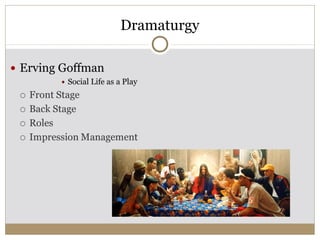
Dramaturgy
The Social Construction of Reality

Our own subjective reality
          http://youtu.be/myq8upzJDJc Josh Bell in the Metro
          http://vimeo.com/16329078 Up in the Air

Thomas Theorem
    How does stereotyping play out?
        Using a famous quote known as the Thomas theorem, we can
         begin to understand the potentially damaging effects of
         stereotypes: "if [people] define situations as real, they are real in
         their consequences." In other words, when people accept
         stereotypes as true, then they are likely to act on these beliefs, and
         these subjective beliefs can lead to objective results.
Social Structure Activity

Think about 3 or 4 statuses you occupy
  Are they achieved or ascribed or master statuses
  Do you display status symbols, what are they

What roles do you play within each status
  Are there any conflicts between the roles

Think about the larger institutions where these
 statuses are located
    What are the functions of these institutions (how do they hold
     society together)
    Which institution exerts the most influence on your life
    Are there conflicts among the institutions
Lens Assignment

Think about the different grand perspectives sociologists
 use to analyze and evaluate the social world – macro and
 micro
It may be easier to select one perspective
From the macrosociological perspective, look for
 different components of social structure (class, status,
 roles, institutions) and describe how they may be
 analyzed within the photograph
From a microsociological perspective, look for evidence
 of Goffman’s Presentation of Self in Everyday life and
 describe “the stage,” roles, and impression management.

Social structure and social interaction

  • 1.
    Social Structure and Social Interaction
  • 2.
    Sociological Approaches Macrosociology  Large-Scale Features of Social Life Microsociology  Focus on Social Interaction Both Approaches Necessary
  • 3.
    The Macrosociological Perspective Examinethe framework of society – how all the pieces fit together Social Structure  Our guide for interactions  Our location, our place, guides our behavior  Culture  Social Class - http://youtu.be/UxB-H6f3crY Snickers?  Social Status – ascribed, achieved, master, and status symbols  Roles  Groups  Social Institutions
  • 4.
    Social Institutions Sociological Significance TenSocial Institutions in Industrialized Societies  To be explored in detail Mass Media as an Emerging Social Institution Comparing Functionalist and Conflict Perspectives
  • 5.
    Social Institutions Comparing Functionalistand Conflict Perspectives  Functionalist  Replacing Members  Socializing New Members  Producing and Distributing Goods and Services  Preserving Order  Providing a Sense of Purpose  Conflict Theorist  Powerful Groups Control Institutions  Preserve the status quo, power and privilege  Feminist sociologists – gender relations
  • 6.
    What Holds ItAll Together? Social Integration – Emile Durkheim Mechanic Solidarity Division of Labor Organic Solidarity
  • 7.
    The Microsociological Perspective Face-to-faceinteractions Behavior and Approach towards life  Stereotyping - http://youtu.be/gspaoaecNAg Boys  http://youtu.be/paNiEdFTvuA Girls  Personal space  Eye contact  Facial expressions and body language
  • 8.
  • 9.
    The Social Constructionof Reality Our own subjective reality  http://youtu.be/myq8upzJDJc Josh Bell in the Metro  http://vimeo.com/16329078 Up in the Air Thomas Theorem  How does stereotyping play out?  Using a famous quote known as the Thomas theorem, we can begin to understand the potentially damaging effects of stereotypes: "if [people] define situations as real, they are real in their consequences." In other words, when people accept stereotypes as true, then they are likely to act on these beliefs, and these subjective beliefs can lead to objective results.
  • 10.
    Social Structure Activity Thinkabout 3 or 4 statuses you occupy  Are they achieved or ascribed or master statuses  Do you display status symbols, what are they What roles do you play within each status  Are there any conflicts between the roles Think about the larger institutions where these statuses are located  What are the functions of these institutions (how do they hold society together)  Which institution exerts the most influence on your life  Are there conflicts among the institutions
  • 11.
    Lens Assignment Think aboutthe different grand perspectives sociologists use to analyze and evaluate the social world – macro and micro It may be easier to select one perspective From the macrosociological perspective, look for different components of social structure (class, status, roles, institutions) and describe how they may be analyzed within the photograph From a microsociological perspective, look for evidence of Goffman’s Presentation of Self in Everyday life and describe “the stage,” roles, and impression management.

Editor's Notes

  • #2 The way in which society is organized into predictable relationships, patterns of social interaction (the way in which people respond to each other). These patterns etc, are to some extent independent of the particular individual, they exert a force which shapes behavior and identity. We already know the vast influence of values and beliefs that culture places on society – Influences can have personal implications, but also have farther reaching, larger impacts on groups of people.
  • #3 Sociologists use 2 approaches to study social life. Macro focus on broad social structures and Micro focus on small face to face.