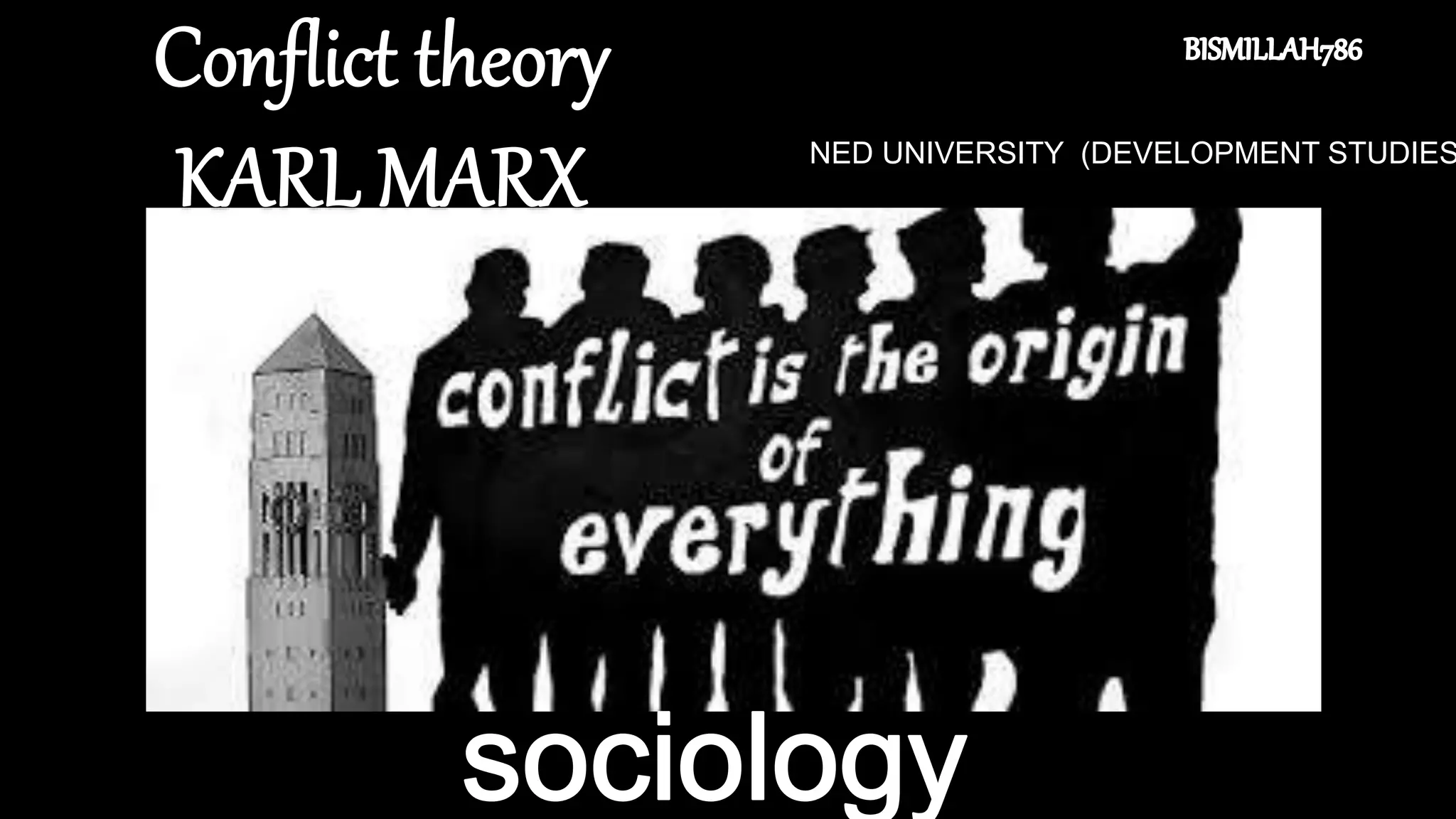
NED UNIVERSITY (DEVELOPMENT STUDIES
Today we will Discuss,
• Introduction of Theorist
• Conflict ?
• Main Concepts
• Approaches
• Strength & weakness
• Conflict analysis in religion
• Criticism
• References.
KARL MARX(1818-1883)
• Father of modern socialism , communism, and
conflict theory.
• German philosopher, sociologists,
economists, and revolutionary socialists.
• He stated “all individuals to reach their full
human capital.”
• Controlling material production  Division of
labor  Formation of economic social classes
 class struggle.
• Marx's theories about society, economics and
politics—collectively understood as ”Marxism” .
• His conflict theory was also influenced by his
personal life and wrote a number of books,
articles and research papers.
1818 1835 1841 1841-42 1843 1844 1845 1846 1848 1849
1867 1883
Marx born at Trier,
Persia.
Marx
studies law
at the
university
of Bonn.
Marx abandons
the idea of
University
teaching.
Marx resigns
as editor of
‘Rheinische
Zeitung’ and
Marx move to
Paris.
Marx accused of High
Treason in Prussia.
Later this year, he
wrote Economical &
Philosophical
Manuscript.
Thesis on
Feuerbach.
Communist
Manifesto
published.
Marx moves to
London.
Death of Marx.
The German
Ideology. Das Capital
Published.
Marx receives
his PhD. After
writing a
dissertation of
Democritus &
Epicurus.
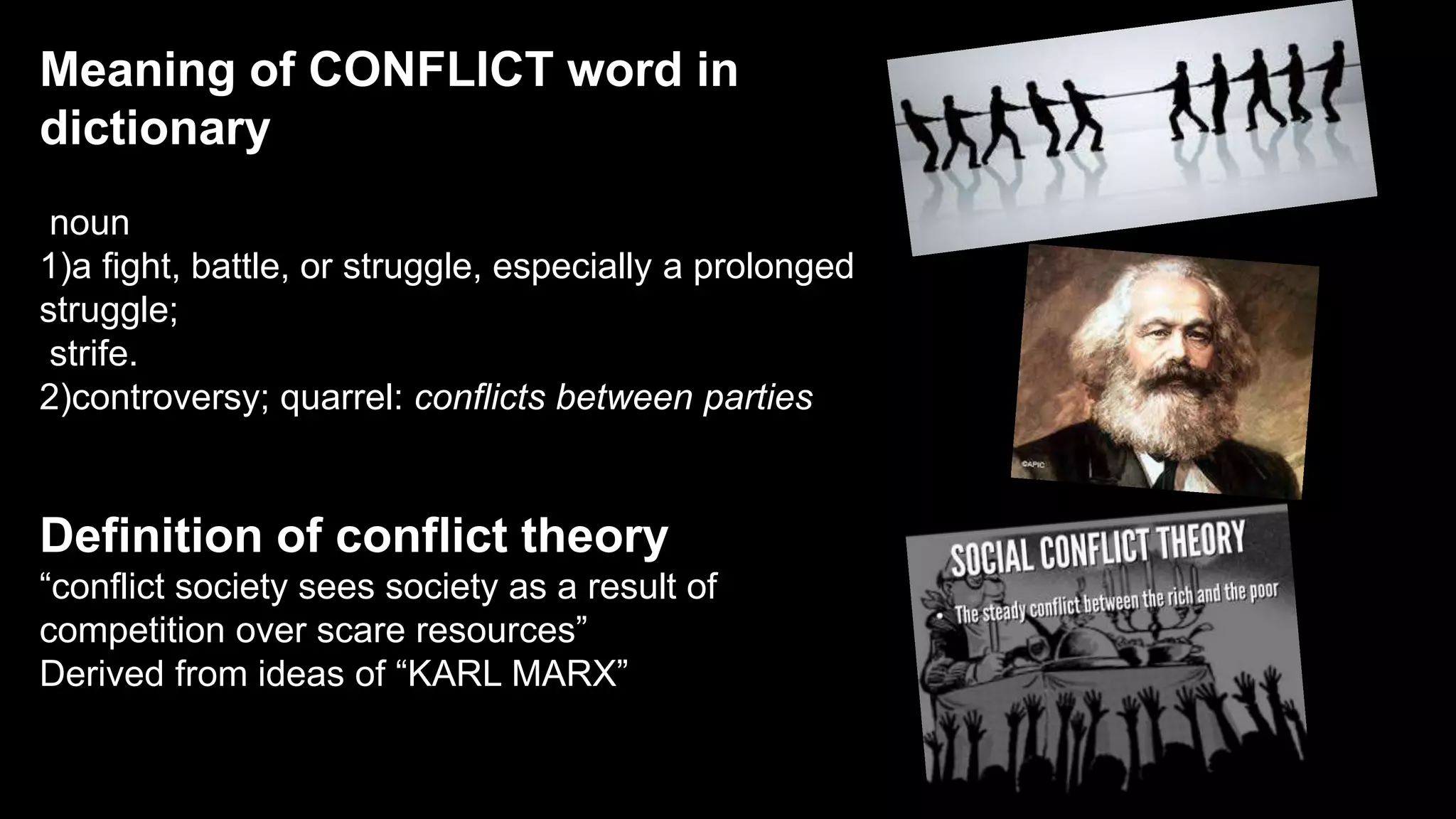
Meaning of CONFLICT word in
dictionary
noun
1)a fight, battle, or struggle, especially a prolonged
struggle;
strife.
2)controversy; quarrel: conflicts between parties
Definition of conflict theory
“conflict society sees society as a result of
competition over scare resources”
Derived from ideas of “KARL MARX”
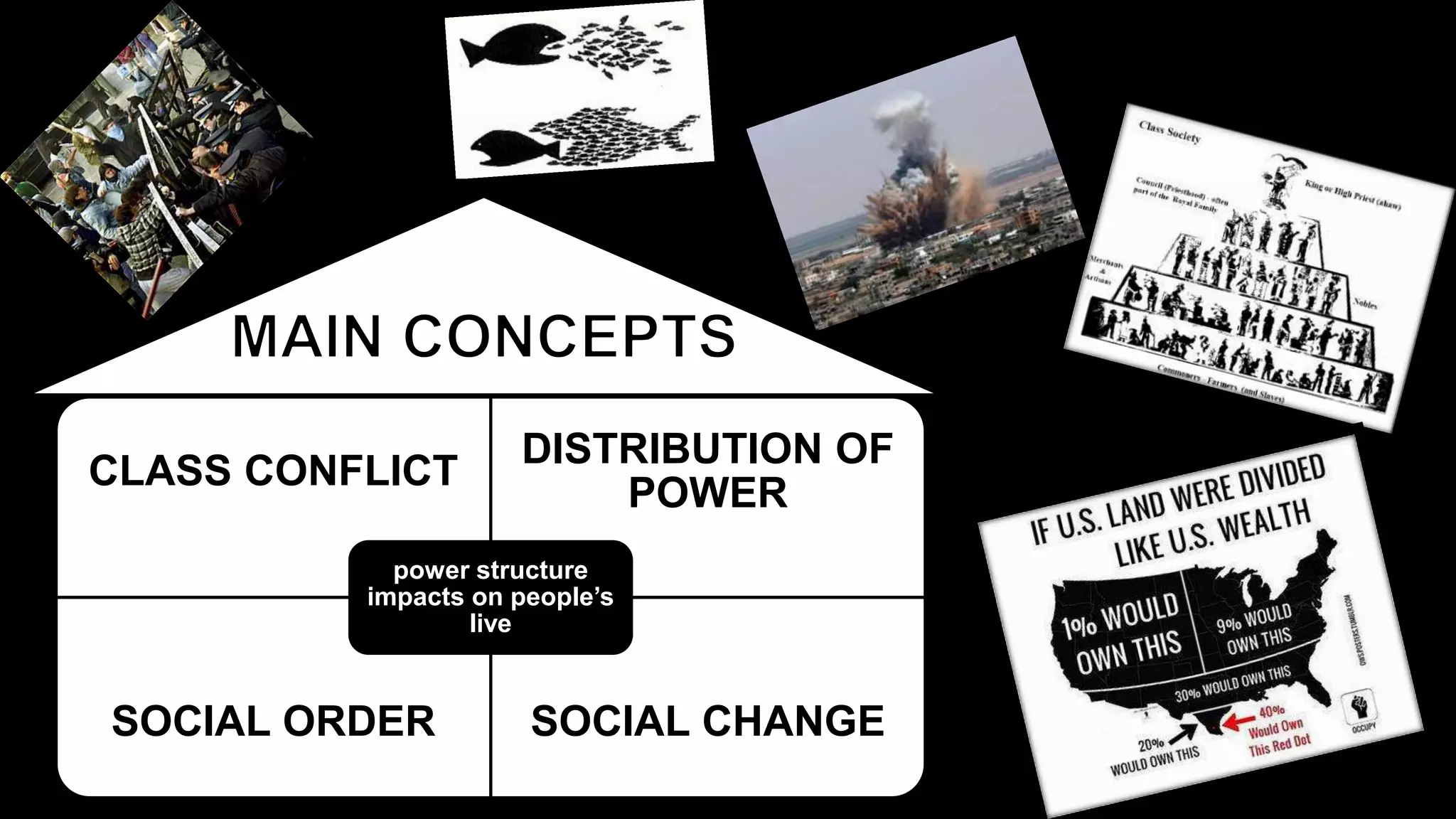
CLASS CONFLICT
DISTRIBUTION OF
POWER
SOCIAL ORDER SOCIAL CHANGE
power structure
impacts on people’s
live
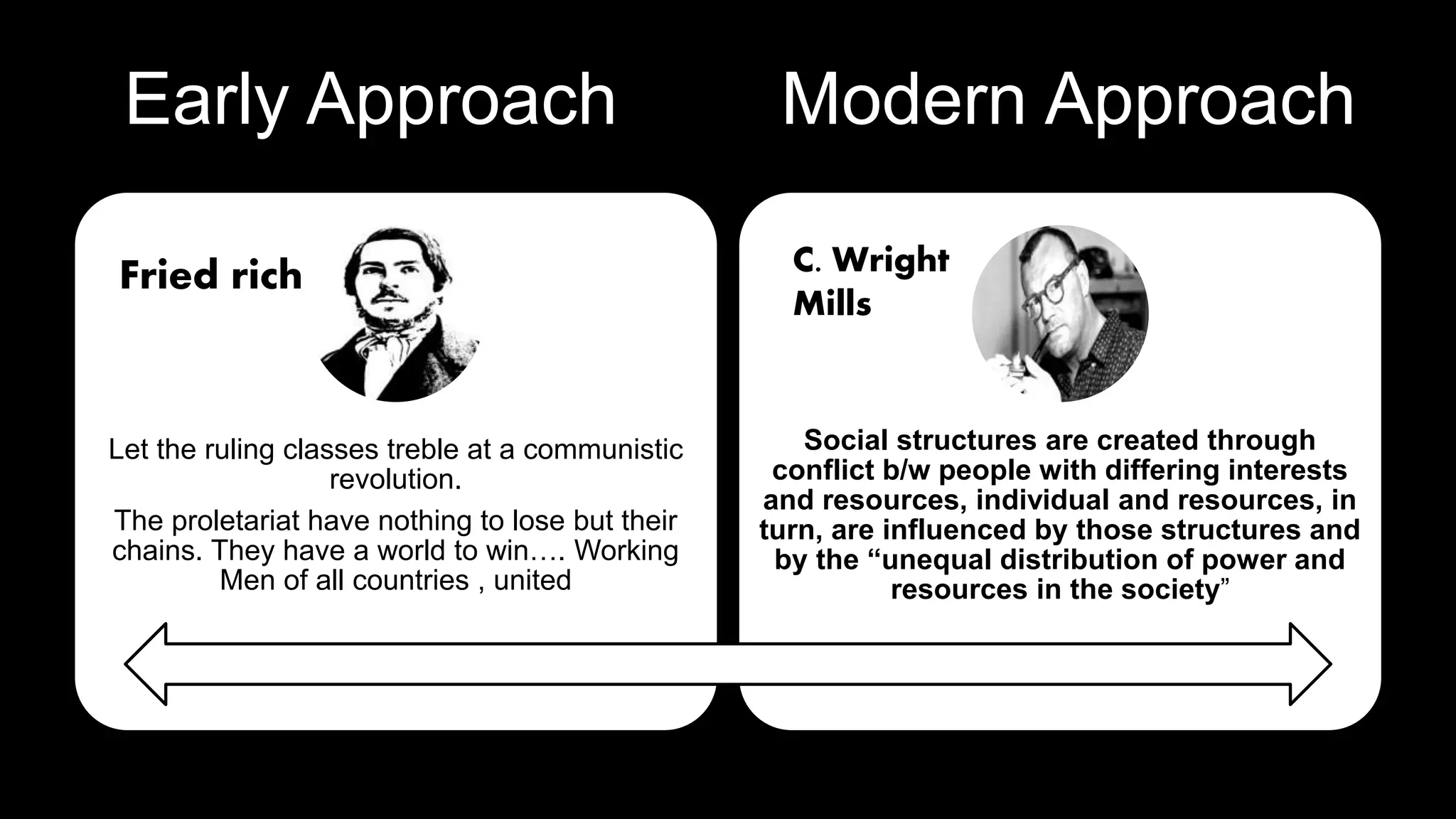
Early Approach Modern Approach
Let the ruling classes treble at a communistic
revolution.
The proletariat have nothing to lose but their
chains. They have a world to win…. Working
Men of all countries , united
Social structures are created through
conflict b/w people with differing interests
and resources, individual and resources, in
turn, are influenced by those structures and
by the “unequal distribution of power and
resources in the society”
Fried rich C. Wright
Mills
competition
social
structures &
organization
Social
change
Macro level
analysis
Social
inequality
Connection
to
socialism
Domination
of one
group
Absolute
Conflict Analysis on
Religion
According to Marx:
 Marx is often quoted as saying that "religion is the opium of the
people.“
 Marx maintained that the happiness and rewards promised by
religion are merely illusions.
 religion helps maintain social inequality by justifying oppression
and is an institution that justifies and perpetuates the ills of
society.
 the inequalities and social injustices that exist in society are
reflected within the religious institutions themselves (e.g., race,
class, or gender stratification).
 religious practices and rituals define group boundaries within
society,
 According to Marx, religion is a matter of ideology not of faith,
focusing more on social needs and aspirations than on spirituality.
Example: The Hindu Caste System
Focus on change and neglect of
social stability.
Change is minor or incremental not
revolutionary
Inequalities in power & reward are
built into social structures
Individuals and groups who benefit
also strive to see it maintained
CONCLUSION
References
• https://answers.yahoo.com/question/index?qid=20080307
150339AAGfgME
• http://www.dictionary.com/browse/conflict
• www.historyguide.org
• www.boundless.org
• Hawaii university
• TED TALKS
• www.feralchildren.com
• www.about.com

Karl Marx and conflict theory

  • 1.
  • 2.
    Today we willDiscuss, • Introduction of Theorist • Conflict ? • Main Concepts • Approaches • Strength & weakness • Conflict analysis in religion • Criticism • References.
  • 3.
    KARL MARX(1818-1883) • Fatherof modern socialism , communism, and conflict theory. • German philosopher, sociologists, economists, and revolutionary socialists. • He stated “all individuals to reach their full human capital.” • Controlling material production  Division of labor  Formation of economic social classes  class struggle. • Marx's theories about society, economics and politics—collectively understood as ”Marxism” . • His conflict theory was also influenced by his personal life and wrote a number of books, articles and research papers.
  • 4.
    1818 1835 18411841-42 1843 1844 1845 1846 1848 1849 1867 1883 Marx born at Trier, Persia. Marx studies law at the university of Bonn. Marx abandons the idea of University teaching. Marx resigns as editor of ‘Rheinische Zeitung’ and Marx move to Paris. Marx accused of High Treason in Prussia. Later this year, he wrote Economical & Philosophical Manuscript. Thesis on Feuerbach. Communist Manifesto published. Marx moves to London. Death of Marx. The German Ideology. Das Capital Published. Marx receives his PhD. After writing a dissertation of Democritus & Epicurus.
  • 6.
    Meaning of CONFLICTword in dictionary noun 1)a fight, battle, or struggle, especially a prolonged struggle; strife. 2)controversy; quarrel: conflicts between parties Definition of conflict theory “conflict society sees society as a result of competition over scare resources” Derived from ideas of “KARL MARX”
  • 8.
    CLASS CONFLICT DISTRIBUTION OF POWER SOCIALORDER SOCIAL CHANGE power structure impacts on people’s live
  • 9.
    Early Approach ModernApproach Let the ruling classes treble at a communistic revolution. The proletariat have nothing to lose but their chains. They have a world to win…. Working Men of all countries , united Social structures are created through conflict b/w people with differing interests and resources, individual and resources, in turn, are influenced by those structures and by the “unequal distribution of power and resources in the society” Fried rich C. Wright Mills
  • 10.
  • 11.
    Conflict Analysis on Religion Accordingto Marx:  Marx is often quoted as saying that "religion is the opium of the people.“  Marx maintained that the happiness and rewards promised by religion are merely illusions.  religion helps maintain social inequality by justifying oppression and is an institution that justifies and perpetuates the ills of society.  the inequalities and social injustices that exist in society are reflected within the religious institutions themselves (e.g., race, class, or gender stratification).  religious practices and rituals define group boundaries within society,  According to Marx, religion is a matter of ideology not of faith, focusing more on social needs and aspirations than on spirituality. Example: The Hindu Caste System
  • 12.
    Focus on changeand neglect of social stability. Change is minor or incremental not revolutionary Inequalities in power & reward are built into social structures Individuals and groups who benefit also strive to see it maintained
  • 13.
  • 15.
    References • https://answers.yahoo.com/question/index?qid=20080307 150339AAGfgME • http://www.dictionary.com/browse/conflict •www.historyguide.org • www.boundless.org • Hawaii university • TED TALKS • www.feralchildren.com • www.about.com