Let’s go back to what is Society…. 
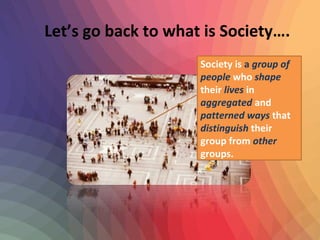
Society is a group of 
people who shape 
their lives in 
aggregated and 
patterned ways that 
distinguish their 
group from other 
groups.
What does society look like? 
• Society as an object itself (sui generis) 
• if society is an object, then it can be examined 
closely and analyzed like any other subject 
(sounds simple isn’t it? We divide it in pieces and 
explore each piece carefully) 
• A sociologist does to society, what a biologist 
does to a living organism, or a geologist does to a 
rock: 
• Society becomes something scientifically 
weighted, measured and dissected.
A geologist studying a rock:
Is Society a concrete object after all? 
• But, wait…if we dissect this object, we’ll find out that 
it’s made up of countless other components such as: 
culture, working class, ethnicity 
• These things appear to be sui generis (objects on their 
own) as well: more phenomena to examine by 
themselves, hmmm, but wait…. 
• And these components can be broken down even 
further into seemly endless bits and pieces 
• It gets confusing: overwhelming, almost impossible to 
imagine we could analyze something so big, with so 
many parts, the shapes and boundaries are so fluid
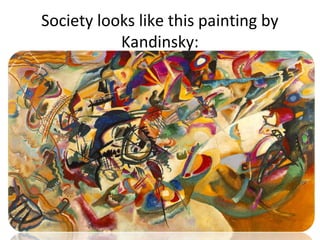
Society looks like this painting by 
Kandinsky:
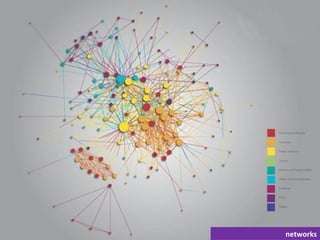
networks
What can we see? 
• If we can’t see the whole of society, what can we see? 
• We can see people living their lives, 
interacting with each other, working, playing, 
eating, dancing, flirting, lying, fighting, 
grieving, driving in their cars, ending their lives 
by own choice, partying, getting married, 
quarrelling, stealing, loosing their minds…..etc 
• There are limitless observable phenomena for us to analyze 
sociologically that surrounds us 
• In fact they are all happening around us right now, every 
moment of every life
This is what society looks like: 
• People actively and collectively shape their lives, 
organizing their social interactions and relationships to 
produce a real meaningful world: and they do this in 
patterned ways that (we as) social scientists can 
analyze. 
• We are curious to analyze the social 
processes that everyone experiences and 
how those social processes create the larger 
society of which we are all a part of
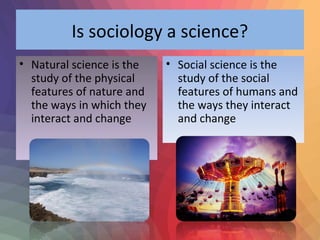
Is sociology a science? 
• Natural science is the 
study of the physical 
features of nature and 
the ways in which they 
interact and change 
• Social science is the 
study of the social 
features of humans and 
the ways they interact 
and change
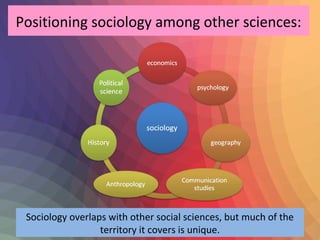
Positioning sociology among other sciences: 
Sociology overlaps with other social sciences, but much of the 
territory it covers is unique.
Sociology 
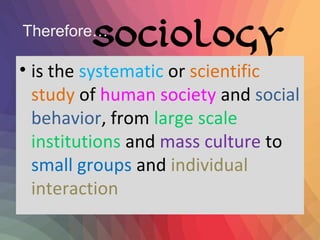
Therefore… 
• is the systematic or scientific 
study of human society and social 
behavior, from large scale 
institutions and mass culture to 
small groups and individual 
interaction
Let us awaken your… 
SOCIOLOGICAL 
IMAGINATION
The term SOCIOLOGICAL 
IMAGINATION was coined by the 
American sociologist C. Wright Mills in 
1959 to describe the type of insight 
offered by the discipline of 
sociology. Mills defined sociological 
imagination as 
“...the vivid awareness of the 
relationship between experience and 
the wider society”.
It is “the capacity to shift from one 
perspective to another”. 
The capacity to see how sociological 
situations play out due to how people 
differ in terms of their places in given 
social or historical circumstances. It is a 
way of thinking about things in society 
that have led to some sort of outcome, 
and understanding what causes led to that 
outcome.
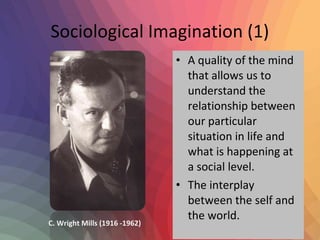
Sociological Imagination (1) 
• A quality of the mind 
that allows us to 
understand the 
relationship between 
our particular 
situation in life and 
what is happening at 
a social level. 
• The interplay 
between the self and 
the world. 
C. Wright Mills (1916 -1962)
Sociological imagination (2) 
• The sociological imagination requires that we 
search for the link between the micro and macro 
levels of analysis 
• Mill’s characterization of sociology as the 
intersection between biography and history 
reminds us that the process works in both 
directions: 
• While larger social forces influence individual 
lives, there are many ways in which our 
individual lives can affect society as well
Sociology and Common Sense? 
• Our theories and opinions typically come from ‘common sense’ , 
every day knowledge and experiences. These can be biased 
and incidental  
• This is not the sociological imagination! 
• The common sense knowledge, while sometimes accurate, is not 
always reliable, because it rests on commonly held beliefs rather 
or assumptions than on systematic analysis of facts. 
• Doing sociology is a radical undertaking: it 
requires from us a willingness to suspend our own pre-conceptions, 
assumptions and beliefs about the way 
things are 
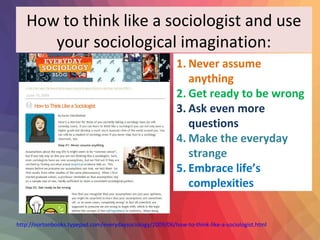
How to think like a sociologist and use 
your sociological imagination: 
1. Never assume 
anything 
2. Get ready to be wrong 
3. Ask even more 
questions 
4. Make the everyday 
strange 
5. Embrace life’s 
complexities 
http://nortonbooks.typepad.com/everydaysociology/2009/06/how-to-think-like-a-sociologist.html
Proverbs 1:3-5 
3 for receiving instruction in prudent behavior, 
doing what is right and just and fair; 
4 for giving prudence to those who are simple, 
[a] knowledge and discretion to the young 
5 let the wise listen and add to their learning, 
and let the discerning get guidance
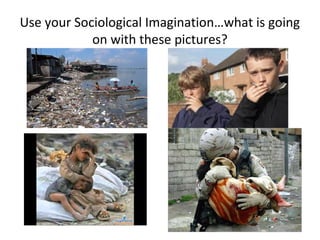
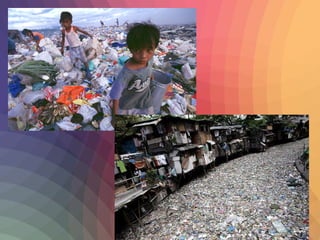
Use your Sociological Imagination…what is going 
on with these pictures?
Sociology & Sociological Imagination

Sociology & Sociological Imagination

  • 2.
    Let’s go backto what is Society…. Society is a group of people who shape their lives in aggregated and patterned ways that distinguish their group from other groups.
  • 3.
    What does societylook like? • Society as an object itself (sui generis) • if society is an object, then it can be examined closely and analyzed like any other subject (sounds simple isn’t it? We divide it in pieces and explore each piece carefully) • A sociologist does to society, what a biologist does to a living organism, or a geologist does to a rock: • Society becomes something scientifically weighted, measured and dissected.
  • 4.
  • 5.
    Is Society aconcrete object after all? • But, wait…if we dissect this object, we’ll find out that it’s made up of countless other components such as: culture, working class, ethnicity • These things appear to be sui generis (objects on their own) as well: more phenomena to examine by themselves, hmmm, but wait…. • And these components can be broken down even further into seemly endless bits and pieces • It gets confusing: overwhelming, almost impossible to imagine we could analyze something so big, with so many parts, the shapes and boundaries are so fluid
  • 6.
    Society looks likethis painting by Kandinsky:
  • 7.
  • 8.
    What can wesee? • If we can’t see the whole of society, what can we see? • We can see people living their lives, interacting with each other, working, playing, eating, dancing, flirting, lying, fighting, grieving, driving in their cars, ending their lives by own choice, partying, getting married, quarrelling, stealing, loosing their minds…..etc • There are limitless observable phenomena for us to analyze sociologically that surrounds us • In fact they are all happening around us right now, every moment of every life
  • 9.
    This is whatsociety looks like: • People actively and collectively shape their lives, organizing their social interactions and relationships to produce a real meaningful world: and they do this in patterned ways that (we as) social scientists can analyze. • We are curious to analyze the social processes that everyone experiences and how those social processes create the larger society of which we are all a part of
  • 11.
    Is sociology ascience? • Natural science is the study of the physical features of nature and the ways in which they interact and change • Social science is the study of the social features of humans and the ways they interact and change
  • 12.
    Positioning sociology amongother sciences: Sociology overlaps with other social sciences, but much of the territory it covers is unique.
  • 13.
    Sociology Therefore… •is the systematic or scientific study of human society and social behavior, from large scale institutions and mass culture to small groups and individual interaction
  • 14.
    Let us awakenyour… SOCIOLOGICAL IMAGINATION
  • 16.
    The term SOCIOLOGICAL IMAGINATION was coined by the American sociologist C. Wright Mills in 1959 to describe the type of insight offered by the discipline of sociology. Mills defined sociological imagination as “...the vivid awareness of the relationship between experience and the wider society”.
  • 17.
    It is “thecapacity to shift from one perspective to another”. The capacity to see how sociological situations play out due to how people differ in terms of their places in given social or historical circumstances. It is a way of thinking about things in society that have led to some sort of outcome, and understanding what causes led to that outcome.
  • 18.
    Sociological Imagination (1) • A quality of the mind that allows us to understand the relationship between our particular situation in life and what is happening at a social level. • The interplay between the self and the world. C. Wright Mills (1916 -1962)
  • 19.
    Sociological imagination (2) • The sociological imagination requires that we search for the link between the micro and macro levels of analysis • Mill’s characterization of sociology as the intersection between biography and history reminds us that the process works in both directions: • While larger social forces influence individual lives, there are many ways in which our individual lives can affect society as well
  • 20.
    Sociology and CommonSense? • Our theories and opinions typically come from ‘common sense’ , every day knowledge and experiences. These can be biased and incidental  • This is not the sociological imagination! • The common sense knowledge, while sometimes accurate, is not always reliable, because it rests on commonly held beliefs rather or assumptions than on systematic analysis of facts. • Doing sociology is a radical undertaking: it requires from us a willingness to suspend our own pre-conceptions, assumptions and beliefs about the way things are 
  • 21.
    How to thinklike a sociologist and use your sociological imagination: 1. Never assume anything 2. Get ready to be wrong 3. Ask even more questions 4. Make the everyday strange 5. Embrace life’s complexities http://nortonbooks.typepad.com/everydaysociology/2009/06/how-to-think-like-a-sociologist.html
  • 22.
    Proverbs 1:3-5 3for receiving instruction in prudent behavior, doing what is right and just and fair; 4 for giving prudence to those who are simple, [a] knowledge and discretion to the young 5 let the wise listen and add to their learning, and let the discerning get guidance
  • 23.
    Use your SociologicalImagination…what is going on with these pictures?

Editor's Notes

  • #4 Can you see society? Really see it? If you can, can yiu describe it? What does it look like? Sound like, taste like or feel like? These are difficult questions to answer
  • #19 A quality of the mind that allows us to understand the relationship between our particular situation in life and what is happening at a social level