SOCIOLOGY AND
     THE
 REAL WORLD
    CHAPTER 1
Chapter 1 Outline
   Society
   Social Science
   What is sociology?
   Microsociology vs. Macrosociology
   The sociological Perspective
   Sociology and Everyday Life
   The U.S. in Global Perspective
   The Mass Media and Popular Culture
Reality T.V. and Society
   Reality T.V. - the issues that are dealt with
    reveal social dynamics of the real world
   Why do we watch it? Are the issues reflective
    of our world? We see some aspect of social life,
    no matter how contrived it may be
   Society – a group of people who shape their
    lives in aggregated and patterned ways that
    distinguish their group from other groups.
       Sui generis? What can we actually see?
       Working, playing, eating, driving, etc…
Sociology’s Development
   Sociology developed out of modern science
    discoveries in 17th &18th centuries, new forms of
    knowledge and practices were established
   During 19th century, the concept of social
    science emerged
   Social Sciences – use scientific method to
    study social world (natural sciences look at
    physical world)
       Sociology is a social science
       Overlaps bits of other social science fields
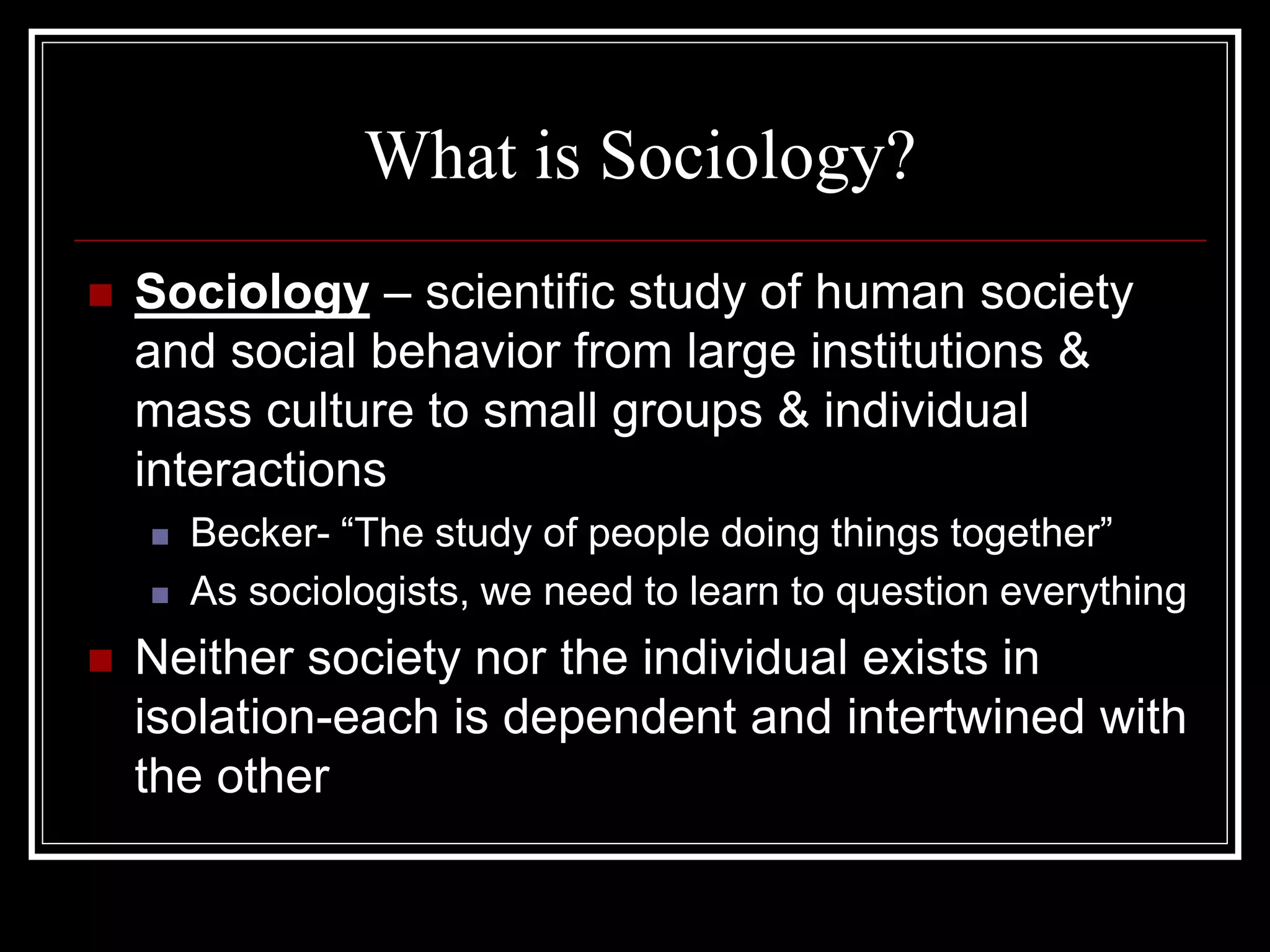
What is Sociology?
   Sociology – scientific study of human society
    and social behavior from large institutions &
    mass culture to small groups & individual
    interactions
       Becker- “The study of people doing things together”
       As sociologists, we need to learn to question everything
   Neither society nor the individual exists in
    isolation-each is dependent and intertwined with
    the other
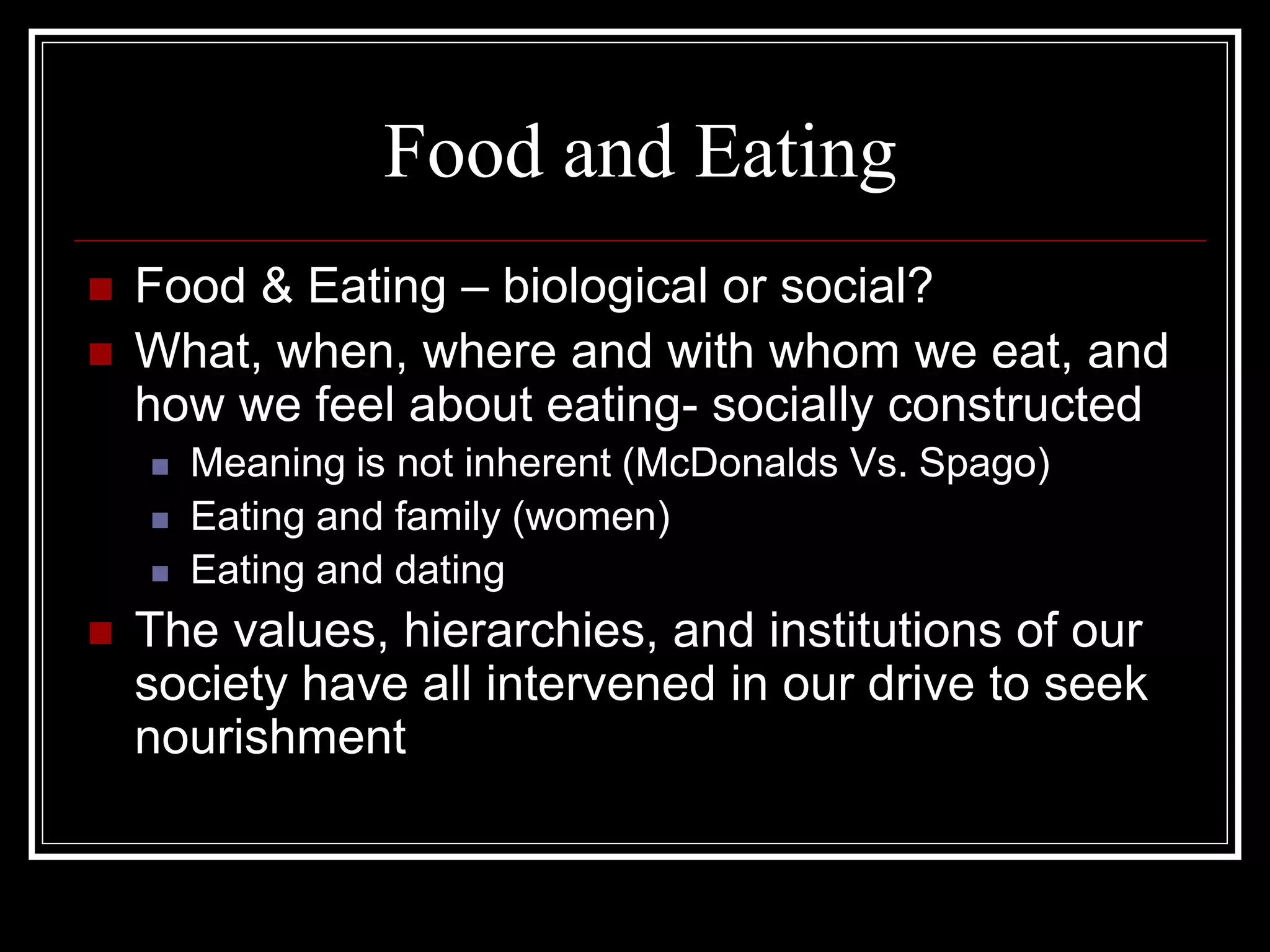
Food and Eating
   Food & Eating – biological or social?
   What, when, where and with whom we eat, and
    how we feel about eating- socially constructed
       Meaning is not inherent (McDonalds Vs. Spago)
       Eating and family (women)
       Eating and dating
   The values, hierarchies, and institutions of our
    society have all intervened in our drive to seek
    nourishment
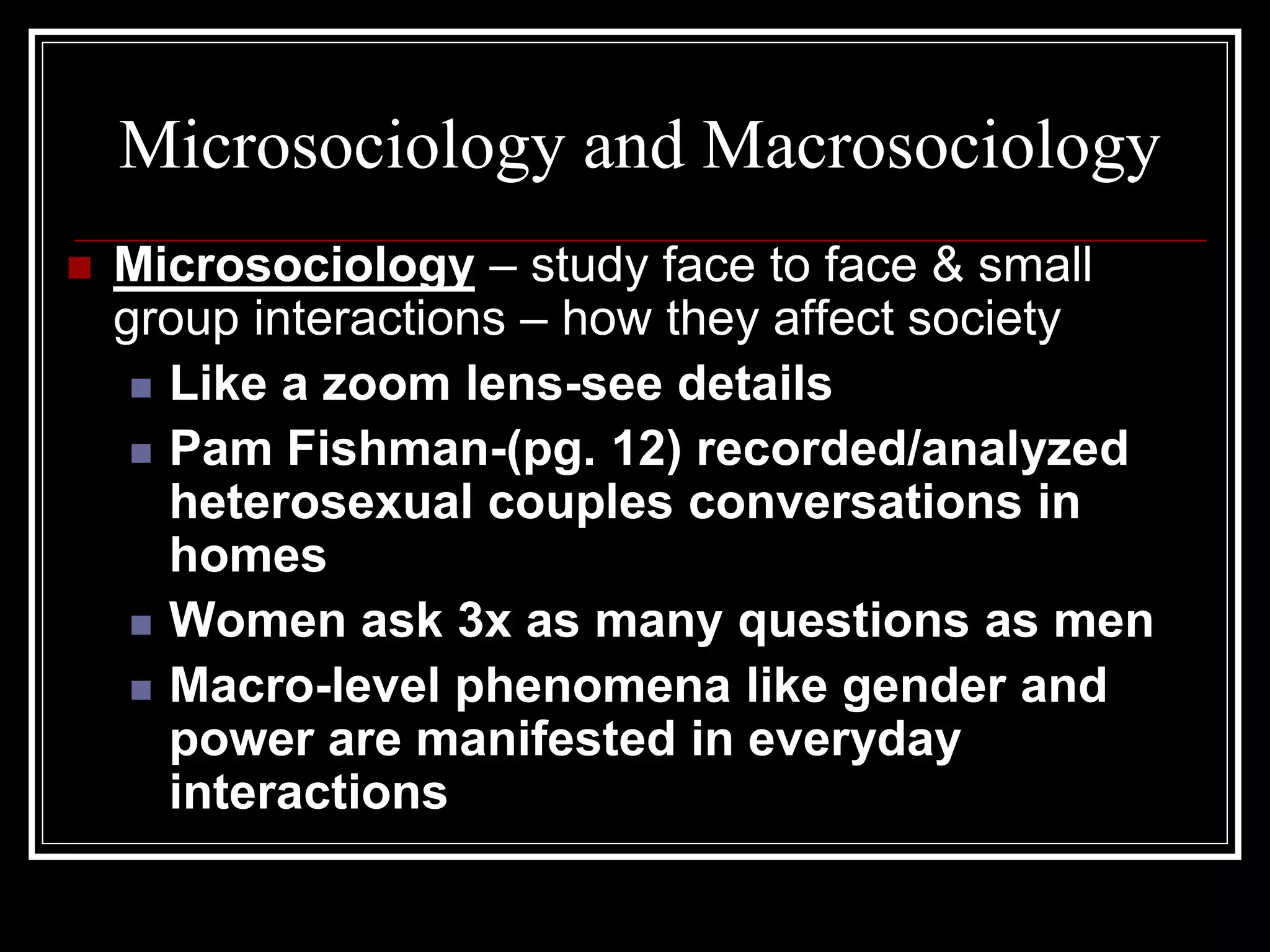
Microsociology and Macrosociology
   Microsociology – study face to face & small
    group interactions – how they affect society
      Like a zoom lens-see details

      Pam Fishman-(pg. 12) recorded/analyzed
       heterosexual couples conversations in
       homes
      Women ask 3x as many questions as men

      Macro-level phenomena like gender and
       power are manifested in everyday
       interactions
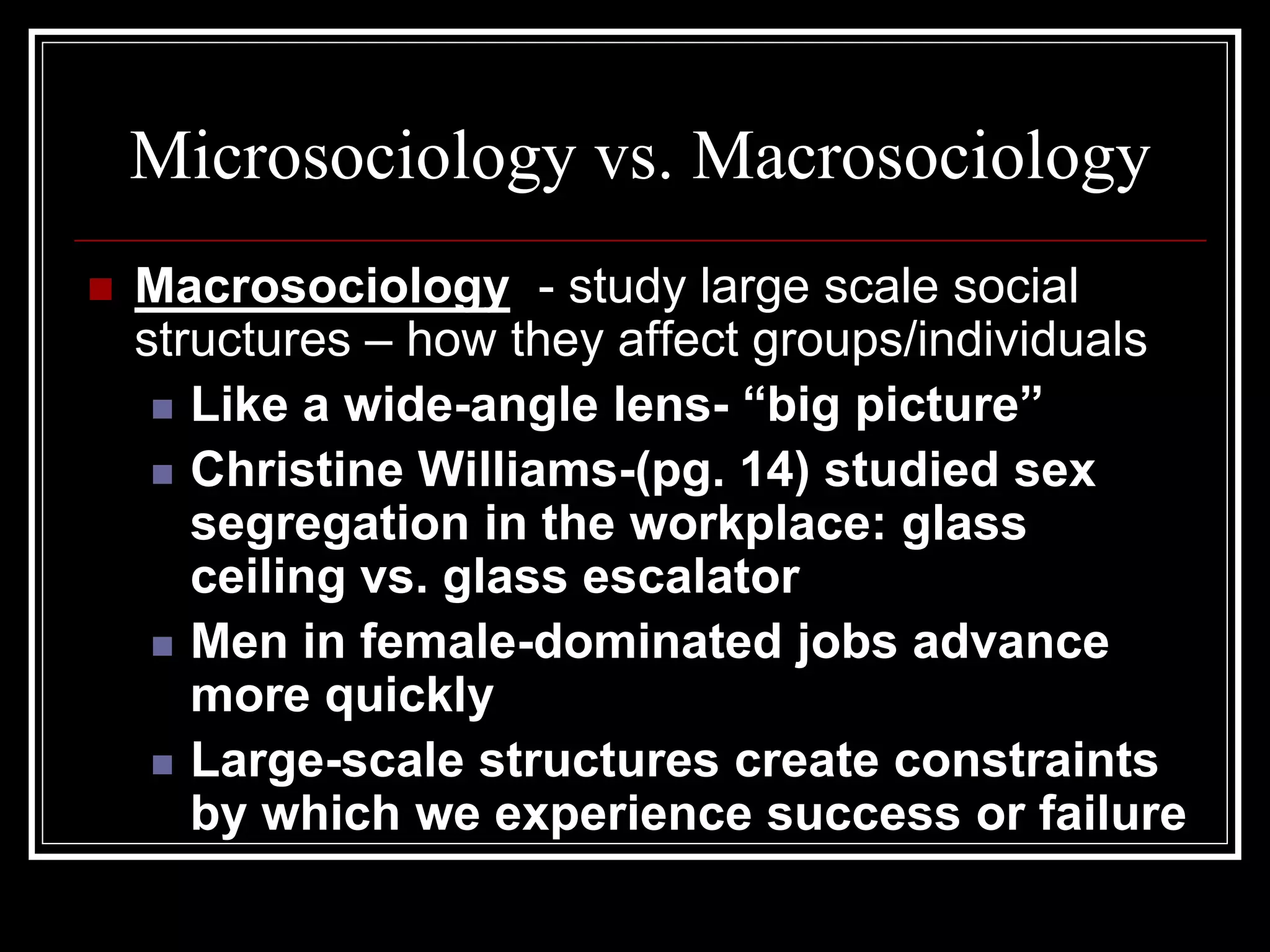
Microsociology vs. Macrosociology
   Macrosociology - study large scale social
    structures – how they affect groups/individuals
      Like a wide-angle lens- “big picture”

      Christine Williams-(pg. 14) studied sex
       segregation in the workplace: glass
       ceiling vs. glass escalator
      Men in female-dominated jobs advance
       more quickly
      Large-scale structures create constraints
       by which we experience success or failure
The Macro-Micro Continuum
             Society
            Culture
        Social Institutions
        Social Inequality
            Groups
             Roles
          Socialization
           Interaction
              Self
Quantitative vs. Qualitative Sociology
   The use of either quantitative or qualitative
    methods depends on the question asked of
    research
   Quantitative-translates social world into
    numbers that can be treated mathematically
       Tries to find cause/effect relationships
   Qualitative-works with non-numerical data
    (texts, interviews, photos, recordings)
       Goal to find how people make sense of their world
The Sociological Perspective
   Sociological Perspective – understand the
    relationship between our particular situation in
    life and what is happening at a social level
   Sociological Imagination – ability to
    understand intersection between history &
    biography
       C. Wright Mills
       We normally think of our problems as being of a
        private matter, but they are connected to our
        cultural and historical context
       Unemployment-personal or social problem?
Sociological Imagination
   We look at what is going on in society and how
    that affects people
   Ex. – Columbine (pg. 18)
       Understand time and place (Soc. Imagination)
       Harris & Klebold shaped by their environment
       American adolescents exposed to violence through
        entertainment (movies to video games; guns available
   Sociological Imagination-gives broader context
    for understanding people and situations
Culture Shock and Beginner’s Mind
   Culture Shock – disorientation when you enter
    a radically new social or cultural environment
       Sociologists try to create this effect in our own culture
       We try to put ourselves in position of “the Other”
   Beginner’s Mind – approach world without
    preconceptions to see things in a new way
       Lose bias to understand the social world – live in the
        present moment
       Opposite of expert’s mind
   Sociology is not just common sense – we
    investigate common wisdom or knowledge
Starting Our Sociological Journey
   There is a difference between an everyday actor
    and a social analyst
   Everyday actor-one who has practical
    knowledge needed to get you through daily life,
    but not necessarily scientific knowledge
   Social analyst-must place in question everything
    that seems unquestionable to everyday actor
       Tries to act as a stranger in the social world, without
        biases or assumptions about it
       Only makes conclusions after investigation or evidence
America as a Place and Ideal
   America is both a real place and an ideal
    concept with a meaningful cultural and historical
    context
       Tocqueville-admired American ideals of freedom,
        equality, individuality, tolerance, democracy and
        enterprise
       Troubled by slavery, lack of universal suffrage, the
        exploitation of workers, tyranny of majority, materialism
   America & multiculturalism in large cities
The U.S. in Global Perspective
   We are closely linked to others around the world
   Open society means mutual flow of goods,
    services, information, ideas, and people
   Macro-trade agreements, multinational corp.
   Micro-my way of life is influenced by…
   “Global Village”-Term coined by Marshall
    McLuhan to describe how media create new
    kinds of social bonds
       Bring together as if belonged to the same small tribe

Soc. 101 rw ch. 1

  • 1.
    SOCIOLOGY AND THE REAL WORLD CHAPTER 1
  • 2.
    Chapter 1 Outline  Society  Social Science  What is sociology?  Microsociology vs. Macrosociology  The sociological Perspective  Sociology and Everyday Life  The U.S. in Global Perspective  The Mass Media and Popular Culture
  • 3.
    Reality T.V. andSociety  Reality T.V. - the issues that are dealt with reveal social dynamics of the real world  Why do we watch it? Are the issues reflective of our world? We see some aspect of social life, no matter how contrived it may be  Society – a group of people who shape their lives in aggregated and patterned ways that distinguish their group from other groups.  Sui generis? What can we actually see?  Working, playing, eating, driving, etc…
  • 4.
    Sociology’s Development  Sociology developed out of modern science discoveries in 17th &18th centuries, new forms of knowledge and practices were established  During 19th century, the concept of social science emerged  Social Sciences – use scientific method to study social world (natural sciences look at physical world)  Sociology is a social science  Overlaps bits of other social science fields
  • 5.
    What is Sociology?  Sociology – scientific study of human society and social behavior from large institutions & mass culture to small groups & individual interactions  Becker- “The study of people doing things together”  As sociologists, we need to learn to question everything  Neither society nor the individual exists in isolation-each is dependent and intertwined with the other
  • 6.
    Food and Eating  Food & Eating – biological or social?  What, when, where and with whom we eat, and how we feel about eating- socially constructed  Meaning is not inherent (McDonalds Vs. Spago)  Eating and family (women)  Eating and dating  The values, hierarchies, and institutions of our society have all intervened in our drive to seek nourishment
  • 7.
    Microsociology and Macrosociology  Microsociology – study face to face & small group interactions – how they affect society  Like a zoom lens-see details  Pam Fishman-(pg. 12) recorded/analyzed heterosexual couples conversations in homes  Women ask 3x as many questions as men  Macro-level phenomena like gender and power are manifested in everyday interactions
  • 8.
    Microsociology vs. Macrosociology  Macrosociology - study large scale social structures – how they affect groups/individuals  Like a wide-angle lens- “big picture”  Christine Williams-(pg. 14) studied sex segregation in the workplace: glass ceiling vs. glass escalator  Men in female-dominated jobs advance more quickly  Large-scale structures create constraints by which we experience success or failure
  • 9.
    The Macro-Micro Continuum  Society  Culture  Social Institutions  Social Inequality  Groups  Roles  Socialization  Interaction  Self
  • 10.
    Quantitative vs. QualitativeSociology  The use of either quantitative or qualitative methods depends on the question asked of research  Quantitative-translates social world into numbers that can be treated mathematically  Tries to find cause/effect relationships  Qualitative-works with non-numerical data (texts, interviews, photos, recordings)  Goal to find how people make sense of their world
  • 11.
    The Sociological Perspective  Sociological Perspective – understand the relationship between our particular situation in life and what is happening at a social level  Sociological Imagination – ability to understand intersection between history & biography  C. Wright Mills  We normally think of our problems as being of a private matter, but they are connected to our cultural and historical context  Unemployment-personal or social problem?
  • 12.
    Sociological Imagination  We look at what is going on in society and how that affects people  Ex. – Columbine (pg. 18)  Understand time and place (Soc. Imagination)  Harris & Klebold shaped by their environment  American adolescents exposed to violence through entertainment (movies to video games; guns available  Sociological Imagination-gives broader context for understanding people and situations
  • 13.
    Culture Shock andBeginner’s Mind  Culture Shock – disorientation when you enter a radically new social or cultural environment  Sociologists try to create this effect in our own culture  We try to put ourselves in position of “the Other”  Beginner’s Mind – approach world without preconceptions to see things in a new way  Lose bias to understand the social world – live in the present moment  Opposite of expert’s mind  Sociology is not just common sense – we investigate common wisdom or knowledge
  • 14.
    Starting Our SociologicalJourney  There is a difference between an everyday actor and a social analyst  Everyday actor-one who has practical knowledge needed to get you through daily life, but not necessarily scientific knowledge  Social analyst-must place in question everything that seems unquestionable to everyday actor  Tries to act as a stranger in the social world, without biases or assumptions about it  Only makes conclusions after investigation or evidence
  • 15.
    America as aPlace and Ideal  America is both a real place and an ideal concept with a meaningful cultural and historical context  Tocqueville-admired American ideals of freedom, equality, individuality, tolerance, democracy and enterprise  Troubled by slavery, lack of universal suffrage, the exploitation of workers, tyranny of majority, materialism  America & multiculturalism in large cities
  • 16.
    The U.S. inGlobal Perspective  We are closely linked to others around the world  Open society means mutual flow of goods, services, information, ideas, and people  Macro-trade agreements, multinational corp.  Micro-my way of life is influenced by…  “Global Village”-Term coined by Marshall McLuhan to describe how media create new kinds of social bonds  Bring together as if belonged to the same small tribe