DR RITU TRIPATHI CHAKRAVARTY
Understanding the
Social Background of
the learners
Social Context
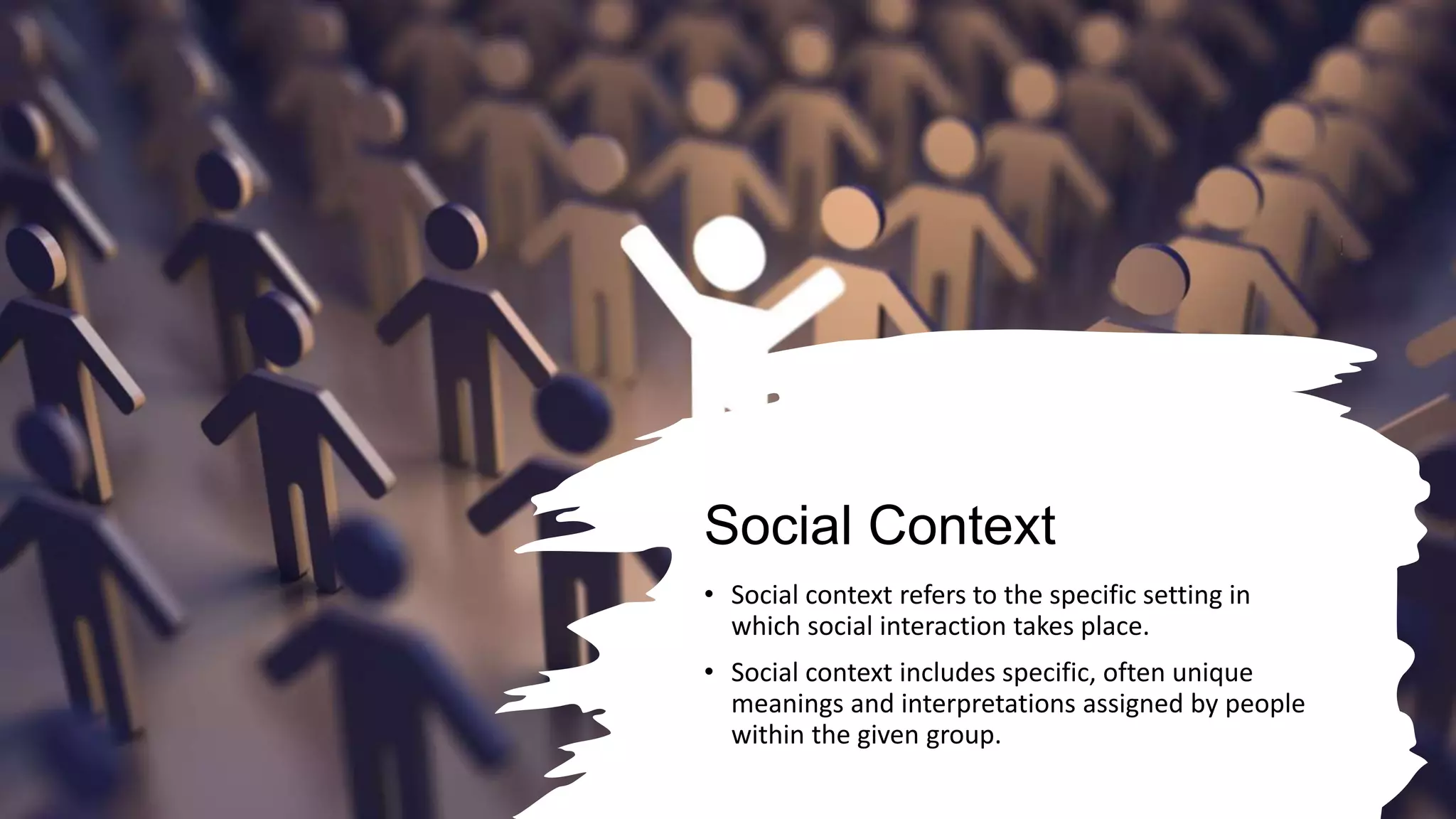
• Social context refers to the specific setting in
which social interaction takes place.
• Social context includes specific, often unique
meanings and interpretations assigned by people
within the given group.
Understanding
Learner’s
Diversity
• It means understanding that
each individual is unique and
recognizing our individual
differences.
• Equally important, though, is
readiness in the emotional,
social, and motivational realms:
the ability to adapt to the new
constraints of the classroom, the
social skills that are needed to
participate effectively in
classroom discourse, and the
self-esteem and sense of agency
required to work hard and learn
intentionally.(https://www.nap.e
du/read/5286/chapter/6)
Vygotsky Social Learning
Theory
• Vygotsky understood that all learning is social.That we don’t actually
end up doing most of our learning all by ourselves in our own heads;
that we work with others, we assist one another to learn.
• Teachers can help students learn by consciously teaching within their
zone of proximal development – right in that area where they’re ready
to learn and providing assistance, or having other students provide
assistance in that social context.”
The Social
Nature of
Knowledge
Acquisition of
the learner
• that individuals actively construct meanings
from interaction with the world around them,
an idea traced back to Piaget's (1970) theories
of cognitive development.
• In contrast, the social perspective is based on
sociocultural theories of learning that
emphasize the role of social interaction with
more knowledgeable others (Vygotsky, 1978)
and activity-oriented work in a social setting
(Leont'ev, 1981).
Therefore for a teacher
• It is of prime importance that the social needs of the
learners are understood .
• This understanding will prepare readiness for
learning.
• The learning outcomes will hence be achieved .

Social needs of the learners

  • 1.
    DR RITU TRIPATHICHAKRAVARTY Understanding the Social Background of the learners
  • 2.
    Social Context • Socialcontext refers to the specific setting in which social interaction takes place. • Social context includes specific, often unique meanings and interpretations assigned by people within the given group.
  • 3.
    Understanding Learner’s Diversity • It meansunderstanding that each individual is unique and recognizing our individual differences. • Equally important, though, is readiness in the emotional, social, and motivational realms: the ability to adapt to the new constraints of the classroom, the social skills that are needed to participate effectively in classroom discourse, and the self-esteem and sense of agency required to work hard and learn intentionally.(https://www.nap.e du/read/5286/chapter/6)
  • 4.
    Vygotsky Social Learning Theory •Vygotsky understood that all learning is social.That we don’t actually end up doing most of our learning all by ourselves in our own heads; that we work with others, we assist one another to learn. • Teachers can help students learn by consciously teaching within their zone of proximal development – right in that area where they’re ready to learn and providing assistance, or having other students provide assistance in that social context.”
  • 5.
    The Social Nature of Knowledge Acquisitionof the learner • that individuals actively construct meanings from interaction with the world around them, an idea traced back to Piaget's (1970) theories of cognitive development. • In contrast, the social perspective is based on sociocultural theories of learning that emphasize the role of social interaction with more knowledgeable others (Vygotsky, 1978) and activity-oriented work in a social setting (Leont'ev, 1981).
  • 6.
    Therefore for ateacher • It is of prime importance that the social needs of the learners are understood . • This understanding will prepare readiness for learning. • The learning outcomes will hence be achieved .