Thasleem. M.P.
2nd Sem. M.S.W.
Central University of Kerala
Social Group Work in Schools
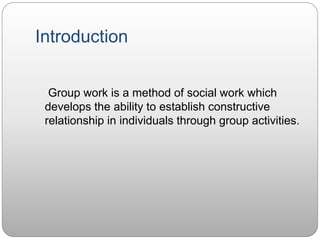
Introduction
Group work is a method of social work which
develops the ability to establish constructive
relationship in individuals through group activities.
Group Work in Schools
Effective way to work with youth today
Types of Groups
Remedial - aimed to improve certain skills
Supportive - giving emotional support to the
students
Psycho educational - deals with common issues
occur at
different stages of
development
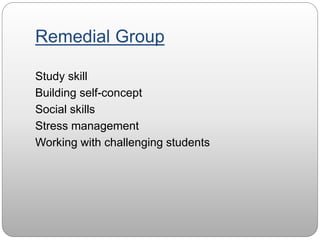
Remedial Group
Study skill
Building self-concept
Social skills
Stress management
Working with challenging students
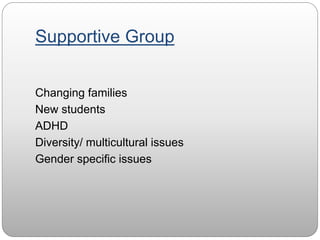
Supportive Group
Changing families
New students
ADHD
Diversity/ multicultural issues
Gender specific issues
Psycho Educational
Peer relationship
‘Girls’ issues / ‘boys’ issues
Decision making
College career issues
Understanding parents
Open group
It’s scheduled at a specific time
Often conducts on free-times
Students would get chance to decide either to
participate or not
Might need parents permission if they are below 18
Closed group
Only selected students are invited
Participants may share a common issue such as
‘writing skill’, ‘low academic performance’ etc.
Tend to be more structured
Have a specific goal
Group leaders role is more directive than in an open
group
Group work in elementary
schools
An efficient way to provide services for students,
hence schedules are more flexible in elementary
classes
Can be done with the students who have
behavioral adjustment problems, or on
developing life skills and addressing the issues
that pertain to elementary students
Other benefit is that there is no stigma among
students in getting group work
Group work among high school
students
More challenging, tight schedule.
developmental changes ( physically, emotionally,
mentally, cognitively) during the middle school
years can wreak havox on students’ self-concept,
peer relationship, and decision making ability.
It’s more important in middle school level than
either of the two levels.
Group work among higher
secondary/ college students
Developmental needs shift to some what career, and
school/college issues begin to move to the forefront, and group
work services can facilitate the decision making of adolescents
as they approach adulthood.
Opens greater opportunities
Small-group work session during lunch, free periods, or before
after school make the open format more attractive than closed
groups.
Structured group may have a common theme such as
relationship or family issues, groups that support accademic
progress of students should be a priority, as students are
beginning to consider their life after the study
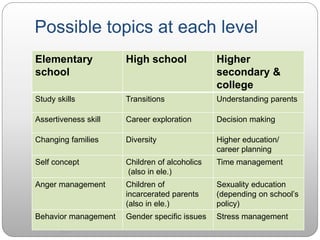
Possible topics at each level
Elementary
school
High school Higher
secondary &
college
Study skills Transitions Understanding parents
Assertiveness skill Career exploration Decision making
Changing families Diversity Higher education/
career planning
Self concept Children of alcoholics
(also in ele.)
Time management
Anger management Children of
incarcerated parents
(also in ele.)
Sexuality education
(depending on school’s
policy)
Behavior management Gender specific issues Stress management
Advantages and challenges of group
work in schools
Advantage
Fills critical need to address developmental
issues
Natural setting where group participants are
readily available
Safe environment, students can express their
thoughts and feelings

Social group work in schools

  • 1.
    Thasleem. M.P. 2nd Sem.M.S.W. Central University of Kerala Social Group Work in Schools
  • 2.
    Introduction Group work isa method of social work which develops the ability to establish constructive relationship in individuals through group activities.
  • 3.
    Group Work inSchools Effective way to work with youth today Types of Groups Remedial - aimed to improve certain skills Supportive - giving emotional support to the students Psycho educational - deals with common issues occur at different stages of development
  • 4.
    Remedial Group Study skill Buildingself-concept Social skills Stress management Working with challenging students
  • 5.
    Supportive Group Changing families Newstudents ADHD Diversity/ multicultural issues Gender specific issues
  • 6.
    Psycho Educational Peer relationship ‘Girls’issues / ‘boys’ issues Decision making College career issues Understanding parents
  • 7.
    Open group It’s scheduledat a specific time Often conducts on free-times Students would get chance to decide either to participate or not Might need parents permission if they are below 18
  • 8.
    Closed group Only selectedstudents are invited Participants may share a common issue such as ‘writing skill’, ‘low academic performance’ etc. Tend to be more structured Have a specific goal Group leaders role is more directive than in an open group
  • 9.
    Group work inelementary schools An efficient way to provide services for students, hence schedules are more flexible in elementary classes Can be done with the students who have behavioral adjustment problems, or on developing life skills and addressing the issues that pertain to elementary students Other benefit is that there is no stigma among students in getting group work
  • 10.
    Group work amonghigh school students More challenging, tight schedule. developmental changes ( physically, emotionally, mentally, cognitively) during the middle school years can wreak havox on students’ self-concept, peer relationship, and decision making ability. It’s more important in middle school level than either of the two levels.
  • 11.
    Group work amonghigher secondary/ college students Developmental needs shift to some what career, and school/college issues begin to move to the forefront, and group work services can facilitate the decision making of adolescents as they approach adulthood. Opens greater opportunities Small-group work session during lunch, free periods, or before after school make the open format more attractive than closed groups. Structured group may have a common theme such as relationship or family issues, groups that support accademic progress of students should be a priority, as students are beginning to consider their life after the study
  • 12.
    Possible topics ateach level Elementary school High school Higher secondary & college Study skills Transitions Understanding parents Assertiveness skill Career exploration Decision making Changing families Diversity Higher education/ career planning Self concept Children of alcoholics (also in ele.) Time management Anger management Children of incarcerated parents (also in ele.) Sexuality education (depending on school’s policy) Behavior management Gender specific issues Stress management
  • 13.
    Advantages and challengesof group work in schools Advantage Fills critical need to address developmental issues Natural setting where group participants are readily available Safe environment, students can express their thoughts and feelings