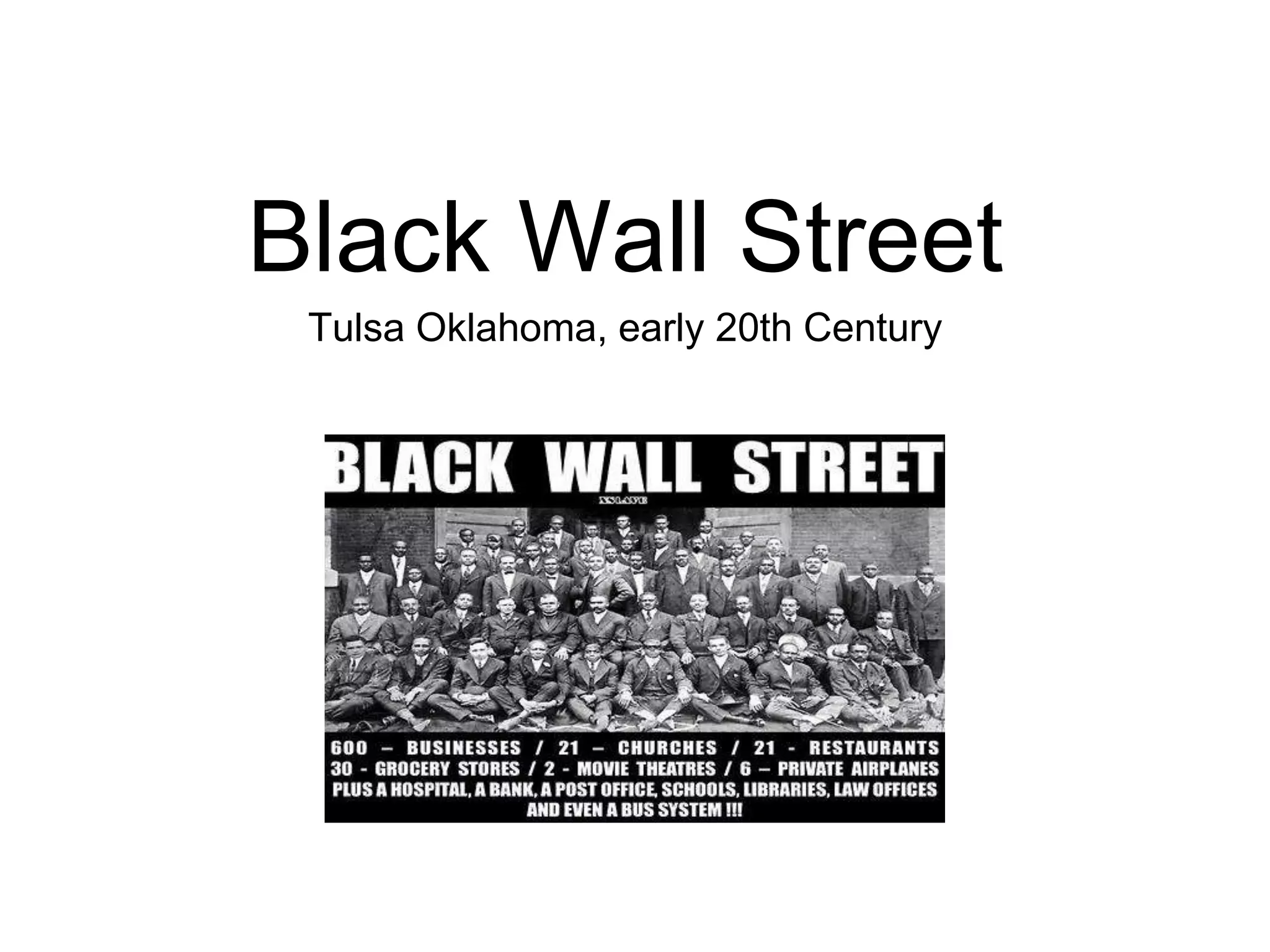
Black Wall Street
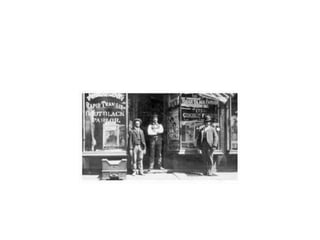
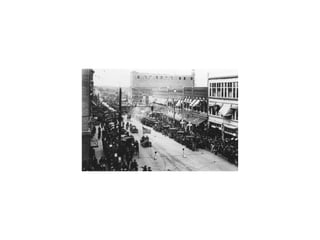
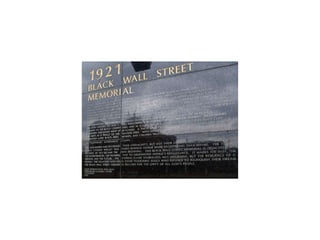
Tulsa Oklahoma, early 20th Century
The What
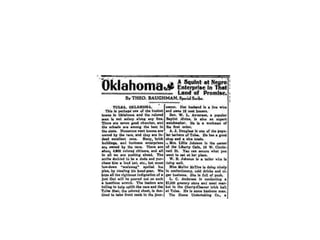
From The San Francisco Bay View, National Black
Newspaper, February 9, 2011
• The best description of Black Wall Street, or Little
Africa as it was also known, would be to compare it
to a mini Beverly Hills. It was the golden door of the
Black community during the early 1900s, and it
proved that African Americans could create a
successful infrastructure. That’s what Black Wall
Street was all about.
• The community was so tight and wealthy because
they traded dollars hand to hand and because they
were dependent upon one another as a result of the
Jim Crow laws. It was not unusual that if a resident’s
home accidentally burned down, it could be rebuilt
within a few weeks by neighbors. This was the type
of scenario that was going on day to day on Black
Wall Street.
• The dollar circulated 36 to 100 times, sometimes
taking a year for currency to leave the community.
Now a dollar leaves the Black community in 15
minutes.
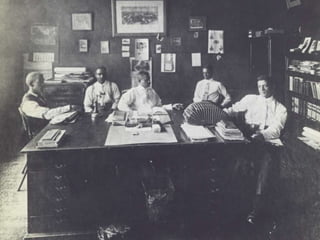
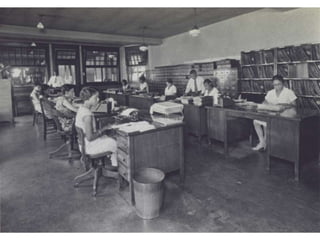
• As for resources, there were Ph.D.s residing in Little
Africa, Black attorneys and doctors.
Then Things Changed
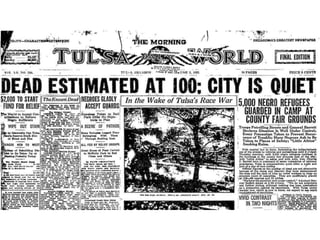
Tulsa Oklahoma, June 1st, 1921
• The community flourished from the early 1900s until
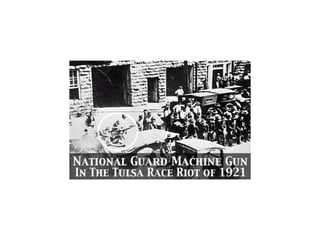
June 1, 1921. That’s when the largest massacre of
nonmilitary Americans in the history of this country
took place, and it was led by the Ku Klux Klan.
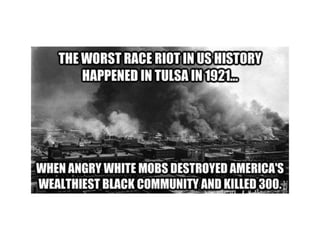
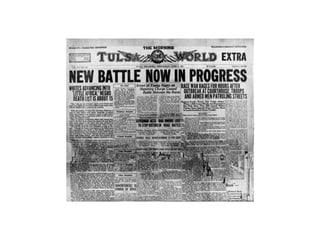
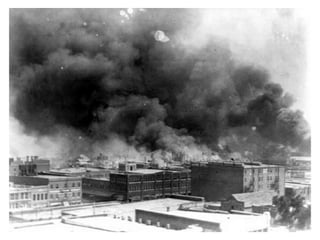
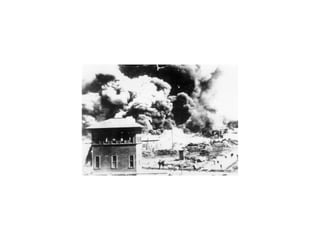
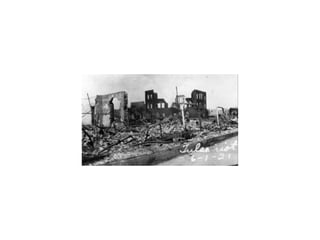
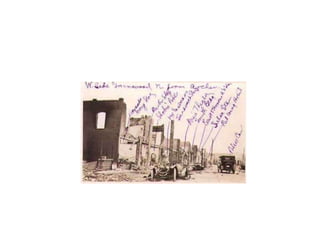
• Black America’s most prosperous community, Black
Wall Street in Tulsa, Oklahoma, went up in flames
June 1, 1921, in the KKK-led Tulsa Race Riot.
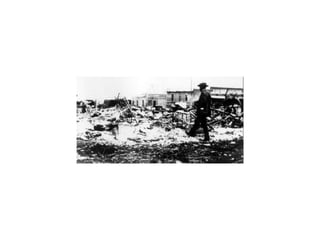
According to Wikipedia, “During the 16 hours of the
assault, over 800 people were admitted to local
hospitals with injuries, an estimated 10,000 were left
homeless, and 35 city blocks composed of 1,256
residences were destroyed by fire caused by
bombing.”
Why?
• A lot of White folks had come back from World War I
and they were poor. When they looked over into the
Black communities and realized that Black men who
fought in the war had come home heroes, that
helped trigger the destruction. It cost the Black
community everything, and not a single dime of
restitution – no insurance claims – have been
awarded the victims to this day. Nonetheless, they
rebuilt.
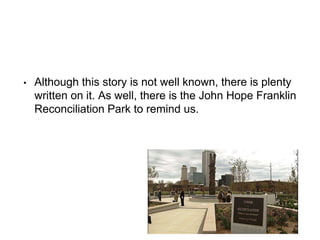
• Although this story is not well known, there is plenty
written on it. As well, there is the John Hope Franklin
Reconciliation Park to remind us.
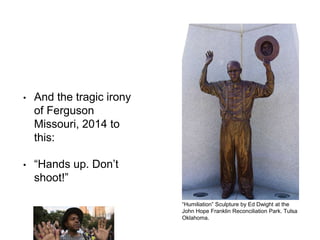
• And the tragic irony
of Ferguson
Missouri, 2014 to
this:
• “Hands up. Don’t
shoot!”
“Humiliation” Sculpture by Ed Dwight at the
John Hope Franklin Reconciliation Park. Tulsa
Oklahoma.

Black wall street riot

  • 1.
    Black Wall Street TulsaOklahoma, early 20th Century
  • 2.
    The What From TheSan Francisco Bay View, National Black Newspaper, February 9, 2011 • The best description of Black Wall Street, or Little Africa as it was also known, would be to compare it to a mini Beverly Hills. It was the golden door of the Black community during the early 1900s, and it proved that African Americans could create a successful infrastructure. That’s what Black Wall Street was all about.
  • 5.
    • The communitywas so tight and wealthy because they traded dollars hand to hand and because they were dependent upon one another as a result of the Jim Crow laws. It was not unusual that if a resident’s home accidentally burned down, it could be rebuilt within a few weeks by neighbors. This was the type of scenario that was going on day to day on Black Wall Street.
  • 7.
    • The dollarcirculated 36 to 100 times, sometimes taking a year for currency to leave the community. Now a dollar leaves the Black community in 15 minutes. • As for resources, there were Ph.D.s residing in Little Africa, Black attorneys and doctors.
  • 11.
    Then Things Changed TulsaOklahoma, June 1st, 1921
  • 12.
    • The communityflourished from the early 1900s until June 1, 1921. That’s when the largest massacre of nonmilitary Americans in the history of this country took place, and it was led by the Ku Klux Klan.
  • 14.
    • Black America’smost prosperous community, Black Wall Street in Tulsa, Oklahoma, went up in flames June 1, 1921, in the KKK-led Tulsa Race Riot. According to Wikipedia, “During the 16 hours of the assault, over 800 people were admitted to local hospitals with injuries, an estimated 10,000 were left homeless, and 35 city blocks composed of 1,256 residences were destroyed by fire caused by bombing.”
  • 25.
    Why? • A lotof White folks had come back from World War I and they were poor. When they looked over into the Black communities and realized that Black men who fought in the war had come home heroes, that helped trigger the destruction. It cost the Black community everything, and not a single dime of restitution – no insurance claims – have been awarded the victims to this day. Nonetheless, they rebuilt.
  • 26.
    • Although thisstory is not well known, there is plenty written on it. As well, there is the John Hope Franklin Reconciliation Park to remind us.
  • 27.
    • And thetragic irony of Ferguson Missouri, 2014 to this: • “Hands up. Don’t shoot!” “Humiliation” Sculpture by Ed Dwight at the John Hope Franklin Reconciliation Park. Tulsa Oklahoma.