Emerging Patterns of
Social Media Use
@neilmajor Strategy Director, Yomego
Eight premises
A mixture of data, observation
(and conjecture)
…and some conclusions on

what this all means for brands
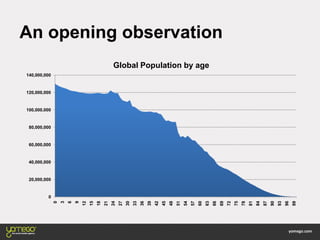
An opening observation
0
20,000,000
40,000,000
60,000,000
80,000,000
100,000,000
120,000,000
140,000,000
0
3
6
9
12
15
18
21
24
27
30
33
36
39
42
45
48
51
54
57
60
63
66
69
72
75
78
81
84
87
90
93
96
99
Global Population by age
1. Real Time
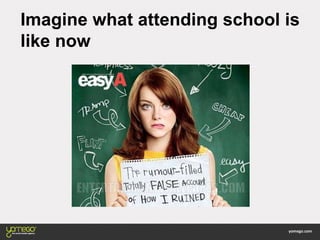
Imagine what attending school is
like now
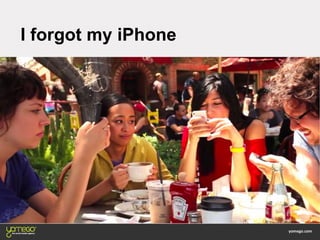
I forgot my iPhone
What this means for brands…
Obvious really – the right
message can spread through
the network like wildfire – but
so can the wrong one.
Think like an editorial outlet
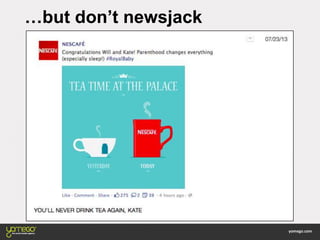
…but don’t newsjack
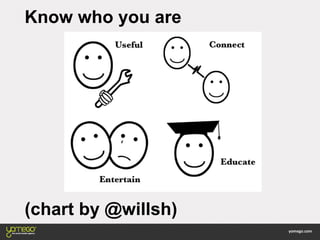
Know who you are
(chart by @willsh)
2. Semi - Anonymous
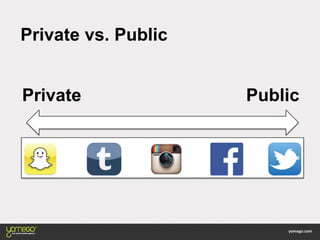
Private vs. Public
Private Public
What this means for
brands…
The social data land grab could
be reaching its end
However, the new networks are
places of great user creativity.
Learn the culture.
3. Curated self
Curated self?
The idea that young people
don’t care about privacy is a
myth.
Young people are incredibly
sophisticated at crafting their
identity
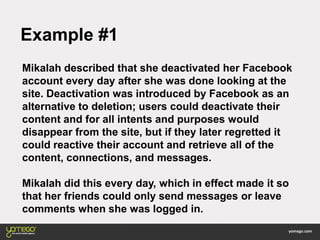
Example #1
Mikalah described that she deactivated her Facebook
account every day after she was done looking at the
site. Deactivation was introduced by Facebook as an
alternative to deletion; users could deactivate their
content and for all intents and purposes would
disappear from the site, but if they later regretted it
could reactive their account and retrieve all of the
content, connections, and messages.
Mikalah did this every day, which in effect made it so
that her friends could only send messages or leave
comments when she was logged in.
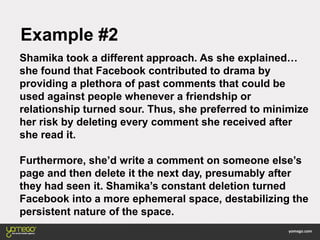
Example #2
Shamika took a different approach. As she explained…
she found that Facebook contributed to drama by
providing a plethora of past comments that could be
used against people whenever a friendship or
relationship turned sour. Thus, she preferred to minimize
her risk by deleting every comment she received after
she read it.
Furthermore, she’d write a comment on someone else’s
page and then delete it the next day, presumably after
they had seen it. Shamika’s constant deletion turned
Facebook into a more ephemeral space, destabilizing the
persistent nature of the space.
Hiding from search engines
Tum bl r an d L J u sers sep ar ate w ords thr ou gh o dd
spacin g in o rde r to fo ol sea rc h en g i nes.
Chinese users hide political messages in image
attachments to seemingly benign posts on Weibo.
General Pretraeus communicated solely through draft
mode.
4chan scares away the faint of heart with porn.
More technically astute groups communicate through
obscure messaging systems. (insight via @kenyatta)
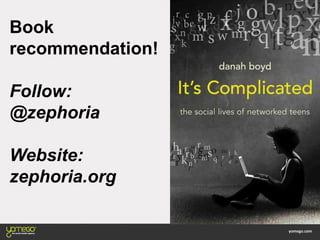
Book
recommendation!
Follow:
@zephoria
Website:
zephoria.org
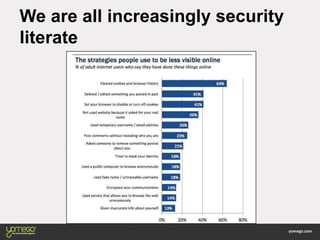
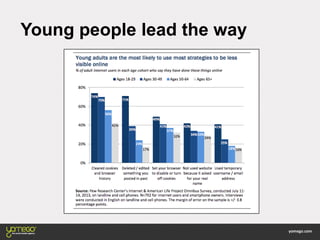
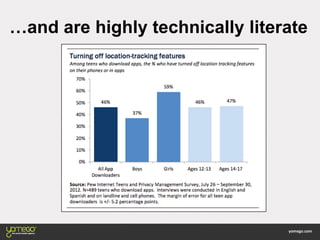
We are all increasingly security
literate
Young people lead the way
…and are highly technically literate
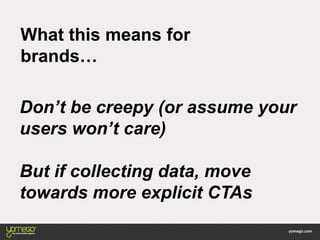
What this means for
brands…
Don’t be creepy (or assume your
users won’t care)
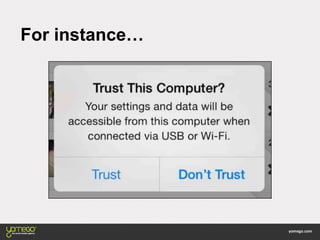
But if collecting data, move
towards more explicit CTAs
For instance…
4. Hyper visual literacy
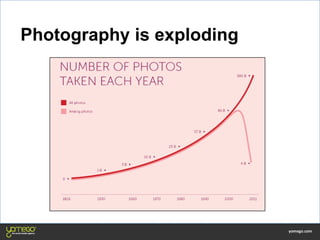
Photography is exploding
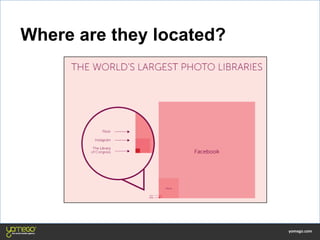
Where are they located?
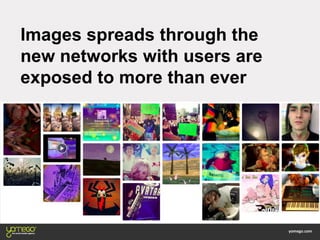
Images spreads through the
new networks with users are
exposed to more than ever
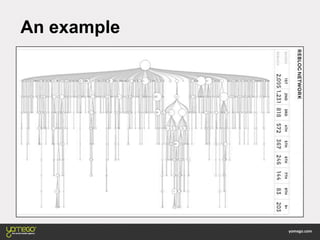
An example
What this means for brands…
Eye candy spreads! Make sure your
sites are easy to harvest
Mobile makes images the most
important medium
Take time to explore the visual web
5. Networks as cultures
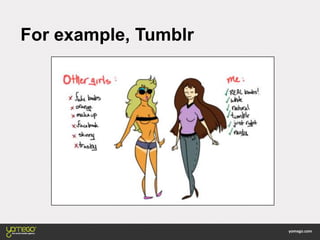
For example, Tumblr
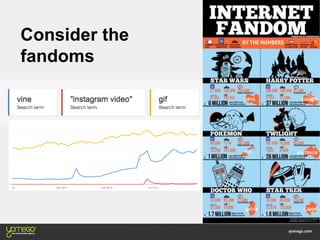
Consider the
fandoms
What does this mean for brands?
It’s not enough to look at the
technical nature of each site or
demographics
Consider the culture and don’t
aim at individuals - think about
the networks of users
6. Internet famous
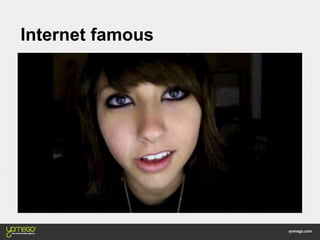
Internet famous
Just Influencers?
…not exactly. Influencers online
traditionally are more akin to
bloggers
Internet fame is about what the
network decides they like
For instance…
So just memes?
It’s part of it, but only part of it.
What it’s more a manifestation of
the offline popularity contests
that have already existed.
Internet fame is an end in itself
What this means for
brands…
Internet fame is a culturally closed
world. Outreach is a little more
problematic.
Instead identify breakout hits early
for maximum success (velocity)
7. Social as human right
Workplace use of Social Media
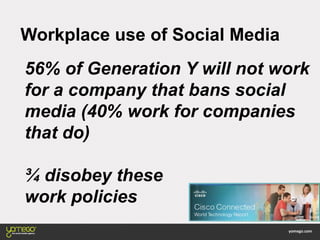
56% of Generation Y will not work
for a company that bans social
media (40% work for companies
that do)
¾ disobey these
work policies
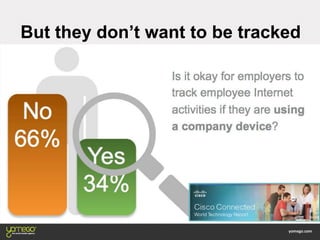
But they don’t want to be tracked
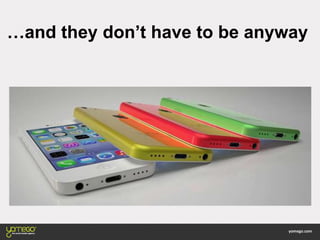
…and they don’t have to be anyway
What this means for brands and
companies
Context is important – content
will be received within a time
poor environment
The law of the playground exists
in your company
8. What happens next?
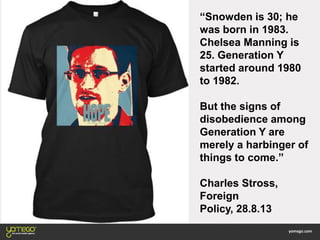
“Snowden is 30; he
was born in 1983.
Chelsea Manning is
25. Generation Y
started around 1980
to 1982.
But the signs of
disobedience among
Generation Y are
merely a harbinger of
things to come.”
Charles Stross,
Foreign
Policy, 28.8.13
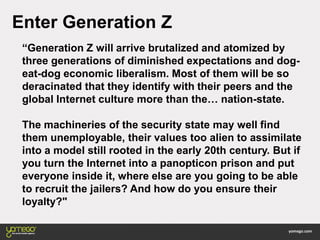
“Generation Z will arrive brutalized and atomized by
three generations of diminished expectations and dog-
eat-dog economic liberalism. Most of them will be so
deracinated that they identify with their peers and the
global Internet culture more than the… nation-state.
The machineries of the security state may well find
them unemployable, their values too alien to assimilate
into a model still rooted in the early 20th century. But if
you turn the Internet into a panopticon prison and put
everyone inside it, where else are you going to be able
to recruit the jailers? And how do you ensure their
loyalty?"
Enter Generation Z
What this means for us…
If things continue as they
are, an inevitable tension
between the establishment and
generation will result
Given the demographics at play
this is unlikely to end well
…so in summary
1. Assume a critical audience
2. Be open (explicit)
3. Learn their culture
4. Examine them as networks
5. Work with them – not through
them
6. If it’s not mobile, it won’t work
7. Work/home/online/offline
distinctions are dead
8. Watch the demographics
Thank you!
@neilmajor Strategy Director, Yomego

Emerging Patterns of Social Media Use

  • 1.
    Emerging Patterns of SocialMedia Use @neilmajor Strategy Director, Yomego
  • 2.
    Eight premises A mixtureof data, observation (and conjecture) …and some conclusions on what this all means for brands
  • 3.
  • 4.
  • 5.
    Imagine what attendingschool is like now
  • 6.
  • 7.
    What this meansfor brands… Obvious really – the right message can spread through the network like wildfire – but so can the wrong one. Think like an editorial outlet
  • 8.
  • 9.
    Know who youare (chart by @willsh)
  • 10.
    2. Semi -Anonymous
  • 11.
  • 13.
    What this meansfor brands… The social data land grab could be reaching its end However, the new networks are places of great user creativity. Learn the culture.
  • 14.
  • 15.
    Curated self? The ideathat young people don’t care about privacy is a myth. Young people are incredibly sophisticated at crafting their identity
  • 16.
    Example #1 Mikalah describedthat she deactivated her Facebook account every day after she was done looking at the site. Deactivation was introduced by Facebook as an alternative to deletion; users could deactivate their content and for all intents and purposes would disappear from the site, but if they later regretted it could reactive their account and retrieve all of the content, connections, and messages. Mikalah did this every day, which in effect made it so that her friends could only send messages or leave comments when she was logged in.
  • 17.
    Example #2 Shamika tooka different approach. As she explained… she found that Facebook contributed to drama by providing a plethora of past comments that could be used against people whenever a friendship or relationship turned sour. Thus, she preferred to minimize her risk by deleting every comment she received after she read it. Furthermore, she’d write a comment on someone else’s page and then delete it the next day, presumably after they had seen it. Shamika’s constant deletion turned Facebook into a more ephemeral space, destabilizing the persistent nature of the space.
  • 18.
    Hiding from searchengines Tum bl r an d L J u sers sep ar ate w ords thr ou gh o dd spacin g in o rde r to fo ol sea rc h en g i nes. Chinese users hide political messages in image attachments to seemingly benign posts on Weibo. General Pretraeus communicated solely through draft mode. 4chan scares away the faint of heart with porn. More technically astute groups communicate through obscure messaging systems. (insight via @kenyatta)
  • 19.
  • 20.
    We are allincreasingly security literate
  • 21.
  • 22.
    …and are highlytechnically literate
  • 23.
    What this meansfor brands… Don’t be creepy (or assume your users won’t care) But if collecting data, move towards more explicit CTAs
  • 24.
  • 25.
  • 26.
  • 27.
  • 28.
    Images spreads throughthe new networks with users are exposed to more than ever
  • 29.
  • 30.
    What this meansfor brands… Eye candy spreads! Make sure your sites are easy to harvest Mobile makes images the most important medium Take time to explore the visual web
  • 31.
  • 32.
  • 33.
  • 34.
    What does thismean for brands? It’s not enough to look at the technical nature of each site or demographics Consider the culture and don’t aim at individuals - think about the networks of users
  • 35.
  • 36.
  • 37.
    Just Influencers? …not exactly.Influencers online traditionally are more akin to bloggers Internet fame is about what the network decides they like
  • 38.
  • 39.
    So just memes? It’spart of it, but only part of it. What it’s more a manifestation of the offline popularity contests that have already existed. Internet fame is an end in itself
  • 40.
    What this meansfor brands… Internet fame is a culturally closed world. Outreach is a little more problematic. Instead identify breakout hits early for maximum success (velocity)
  • 41.
    7. Social ashuman right
  • 42.
    Workplace use ofSocial Media 56% of Generation Y will not work for a company that bans social media (40% work for companies that do) ¾ disobey these work policies
  • 43.
    But they don’twant to be tracked
  • 44.
    …and they don’thave to be anyway
  • 45.
    What this meansfor brands and companies Context is important – content will be received within a time poor environment The law of the playground exists in your company
  • 46.
  • 47.
    “Snowden is 30;he was born in 1983. Chelsea Manning is 25. Generation Y started around 1980 to 1982. But the signs of disobedience among Generation Y are merely a harbinger of things to come.” Charles Stross, Foreign Policy, 28.8.13
  • 48.
    “Generation Z willarrive brutalized and atomized by three generations of diminished expectations and dog- eat-dog economic liberalism. Most of them will be so deracinated that they identify with their peers and the global Internet culture more than the… nation-state. The machineries of the security state may well find them unemployable, their values too alien to assimilate into a model still rooted in the early 20th century. But if you turn the Internet into a panopticon prison and put everyone inside it, where else are you going to be able to recruit the jailers? And how do you ensure their loyalty?" Enter Generation Z
  • 49.
    What this meansfor us… If things continue as they are, an inevitable tension between the establishment and generation will result Given the demographics at play this is unlikely to end well
  • 50.
  • 51.
    1. Assume acritical audience 2. Be open (explicit) 3. Learn their culture 4. Examine them as networks 5. Work with them – not through them 6. If it’s not mobile, it won’t work 7. Work/home/online/offline distinctions are dead 8. Watch the demographics
  • 52.

Editor's Notes

  • #10 Chart by John Willshire
  • #14 The new networks – perhaps more so
  • #16 Snowdon is a millenialThis is on top of the use of different networks to share different things with different peer groups
  • #21 Leaving teens aside for a moment
  • #43 This section is from the Cisco connected youth