Smelting Furnaces   By Dr. Bharati Rehani Metallurgical and Materials Engg. Dept. M.S.University of Baroda
Introduction Smelting involves "melting the metal out of its ore"  Most ores are a chemical compound of the metal with other elements, such as oxygen (as an  oxide ) sulfur (as a  sulfide ) or  carbon and oxygen together (as a  carbonate ) To produce the metal, these compounds have to undergo a chemical reaction. Smelting therefore consists of using suitable  reducing substances  that will combine with those  oxidizing  elements to free the metal.
Types of smelting Reduction smelting  The ore is reduced by carbon, in the presence of flux to give molten metal and slag. It is carried out in blast furnace or electric furnace Matte smelting No reducing agent is used. Matte and slag is formed. It is carried out in reverberatory furnace or flash smelter
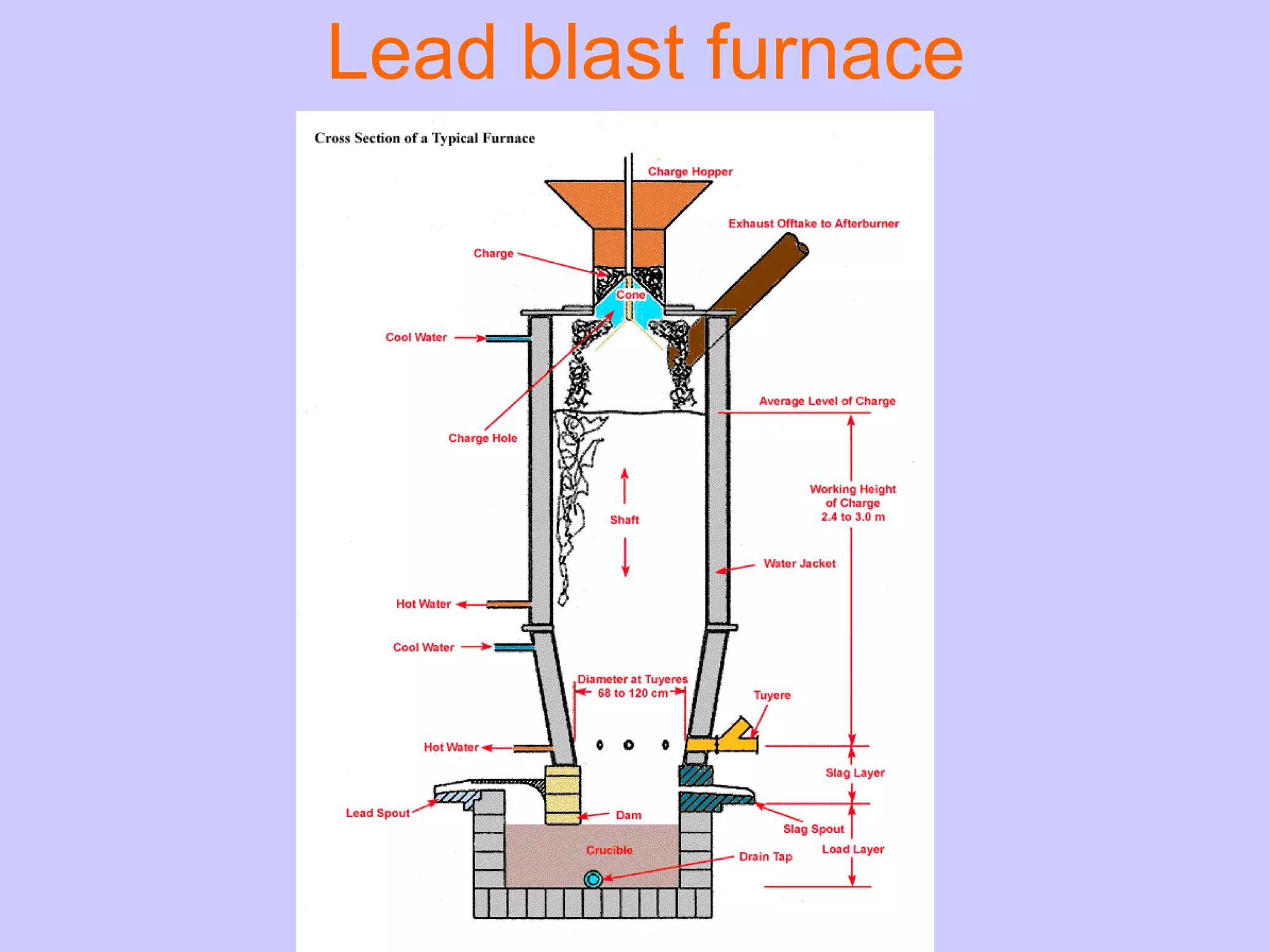
Blast furnace Lead is usually smelted in a blast furnace using the carbon As melting occurs, several layers form in the furnace.  The molten lead layer sinks to the bottom of the furnace A layer of the lightest elements, including arsenic and antimony, floats to the top and is referred to as the "speiss.“ The lead from the blast furnace, called lead bullion
Lead blast furnace
Lead smelting Blast furnace charge: Lead sinter (PbO) + coke(10%)+ limestone(5-10%)+ Scrap iron(1%) +quartz Product: Lead bullion + slag + matte containing copper + spiess + impurities + gas dust
Reverberatory furnace Reverberatory furnace is used for  smelting  refining or  melting  Here, the fuel is not in direct contact with the contents but heats it by a flame blown over it from another chamber This furnace is applied in copper, tin, and nickel production
Reverbaretory furnace The primary mode of heat transfer is through radiation from the refractory brick walls to the metal, but convective heat transfer also provides additional heating from the burner to the metal.
Advantages high volume processing rate low operating  maintenance costs Disadvantages  high metal oxidation rates low efficiencies large floor space requirements
Applications Smelting of Tin concentrate Copper matte smelting Nickel concentrate
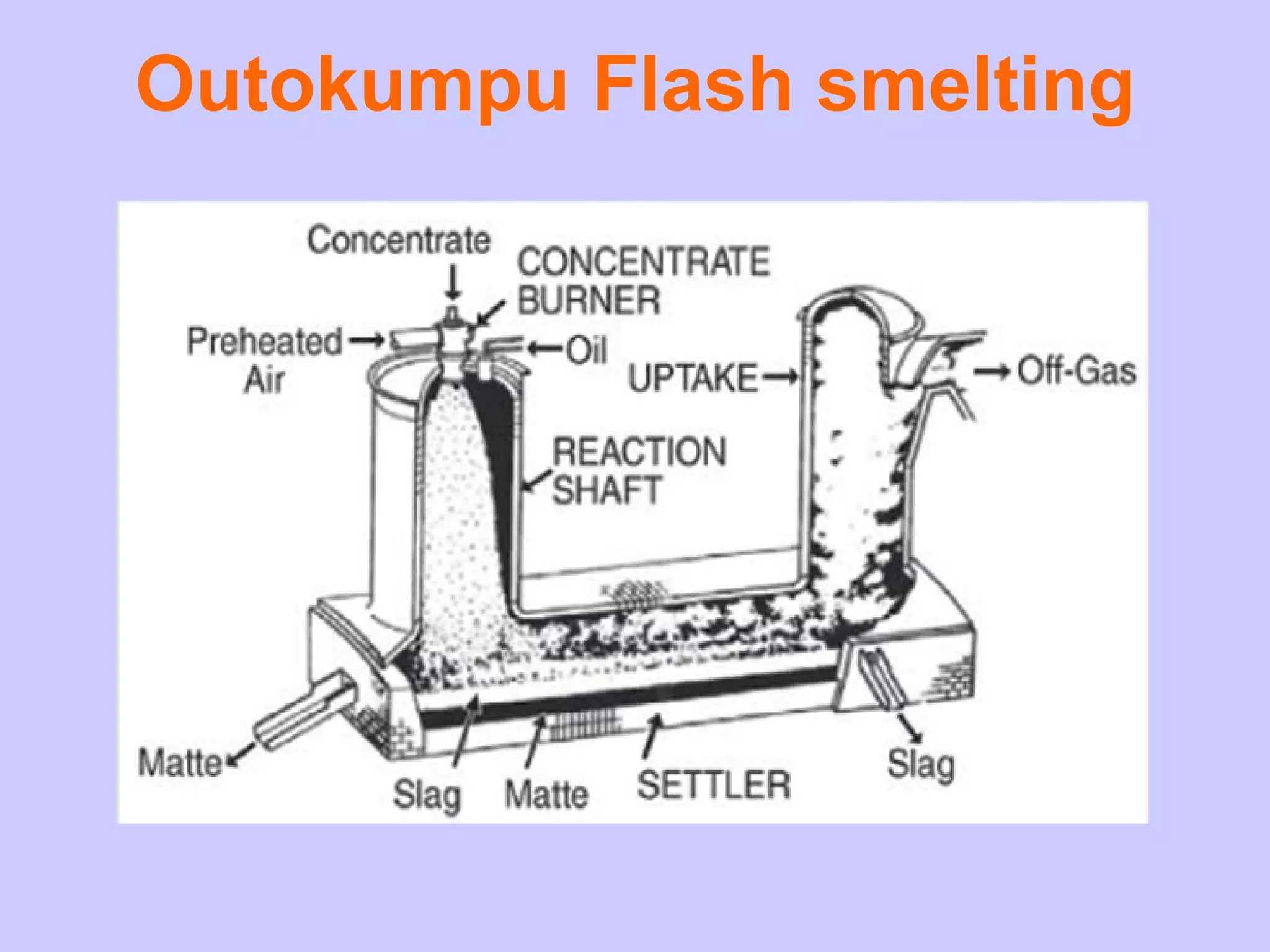
Flash smelting Flash smelting  is a  smelting  process for  sulfur -containing ores The process was developed by  Outokumpu  in  Finland   for smelting copper ore The process uses the autogenic principle by using the energy contained in the sulfur and  iron  for melting the ore In the process dried and powdered ore is discharged from a nozzle into a  fluidized bed reactor  fed with oxygen.  The reduced metal melts, and drops to the bottom of a settling chamber.
Smelting of copper concentrate The feed to flash smelting is known as copper concentrate. It contains copper and iron sulfides, silica and limestone grind to small particles (<100mm) Flash smelting is highly exothermic process. It requires almost no external heat.  Concentrate and enriched air are fed to the shaft of the furnace.
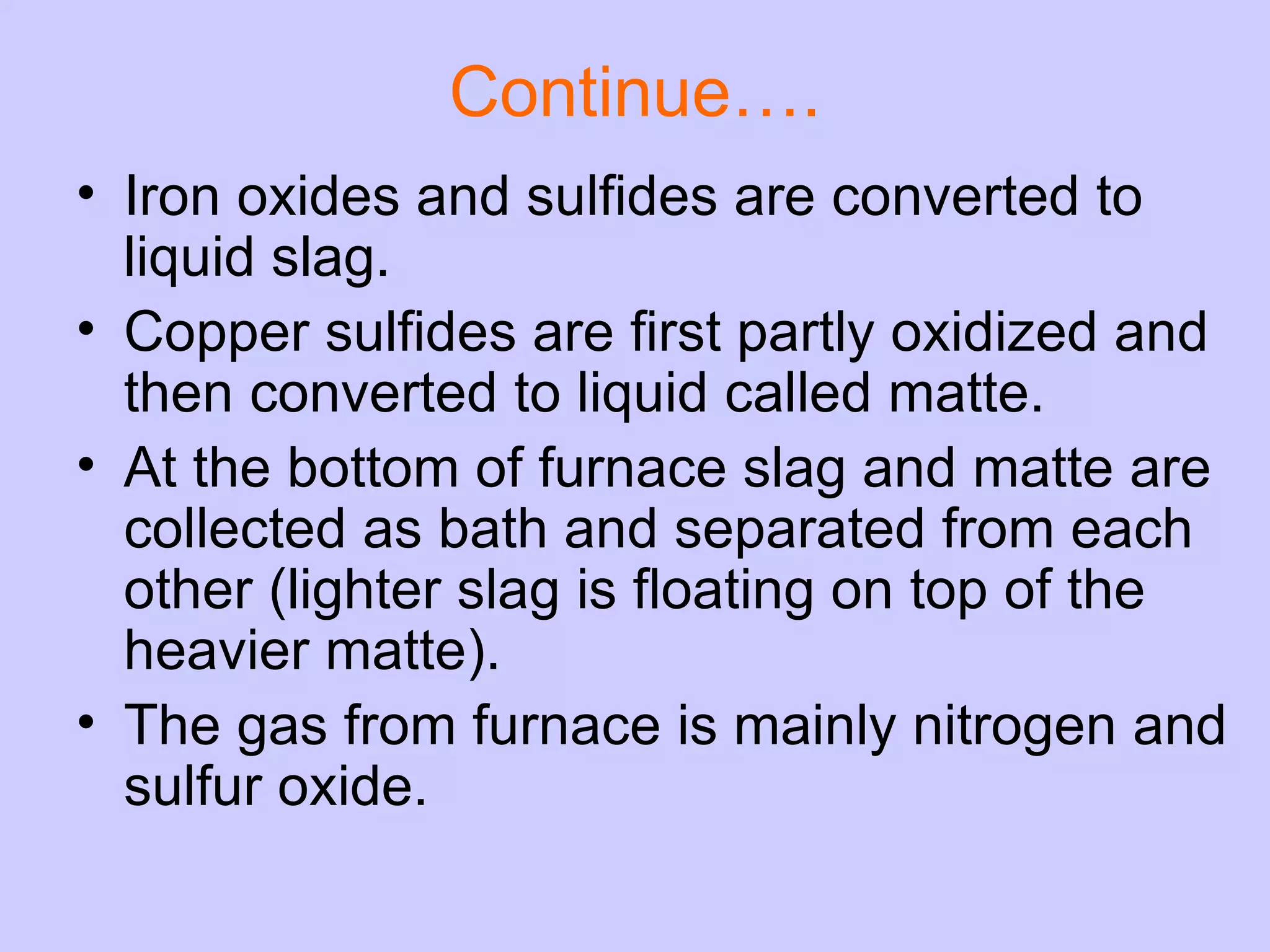
Continue…. Iron oxides and sulfides are converted to liquid slag.  Copper sulfides are first partly oxidized and then converted to liquid called matte. At the bottom of furnace slag and matte are collected as bath and separated from each other (lighter slag is floating on top of the heavier matte).  The gas from furnace is mainly nitrogen and sulfur oxide.
Outokumpu Flash smelting
Advantages Reliable and proven process and equipment Low investment and operating costs Capability to treat different qualities of raw materials with variable feed rates High recovery of valuable metals Meets the strictest environmental requirements The cleanest smelting method available Safe and easy working conditions
Thank you

Smelting furnaces

  • 1.
    Smelting Furnaces By Dr. Bharati Rehani Metallurgical and Materials Engg. Dept. M.S.University of Baroda
  • 2.
    Introduction Smelting involves&quot;melting the metal out of its ore&quot; Most ores are a chemical compound of the metal with other elements, such as oxygen (as an oxide ) sulfur (as a sulfide ) or carbon and oxygen together (as a carbonate ) To produce the metal, these compounds have to undergo a chemical reaction. Smelting therefore consists of using suitable reducing substances that will combine with those oxidizing elements to free the metal.
  • 3.
    Types of smeltingReduction smelting The ore is reduced by carbon, in the presence of flux to give molten metal and slag. It is carried out in blast furnace or electric furnace Matte smelting No reducing agent is used. Matte and slag is formed. It is carried out in reverberatory furnace or flash smelter
  • 4.
    Blast furnace Leadis usually smelted in a blast furnace using the carbon As melting occurs, several layers form in the furnace. The molten lead layer sinks to the bottom of the furnace A layer of the lightest elements, including arsenic and antimony, floats to the top and is referred to as the &quot;speiss.“ The lead from the blast furnace, called lead bullion
  • 5.
  • 6.
    Lead smelting Blastfurnace charge: Lead sinter (PbO) + coke(10%)+ limestone(5-10%)+ Scrap iron(1%) +quartz Product: Lead bullion + slag + matte containing copper + spiess + impurities + gas dust
  • 7.
    Reverberatory furnace Reverberatoryfurnace is used for smelting refining or melting Here, the fuel is not in direct contact with the contents but heats it by a flame blown over it from another chamber This furnace is applied in copper, tin, and nickel production
  • 8.
    Reverbaretory furnace Theprimary mode of heat transfer is through radiation from the refractory brick walls to the metal, but convective heat transfer also provides additional heating from the burner to the metal.
  • 9.
    Advantages high volumeprocessing rate low operating maintenance costs Disadvantages high metal oxidation rates low efficiencies large floor space requirements
  • 10.
    Applications Smelting ofTin concentrate Copper matte smelting Nickel concentrate
  • 11.
    Flash smelting Flashsmelting is a smelting process for sulfur -containing ores The process was developed by Outokumpu in Finland for smelting copper ore The process uses the autogenic principle by using the energy contained in the sulfur and iron for melting the ore In the process dried and powdered ore is discharged from a nozzle into a fluidized bed reactor fed with oxygen. The reduced metal melts, and drops to the bottom of a settling chamber.
  • 12.
    Smelting of copperconcentrate The feed to flash smelting is known as copper concentrate. It contains copper and iron sulfides, silica and limestone grind to small particles (<100mm) Flash smelting is highly exothermic process. It requires almost no external heat. Concentrate and enriched air are fed to the shaft of the furnace.
  • 13.
    Continue…. Iron oxidesand sulfides are converted to liquid slag. Copper sulfides are first partly oxidized and then converted to liquid called matte. At the bottom of furnace slag and matte are collected as bath and separated from each other (lighter slag is floating on top of the heavier matte). The gas from furnace is mainly nitrogen and sulfur oxide.
  • 14.
  • 15.
    Advantages Reliable andproven process and equipment Low investment and operating costs Capability to treat different qualities of raw materials with variable feed rates High recovery of valuable metals Meets the strictest environmental requirements The cleanest smelting method available Safe and easy working conditions
  • 16.