Extraction of Zinc 
Presented by 
Nikhil Koshy Jacob 
ME Industrial Metallurgy 
14MY33
Introduction 
• Zinc is mainly used for 
Galvanizing 
Production of alloys 
Dry cell batteries 
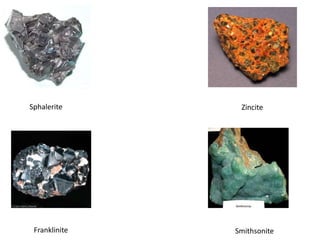
• Its minerals are 
Sphalerite (ZnS) 
Zincite (ZnO) 
Smithsonite (ZnCO3) 
Franklinite (ZnO(Fe,Mn)2O3 )
Sphalerite Zincite 
Franklinite Smithsonite
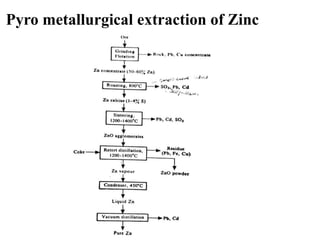
Pyro metallurgical extraction of Zinc 
Jkkkkkkkkkkk
Procedures 
• The ore is first ground and subjected to froth flotation 
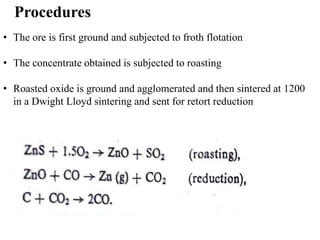
• The concentrate obtained is subjected to roasting 
• Roasted oxide is ground and agglomerated and then sintered at 1200 
in a Dwight Lloyd sintering and sent for retort reduction
• ZnO is reduced by carbon 
• Make sure CO partial pressure is maintained to prevent reverse 
reaction 
• Zinc vapour obtained is condensed at 4500c to form liquid Zn 
• Zinc condensation has to be carried out quickly to prevent 
formation of blue oxide of Zn+ZnO
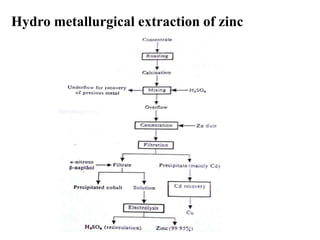
Hydro metallurgical extraction of zinc
Procedures 
• Dissolution of zinc calcine in sulphuric acid 
• Precipitation of Cd by adding zinc dust to the leach solution i.e 
cementation 
• Precipitation of cobalt from leach solution by adding alpha nitroso – 
beta naphthol 
• Adjust the pH of leach solution to 5.3 to hydrolyze Fe and Al and add 
of MnO2 to oxidize iron to trivalent state to produce a precipitate that 
can absorb As, Sb, and Ge 
• Do electrolysis of filterate solution
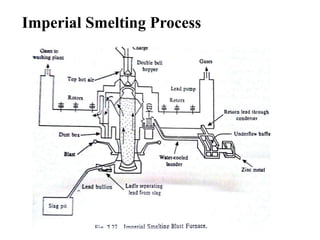
Imperial Smelting Process 
J,h
Advantages of ISP 
• Its possible to simultaneously smelt low grade complex mixed charges 
to recover both Zn and Pb 
• Recovery of Zn is less expensive 
• A wide variety of furnace sizes are available 
• Furnace operation is fully automated 
• The mechanism is highly robust
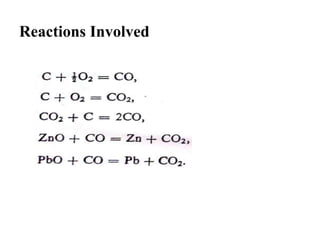
Reactions Involved
Procedures 
• Preheated coke and sinter is charged from the top of the furnace 
• The lead becomes liquid metal and flows to the bottom of the furnace 
collecting precious metals like gold , silver etc (lead bullion) 
• Slag and lead bullion at the bottom can be separated because of their 
density differences 
• The furnace gases produced flows upwards to the condensers 
• Zinc and lead are collected after condensation
Procedures 
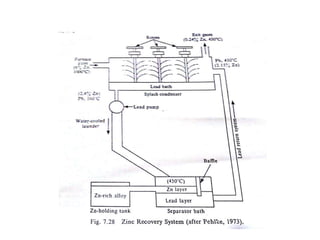
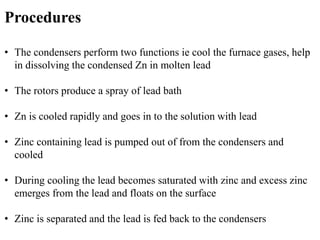
• The condensers perform two functions ie cool the furnace gases, help 
in dissolving the condensed Zn in molten lead 
• The rotors produce a spray of lead bath 
• Zn is cooled rapidly and goes in to the solution with lead 
• Zinc containing lead is pumped out of from the condensers and 
cooled 
• During cooling the lead becomes saturated with zinc and excess zinc 
emerges from the lead and floats on the surface 
• Zinc is separated and the lead is fed back to the condensers
Zinc from Lead Slags by Slag Fuming 
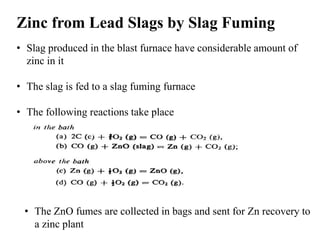
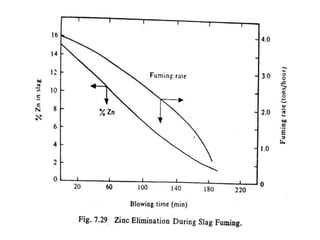
• Slag produced in the blast furnace have considerable amount of 
zinc in it 
• The slag is fed to a slag fuming furnace 
• The following reactions take place 
• The ZnO fumes are collected in bags and sent for Zn recovery to 
a zinc plant
Extraction of zinc

Extraction of zinc

  • 1.
    Extraction of Zinc Presented by Nikhil Koshy Jacob ME Industrial Metallurgy 14MY33
  • 2.
    Introduction • Zincis mainly used for Galvanizing Production of alloys Dry cell batteries • Its minerals are Sphalerite (ZnS) Zincite (ZnO) Smithsonite (ZnCO3) Franklinite (ZnO(Fe,Mn)2O3 )
  • 3.
  • 4.
    Pyro metallurgical extractionof Zinc Jkkkkkkkkkkk
  • 5.
    Procedures • Theore is first ground and subjected to froth flotation • The concentrate obtained is subjected to roasting • Roasted oxide is ground and agglomerated and then sintered at 1200 in a Dwight Lloyd sintering and sent for retort reduction
  • 6.
    • ZnO isreduced by carbon • Make sure CO partial pressure is maintained to prevent reverse reaction • Zinc vapour obtained is condensed at 4500c to form liquid Zn • Zinc condensation has to be carried out quickly to prevent formation of blue oxide of Zn+ZnO
  • 7.
  • 8.
    Procedures • Dissolutionof zinc calcine in sulphuric acid • Precipitation of Cd by adding zinc dust to the leach solution i.e cementation • Precipitation of cobalt from leach solution by adding alpha nitroso – beta naphthol • Adjust the pH of leach solution to 5.3 to hydrolyze Fe and Al and add of MnO2 to oxidize iron to trivalent state to produce a precipitate that can absorb As, Sb, and Ge • Do electrolysis of filterate solution
  • 9.
  • 10.
    Advantages of ISP • Its possible to simultaneously smelt low grade complex mixed charges to recover both Zn and Pb • Recovery of Zn is less expensive • A wide variety of furnace sizes are available • Furnace operation is fully automated • The mechanism is highly robust
  • 11.
  • 12.
    Procedures • Preheatedcoke and sinter is charged from the top of the furnace • The lead becomes liquid metal and flows to the bottom of the furnace collecting precious metals like gold , silver etc (lead bullion) • Slag and lead bullion at the bottom can be separated because of their density differences • The furnace gases produced flows upwards to the condensers • Zinc and lead are collected after condensation
  • 14.
    Procedures • Thecondensers perform two functions ie cool the furnace gases, help in dissolving the condensed Zn in molten lead • The rotors produce a spray of lead bath • Zn is cooled rapidly and goes in to the solution with lead • Zinc containing lead is pumped out of from the condensers and cooled • During cooling the lead becomes saturated with zinc and excess zinc emerges from the lead and floats on the surface • Zinc is separated and the lead is fed back to the condensers
  • 15.
    Zinc from LeadSlags by Slag Fuming • Slag produced in the blast furnace have considerable amount of zinc in it • The slag is fed to a slag fuming furnace • The following reactions take place • The ZnO fumes are collected in bags and sent for Zn recovery to a zinc plant