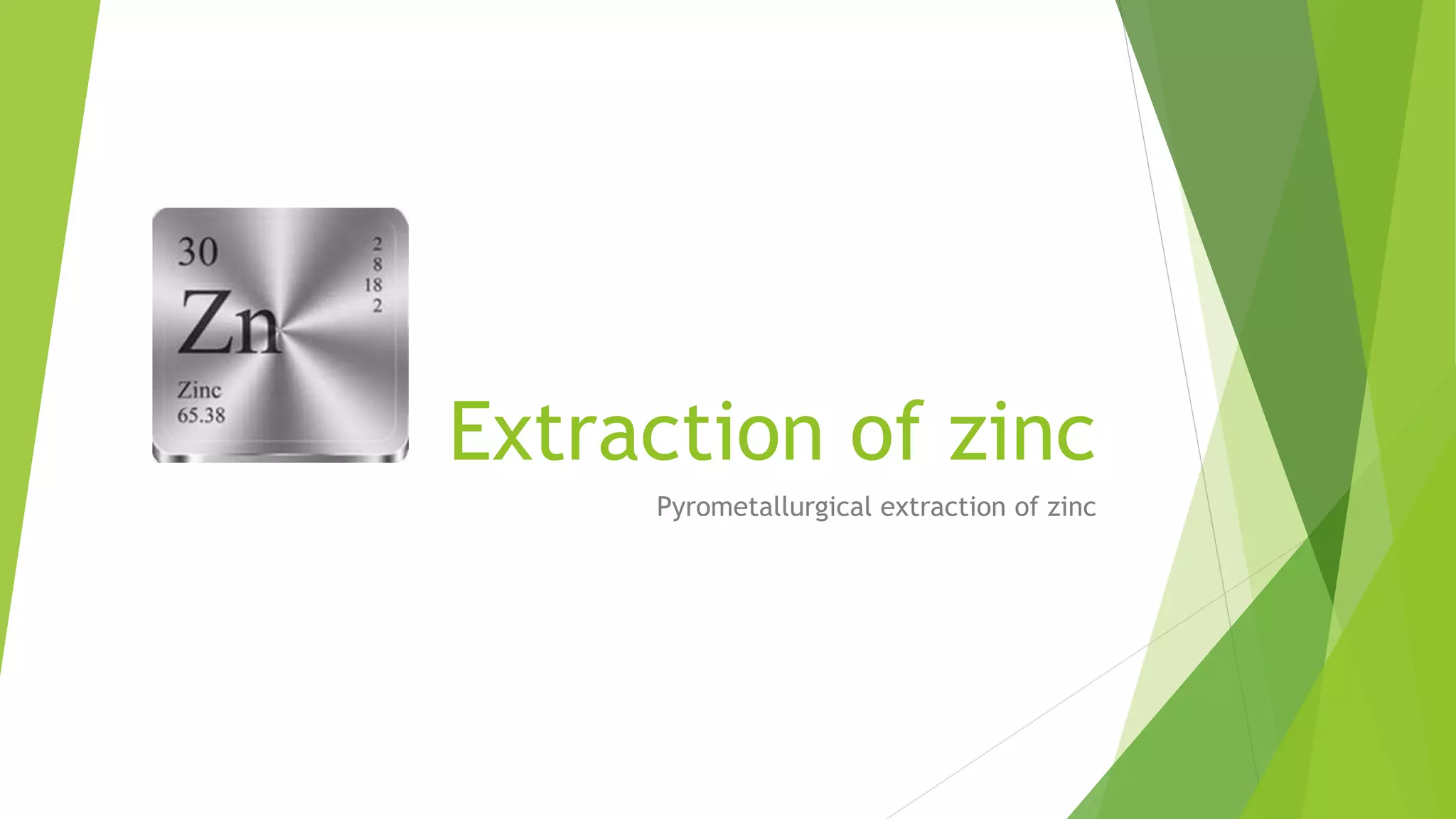
Extraction of zinc
Pyrometallurgical extraction of zinc
Introduction
 Zinc (Zn) is a metallic element of hexagonal close-packed (hcp) crystal
structure and a density of 7.13 grams per cubic centimetre, with an atomic
number of 30 and atomic weight of 65.39. The melting and boiling points of
zinc are 692.68K (419.53 °C, 787.15 °F) and 1180 K (907 °C, 1665 °F)
respectively. Pure zinc is a bluish-white, transition-metal. It is hard and
brittle at most temperatures but becomes malleable between 100-150°C.
When the temperature rises above 210°C, it becomes brittle again. The
surface of pure zinc tarnishes quickly, and a layer of the basic zinc carbonate
is formed to prevent further oxidation. Zinc itself is a common non-ferrous
metal, which can combine many other non-ferrous metals to form alloys, the
main alloys being brass and die-casting alloys. Zinc and its alloys are mainly
used for iron and steel, metallurgy, machinery, the electrical and chemical
industries, light industry, military applications, medicine and some other
fields.
Cont.………….
 With its low melting point of 420 °C (788 °F), unalloyed zinc has poor engineering
properties, but in alloyed form the metal is used extensively. The addition of up to 45
percent zinc to copper forms the series of brass alloys, while, with additions of aluminium,
zinc forms commercially significant pressure die-casting and gravity-casting alloys. In
sheet form, zinc is used to make the cans of dry-cell batteries, and, alloyed with small
amounts of copper and titanium, an improved-strength sheet is formed that has
applications in the roofing and cladding of many buildings.
 Presently 15-25% of the world’s zinc production comes from the pyrometallurgical route
Zinc ores
 Zinc ores are widely distributed throughout the world, although more than 40
percent of the world’s output originates in North America and Australia. The
common zinc-containing minerals are the zinc sulfide known as zinc blende or
sphalerite (ZnS), a ferrous form of zinc blende known as marmatite [(ZnFe)S],
and a zinc carbonate known as calamine or smithsonite (ZnCO3).
 The geology of zinc deposits is complex. In most cases, hydrothermal
mechanisms have occurred in which aqueous solutions were forced through
porous strata at high temperatures and pressures to dissolve zinc,
Cont.……………
, lead, and other minerals, which were finally precipitated as sulfides. The zinc
content of mined ore is usually between 3 and 10 percent. Almost all ores
contain the lead sulfide mineral galena and small quantities of cadmium sulfide.
Chalcopyrite, and copper-iron sulfide, is often present. The most common
gangue constituents are calcite, dolomite, and quartz. Metallic zinc resources
are distributed widely in nature, and zinc commonly exists in sulfide state. The
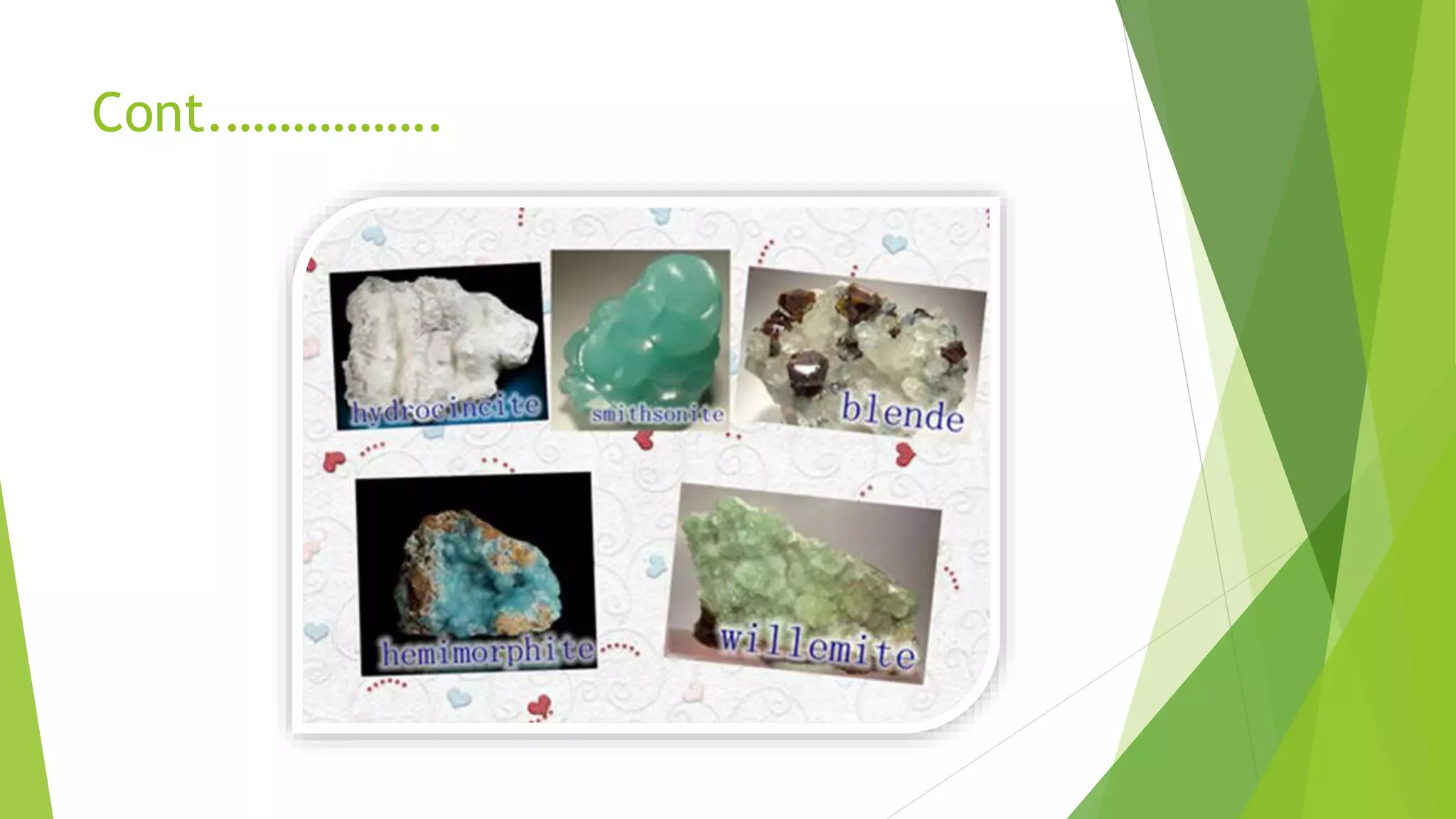
mineral spreads over blende (mainly), as well as a few oxidized ores like
smithsonite, willemite, hemimorphite and hydrocincite.
Cont.…………….
Major Zinc Ores
 Sphalerite(ZnS)
 Zincite(ZnO)
 Frankenlite(ZnO(Fe,Mn)2O3)
 Calamine(Zn02(OH)2SiO3)
 Smithsone (ZnCO3)
Distribution of zinc ore in the world
 Currently, the identified zinc resources of the world are about 1.9 billion metric tonnes.
The zinc resource distribution in the world is as follows:
 Area distribution: Asian, Africa, Oceania, North America and South America.
 Country distribution: China, United States, Australia, Canada, Kazakhstan, Zimbabwe, Peru
and Mexico, etc.
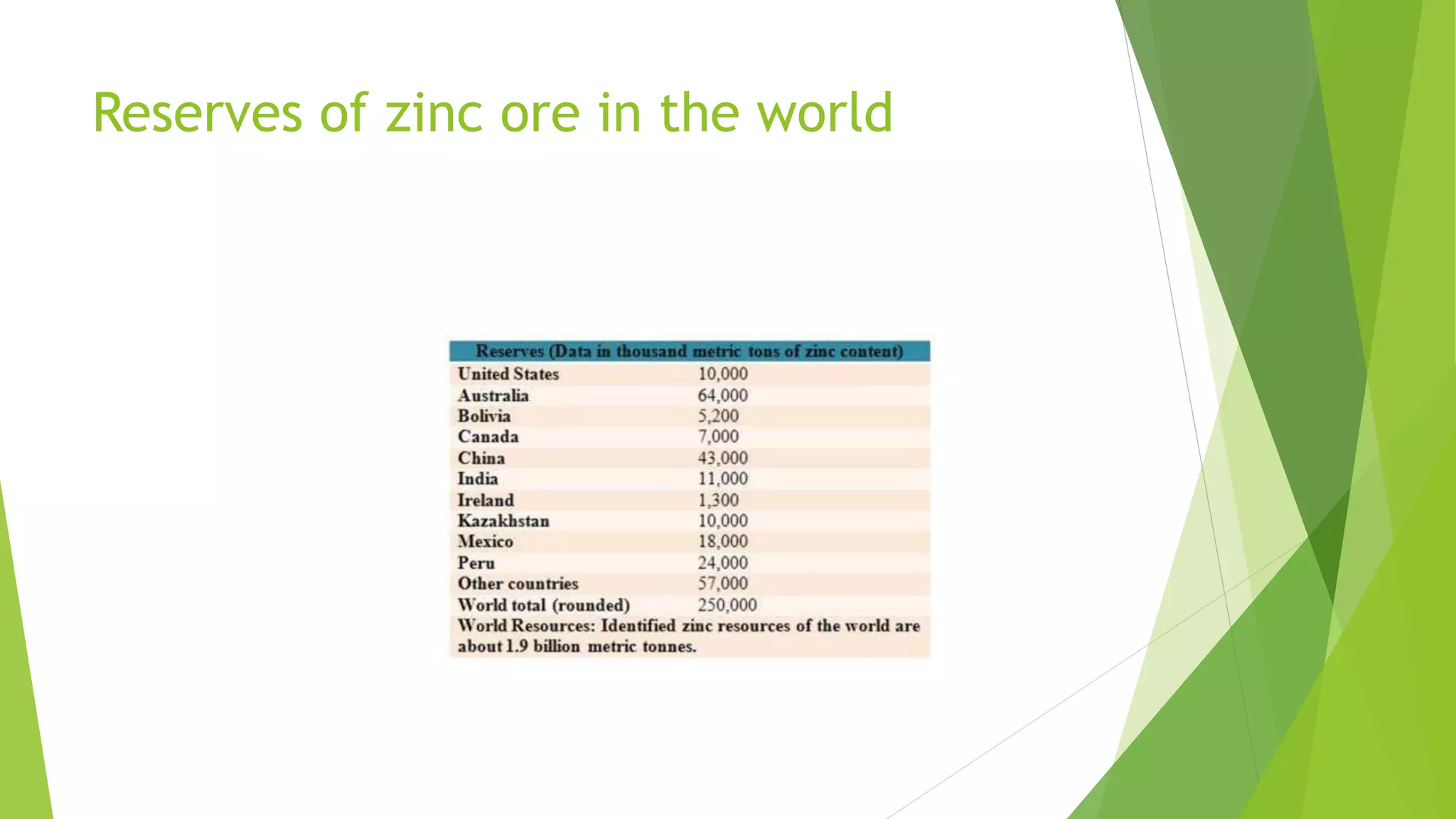
 The zinc reserves of four countries — Australia, China, the United States and Kazakhstan —
account for about 57% of world reserves, and cover 64.66% of the world’s reserve base.
Reserves of zinc ore in the world
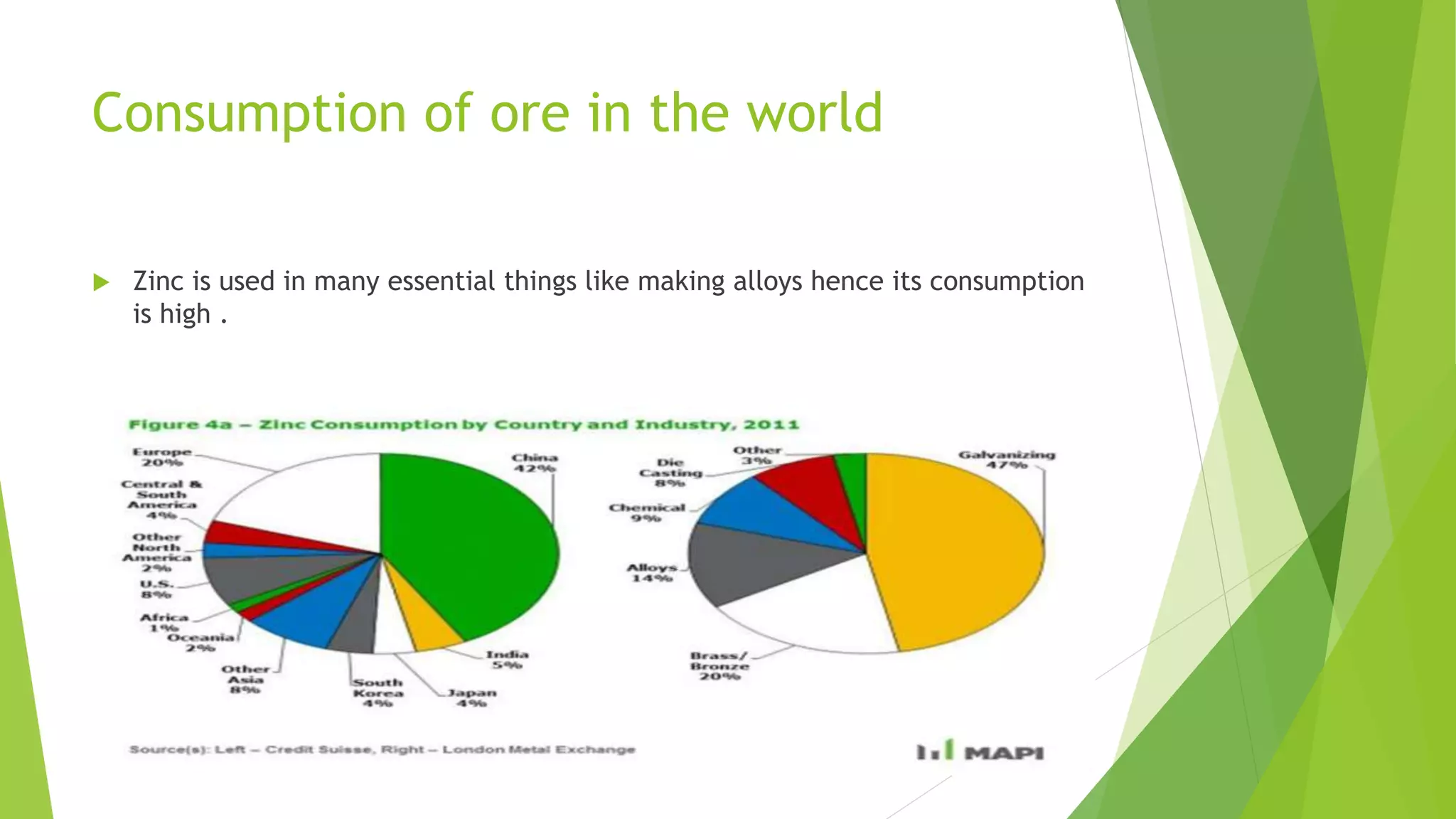
Consumption of ore in the world
 Zinc is used in many essential things like making alloys hence its consumption
is high .
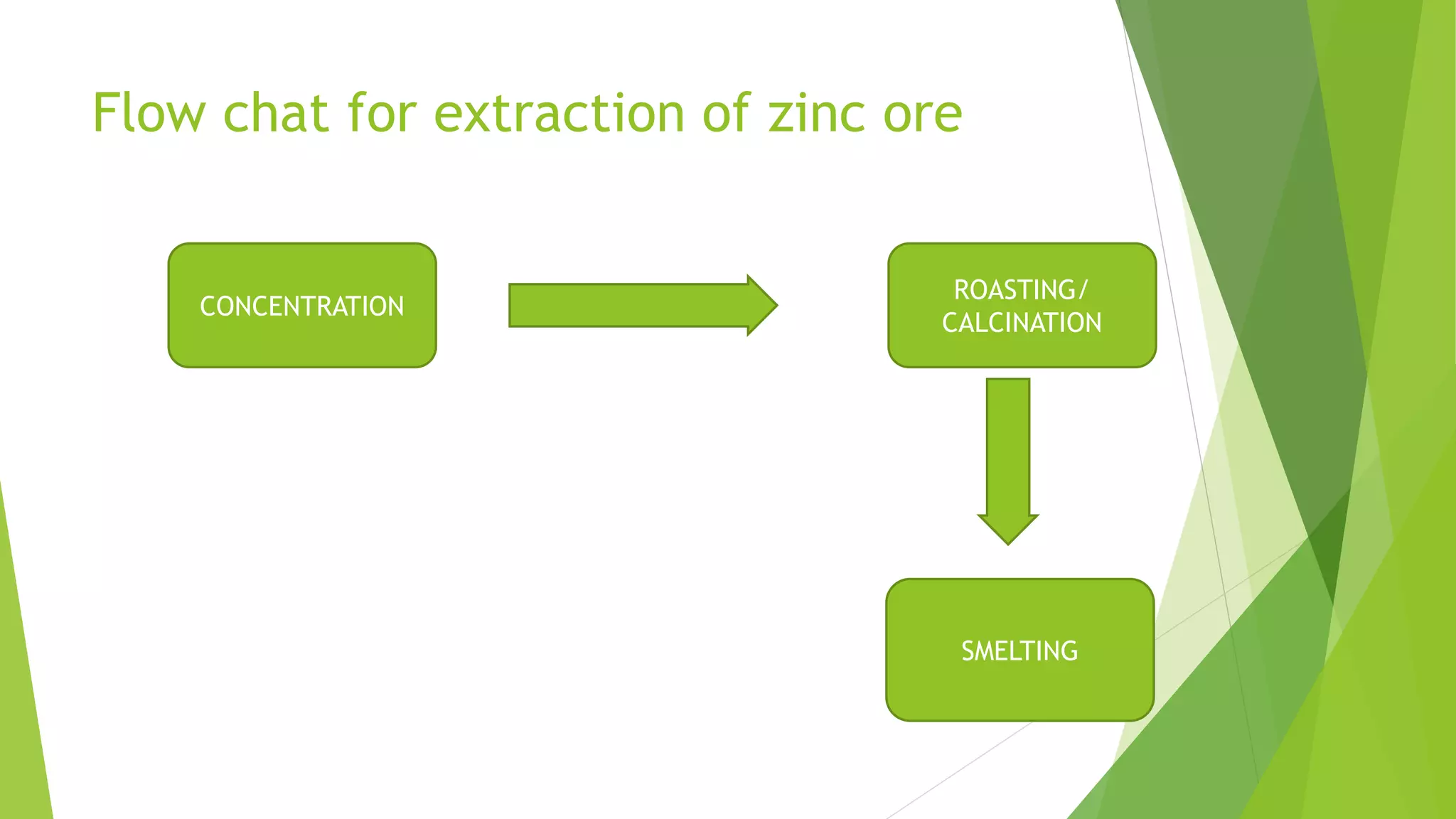
Flow chat for extraction of zinc ore
CONCENTRATION
ROASTING/
CALCINATION
SMELTING
CONCENTRATION
 The small fraction of zinc sulfide minerals present in the ore makes
beneficiation necessary in order to produce a concentrate suitable for
treatment. The most common method for accomplishing this concentration is
to isolate the sulfide mineral from the impure constituents, or gangue, by
flotation separation. In this process, the ore initially is crushed to about 1.9
centimetres (0.75 inch), combined with water, and ground to less than 0.1
millimetre in a ball mill.
 The finely ground particles and water form a slurry that flows from the mill,
Cont.………….
to flotation cells or tanks, where, in the presence of selected chemical reagents
that create a suspension of air bubbles, the slurry is agitated by beaters
 The mineral particles cling to the bubbles and float to the surface, forming an
oily froth that is constantly skimmed, while the gangue is wetted by the
action of the chemicals and sinks in the cell. The proper choice of frothing
agents makes it possible to separate each constituent mineral of complex
lead and zinc sulfides in a concentrated form.
Roasting
 Is a process of oxidising zinc sulfide concentrates at high temperature into a impure zinc
oxide called “zinc calcine”
 Both of the main extraction methods for the production of zinc, electrolysis and smelting,
require the prior removal of sulphur in a highly exothermic oxidation reaction
 The primary processes use sulphidic and oxidic concentrates,
Types of Roasting
1. Lurgi Furnace
2. Multiple hearth roaster
3. Fluidized bed Roaster
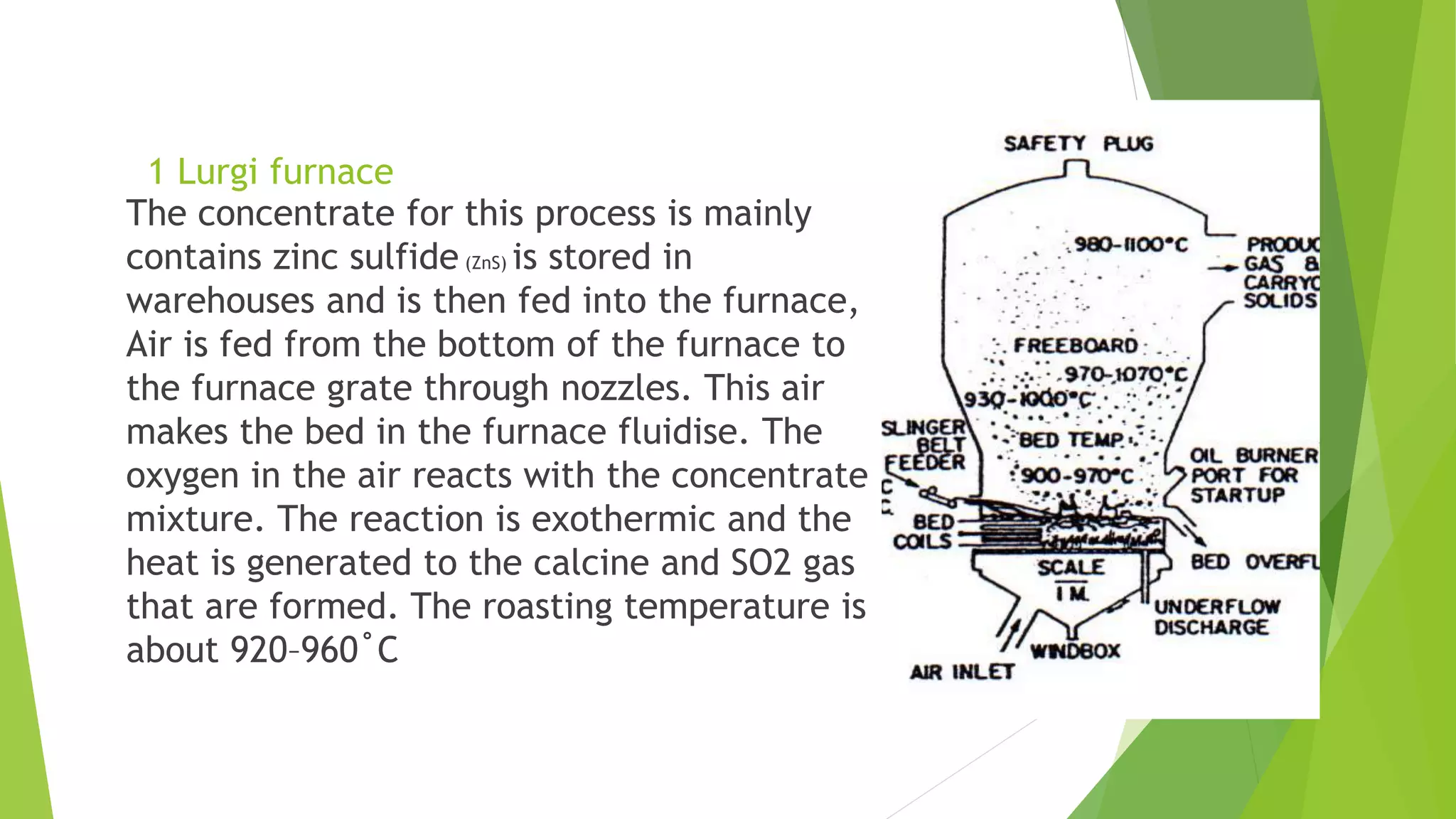
1 Lurgi furnace
The concentrate for this process is mainly
contains zinc sulfide (ZnS) is stored in
warehouses and is then fed into the furnace,
Air is fed from the bottom of the furnace to
the furnace grate through nozzles. This air
makes the bed in the furnace fluidise. The
oxygen in the air reacts with the concentrate
mixture. The reaction is exothermic and the
heat is generated to the calcine and SO2 gas
that are formed. The roasting temperature is
about 920–960˚C
Cont…………..
 The cooling coils in the furnace remove some of the generated heat, but the boiler
removes most of the heat. The heat is recovered, both from furnace and boiler, by the
water-steam system of the boiler. The SO2 gas formed in the furnace leaves the furnace
from the upper part and enters the boiler. The inlet temperature is about 850–950oC. The
boiler cools the gas to approximately 320–380oC
 Primary zinc is produced from ores which contain 85 % zinc sulphide (by weight) and 8–10 %
iron sulphide, with the total zinc concentration about 50 %. The ores also contain metal
sulphides such as lead, cobalt, copper, silver, cadmium and arsenic sulphide.
Cont.……………..
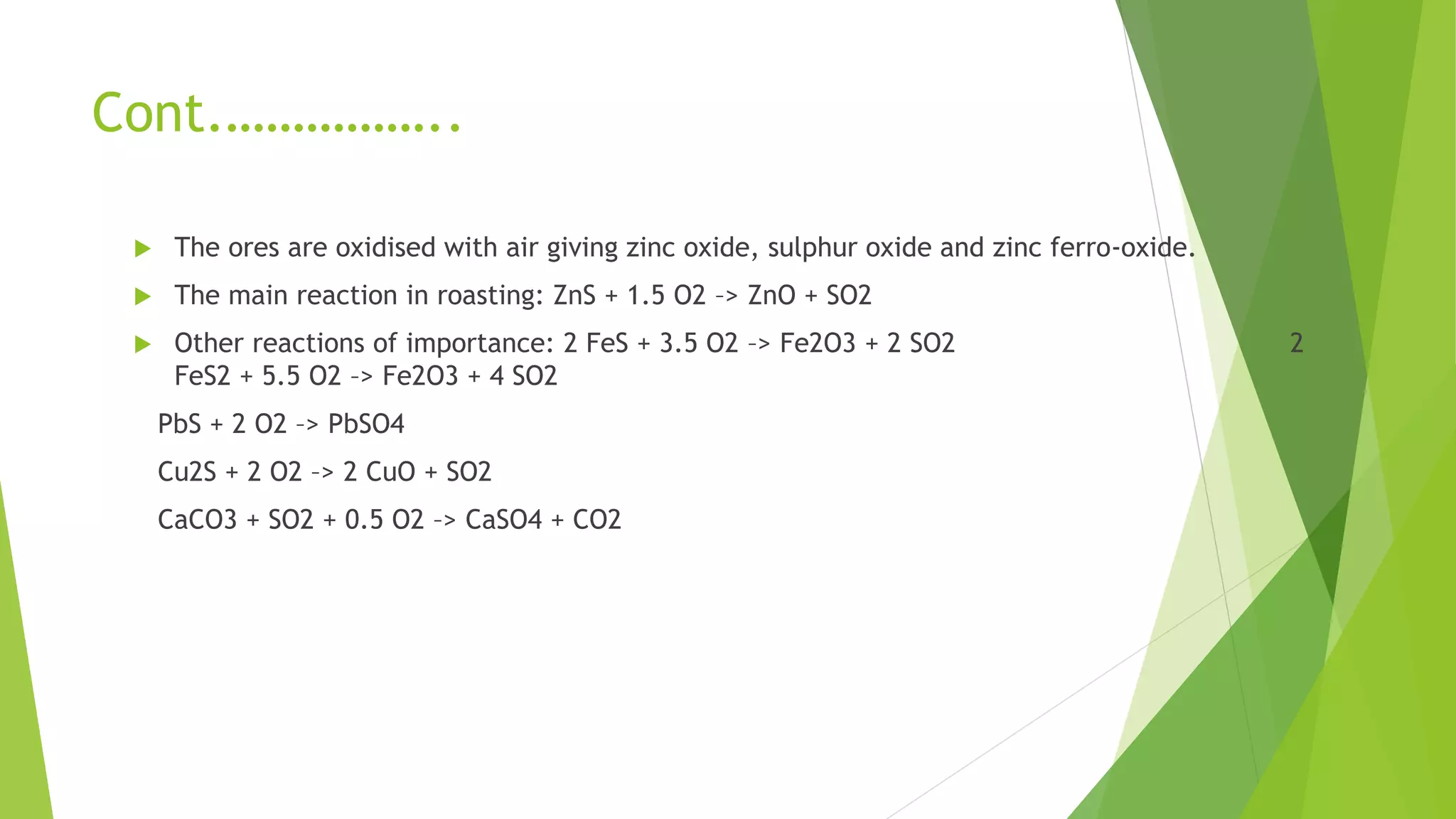
 The ores are oxidised with air giving zinc oxide, sulphur oxide and zinc ferro-oxide.
 The main reaction in roasting: ZnS + 1.5 O2 –> ZnO + SO2
 Other reactions of importance: 2 FeS + 3.5 O2 –> Fe2O3 + 2 SO2 2
FeS2 + 5.5 O2 –> Fe2O3 + 4 SO2
PbS + 2 O2 –> PbSO4
Cu2S + 2 O2 –> 2 CuO + SO2
CaCO3 + SO2 + 0.5 O2 –> CaSO4 + CO2
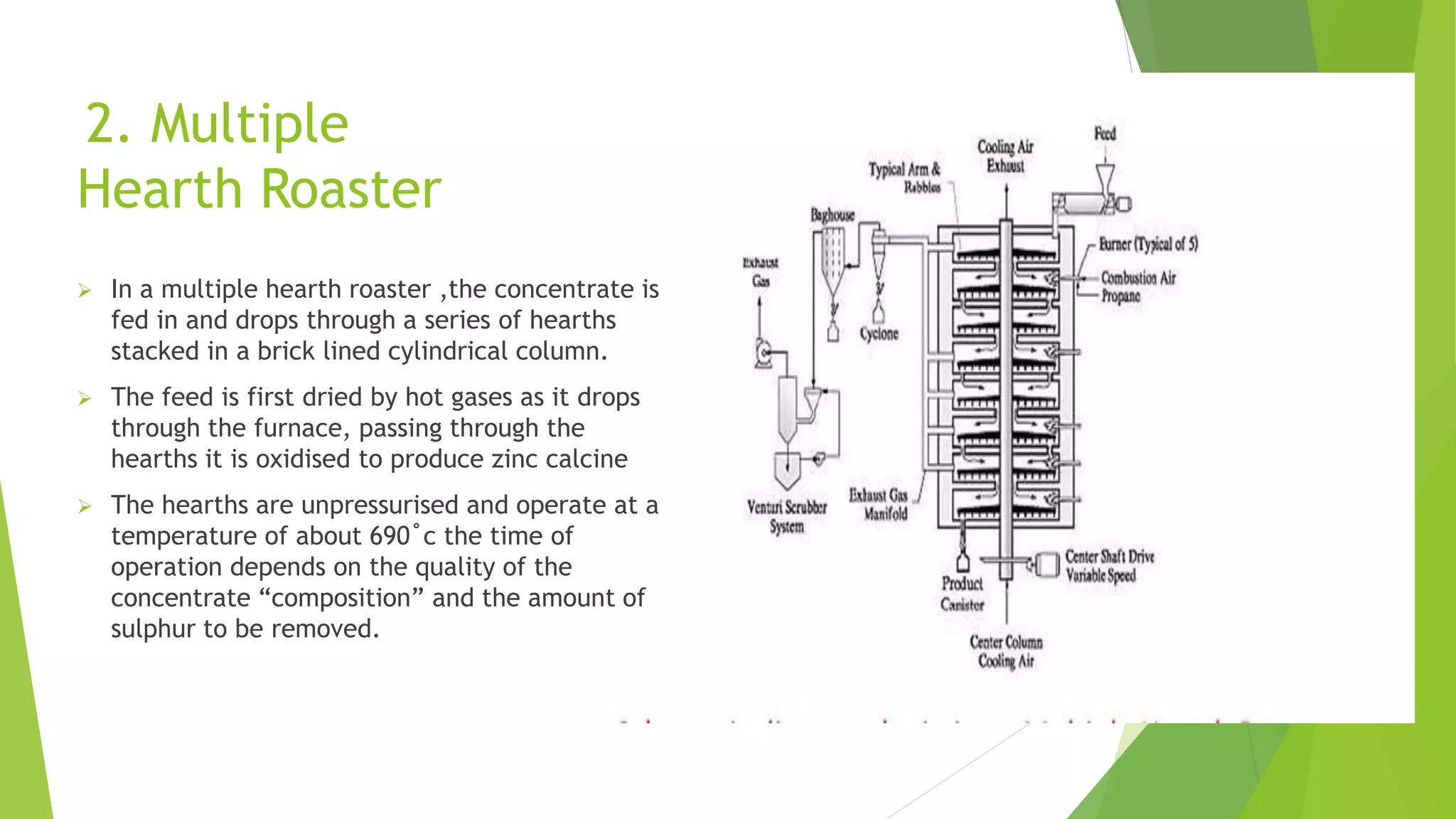
2. Multiple
Hearth Roaster
 In a multiple hearth roaster ,the concentrate is
fed in and drops through a series of hearths
stacked in a brick lined cylindrical column.
 The feed is first dried by hot gases as it drops
through the furnace, passing through the
hearths it is oxidised to produce zinc calcine
 The hearths are unpressurised and operate at a
temperature of about 690˚c the time of
operation depends on the quality of the
concentrate “composition” and the amount of
sulphur to be removed.
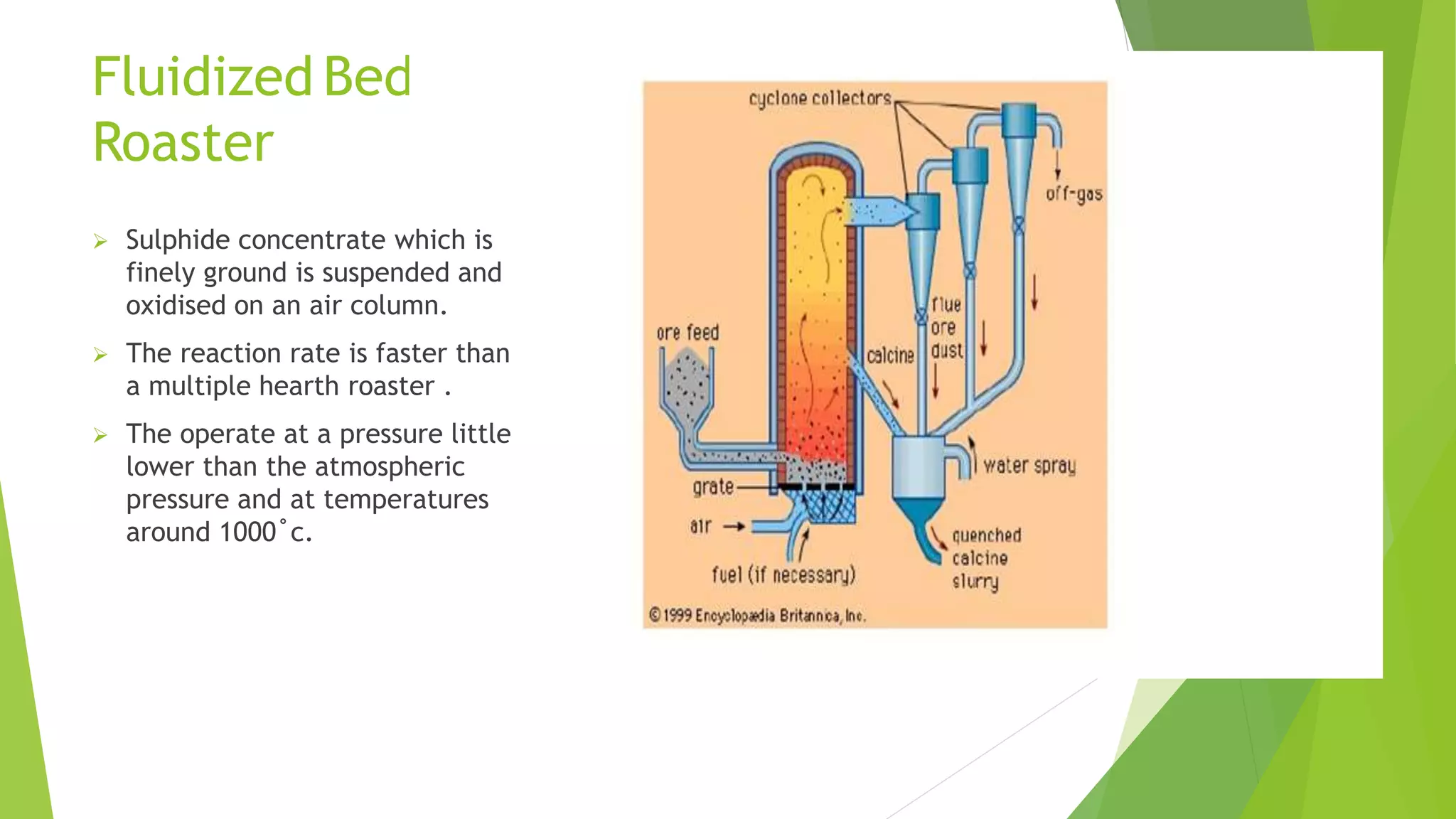
Fluidized Bed
Roaster
 Sulphide concentrate which is
finely ground is suspended and
oxidised on an air column.
 The reaction rate is faster than
a multiple hearth roaster .
 The operate at a pressure little
lower than the atmospheric
pressure and at temperatures
around 1000˚c.
Calcination
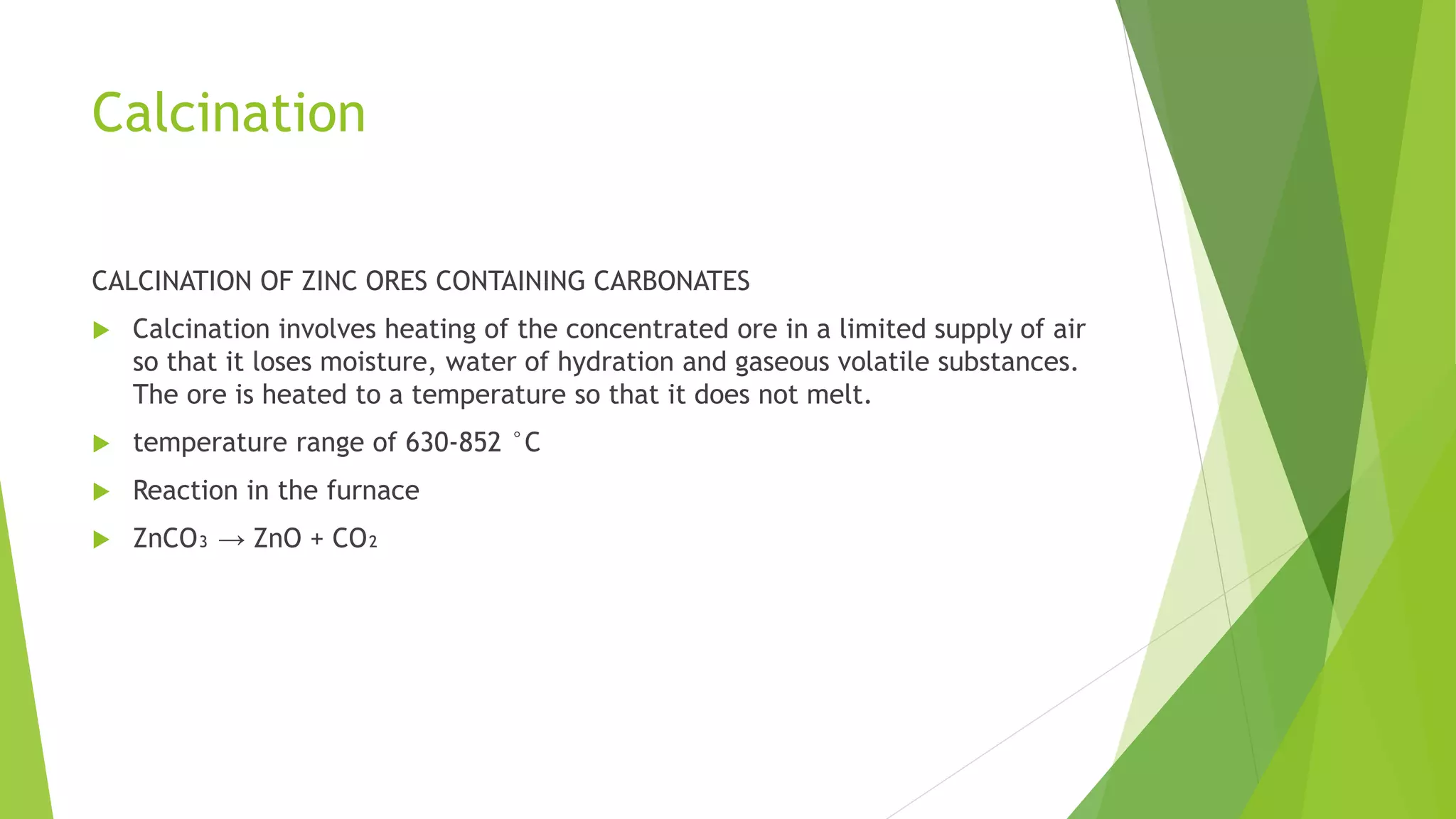
CALCINATION OF ZINC ORES CONTAINING CARBONATES
 Calcination involves heating of the concentrated ore in a limited supply of air
so that it loses moisture, water of hydration and gaseous volatile substances.
The ore is heated to a temperature so that it does not melt.
 temperature range of 630-852 °C
 Reaction in the furnace
 ZnCO₃ → ZnO + CO₂
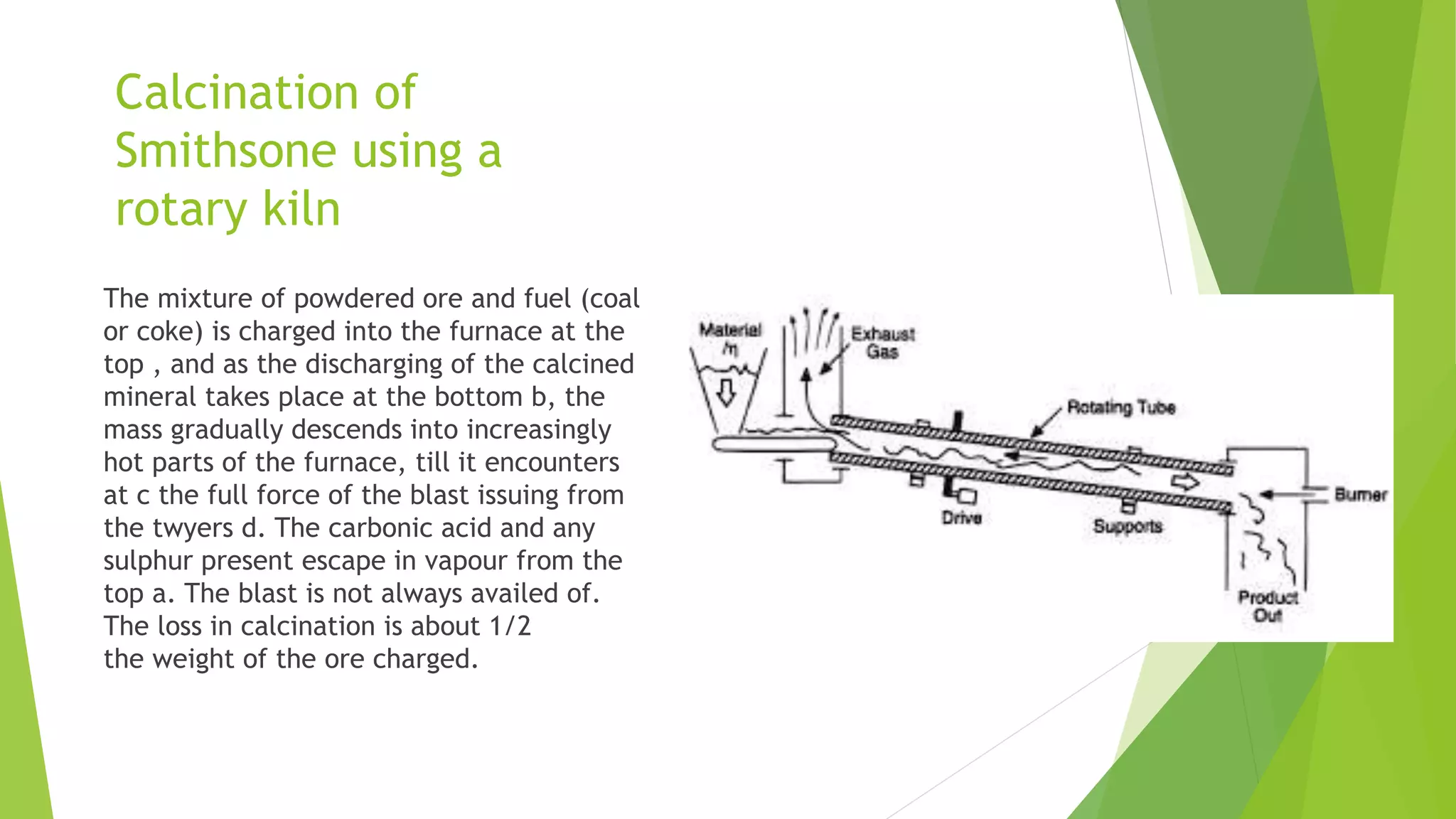
Calcination of
Smithsone using a
rotary kiln
The mixture of powdered ore and fuel (coal
or coke) is charged into the furnace at the
top , and as the discharging of the calcined
mineral takes place at the bottom b, the
mass gradually descends into increasingly
hot parts of the furnace, till it encounters
at c the full force of the blast issuing from
the twyers d. The carbonic acid and any
sulphur present escape in vapour from the
top a. The blast is not always availed of.
The loss in calcination is about 1/2
the weight of the ore charged.
Cont.….
 The calcined ore contains the zinc in the form of oxide. It is next reduced to
very fine powder, passed through a sieve, and mixed with half its weight of
coke or anthracite coal-dust, ready for smelting
The thermal smelting zinc production
process
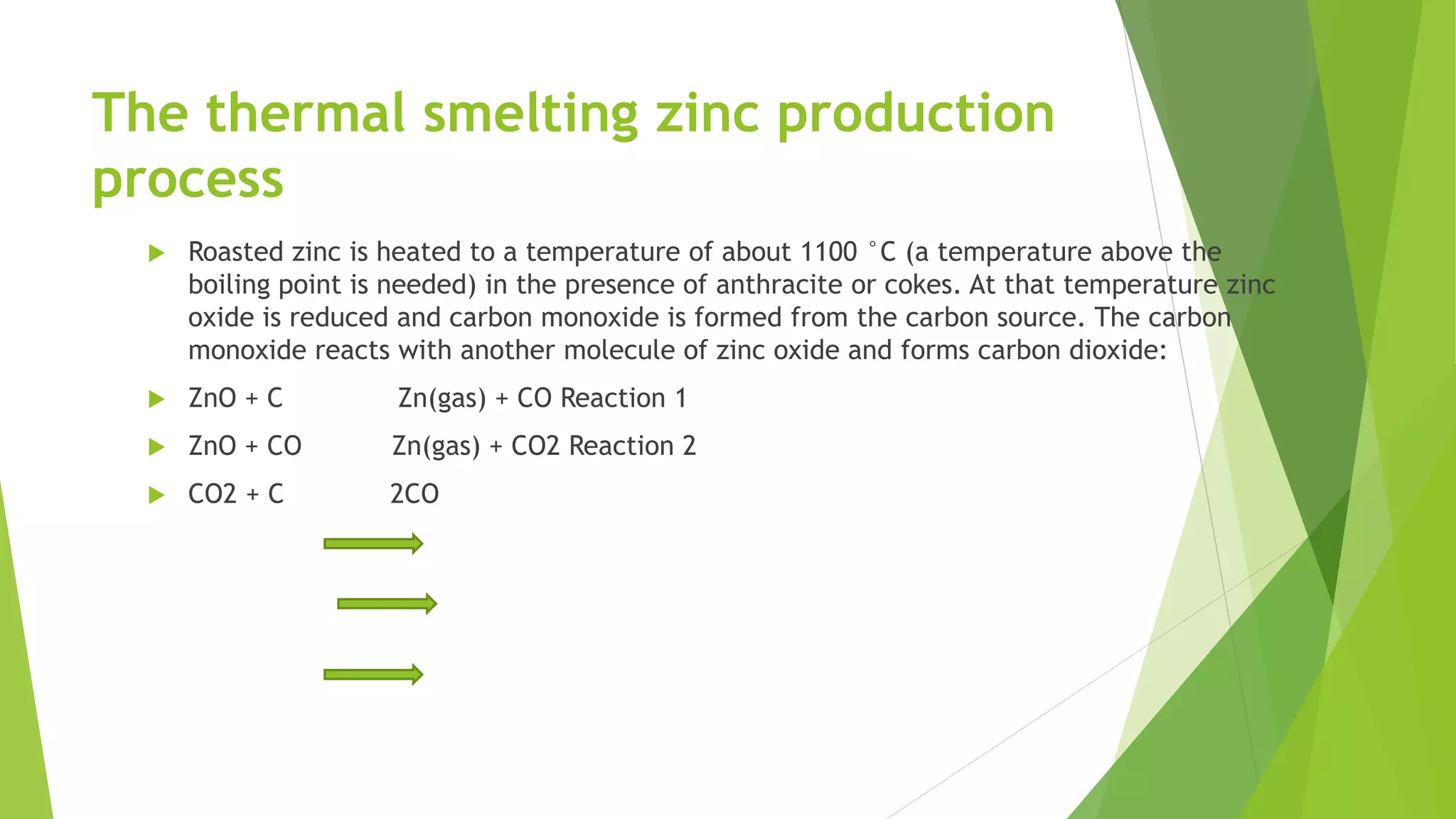
 Roasted zinc is heated to a temperature of about 1100 °C (a temperature above the
boiling point is needed) in the presence of anthracite or cokes. At that temperature zinc
oxide is reduced and carbon monoxide is formed from the carbon source. The carbon
monoxide reacts with another molecule of zinc oxide and forms carbon dioxide:
 ZnO + C Zn(gas) + CO Reaction 1
 ZnO + CO Zn(gas) + CO2 Reaction 2
 CO2 + C 2CO
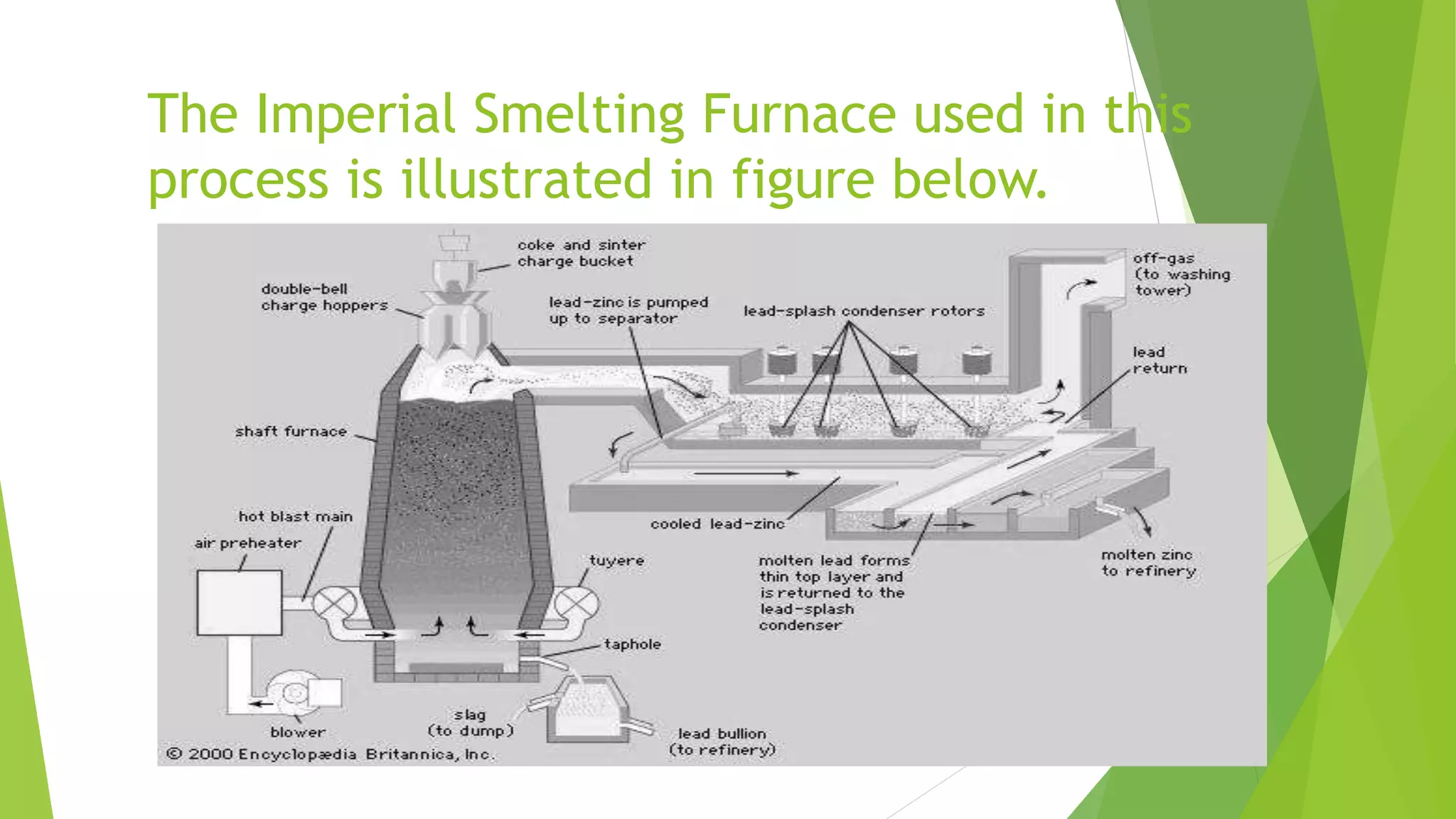
The Imperial Smelting Furnace used in this
process is illustrated in figure below.
Cont.…………..
 Zn vapor is drawn at 1000˚C then cooled rapidly to 550˚C in molten lead bath
to produce condensate zinc (contain small amount of Cd) which is denser than
other component (Zn sink to the bottom), then tapped of, while slug (lighter)
tapped from above.
 Two layers will form as follows:
1. Zinc contains 1wt%Pb drawn to more refining by distillation to produce 99.9%
Zn.
2. Pb contains 2.25wt% Zn return to condenser.
Cont.……
 Then Redistillation at T of 765oC to vaporize Cd off.
 Zinc produced by this process is about 98.5% pure and can be further refined
if required.
 Around 15% of the world's zinc is produced this way.
acknowledgments
 Habashi, F., 2017. Principles of extractive metallurgy. Routledge.
 Nyberg, J.R., 2005. Characterisation and control of the zinc roasting process.
 Metsärintal, M.L., Taskinenl, P., Jyrkönenl, S., Nyberg, J. and Rytioja, A.,
2003. ROASTING MECHANISMS OF IMPURE ZINC CONCENTRATES IN FLUmIZED
BEDS.

Pyrometallurgy Extraction of zinc presentation

  • 1.
  • 2.
    Introduction  Zinc (Zn)is a metallic element of hexagonal close-packed (hcp) crystal structure and a density of 7.13 grams per cubic centimetre, with an atomic number of 30 and atomic weight of 65.39. The melting and boiling points of zinc are 692.68K (419.53 °C, 787.15 °F) and 1180 K (907 °C, 1665 °F) respectively. Pure zinc is a bluish-white, transition-metal. It is hard and brittle at most temperatures but becomes malleable between 100-150°C. When the temperature rises above 210°C, it becomes brittle again. The surface of pure zinc tarnishes quickly, and a layer of the basic zinc carbonate is formed to prevent further oxidation. Zinc itself is a common non-ferrous metal, which can combine many other non-ferrous metals to form alloys, the main alloys being brass and die-casting alloys. Zinc and its alloys are mainly used for iron and steel, metallurgy, machinery, the electrical and chemical industries, light industry, military applications, medicine and some other fields.
  • 3.
    Cont.………….  With itslow melting point of 420 °C (788 °F), unalloyed zinc has poor engineering properties, but in alloyed form the metal is used extensively. The addition of up to 45 percent zinc to copper forms the series of brass alloys, while, with additions of aluminium, zinc forms commercially significant pressure die-casting and gravity-casting alloys. In sheet form, zinc is used to make the cans of dry-cell batteries, and, alloyed with small amounts of copper and titanium, an improved-strength sheet is formed that has applications in the roofing and cladding of many buildings.  Presently 15-25% of the world’s zinc production comes from the pyrometallurgical route
  • 4.
    Zinc ores  Zincores are widely distributed throughout the world, although more than 40 percent of the world’s output originates in North America and Australia. The common zinc-containing minerals are the zinc sulfide known as zinc blende or sphalerite (ZnS), a ferrous form of zinc blende known as marmatite [(ZnFe)S], and a zinc carbonate known as calamine or smithsonite (ZnCO3).  The geology of zinc deposits is complex. In most cases, hydrothermal mechanisms have occurred in which aqueous solutions were forced through porous strata at high temperatures and pressures to dissolve zinc,
  • 5.
    Cont.…………… , lead, andother minerals, which were finally precipitated as sulfides. The zinc content of mined ore is usually between 3 and 10 percent. Almost all ores contain the lead sulfide mineral galena and small quantities of cadmium sulfide. Chalcopyrite, and copper-iron sulfide, is often present. The most common gangue constituents are calcite, dolomite, and quartz. Metallic zinc resources are distributed widely in nature, and zinc commonly exists in sulfide state. The mineral spreads over blende (mainly), as well as a few oxidized ores like smithsonite, willemite, hemimorphite and hydrocincite.
  • 6.
  • 7.
    Major Zinc Ores Sphalerite(ZnS)  Zincite(ZnO)  Frankenlite(ZnO(Fe,Mn)2O3)  Calamine(Zn02(OH)2SiO3)  Smithsone (ZnCO3)
  • 8.
    Distribution of zincore in the world  Currently, the identified zinc resources of the world are about 1.9 billion metric tonnes. The zinc resource distribution in the world is as follows:  Area distribution: Asian, Africa, Oceania, North America and South America.  Country distribution: China, United States, Australia, Canada, Kazakhstan, Zimbabwe, Peru and Mexico, etc.  The zinc reserves of four countries — Australia, China, the United States and Kazakhstan — account for about 57% of world reserves, and cover 64.66% of the world’s reserve base.
  • 9.
    Reserves of zincore in the world
  • 10.
    Consumption of orein the world  Zinc is used in many essential things like making alloys hence its consumption is high .
  • 11.
    Flow chat forextraction of zinc ore CONCENTRATION ROASTING/ CALCINATION SMELTING
  • 12.
    CONCENTRATION  The smallfraction of zinc sulfide minerals present in the ore makes beneficiation necessary in order to produce a concentrate suitable for treatment. The most common method for accomplishing this concentration is to isolate the sulfide mineral from the impure constituents, or gangue, by flotation separation. In this process, the ore initially is crushed to about 1.9 centimetres (0.75 inch), combined with water, and ground to less than 0.1 millimetre in a ball mill.  The finely ground particles and water form a slurry that flows from the mill,
  • 13.
    Cont.…………. to flotation cellsor tanks, where, in the presence of selected chemical reagents that create a suspension of air bubbles, the slurry is agitated by beaters  The mineral particles cling to the bubbles and float to the surface, forming an oily froth that is constantly skimmed, while the gangue is wetted by the action of the chemicals and sinks in the cell. The proper choice of frothing agents makes it possible to separate each constituent mineral of complex lead and zinc sulfides in a concentrated form.
  • 14.
    Roasting  Is aprocess of oxidising zinc sulfide concentrates at high temperature into a impure zinc oxide called “zinc calcine”  Both of the main extraction methods for the production of zinc, electrolysis and smelting, require the prior removal of sulphur in a highly exothermic oxidation reaction  The primary processes use sulphidic and oxidic concentrates,
  • 15.
    Types of Roasting 1.Lurgi Furnace 2. Multiple hearth roaster 3. Fluidized bed Roaster
  • 16.
    1 Lurgi furnace Theconcentrate for this process is mainly contains zinc sulfide (ZnS) is stored in warehouses and is then fed into the furnace, Air is fed from the bottom of the furnace to the furnace grate through nozzles. This air makes the bed in the furnace fluidise. The oxygen in the air reacts with the concentrate mixture. The reaction is exothermic and the heat is generated to the calcine and SO2 gas that are formed. The roasting temperature is about 920–960˚C
  • 17.
    Cont…………..  The coolingcoils in the furnace remove some of the generated heat, but the boiler removes most of the heat. The heat is recovered, both from furnace and boiler, by the water-steam system of the boiler. The SO2 gas formed in the furnace leaves the furnace from the upper part and enters the boiler. The inlet temperature is about 850–950oC. The boiler cools the gas to approximately 320–380oC  Primary zinc is produced from ores which contain 85 % zinc sulphide (by weight) and 8–10 % iron sulphide, with the total zinc concentration about 50 %. The ores also contain metal sulphides such as lead, cobalt, copper, silver, cadmium and arsenic sulphide.
  • 18.
    Cont.……………..  The oresare oxidised with air giving zinc oxide, sulphur oxide and zinc ferro-oxide.  The main reaction in roasting: ZnS + 1.5 O2 –> ZnO + SO2  Other reactions of importance: 2 FeS + 3.5 O2 –> Fe2O3 + 2 SO2 2 FeS2 + 5.5 O2 –> Fe2O3 + 4 SO2 PbS + 2 O2 –> PbSO4 Cu2S + 2 O2 –> 2 CuO + SO2 CaCO3 + SO2 + 0.5 O2 –> CaSO4 + CO2
  • 19.
    2. Multiple Hearth Roaster In a multiple hearth roaster ,the concentrate is fed in and drops through a series of hearths stacked in a brick lined cylindrical column.  The feed is first dried by hot gases as it drops through the furnace, passing through the hearths it is oxidised to produce zinc calcine  The hearths are unpressurised and operate at a temperature of about 690˚c the time of operation depends on the quality of the concentrate “composition” and the amount of sulphur to be removed.
  • 20.
    Fluidized Bed Roaster  Sulphideconcentrate which is finely ground is suspended and oxidised on an air column.  The reaction rate is faster than a multiple hearth roaster .  The operate at a pressure little lower than the atmospheric pressure and at temperatures around 1000˚c.
  • 21.
    Calcination CALCINATION OF ZINCORES CONTAINING CARBONATES  Calcination involves heating of the concentrated ore in a limited supply of air so that it loses moisture, water of hydration and gaseous volatile substances. The ore is heated to a temperature so that it does not melt.  temperature range of 630-852 °C  Reaction in the furnace  ZnCO₃ → ZnO + CO₂
  • 22.
    Calcination of Smithsone usinga rotary kiln The mixture of powdered ore and fuel (coal or coke) is charged into the furnace at the top , and as the discharging of the calcined mineral takes place at the bottom b, the mass gradually descends into increasingly hot parts of the furnace, till it encounters at c the full force of the blast issuing from the twyers d. The carbonic acid and any sulphur present escape in vapour from the top a. The blast is not always availed of. The loss in calcination is about 1/2 the weight of the ore charged.
  • 23.
    Cont.….  The calcinedore contains the zinc in the form of oxide. It is next reduced to very fine powder, passed through a sieve, and mixed with half its weight of coke or anthracite coal-dust, ready for smelting
  • 24.
    The thermal smeltingzinc production process  Roasted zinc is heated to a temperature of about 1100 °C (a temperature above the boiling point is needed) in the presence of anthracite or cokes. At that temperature zinc oxide is reduced and carbon monoxide is formed from the carbon source. The carbon monoxide reacts with another molecule of zinc oxide and forms carbon dioxide:  ZnO + C Zn(gas) + CO Reaction 1  ZnO + CO Zn(gas) + CO2 Reaction 2  CO2 + C 2CO
  • 25.
    The Imperial SmeltingFurnace used in this process is illustrated in figure below.
  • 26.
    Cont.…………..  Zn vaporis drawn at 1000˚C then cooled rapidly to 550˚C in molten lead bath to produce condensate zinc (contain small amount of Cd) which is denser than other component (Zn sink to the bottom), then tapped of, while slug (lighter) tapped from above.  Two layers will form as follows: 1. Zinc contains 1wt%Pb drawn to more refining by distillation to produce 99.9% Zn. 2. Pb contains 2.25wt% Zn return to condenser.
  • 27.
    Cont.……  Then Redistillationat T of 765oC to vaporize Cd off.  Zinc produced by this process is about 98.5% pure and can be further refined if required.  Around 15% of the world's zinc is produced this way.
  • 28.
    acknowledgments  Habashi, F.,2017. Principles of extractive metallurgy. Routledge.  Nyberg, J.R., 2005. Characterisation and control of the zinc roasting process.  Metsärintal, M.L., Taskinenl, P., Jyrkönenl, S., Nyberg, J. and Rytioja, A., 2003. ROASTING MECHANISMS OF IMPURE ZINC CONCENTRATES IN FLUmIZED BEDS.