www.biocomes.eu
Fusarium
The BIOCOMES project brings together 27
partners developing 11 novel biological control
products for pests and diseases.
Some important fungal diseases are caused by
the genus Fusarium. This slide share
presentation explains more about Fusarium
Head Blight in wheat and Pink Ear Rot in maize
and the BIOCOMES activities to find a
sustainable biocontrol product to counteract
these diseases
www.biocomes.eu
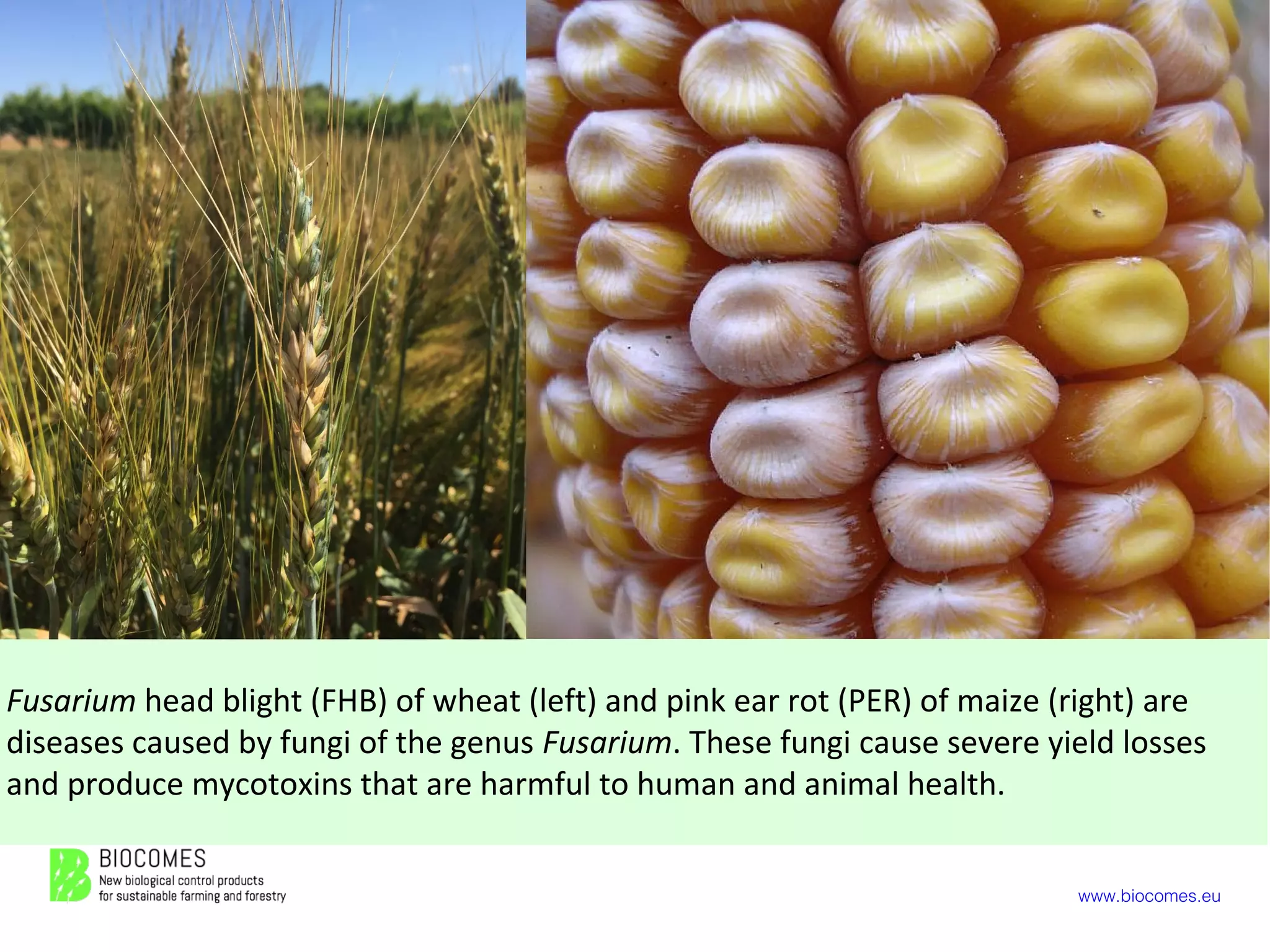
Fusarium head blight (FHB) of wheat (left) and pink ear rot (PER) of maize (right) are
diseases caused by fungi of the genus Fusarium. These fungi cause severe yield losses
and produce mycotoxins that are harmful to human and animal health.
www.biocomes.eu
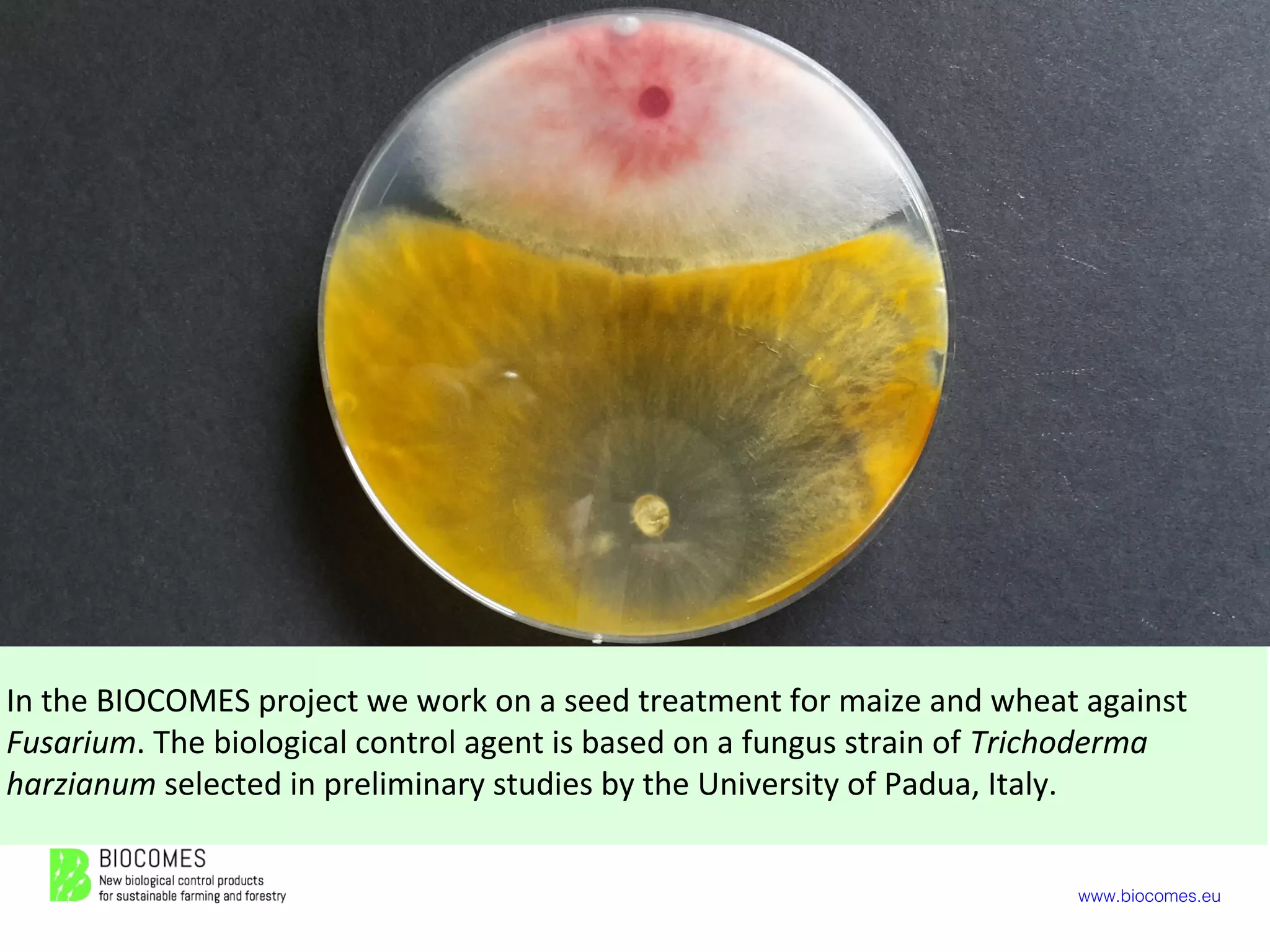
In the BIOCOMES project we work on a seed treatment for maize and wheat against
Fusarium. The biological control agent is based on a fungus strain of Trichoderma
harzianum selected in preliminary studies by the University of Padua, Italy.
www.biocomes.eu
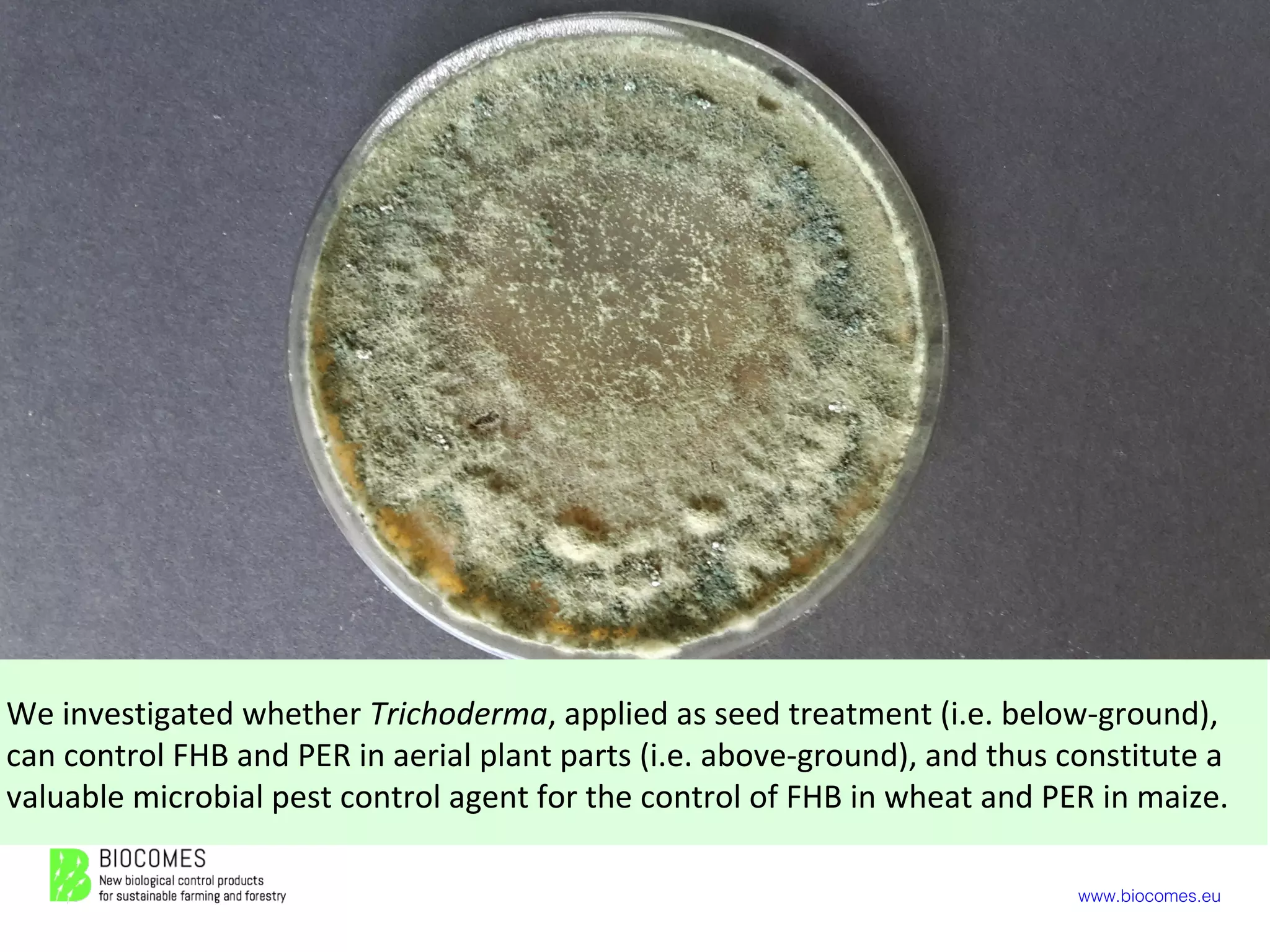
We investigated whether Trichoderma, applied as seed treatment (i.e. below-ground),
can control FHB and PER in aerial plant parts (i.e. above-ground), and thus constitute a
valuable microbial pest control agent for the control of FHB in wheat and PER in maize.
Foto: G. Barloggio
www.biocomes.eu
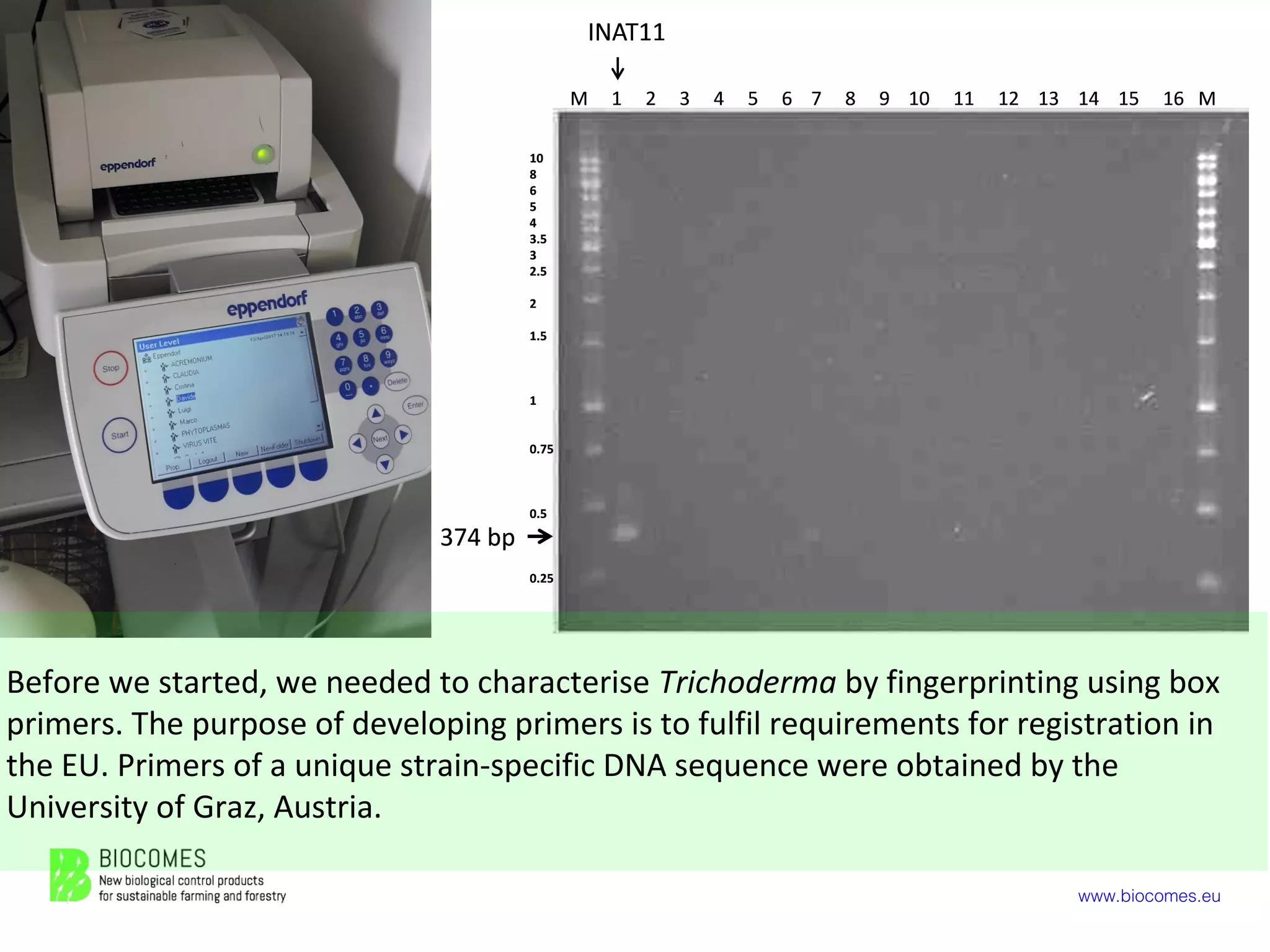
Before we started, we needed to characterise Trichoderma by fingerprinting using box
primers. The purpose of developing primers is to fulfil requirements for registration in
the EU. Primers of a unique strain-specific DNA sequence were obtained by the
University of Graz, Austria.
www.biocomes.eu
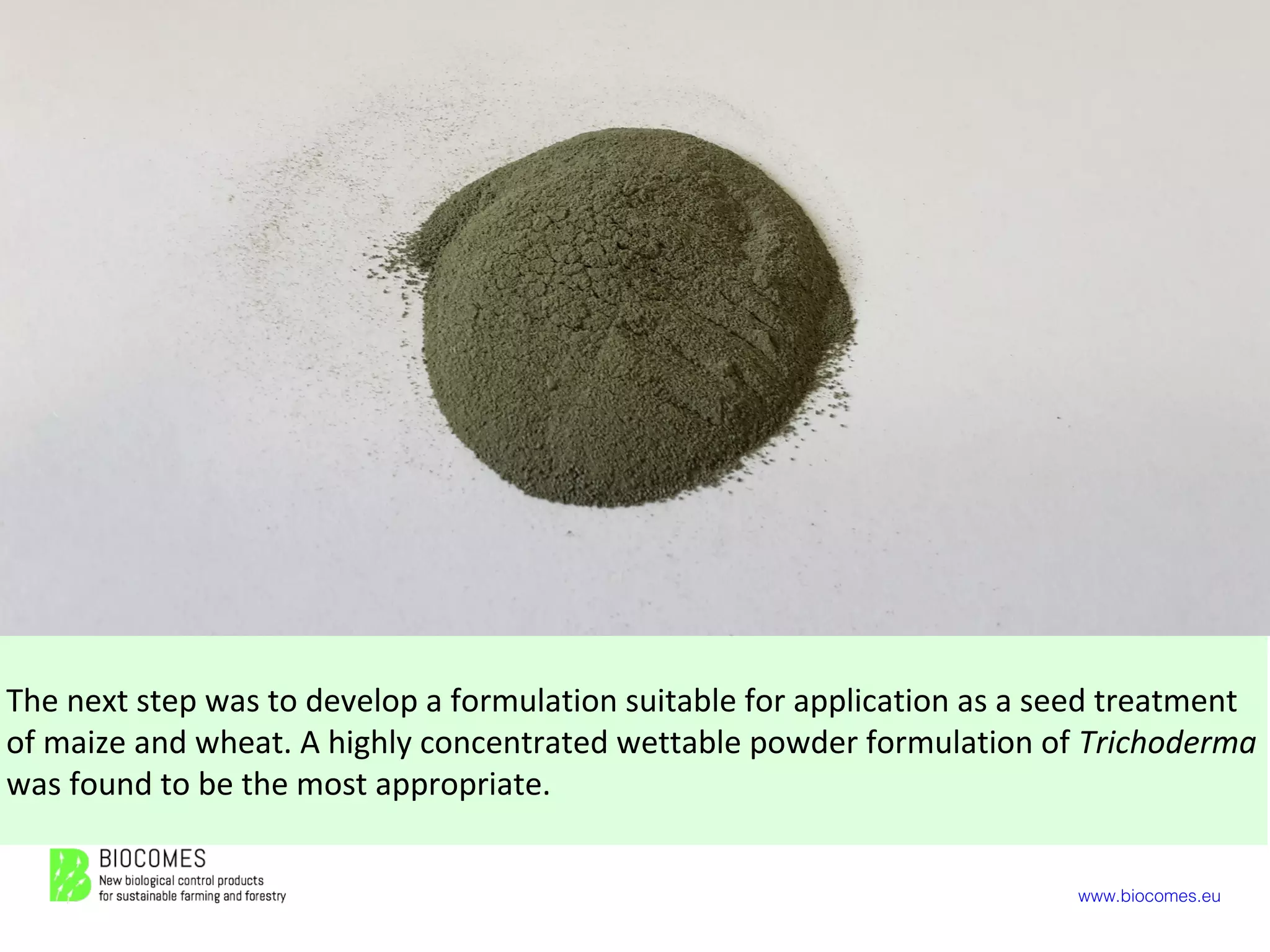
The next step was to develop a formulation suitable for application as a seed treatment
of maize and wheat. A highly concentrated wettable powder formulation of Trichoderma
was found to be the most appropriate.
www.biocomes.eu
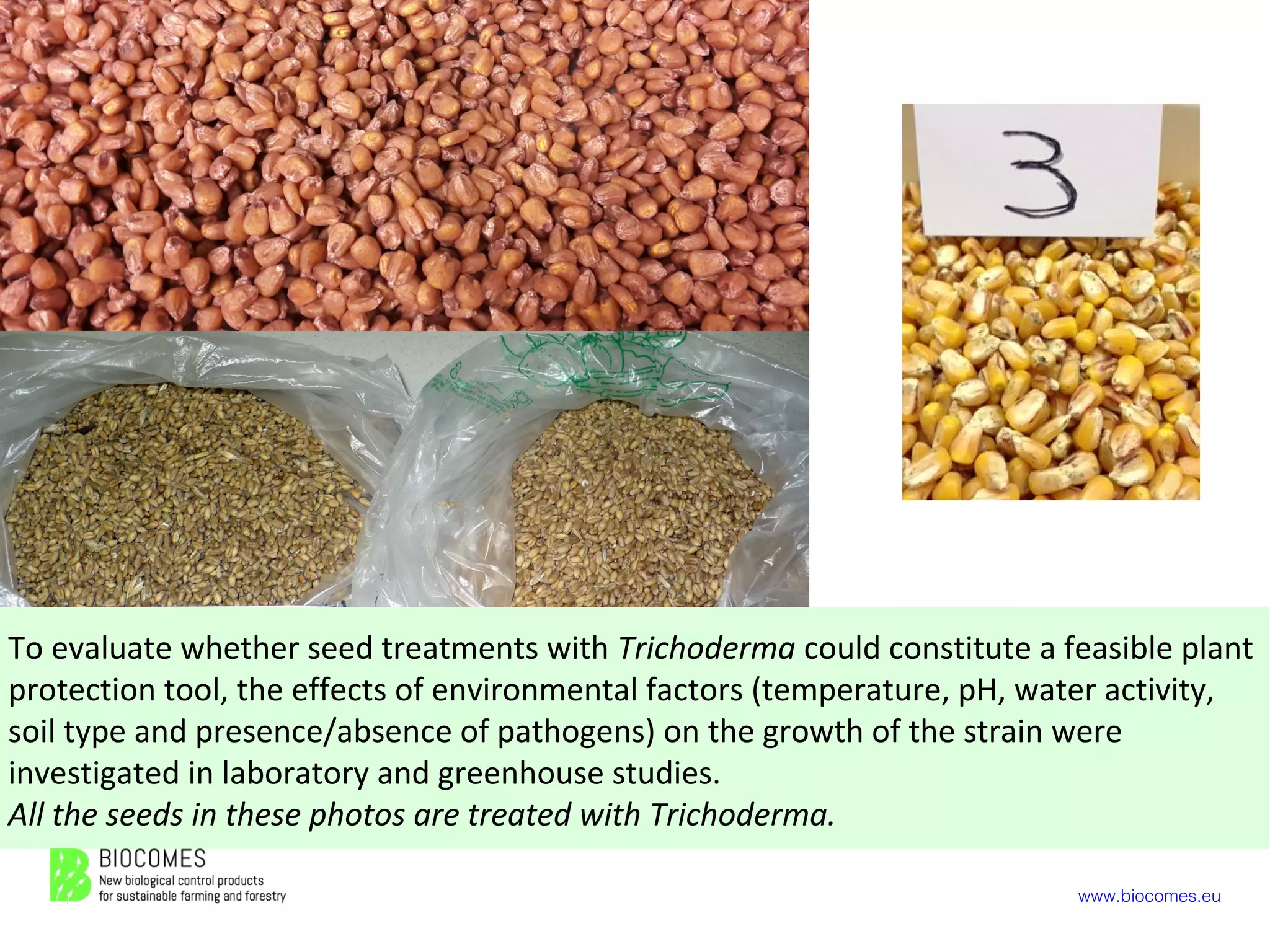
To evaluate whether seed treatments with Trichoderma could constitute a feasible plant
protection tool, the effects of environmental factors (temperature, pH, water activity,
soil type and presence/absence of pathogens) on the growth of the strain were
investigated in laboratory and greenhouse studies.
All the seeds in these photos are treated with Trichoderma.
www.biocomes.eu
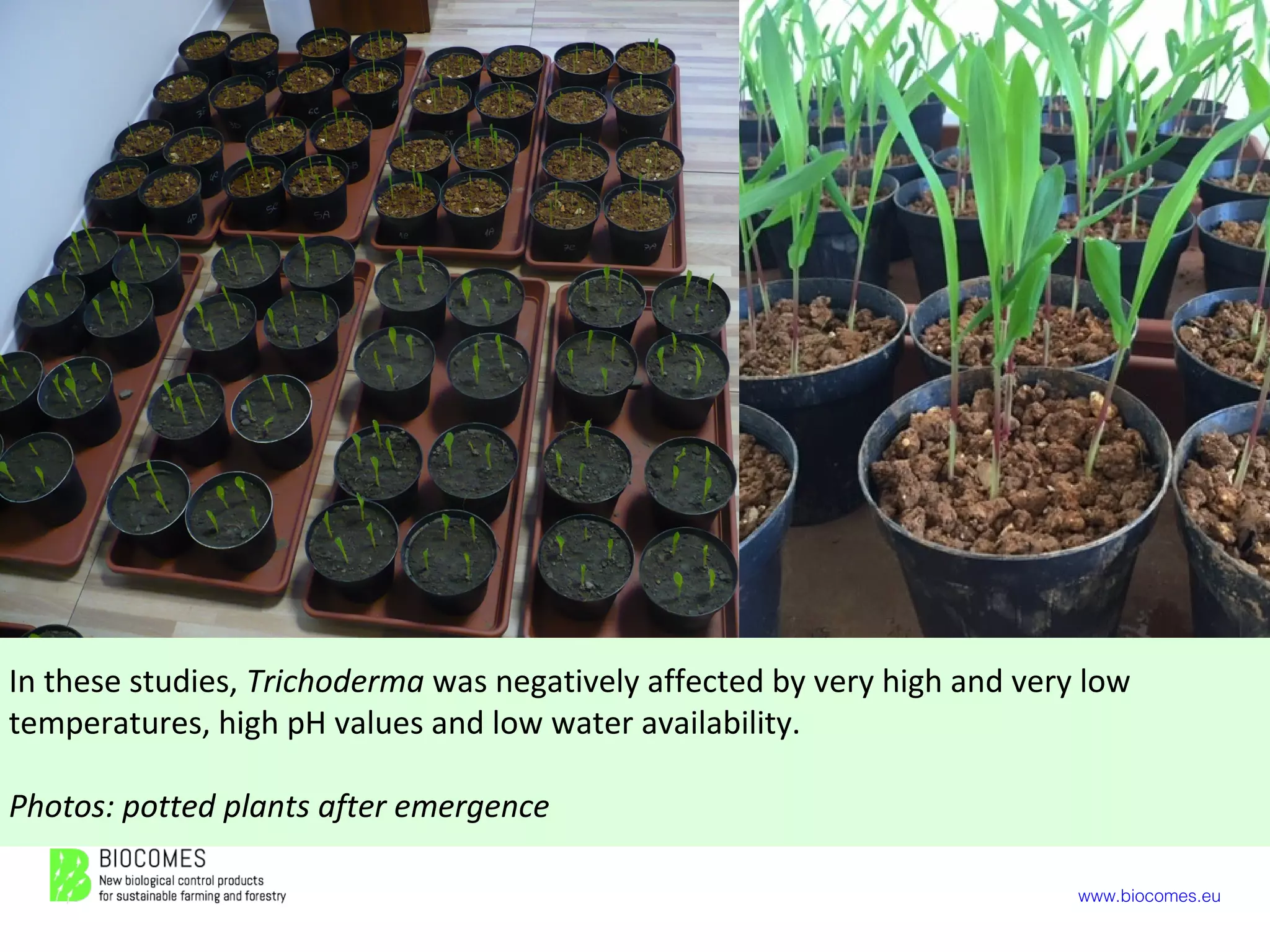
In these studies, Trichoderma was negatively affected by very high and very low
temperatures, high pH values and low water availability.
Photos: potted plants after emergence
www.biocomes.eu
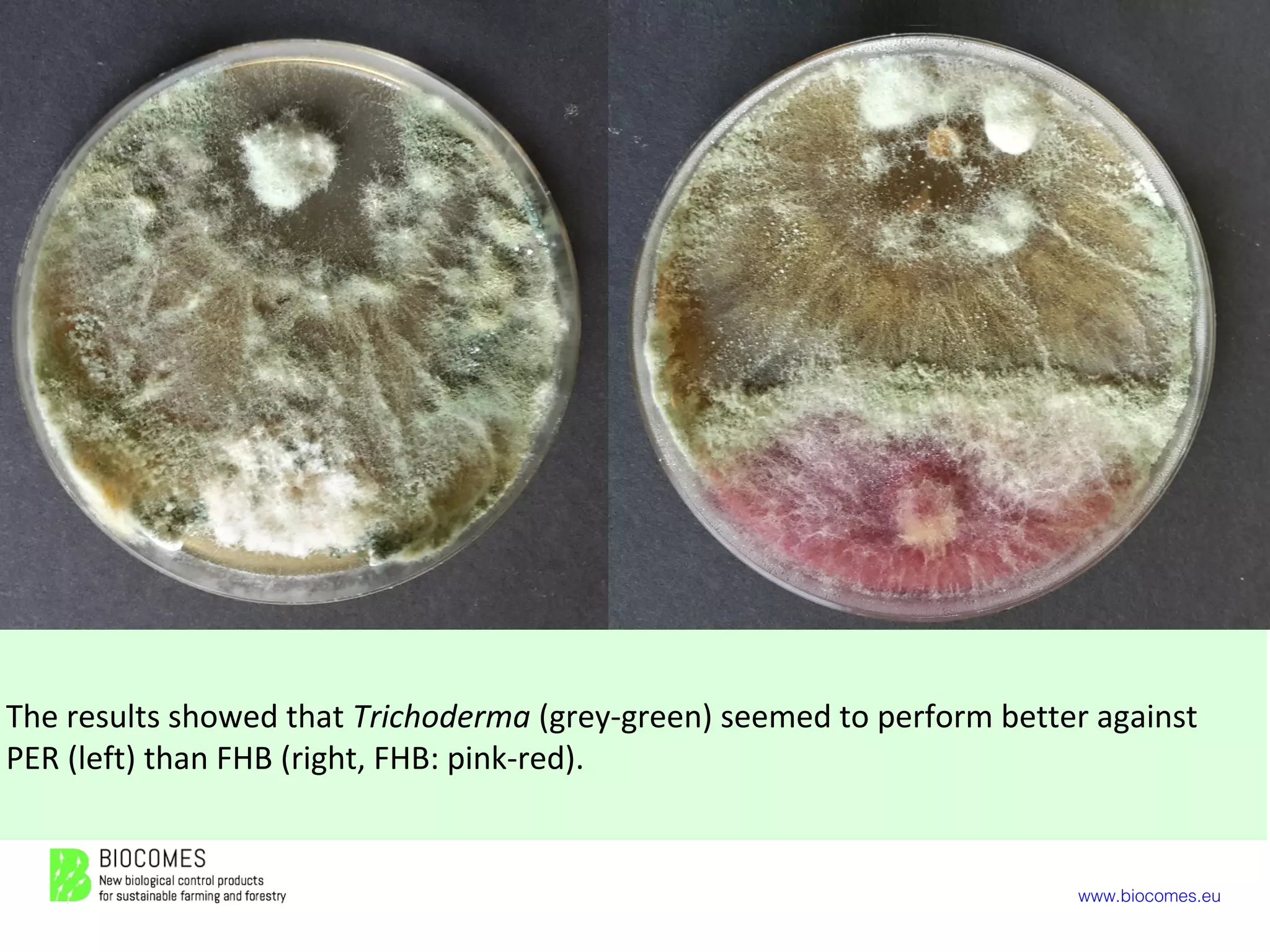
The results showed that Trichoderma (grey-green) seemed to perform better against
PER (left) than FHB (right, FHB: pink-red).
www.biocomes.eu
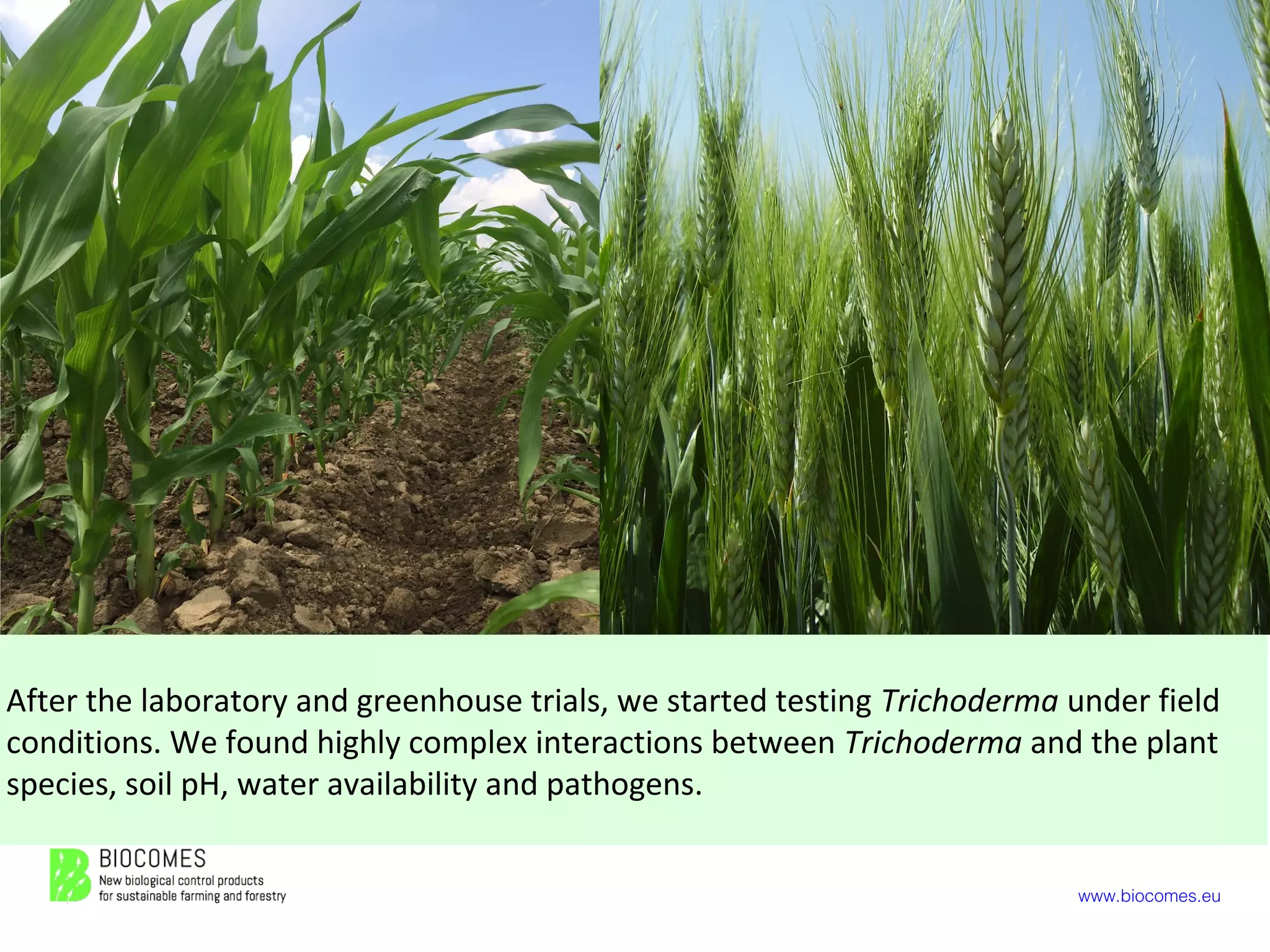
After the laboratory and greenhouse trials, we started testing Trichoderma under field
conditions. We found highly complex interactions between Trichoderma and the plant
species, soil pH, water availability and pathogens.
www.biocomes.eu
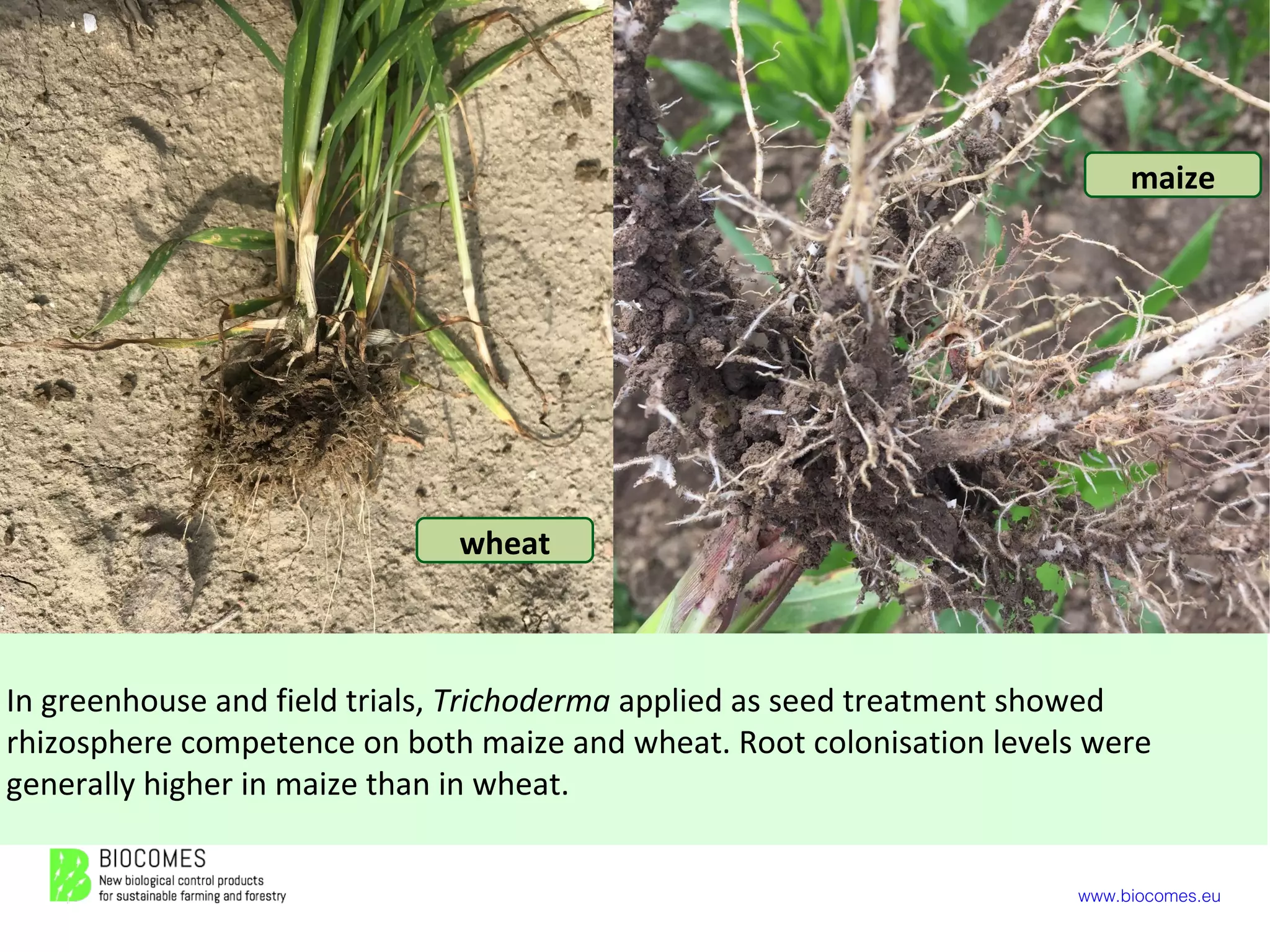
In greenhouse and field trials, Trichoderma applied as seed treatment showed
rhizosphere competence on both maize and wheat. Root colonisation levels were
generally higher in maize than in wheat.
wheat
maize
www.biocomes.eu
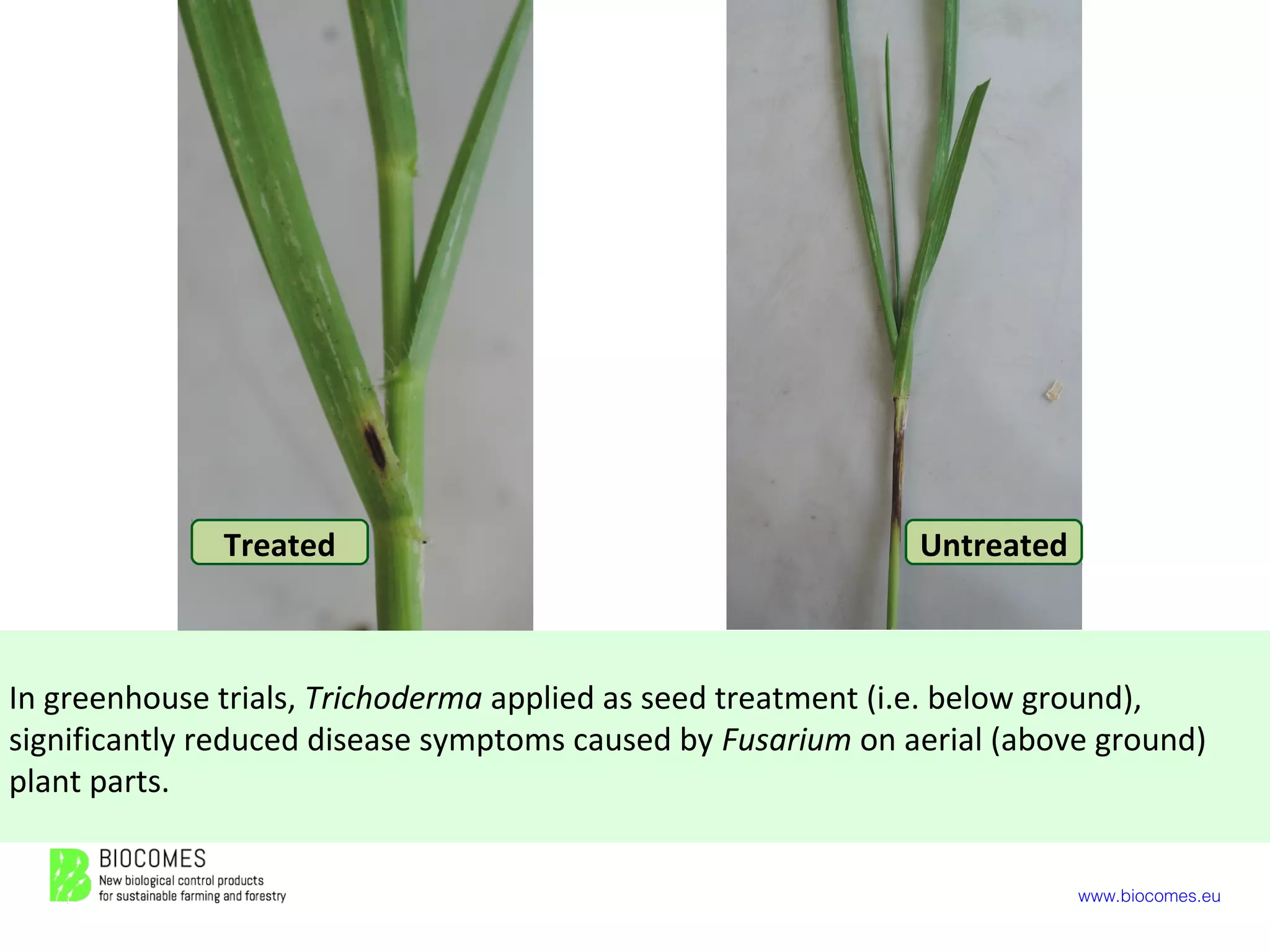
In greenhouse trials, Trichoderma applied as seed treatment (i.e. below ground),
significantly reduced disease symptoms caused by Fusarium on aerial (above ground)
plant parts.
Treated Untreated
www.biocomes.eu
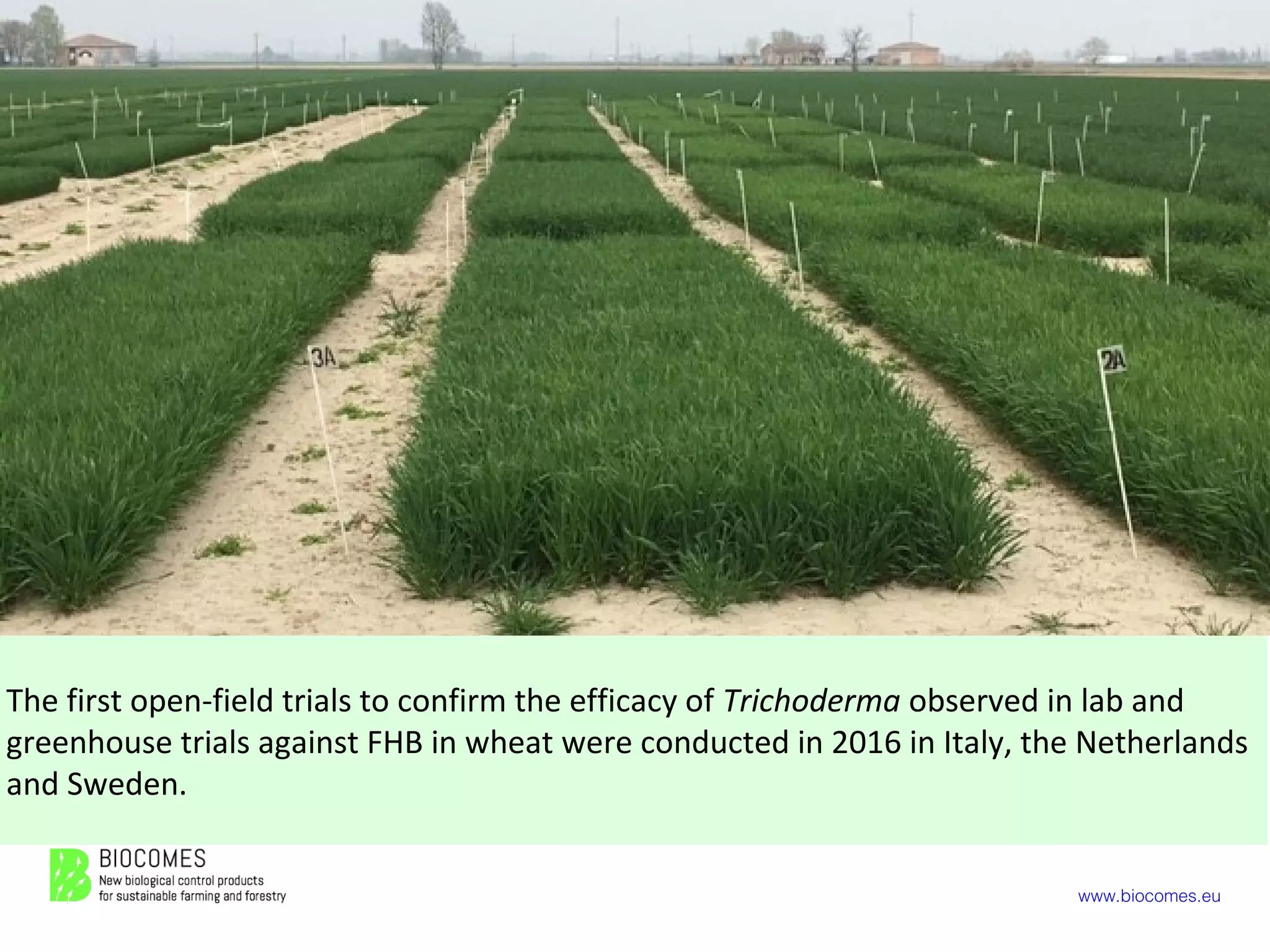
The first open-field trials to confirm the efficacy of Trichoderma observed in lab and
greenhouse trials against FHB in wheat were conducted in 2016 in Italy, the Netherlands
and Sweden.
www.biocomes.eu
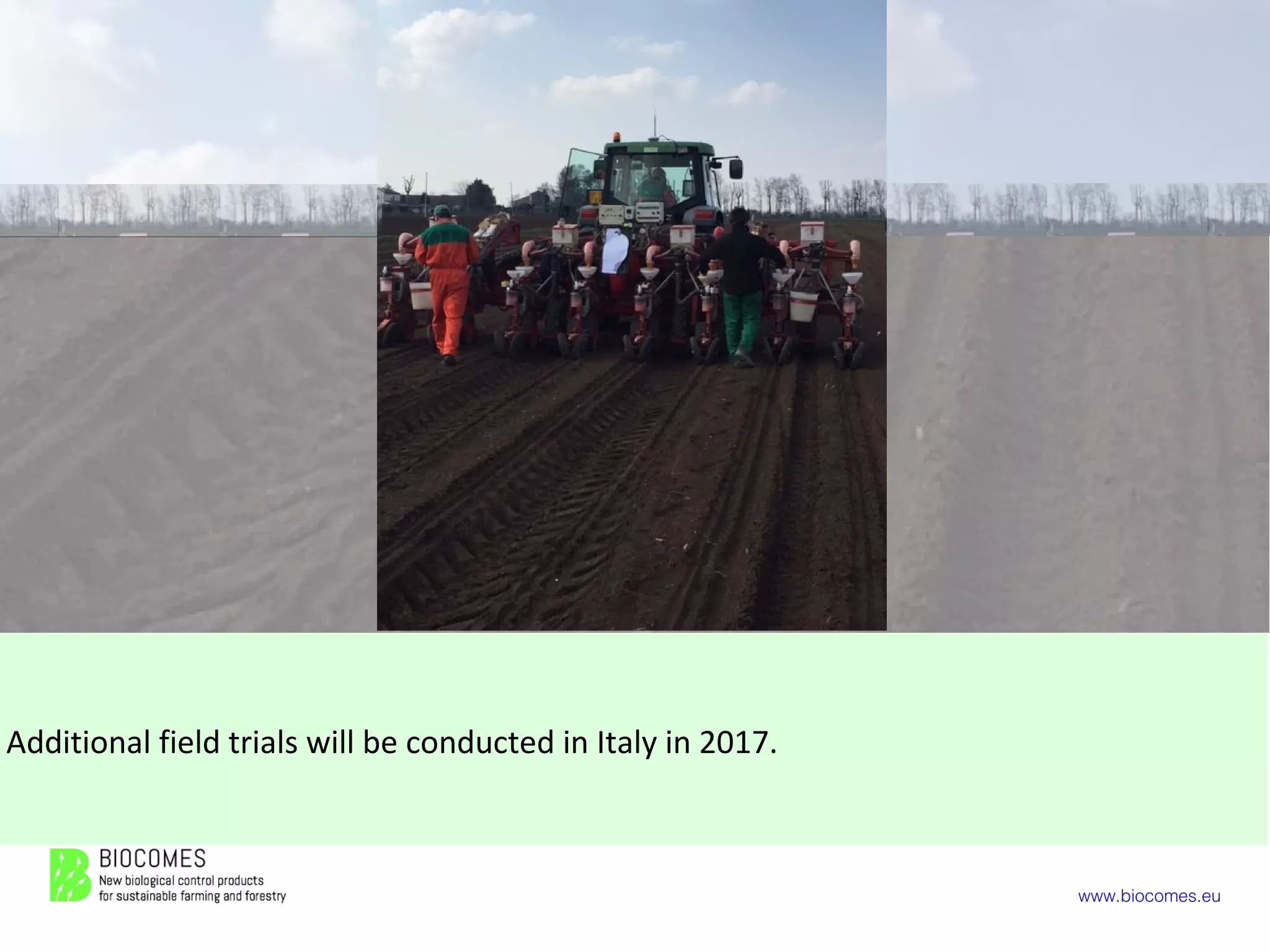
Additional field trials will be conducted in Italy in 2017.
www.biocomes.eu
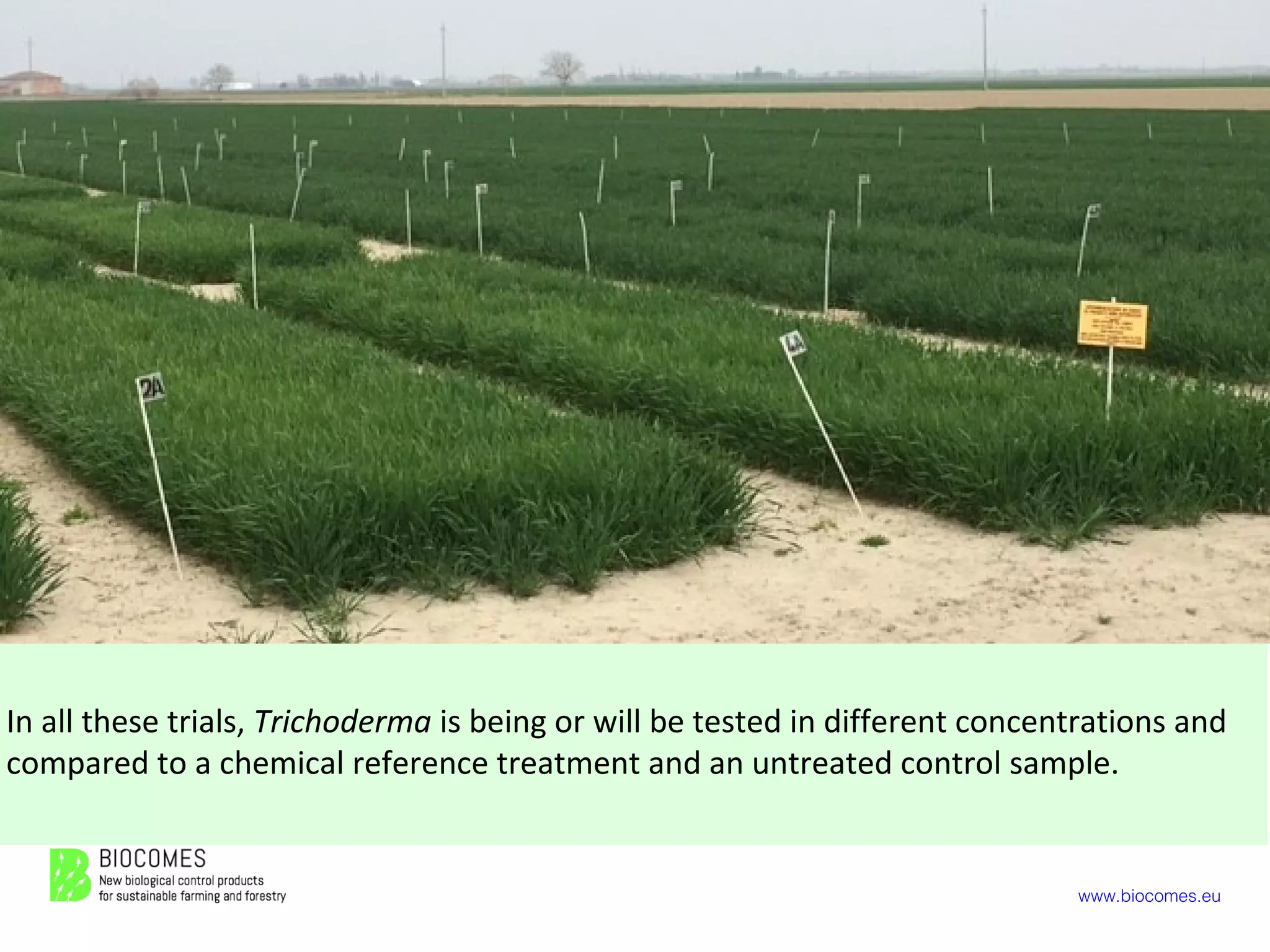
In all these trials, Trichoderma is being or will be tested in different concentrations and
compared to a chemical reference treatment and an untreated control sample.
www.biocomes.eu
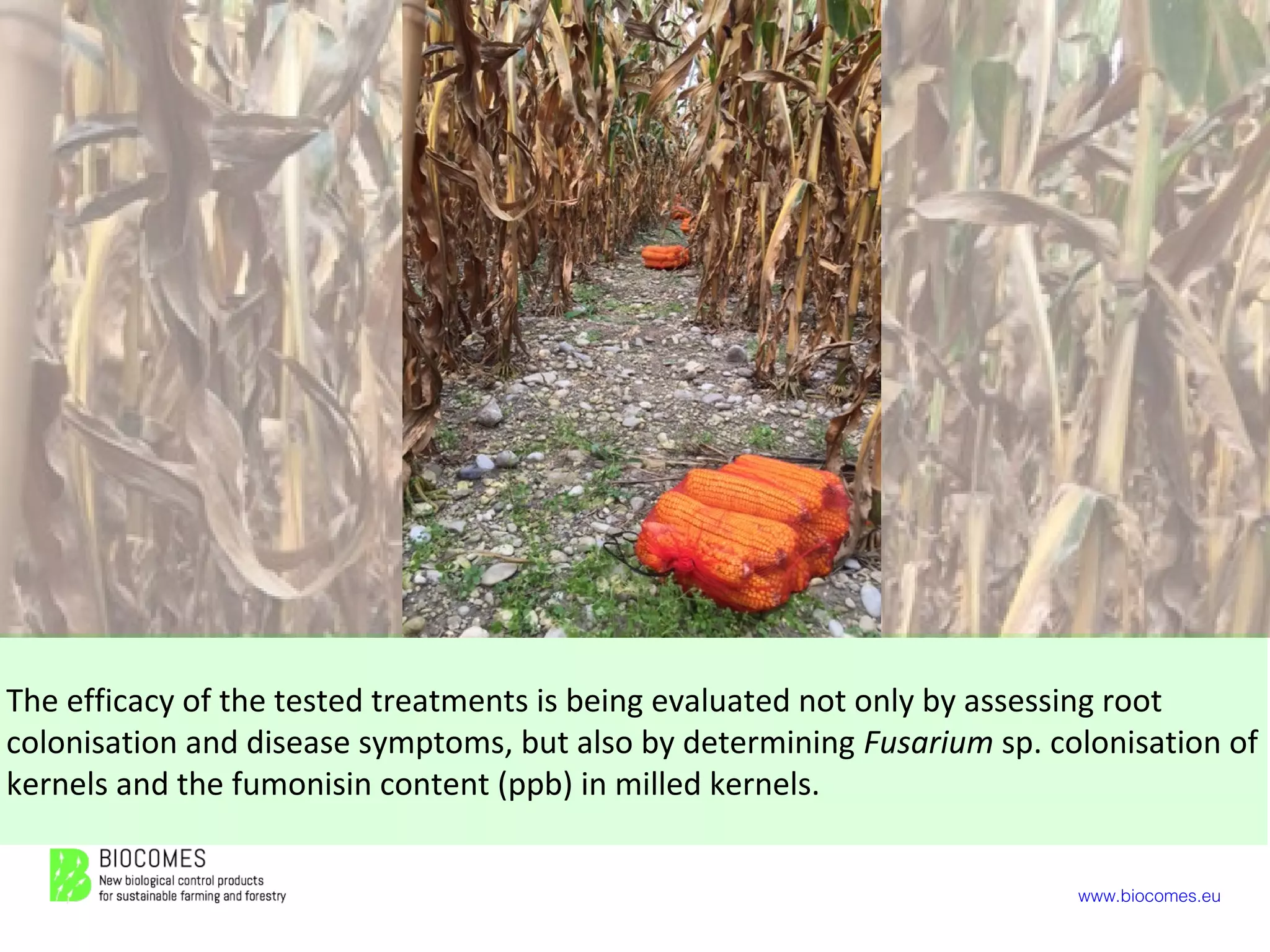
The efficacy of the tested treatments is being evaluated not only by assessing root
colonisation and disease symptoms, but also by determining Fusarium sp. colonisation of
kernels and the fumonisin content (ppb) in milled kernels.
This presentation gave a quick overview
of the development of a BCA for
Fusarium.
Visit our website to read more about our
work on Fusarium and the other 10
biological control products we are
developing.
www.biocomes.eu
This project has received funding from the
European Union’s Seventh Framework Programme for
research, technological development and demonstration
under grant agreement no
612713

Slideshare presentation fusarium

  • 1.
    www.biocomes.eu Fusarium The BIOCOMES projectbrings together 27 partners developing 11 novel biological control products for pests and diseases. Some important fungal diseases are caused by the genus Fusarium. This slide share presentation explains more about Fusarium Head Blight in wheat and Pink Ear Rot in maize and the BIOCOMES activities to find a sustainable biocontrol product to counteract these diseases
  • 2.
    www.biocomes.eu Fusarium head blight(FHB) of wheat (left) and pink ear rot (PER) of maize (right) are diseases caused by fungi of the genus Fusarium. These fungi cause severe yield losses and produce mycotoxins that are harmful to human and animal health.
  • 3.
    www.biocomes.eu In the BIOCOMESproject we work on a seed treatment for maize and wheat against Fusarium. The biological control agent is based on a fungus strain of Trichoderma harzianum selected in preliminary studies by the University of Padua, Italy.
  • 4.
    www.biocomes.eu We investigated whetherTrichoderma, applied as seed treatment (i.e. below-ground), can control FHB and PER in aerial plant parts (i.e. above-ground), and thus constitute a valuable microbial pest control agent for the control of FHB in wheat and PER in maize. Foto: G. Barloggio
  • 5.
    www.biocomes.eu Before we started,we needed to characterise Trichoderma by fingerprinting using box primers. The purpose of developing primers is to fulfil requirements for registration in the EU. Primers of a unique strain-specific DNA sequence were obtained by the University of Graz, Austria.
  • 6.
    www.biocomes.eu The next stepwas to develop a formulation suitable for application as a seed treatment of maize and wheat. A highly concentrated wettable powder formulation of Trichoderma was found to be the most appropriate.
  • 7.
    www.biocomes.eu To evaluate whetherseed treatments with Trichoderma could constitute a feasible plant protection tool, the effects of environmental factors (temperature, pH, water activity, soil type and presence/absence of pathogens) on the growth of the strain were investigated in laboratory and greenhouse studies. All the seeds in these photos are treated with Trichoderma.
  • 8.
    www.biocomes.eu In these studies,Trichoderma was negatively affected by very high and very low temperatures, high pH values and low water availability. Photos: potted plants after emergence
  • 9.
    www.biocomes.eu The results showedthat Trichoderma (grey-green) seemed to perform better against PER (left) than FHB (right, FHB: pink-red).
  • 10.
    www.biocomes.eu After the laboratoryand greenhouse trials, we started testing Trichoderma under field conditions. We found highly complex interactions between Trichoderma and the plant species, soil pH, water availability and pathogens.
  • 11.
    www.biocomes.eu In greenhouse andfield trials, Trichoderma applied as seed treatment showed rhizosphere competence on both maize and wheat. Root colonisation levels were generally higher in maize than in wheat. wheat maize
  • 12.
    www.biocomes.eu In greenhouse trials,Trichoderma applied as seed treatment (i.e. below ground), significantly reduced disease symptoms caused by Fusarium on aerial (above ground) plant parts. Treated Untreated
  • 13.
    www.biocomes.eu The first open-fieldtrials to confirm the efficacy of Trichoderma observed in lab and greenhouse trials against FHB in wheat were conducted in 2016 in Italy, the Netherlands and Sweden.
  • 14.
    www.biocomes.eu Additional field trialswill be conducted in Italy in 2017.
  • 15.
    www.biocomes.eu In all thesetrials, Trichoderma is being or will be tested in different concentrations and compared to a chemical reference treatment and an untreated control sample.
  • 16.
    www.biocomes.eu The efficacy ofthe tested treatments is being evaluated not only by assessing root colonisation and disease symptoms, but also by determining Fusarium sp. colonisation of kernels and the fumonisin content (ppb) in milled kernels.
  • 17.
    This presentation gavea quick overview of the development of a BCA for Fusarium. Visit our website to read more about our work on Fusarium and the other 10 biological control products we are developing. www.biocomes.eu This project has received funding from the European Union’s Seventh Framework Programme for research, technological development and demonstration under grant agreement no 612713