Knowing their Place: Improving the 
Spatial Literacy of Tomorrow’s Workforce 
Scottish Learning Festival 
24th – 25th September 2014 
Anne Robertson, EDINA, University of Edinburgh 
Lisa Allan, Barrhead High School 
Murdo MacDonald, Bellahouston Academy
Presentation overview 
• What is spatial information? 
• What do we mean by spatial literacy? 
• Which industries use it and for what 
purposes? 
• Spatial literacy & Curriculum for Excellence 
• Getting started with Digimap for Schools 
• Examples from Barrhead High School & 
Bellahouston Academy
Spatial information…….. 
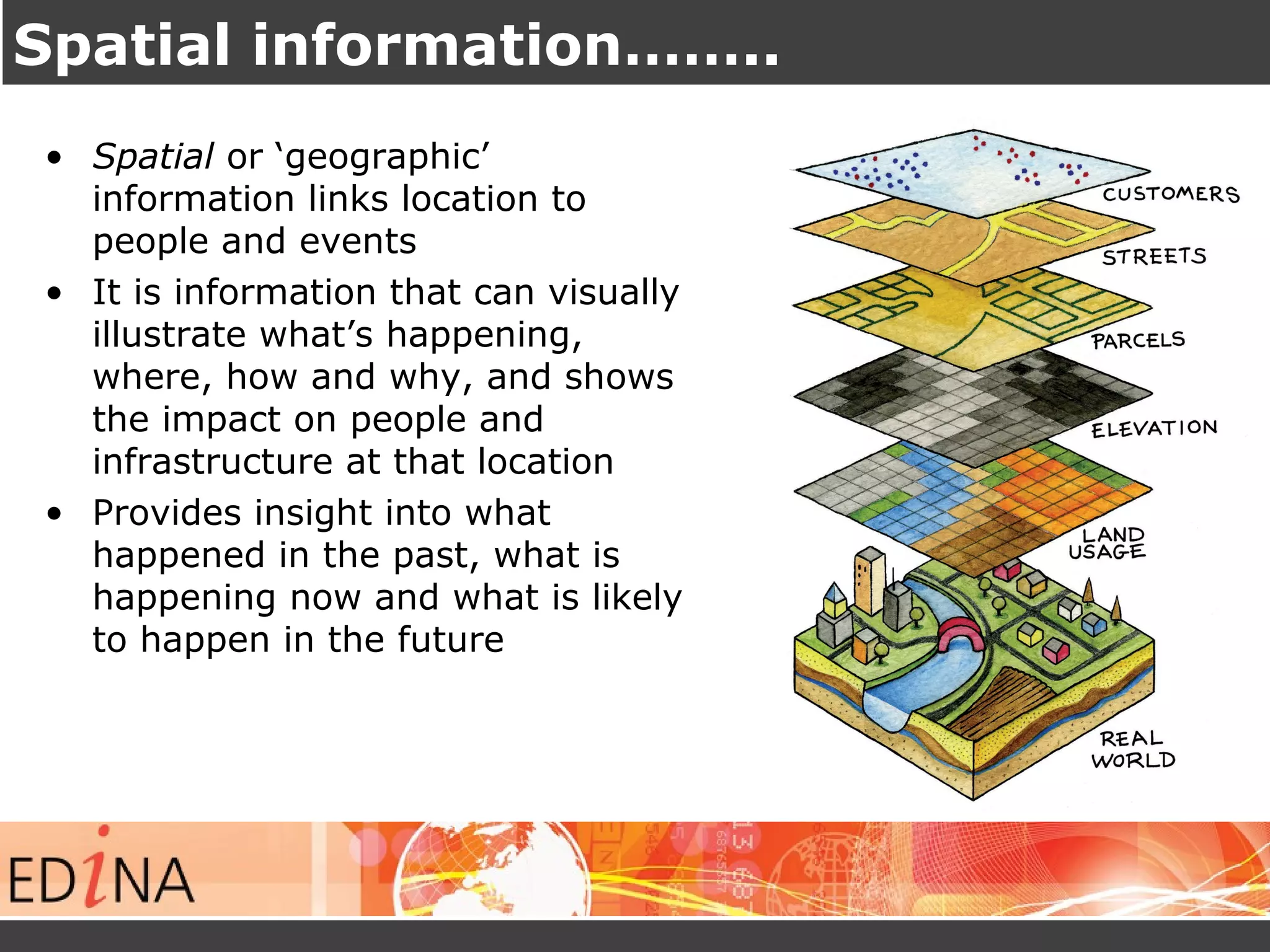
• Spatial or ‘geographic’ 
information links location to 
people and events 
• It is information that can visually 
illustrate what’s happening, 
where, how and why, and shows 
the impact on people and 
infrastructure at that location 
• Provides insight into what 
happened in the past, what is 
happening now and what is likely 
to happen in the future
Spatial literacy…….. 
The ability to use the properties of space to communicate, reason, and 
solve problems 
Can this 4-bedroom property be marketed at a higher price because it falls within a 
particular school catchment? 
Which town of population greater than 10,000 have we not yet opened a branch in? 
Should we merge two smaller branches and relocate where we know our customers spend 
more? 
What could be the effects on local tourism if a new wind farm is located in a village? 
How can a particular bus service attract the most customers but still journey from A to B 
on main straight roads thus reducing fuel costs? 
Which health centres require most help from government when targeting healthy lifestyle 
campaigns? 
If a river running through an urban area experiences a 100 year flood, what are the 
furthest properties to be affected by flood waters?
Sector use
Ensuring a well prepared workforce 
• Young people should be trained in the use of geographic 
information and geographical information systems (GIS) 
to avail themselves of employment opportunities 
• GIS leads to critical thinking and inquiry-based teaching 
• This should be happening at school not waiting until 
tertiary education 
and it’s in CfE …… 
• SOC 3-14a I can use a range of maps and geographical 
information systems to gather, interpret and present 
conclusions 
• SOC 4-14a I can use specialized maps and geographical 
information systems to identify patterns of human 
activity and physical processes
The first step – online mapping
Getting started
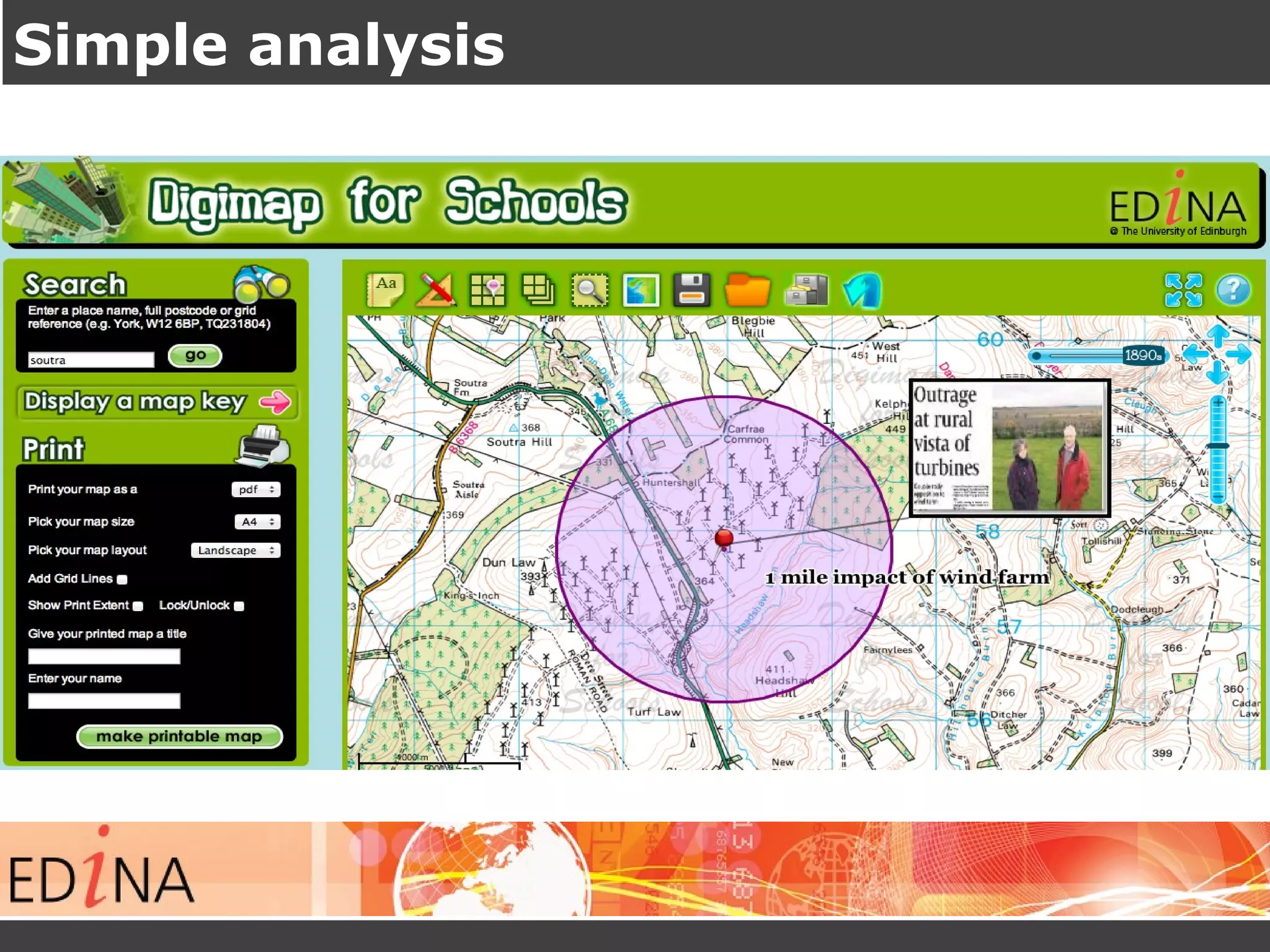
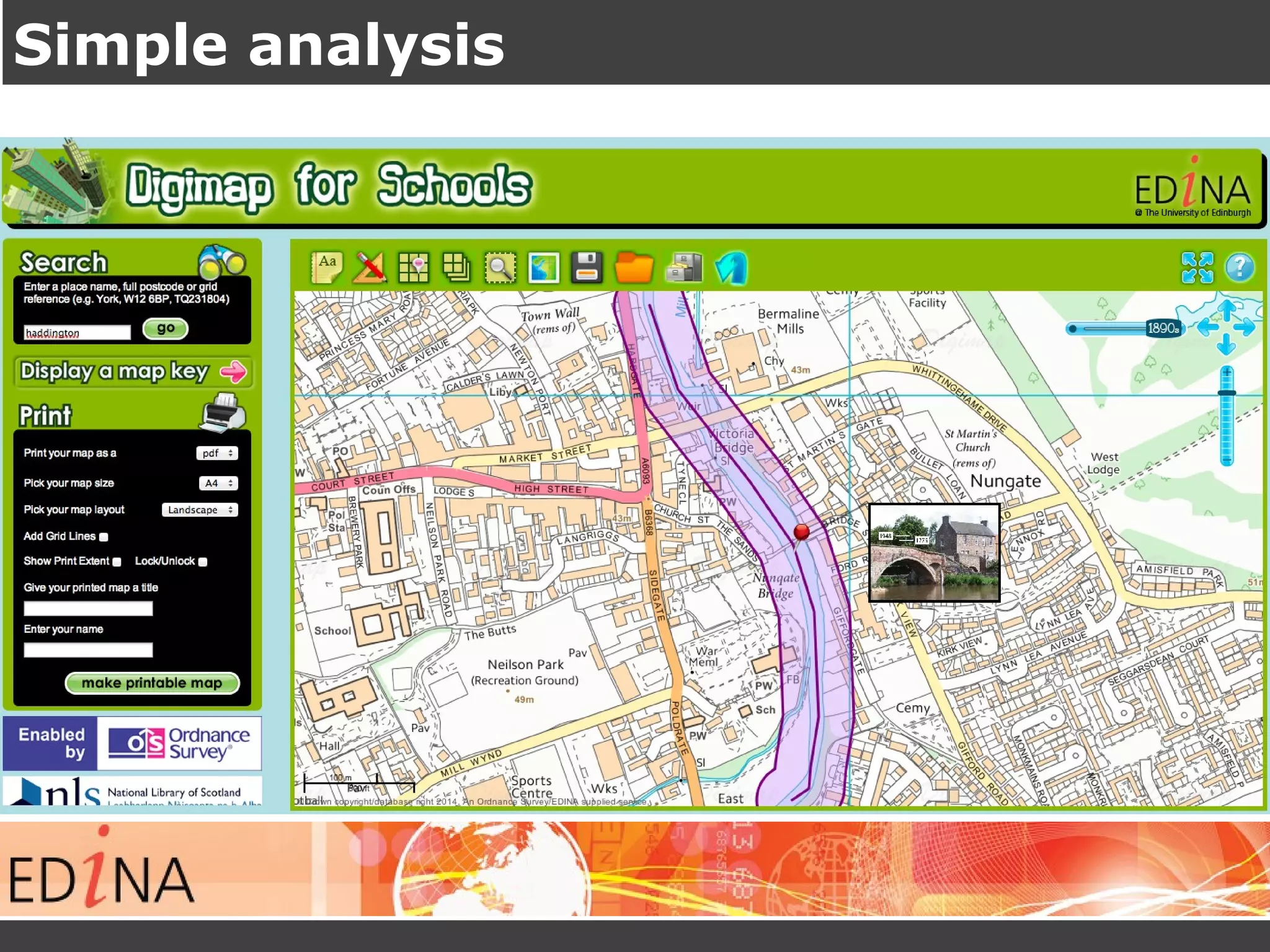
Simple analysis
Simple analysis
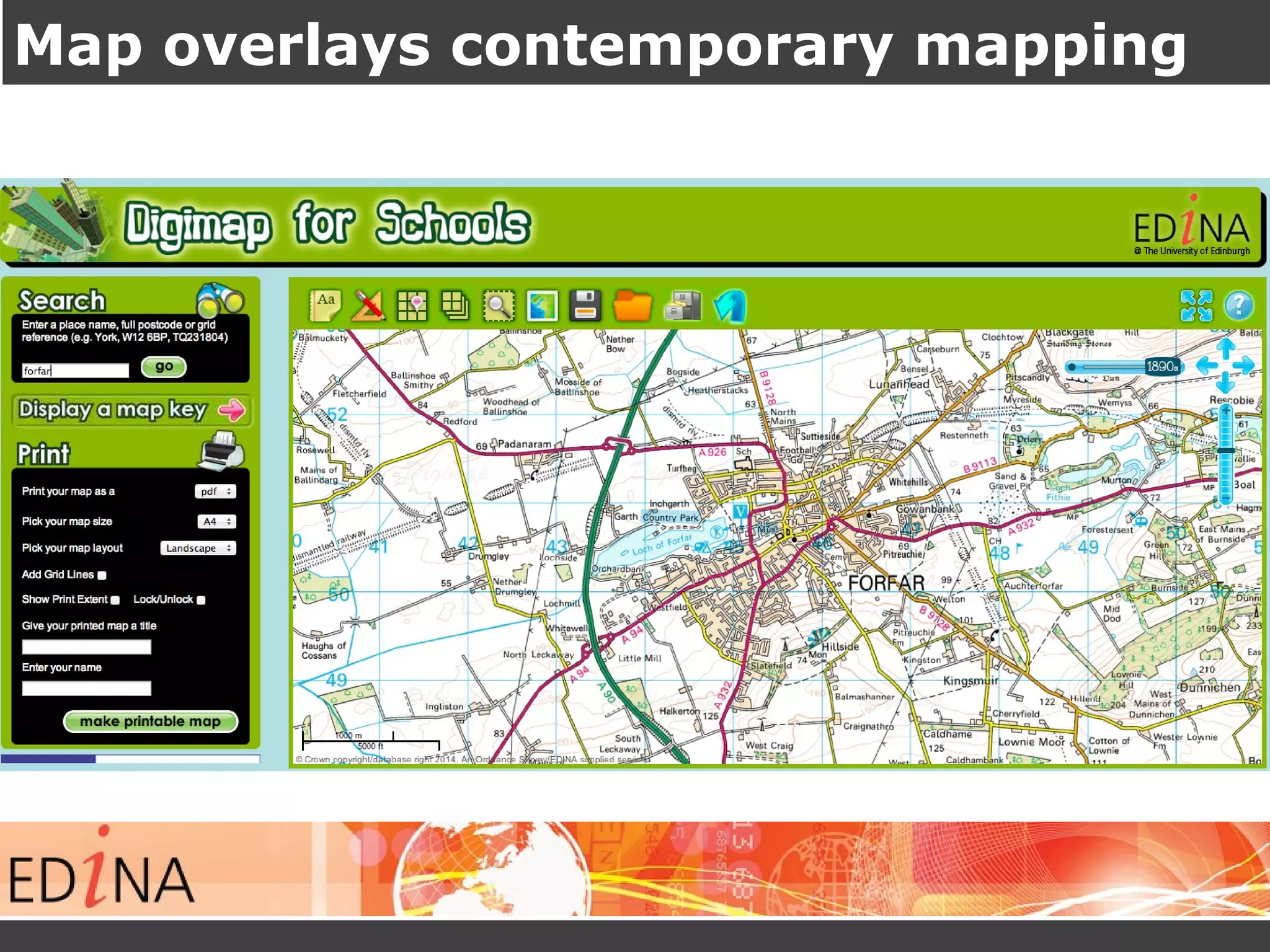
Map overlays contemporary mapping
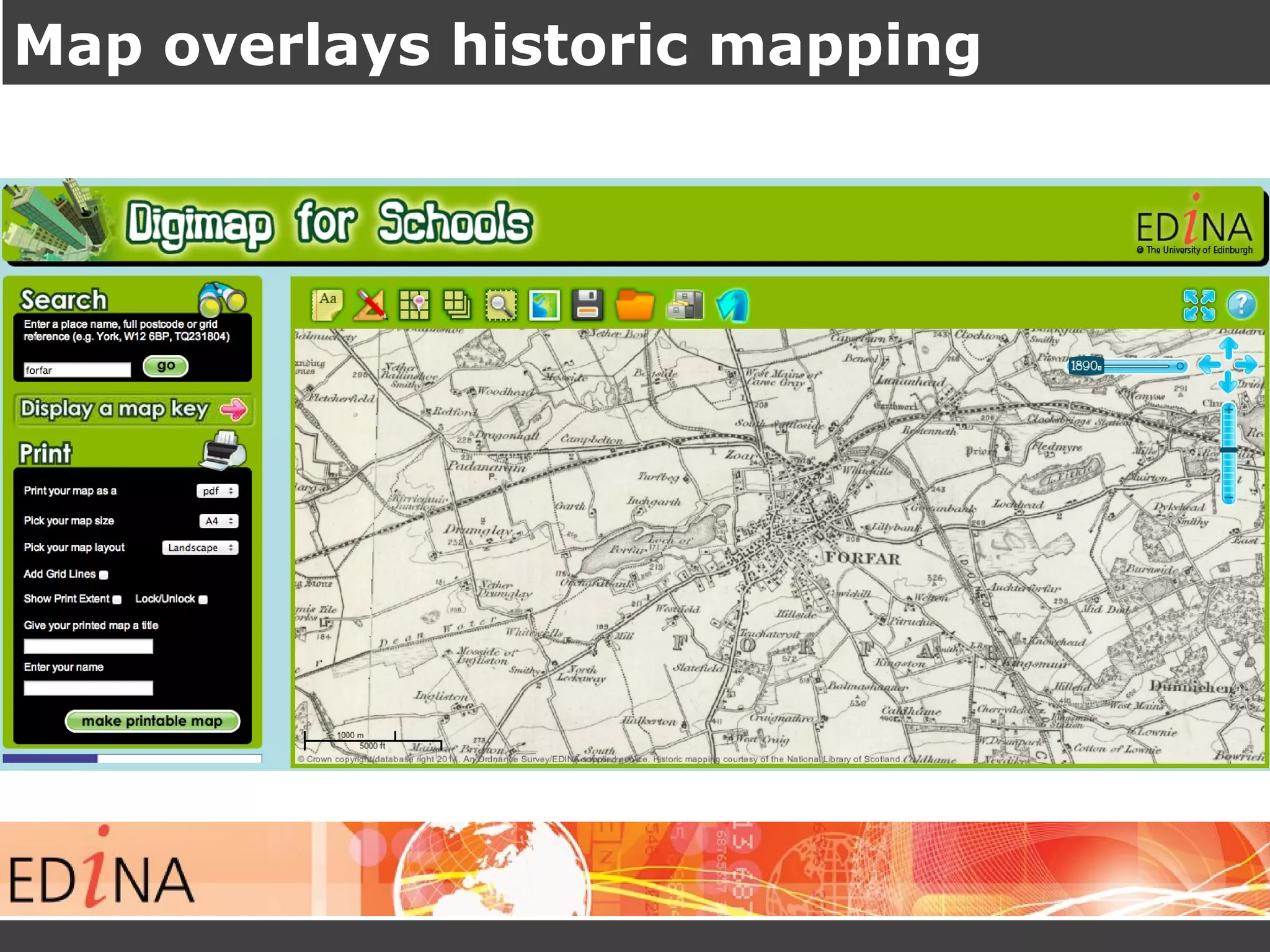
Map overlays historic mapping
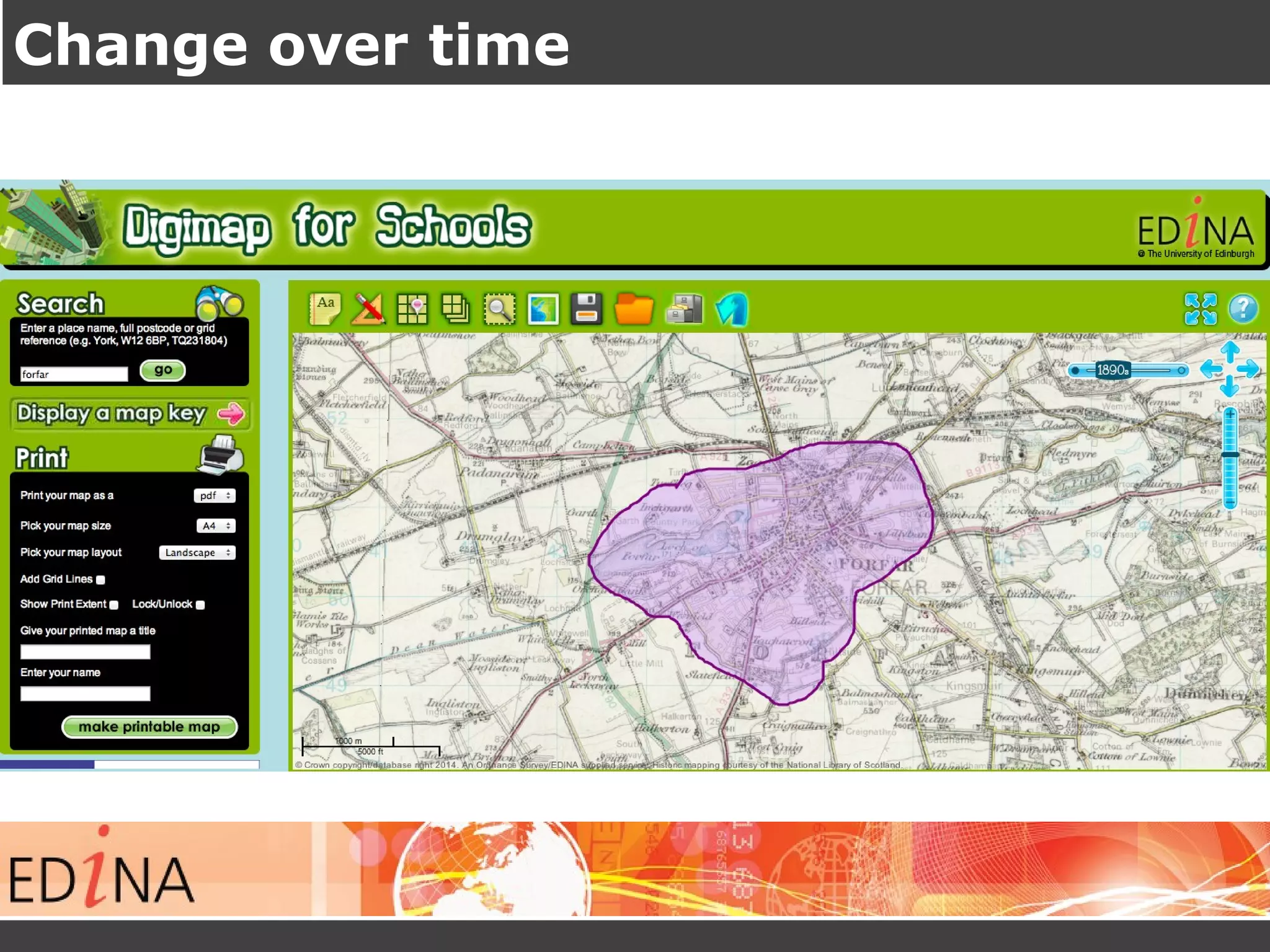
Change over time
Digimap for Schools 
Examples from 
Lisa Allan, Barrhead High School 
Murdo MacDonald, Bellahouston Academy
Using Digimaps in (and out of) the 
classroom 
Barrhead High School
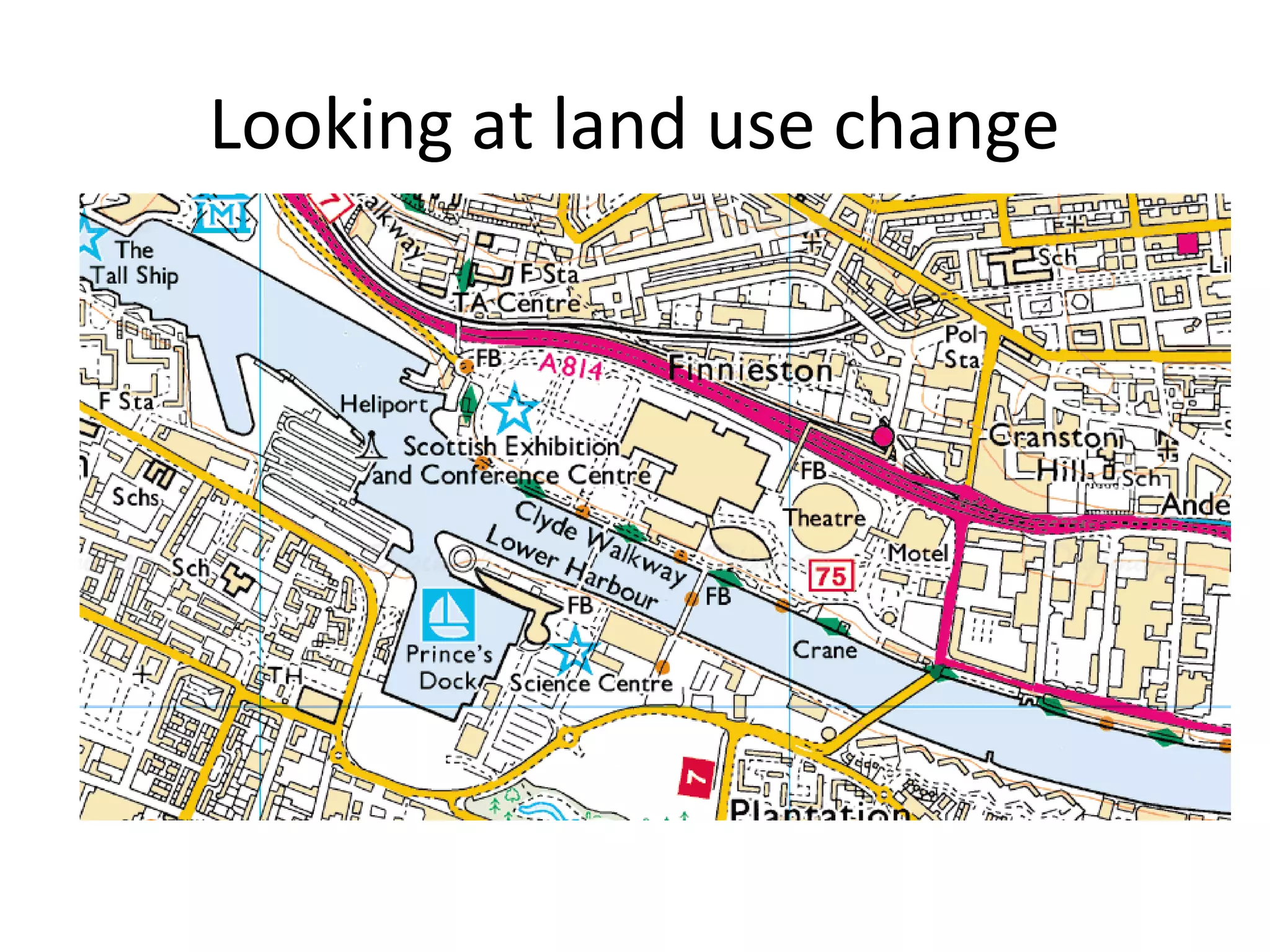
Looking at land use change
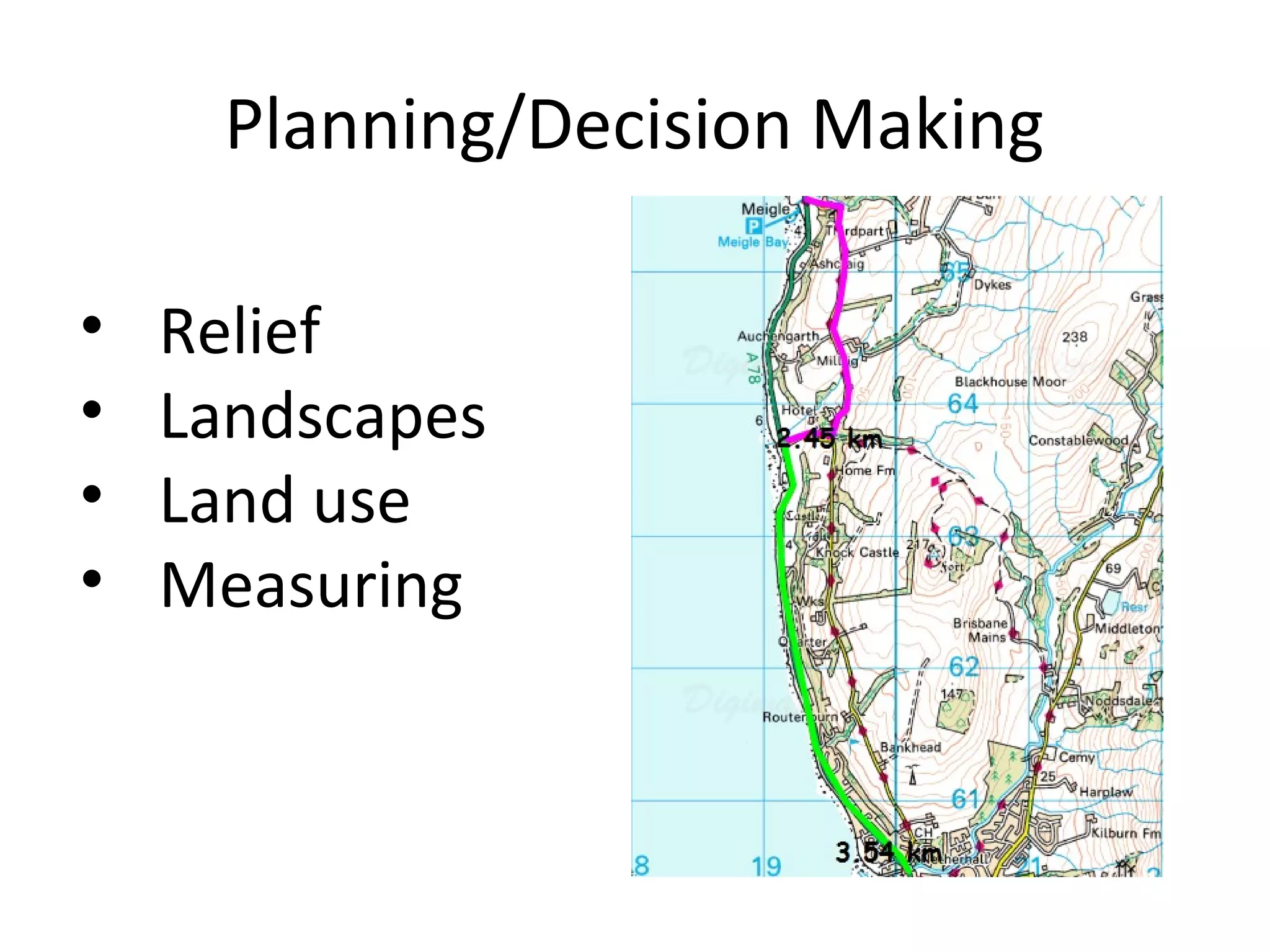
Planning/Decision Making 
• Relief 
• Landscapes 
• Land use 
• Measuring
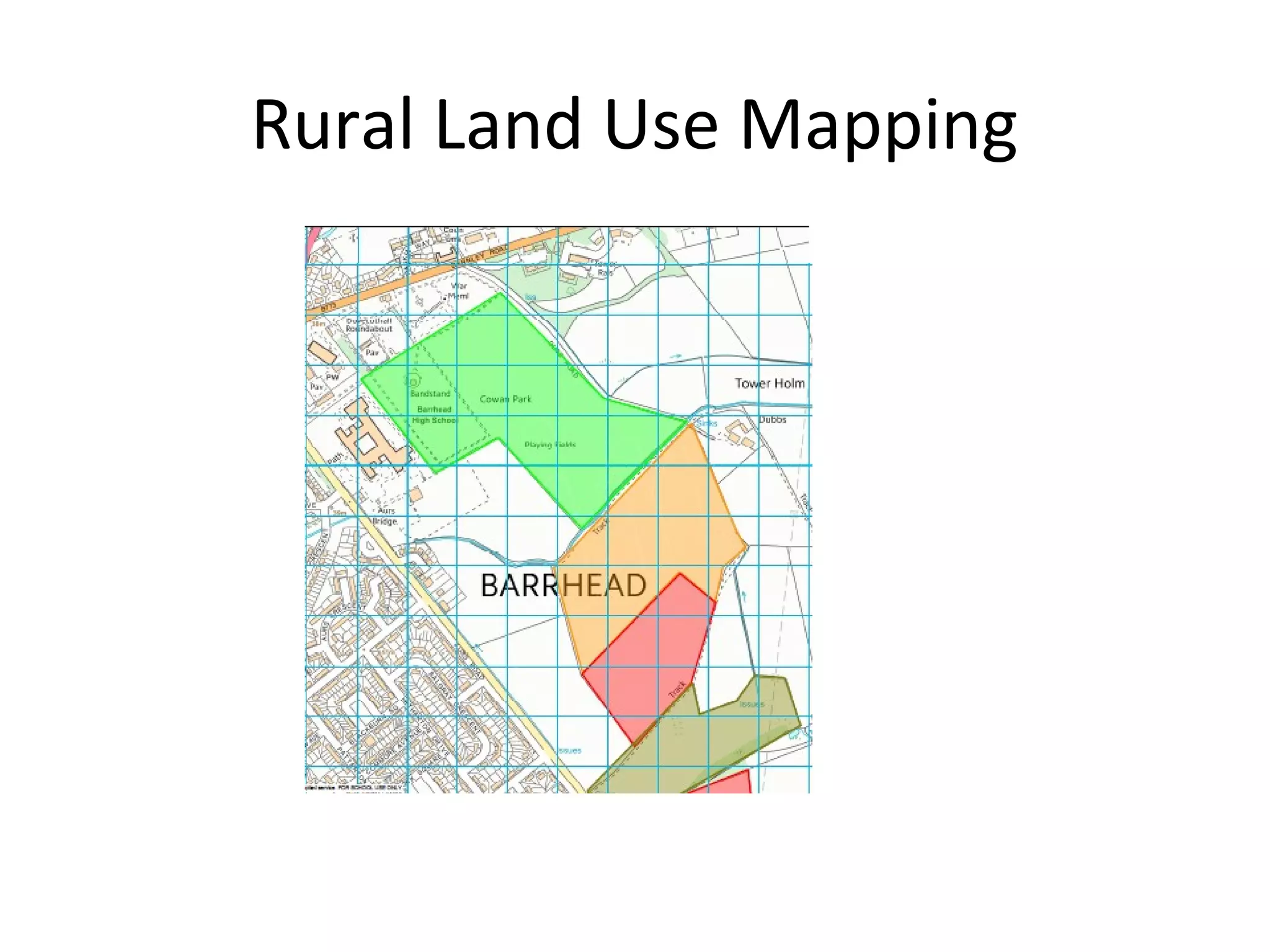
Rural Land Use Mapping
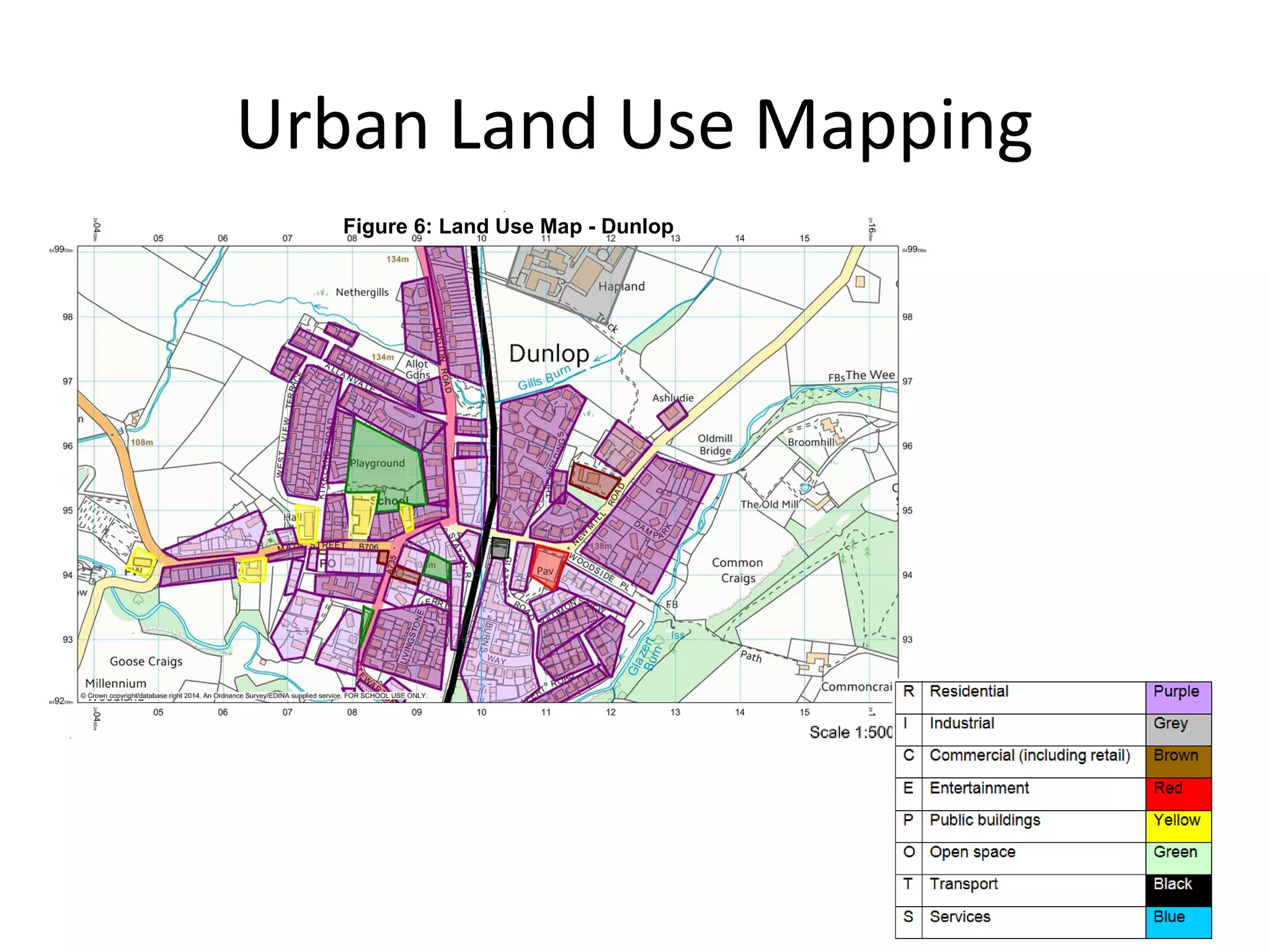
Urban Land Use Mapping 
Figure 6: Land Use Map - Dunlop 
Red
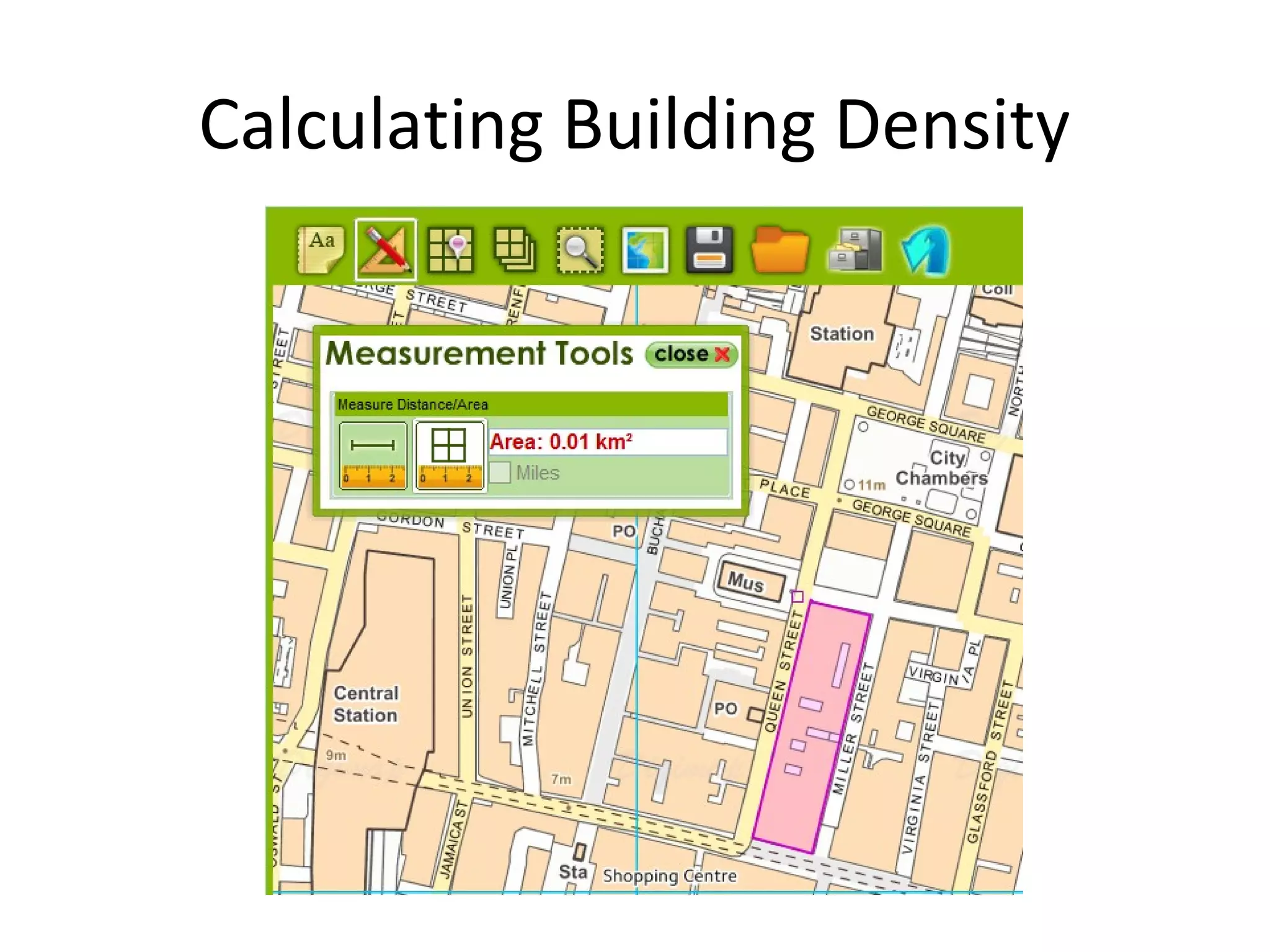
Calculating Building Density
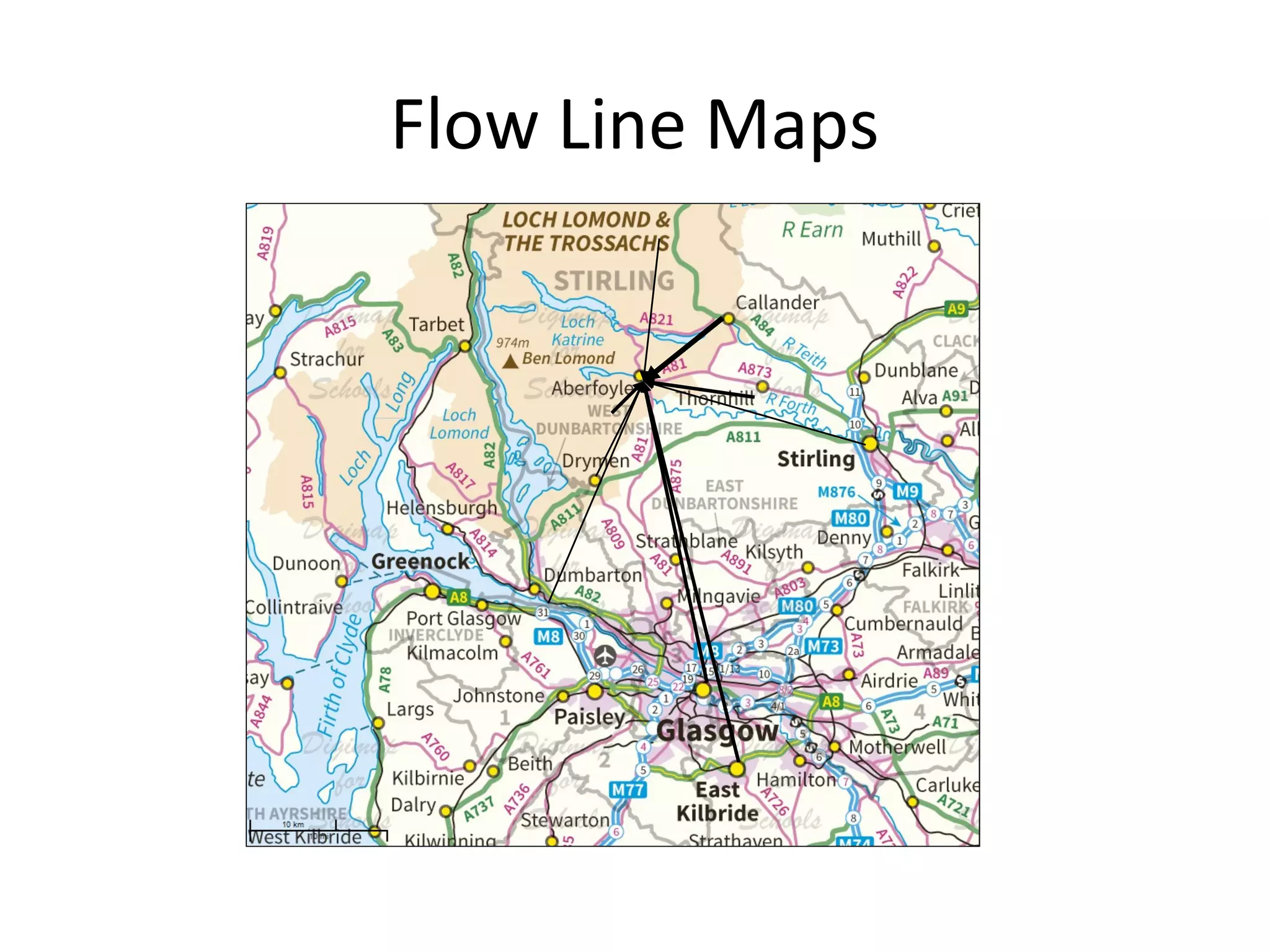
Flow Line Maps
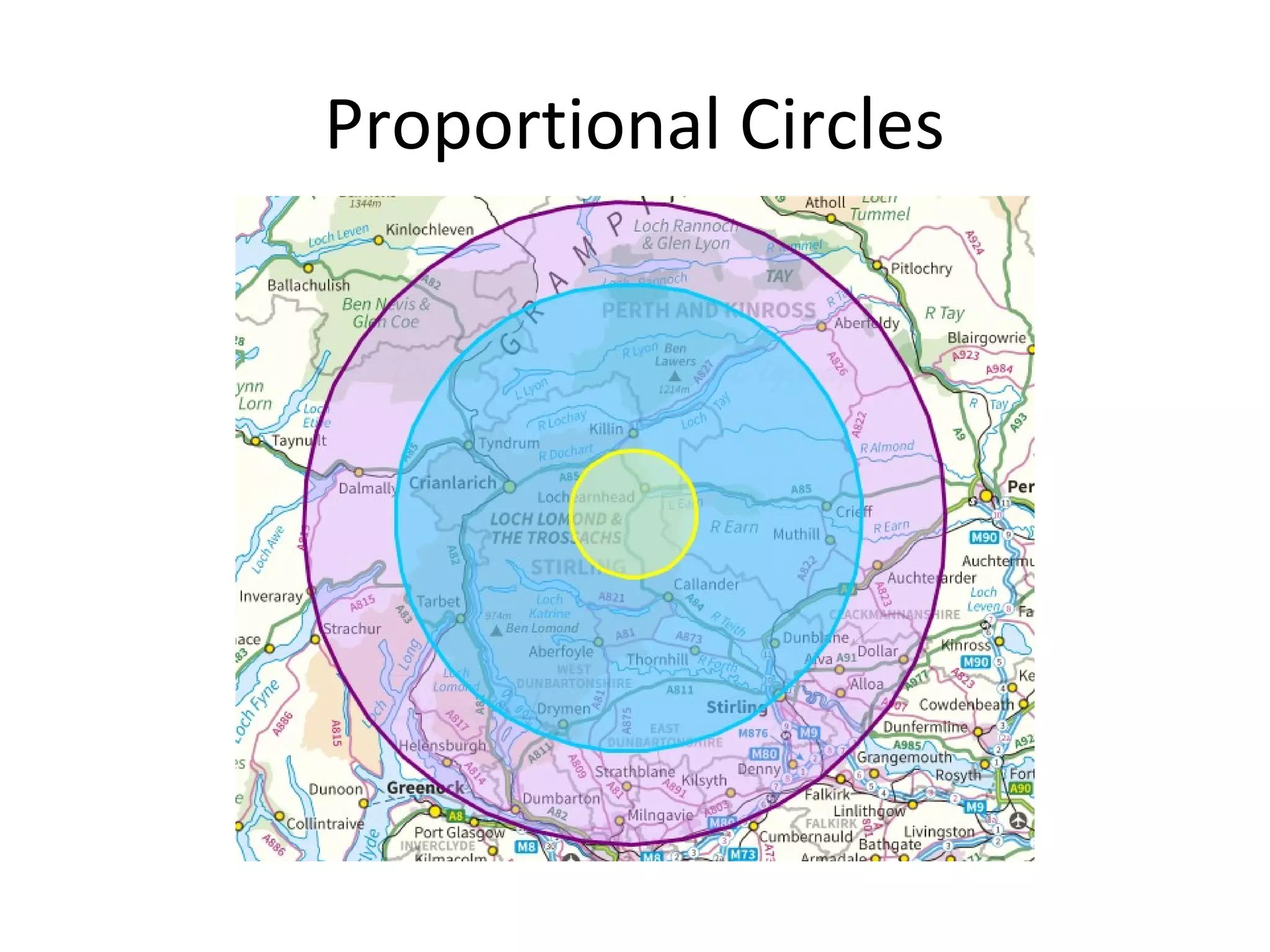
Proportional Circles
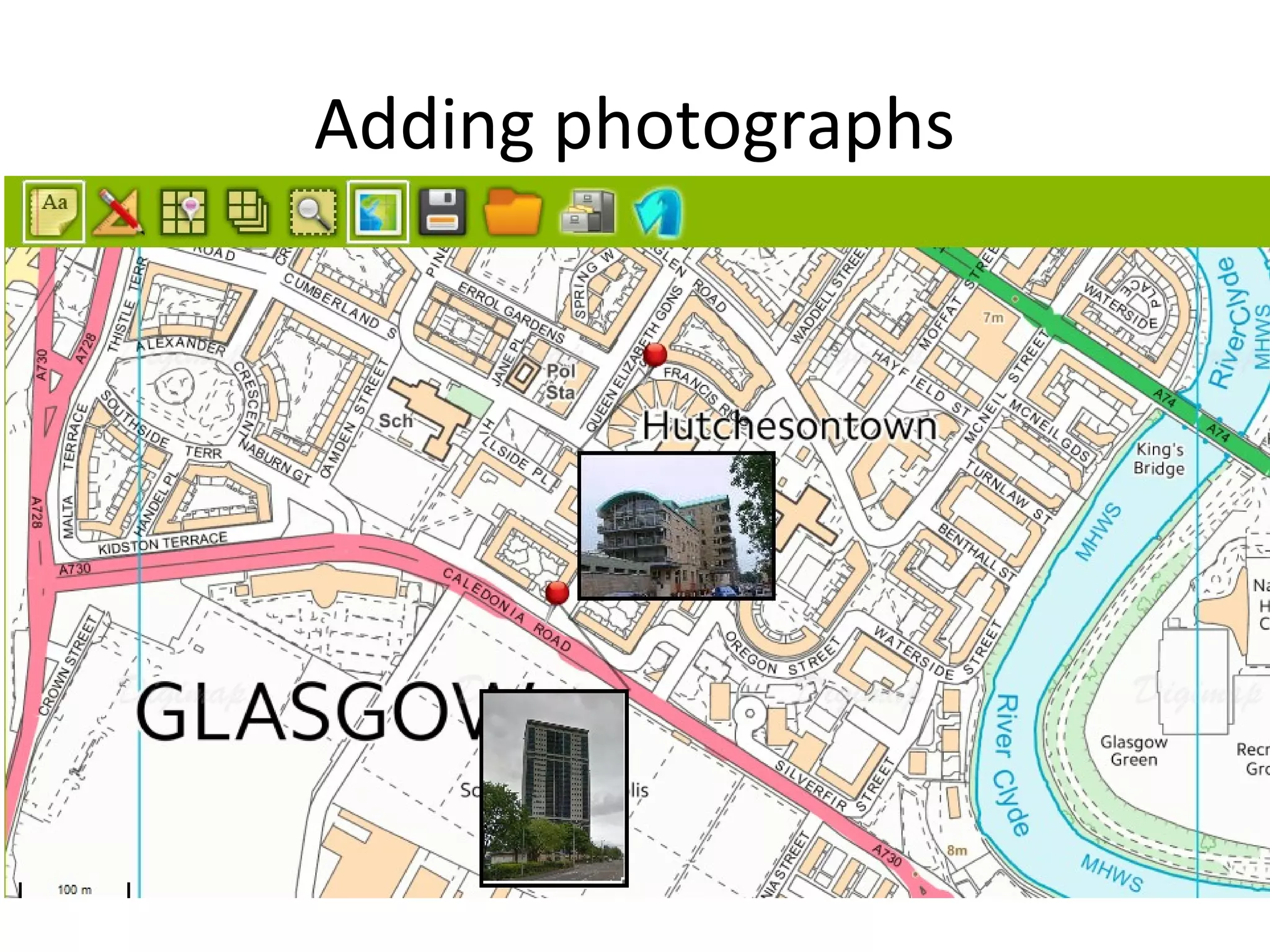
Adding photographs
Using Digimaps in (and out of) the 
classroom 
Bellahouston Academy
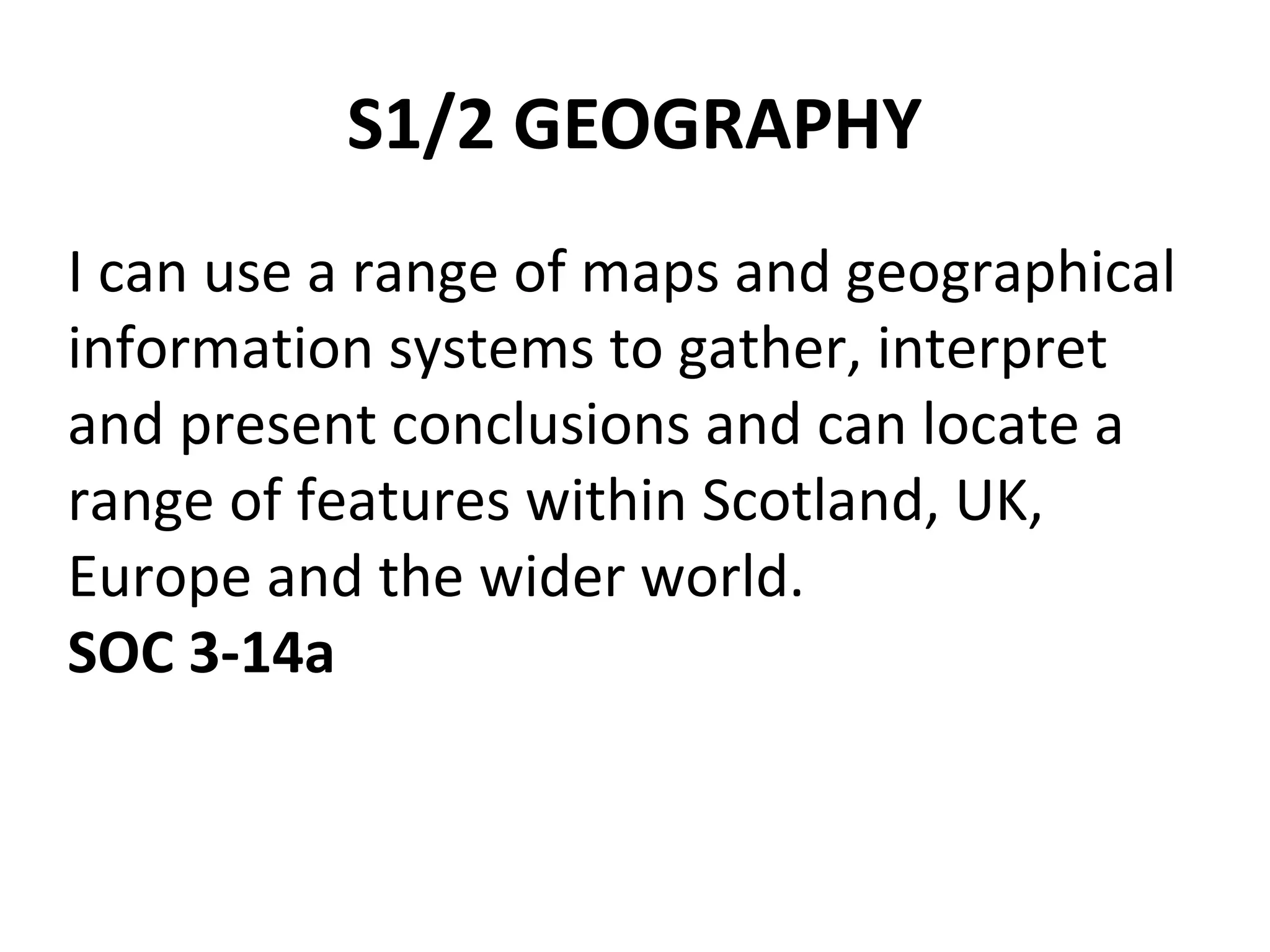
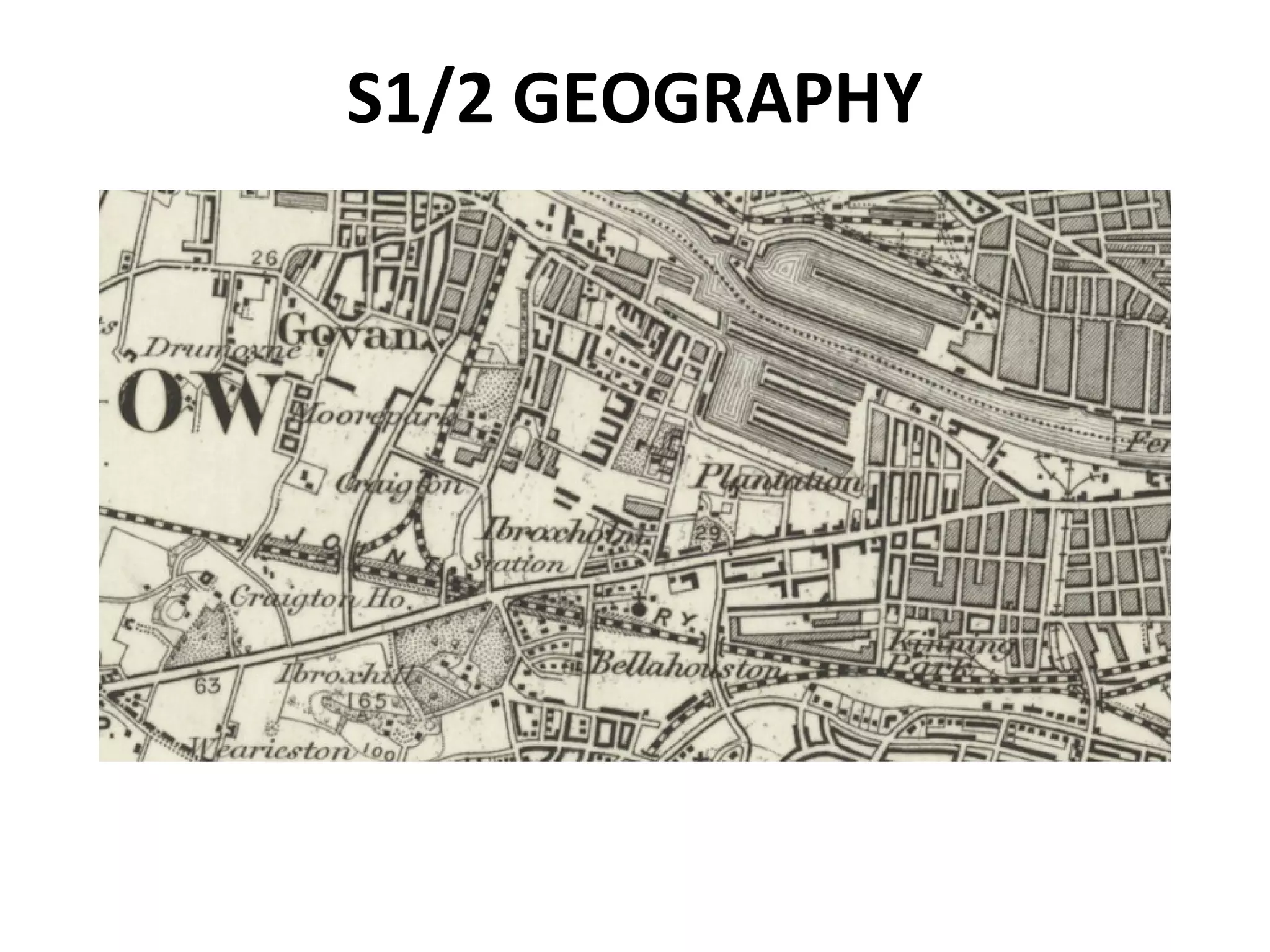
S1/2 GEOGRAPHY 
I can use a range of maps and geographical 
information systems to gather, interpret 
and present conclusions and can locate a 
range of features within Scotland, UK, 
Europe and the wider world. 
SOC 3-14a
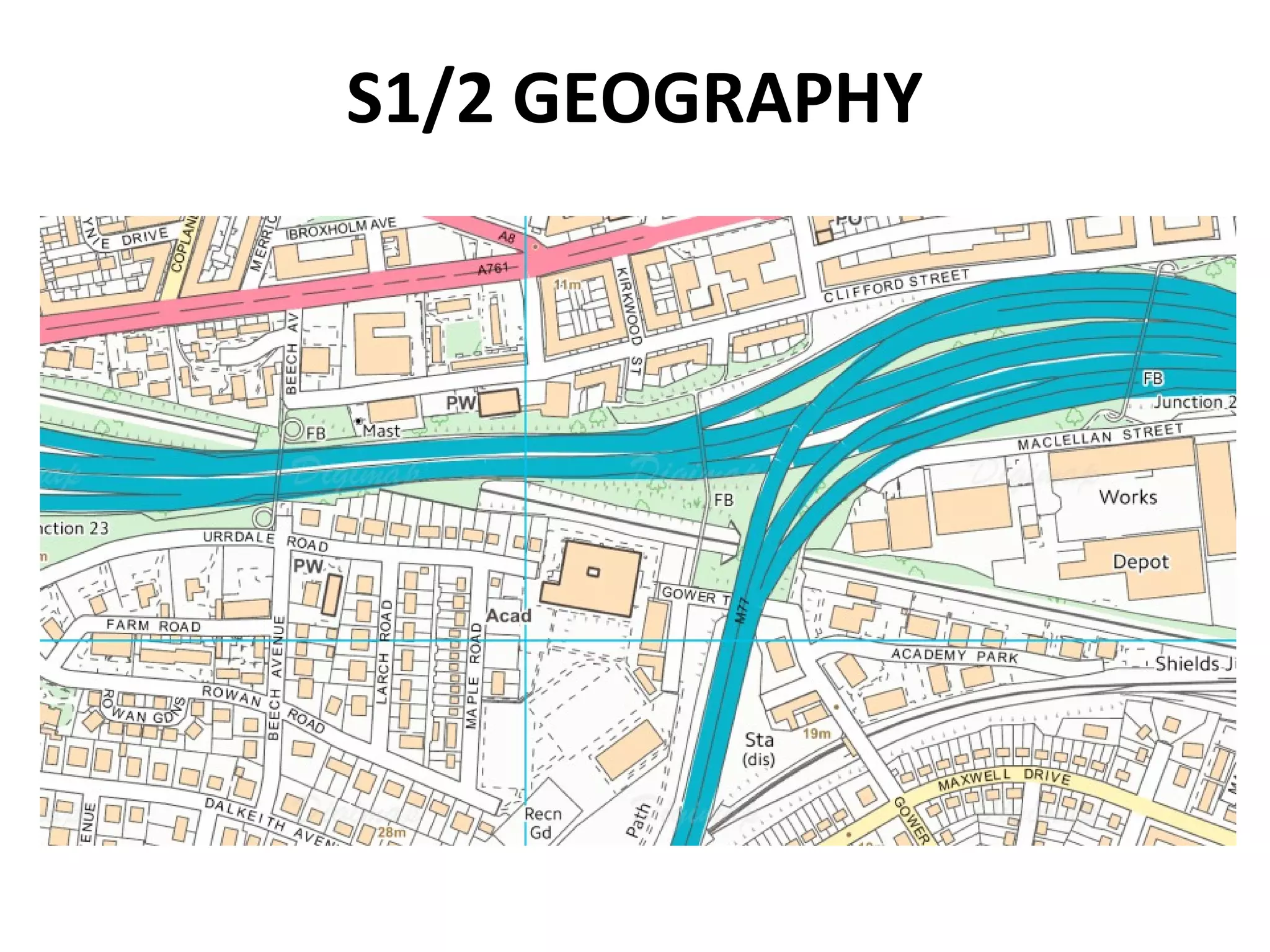
S1/2 GEOGRAPHY
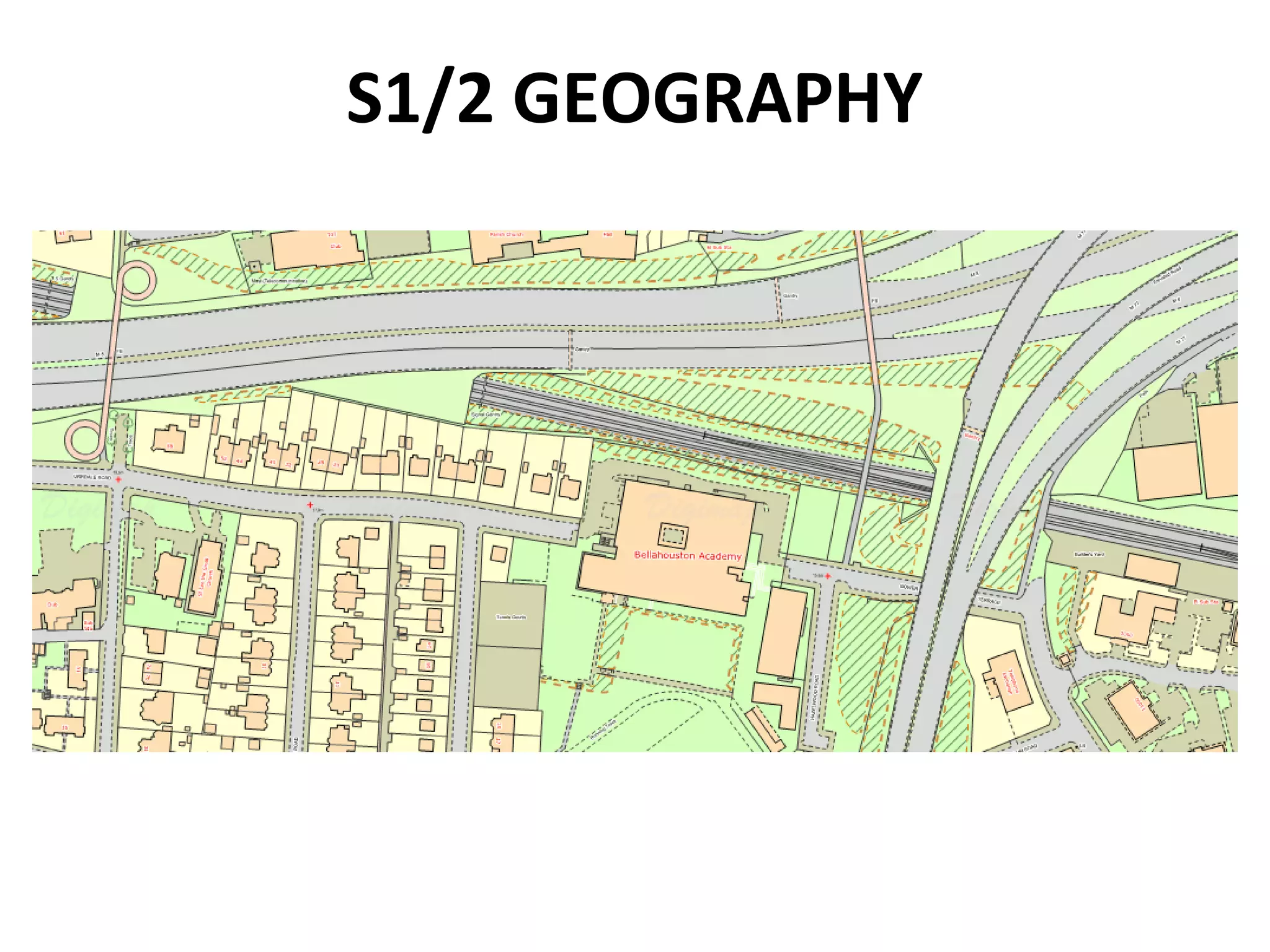
S1/2 GEOGRAPHY
S1/2 GEOGRAPHY
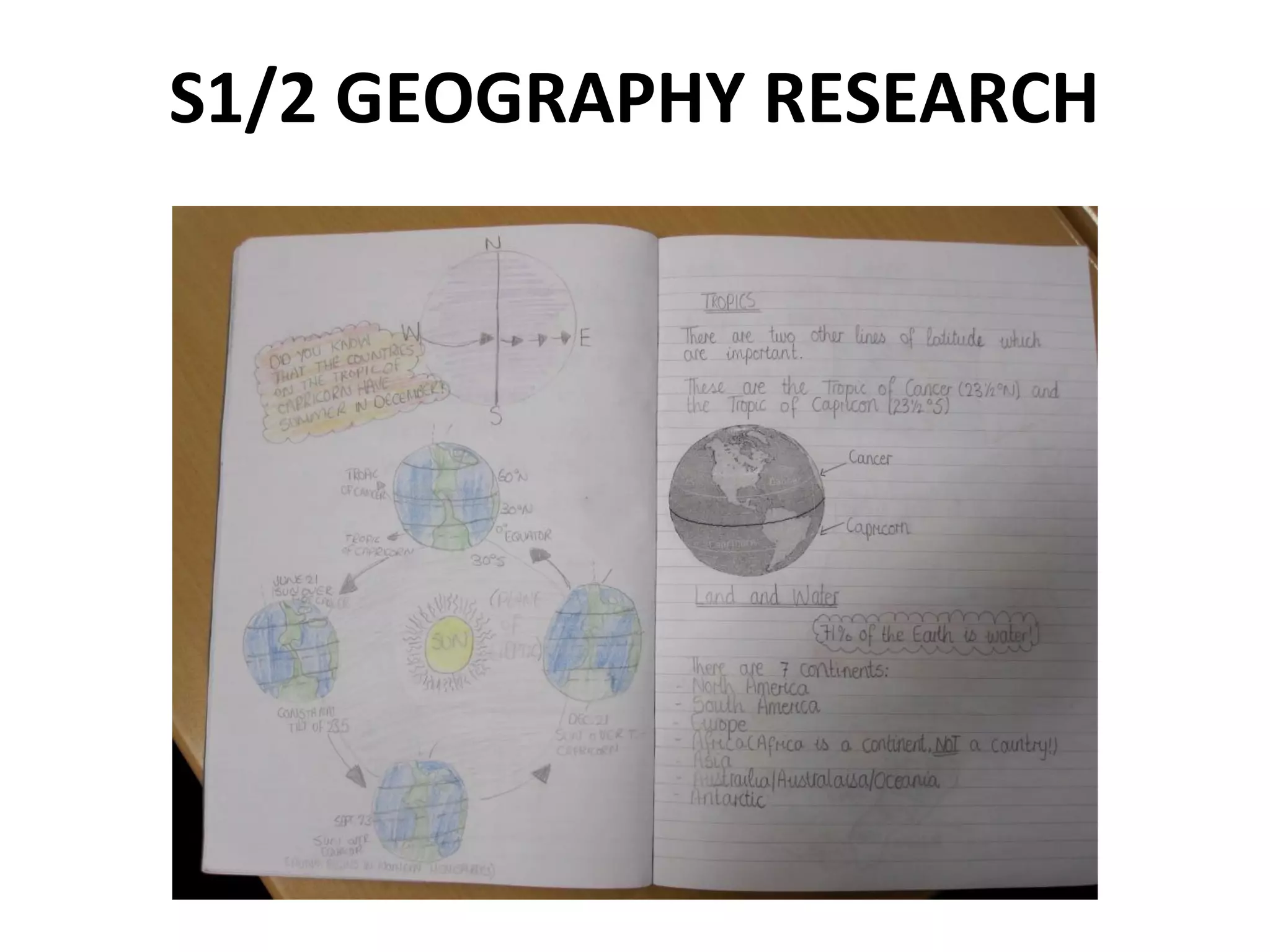
S1/2 GEOGRAPHY RESEARCH
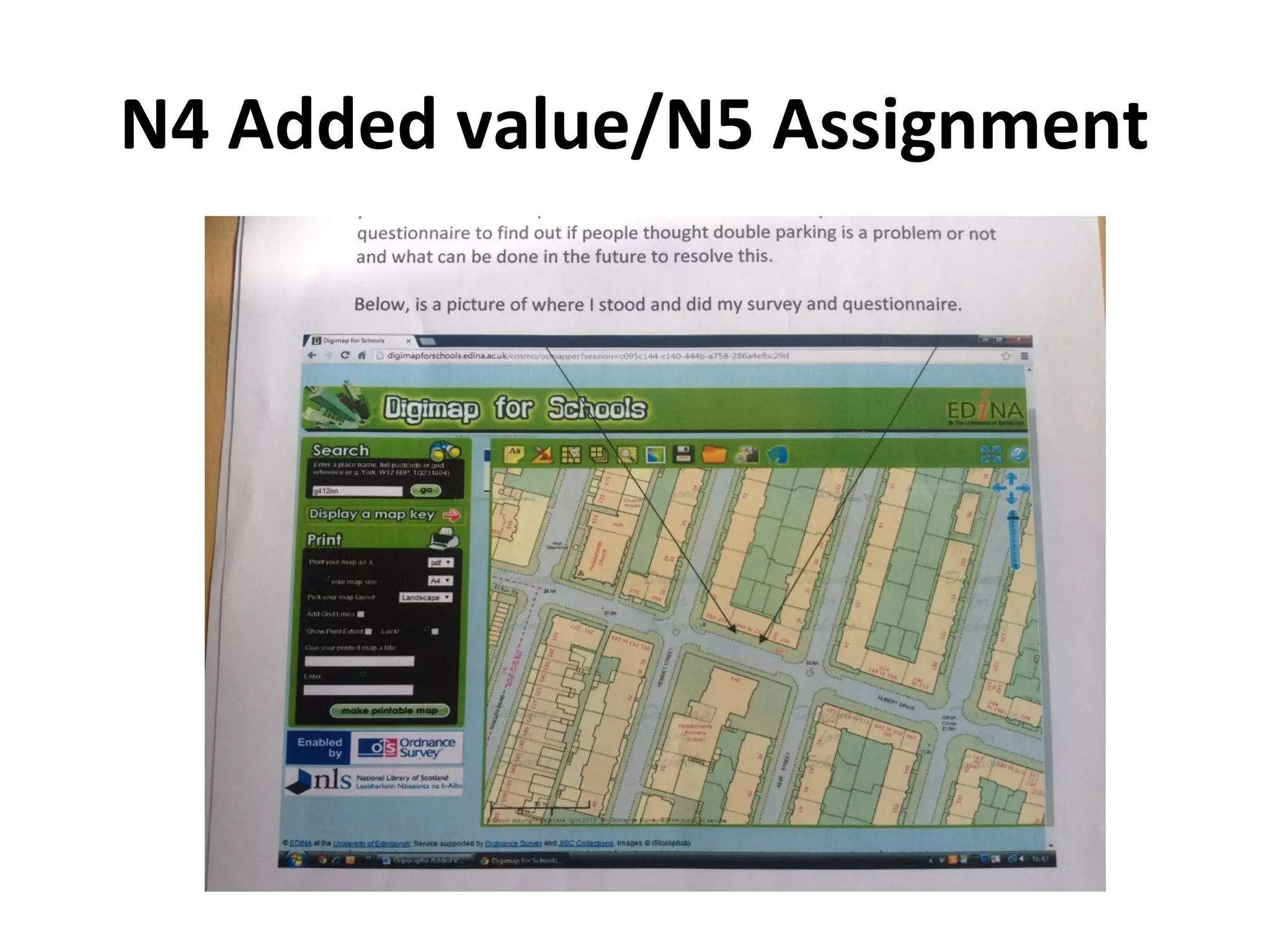
N4 Added value/N5 Assignment
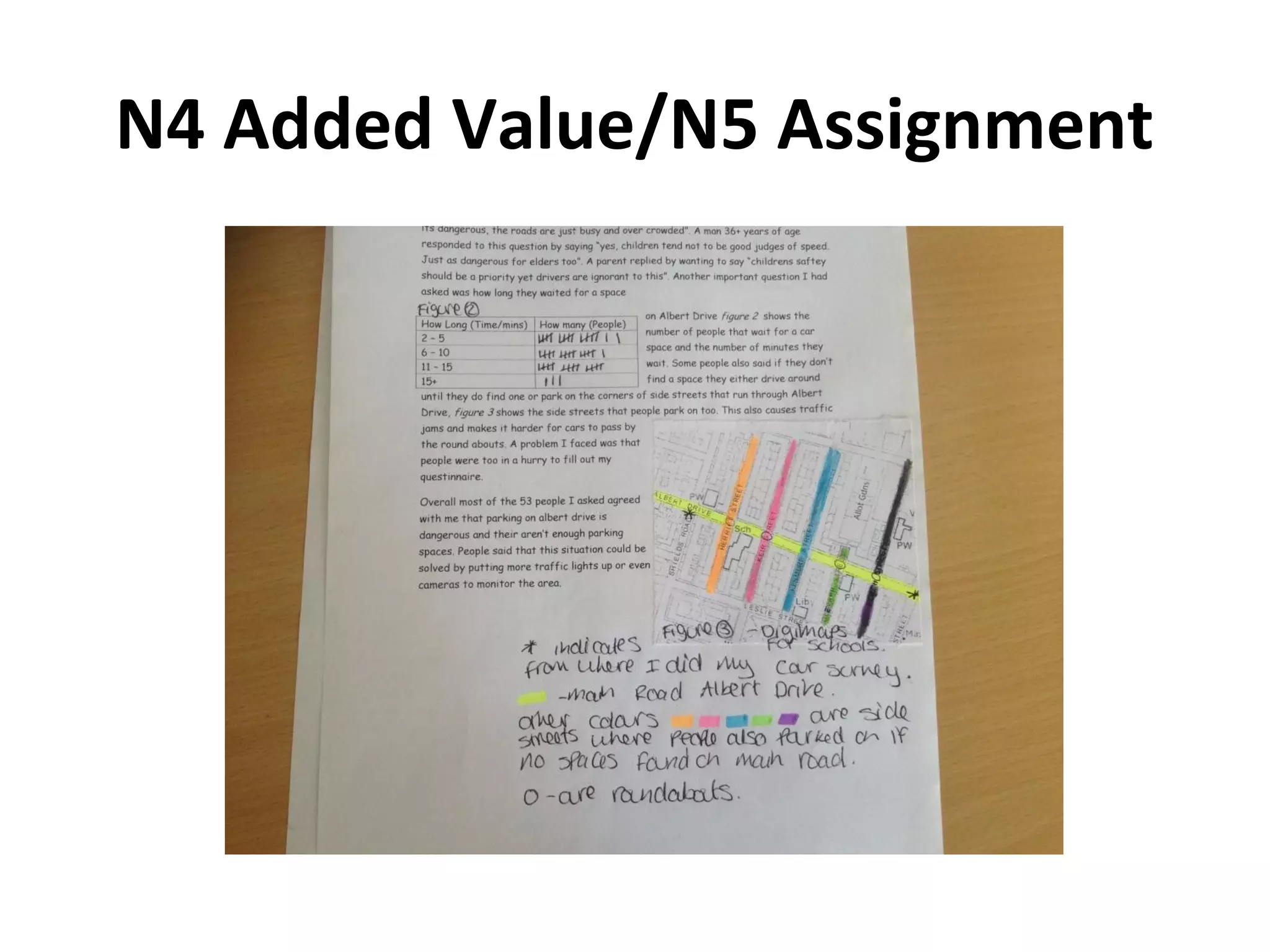
N4 Added Value/N5 Assignment
WHOLE SCHOOL
Thanks 
Questions? 
Lisa Allan 
Murdo MacDonald 
Anne Robertson, EDINA, University of Edinburgh 
Stand E25 today & tomorrow 
a.m.robertson@ed.ac.uk

Knowing their Place: Improving the Spatial Literacy of Tomorrow’s Workforce

  • 1.
    Knowing their Place:Improving the Spatial Literacy of Tomorrow’s Workforce Scottish Learning Festival 24th – 25th September 2014 Anne Robertson, EDINA, University of Edinburgh Lisa Allan, Barrhead High School Murdo MacDonald, Bellahouston Academy
  • 2.
    Presentation overview •What is spatial information? • What do we mean by spatial literacy? • Which industries use it and for what purposes? • Spatial literacy & Curriculum for Excellence • Getting started with Digimap for Schools • Examples from Barrhead High School & Bellahouston Academy
  • 3.
    Spatial information…….. •Spatial or ‘geographic’ information links location to people and events • It is information that can visually illustrate what’s happening, where, how and why, and shows the impact on people and infrastructure at that location • Provides insight into what happened in the past, what is happening now and what is likely to happen in the future
  • 4.
    Spatial literacy…….. Theability to use the properties of space to communicate, reason, and solve problems Can this 4-bedroom property be marketed at a higher price because it falls within a particular school catchment? Which town of population greater than 10,000 have we not yet opened a branch in? Should we merge two smaller branches and relocate where we know our customers spend more? What could be the effects on local tourism if a new wind farm is located in a village? How can a particular bus service attract the most customers but still journey from A to B on main straight roads thus reducing fuel costs? Which health centres require most help from government when targeting healthy lifestyle campaigns? If a river running through an urban area experiences a 100 year flood, what are the furthest properties to be affected by flood waters?
  • 5.
  • 6.
    Ensuring a wellprepared workforce • Young people should be trained in the use of geographic information and geographical information systems (GIS) to avail themselves of employment opportunities • GIS leads to critical thinking and inquiry-based teaching • This should be happening at school not waiting until tertiary education and it’s in CfE …… • SOC 3-14a I can use a range of maps and geographical information systems to gather, interpret and present conclusions • SOC 4-14a I can use specialized maps and geographical information systems to identify patterns of human activity and physical processes
  • 7.
    The first step– online mapping
  • 8.
  • 9.
  • 10.
  • 11.
  • 12.
  • 13.
  • 15.
    Digimap for Schools Examples from Lisa Allan, Barrhead High School Murdo MacDonald, Bellahouston Academy
  • 16.
    Using Digimaps in(and out of) the classroom Barrhead High School
  • 17.
    Looking at landuse change
  • 18.
    Planning/Decision Making •Relief • Landscapes • Land use • Measuring
  • 19.
  • 20.
    Urban Land UseMapping Figure 6: Land Use Map - Dunlop Red
  • 21.
  • 22.
  • 23.
  • 24.
  • 25.
    Using Digimaps in(and out of) the classroom Bellahouston Academy
  • 26.
    S1/2 GEOGRAPHY Ican use a range of maps and geographical information systems to gather, interpret and present conclusions and can locate a range of features within Scotland, UK, Europe and the wider world. SOC 3-14a
  • 27.
  • 28.
  • 29.
  • 30.
  • 31.
  • 32.
  • 33.
  • 34.
    Thanks Questions? LisaAllan Murdo MacDonald Anne Robertson, EDINA, University of Edinburgh Stand E25 today & tomorrow a.m.robertson@ed.ac.uk

Editor's Notes

  • #2 Thank you and welcome to one of the early sessions on the first day of SLF. My name is xxx from EDINA at the Uni of Edinburgh and I’m joined by Lisa Allan of Barrhead High School and Murdo MacDonald of Bellahouston Academy. The title of our presentation today is Knowing their Place …………… and it’s featuring Digimap for School, an EDINA service.
  • #3 What we’d like to cover this morning is A few definitions first
  • #4 And it is being able to play out different scenarios in the future that is particularly powerful for planning/decision making.
  • #5 I put together a few questions to illustrate the types of business decisions requiring consideration of space and location
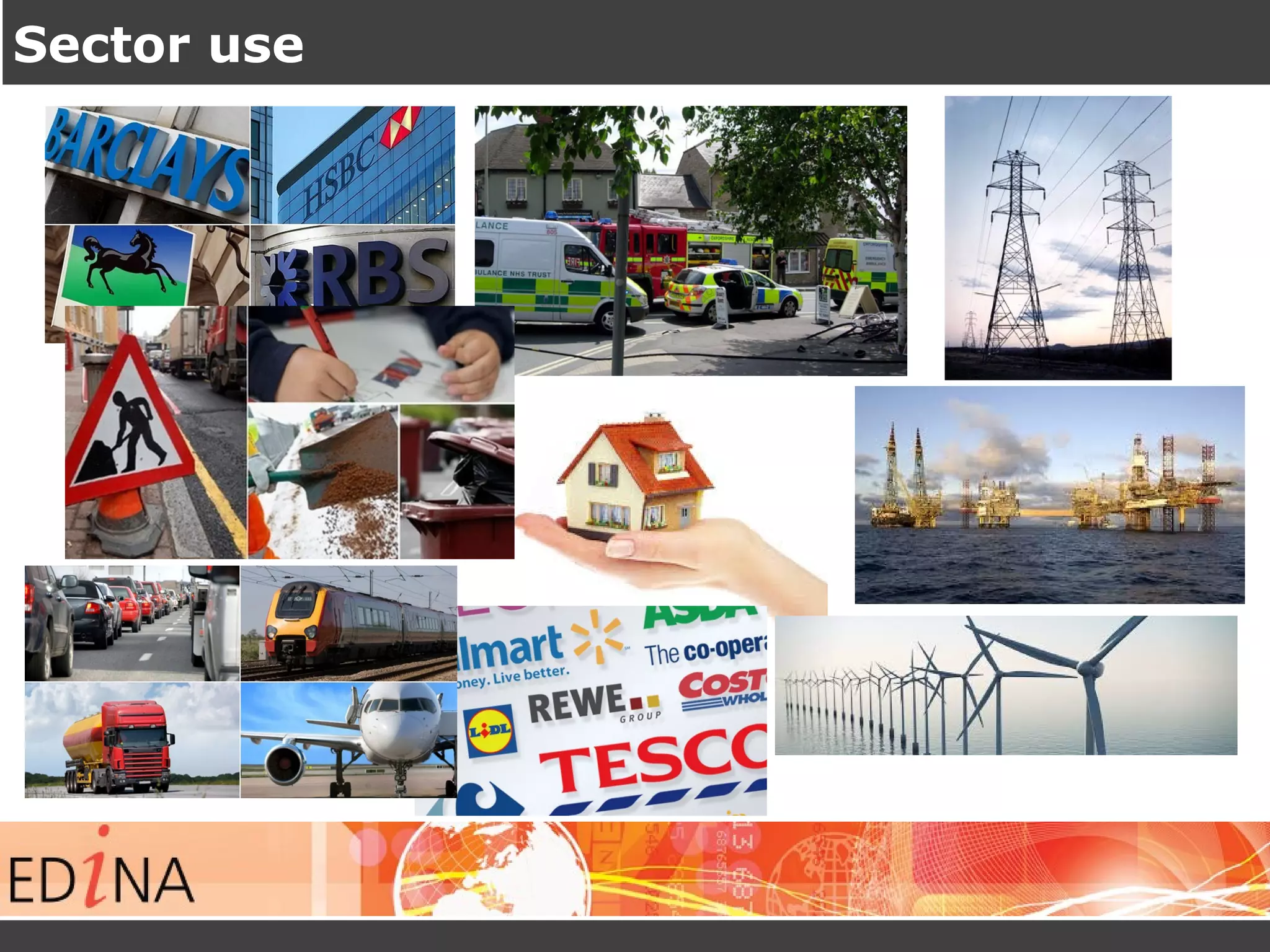
  • #6 Geographic information is used by almost every sector one can think of. Geographic information is often the data that underpins many business decisions relating to identifying customers, effective logistics, planning, environmental and cost considerations. Business – insurance, retail, real estate, banking, marketing Defence – military and intelligence Education – libraries, museums, schools, HFE Government – land administration, services, planning, elections Health – public health, hospital and gp services Natural Resources – agriculture, environmental management, forestry, mining, petroleum, water resources Emergency services – police, fire brigade, ambulance Transportation – aviation, road and rail network, ports and maritime, public transport, logistics Utilities – electric, gas, telecomms Environmental/planning/impact assessments
  • #7 Social studies 3rd level and 4th level
  • #8 I’m inspired, need help, what next. I’m familiar with GIS but I don’t know how to get going never mind invest in GIS system – too hard, too expensive don’t know how to go about procuring….. Digimap for Schools might be right for you.
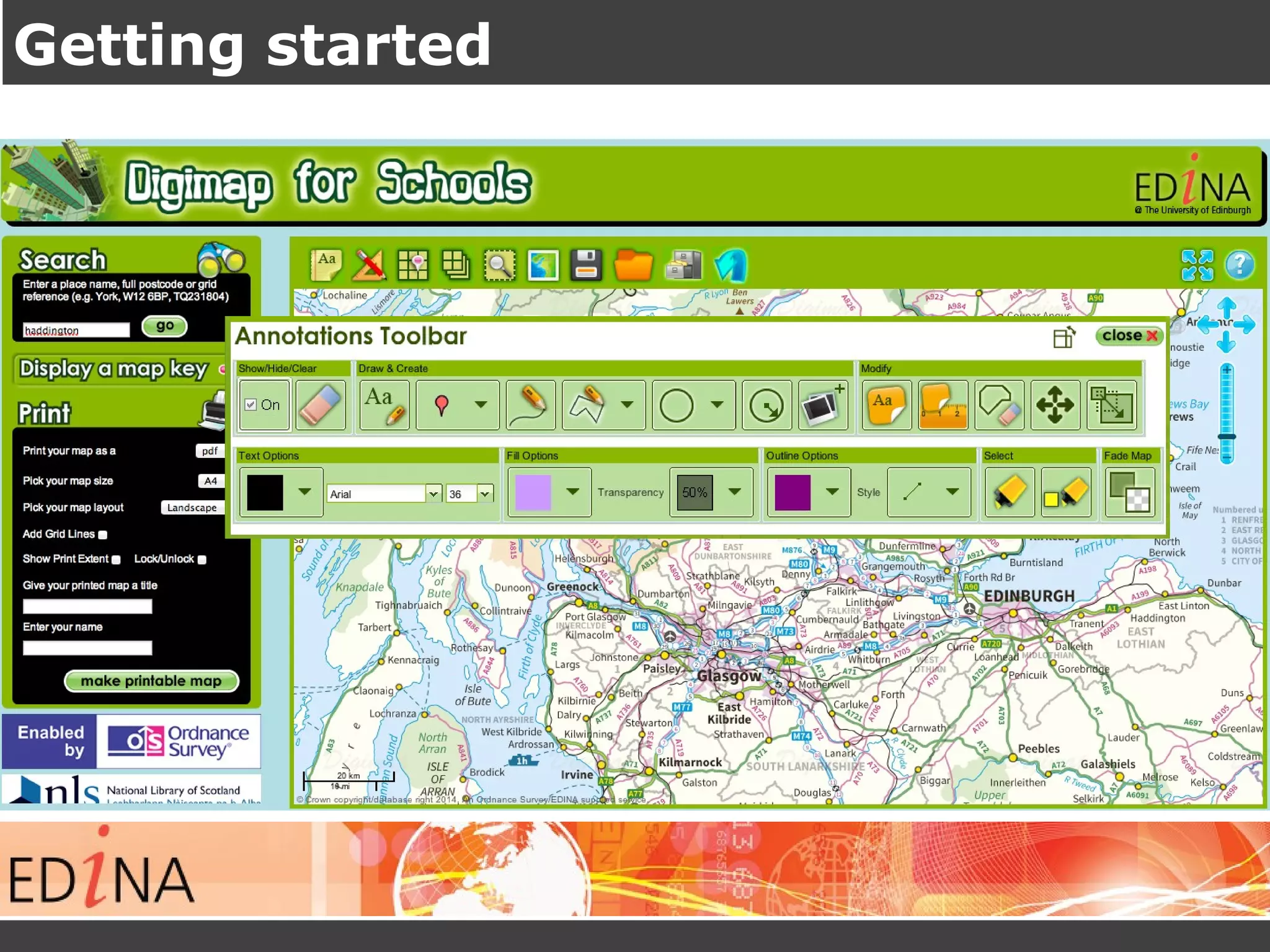
  • #9 What is it and what can it do? Well, DfS offers a simple online mapping interface to introduce teachers and students to the concept of geographic information in an ICT setting. It contains Ordnance Survey mapping data for all of GB at a variety of different scales. Pupils can seamlessly pan around, zoom in and out anywhere in GB. It introduces the basic concepts of seeing different features at different scales. It has a simple slider bar to show how layering data allows interpretation of changing environments. Then with annotation tool bar ----- It’s simple buffer tools allows students to observe spheres of influence – what features fall within 5 miles of my point of interest or within a line of interest – a road, railway, river, coastline. The annotation tools – adding text, photographs, markers and graphs enables pupils to annotate their maps and present their information using place as the context.
  • #10 DfS offers a simple online mapping interface to introduce teachers and students to the concept of geographic information in an ICT setting. It introduces the basic concepts of seeing different features at different scales. It has a simple slider bar to show how layering data allows interpretation of changing environments – in this scenario, what did my place of interest look like at the end of the 19th century. It’s simple buffer tools allows students to observe spheres of influence – what features fall within 5 miles of my point of interest or within a line of interest – a road, railway, river, coastline. The annotation tools – adding text, photographs, markers enables pupils to annotate their maps and present their information using place as the context.
  • #11 Flooding in Haddington line buffer 50m of the bridge of the River Tweed
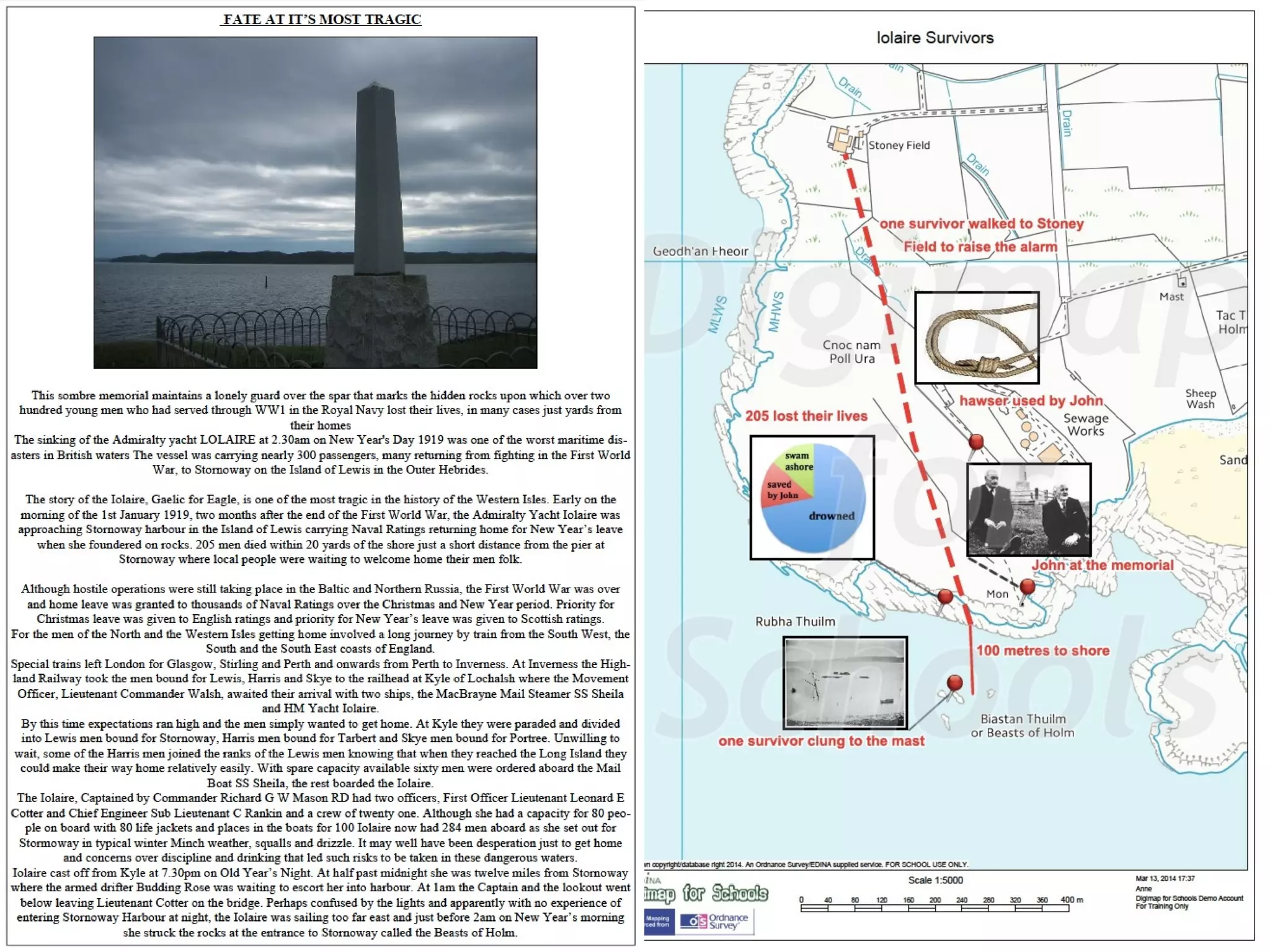
  • #15 Critical thinking and inquiry based teaching…..Here we see a map that’s been created to tell the story of the sinking of the HMS Iolaire one of the greatest maritime tragedies in UK waters. The written event of the story is powerful and moving. Pupils can then interpret the story and create their pictoral interpretation – what percent of soldiers lost their lives, how come the captain manouvered the boat incorrectly that evening, how did the survivor who walked to Stoney Field to raise the alarm feel, which way did he walk – around the coastline or over land? What would it have been like for John McLeod to have pulled 45 men to shore using a hawser rope. How far is 100 meters compared to when I swim at the local swimming pool. Did one survivor really cling to the mast of the ship and was he only discovered at 11am the next morning? It can form the basis of much critical thinking and inquiry based teaching.
  • #16 I’d now like to hand over to Lisa and Murdo to describe their students uses of Digimap for Schools and describe the skill their pupils have developed.