sleep pattern
S BANKIM
NURSING TUTOR
MMCON
INTRODUCTION
 Physical and mental health depends on
adequate rest and sleep.
 Rest and sleep is essential for :-
 Concentration
 Decision making
 Daily activities
 Mental peace
DEFINITION
 SLEEP: - Sleep is a naturally occurring altered
state of consciousness characterized by
decrease in awareness and responsiveness to
stimuli.
OR
 Sleep is a cyclic physiological process that
alternates with longer period of wakefulness.
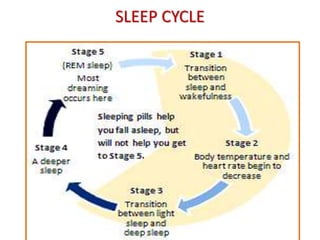
SLEEP CYCLE
 Consists of five stages-
 Four stages are classified as non-rapid eye
movement (NERM) sleep
 Other stage is called REM (rapid eye
movement) sleep.
SLEEP CYCLE
Non-rapid eye movement sleep
(NREM)
 STAGE 1:-
 Called the gateway of sleep
 Transitional stage between drowsiness and
sleep
 Body begin to loss its muscle tone
 Muscles become relax
 Pulse rate decreases
 Last only a few minutes and if awakened the
person may say he or she was not asleep.
STAGE 2
 Stage of light sleep from which the person is
easily awakened
 Rolling eye movements continue and snoring
may occur
 Body temperature starts to decrease
 Heart rate begins to slow down.
 Blood pressure, metabolism, secretions and
cardiac activity decrease.
 Lasts for 15-30 min.
STAGE 3
 Initial stage of deep sleep
 Last for 15-30 min.
 Transitional period between light sleep and
very deep sleep.
 More difficult to awaken as compared to stage
1 and 2
 Needs a louder noise or an active attempt to
wake the person.
STAGE 4
 Deepest stage of sleeps very difficult to
arouse. The brain waves are quite large
 Body functions continue to decline to the
deepest possible state of physical rest
 Responsible for restoring and resting body.
 Lasts for approximately 15-30 min.
 Hard to awaken
Rapid eye movements (REM)
 Closely resembles wakefulness
 noted by careful observation of eye
movements detectable through closed lids
 Blood pressure and pulse rate show wide
variations and may fluctuate rapidly
 Respirations are irregular and oxygen
consumption increases.
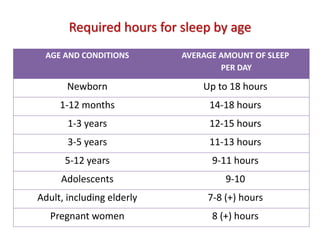
Required hours for sleep by age
AGE AND CONDITIONS AVERAGE AMOUNT OF SLEEP
PER DAY
Newborn Up to 18 hours
1-12 months 14-18 hours
1-3 years 12-15 hours
3-5 years 11-13 hours
5-12 years 9-11 hours
Adolescents 9-10
Adult, including elderly 7-8 (+) hours
Pregnant women 8 (+) hours
FUNCTIONS OF SLEEP
Beneficial in
preserving
cardiac
functions
Restore
biological
processes
Human
growth
hormone
Energy
conservation
Psychologic
al
restoration
Memory
consolidatio
n
FACTORS AFFECTING SLEEP
Psychologic
stress
Motivation Diet Alcohol intake
Caffeine
containing
beverages
Smoking
Environmental
factors
Lifestyle
Illness Medications
Exercise and
fatigue
SLEEP DISORDERS
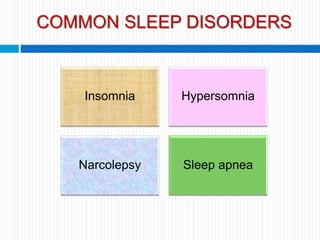
COMMON SLEEP DISORDERS
Insomnia Hypersomnia
Narcolepsy Sleep apnea
Insomnia
 Common sleep disorder
 Characterized by difficulty in initiating sleep
 Frequent awakening from sleep.
 Classified as idiopathic or psychological.
Hypersomnia
 Characterized by excessive sleep, particularly
during the day.
 May result from medical conditions
 Used as coping mechanism when someone
has no desire or energy to face a new day.
Narcolepsy
 Characterized by an uncontrollable desire to
sleep.
 Fall asleep standing up, while driving a car or
while swimming.
 This disabling condition should not to be
confused with hyper somnolence, which is
excessive sleeping for long periods.
Sleep apnea
 Periods of no breathing between snoring
intervals.
 may not breathe for periods of 10-20 seconds
to as long as 2 minutes.
 Obstructive sleep apnea results when the
airway is occluded due to collapse of the hypo
pharynx.
 During long periods of apnea, there is a drop in
the oxygen level of the blood, the pulse usually
become irregular and the blood pressure often
MANAGEMENT
 Restful environment
 Bedtime rituals
 Appropriate bedtime snacks and beverages
 Promoting relaxation
 Promoting comfort
 Scheduling nursing care to avoid unnecessary
disturbance
 Medications to produce sleep
 Teaching about rest and sleep
CONCLUSION
Sleep is an important life process in every
living organism’s life. Sleep disorders can
result in imbalance in the normal
homeostatic mechanisms. So it is very
important to identify and solve the sleep
disorders at the earliest.
Sleep final ppt.pptx

Sleep final ppt.pptx

  • 2.
  • 3.
    INTRODUCTION  Physical andmental health depends on adequate rest and sleep.  Rest and sleep is essential for :-  Concentration  Decision making  Daily activities  Mental peace
  • 4.
    DEFINITION  SLEEP: -Sleep is a naturally occurring altered state of consciousness characterized by decrease in awareness and responsiveness to stimuli. OR  Sleep is a cyclic physiological process that alternates with longer period of wakefulness.
  • 5.
    SLEEP CYCLE  Consistsof five stages-  Four stages are classified as non-rapid eye movement (NERM) sleep  Other stage is called REM (rapid eye movement) sleep.
  • 6.
  • 7.
    Non-rapid eye movementsleep (NREM)  STAGE 1:-  Called the gateway of sleep  Transitional stage between drowsiness and sleep  Body begin to loss its muscle tone  Muscles become relax  Pulse rate decreases  Last only a few minutes and if awakened the person may say he or she was not asleep.
  • 8.
    STAGE 2  Stageof light sleep from which the person is easily awakened  Rolling eye movements continue and snoring may occur  Body temperature starts to decrease  Heart rate begins to slow down.  Blood pressure, metabolism, secretions and cardiac activity decrease.  Lasts for 15-30 min.
  • 9.
    STAGE 3  Initialstage of deep sleep  Last for 15-30 min.  Transitional period between light sleep and very deep sleep.  More difficult to awaken as compared to stage 1 and 2  Needs a louder noise or an active attempt to wake the person.
  • 10.
    STAGE 4  Deepeststage of sleeps very difficult to arouse. The brain waves are quite large  Body functions continue to decline to the deepest possible state of physical rest  Responsible for restoring and resting body.  Lasts for approximately 15-30 min.  Hard to awaken
  • 11.
    Rapid eye movements(REM)  Closely resembles wakefulness  noted by careful observation of eye movements detectable through closed lids  Blood pressure and pulse rate show wide variations and may fluctuate rapidly  Respirations are irregular and oxygen consumption increases.
  • 12.
    Required hours forsleep by age AGE AND CONDITIONS AVERAGE AMOUNT OF SLEEP PER DAY Newborn Up to 18 hours 1-12 months 14-18 hours 1-3 years 12-15 hours 3-5 years 11-13 hours 5-12 years 9-11 hours Adolescents 9-10 Adult, including elderly 7-8 (+) hours Pregnant women 8 (+) hours
  • 13.
    FUNCTIONS OF SLEEP Beneficialin preserving cardiac functions Restore biological processes Human growth hormone Energy conservation Psychologic al restoration Memory consolidatio n
  • 14.
    FACTORS AFFECTING SLEEP Psychologic stress MotivationDiet Alcohol intake Caffeine containing beverages Smoking Environmental factors Lifestyle Illness Medications Exercise and fatigue
  • 15.
  • 16.
    COMMON SLEEP DISORDERS InsomniaHypersomnia Narcolepsy Sleep apnea
  • 17.
    Insomnia  Common sleepdisorder  Characterized by difficulty in initiating sleep  Frequent awakening from sleep.  Classified as idiopathic or psychological.
  • 18.
    Hypersomnia  Characterized byexcessive sleep, particularly during the day.  May result from medical conditions  Used as coping mechanism when someone has no desire or energy to face a new day.
  • 19.
    Narcolepsy  Characterized byan uncontrollable desire to sleep.  Fall asleep standing up, while driving a car or while swimming.  This disabling condition should not to be confused with hyper somnolence, which is excessive sleeping for long periods.
  • 20.
    Sleep apnea  Periodsof no breathing between snoring intervals.  may not breathe for periods of 10-20 seconds to as long as 2 minutes.  Obstructive sleep apnea results when the airway is occluded due to collapse of the hypo pharynx.  During long periods of apnea, there is a drop in the oxygen level of the blood, the pulse usually become irregular and the blood pressure often
  • 21.
    MANAGEMENT  Restful environment Bedtime rituals  Appropriate bedtime snacks and beverages  Promoting relaxation  Promoting comfort  Scheduling nursing care to avoid unnecessary disturbance  Medications to produce sleep  Teaching about rest and sleep
  • 22.
    CONCLUSION Sleep is animportant life process in every living organism’s life. Sleep disorders can result in imbalance in the normal homeostatic mechanisms. So it is very important to identify and solve the sleep disorders at the earliest.