objectives
 Definition of terms
 State the different stages of sleep
 Cause of sleep deprivation
 The different effects of sleep deprivation
 Ways how to avoid sleep deprivation.
Sleep
 Is the state wherein the body and mind is at rest.
 Is one of the most natural behaviors of a person.
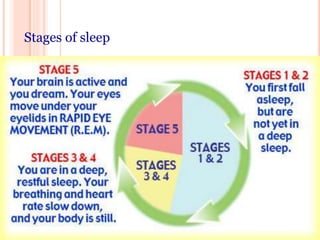
Stages of sleep
Required sleep
 Newborn baby sleeps for 16 hours a day
 Young adult and adult people (19 to 30 years old)
sleep for 8 hours or less.
 Elder ones only sleep for 6 hours.
Sleep deprivation
 A chronic lack of
sufficient restorative
sleep.
 Occurs when individual consistently does not get
the minimum number of hours he or she needs at
night in order to function at full power.
Causes of sleep dep.
 Side effects of medication
 Living environment/situation
 Social engagement
 Studying (all nighters)
 Caffeine
 Stress
Mind and body effects
 Does more than
leave an individual
tired during the
day:
 it can also have a
dangerous effects on
physical and mental
health.
Physical effects
 Not getting enough sleep increases the risk of developing
a number of illness includes:
 Heart diseases
 Diabetes
 Decreases the function of Immune system making the
person more susceptible to illnesses.
 Another effects of sleep dep is weight gain and contribute
to obesity
 Studies found out that when a person is sleep deprived he
or she has higher than normal levels of the hormone
Gherlin.
 Gherlin
 Leptin
 Combining an increased appetite with a decrease feeling
of fullness leads to overeating, which in return leads to
obesity.
Mental effects
 Thinks, act, and
perform normal
activities.
 Will have problems
with memory and
concentration.
 Experience emotion instability
 Depression
 Anxiety
 Irritability
 Problem solving is also difficult; individual may suffer:
 Slow thinking reaction
 Difficulty in concentration and understanding instruction
 Forgetfulness, frequent error and mistake
 Poor attentiveness or judgment in changing and complex
situation
 Avoid drinking:
 Coffee
 Soda
 Energy drink
 Students often turn to alcohol to relax after stressful
classes or to prepare for bedtime.
Do’s and dont’s
 Drugs that college students may take that can affect sleep
includes:
 Diet pills
 Illegal drugs, including cocaine
 Nicotine
 Oral contraceptives containing hormones
 steroids
Tips in avoiding sleep deprivation
 Exercise
 Can help in establish healthy sleeping pattern
and will make it easier to fall asleep at the
end of the day.
 Expert recommended exercising at least 3
hours before sleep
 Take naps
 Expert recommended setting aside at least a few days after per
week for a full night’s sleep.
 It is recommended that people sleep and wake up the same time
everyday in order to maintain a healthy sleep schedule.
 Even if you can’t get 8 hours every night, getting 8 hours one
or two days each week will help prevent long term health
issues
 Irritability
 Tiredness
 Stress cracker
 Bad concentration
 Strange appetite change
 Drowsiness
 Daytime sleepiness
 Lack of tolerance
Symptoms

Sleep deprivation

  • 2.
    objectives  Definition ofterms  State the different stages of sleep  Cause of sleep deprivation  The different effects of sleep deprivation  Ways how to avoid sleep deprivation.
  • 3.
    Sleep  Is thestate wherein the body and mind is at rest.  Is one of the most natural behaviors of a person.
  • 4.
  • 5.
    Required sleep  Newbornbaby sleeps for 16 hours a day  Young adult and adult people (19 to 30 years old) sleep for 8 hours or less.  Elder ones only sleep for 6 hours.
  • 6.
    Sleep deprivation  Achronic lack of sufficient restorative sleep.  Occurs when individual consistently does not get the minimum number of hours he or she needs at night in order to function at full power.
  • 7.
    Causes of sleepdep.  Side effects of medication  Living environment/situation  Social engagement  Studying (all nighters)  Caffeine  Stress
  • 8.
    Mind and bodyeffects  Does more than leave an individual tired during the day:  it can also have a dangerous effects on physical and mental health.
  • 9.
    Physical effects  Notgetting enough sleep increases the risk of developing a number of illness includes:  Heart diseases  Diabetes  Decreases the function of Immune system making the person more susceptible to illnesses.
  • 10.
     Another effectsof sleep dep is weight gain and contribute to obesity  Studies found out that when a person is sleep deprived he or she has higher than normal levels of the hormone Gherlin.  Gherlin  Leptin  Combining an increased appetite with a decrease feeling of fullness leads to overeating, which in return leads to obesity.
  • 11.
    Mental effects  Thinks,act, and perform normal activities.  Will have problems with memory and concentration.
  • 12.
     Experience emotioninstability  Depression  Anxiety  Irritability  Problem solving is also difficult; individual may suffer:  Slow thinking reaction  Difficulty in concentration and understanding instruction  Forgetfulness, frequent error and mistake  Poor attentiveness or judgment in changing and complex situation
  • 13.
     Avoid drinking: Coffee  Soda  Energy drink  Students often turn to alcohol to relax after stressful classes or to prepare for bedtime. Do’s and dont’s
  • 14.
     Drugs thatcollege students may take that can affect sleep includes:  Diet pills  Illegal drugs, including cocaine  Nicotine  Oral contraceptives containing hormones  steroids
  • 15.
    Tips in avoidingsleep deprivation  Exercise  Can help in establish healthy sleeping pattern and will make it easier to fall asleep at the end of the day.  Expert recommended exercising at least 3 hours before sleep
  • 16.
     Take naps Expert recommended setting aside at least a few days after per week for a full night’s sleep.  It is recommended that people sleep and wake up the same time everyday in order to maintain a healthy sleep schedule.  Even if you can’t get 8 hours every night, getting 8 hours one or two days each week will help prevent long term health issues
  • 17.
     Irritability  Tiredness Stress cracker  Bad concentration  Strange appetite change  Drowsiness  Daytime sleepiness  Lack of tolerance Symptoms