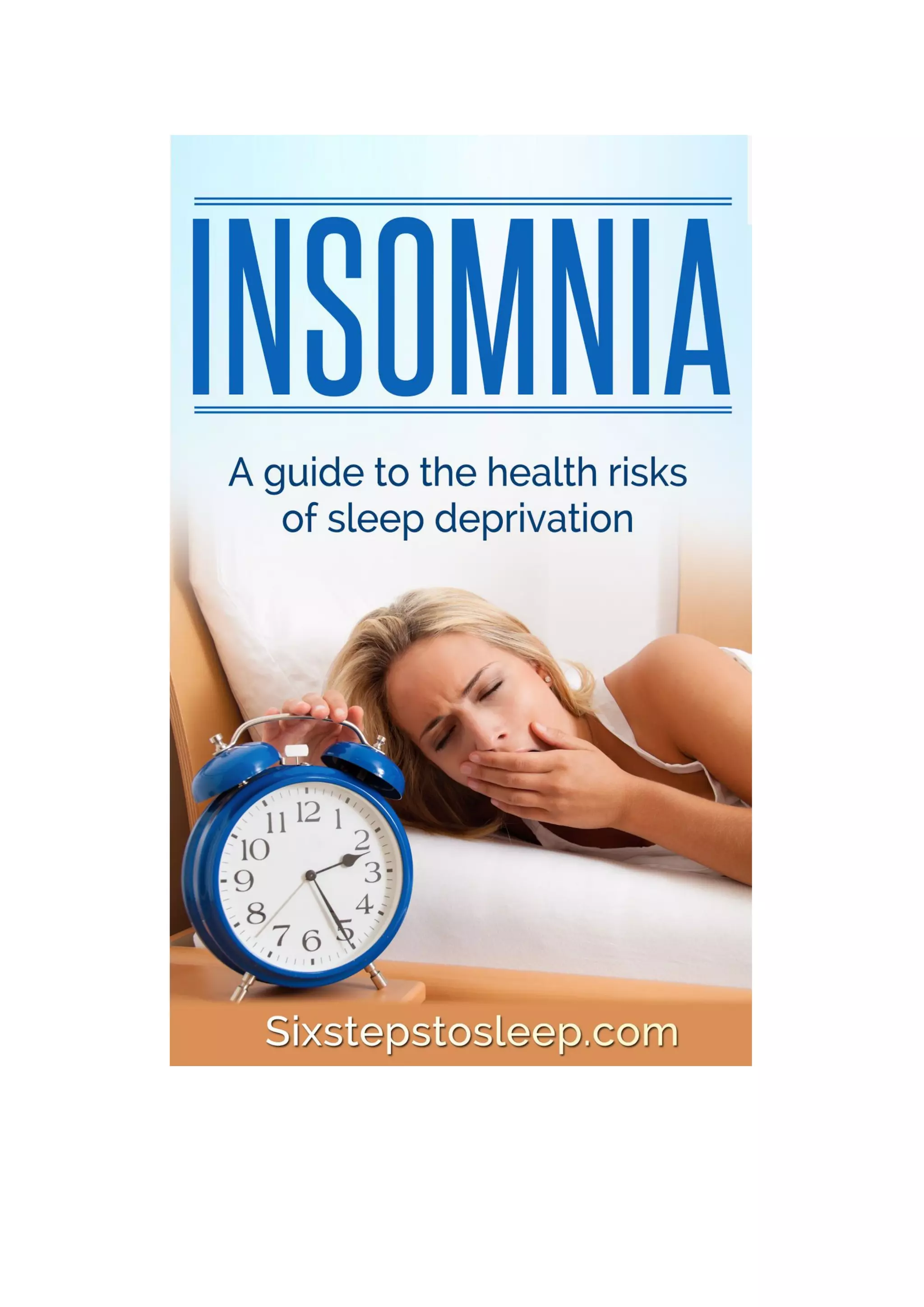
Insomnia
A​ ​guide​ ​to​ ​the​ ​health​ ​risks​ ​of​ ​sleep​ ​deprivation
SixStepsToSleep.com
Second​ ​Edition​ ​©​ ​2015
2
Table​ ​of​ ​Contents
1.​ ​Introduction
2.​ ​What​ ​Happens​ ​When​ ​You​ ​Don’t​ ​Get​ ​Enough​ ​Sleep
-​ ​Effects​ ​on​ ​the​ ​Body
-​ ​Effects​ ​on​ ​Mood
3.​ ​Sleep​ ​Deprivation:​ ​Hormones​ ​and​ ​Metabolism
-​ ​Sleep​ ​and​ ​Obesity
-​ ​Sleep​ ​and​ ​Diabetes
-​ ​Sleep​ ​and​ ​the​ ​Immune​ ​System
-​ ​Sleep​ ​and​ ​Cardiovascular​ ​Disease
4.​ ​Understanding​ ​Insomnia
5.​ ​How​ ​To​ ​Cure​ ​Insomnia
-​ ​Prescription​ ​Sleep​ ​Medications​ ​(Sleeping​ ​Pills)
-​ ​Natural​ ​Cures​ ​for​ ​Insomnia
6.​ ​Summary
3
 
 
SixStepsToSleep.com​ ​–​ ​Insomnia​ ​Guide 
 
1.​ ​Introduction
The​ ​consequences​ ​of​ ​sleep​ ​deprivation​ ​are​ ​far​ ​reaching.​ ​Lack​ ​of​ ​sleep​ ​affects​ ​physical
and​ ​mental​ ​health,​ ​and​ ​causes​ ​an​ ​increased​ ​risk​ ​of​ ​human​ ​error​ ​that​ ​can​ ​be​ ​fatal.
Two​ ​well-publicized​ ​examples​ ​of​ ​this​ ​were​ ​the​ ​1989​ ​Exxon​ ​Valdez​ ​oil​ ​spill,​ ​and
the1986​ ​NASA​ ​Challenger​ ​shuttle​ ​explosion.​ ​Both​ ​accidents​ ​were​ ​caused​ ​by​ ​fatigue
linked​ ​to​ ​lack​ ​of​ ​sleep.
In​ ​addition​ ​to​ ​such​ ​major​ ​accidents,​ ​drowsiness​ ​in​ ​sleep-deprived​ ​drivers​ ​is​ ​said​ ​to​ ​be
the​ ​likely​ ​cause​ ​of​ ​more​ ​than​ ​100,000​ ​crashes,​ ​71,000​ ​injuries​ ​and​ ​more​ ​than​ ​1,500
deaths​ ​each​ ​year.
Many​ ​airplane​ ​crashes​ ​have​ ​been​ ​linked​ ​to​ ​pilot​ ​tiredness​ ​due​ ​to​ ​excessive​ ​flying
hours​ ​across​ ​different​ ​time​ ​zones.​ ​This​ ​evidence​ ​points​ ​to​ ​one​ ​simple​ ​conclusion;​ ​lack
of​ ​sleep​ ​presents​ ​a​ ​very​ ​real​ ​danger​ ​to​ ​human​ ​life.
In​ ​terms​ ​of​ ​physiological​ ​health,​ ​studies​ ​show​ ​a​ ​growing​ ​correlation​ ​between​ ​sleep
duration​ ​and​ ​a​ ​variety​ ​of​ ​serious​ ​health​ ​problems,​ ​including​ ​obesity,​ ​diabetes,
hypertension​ ​and​ ​depression.​ ​On​ ​a​ ​more​ ​personal​ ​level,​ ​lack​ ​of​ ​sleep​ ​affects​ ​our
quality​ ​of​ ​life,​ ​leaving​ ​us​ ​feeling​ ​miserable,​ ​lethargic​ ​and​ ​stressed.
With​ ​these​ ​things​ ​in​ ​mind,​ ​it​ ​is​ ​important​ ​that​ ​we​ ​begin​ ​to​ ​understand​ ​the​ ​biology​ ​of
sleep;​ ​why​ ​we​ ​need​ ​sleep​ ​and​ ​how​ ​we​ ​can​ ​better​ ​the​ ​quality​ ​of​ ​our​ ​sleep​ ​to​ ​improve
overall​ ​health​ ​and​ ​safety.
4
Scientists​ ​now​ ​know​ ​that​ ​sleep​ ​isn’t​ ​simply​ ​about​ ​rest​ ​and​ ​recovery.​ ​Sleep​ ​is​ ​essential
in​ ​helping​ ​maintain​ ​mood,​ ​memory​ ​and​ ​cognitive​ ​performance.​ ​Sleep​ ​also​ ​plays​ ​a
pivotal​ ​role​ ​in​ ​the​ ​normal​ ​function​ ​of​ ​the​ ​endocrine​ ​and​ ​immune​ ​systems.​ ​In​ ​short,​ ​the
less​ ​sleep​ ​a​ ​person​ ​has,​ ​the​ ​more​ ​likely​ ​their​ ​health​ ​is​ ​to​ ​decline.
However,​ ​even​ ​though​ ​poor​ ​quality​ ​sleep​ ​is​ ​endemic,​ ​with​ ​at​ ​least​ ​40​ ​million
Americans​ ​suffering​ ​sleep​ ​problems,​ ​60​ ​percent​ ​of​ ​the​ ​adult​ ​population​ ​has​ ​never
been​ ​asked​ ​about​ ​their​ ​sleeping​ ​habits​ ​by​ ​a​ ​physician.
With​ ​a​ ​growing​ ​pool​ ​of​ ​knowledge​ ​regarding​ ​the​ ​negative​ ​consequences​ ​of​ ​sleep
deprivation,​ ​improving​ ​sleep​ ​quality​ ​must​ ​become​ ​a​ ​health​ ​priority​ ​in​ ​our​ ​lives.
5
 
 
SixStepsToSleep.com​ ​–​ ​Insomnia​ ​Guide 
 
2.​ ​What​ ​Happens​ ​When​ ​You​ ​Don’t​ ​Get​ ​Enough​ ​Sleep
Through​ ​extensive​ ​animal​ ​research,​ ​scientists​ ​know​ ​that​ ​that​ ​sleep​ ​is​ ​essential​ ​for
survival.​ ​In​ ​short,​ ​a​ ​person​ ​cannot​ ​survive​ ​indefinitely​ ​without​ ​sleep.
When​ ​we​ ​sleep,​ ​protein​ ​production​ ​takes​ ​place​ ​that​ ​provides​ ​the​ ​necessary​ ​building
blocks​ ​for​ ​cell​ ​growth​ ​and​ ​repair.​ ​The​ ​body​ ​recovers​ ​from​ ​stress​ ​damage​ ​and​ ​the
damage​ ​caused​ ​by​ ​ultraviolet​ ​rays,​ ​and​ ​immunity​ ​is​ ​boosted.​ ​Without​ ​sufficient​ ​rest​ ​the
body​ ​is​ ​weakened,​ ​exposing​ ​us​ ​to​ ​greater​ ​risk​ ​of​ ​poor​ ​health.
Effects​ ​on​ ​the​ ​Body
When​ ​humans​ ​don’t​ ​sleep​ ​properly,​ ​physiological​ ​and​ ​cognitive​ ​functions​ ​are
negatively​ ​impacted.​ ​​The​ ​affected​ ​functions​ ​include​ ​memory​ ​and​ ​attention,​ ​complex
thought,​ ​motor​ ​response​ ​and​ ​emotional​ ​control.
One​ ​particular​ ​clinical​ ​study​ ​showed​ ​that​ ​subjects​ ​who​ ​stayed​ ​awake​ ​for​ ​up​ ​to​ ​19
hours​ ​scored​ ​substantially​ ​worse​ ​on​ ​performance​ ​and​ ​alertness​ ​than​ ​those​ ​who​ ​were
legally​ ​intoxicated.​ ​Other​ ​studies​ ​have​ ​demonstrated​ ​similar​ ​results:
6
-​ ​After​ ​one​ ​night​ ​of​ ​total​ ​sleep​ ​deprivation,​ ​subjects​ ​scored​ ​significantly​ ​lower​ ​on​ ​tests
of​ ​judgment,​ ​simple​ ​reaction​ ​time,​ ​explicit​ ​recall​ ​and​ ​inverse​ ​word​ ​reading.
-​ ​Daytime​ ​alertness​ ​and​ ​memory​ ​are​ ​impaired​ ​by​ ​sleep​ ​deprivation,​ ​especially​ ​when
sustained​ ​over​ ​a​ ​few​ ​nights.
-​ ​Getting​ ​three,​ ​five​ ​or​ ​less​ ​than​ ​seven​ ​hours​ ​of​ ​sleep​ ​a​ ​night​ ​for​ ​seven​ ​consecutive
days​ ​can​ ​significantly​ ​impair​ ​alertness​ ​and​ ​motor​ ​performance.
(Source​:​​ ​National​ ​Sleep​ ​Foundation​ ​–​ ​Sleep-Wake​ ​Cycle,​ ​2006)
Effects​ ​on​ ​Mood
After​ ​a​ ​bad​ ​night’s​ ​sleep,​ ​it​ ​is​ ​normal​ ​to​ ​feel​ ​pretty​ ​miserable.​ ​Studies​ ​have
shown​ ​that​ ​lack​ ​of​ ​sleep​ ​considerably​ ​affects​ ​mood,​ ​causing​ ​anger,​ ​anxiety​ ​and
sadness.
A​ ​study​ ​at​ ​the​ ​University​ ​of​ ​Pennsylvania​ ​found​ ​that​ ​when​ ​subjects​ ​were​ ​allowed
to​ ​sleep​ ​just​ ​4.5​ ​hours​ ​a​ ​night​ ​for​ ​one​ ​week,​ ​scores​ ​for​ ​mood​ ​declined​ ​steadily
during​ ​the​ ​testing​ ​period.
When​ ​participants​ ​were​ ​allowed​ ​to​ ​get​ ​enough​ ​sleep,​ ​their​ ​mood​ ​scores
improved​ ​dramatically.​ ​During​ ​the​ ​test​ ​period​ ​subjects​ ​said​ ​they​ ​felt​ ​stressed,
angry,​ ​sad​ ​and​ ​mentally​ ​exhausted.
But​ ​sleep​ ​deprivation​ ​does​ ​far​ ​more​ ​than​ ​make​ ​us​ ​feel​ ​grumpy​ ​and​ ​a​ ​little​ ​slower
7
 
 
SixStepsToSleep.com​ ​–​ ​Insomnia​ ​Guide 
 
to​ ​react.​ ​In​ ​the​ ​past​ ​few​ ​years,​ ​investigators​ ​have​ ​found​ ​that​ ​sleep​ ​deprivation
may​ ​have​ ​harmful​ ​consequences​ ​for​ ​our​ ​immune​ ​system,​ ​contributing​ ​to​ ​serious
illnesses​ ​such​ ​as​ ​obesity,​ ​diabetes​ ​and​ ​hypertension.
3.​ ​Sleep​ ​Deprivation:​ ​Hormones​ ​and​ ​Metabolism
When​ ​we​ ​sleep,​ ​the​ ​body​ ​secretes​ ​essential​ ​hormones​ ​that​ ​regulate​ ​energy​ ​and
control​ ​metabolic​ ​and​ ​endocrine​ ​functions.
Sleep​ ​deprivation​ ​dampens​ ​the​ ​production​ ​of​ ​thyroid-stimulating​ ​hormones​ ​and
increases​ ​blood​ ​levels​ ​of​ ​cortisol,​ ​a​ ​hormone​ ​that​ ​contributes​ ​to​ ​wakefulness.
Growth​ ​hormone​ ​is​ ​also​ ​secreted​ ​during​ ​sleep,​ ​which​ ​contributes​ ​to​ ​childhood
growth​ ​and​ ​helps​ ​regulate​ ​muscle​ ​mass​ ​in​ ​adults.
This​ ​means​ ​that​ ​without​ ​sleep​ ​the​ ​body​ ​cannot​ ​produce​ ​the​ ​basic​ ​hormonal
functions​ ​required​ ​for​ ​the​ ​body​ ​to​ ​operate​ ​properly.
Sleep​ ​and​ ​Obesity
8
The​ ​fact​ ​is​ ​we​ ​are​ ​sleeping​ ​less​ ​than​ ​ever​ ​before,​ ​and​ ​it​ ​is​ ​affecting​ ​our​ ​health.
The​ ​average​ ​night’s​ ​sleep​ ​decreased​ ​from​ ​about​ ​nine​ ​hours​ ​in​ ​1910​ ​to​ ​about​ ​7.5
hours​ ​in​ ​1975,​ ​and​ ​in​ ​the​ ​modern​ ​era​ ​millions​ ​of​ ​shift​ ​workers​ ​average​ ​less​ ​than
five​ ​hours​ ​of​ ​sleep​ ​per​ ​working​ ​day.
Research​ ​has​ ​shown​ ​that​ ​this​ ​global​ ​sleep​ ​deprivation​ ​trend​ ​is​ ​having​ ​an​ ​impact
on​ ​the​ ​obesity​ ​and​ ​diabetes​ ​epidemics.
According​ ​to​ ​the​ ​Centers​ ​for​ ​Disease​ ​Control​ ​and​ ​Prevention,​ ​about​ ​65​ ​percent
of​ ​Americans​ ​are​ ​overweight​ ​or​ ​obese.​ ​Of​ ​course,​ ​caloric​ ​intake​ ​is​ ​a​ ​major​ ​factor
in​ ​rising​ ​obesity,​ ​but​ ​science​ ​has​ ​proven​ ​a​ ​link​ ​between​ ​lack​ ​of​ ​sleep​ ​and​ ​weight
gain.
One​ ​interesting​ ​study​ ​shows​ ​that​ ​lack​ ​of​ ​sleep​ ​imbalances​ ​leptin​ ​and​ ​ghrelin,
two​ ​hormones​ ​responsible​ ​for​ ​the​ ​control​ ​of​ ​feeling​ ​hunger​ ​and​ ​fullness.​ ​Ghrelin
is​ ​produced​ ​in​ ​the​ ​gastrointestinal​ ​tract​ ​and​ ​stimulates​ ​appetite;​ ​leptin​ ​on​ ​the
other​ ​hand​ ​signals​ ​to​ ​the​ ​brain​ ​when​ ​a​ ​person​ ​is​ ​full.
Lack​ ​of​ ​sleep​ ​causes​ ​these​ ​two​ ​hormones​ ​to​ ​become​ ​imbalanced​ ​and​ ​operate
ineffectively.​ ​When​ ​a​ ​person​ ​is​ ​sleep-deprived,​ ​leptin​ ​levels​ ​drop​ ​and​ ​ghrelin
levels​ ​rise;​ ​subsequently​ ​appetite​ ​increases,​ ​leaving​ ​a​ ​person​ ​feeling​ ​hungry
after​ ​they​ ​have​ ​eaten​ ​and​ ​causing​ ​them​ ​to​ ​crave​ ​further​ ​calories.
Sleep​ ​and​ ​Diabetes
9
 
 
SixStepsToSleep.com​ ​–​ ​Insomnia​ ​Guide 
 
Obesity​ ​has​ ​been​ ​directly​ ​linked​ ​to​ ​diabetes,​ ​and​ ​sleep​ ​deprivation​ ​linked​ ​to
impairing​ ​sugar​ ​metabolism.
A​ ​study​ ​conducted​ ​at​ ​the​ ​University​ ​of​ ​Chicago​ ​in​ ​1999​ ​found​ ​that​ ​a​ ​sleep​ ​debt
accumulated​ ​over​ ​a​ ​matter​ ​of​ ​days​ ​is​ ​capable​ ​of​ ​impairing​ ​sugar​ ​metabolism
and​ ​disrupting​ ​hormone​ ​levels.
After​ ​restricting​ ​the​ ​sleep​ ​of​ ​11​ ​healthy​ ​young​ ​adults​ ​to​ ​just​ ​four​ ​hours​ ​per​ ​night
over​ ​several​ ​nights,​ ​the​ ​group’s​ ​ability​ ​to​ ​process​ ​blood​ ​glucose​ ​declined
considerably​ ​–​ ​in​ ​some​ ​cases​ ​to​ ​a​ ​pre-diabetic​ ​state,​ ​prompting​ ​the​ ​subjects’
bodies​ ​to​ ​produce​ ​more​ ​insulin.
Sleep​ ​and​ ​the​ ​Immune​ ​System
The​ ​age-old​ ​theory​ ​that​ ​sleep​ ​helps​ ​speed​ ​up​ ​recovery​ ​from​ ​illness​ ​may​ ​not​ ​be
just​ ​an​ ​old​ ​wives’​ ​tale​ ​after​ ​all.
Studies​ ​have​ ​shown​ ​that​ ​lack​ ​of​ ​sleep​ ​has​ ​a​ ​negative​ ​effect​ ​on​ ​the​ ​immune
system;​ ​with​ ​one​ ​study​ ​proving​ ​that​ ​flu​ ​vaccination​ ​patients​ ​subjected​ ​to​ ​sleep
deprivation​ ​took​ ​longer​ ​to​ ​attain​ ​immunity.
During​ ​the​ ​study,​ ​flu​ ​shots​ ​were​ ​administered​ ​to​ ​men​ ​who​ ​had​ ​been​ ​restricted​ ​to
just​ ​four​ ​hours​ ​of​ ​sleep​ ​for​ ​four​ ​nights​ ​in​ ​a​ ​row,​ ​and​ ​to​ ​those​ ​who​ ​had​ ​slept
normally.
Ten​ ​days​ ​after​ ​vaccination,​ ​those​ ​in​ ​the​ ​sleep-deprived​ ​group​ ​had​ ​a​ ​substantially
10
lower​ ​immune​ ​response​ ​compared​ ​with​ ​those​ ​who​ ​got​ ​adequate​ ​sleep,​ ​and
produced​ ​less​ ​than​ ​half​ ​as​ ​many​ ​flu-fighting​ ​antibodies.
(Source​:​​ ​National​ ​Sleep​ ​Foundation​ ​–​ ​Sleep-Wake​ ​Cycle,​ ​2006)
Sleep​ ​and​ ​Cardiovascular​ ​Disease
Long​ ​and​ ​short-term​ ​sleep​ ​deprivation​ ​is​ ​now​ ​known​ ​to​ ​contribute​ ​to
cardiovascular​ ​disease.​ ​Lack​ ​of​ ​sleep​ ​causes​ ​increased​ ​blood​ ​pressure​ ​and
increased​ ​risk​ ​of​ ​stroke,​ ​and​ ​is​ ​associated​ ​with​ ​a​ ​rise​ ​in​ ​blood​ ​pressure​ ​during
the​ ​night​ ​that​ ​lasts​ ​through​ ​the​ ​following​ ​day.​ ​Evidence​ ​also​ ​suggests​ ​increased
risk​ ​of​ ​coronary​ ​heart​ ​disease​ ​in​ ​women​ ​who​ ​don’t​ ​get​ ​enough​ ​sleep.
4.​ ​Understanding​ ​Insomnia
All​ ​scientific​ ​evidence​ ​shows​ ​that​ ​sleep​ ​deprivation​ ​presents​ ​considerable​ ​health
risks​ ​on​ ​a​ ​number​ ​of​ ​levels,​ ​yet​ ​statistics​ ​show​ ​that​ ​approximately​ ​30​ ​percent​ ​of
the​ ​American​ ​population​ ​suffers​ ​from​ ​a​ ​form​ ​of​ ​insomnia.
11
 
 
SixStepsToSleep.com​ ​–​ ​Insomnia​ ​Guide 
 
But​ ​what​ ​is​ ​insomnia​ ​and​ ​how​ ​can​ ​it​ ​be​ ​cured?
Insomnia​ ​is​ ​diagnosed​ ​when​ ​a​ ​person​ ​has​ ​difficulty​ ​initiating​ ​or​ ​maintaining
sleep,​ ​that​ ​is​ ​either​ ​not​ ​being​ ​able​ ​to​ ​fall​ ​asleep,​ ​waking​ ​too​ ​early​ ​and​ ​not​ ​being
able​ ​to​ ​get​ ​back​ ​to​ ​sleep,​ ​or​ ​waking​ ​persistently​ ​through​ ​the​ ​night​ ​and
subsequently​ ​feeling​ ​unrested​ ​and​ ​lethargic.
Insomnia​ ​symptoms​ ​include​ ​daytime​ ​fatigue,​ ​impaired​ ​mood​ ​and​ ​judgment,​ ​poor
performance​ ​and​ ​an​ ​increased​ ​likelihood​ ​of​ ​accidents​ ​at​ ​home,​ ​in​ ​the​ ​workplace
and​ ​while​ ​driving.
For​ ​some​ ​insomnia​ ​is​ ​temporary,​ ​perhaps​ ​caused​ ​by​ ​jet​ ​lag,​ ​work​ ​stress,​ ​a
major​ ​life​ ​change​ ​such​ ​as​ ​the​ ​loss​ ​of​ ​a​ ​relationship,​ ​environmental​ ​factors​ ​like
excessive​ ​noise​ ​or​ ​by​ ​consuming​ ​too​ ​much​ ​caffeine​ ​or​ ​sugar​ ​before​ ​bed.​ ​But
some​ ​people​ ​go​ ​on​ ​to​ ​develop​ ​chronic​ ​insomnia,​ ​which​ ​is​ ​generally​ ​diagnosed​ ​in
those​ ​who​ ​struggle​ ​to​ ​sleep​ ​for​ ​three​ ​nights​ ​in​ ​a​ ​given​ ​week,​ ​for​ ​a​ ​month​ ​or
longer.​ ​Chronic​ ​insomnia​ ​is​ ​often​ ​related​ ​to​ ​an​ ​underlying​ ​medical​ ​or​ ​psychiatric
condition​ ​such​ ​as​ ​depression​ ​or​ ​anxiety,​ ​but​ ​is​ ​commonly​ ​caused​ ​by​ ​a
persistent,​ ​unhealthy​ ​sleep-wake​ ​cycle.
5.​ ​How​ ​To​ ​Cure​ ​Insomnia
The​ ​approach​ ​to​ ​treatment​ ​for​ ​insomnia​ ​generally​ ​falls​ ​into​ ​two​ ​categories:
pharmacologic​ ​and​ ​behavioral.
12
Prescription​ ​Sleep​ ​Medications​ ​(Sleeping​ ​Pills)
An​ ​estimated​ ​10%​ ​of​ ​the​ ​American​ ​population​ ​takes​ ​some​ ​form​ ​of​ ​medication​ ​to
achieve​ ​a​ ​state​ ​of​ ​sleep.​ ​However,​ ​few​ ​people​ ​who​ ​take​ ​sleeping​ ​pills​ ​really
understand​ ​how​ ​the​ ​pills​ ​work,​ ​and​ ​even​ ​fewer​ ​understand​ ​that​ ​sleeping​ ​pills​ ​do
not​ ​cure​ ​insomnia.
Benzodiazepines​ ​(also​ ​known​ ​as​ ​benzodiazepine​ ​receptor​ ​agonists)​ ​were​ ​the
main​ ​pharmacologic​ ​treatment​ ​for​ ​insomnia​ ​up​ ​until​ ​the​ ​‘90s.​ ​These​ ​included
popular​ ​drugs​ ​such​ ​as​ ​Flurazepam,​ ​Triazolam,​ ​and​ ​Temazepam.
Benzodiazepines​ ​are​ ​central​ ​nervous​ ​system​ ​depressants​ ​that​ ​are​ ​considered
by​ ​the​ ​majority​ ​of​ ​physicians​ ​to​ ​be​ ​more​ ​active​ ​in​ ​reducing​ ​anxiety,​ ​inducing
muscle​ ​relaxation​ ​and​ ​inhibiting​ ​convulsions​ ​than​ ​in​ ​promoting​ ​sleep.​ ​Many
people​ ​experience​ ​side​ ​effects​ ​when​ ​taking​ ​benzodiazepines,​ ​such​ ​as​ ​memory
loss,​ ​rebound​ ​insomnia​ ​and​ ​addiction.
In​ ​the​ ​modern​ ​era,​ ​a​ ​benzodiazepine​ ​named​ ​Xanax​ ​has​ ​become​ ​a​ ​popular​ ​sleep
aid​ ​because​ ​it​ ​is​ ​easily​ ​bought​ ​over​ ​the​ ​Internet​ ​without​ ​prescription.​ ​Xanax
contains​ ​​Alprazolam,​ ​a​ ​substance​ ​that​ ​increases​ ​the​ ​activity​ ​of​ ​GABA​ ​in​ ​the
brain​ ​and​ ​therefore​ ​increases​ ​its​ ​calming​ ​effect​ ​on​ ​the​ ​brain.​ ​This​ ​helps
decrease​ ​anxiety​ ​and​ ​panic​ ​by​ ​causing​ ​drowsiness​ ​and​ ​relaxation​ ​of​ ​the
muscles,​ ​which​ ​is​ ​of​ ​course​ ​conducive​ ​to​ ​sleep.​ ​However,​ ​Xanax​ ​is​ ​highly
addictive,​ ​and​ ​is​ ​only​ ​recommended​ ​for​ ​short-term​ ​use.​ ​It​ ​is​ ​by​ ​no​ ​means​ ​a​ ​cure
for​ ​insomnia​ ​and​ ​should​ ​not​ ​be​ ​self-prescribed.
13
 
 
SixStepsToSleep.com​ ​–​ ​Insomnia​ ​Guide 
 
In​ ​the​ ​‘90s,​ ​nonbenzodiazepines​ ​(or​ ​nonbenzodiazepine​ ​receptor​ ​agonists)​ ​were
introduced.​ ​These​ ​sleeping​ ​pills,​ ​which​ ​include​ ​Zolpidem​ ​and​ ​Zaleplon,​ ​have​ ​the
advantage​ ​of​ ​being​ ​much​ ​shorter-acting​ ​compounds​ ​with​ ​less​ ​likelihood​ ​for
daytime​ ​sleepiness​ ​or​ ​impairment​ ​of​ ​memory.​ ​However,​ ​they​ ​may​ ​still​ ​cause
side​ ​effects​ ​in​ ​some​ ​people,​ ​including​ ​rebound​ ​insomnia,​ ​addiction,​ ​drowsiness,
dizziness,​ ​lightheadedness​ ​and​ ​difficulty​ ​with​ ​coordination.
The​ ​Danger​ ​of​ ​Sleeping​ ​Pills
Sleeping​ ​pills​ ​are​ ​highly​ ​effective​ ​in​ ​helping​ ​people​ ​fall​ ​asleep​ ​quickly,​ ​and​ ​in
helping​ ​people​ ​stay​ ​asleep​ ​for​ ​the​ ​recommended​ ​eight​ ​hours.​ ​However,​ ​sleeping
pills​ ​are​ ​generally​ ​addictive​ ​and​ ​ineffective​ ​at​ ​curing​ ​insomnia,​ ​with​ ​the​ ​majority
of​ ​patients​ ​experiencing​ ​rebound​ ​insomnia.
Another​ ​side​ ​effect​ ​of​ ​sleeping​ ​pills​ ​is​ ​sleepiness,​ ​which​ ​is​ ​often​ ​far​ ​more​ ​difficult
to​ ​cope​ ​with​ ​than​ ​the​ ​sleepiness​ ​caused​ ​by​ ​lack​ ​of​ ​natural​ ​sleep.​ ​So​ ​while​ ​a
person​ ​may​ ​sleep​ ​fall​ ​asleep​ ​quickly​ ​and​ ​stay​ ​asleep​ ​for​ ​the​ ​required​ ​duration
when​ ​taking​ ​sleeping​ ​pills,​ ​their​ ​quality​ ​of​ ​life​ ​(daytime)​ ​is​ ​impaired​ ​by
sleepiness,​ ​which​ ​in​ ​turn​ ​affects​ ​cognitive​ ​ability​ ​and​ ​renders​ ​the​ ​medication
largely​ ​counterproductive.
Recent​ ​evidence​ ​has​ ​highlighted​ ​serious​ ​health​ ​issues​ ​relating​ ​to​ ​the​ ​regular
consumption​ ​of​ ​sleeping​ ​pills.​ ​​A​ ​study​ ​headed​ ​up​ ​by​ ​Dr.​ ​Daniel​ ​Kripke,​ ​of​ ​the
Scripps​ ​Clinic,​ ​compared​ ​10,529​ ​people​ ​that​ ​took​ ​sleeping​ ​pills​ ​with​ ​twice​ ​as
many​ ​who​ ​didn’t.
The​ ​study​ ​revealed​ ​that​ ​those​ ​taking​ ​prescriptions​ ​were​ ​at​ ​a​ ​35%​ ​increased​ ​risk
14
of​ ​cancer​ ​compared​ ​with​ ​the​ ​non-prescription​ ​group.​ ​The​ ​study​ ​proved​ ​that​ ​the
risk​ ​of​ ​developing​ ​lymphoma,​ ​lung,​ ​colon​ ​or​ ​prostate​ ​cancer​ ​associated​ ​with
sleeping​ ​pills​ ​was​ ​greater​ ​than​ ​the​ ​effect​ ​from​ ​smoking.
In​ ​short,​ ​sleeping​ ​pills​ ​are​ ​a​ ​short-term​ ​fix,​ ​not​ ​an​ ​insomnia​ ​cure.​ ​Regular
consumption​ ​of​ ​sleeping​ ​pills​ ​is​ ​likely​ ​to​ ​cause​ ​side​ ​effects​ ​and​ ​addiction,​ ​and
may​ ​lead​ ​to​ ​health​ ​problems.
Natural​ ​Cures​ ​For​ ​Insomnia
Considering​ ​that​ ​sleep​ ​is​ ​a​ ​natural​ ​part​ ​of​ ​the​ ​human​ ​lifecycle,​ ​it​ ​seems​ ​quite
surprising​ ​that​ ​so​ ​many​ ​people​ ​have​ ​trouble​ ​sleeping.
That​ ​said,​ ​the​ ​reason​ ​for​ ​the​ ​prevalence​ ​of​ ​insomnia​ ​is​ ​quite​ ​clear.​ ​In​ ​the
modern​ ​day​ ​sleep​ ​has​ ​become​ ​less​ ​of​ ​a​ ​priority,​ ​much​ ​to​ ​the​ ​detriment​ ​of​ ​our
health.​ ​Most​ ​people​ ​simply​ ​don’t​ ​allow​ ​the​ ​body​ ​to​ ​prepare​ ​for​ ​sleep​ ​properly,​ ​or
provide​ ​the​ ​body​ ​with​ ​a​ ​lifestyle​ ​and​ ​environment​ ​conducive​ ​to​ ​healthy​ ​sleep.
The​ ​only​ ​proven,​ ​sustainable​ ​cure​ ​for​ ​insomnia​ ​is​ ​the​ ​practice​ ​of​ ​​good​ ​sleep
hygiene​,​ ​which​ ​is​ ​often​ ​accompanied​ ​by​ ​other​ ​holistic​ ​therapies​ ​such​ ​as
meditation​ ​to​ ​help​ ​temper​ ​stress​ ​and​ ​anxiety​ ​and​ ​promote​ ​habitual​ ​relaxation.
Good​ ​sleep​ ​hygiene​ ​is​ ​essential​ ​to​ ​achieving​ ​deep,​ ​restorative​ ​sleep.​ ​Some​ ​of
the​ ​key​ ​practices​ ​involved​ ​include​ ​maintaining​ ​a​ ​regular​ ​sleep-wake​ ​cycle,
avoiding​ ​stimulants​ ​late​ ​in​ ​the​ ​day,​ ​ensuring​ ​adequate​ ​exposure​ ​to​ ​natural
15
 
 
SixStepsToSleep.com​ ​–​ ​Insomnia​ ​Guide 
 
daylight​ ​and​ ​maintaining​ ​an​ ​environment​ ​conducive​ ​to​ ​sleep;​ ​dark,​ ​cool​ ​and
noise-free.
Sleep​ ​hygiene​ ​experts​ ​often​ ​include​ ​behavioral​ ​therapy​ ​within​ ​their​ ​programs.
One​ ​such​ ​therapy​ ​is​ ​Stimulus-Control,​ ​which​ ​conditions​ ​the​ ​patient​ ​to​ ​solely
associate​ ​the​ ​bed​ ​and​ ​bedroom​ ​with​ ​sleep.​ ​If​ ​unable​ ​to​ ​sleep,​ ​the​ ​patient​ ​is
instructed​ ​to​ ​get​ ​out​ ​of​ ​bed,​ ​and​ ​to​ ​avoid​ ​eating,​ ​reading​ ​or​ ​watching​ ​television​ ​in
bed.
Another​ ​pathway​ ​is​ ​Relaxation​ ​Therapy,​ ​which​ ​includes​ ​muscle​ ​relaxation,
brainwave​ ​meditation​​ ​and​ ​breathing​ ​techniques.​ ​These​ ​techniques​ ​entrain​ ​the
brain​ ​to​ ​fall​ ​asleep​ ​faster​ ​and​ ​stay​ ​asleep​ ​for​ ​longer.
Sleep-Restriction​ ​Therapy​ ​also​ ​plays​ ​a​ ​part​ ​in​ ​good​ ​sleep​ ​hygiene.​ ​In​ ​this
practice​ ​the​ ​patient​ ​is​ ​required​ ​to​ ​wake​ ​at​ ​the​ ​same​ ​time​ ​each​ ​day,​ ​regardless​ ​of
the​ ​amount​ ​of​ ​sleep​ ​achieved​ ​during​ ​the​ ​night.​ ​This​ ​results​ ​in​ ​sleep​ ​deprivation,
which​ ​enables​ ​the​ ​individual​ ​to​ ​fall​ ​asleep​ ​faster​ ​the​ ​following​ ​night,​ ​and​ ​so​ ​on
and​ ​so​ ​forth,​ ​subsequently​ ​breaking​ ​the​ ​cycle​ ​of​ ​habitual​ ​insomnia.
No​ ​matter​ ​how​ ​bad​ ​the​ ​cycle​ ​of​ ​insomnia,​ ​with​ ​the​ ​correct​ ​sleep​ ​hygiene
methods,​ ​the​ ​cycle​ ​can​ ​be​ ​broken,​ ​the​ ​body​ ​clock​ ​readjusted​ ​and​ ​the​ ​brain
remapped​ ​to​ ​a​ ​healthy​ ​sleep-wake​ ​cycle.
16
6.​ ​Summary
Cutting​ ​back​ ​on​ ​sleep​ ​is​ ​an​ ​extremely​ ​common​ ​response​ ​to​ ​the​ ​pressure​ ​we
face​ ​in​ ​our​ ​modern​ ​industrial​ ​society.​ ​But​ ​research​ ​shows​ ​that​ ​sleep​ ​deprivation
disrupts​ ​hormonal​ ​and​ ​metabolic​ ​function​ ​which,​ ​if​ ​not​ ​addressed,​ ​can​ ​cause
cardiovascular​ ​problems,​ ​weight​ ​gain​ ​and​ ​psychological​ ​issues.
Sleep​ ​is​ ​a​ ​dynamic​ ​activity​ ​that​ ​is​ ​as​ ​essential​ ​to​ ​good​ ​health​ ​as​ ​exercise​ ​and​ ​a
good​ ​diet.​ ​Sleep​ ​deprivation​ ​is​ ​dangerous,​ ​and​ ​must​ ​be​ ​addressed​ ​quickly​ ​to
ensure​ ​the​ ​mind​ ​and​ ​body​ ​function​ ​healthily​ ​in​ ​the​ ​long​ ​term.
If​ ​you​ ​are​ ​suffering​ ​from​ ​insomnia,​ ​or​ ​have​ ​recently​ ​been​ ​struggling​ ​to​ ​sleep,​ ​it​ ​is
important​ ​that​ ​you​ ​address​ ​the​ ​underlying​ ​issues​ ​quickly​ ​instead​ ​of​ ​using​ ​pills​ ​or
other​ ​sleep​ ​aids​ ​to​ ​temporarily​ ​mask​ ​the​ ​problem.
My​ ​Six​ ​Steps​ ​To​ ​Sleep​ ​program,​ ​based​ ​on​ ​my​ ​personal​ ​15-year​ ​battle​ ​with
insomnia​ ​has​ ​helped​ ​over​ ​100,000​ ​people​ ​cure​ ​themselves​ ​safely​ ​and​ ​naturally
of​ ​insomnia.
The​ ​program​ ​combines​ ​proven​ ​good​ ​sleep​ ​hygiene​ ​methodology,​ ​cognitive
behavioral​ ​therapy​ ​and​ ​brainwave​ ​meditation.​ ​This​ ​powerful​ ​three-pronged
17
 
 
SixStepsToSleep.com​ ​–​ ​Insomnia​ ​Guide 
 
approach​ ​retrains​ ​the​ ​body​ ​to​ ​fall​ ​asleep​ ​faster​ ​and​ ​sleep​ ​deeper​ ​for​ ​longer,​ ​and
permanently​ ​restores​ ​a​ ​healthy​ ​sleep-wake​ ​cycle.
>>​ ​Click​ ​here​ ​to​ ​get​ ​started​ ​&​ ​start​ ​sleep​ ​better​ ​tonight​ ​<<
All​ ​rights​ ​reserved.​ ​Peter​ ​Litchfield​ ​/​ ​SixStepsToSleep.com​ ​2015​ ​©.​ ​No​ ​part​ ​of​ ​this​ ​publication
18
may​ ​be​ ​reproduced,​ ​distributed,​ ​or​ ​transmitted​ ​in​ ​any​ ​form​ ​or​ ​by​ ​any​ ​means,​ ​including
photocopying,​ ​recording,​ ​or​ ​other​ ​electronic​ ​or​ ​mechanical​ ​methods,​ ​without​ ​the​ ​prior​ ​written
permission​ ​of​ ​the​ ​publisher,​ ​except​ ​in​ ​the​ ​case​ ​of​ ​brief​ ​quotations​ ​embodied​ ​in​ ​critical​ ​reviews
and​ ​certain​ ​other​ ​non-commercial​ ​uses​ ​permitted​ ​by​ ​copyright​ ​law.
The​ ​information​ ​for​ ​this​ ​document​ ​was​ ​compiled​ ​using​ ​research​ ​studies​ ​and​ ​information
supplied​ ​by​ ​The​ ​National​ ​Sleep​ ​Foundation​ ​(​www.sleepfoundation.org​)​ ​and​ ​Peter​ ​Litchfield
(founder​ ​of​ ​​sixstepstosleep.com​).
19
 
 
SixStepsToSleep.com​ ​–​ ​Insomnia​ ​Guide 
 

Cure insomnia 6 steps to sleep

  • 2.
    Insomnia A​ ​guide​ ​to​​the​ ​health​ ​risks​ ​of​ ​sleep​ ​deprivation SixStepsToSleep.com Second​ ​Edition​ ​©​ ​2015 2
  • 3.
    Table​ ​of​ ​Contents 1.​​Introduction 2.​ ​What​ ​Happens​ ​When​ ​You​ ​Don’t​ ​Get​ ​Enough​ ​Sleep -​ ​Effects​ ​on​ ​the​ ​Body -​ ​Effects​ ​on​ ​Mood 3.​ ​Sleep​ ​Deprivation:​ ​Hormones​ ​and​ ​Metabolism -​ ​Sleep​ ​and​ ​Obesity -​ ​Sleep​ ​and​ ​Diabetes -​ ​Sleep​ ​and​ ​the​ ​Immune​ ​System -​ ​Sleep​ ​and​ ​Cardiovascular​ ​Disease 4.​ ​Understanding​ ​Insomnia 5.​ ​How​ ​To​ ​Cure​ ​Insomnia -​ ​Prescription​ ​Sleep​ ​Medications​ ​(Sleeping​ ​Pills) -​ ​Natural​ ​Cures​ ​for​ ​Insomnia 6.​ ​Summary 3     SixStepsToSleep.com​ ​–​ ​Insomnia​ ​Guide   
  • 4.
    1.​ ​Introduction The​ ​consequences​​of​ ​sleep​ ​deprivation​ ​are​ ​far​ ​reaching.​ ​Lack​ ​of​ ​sleep​ ​affects​ ​physical and​ ​mental​ ​health,​ ​and​ ​causes​ ​an​ ​increased​ ​risk​ ​of​ ​human​ ​error​ ​that​ ​can​ ​be​ ​fatal. Two​ ​well-publicized​ ​examples​ ​of​ ​this​ ​were​ ​the​ ​1989​ ​Exxon​ ​Valdez​ ​oil​ ​spill,​ ​and the1986​ ​NASA​ ​Challenger​ ​shuttle​ ​explosion.​ ​Both​ ​accidents​ ​were​ ​caused​ ​by​ ​fatigue linked​ ​to​ ​lack​ ​of​ ​sleep. In​ ​addition​ ​to​ ​such​ ​major​ ​accidents,​ ​drowsiness​ ​in​ ​sleep-deprived​ ​drivers​ ​is​ ​said​ ​to​ ​be the​ ​likely​ ​cause​ ​of​ ​more​ ​than​ ​100,000​ ​crashes,​ ​71,000​ ​injuries​ ​and​ ​more​ ​than​ ​1,500 deaths​ ​each​ ​year. Many​ ​airplane​ ​crashes​ ​have​ ​been​ ​linked​ ​to​ ​pilot​ ​tiredness​ ​due​ ​to​ ​excessive​ ​flying hours​ ​across​ ​different​ ​time​ ​zones.​ ​This​ ​evidence​ ​points​ ​to​ ​one​ ​simple​ ​conclusion;​ ​lack of​ ​sleep​ ​presents​ ​a​ ​very​ ​real​ ​danger​ ​to​ ​human​ ​life. In​ ​terms​ ​of​ ​physiological​ ​health,​ ​studies​ ​show​ ​a​ ​growing​ ​correlation​ ​between​ ​sleep duration​ ​and​ ​a​ ​variety​ ​of​ ​serious​ ​health​ ​problems,​ ​including​ ​obesity,​ ​diabetes, hypertension​ ​and​ ​depression.​ ​On​ ​a​ ​more​ ​personal​ ​level,​ ​lack​ ​of​ ​sleep​ ​affects​ ​our quality​ ​of​ ​life,​ ​leaving​ ​us​ ​feeling​ ​miserable,​ ​lethargic​ ​and​ ​stressed. With​ ​these​ ​things​ ​in​ ​mind,​ ​it​ ​is​ ​important​ ​that​ ​we​ ​begin​ ​to​ ​understand​ ​the​ ​biology​ ​of sleep;​ ​why​ ​we​ ​need​ ​sleep​ ​and​ ​how​ ​we​ ​can​ ​better​ ​the​ ​quality​ ​of​ ​our​ ​sleep​ ​to​ ​improve overall​ ​health​ ​and​ ​safety. 4
  • 5.
    Scientists​ ​now​ ​know​​that​ ​sleep​ ​isn’t​ ​simply​ ​about​ ​rest​ ​and​ ​recovery.​ ​Sleep​ ​is​ ​essential in​ ​helping​ ​maintain​ ​mood,​ ​memory​ ​and​ ​cognitive​ ​performance.​ ​Sleep​ ​also​ ​plays​ ​a pivotal​ ​role​ ​in​ ​the​ ​normal​ ​function​ ​of​ ​the​ ​endocrine​ ​and​ ​immune​ ​systems.​ ​In​ ​short,​ ​the less​ ​sleep​ ​a​ ​person​ ​has,​ ​the​ ​more​ ​likely​ ​their​ ​health​ ​is​ ​to​ ​decline. However,​ ​even​ ​though​ ​poor​ ​quality​ ​sleep​ ​is​ ​endemic,​ ​with​ ​at​ ​least​ ​40​ ​million Americans​ ​suffering​ ​sleep​ ​problems,​ ​60​ ​percent​ ​of​ ​the​ ​adult​ ​population​ ​has​ ​never been​ ​asked​ ​about​ ​their​ ​sleeping​ ​habits​ ​by​ ​a​ ​physician. With​ ​a​ ​growing​ ​pool​ ​of​ ​knowledge​ ​regarding​ ​the​ ​negative​ ​consequences​ ​of​ ​sleep deprivation,​ ​improving​ ​sleep​ ​quality​ ​must​ ​become​ ​a​ ​health​ ​priority​ ​in​ ​our​ ​lives. 5     SixStepsToSleep.com​ ​–​ ​Insomnia​ ​Guide   
  • 6.
    2.​ ​What​ ​Happens​​When​ ​You​ ​Don’t​ ​Get​ ​Enough​ ​Sleep Through​ ​extensive​ ​animal​ ​research,​ ​scientists​ ​know​ ​that​ ​that​ ​sleep​ ​is​ ​essential​ ​for survival.​ ​In​ ​short,​ ​a​ ​person​ ​cannot​ ​survive​ ​indefinitely​ ​without​ ​sleep. When​ ​we​ ​sleep,​ ​protein​ ​production​ ​takes​ ​place​ ​that​ ​provides​ ​the​ ​necessary​ ​building blocks​ ​for​ ​cell​ ​growth​ ​and​ ​repair.​ ​The​ ​body​ ​recovers​ ​from​ ​stress​ ​damage​ ​and​ ​the damage​ ​caused​ ​by​ ​ultraviolet​ ​rays,​ ​and​ ​immunity​ ​is​ ​boosted.​ ​Without​ ​sufficient​ ​rest​ ​the body​ ​is​ ​weakened,​ ​exposing​ ​us​ ​to​ ​greater​ ​risk​ ​of​ ​poor​ ​health. Effects​ ​on​ ​the​ ​Body When​ ​humans​ ​don’t​ ​sleep​ ​properly,​ ​physiological​ ​and​ ​cognitive​ ​functions​ ​are negatively​ ​impacted.​ ​​The​ ​affected​ ​functions​ ​include​ ​memory​ ​and​ ​attention,​ ​complex thought,​ ​motor​ ​response​ ​and​ ​emotional​ ​control. One​ ​particular​ ​clinical​ ​study​ ​showed​ ​that​ ​subjects​ ​who​ ​stayed​ ​awake​ ​for​ ​up​ ​to​ ​19 hours​ ​scored​ ​substantially​ ​worse​ ​on​ ​performance​ ​and​ ​alertness​ ​than​ ​those​ ​who​ ​were legally​ ​intoxicated.​ ​Other​ ​studies​ ​have​ ​demonstrated​ ​similar​ ​results: 6
  • 7.
    -​ ​After​ ​one​​night​ ​of​ ​total​ ​sleep​ ​deprivation,​ ​subjects​ ​scored​ ​significantly​ ​lower​ ​on​ ​tests of​ ​judgment,​ ​simple​ ​reaction​ ​time,​ ​explicit​ ​recall​ ​and​ ​inverse​ ​word​ ​reading. -​ ​Daytime​ ​alertness​ ​and​ ​memory​ ​are​ ​impaired​ ​by​ ​sleep​ ​deprivation,​ ​especially​ ​when sustained​ ​over​ ​a​ ​few​ ​nights. -​ ​Getting​ ​three,​ ​five​ ​or​ ​less​ ​than​ ​seven​ ​hours​ ​of​ ​sleep​ ​a​ ​night​ ​for​ ​seven​ ​consecutive days​ ​can​ ​significantly​ ​impair​ ​alertness​ ​and​ ​motor​ ​performance. (Source​:​​ ​National​ ​Sleep​ ​Foundation​ ​–​ ​Sleep-Wake​ ​Cycle,​ ​2006) Effects​ ​on​ ​Mood After​ ​a​ ​bad​ ​night’s​ ​sleep,​ ​it​ ​is​ ​normal​ ​to​ ​feel​ ​pretty​ ​miserable.​ ​Studies​ ​have shown​ ​that​ ​lack​ ​of​ ​sleep​ ​considerably​ ​affects​ ​mood,​ ​causing​ ​anger,​ ​anxiety​ ​and sadness. A​ ​study​ ​at​ ​the​ ​University​ ​of​ ​Pennsylvania​ ​found​ ​that​ ​when​ ​subjects​ ​were​ ​allowed to​ ​sleep​ ​just​ ​4.5​ ​hours​ ​a​ ​night​ ​for​ ​one​ ​week,​ ​scores​ ​for​ ​mood​ ​declined​ ​steadily during​ ​the​ ​testing​ ​period. When​ ​participants​ ​were​ ​allowed​ ​to​ ​get​ ​enough​ ​sleep,​ ​their​ ​mood​ ​scores improved​ ​dramatically.​ ​During​ ​the​ ​test​ ​period​ ​subjects​ ​said​ ​they​ ​felt​ ​stressed, angry,​ ​sad​ ​and​ ​mentally​ ​exhausted. But​ ​sleep​ ​deprivation​ ​does​ ​far​ ​more​ ​than​ ​make​ ​us​ ​feel​ ​grumpy​ ​and​ ​a​ ​little​ ​slower 7     SixStepsToSleep.com​ ​–​ ​Insomnia​ ​Guide   
  • 8.
    to​ ​react.​ ​In​​the​ ​past​ ​few​ ​years,​ ​investigators​ ​have​ ​found​ ​that​ ​sleep​ ​deprivation may​ ​have​ ​harmful​ ​consequences​ ​for​ ​our​ ​immune​ ​system,​ ​contributing​ ​to​ ​serious illnesses​ ​such​ ​as​ ​obesity,​ ​diabetes​ ​and​ ​hypertension. 3.​ ​Sleep​ ​Deprivation:​ ​Hormones​ ​and​ ​Metabolism When​ ​we​ ​sleep,​ ​the​ ​body​ ​secretes​ ​essential​ ​hormones​ ​that​ ​regulate​ ​energy​ ​and control​ ​metabolic​ ​and​ ​endocrine​ ​functions. Sleep​ ​deprivation​ ​dampens​ ​the​ ​production​ ​of​ ​thyroid-stimulating​ ​hormones​ ​and increases​ ​blood​ ​levels​ ​of​ ​cortisol,​ ​a​ ​hormone​ ​that​ ​contributes​ ​to​ ​wakefulness. Growth​ ​hormone​ ​is​ ​also​ ​secreted​ ​during​ ​sleep,​ ​which​ ​contributes​ ​to​ ​childhood growth​ ​and​ ​helps​ ​regulate​ ​muscle​ ​mass​ ​in​ ​adults. This​ ​means​ ​that​ ​without​ ​sleep​ ​the​ ​body​ ​cannot​ ​produce​ ​the​ ​basic​ ​hormonal functions​ ​required​ ​for​ ​the​ ​body​ ​to​ ​operate​ ​properly. Sleep​ ​and​ ​Obesity 8
  • 9.
    The​ ​fact​ ​is​​we​ ​are​ ​sleeping​ ​less​ ​than​ ​ever​ ​before,​ ​and​ ​it​ ​is​ ​affecting​ ​our​ ​health. The​ ​average​ ​night’s​ ​sleep​ ​decreased​ ​from​ ​about​ ​nine​ ​hours​ ​in​ ​1910​ ​to​ ​about​ ​7.5 hours​ ​in​ ​1975,​ ​and​ ​in​ ​the​ ​modern​ ​era​ ​millions​ ​of​ ​shift​ ​workers​ ​average​ ​less​ ​than five​ ​hours​ ​of​ ​sleep​ ​per​ ​working​ ​day. Research​ ​has​ ​shown​ ​that​ ​this​ ​global​ ​sleep​ ​deprivation​ ​trend​ ​is​ ​having​ ​an​ ​impact on​ ​the​ ​obesity​ ​and​ ​diabetes​ ​epidemics. According​ ​to​ ​the​ ​Centers​ ​for​ ​Disease​ ​Control​ ​and​ ​Prevention,​ ​about​ ​65​ ​percent of​ ​Americans​ ​are​ ​overweight​ ​or​ ​obese.​ ​Of​ ​course,​ ​caloric​ ​intake​ ​is​ ​a​ ​major​ ​factor in​ ​rising​ ​obesity,​ ​but​ ​science​ ​has​ ​proven​ ​a​ ​link​ ​between​ ​lack​ ​of​ ​sleep​ ​and​ ​weight gain. One​ ​interesting​ ​study​ ​shows​ ​that​ ​lack​ ​of​ ​sleep​ ​imbalances​ ​leptin​ ​and​ ​ghrelin, two​ ​hormones​ ​responsible​ ​for​ ​the​ ​control​ ​of​ ​feeling​ ​hunger​ ​and​ ​fullness.​ ​Ghrelin is​ ​produced​ ​in​ ​the​ ​gastrointestinal​ ​tract​ ​and​ ​stimulates​ ​appetite;​ ​leptin​ ​on​ ​the other​ ​hand​ ​signals​ ​to​ ​the​ ​brain​ ​when​ ​a​ ​person​ ​is​ ​full. Lack​ ​of​ ​sleep​ ​causes​ ​these​ ​two​ ​hormones​ ​to​ ​become​ ​imbalanced​ ​and​ ​operate ineffectively.​ ​When​ ​a​ ​person​ ​is​ ​sleep-deprived,​ ​leptin​ ​levels​ ​drop​ ​and​ ​ghrelin levels​ ​rise;​ ​subsequently​ ​appetite​ ​increases,​ ​leaving​ ​a​ ​person​ ​feeling​ ​hungry after​ ​they​ ​have​ ​eaten​ ​and​ ​causing​ ​them​ ​to​ ​crave​ ​further​ ​calories. Sleep​ ​and​ ​Diabetes 9     SixStepsToSleep.com​ ​–​ ​Insomnia​ ​Guide   
  • 10.
    Obesity​ ​has​ ​been​​directly​ ​linked​ ​to​ ​diabetes,​ ​and​ ​sleep​ ​deprivation​ ​linked​ ​to impairing​ ​sugar​ ​metabolism. A​ ​study​ ​conducted​ ​at​ ​the​ ​University​ ​of​ ​Chicago​ ​in​ ​1999​ ​found​ ​that​ ​a​ ​sleep​ ​debt accumulated​ ​over​ ​a​ ​matter​ ​of​ ​days​ ​is​ ​capable​ ​of​ ​impairing​ ​sugar​ ​metabolism and​ ​disrupting​ ​hormone​ ​levels. After​ ​restricting​ ​the​ ​sleep​ ​of​ ​11​ ​healthy​ ​young​ ​adults​ ​to​ ​just​ ​four​ ​hours​ ​per​ ​night over​ ​several​ ​nights,​ ​the​ ​group’s​ ​ability​ ​to​ ​process​ ​blood​ ​glucose​ ​declined considerably​ ​–​ ​in​ ​some​ ​cases​ ​to​ ​a​ ​pre-diabetic​ ​state,​ ​prompting​ ​the​ ​subjects’ bodies​ ​to​ ​produce​ ​more​ ​insulin. Sleep​ ​and​ ​the​ ​Immune​ ​System The​ ​age-old​ ​theory​ ​that​ ​sleep​ ​helps​ ​speed​ ​up​ ​recovery​ ​from​ ​illness​ ​may​ ​not​ ​be just​ ​an​ ​old​ ​wives’​ ​tale​ ​after​ ​all. Studies​ ​have​ ​shown​ ​that​ ​lack​ ​of​ ​sleep​ ​has​ ​a​ ​negative​ ​effect​ ​on​ ​the​ ​immune system;​ ​with​ ​one​ ​study​ ​proving​ ​that​ ​flu​ ​vaccination​ ​patients​ ​subjected​ ​to​ ​sleep deprivation​ ​took​ ​longer​ ​to​ ​attain​ ​immunity. During​ ​the​ ​study,​ ​flu​ ​shots​ ​were​ ​administered​ ​to​ ​men​ ​who​ ​had​ ​been​ ​restricted​ ​to just​ ​four​ ​hours​ ​of​ ​sleep​ ​for​ ​four​ ​nights​ ​in​ ​a​ ​row,​ ​and​ ​to​ ​those​ ​who​ ​had​ ​slept normally. Ten​ ​days​ ​after​ ​vaccination,​ ​those​ ​in​ ​the​ ​sleep-deprived​ ​group​ ​had​ ​a​ ​substantially 10
  • 11.
    lower​ ​immune​ ​response​​compared​ ​with​ ​those​ ​who​ ​got​ ​adequate​ ​sleep,​ ​and produced​ ​less​ ​than​ ​half​ ​as​ ​many​ ​flu-fighting​ ​antibodies. (Source​:​​ ​National​ ​Sleep​ ​Foundation​ ​–​ ​Sleep-Wake​ ​Cycle,​ ​2006) Sleep​ ​and​ ​Cardiovascular​ ​Disease Long​ ​and​ ​short-term​ ​sleep​ ​deprivation​ ​is​ ​now​ ​known​ ​to​ ​contribute​ ​to cardiovascular​ ​disease.​ ​Lack​ ​of​ ​sleep​ ​causes​ ​increased​ ​blood​ ​pressure​ ​and increased​ ​risk​ ​of​ ​stroke,​ ​and​ ​is​ ​associated​ ​with​ ​a​ ​rise​ ​in​ ​blood​ ​pressure​ ​during the​ ​night​ ​that​ ​lasts​ ​through​ ​the​ ​following​ ​day.​ ​Evidence​ ​also​ ​suggests​ ​increased risk​ ​of​ ​coronary​ ​heart​ ​disease​ ​in​ ​women​ ​who​ ​don’t​ ​get​ ​enough​ ​sleep. 4.​ ​Understanding​ ​Insomnia All​ ​scientific​ ​evidence​ ​shows​ ​that​ ​sleep​ ​deprivation​ ​presents​ ​considerable​ ​health risks​ ​on​ ​a​ ​number​ ​of​ ​levels,​ ​yet​ ​statistics​ ​show​ ​that​ ​approximately​ ​30​ ​percent​ ​of the​ ​American​ ​population​ ​suffers​ ​from​ ​a​ ​form​ ​of​ ​insomnia. 11     SixStepsToSleep.com​ ​–​ ​Insomnia​ ​Guide   
  • 12.
    But​ ​what​ ​is​​insomnia​ ​and​ ​how​ ​can​ ​it​ ​be​ ​cured? Insomnia​ ​is​ ​diagnosed​ ​when​ ​a​ ​person​ ​has​ ​difficulty​ ​initiating​ ​or​ ​maintaining sleep,​ ​that​ ​is​ ​either​ ​not​ ​being​ ​able​ ​to​ ​fall​ ​asleep,​ ​waking​ ​too​ ​early​ ​and​ ​not​ ​being able​ ​to​ ​get​ ​back​ ​to​ ​sleep,​ ​or​ ​waking​ ​persistently​ ​through​ ​the​ ​night​ ​and subsequently​ ​feeling​ ​unrested​ ​and​ ​lethargic. Insomnia​ ​symptoms​ ​include​ ​daytime​ ​fatigue,​ ​impaired​ ​mood​ ​and​ ​judgment,​ ​poor performance​ ​and​ ​an​ ​increased​ ​likelihood​ ​of​ ​accidents​ ​at​ ​home,​ ​in​ ​the​ ​workplace and​ ​while​ ​driving. For​ ​some​ ​insomnia​ ​is​ ​temporary,​ ​perhaps​ ​caused​ ​by​ ​jet​ ​lag,​ ​work​ ​stress,​ ​a major​ ​life​ ​change​ ​such​ ​as​ ​the​ ​loss​ ​of​ ​a​ ​relationship,​ ​environmental​ ​factors​ ​like excessive​ ​noise​ ​or​ ​by​ ​consuming​ ​too​ ​much​ ​caffeine​ ​or​ ​sugar​ ​before​ ​bed.​ ​But some​ ​people​ ​go​ ​on​ ​to​ ​develop​ ​chronic​ ​insomnia,​ ​which​ ​is​ ​generally​ ​diagnosed​ ​in those​ ​who​ ​struggle​ ​to​ ​sleep​ ​for​ ​three​ ​nights​ ​in​ ​a​ ​given​ ​week,​ ​for​ ​a​ ​month​ ​or longer.​ ​Chronic​ ​insomnia​ ​is​ ​often​ ​related​ ​to​ ​an​ ​underlying​ ​medical​ ​or​ ​psychiatric condition​ ​such​ ​as​ ​depression​ ​or​ ​anxiety,​ ​but​ ​is​ ​commonly​ ​caused​ ​by​ ​a persistent,​ ​unhealthy​ ​sleep-wake​ ​cycle. 5.​ ​How​ ​To​ ​Cure​ ​Insomnia The​ ​approach​ ​to​ ​treatment​ ​for​ ​insomnia​ ​generally​ ​falls​ ​into​ ​two​ ​categories: pharmacologic​ ​and​ ​behavioral. 12
  • 13.
    Prescription​ ​Sleep​ ​Medications​​(Sleeping​ ​Pills) An​ ​estimated​ ​10%​ ​of​ ​the​ ​American​ ​population​ ​takes​ ​some​ ​form​ ​of​ ​medication​ ​to achieve​ ​a​ ​state​ ​of​ ​sleep.​ ​However,​ ​few​ ​people​ ​who​ ​take​ ​sleeping​ ​pills​ ​really understand​ ​how​ ​the​ ​pills​ ​work,​ ​and​ ​even​ ​fewer​ ​understand​ ​that​ ​sleeping​ ​pills​ ​do not​ ​cure​ ​insomnia. Benzodiazepines​ ​(also​ ​known​ ​as​ ​benzodiazepine​ ​receptor​ ​agonists)​ ​were​ ​the main​ ​pharmacologic​ ​treatment​ ​for​ ​insomnia​ ​up​ ​until​ ​the​ ​‘90s.​ ​These​ ​included popular​ ​drugs​ ​such​ ​as​ ​Flurazepam,​ ​Triazolam,​ ​and​ ​Temazepam. Benzodiazepines​ ​are​ ​central​ ​nervous​ ​system​ ​depressants​ ​that​ ​are​ ​considered by​ ​the​ ​majority​ ​of​ ​physicians​ ​to​ ​be​ ​more​ ​active​ ​in​ ​reducing​ ​anxiety,​ ​inducing muscle​ ​relaxation​ ​and​ ​inhibiting​ ​convulsions​ ​than​ ​in​ ​promoting​ ​sleep.​ ​Many people​ ​experience​ ​side​ ​effects​ ​when​ ​taking​ ​benzodiazepines,​ ​such​ ​as​ ​memory loss,​ ​rebound​ ​insomnia​ ​and​ ​addiction. In​ ​the​ ​modern​ ​era,​ ​a​ ​benzodiazepine​ ​named​ ​Xanax​ ​has​ ​become​ ​a​ ​popular​ ​sleep aid​ ​because​ ​it​ ​is​ ​easily​ ​bought​ ​over​ ​the​ ​Internet​ ​without​ ​prescription.​ ​Xanax contains​ ​​Alprazolam,​ ​a​ ​substance​ ​that​ ​increases​ ​the​ ​activity​ ​of​ ​GABA​ ​in​ ​the brain​ ​and​ ​therefore​ ​increases​ ​its​ ​calming​ ​effect​ ​on​ ​the​ ​brain.​ ​This​ ​helps decrease​ ​anxiety​ ​and​ ​panic​ ​by​ ​causing​ ​drowsiness​ ​and​ ​relaxation​ ​of​ ​the muscles,​ ​which​ ​is​ ​of​ ​course​ ​conducive​ ​to​ ​sleep.​ ​However,​ ​Xanax​ ​is​ ​highly addictive,​ ​and​ ​is​ ​only​ ​recommended​ ​for​ ​short-term​ ​use.​ ​It​ ​is​ ​by​ ​no​ ​means​ ​a​ ​cure for​ ​insomnia​ ​and​ ​should​ ​not​ ​be​ ​self-prescribed. 13     SixStepsToSleep.com​ ​–​ ​Insomnia​ ​Guide   
  • 14.
    In​ ​the​ ​‘90s,​​nonbenzodiazepines​ ​(or​ ​nonbenzodiazepine​ ​receptor​ ​agonists)​ ​were introduced.​ ​These​ ​sleeping​ ​pills,​ ​which​ ​include​ ​Zolpidem​ ​and​ ​Zaleplon,​ ​have​ ​the advantage​ ​of​ ​being​ ​much​ ​shorter-acting​ ​compounds​ ​with​ ​less​ ​likelihood​ ​for daytime​ ​sleepiness​ ​or​ ​impairment​ ​of​ ​memory.​ ​However,​ ​they​ ​may​ ​still​ ​cause side​ ​effects​ ​in​ ​some​ ​people,​ ​including​ ​rebound​ ​insomnia,​ ​addiction,​ ​drowsiness, dizziness,​ ​lightheadedness​ ​and​ ​difficulty​ ​with​ ​coordination. The​ ​Danger​ ​of​ ​Sleeping​ ​Pills Sleeping​ ​pills​ ​are​ ​highly​ ​effective​ ​in​ ​helping​ ​people​ ​fall​ ​asleep​ ​quickly,​ ​and​ ​in helping​ ​people​ ​stay​ ​asleep​ ​for​ ​the​ ​recommended​ ​eight​ ​hours.​ ​However,​ ​sleeping pills​ ​are​ ​generally​ ​addictive​ ​and​ ​ineffective​ ​at​ ​curing​ ​insomnia,​ ​with​ ​the​ ​majority of​ ​patients​ ​experiencing​ ​rebound​ ​insomnia. Another​ ​side​ ​effect​ ​of​ ​sleeping​ ​pills​ ​is​ ​sleepiness,​ ​which​ ​is​ ​often​ ​far​ ​more​ ​difficult to​ ​cope​ ​with​ ​than​ ​the​ ​sleepiness​ ​caused​ ​by​ ​lack​ ​of​ ​natural​ ​sleep.​ ​So​ ​while​ ​a person​ ​may​ ​sleep​ ​fall​ ​asleep​ ​quickly​ ​and​ ​stay​ ​asleep​ ​for​ ​the​ ​required​ ​duration when​ ​taking​ ​sleeping​ ​pills,​ ​their​ ​quality​ ​of​ ​life​ ​(daytime)​ ​is​ ​impaired​ ​by sleepiness,​ ​which​ ​in​ ​turn​ ​affects​ ​cognitive​ ​ability​ ​and​ ​renders​ ​the​ ​medication largely​ ​counterproductive. Recent​ ​evidence​ ​has​ ​highlighted​ ​serious​ ​health​ ​issues​ ​relating​ ​to​ ​the​ ​regular consumption​ ​of​ ​sleeping​ ​pills.​ ​​A​ ​study​ ​headed​ ​up​ ​by​ ​Dr.​ ​Daniel​ ​Kripke,​ ​of​ ​the Scripps​ ​Clinic,​ ​compared​ ​10,529​ ​people​ ​that​ ​took​ ​sleeping​ ​pills​ ​with​ ​twice​ ​as many​ ​who​ ​didn’t. The​ ​study​ ​revealed​ ​that​ ​those​ ​taking​ ​prescriptions​ ​were​ ​at​ ​a​ ​35%​ ​increased​ ​risk 14
  • 15.
    of​ ​cancer​ ​compared​​with​ ​the​ ​non-prescription​ ​group.​ ​The​ ​study​ ​proved​ ​that​ ​the risk​ ​of​ ​developing​ ​lymphoma,​ ​lung,​ ​colon​ ​or​ ​prostate​ ​cancer​ ​associated​ ​with sleeping​ ​pills​ ​was​ ​greater​ ​than​ ​the​ ​effect​ ​from​ ​smoking. In​ ​short,​ ​sleeping​ ​pills​ ​are​ ​a​ ​short-term​ ​fix,​ ​not​ ​an​ ​insomnia​ ​cure.​ ​Regular consumption​ ​of​ ​sleeping​ ​pills​ ​is​ ​likely​ ​to​ ​cause​ ​side​ ​effects​ ​and​ ​addiction,​ ​and may​ ​lead​ ​to​ ​health​ ​problems. Natural​ ​Cures​ ​For​ ​Insomnia Considering​ ​that​ ​sleep​ ​is​ ​a​ ​natural​ ​part​ ​of​ ​the​ ​human​ ​lifecycle,​ ​it​ ​seems​ ​quite surprising​ ​that​ ​so​ ​many​ ​people​ ​have​ ​trouble​ ​sleeping. That​ ​said,​ ​the​ ​reason​ ​for​ ​the​ ​prevalence​ ​of​ ​insomnia​ ​is​ ​quite​ ​clear.​ ​In​ ​the modern​ ​day​ ​sleep​ ​has​ ​become​ ​less​ ​of​ ​a​ ​priority,​ ​much​ ​to​ ​the​ ​detriment​ ​of​ ​our health.​ ​Most​ ​people​ ​simply​ ​don’t​ ​allow​ ​the​ ​body​ ​to​ ​prepare​ ​for​ ​sleep​ ​properly,​ ​or provide​ ​the​ ​body​ ​with​ ​a​ ​lifestyle​ ​and​ ​environment​ ​conducive​ ​to​ ​healthy​ ​sleep. The​ ​only​ ​proven,​ ​sustainable​ ​cure​ ​for​ ​insomnia​ ​is​ ​the​ ​practice​ ​of​ ​​good​ ​sleep hygiene​,​ ​which​ ​is​ ​often​ ​accompanied​ ​by​ ​other​ ​holistic​ ​therapies​ ​such​ ​as meditation​ ​to​ ​help​ ​temper​ ​stress​ ​and​ ​anxiety​ ​and​ ​promote​ ​habitual​ ​relaxation. Good​ ​sleep​ ​hygiene​ ​is​ ​essential​ ​to​ ​achieving​ ​deep,​ ​restorative​ ​sleep.​ ​Some​ ​of the​ ​key​ ​practices​ ​involved​ ​include​ ​maintaining​ ​a​ ​regular​ ​sleep-wake​ ​cycle, avoiding​ ​stimulants​ ​late​ ​in​ ​the​ ​day,​ ​ensuring​ ​adequate​ ​exposure​ ​to​ ​natural 15     SixStepsToSleep.com​ ​–​ ​Insomnia​ ​Guide   
  • 16.
    daylight​ ​and​ ​maintaining​​an​ ​environment​ ​conducive​ ​to​ ​sleep;​ ​dark,​ ​cool​ ​and noise-free. Sleep​ ​hygiene​ ​experts​ ​often​ ​include​ ​behavioral​ ​therapy​ ​within​ ​their​ ​programs. One​ ​such​ ​therapy​ ​is​ ​Stimulus-Control,​ ​which​ ​conditions​ ​the​ ​patient​ ​to​ ​solely associate​ ​the​ ​bed​ ​and​ ​bedroom​ ​with​ ​sleep.​ ​If​ ​unable​ ​to​ ​sleep,​ ​the​ ​patient​ ​is instructed​ ​to​ ​get​ ​out​ ​of​ ​bed,​ ​and​ ​to​ ​avoid​ ​eating,​ ​reading​ ​or​ ​watching​ ​television​ ​in bed. Another​ ​pathway​ ​is​ ​Relaxation​ ​Therapy,​ ​which​ ​includes​ ​muscle​ ​relaxation, brainwave​ ​meditation​​ ​and​ ​breathing​ ​techniques.​ ​These​ ​techniques​ ​entrain​ ​the brain​ ​to​ ​fall​ ​asleep​ ​faster​ ​and​ ​stay​ ​asleep​ ​for​ ​longer. Sleep-Restriction​ ​Therapy​ ​also​ ​plays​ ​a​ ​part​ ​in​ ​good​ ​sleep​ ​hygiene.​ ​In​ ​this practice​ ​the​ ​patient​ ​is​ ​required​ ​to​ ​wake​ ​at​ ​the​ ​same​ ​time​ ​each​ ​day,​ ​regardless​ ​of the​ ​amount​ ​of​ ​sleep​ ​achieved​ ​during​ ​the​ ​night.​ ​This​ ​results​ ​in​ ​sleep​ ​deprivation, which​ ​enables​ ​the​ ​individual​ ​to​ ​fall​ ​asleep​ ​faster​ ​the​ ​following​ ​night,​ ​and​ ​so​ ​on and​ ​so​ ​forth,​ ​subsequently​ ​breaking​ ​the​ ​cycle​ ​of​ ​habitual​ ​insomnia. No​ ​matter​ ​how​ ​bad​ ​the​ ​cycle​ ​of​ ​insomnia,​ ​with​ ​the​ ​correct​ ​sleep​ ​hygiene methods,​ ​the​ ​cycle​ ​can​ ​be​ ​broken,​ ​the​ ​body​ ​clock​ ​readjusted​ ​and​ ​the​ ​brain remapped​ ​to​ ​a​ ​healthy​ ​sleep-wake​ ​cycle. 16
  • 17.
    6.​ ​Summary Cutting​ ​back​​on​ ​sleep​ ​is​ ​an​ ​extremely​ ​common​ ​response​ ​to​ ​the​ ​pressure​ ​we face​ ​in​ ​our​ ​modern​ ​industrial​ ​society.​ ​But​ ​research​ ​shows​ ​that​ ​sleep​ ​deprivation disrupts​ ​hormonal​ ​and​ ​metabolic​ ​function​ ​which,​ ​if​ ​not​ ​addressed,​ ​can​ ​cause cardiovascular​ ​problems,​ ​weight​ ​gain​ ​and​ ​psychological​ ​issues. Sleep​ ​is​ ​a​ ​dynamic​ ​activity​ ​that​ ​is​ ​as​ ​essential​ ​to​ ​good​ ​health​ ​as​ ​exercise​ ​and​ ​a good​ ​diet.​ ​Sleep​ ​deprivation​ ​is​ ​dangerous,​ ​and​ ​must​ ​be​ ​addressed​ ​quickly​ ​to ensure​ ​the​ ​mind​ ​and​ ​body​ ​function​ ​healthily​ ​in​ ​the​ ​long​ ​term. If​ ​you​ ​are​ ​suffering​ ​from​ ​insomnia,​ ​or​ ​have​ ​recently​ ​been​ ​struggling​ ​to​ ​sleep,​ ​it​ ​is important​ ​that​ ​you​ ​address​ ​the​ ​underlying​ ​issues​ ​quickly​ ​instead​ ​of​ ​using​ ​pills​ ​or other​ ​sleep​ ​aids​ ​to​ ​temporarily​ ​mask​ ​the​ ​problem. My​ ​Six​ ​Steps​ ​To​ ​Sleep​ ​program,​ ​based​ ​on​ ​my​ ​personal​ ​15-year​ ​battle​ ​with insomnia​ ​has​ ​helped​ ​over​ ​100,000​ ​people​ ​cure​ ​themselves​ ​safely​ ​and​ ​naturally of​ ​insomnia. The​ ​program​ ​combines​ ​proven​ ​good​ ​sleep​ ​hygiene​ ​methodology,​ ​cognitive behavioral​ ​therapy​ ​and​ ​brainwave​ ​meditation.​ ​This​ ​powerful​ ​three-pronged 17     SixStepsToSleep.com​ ​–​ ​Insomnia​ ​Guide   
  • 18.
    approach​ ​retrains​ ​the​​body​ ​to​ ​fall​ ​asleep​ ​faster​ ​and​ ​sleep​ ​deeper​ ​for​ ​longer,​ ​and permanently​ ​restores​ ​a​ ​healthy​ ​sleep-wake​ ​cycle. >>​ ​Click​ ​here​ ​to​ ​get​ ​started​ ​&​ ​start​ ​sleep​ ​better​ ​tonight​ ​<< All​ ​rights​ ​reserved.​ ​Peter​ ​Litchfield​ ​/​ ​SixStepsToSleep.com​ ​2015​ ​©.​ ​No​ ​part​ ​of​ ​this​ ​publication 18
  • 19.
    may​ ​be​ ​reproduced,​​distributed,​ ​or​ ​transmitted​ ​in​ ​any​ ​form​ ​or​ ​by​ ​any​ ​means,​ ​including photocopying,​ ​recording,​ ​or​ ​other​ ​electronic​ ​or​ ​mechanical​ ​methods,​ ​without​ ​the​ ​prior​ ​written permission​ ​of​ ​the​ ​publisher,​ ​except​ ​in​ ​the​ ​case​ ​of​ ​brief​ ​quotations​ ​embodied​ ​in​ ​critical​ ​reviews and​ ​certain​ ​other​ ​non-commercial​ ​uses​ ​permitted​ ​by​ ​copyright​ ​law. The​ ​information​ ​for​ ​this​ ​document​ ​was​ ​compiled​ ​using​ ​research​ ​studies​ ​and​ ​information supplied​ ​by​ ​The​ ​National​ ​Sleep​ ​Foundation​ ​(​www.sleepfoundation.org​)​ ​and​ ​Peter​ ​Litchfield (founder​ ​of​ ​​sixstepstosleep.com​). 19     SixStepsToSleep.com​ ​–​ ​Insomnia​ ​Guide