What is Sleep Deprivation?
 Sleep Deprivation-any significant loss of
sleep, resulting in problems in
concentration and irritability
 Symptoms of sleep deprivation
Trembling hands
Inattention
Staring off into space
Droopy eyelids
General discomfort
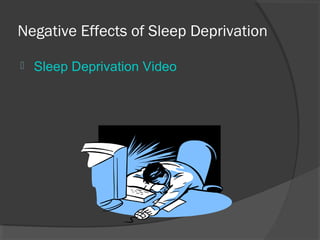
Negative Effects of Sleep Deprivation
 Sleep Deprivation Video
What is sleep, and why do we
need it?
 Sleep-the natural periodic suspension of
consciousness during which the powers of
the body are restored
 Sleep length has been associated with
subjective and psychological well-being, as
well as overall life satisfaction
 If the quantity of sleep is not of sufficient
quality it will impact waking activities and
could even affect long-term health
 Individuals sleeping 6 hours or less a night
have a 70% higher mortality rate than
those who sleep 7 or 8 hours
Health Issues
 Insufficient sleep has been linked to
lack of stress management skills
Increased risk of colds and infections
occupational and traffic accidents
Chronic disease
Heightened levels of negative emotion
states such as depression, anger, sadness,
and fear
Effect on children
 Research suggests that sleep is even more
critical for adolescents as their bodies and
brains are experiencing rapid growth and
development
 Lack of sleep in developing children have
demonstrated deficits in cognition and deficits
in working memory and attention
 Shorter sleep time has been associated with
externalizing problems, delinquency, thought
disorder in children aged 7-12 years
 Children sleeping almost 1 hour less than the
average child may be at risk of significant
conduct difficulties
Effect on College Students
 Sleep deprivation and poor sleep quality are
particularly prominent in young adult and
college student populations
 Research shows that there is a relationship
between poor sleep quality and lower
academic performance
 Sleep loss results in a preference for cognitive
tasks demanding minimal effort so that
adequate performance can be maintained
 Sleep may also constrain the academic,
extracurricular, and perhaps even the
vocational choices of at least some sleep-
deprived students
Effect on Shift Workers
 Third shift captain piloted his vessel into shallow
water where it ran aground, spilling its cargo of oil
into the ocean due to how tired he was to respond to
the two warnings from the lookout
 Shift work reduces both the quality and the quantity
of sleep
 Sleepy individuals are less ambitious and less
productive
 Sleep loss impairs performance on cognitive tasks
involving memory, learning, logical reasoning, etc.
 Sleep length is decreased by 1-4 hours when one is
required to sleep during the day
References
 Ciccarelli, S., & White, J. (2012). Psychology. (3 ed., pp.
131-133). Upper Saddle River: Prentice Hall.
 Clinkinbeard, S. (2010). Sleep and Delinquency: Does
the Amount of Sleep Matter? J Youth Adolescence
vol. 40, no. 7 (Jul 2011), 916-930
 Gilbert, S. P., & Weaver, C. C. (2010). Sleep Quality and
Academic Performance in University Students: A
Wake-Up Call for College Psychologists. Journal
Of College Student Psychotherapy, 24(4), 295-306.
 Holley, S. S., Hill, C. M., & Stevenson, J. J. (2011). An
hour less sleep is a risk factor for childhood
conduct problems. Child: Care, Health & Development,
37(4), 563-570.
 Oexman, R. D., Knotts, T. L., & Koch, J. (2002).
Working While the World Sleeps: A Consideration of
Sleep and Shift Work Design. Employee Responsibilities
& Rights Journal, 14(4), 145-157.
References
 Ciccarelli, S., & White, J. (2012). Psychology. (3 ed., pp.
131-133). Upper Saddle River: Prentice Hall.
 Clinkinbeard, S. (2010). Sleep and Delinquency: Does
the Amount of Sleep Matter? J Youth Adolescence
vol. 40, no. 7 (Jul 2011), 916-930
 Gilbert, S. P., & Weaver, C. C. (2010). Sleep Quality and
Academic Performance in University Students: A
Wake-Up Call for College Psychologists. Journal
Of College Student Psychotherapy, 24(4), 295-306.
 Holley, S. S., Hill, C. M., & Stevenson, J. J. (2011). An
hour less sleep is a risk factor for childhood
conduct problems. Child: Care, Health & Development,
37(4), 563-570.
 Oexman, R. D., Knotts, T. L., & Koch, J. (2002).
Working While the World Sleeps: A Consideration of
Sleep and Shift Work Design. Employee Responsibilities
& Rights Journal, 14(4), 145-157.

Sleep deprivation powerpoint

  • 2.
    What is SleepDeprivation?  Sleep Deprivation-any significant loss of sleep, resulting in problems in concentration and irritability  Symptoms of sleep deprivation Trembling hands Inattention Staring off into space Droopy eyelids General discomfort
  • 3.
    Negative Effects ofSleep Deprivation  Sleep Deprivation Video
  • 4.
    What is sleep,and why do we need it?  Sleep-the natural periodic suspension of consciousness during which the powers of the body are restored  Sleep length has been associated with subjective and psychological well-being, as well as overall life satisfaction  If the quantity of sleep is not of sufficient quality it will impact waking activities and could even affect long-term health  Individuals sleeping 6 hours or less a night have a 70% higher mortality rate than those who sleep 7 or 8 hours
  • 5.
    Health Issues  Insufficientsleep has been linked to lack of stress management skills Increased risk of colds and infections occupational and traffic accidents Chronic disease Heightened levels of negative emotion states such as depression, anger, sadness, and fear
  • 6.
    Effect on children Research suggests that sleep is even more critical for adolescents as their bodies and brains are experiencing rapid growth and development  Lack of sleep in developing children have demonstrated deficits in cognition and deficits in working memory and attention  Shorter sleep time has been associated with externalizing problems, delinquency, thought disorder in children aged 7-12 years  Children sleeping almost 1 hour less than the average child may be at risk of significant conduct difficulties
  • 7.
    Effect on CollegeStudents  Sleep deprivation and poor sleep quality are particularly prominent in young adult and college student populations  Research shows that there is a relationship between poor sleep quality and lower academic performance  Sleep loss results in a preference for cognitive tasks demanding minimal effort so that adequate performance can be maintained  Sleep may also constrain the academic, extracurricular, and perhaps even the vocational choices of at least some sleep- deprived students
  • 8.
    Effect on ShiftWorkers  Third shift captain piloted his vessel into shallow water where it ran aground, spilling its cargo of oil into the ocean due to how tired he was to respond to the two warnings from the lookout  Shift work reduces both the quality and the quantity of sleep  Sleepy individuals are less ambitious and less productive  Sleep loss impairs performance on cognitive tasks involving memory, learning, logical reasoning, etc.  Sleep length is decreased by 1-4 hours when one is required to sleep during the day
  • 9.
    References  Ciccarelli, S.,& White, J. (2012). Psychology. (3 ed., pp. 131-133). Upper Saddle River: Prentice Hall.  Clinkinbeard, S. (2010). Sleep and Delinquency: Does the Amount of Sleep Matter? J Youth Adolescence vol. 40, no. 7 (Jul 2011), 916-930  Gilbert, S. P., & Weaver, C. C. (2010). Sleep Quality and Academic Performance in University Students: A Wake-Up Call for College Psychologists. Journal Of College Student Psychotherapy, 24(4), 295-306.  Holley, S. S., Hill, C. M., & Stevenson, J. J. (2011). An hour less sleep is a risk factor for childhood conduct problems. Child: Care, Health & Development, 37(4), 563-570.  Oexman, R. D., Knotts, T. L., & Koch, J. (2002). Working While the World Sleeps: A Consideration of Sleep and Shift Work Design. Employee Responsibilities & Rights Journal, 14(4), 145-157.
  • 10.
    References  Ciccarelli, S.,& White, J. (2012). Psychology. (3 ed., pp. 131-133). Upper Saddle River: Prentice Hall.  Clinkinbeard, S. (2010). Sleep and Delinquency: Does the Amount of Sleep Matter? J Youth Adolescence vol. 40, no. 7 (Jul 2011), 916-930  Gilbert, S. P., & Weaver, C. C. (2010). Sleep Quality and Academic Performance in University Students: A Wake-Up Call for College Psychologists. Journal Of College Student Psychotherapy, 24(4), 295-306.  Holley, S. S., Hill, C. M., & Stevenson, J. J. (2011). An hour less sleep is a risk factor for childhood conduct problems. Child: Care, Health & Development, 37(4), 563-570.  Oexman, R. D., Knotts, T. L., & Koch, J. (2002). Working While the World Sleeps: A Consideration of Sleep and Shift Work Design. Employee Responsibilities & Rights Journal, 14(4), 145-157.