Downloaded 30 times
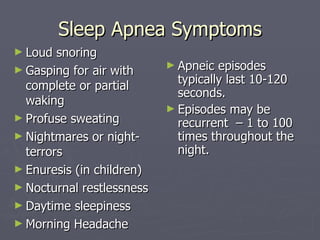
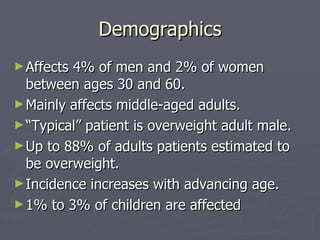
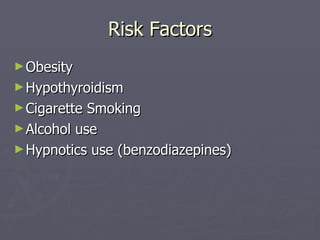
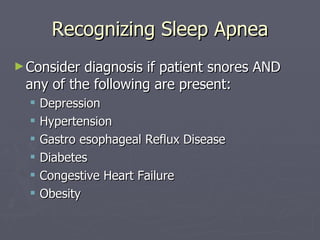
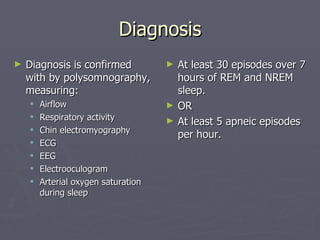
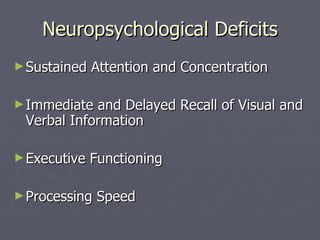
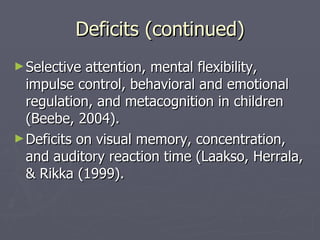
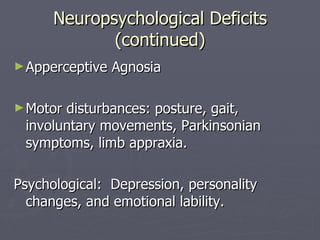
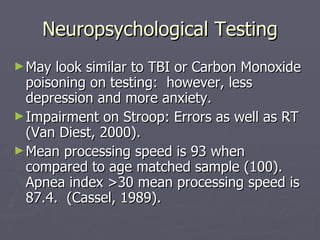
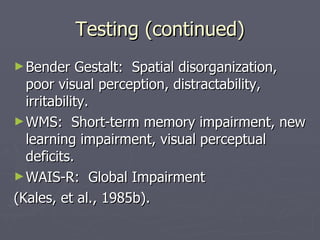
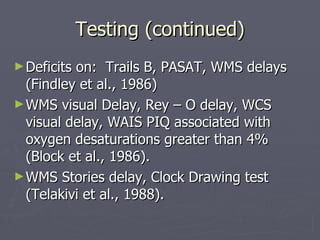

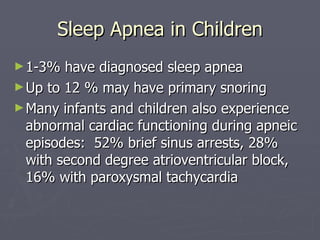
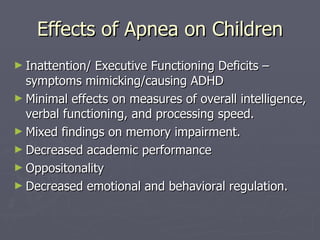
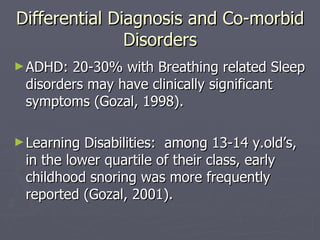

This document discusses sleep apnea, including its symptoms, causes, effects, diagnosis, and treatment. Sleep apnea is characterized by pauses in breathing during sleep and can be obstructive, central, or mixed. It is associated with daytime sleepiness and neuropsychological deficits affecting attention, memory, and executive function. Diagnosis involves polysomnography and treatment primarily involves continuous positive airway pressure. CPAP treatment has been shown to improve symptoms and neuropsychological functioning in many patients. Sleep apnea can also affect children and be misdiagnosed as conditions like ADHD if not properly identified and treated.


