












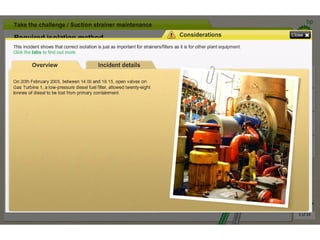
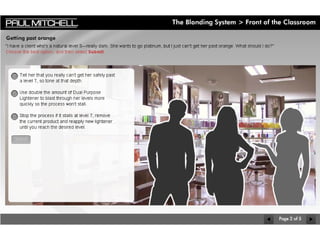

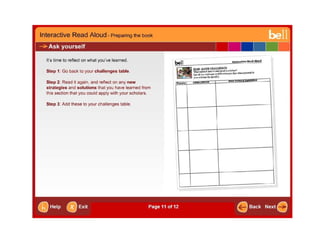
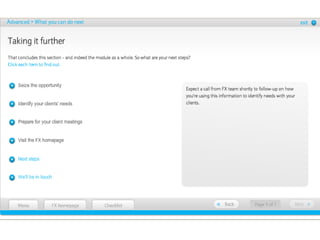





Simple Strategies for Creating
More Engaging E-Learning
Cammy Bean
ASTD ICE 2013
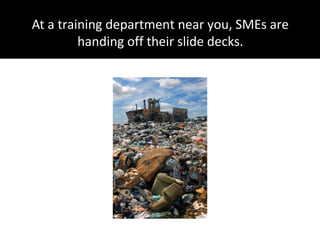
At a training department near you, SMEs are
handing off their slide decks.
You have to transform that dump into elearning.
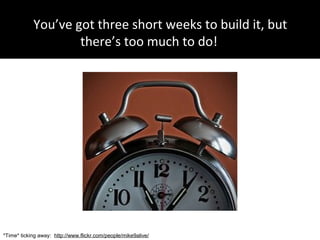
You’ve got three short weeks to build it, but
there’s too much to do!
*Time* ticking away: http://www.flickr.com/people/mike9alive/
You want a more streamlined process and
better eLearning outcomes.
Yawn-proof your elearning without busting the
bank with these top tips.
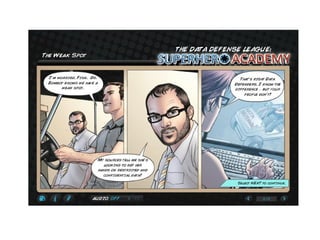
How long have you been involved with
elearning projects?
I haven’t worked on any yet (that’s why I’m
here!)
0.1-1 years
2-5 years
6-10 years
10+ years
What’s the most boring
program you’ve ever
had to work on?
What are you currently
working on?
A cautionary tale.
Tip 1:
Get their attention.
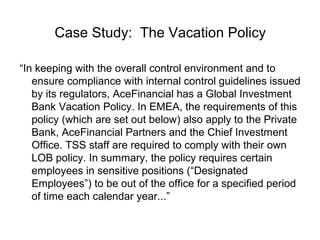
Case Study: The Vacation Policy
“In keeping with the overall control environment and to
ensure compliance with internal control guidelines issued
by its regulators, AceFinancial has a Global Investment
Bank Vacation Policy. In EMEA, the requirements of this
policy (which are set out below) also apply to the Private
Bank, AceFinancial Partners and the Chief Investment
Office. TSS staff are required to comply with their own
LOB policy. In summary, the policy requires certain
employees in sensitive positions (“Designated
Employees”) to be out of the office for a specified period
of time each calendar year...”
Tip 2:
Give it some structure!
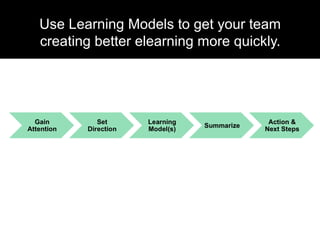
Use Learning Models to get your team
creating better elearning more quickly.
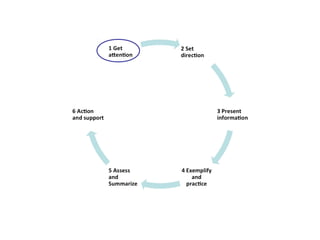
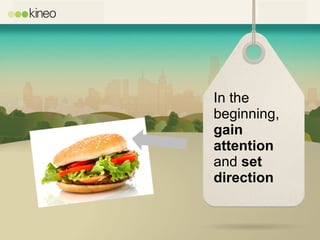
The eLearning
Sandwich
The beginning, the end, and all
that’s in between…
In the
beginning,
gain
attention
and set
direction
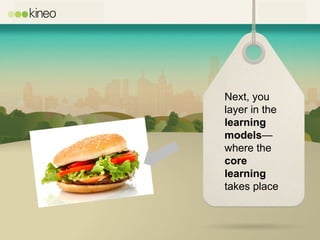
Next, you
layer in the
learning
models—
where the
core
learning
takes place
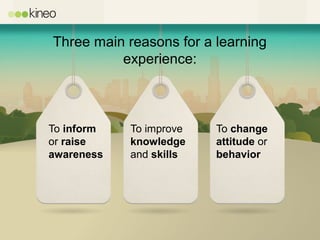
Three main reasons for a learning
experience:
To inform
or raise
awareness
To improve
knowledge
and skills
To change
attitude or
behavior
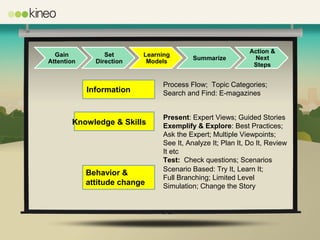
Process Flow; Topic Categories;
Search and Find: E-magazines
Present: Expert Views; Guided Stories
Exemplify & Explore: Best Practices;
Ask the Expert; Multiple Viewpoints;
See It, Analyze It; Plan It, Do It, Review
It etc
Test: Check questions; Scenarios
Scenario Based: Try It, Learn It;
Full Branching; Limited Level
Simulation; Change the Story
Information
Knowledge & Skills
Behavior &
attitude change
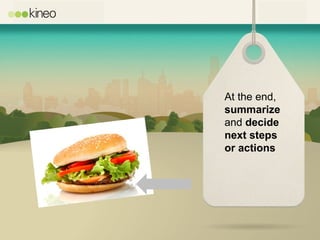
At the end,
summarize
and decide
next steps
or actions
Tip 3:
Don’t be tone deaf –
write for the people,
man!
Our 5 rule framework
1.Keep it light
1.Give it spirit
2.Have a conversation
3.Call for action
4.Be adult
“As café staff, it’s compulsory
that you maintain quality of
produce and serve it as
specified by the Quality Food
Manual. By the end of this
training you will understand how
to serve every food type
according to the standards.”
“As café staff, it’s compulsory
that you maintain quality of
produce and serve it as
specified by the Quality Food
Manual. By the end of this
training you will understand how
to serve every food type
according to the standards.”
Boring!
1. Keep it light
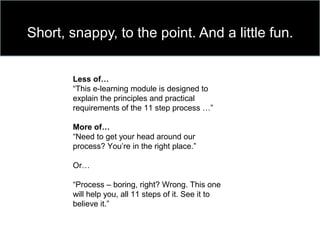
Short, snappy, to the point. And a little fun.
Less of…
“This e-learning module is designed to
explain the principles and practical
requirements of the 11 step process …”
More of…
“Need to get your head around our
process? You’re in the right place.”
Or…
“Process – boring, right? Wrong. This one
will help you, all 11 steps of it. See it to
believe it.”
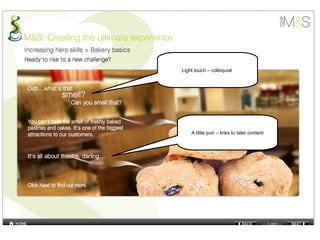
Light touch – colloquial
A little pun – links to later content
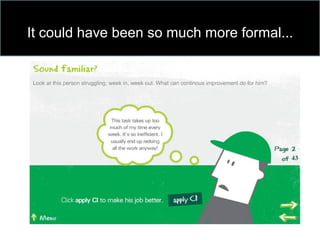
It could have been so much more formal...
2. Give it spirit!
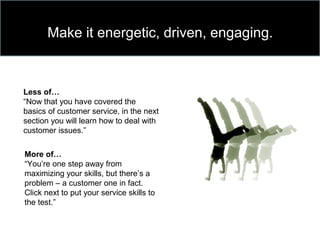
Make it energetic, driven, engaging.
Less of…
“Now that you have covered the
basics of customer service, in the next
section you will learn how to deal with
customer issues.”
More of…
“You’re one step away from
maximizing your skills, but there’s a
problem – a customer one in fact.
Click next to put your service skills to
the test.”
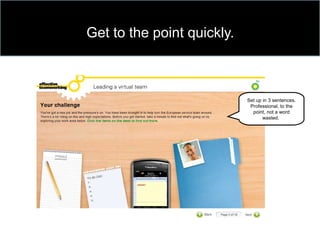
Get to the point quickly.
Set up in 3 sentences.
Professional, to the
point, not a word
wasted.
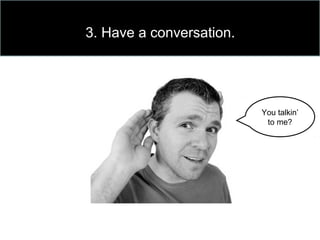
3. Have a conversation.
You talkin’
to me?
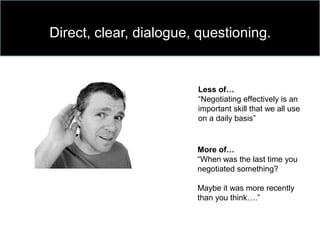
Direct, clear, dialogue, questioning.
Less of…
“Negotiating effectively is an
important skill that we all use
on a daily basis”
More of…
“When was the last time you
negotiated something?
Maybe it was more recently
than you think….”
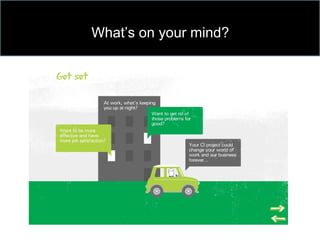
What’s on your mind?
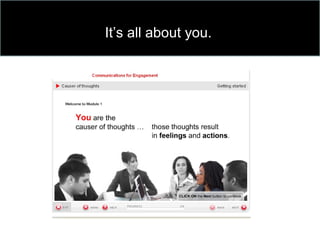
It’s all about you.
Interview your SMEs and then use their
words – not their bullets!
4. Call for action
Give direction, focus on actions and tasks – it’s
what happens next that counts.
Less of…
“You’ve now completed this section on
PBX sales. Go back to the menu to
make another selection.”
More of…
“Now review your own client list. Who
could benefit from the PBX product?
Plan the time to call them now.”
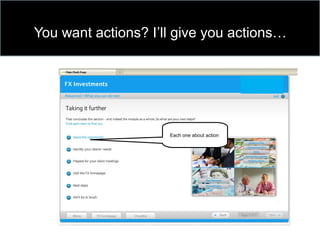
You want actions? I’ll give you actions…
Each one about action
5. Be adult
Learners are busy professionals. Treat them like
grown ups and don’t patronize.
Less of…
“By now you have learned…”
“You must do…”
“This will take 90 minutes”
More of…
“Take 5 minutes to find
out how to run effective meetings.”
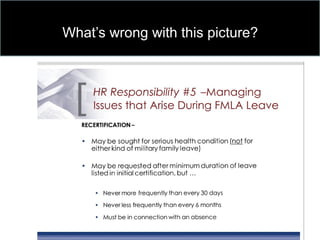
What’s wrong with this picture?
Keep it short.
Active, not passive sentences.
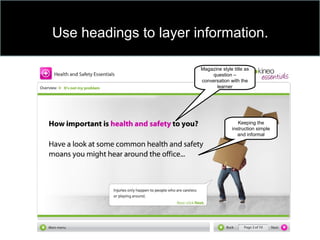
Use headings to layer information.
Magazine style title as
question –
conversation with the
learner
Keeping the
instruction simple
and informal
What are the problems with trying to write
this way?
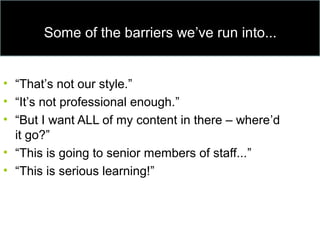
Some of the barriers we’ve run into...
• “That’s not our style.”
• “It’s not professional enough.”
• “But I want ALL of my content in there – where’d
it go?”
• “This is going to senior members of staff...”
• “This is serious learning!”
Tip 4:
Object to learning
objectives.
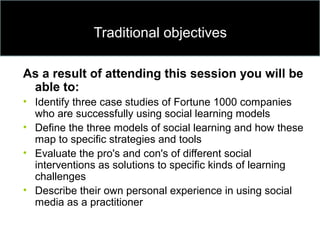
Traditional objectives
As a result of attending this session you will be
able to:
• Identify three case studies of Fortune 1000 companies
who are successfully using social learning models
• Define the three models of social learning and how these
map to specific strategies and tools
• Evaluate the pro's and con's of different social
interventions as solutions to specific kinds of learning
challenges
• Describe their own personal experience in using social
media as a practitioner
Set direction
Tip 5:
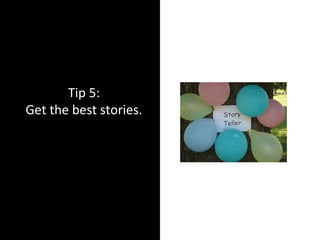
Get the best stories.
Tip 6:
Make it hurt so good.
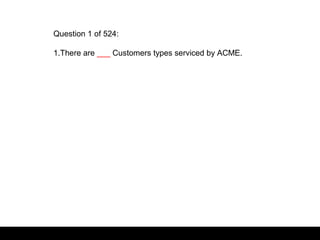
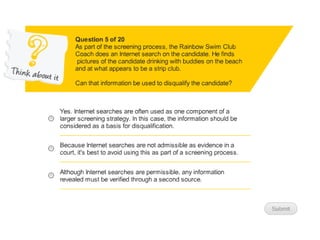
Question 1 of 524:
1.There are ___ Customers types serviced by ACME.
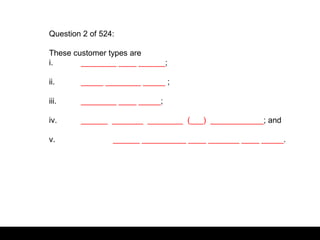
Question 2 of 524:
These customer types are
i. ________ ____ ______;
ii. _____ ________ _____ ;
iii. ________ ____ _____;
iv. ______ _______ ________ (___) ____________; and
v. ______ __________ ____ _______ ____ _____.
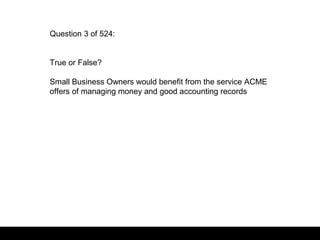
Question 3 of 524:
True or False?
Small Business Owners would benefit from the service ACME
offers of managing money and good accounting records
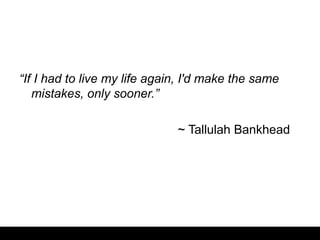
“If I had to live my life again, I'd make the same
mistakes, only sooner.”
~ Tallulah Bankhead
Tip 7:
Think outside the
course.
Let’s review!
Tip 1:
Get their attention.
Tip 2:
Give it some structure!
Tip 3:
Don’t be tone deaf.
Tip 4:
Object to learning
objectives.
Tip 5:
Get the best stories.
Tip 6:
Make it hurt so good.
Tip 7:
Think outside the
course.
So think back to that
current or most boring
project…
Anything you might do
differently now?
Questions?
www.kineo.com
email: cammy.bean@kineo.com
Twitter: @cammybean
Blog : http://cammybean.kineo.com/
Get lots of free stuff on the Kineo website:
www.kineo.com
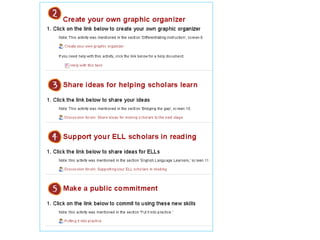
Your Feedback Counts!
Your feedback helps ASTD continue to provide
top-notch educational programs that help you
stay on top of a changing profession.
Evaluation forms for this session are available
NOW via the mobile app and at the following
link: www.astdconference.org.

Simple strategies for creating more engaging elearning

  • 1.
    Simple Strategies forCreating More Engaging E-Learning Cammy Bean ASTD ICE 2013
  • 2.
    At a trainingdepartment near you, SMEs are handing off their slide decks.
  • 3.
    You have totransform that dump into elearning.
  • 4.
    You’ve got threeshort weeks to build it, but there’s too much to do! *Time* ticking away: http://www.flickr.com/people/mike9alive/
  • 5.
    You want amore streamlined process and better eLearning outcomes.
  • 6.
    Yawn-proof your elearningwithout busting the bank with these top tips.
  • 7.
    How long haveyou been involved with elearning projects? I haven’t worked on any yet (that’s why I’m here!) 0.1-1 years 2-5 years 6-10 years 10+ years
  • 8.
    What’s the mostboring program you’ve ever had to work on? What are you currently working on?
  • 9.
  • 10.
    Tip 1: Get theirattention.
  • 15.
    Case Study: TheVacation Policy “In keeping with the overall control environment and to ensure compliance with internal control guidelines issued by its regulators, AceFinancial has a Global Investment Bank Vacation Policy. In EMEA, the requirements of this policy (which are set out below) also apply to the Private Bank, AceFinancial Partners and the Chief Investment Office. TSS staff are required to comply with their own LOB policy. In summary, the policy requires certain employees in sensitive positions (“Designated Employees”) to be out of the office for a specified period of time each calendar year...”
  • 18.
    Tip 2: Give itsome structure!
  • 19.
    Use Learning Modelsto get your team creating better elearning more quickly.
  • 20.
    The eLearning Sandwich The beginning,the end, and all that’s in between…
  • 21.
  • 22.
    Next, you layer inthe learning models— where the core learning takes place
  • 23.
    Three main reasonsfor a learning experience: To inform or raise awareness To improve knowledge and skills To change attitude or behavior
  • 24.
    Process Flow; TopicCategories; Search and Find: E-magazines Present: Expert Views; Guided Stories Exemplify & Explore: Best Practices; Ask the Expert; Multiple Viewpoints; See It, Analyze It; Plan It, Do It, Review It etc Test: Check questions; Scenarios Scenario Based: Try It, Learn It; Full Branching; Limited Level Simulation; Change the Story Information Knowledge & Skills Behavior & attitude change
  • 25.
    At the end, summarize anddecide next steps or actions
  • 26.
    Tip 3: Don’t betone deaf – write for the people, man!
  • 27.
    Our 5 ruleframework 1.Keep it light 1.Give it spirit 2.Have a conversation 3.Call for action 4.Be adult
  • 28.
    “As café staff,it’s compulsory that you maintain quality of produce and serve it as specified by the Quality Food Manual. By the end of this training you will understand how to serve every food type according to the standards.” “As café staff, it’s compulsory that you maintain quality of produce and serve it as specified by the Quality Food Manual. By the end of this training you will understand how to serve every food type according to the standards.”
  • 29.
  • 30.
  • 31.
    Short, snappy, tothe point. And a little fun. Less of… “This e-learning module is designed to explain the principles and practical requirements of the 11 step process …” More of… “Need to get your head around our process? You’re in the right place.” Or… “Process – boring, right? Wrong. This one will help you, all 11 steps of it. See it to believe it.”
  • 32.
    Light touch –colloquial A little pun – links to later content
  • 33.
    It could havebeen so much more formal...
  • 34.
    2. Give itspirit!
  • 35.
    Make it energetic,driven, engaging. Less of… “Now that you have covered the basics of customer service, in the next section you will learn how to deal with customer issues.” More of… “You’re one step away from maximizing your skills, but there’s a problem – a customer one in fact. Click next to put your service skills to the test.”
  • 36.
    Get to thepoint quickly. Set up in 3 sentences. Professional, to the point, not a word wasted.
  • 37.
    3. Have aconversation. You talkin’ to me?
  • 38.
    Direct, clear, dialogue,questioning. Less of… “Negotiating effectively is an important skill that we all use on a daily basis” More of… “When was the last time you negotiated something? Maybe it was more recently than you think….”
  • 39.
  • 40.
  • 41.
    Interview your SMEsand then use their words – not their bullets!
  • 42.
  • 43.
    Give direction, focuson actions and tasks – it’s what happens next that counts. Less of… “You’ve now completed this section on PBX sales. Go back to the menu to make another selection.” More of… “Now review your own client list. Who could benefit from the PBX product? Plan the time to call them now.”
  • 44.
    You want actions?I’ll give you actions… Each one about action
  • 45.
  • 46.
    Learners are busyprofessionals. Treat them like grown ups and don’t patronize. Less of… “By now you have learned…” “You must do…” “This will take 90 minutes” More of… “Take 5 minutes to find out how to run effective meetings.”
  • 47.
    What’s wrong withthis picture?
  • 48.
  • 49.
  • 50.
    Use headings tolayer information. Magazine style title as question – conversation with the learner Keeping the instruction simple and informal
  • 51.
    What are theproblems with trying to write this way?
  • 52.
    Some of thebarriers we’ve run into... • “That’s not our style.” • “It’s not professional enough.” • “But I want ALL of my content in there – where’d it go?” • “This is going to senior members of staff...” • “This is serious learning!”
  • 53.
    Tip 4: Object tolearning objectives.
  • 54.
    Traditional objectives As aresult of attending this session you will be able to: • Identify three case studies of Fortune 1000 companies who are successfully using social learning models • Define the three models of social learning and how these map to specific strategies and tools • Evaluate the pro's and con's of different social interventions as solutions to specific kinds of learning challenges • Describe their own personal experience in using social media as a practitioner
  • 55.
  • 57.
    Tip 5: Get thebest stories.
  • 68.
    Tip 6: Make ithurt so good.
  • 69.
    Question 1 of524: 1.There are ___ Customers types serviced by ACME.
  • 70.
    Question 2 of524: These customer types are i. ________ ____ ______; ii. _____ ________ _____ ; iii. ________ ____ _____; iv. ______ _______ ________ (___) ____________; and v. ______ __________ ____ _______ ____ _____.
  • 71.
    Question 3 of524: True or False? Small Business Owners would benefit from the service ACME offers of managing money and good accounting records
  • 72.
    “If I hadto live my life again, I'd make the same mistakes, only sooner.” ~ Tallulah Bankhead
  • 79.
  • 85.
  • 86.
    Tip 1: Get theirattention.
  • 87.
    Tip 2: Give itsome structure!
  • 88.
  • 89.
    Tip 4: Object tolearning objectives.
  • 90.
    Tip 5: Get thebest stories.
  • 91.
    Tip 6: Make ithurt so good.
  • 92.
  • 93.
    So think backto that current or most boring project… Anything you might do differently now?
  • 94.
  • 95.
  • 96.
    email: cammy.bean@kineo.com Twitter: @cammybean Blog: http://cammybean.kineo.com/ Get lots of free stuff on the Kineo website: www.kineo.com
  • 97.
    Your Feedback Counts! Yourfeedback helps ASTD continue to provide top-notch educational programs that help you stay on top of a changing profession. Evaluation forms for this session are available NOW via the mobile app and at the following link: www.astdconference.org.

Editor's Notes

  • #10 Flickr Photo: “Always be nice to the lunch lady” by MelvinSchlubman
  • #12 So what are some ways to focus attention and minimize distractions in what is inherently a passive experience (elearning)
  • #13 Get the learner to sit up – make them DO something right away. Get straight into the action. Ask questions – this focuses the learner’s attention on what they don’t know – and presumably what you’re going to cover in the program Find the killer fact, stat, or quote Lead with a killer mistake Some mistakes make such an impact on business performance that it’s worth highlighting them upfront to the learner. For example: “Did you know that 40% of our customers go elsewhere for services they would happily buy from us if they know we offered them?”
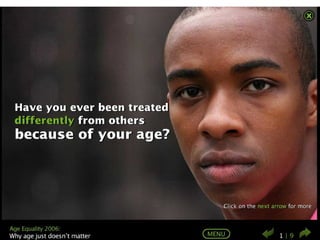
  • #14 Ask provocative questions – turn things around in a surprising way. Rattle expectations a bit… Learn from the marketing team – strong visuals and text to hook the learner emotionally. ink to application share... http://www.kineo.com/showcase/file.php/30/age/index.html As a first screen, it ’ s a very good attention grabber... Ask provocotavie questions.
  • #15 AIDA = Awareness, Interest, Desire, Action
  • #16 We ’ ve all been handed a lengthy PPT or dry source content to start from. I like to call this “ clicky-clicky blah-blah ” .
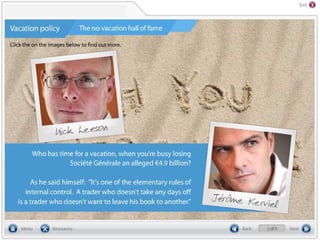
  • #17 What We Did A demo... Wish you were here...about the vacation policy – the surprise is that if you don ’ t go on holiday, it suggests you ’ re up to no good. They want you to take vacations so they engatge you upfront. This also shows you what can go wrong – what happens when you don ’ t follow the policy? Peer pressure – everyone’s doing – these success stories show how people who’ve mastered this learning are now benefiting from it. (Some clients have told us, “people are bored with that risk thing – we see it in all of the compliance courses…” The peer pressure approach can be a good alternative. Or perhaps the utopian ideal if we all learn this…e.g. BIW scenario “In the ideal workplace…”) Tell a story – show the risk (Michael Allen’s famous plane crash example, which has now entered into the annals of eLearning legend. Who’s heard of it? Who’s actually seen the presentation? Who’s actually seen that eLearning? Can I show this demo – or just screen capture? (I could mask the screen capture...) all my points made at the elearning guild still stand though - got good reactions when they put it in front of target audience as a potential approach. [5:29:25 PM] Stephen Walsh: and the HR dept were nervous about the approach etc.
  • #18 Show demo…
  • #20 So, how can we help those relatively new to the field deliver effective learning solutions as soon as possible? Rather than approaching every new project as a shot in the dark, roll-up-your-sleeves and-start-from-scratch initiative, we’ve identified a core set of learning design models to help. Even inexperienced practitioners can quickly understand these models and easily apply them to the vast majority of learning requirements that come their way. These models combine some of the best principles and leading practices gained from our years of research and experience. They can give your internal teams a shared vocabulary and point of view and ensures every program has a solid instructional design strategy at its foundation.
  • #21 Whatever learning model you choose to use, there are some components that we think should always be present in the most effective learning experiences: the Start and the Finish. Sandwiched between this beginning and end you’ll find our learning models – where the core learning takes place. It’s the filling that you choose that makes each learning experience fundamentally different from each other.
  • #22 All the best learning experiences should start by engaging the learner (the ‘what’s in it for me?’ element) and then providing the information they need to get the most out of the learning experience (setting the direction).
  • #23 All the best learning experiences should start by engaging the learner (the ‘what’s in it for me?’ element) and then providing the information they need to get the most out of the learning experience (setting the direction).
  • #26 You then need to finish the experience by making sure the learner goes away with the key learning points clearly summarized and, most importantly, with their next actions laid out—what they need to do to apply what they have learned in the real world. (Of course, it should rightly be pointed out that learning never finishes, but formal more structured learning experiences do have some form of end, often a launch pad to start applying those skills and ideas in the workplace.)
  • #28 Let ’ s look at each in turn…
  • #30 This was the original content we got from them...
  • #32 Less is more!
  • #33 Keep it light.
  • #34 Keep it light.
  • #47 Point about not being patronising
  • #49 Reading from computer screens is about 25% slower than reading from paper Write 50% less text – and allow for images too Keep to short sentences, short paragraphs “ If I ’ d had more time, I would ’ ve written a shorter letter. ”
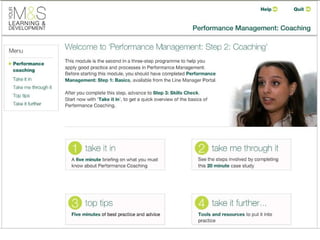
  • #50 Reading from computer screens is about 25% slower than reading from paper Write 50% less text – and allow for images too Keep to short sentences, short paragraphs “ If I ’ d had more time, I would ’ ve written a shorter letter. ”
  • #51 Reading from computer screens is about 25% slower than reading from paper Write 50% less text – and allow for images too Keep to short sentences, short paragraphs “ If I ’ d had more time, I would ’ ve written a shorter letter. ”
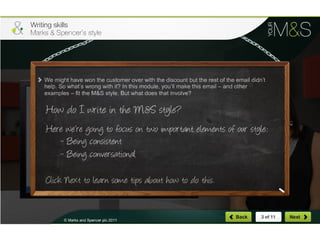
  • #53 So how do you push back on that – Advertising – we get this message out to our customers in a fun catchy way, why not sell the learning this way as well? It capture interest Conversational tone engages more... Ask the learners what they prefer.
  • #55 Most learners click NEXT on this slide.
  • #56 Set direction via a menu. By using really clear wording – take it in, etc. The menu sets the direction for the whole program.
  • #57 file:///C:/Documents%20and%20Settings/Cammy%20Bean/My%20Documents/Demos/M&S%20Writing%20Skills/main.html
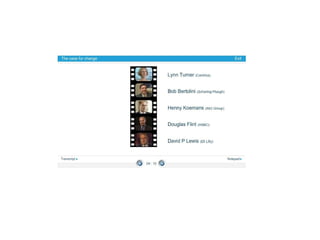
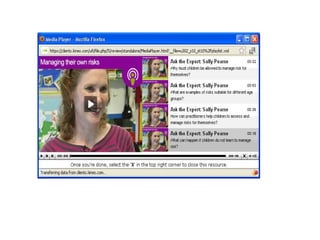
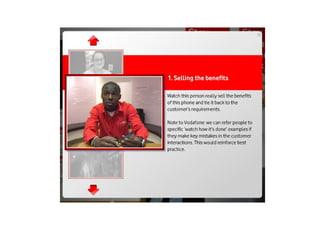
  • #60 Get war stories from your best people Get true stories from your newer people (they still know what they didn’t know) You don’t need fancy equipment We recorded this with skype + audacity – both free UFI_ask the expert.swf When you click on these you just hear short audio – no moving video or flipping stills. Sometimes these are video – sometimes just audio with stills. (think flip video camera – even an iPod Nano/or iPhone now has video)
  • #61 Do an .flv/.swf… Video and audio where it counts Guerilla approaches to shooting and audio Flip video for secret shopper Skype for expert interviews
  • #70 Are these the types of questions your courses include?
  • #71 Are these the types of questions your courses include?
  • #72 Are these the types of questions your courses include?
  • #73 Make more mistakes. Find the mistakes that hurt the most Keep ‘ em real Play it out Provide useful feedback
  • #74 Make it hard.
  • #76 Show mistakes and what you can learn from them… As part of your initial TNA – find out where people make the most common (or the most painful mistakes) – make that the focale point of your design.
  • #80 Space it out – create a campaign of events – emails, links, etc. – over a sustained period of time. Gentle nudges, short sharp eLearning bits to keep the concepts alive.
  • #81 What ’ s the final call to action – Call to action and don’t let go what was the point of the whole thing in the first place. What do you need to go out and do.
  • #82 They ’ re coming to get you… Take the Call to Action and make it personal. In this case, a real-live manager will follow up with the learner…
  • #83 More call to actions...with specific links to take the experience beyond the eLearning event... ” beyond the course ”
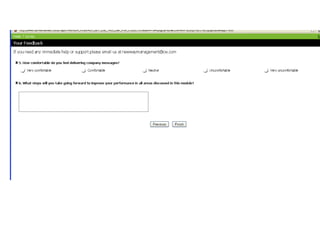
  • #85 Using survey monkey to get calls to action
  • #96 http://www.kineo.com/elearning-reports/free-guide-10-ways-to-yawn-proof-your-e-learning.html
  • #97 Contact us!