Sickle-cell disease (SCD) is a group of blood disorders
typically inherited from a person's parents. The most
common type is known as Sickle-cell anaemia (SCA). It
results in an abnormality in the oxygen-carrying
protein, haemoglobin present in RBCs. This leads to a
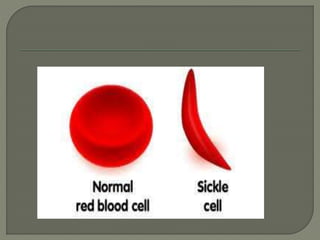
rigid, sickle-like shape under certain circumstances.
Problems typically begin around 5-6 months of age.
The problems involve anaemia, swelling in hands and
feet, bacterial infections etc.
Normal RBCs are quite elastic, which allows
them to deform while passing through
capillaries.
In sickle cell anaemia, low oxygen tension
promotes sickling of RBCs and repeated
episodes of sickling damage the cell membrane
leading to decrease in cell elasticity.
The cells return to normal shape
when oxygen tension is restored.
Rigid RBCs are unable to pass
through narrow capillaries, leading
to vessel occlusion and ischaemia.
The actual anaemia is caused by
haemolysis.
Healthy RBCs typically function
for 90-120 days; while sickle cells
last only for 10-20 days.
Fatigue and Anemia
 Pain Crises and Dactylitis (swelling and
inflammation of the hands and/or feet)
Arthritis
Bacterial Infections
Splenic sequestration (sudden pooling of
blood in the spleenand Liver Congestion )
Lung and Heart Injury
 Leg Ulcers
 Aseptic necrosis and bone infarcts
(death of portions of bone)
Eye damage
The loss of red blood cell elasticity is
central to the pathophysiology of
sickle cell anemia. Normal red blood
cells are quite elastic, which allows
the cells to deform to pass through
capillaries.
In sickle cell anemia, low-oxygen
tensions promotes red blood cell
sickling and repeated episodes of
sickling damage the cell membrane
and decrease the cell's elasticity. These
cells fail to return to normal shape
when normal oxygen tension is
restored
As a consequence, these rigid
blood cells are unable to deform
as they pass through narrow
capillaries, leading to vessel
occlusion and ischaemia.
SICKLE CELL PATHOPHYSIOLOGY B.PHARM 2ND SEM.pptx

SICKLE CELL PATHOPHYSIOLOGY B.PHARM 2ND SEM.pptx

  • 1.
    Sickle-cell disease (SCD)is a group of blood disorders typically inherited from a person's parents. The most common type is known as Sickle-cell anaemia (SCA). It results in an abnormality in the oxygen-carrying protein, haemoglobin present in RBCs. This leads to a rigid, sickle-like shape under certain circumstances. Problems typically begin around 5-6 months of age. The problems involve anaemia, swelling in hands and feet, bacterial infections etc.
  • 2.
    Normal RBCs arequite elastic, which allows them to deform while passing through capillaries. In sickle cell anaemia, low oxygen tension promotes sickling of RBCs and repeated episodes of sickling damage the cell membrane leading to decrease in cell elasticity.
  • 3.
    The cells returnto normal shape when oxygen tension is restored. Rigid RBCs are unable to pass through narrow capillaries, leading to vessel occlusion and ischaemia.
  • 4.
    The actual anaemiais caused by haemolysis. Healthy RBCs typically function for 90-120 days; while sickle cells last only for 10-20 days.
  • 5.
    Fatigue and Anemia Pain Crises and Dactylitis (swelling and inflammation of the hands and/or feet) Arthritis Bacterial Infections Splenic sequestration (sudden pooling of blood in the spleenand Liver Congestion )
  • 6.
    Lung and HeartInjury  Leg Ulcers  Aseptic necrosis and bone infarcts (death of portions of bone) Eye damage
  • 7.
    The loss ofred blood cell elasticity is central to the pathophysiology of sickle cell anemia. Normal red blood cells are quite elastic, which allows the cells to deform to pass through capillaries.
  • 8.
    In sickle cellanemia, low-oxygen tensions promotes red blood cell sickling and repeated episodes of sickling damage the cell membrane and decrease the cell's elasticity. These cells fail to return to normal shape when normal oxygen tension is restored
  • 9.
    As a consequence,these rigid blood cells are unable to deform as they pass through narrow capillaries, leading to vessel occlusion and ischaemia.