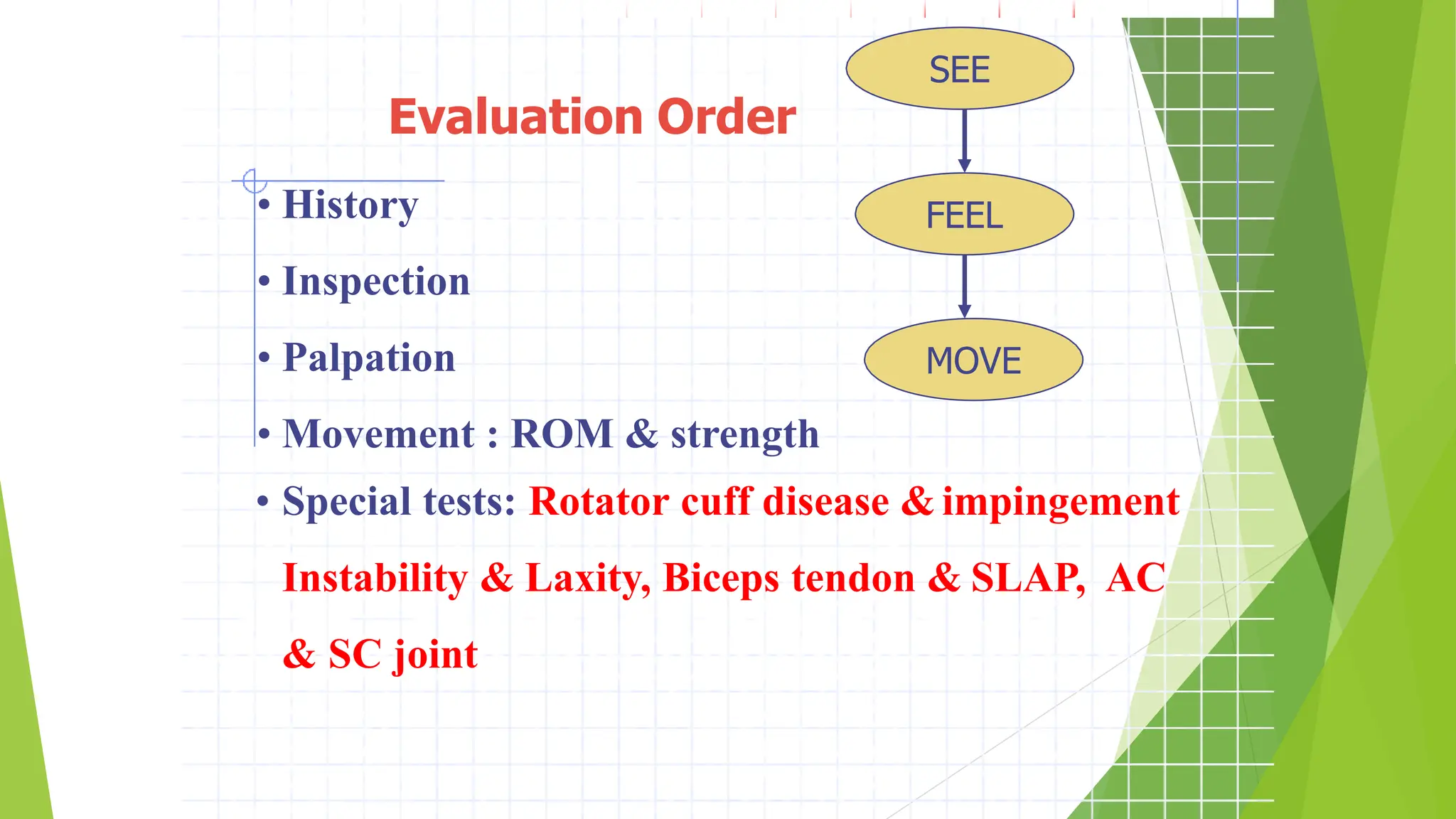
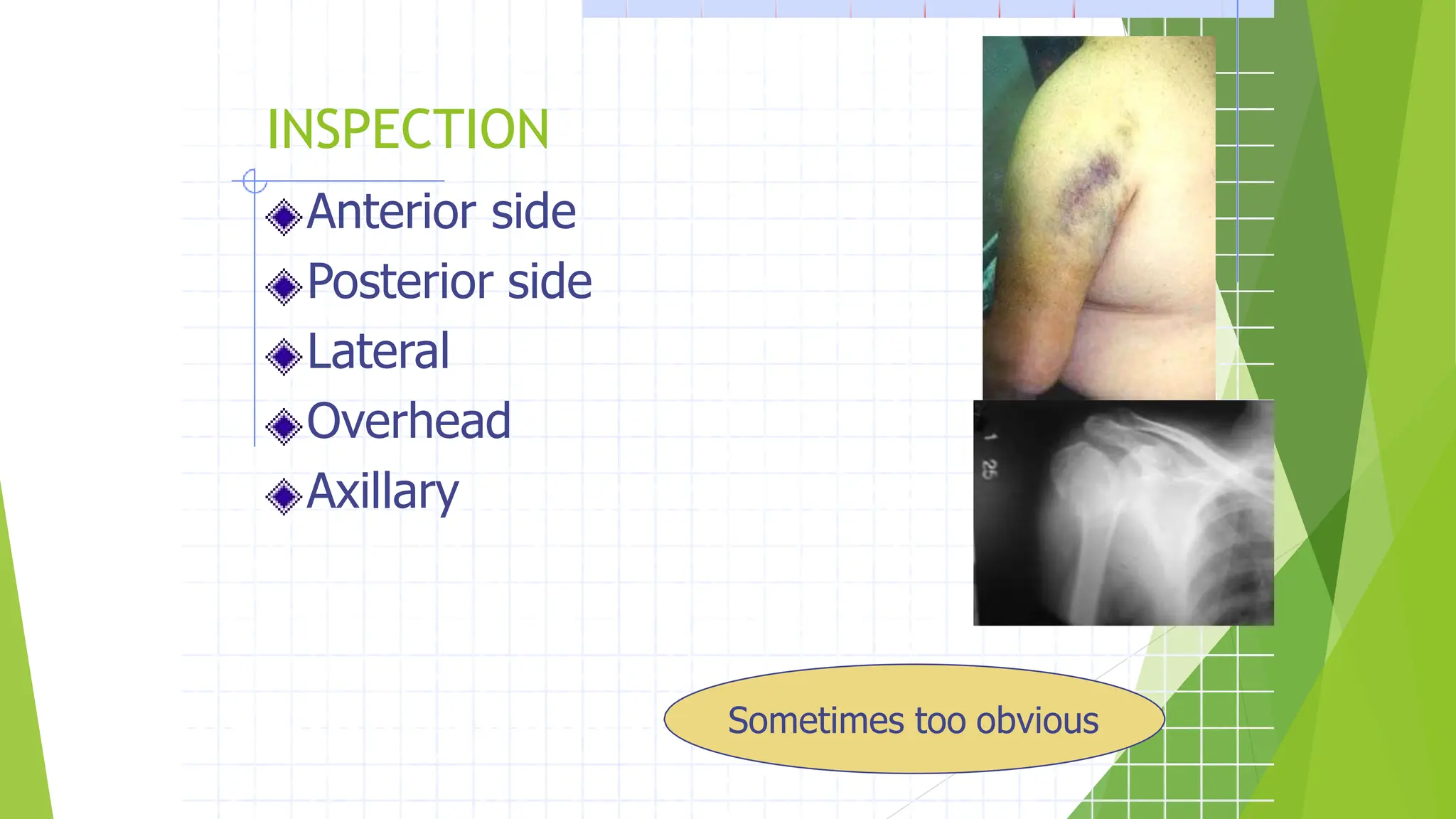
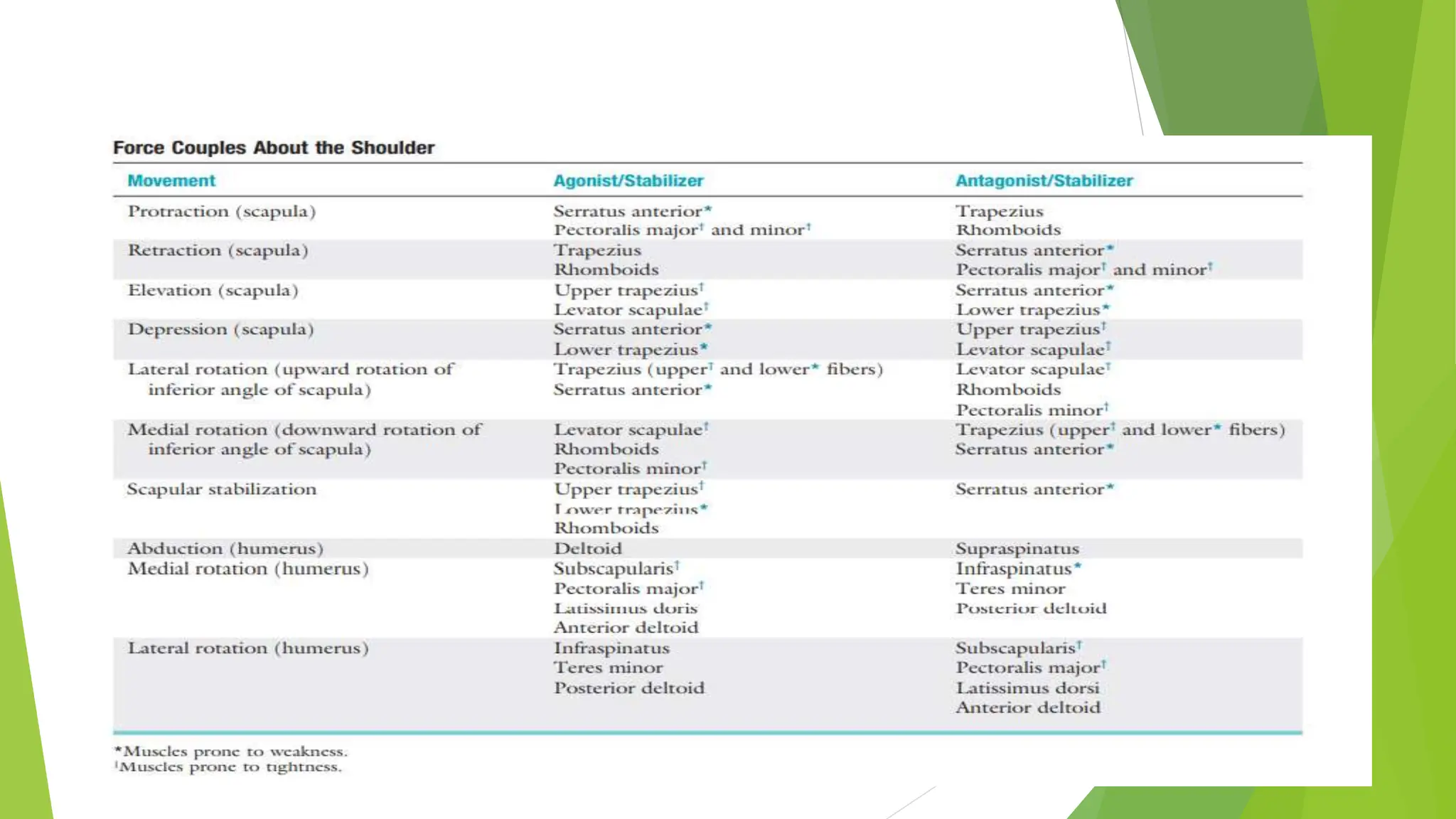
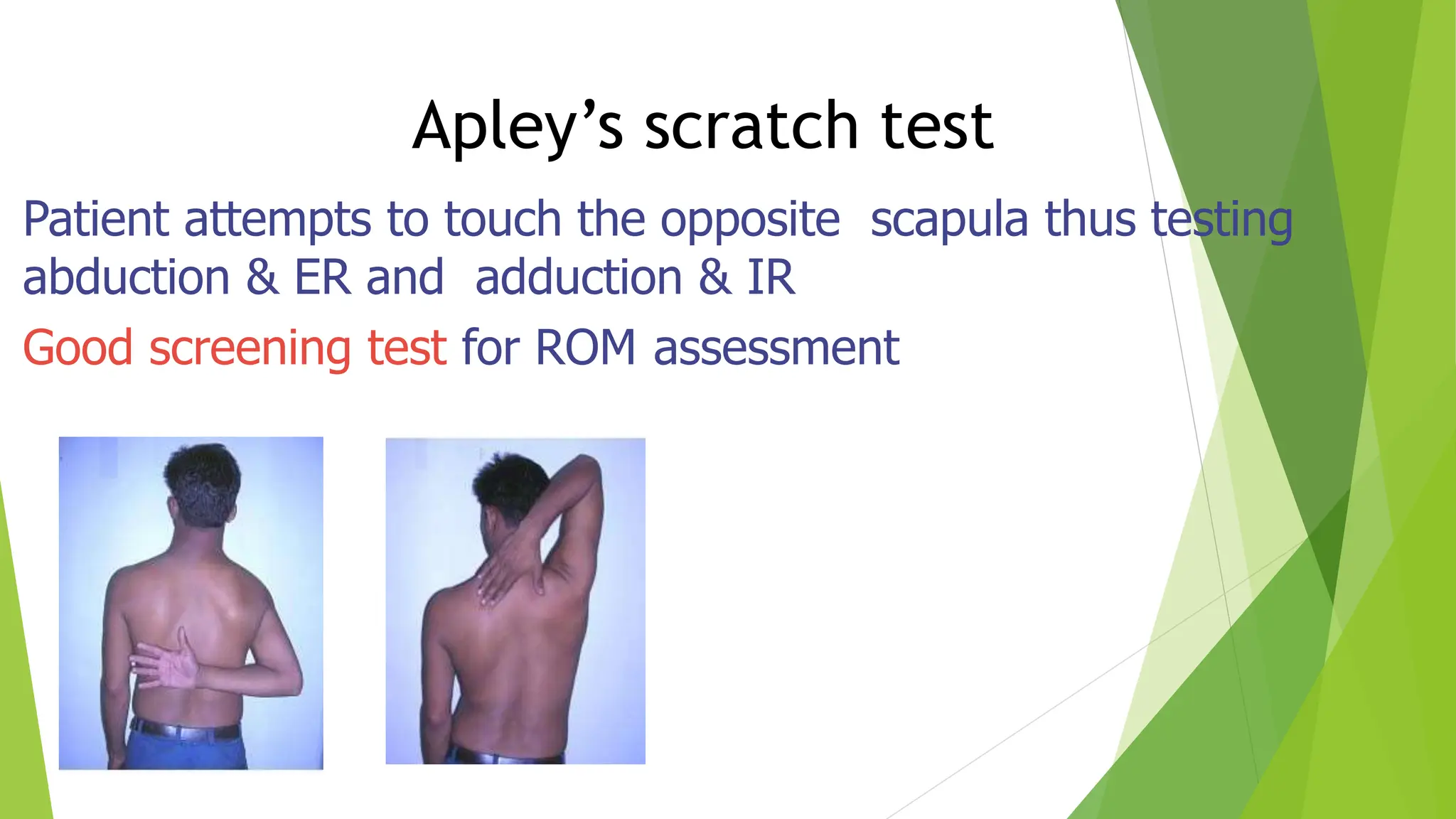
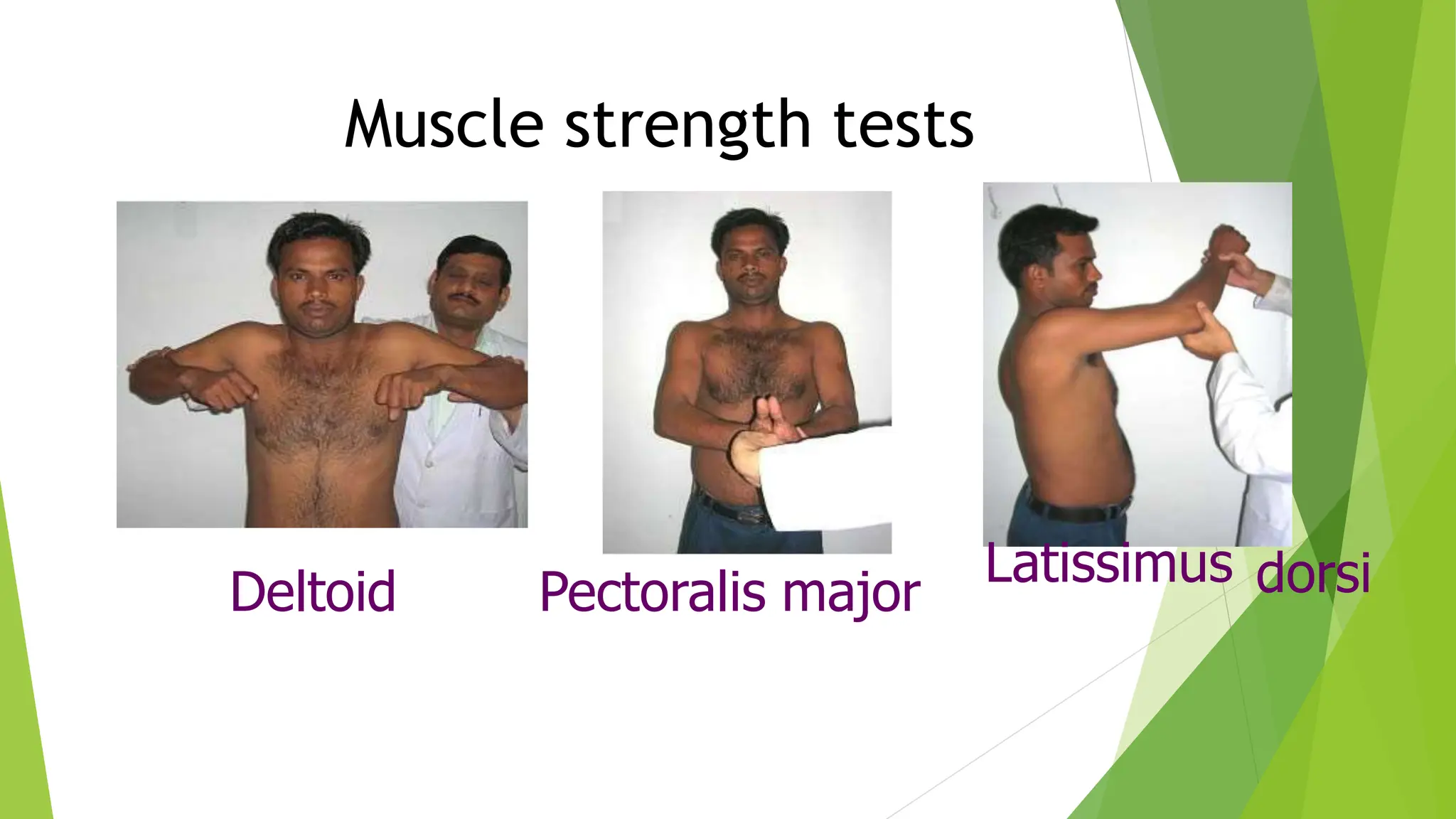
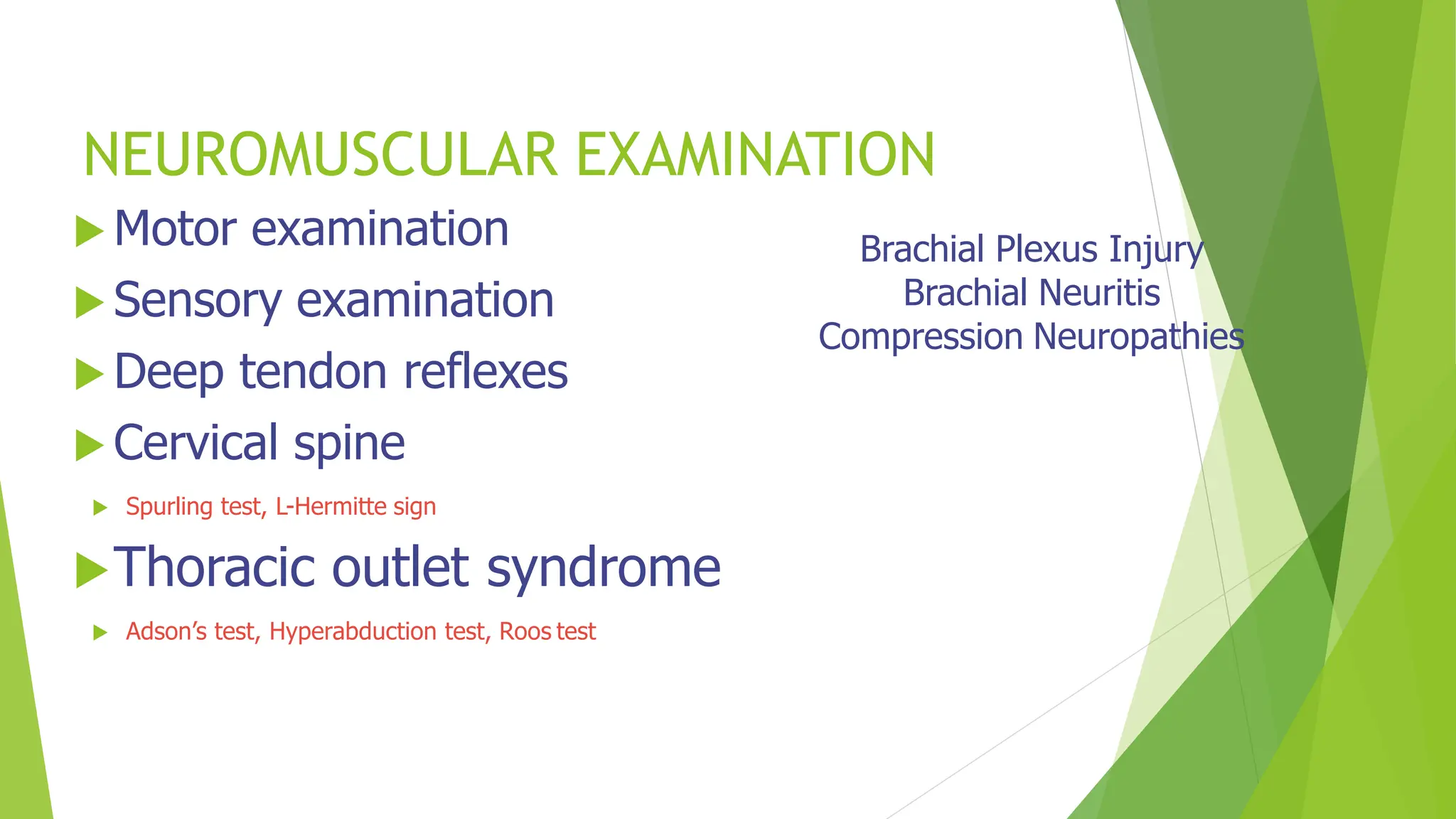
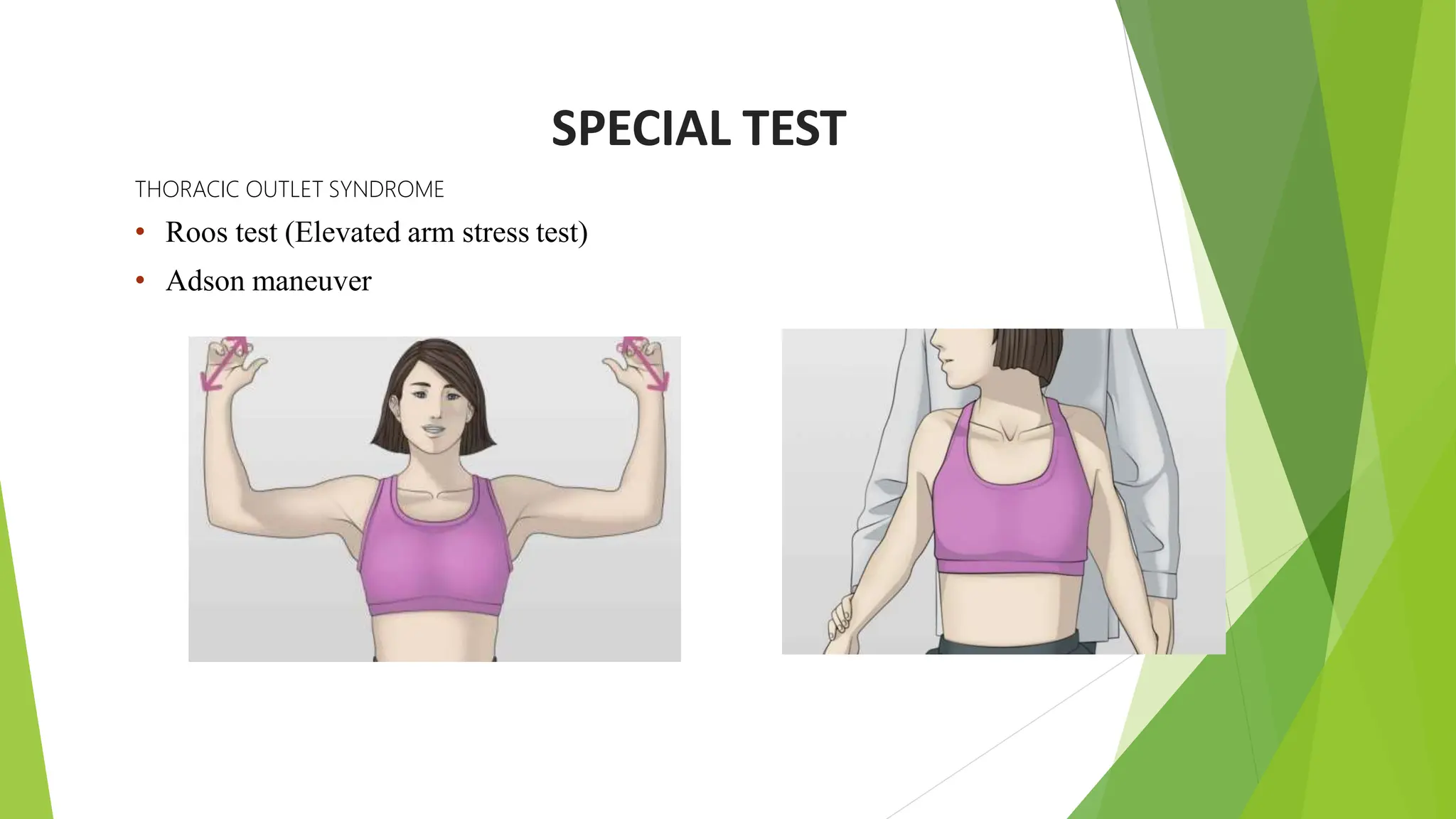
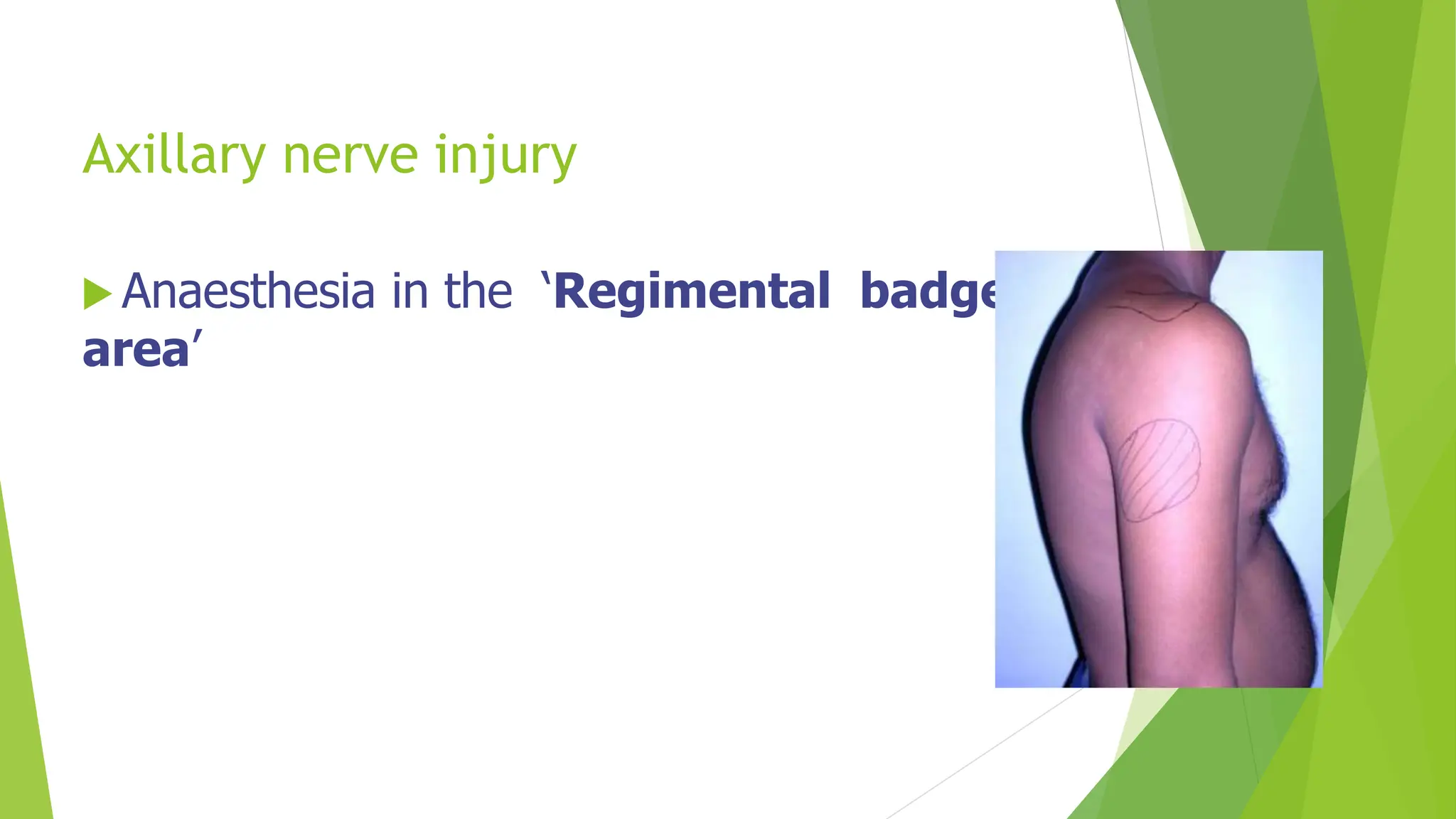
The document outlines the clinical examination process for shoulder pain, instability, and loss of motion, emphasizing the importance of history taking, physical assessment, and various special tests. It details subjective and objective evaluations to identify conditions such as rotator cuff tears, biceps tendon issues, and different forms of shoulder instability. The evaluation strategies include observation, palpation, movement assessments, and various tests to confirm diagnoses and guide treatment for shoulder pathologies.