Knee: portal placement
and diagnostic
arthroscopy
Dr Asish Rajak
Fellow Sports Medicine and Arthroplasty
Grande International Hospital
Indications:
• Diagnostic arthroscopy: corroborate MRI
• Removal of loose bodies
• Synovial biopsy or synovectomy
• Meniscal repair or resection
• ACL and PCL reconstruction
• Chondral defect repair, including microfracture
• Osteochondritis dissecans
• Knee debridement for osteoarthritis
Patient positioning
• Supine on table
• Examination under
anesthesia
• Tourniquet: to be inflated
after D/A
• Leg holder/ lateral post
• Leg holder:
• Place patient distal on
table for adequate knee
flexion.
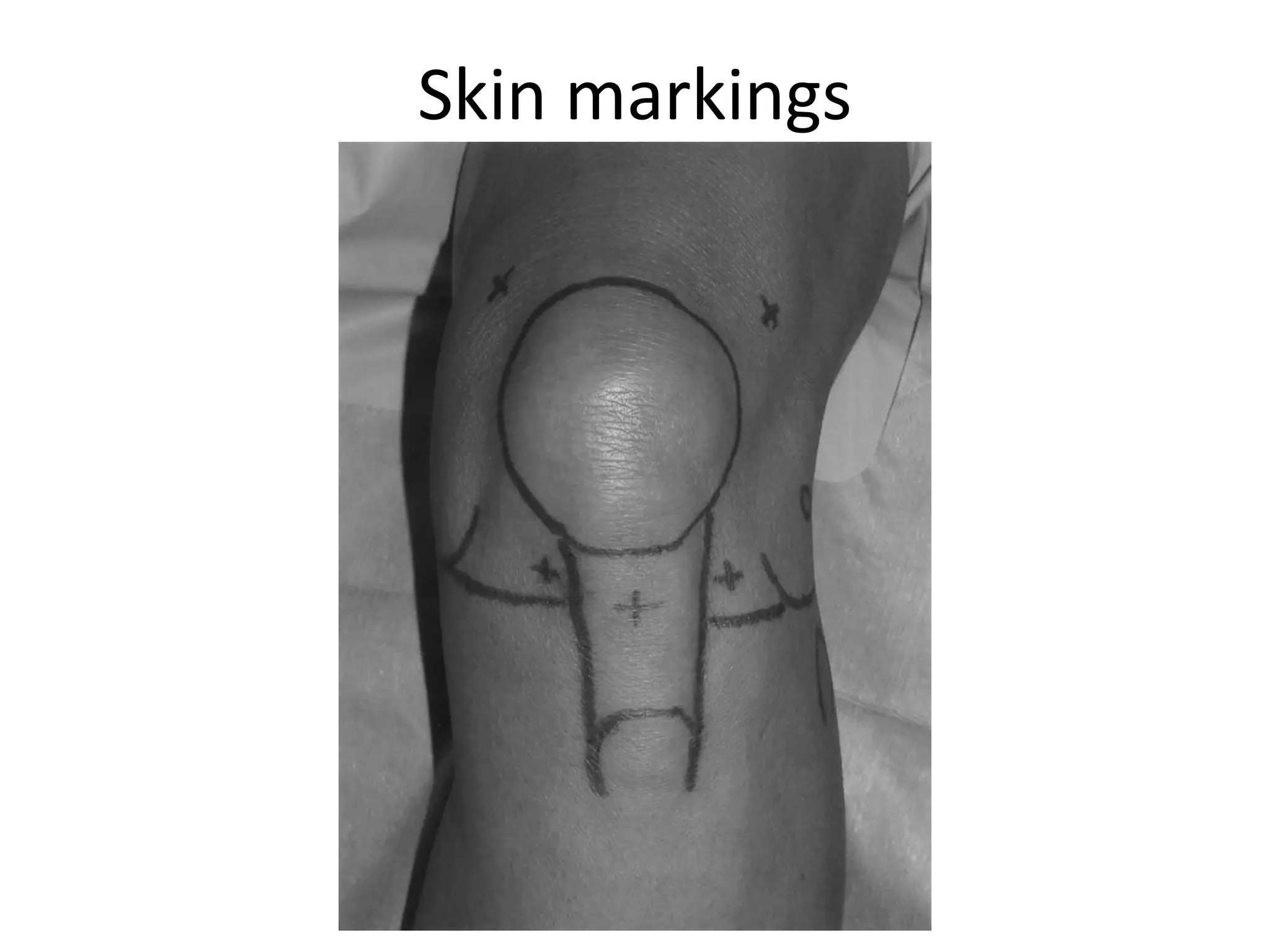
Skin markings
Knee portals
Standard portals
• Anterolateral
• Anteromedial
• Posteromedial
• Superolateral
Accessory portals
• Posterolateral
• Proximal midpatellar
medial and lateral
• Far medial and far
lateral
• Central transpatellar
Standard portals
Antero lateral
• viewing portal:
arthroscope first inserted
• most versatile
• palpable lateral “soft spot”
• 1 cm above LJL adjacent to
lateral margin of PT
• 1 cm inferior to inferior
pole
• almost all structures visualised
• Exception: tibial insertion of PCL, undersurface
of anterior horn lateral meniscus
Superior placement;
• restricts access to patellofemoral joint and
suprapatellar pouch
• Access to posteromedial structures is difficult
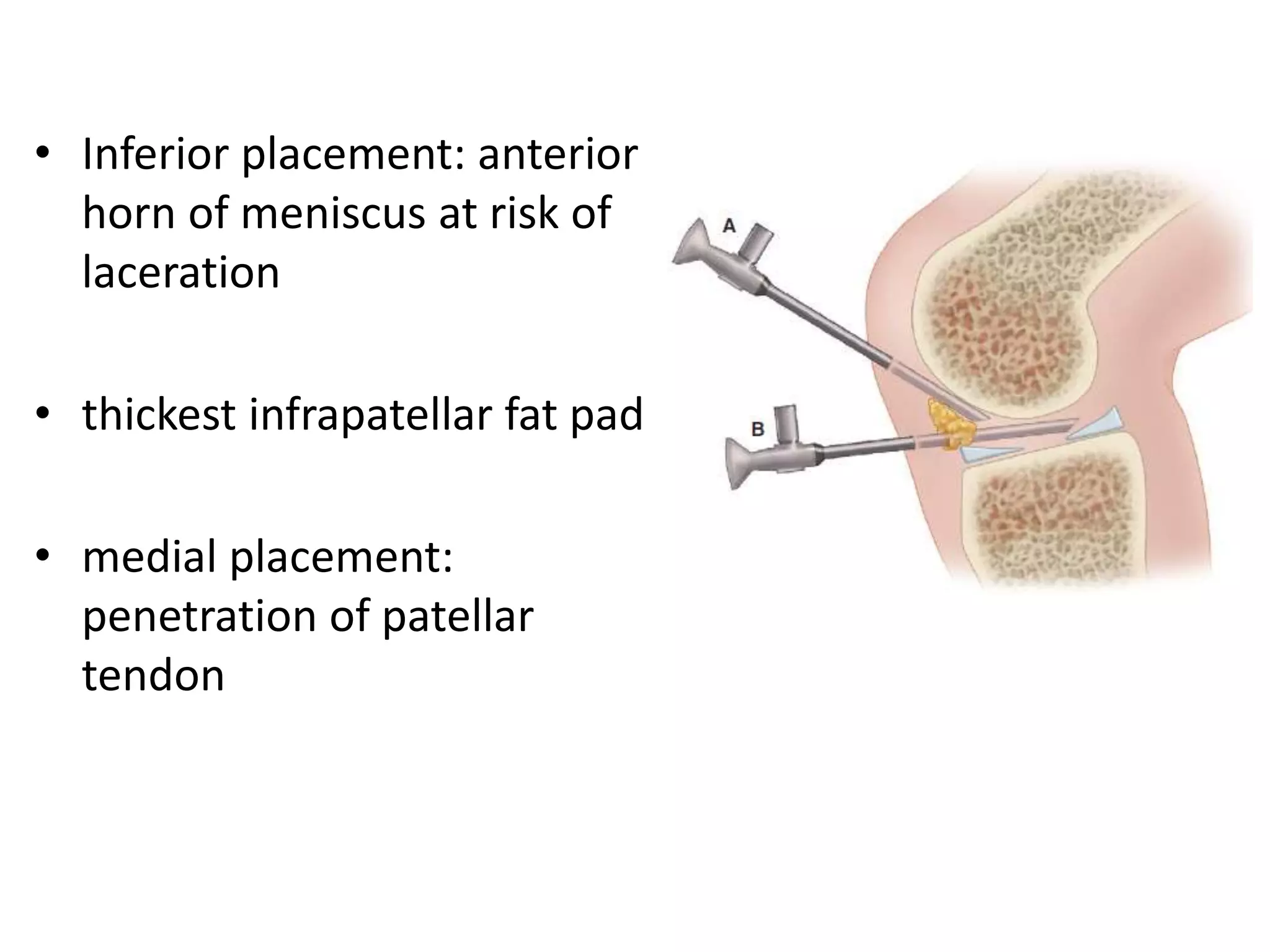
• Inferior placement: anterior
horn of meniscus at risk of
laceration
• thickest infrapatellar fat pad
• medial placement:
penetration of patellar
tendon
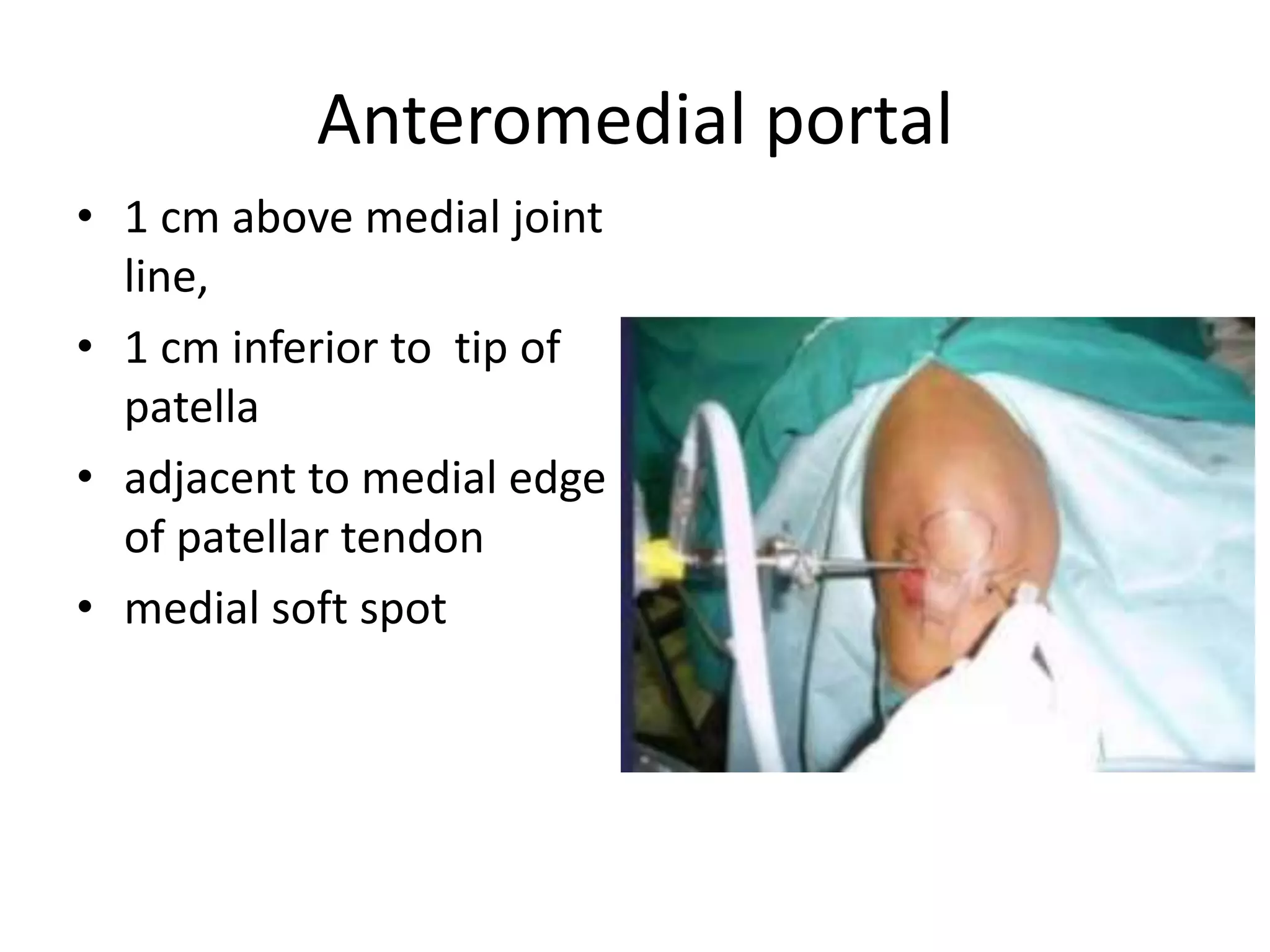
Anteromedial portal
• 1 cm above medial joint
line,
• 1 cm inferior to tip of
patella
• adjacent to medial edge
of patellar tendon
• medial soft spot
• made at same time as anterolateral
• or under arthroscopic visualization after
localization with a spinal needle
• primary working portal.
• introduce instruments
• alternative viewing portal
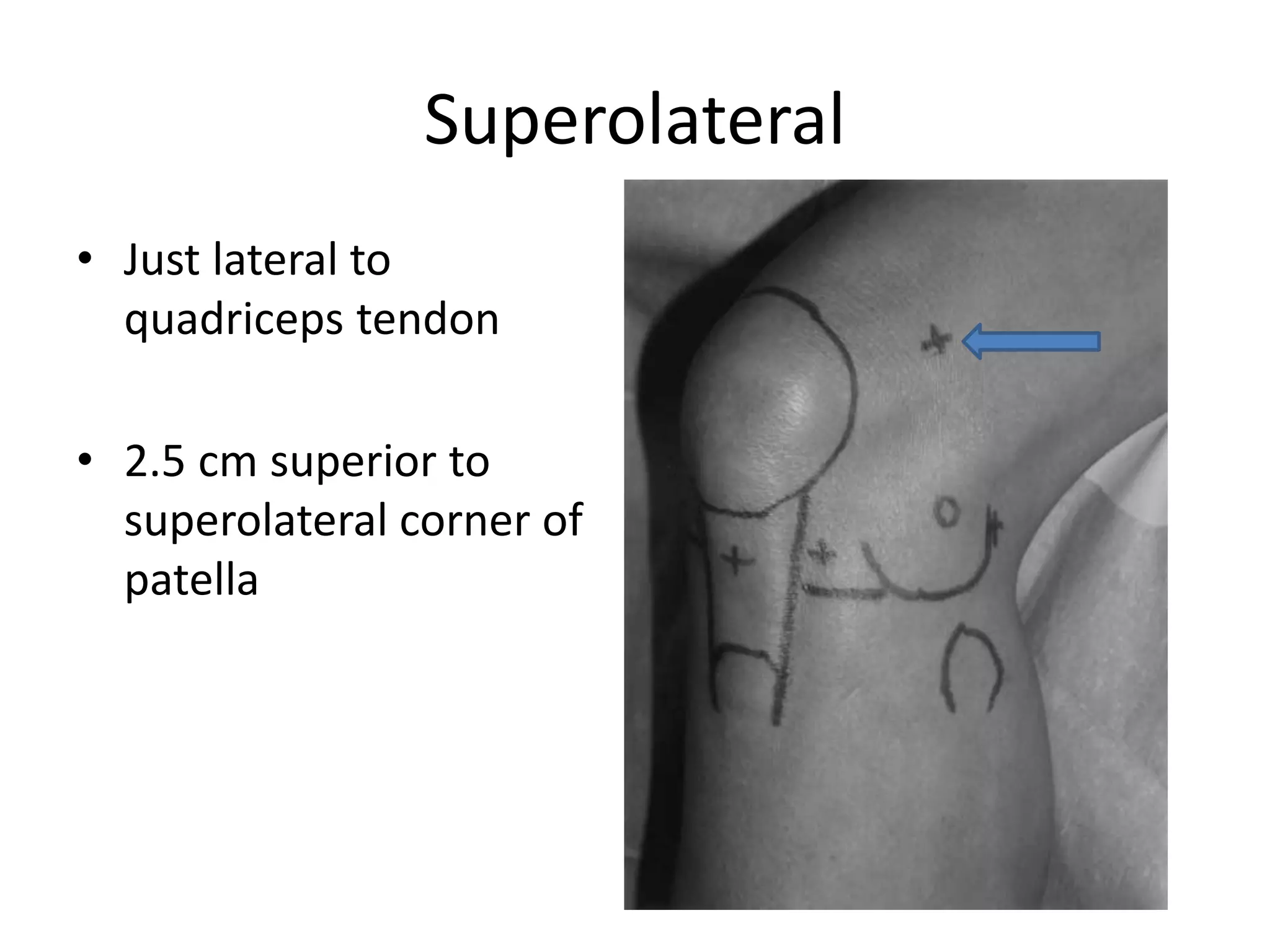
Superolateral
• Just lateral to
quadriceps tendon
• 2.5 cm superior to
superolateral corner of
patella
• view dynamics of patellofemoral articulation.
• excision of medial plicae.
• evaluation of patellar tracking, congruity,
lateral overhang
• Viewed from extension to varying degrees of
flexion
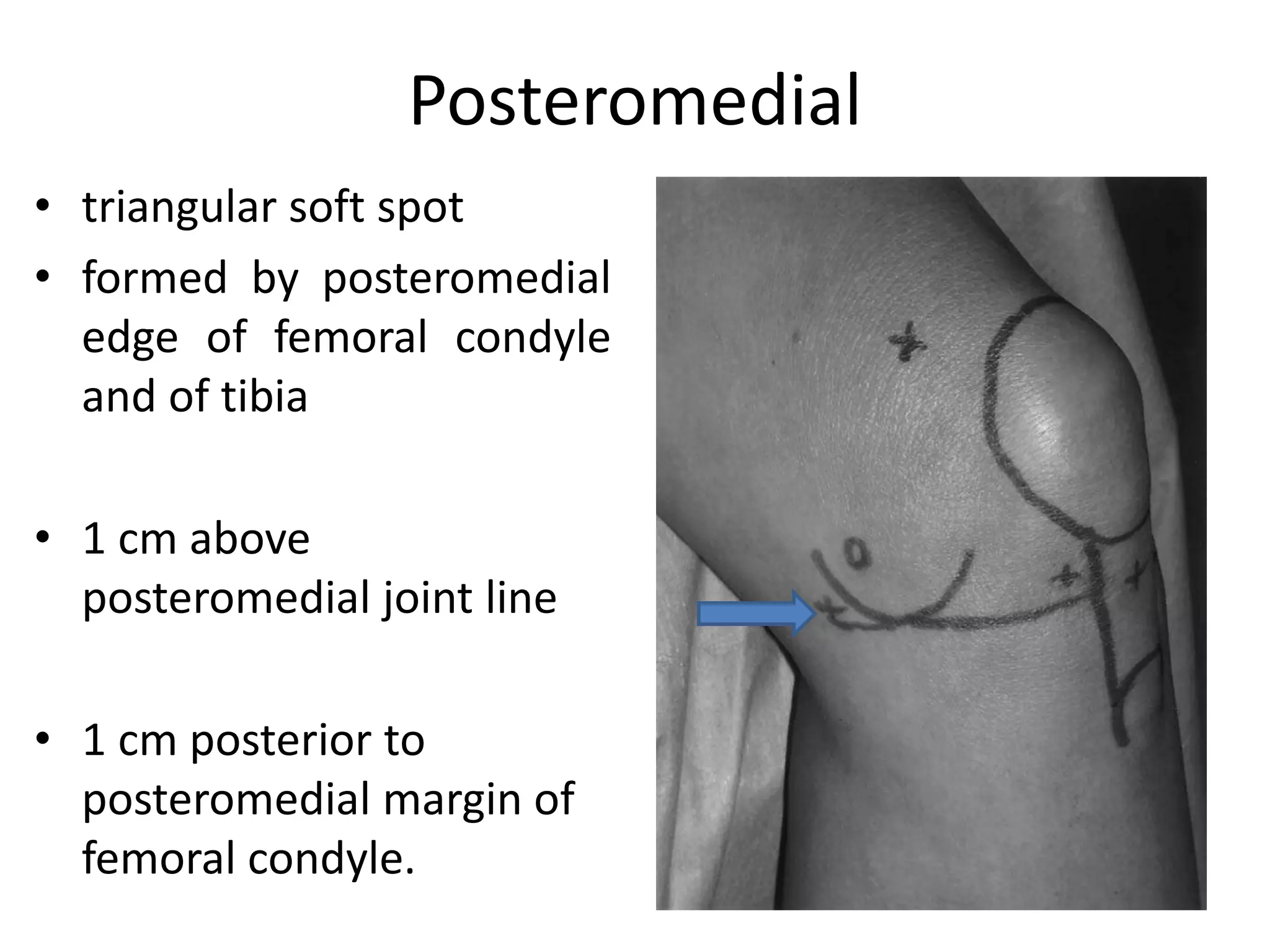
Posteromedial
• triangular soft spot
• formed by posteromedial
edge of femoral condyle
and of tibia
• 1 cm above
posteromedial joint line
• 1 cm posterior to
posteromedial margin of
femoral condyle.
• Land marks drawn before distention
• Knee flexed to 90 degrees
• Make portal after distention
• repair or removal of displaced posterior horn
meniscal tears
• removal of posterior loose bodies
Accessory portals
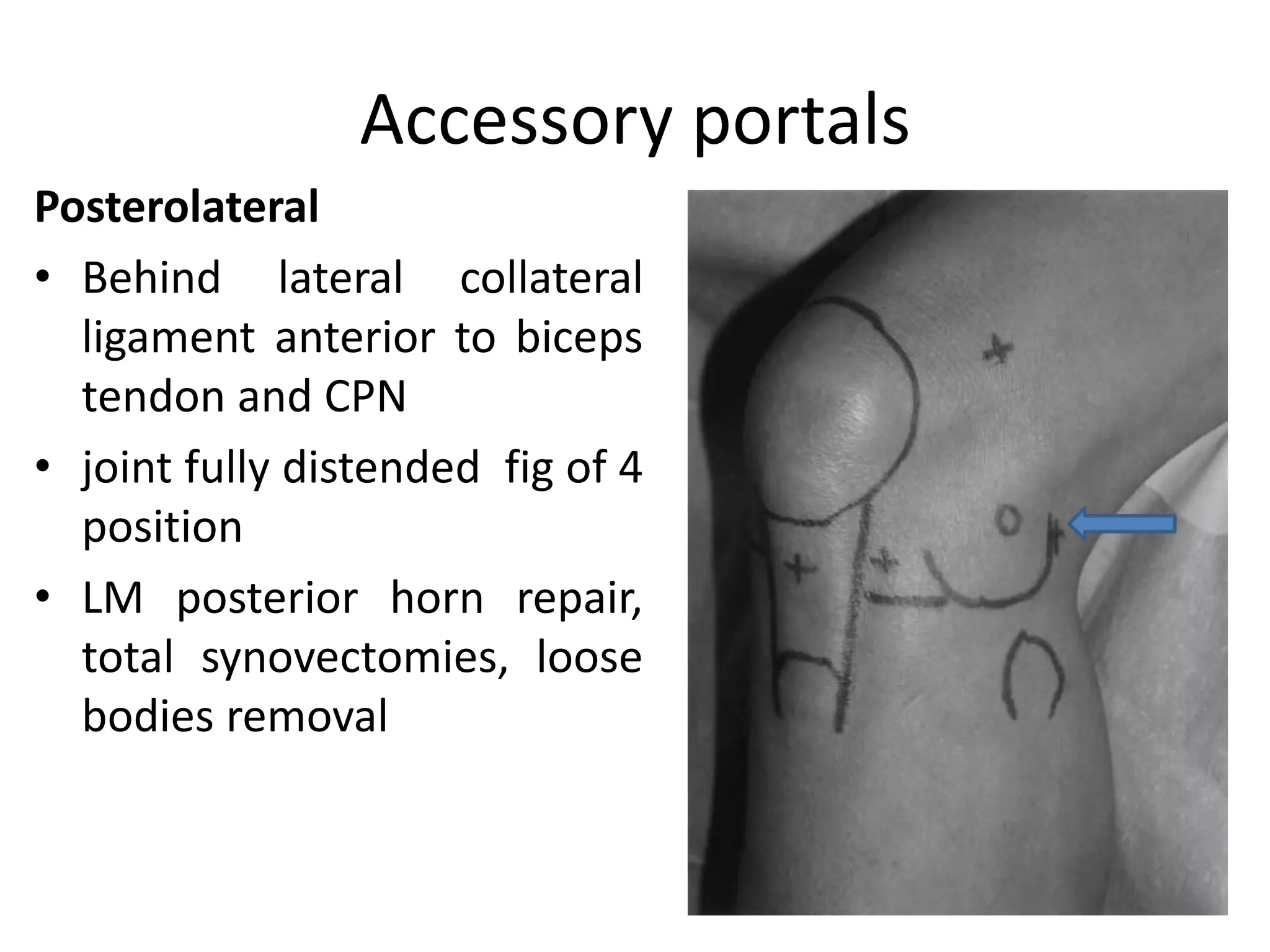
Posterolateral
• Behind lateral collateral
ligament anterior to biceps
tendon and CPN
• joint fully distended fig of 4
position
• LM posterior horn repair,
total synovectomies, loose
bodies removal
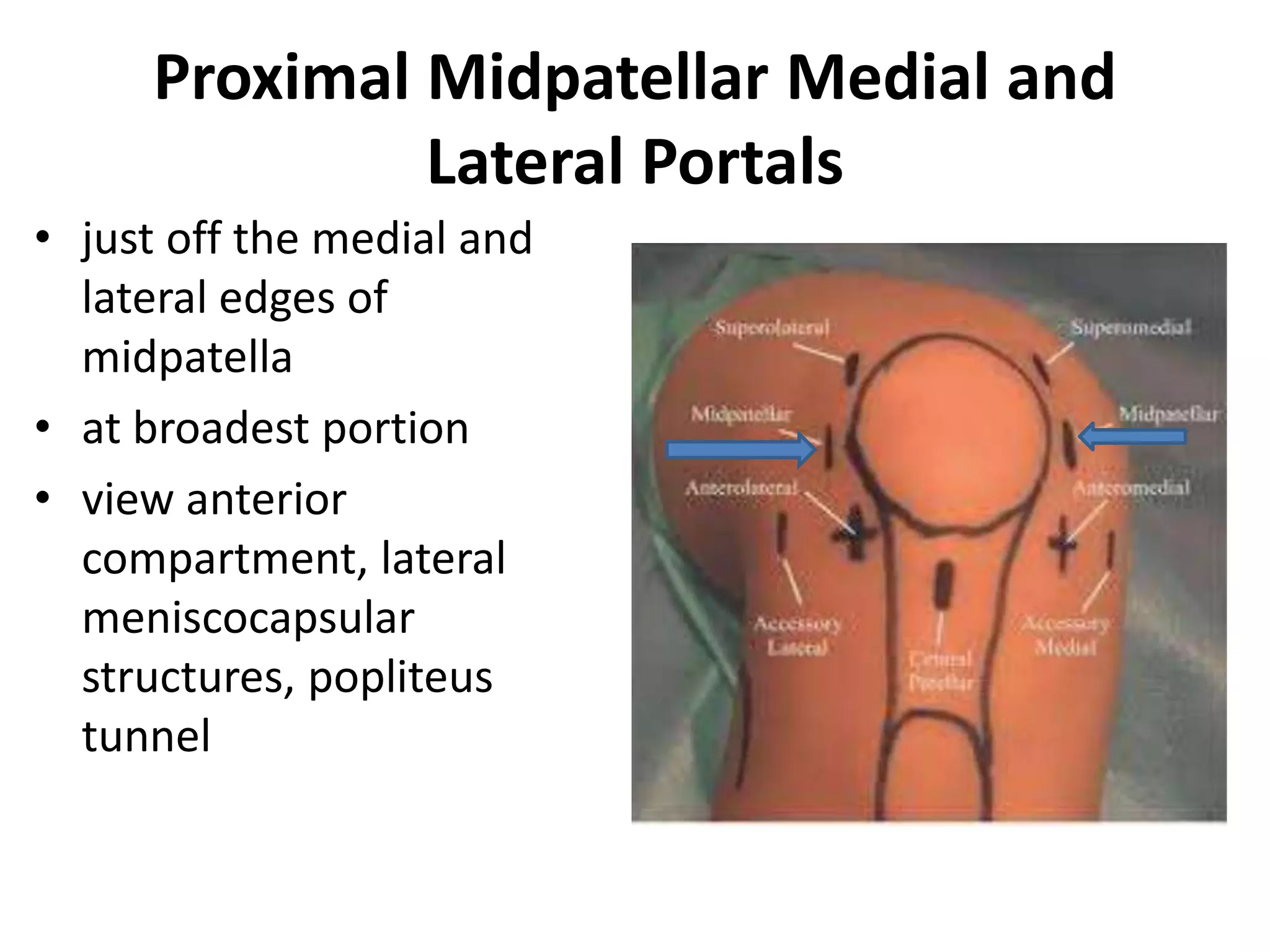
Proximal Midpatellar Medial and
Lateral Portals
• just off the medial and
lateral edges of
midpatella
• at broadest portion
• view anterior
compartment, lateral
meniscocapsular
structures, popliteus
tunnel
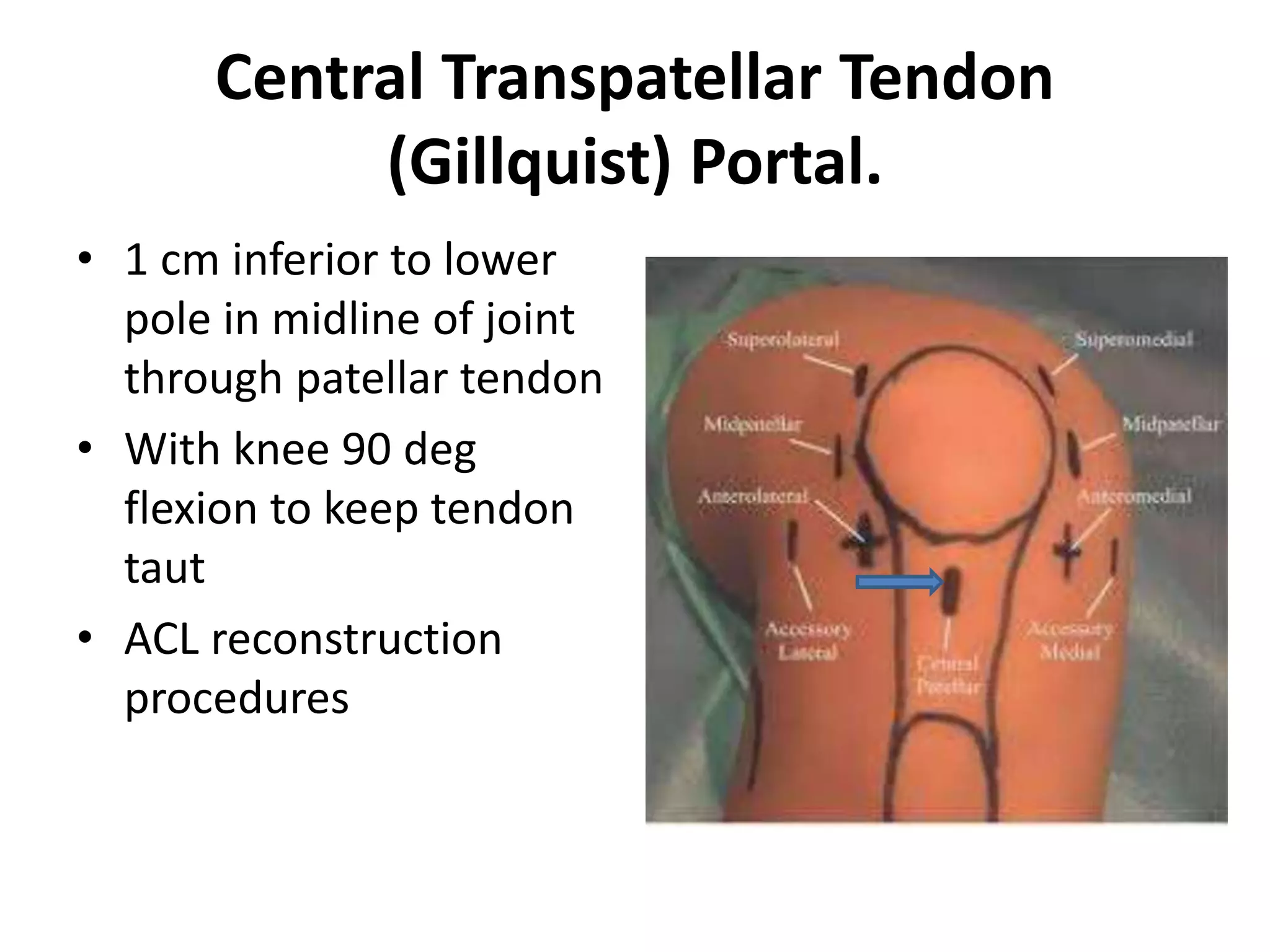
Central Transpatellar Tendon
(Gillquist) Portal.
• 1 cm inferior to lower
pole in midline of joint
through patellar tendon
• With knee 90 deg
flexion to keep tendon
taut
• ACL reconstruction
procedures
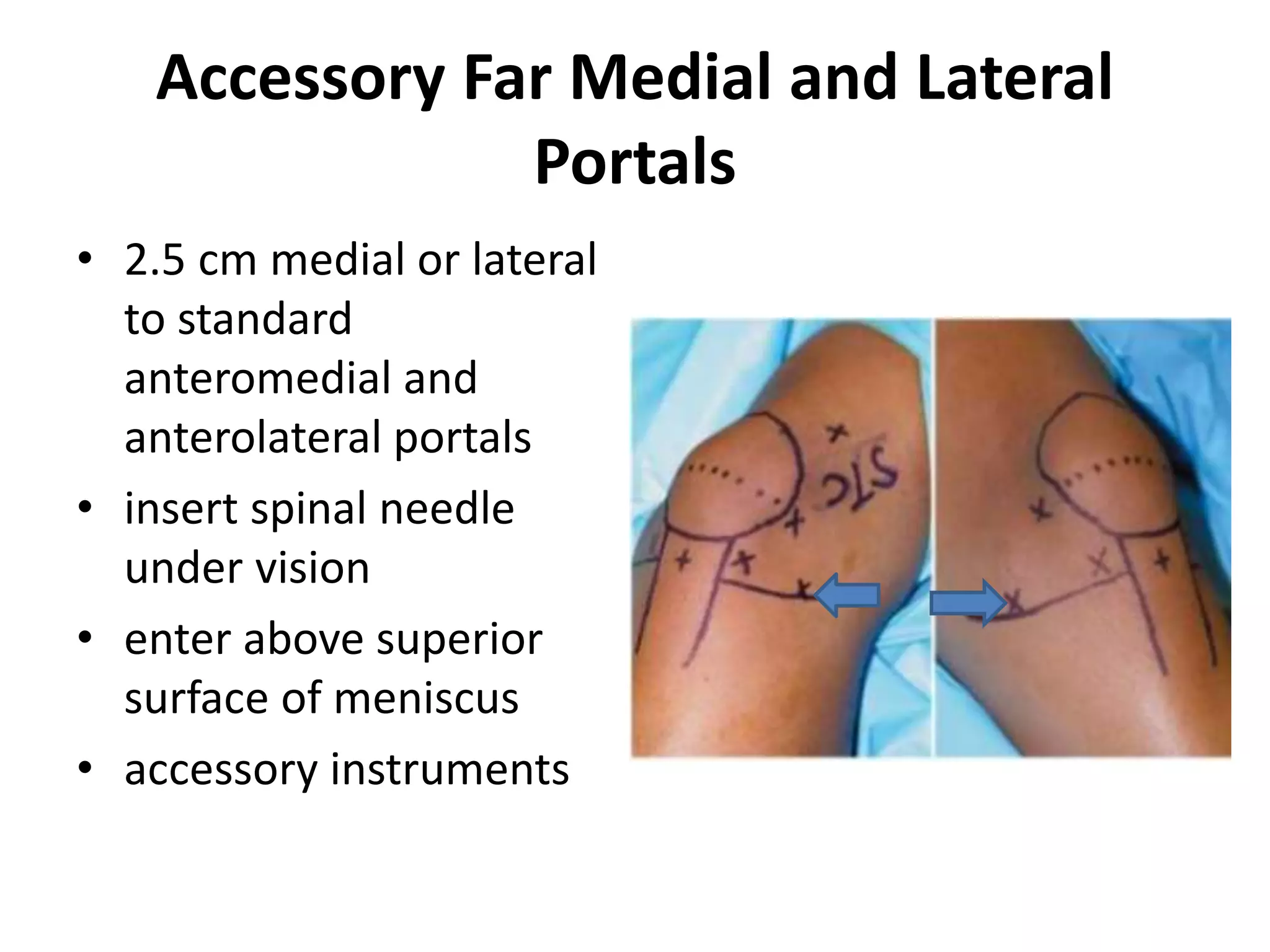
Accessory Far Medial and Lateral
Portals
• 2.5 cm medial or lateral
to standard
anteromedial and
anterolateral portals
• insert spinal needle
under vision
• enter above superior
surface of meniscus
• accessory instruments
Diagnostic arthroscopy
Making of portal
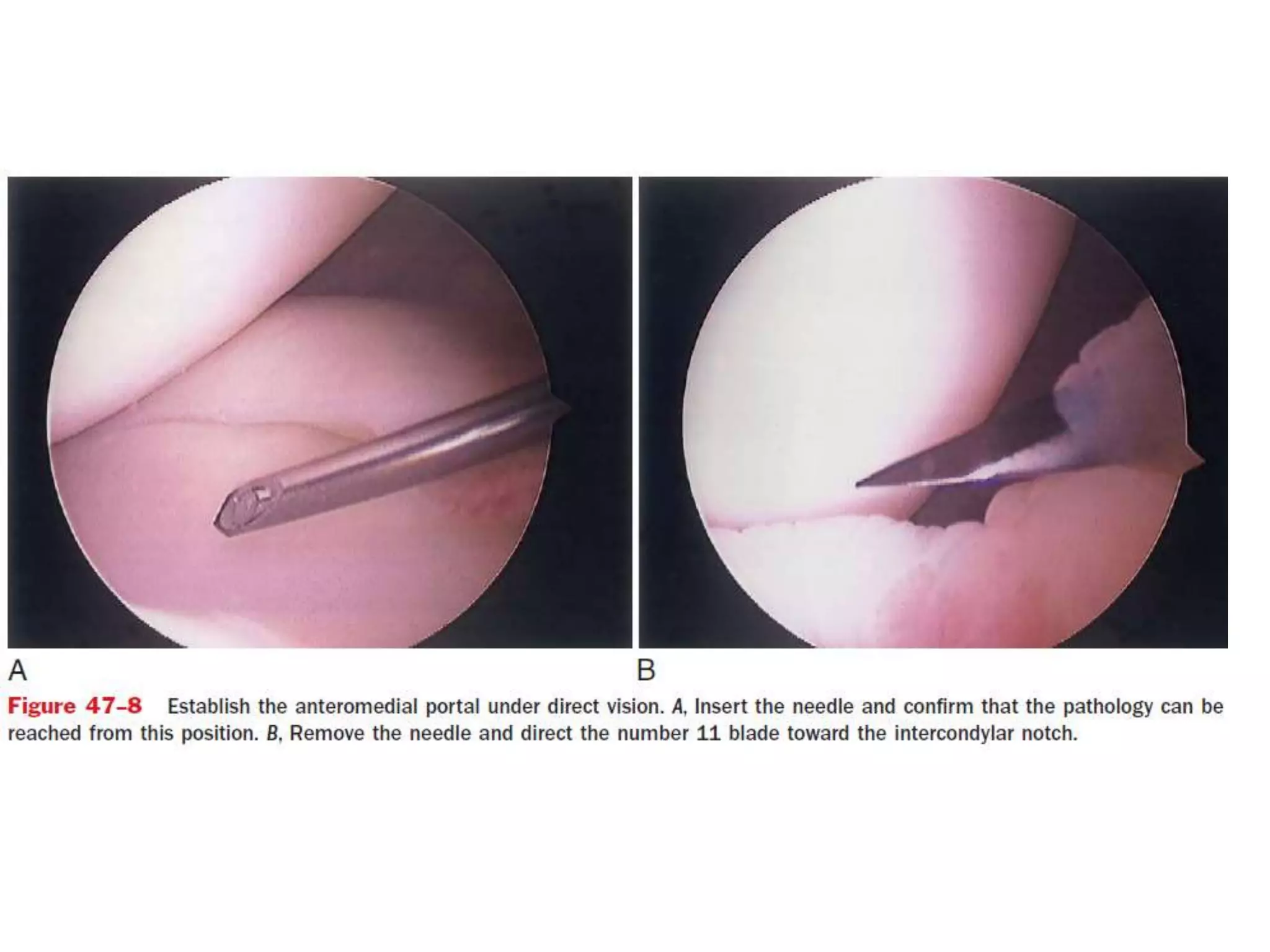
• number 11 blade
• Aim: femoral notch
Vertical:
• Point blade superiorly, vertically: prevent
injury to anterior horn of lateral meniscus
Horizontal portal
• blade is oriented away from patellar tendon
• Avoid injury to the fibers
• penetrate capsule
• Introduce sheath with a blunt trocar
• twisting motion toward intercondylar notch
• knee flexed 60 to 90 degrees.
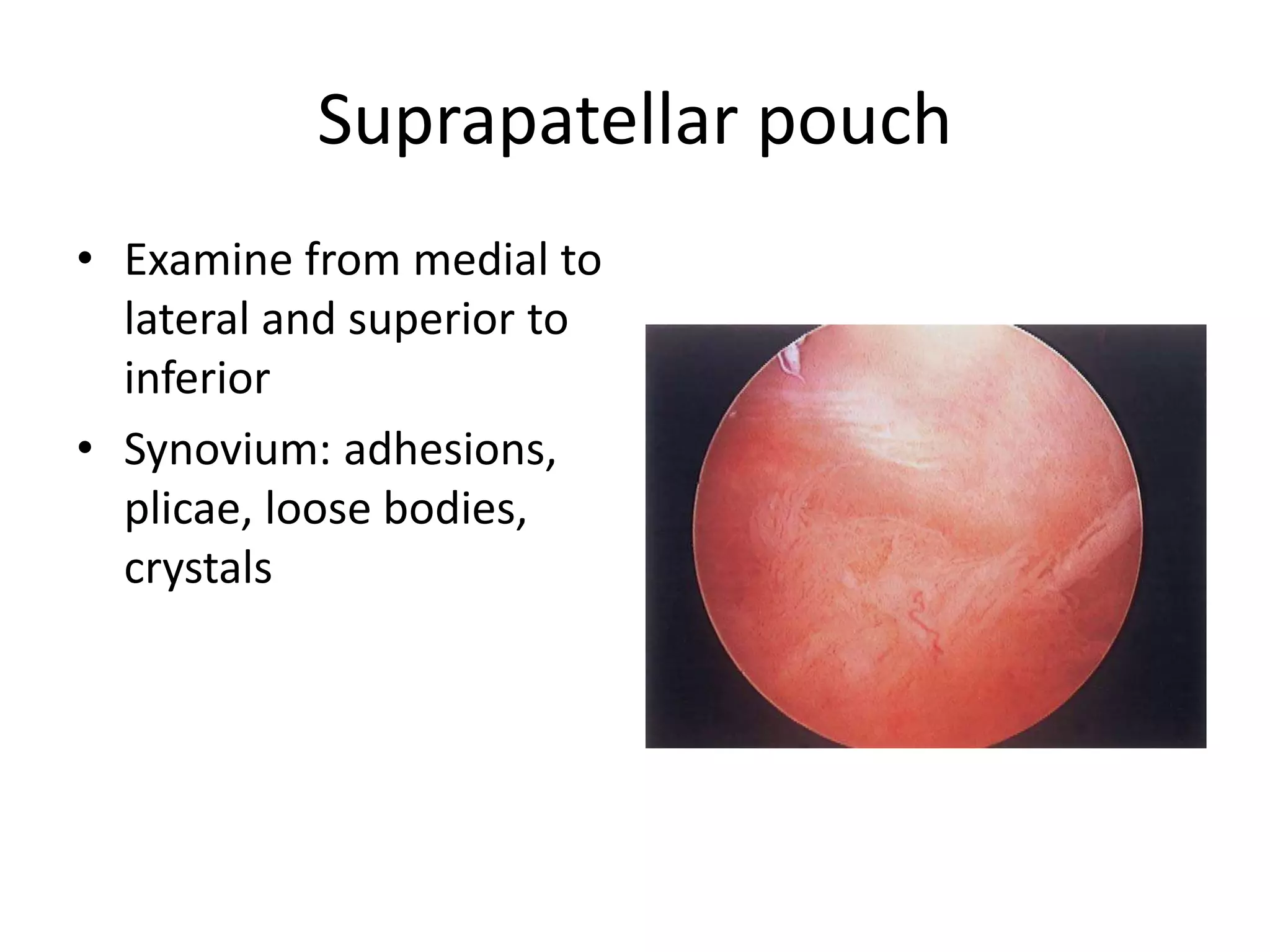
Suprapatellar pouch
• Examine from medial to
lateral and superior to
inferior
• Synovium: adhesions,
plicae, loose bodies,
crystals
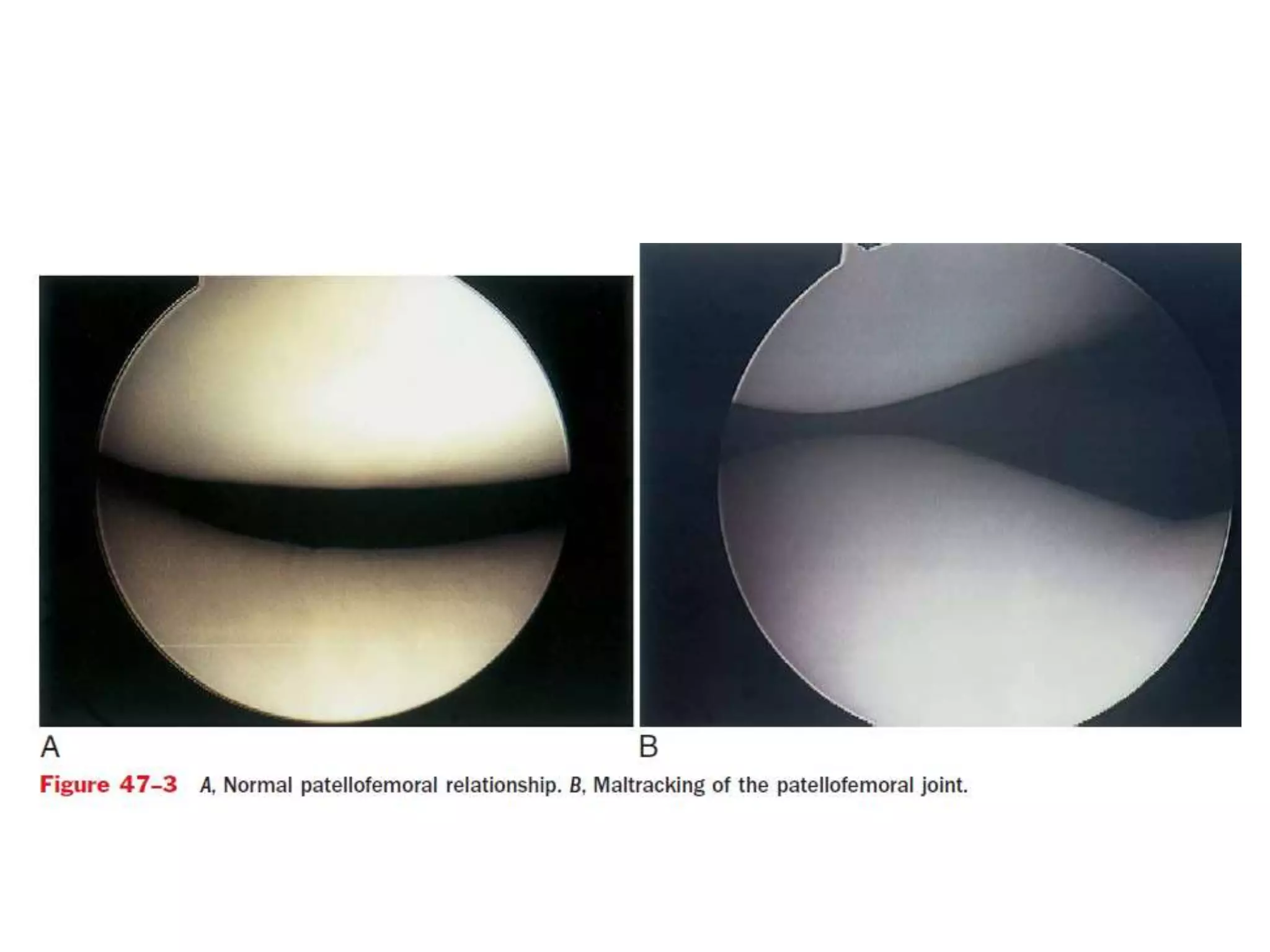
Patellofemoral compartment
• Undersurface of patella:
turn lens upwards
• Trochlea: turn lens
downwards
• Patellofemoral tracking
• Osteochondral deffects
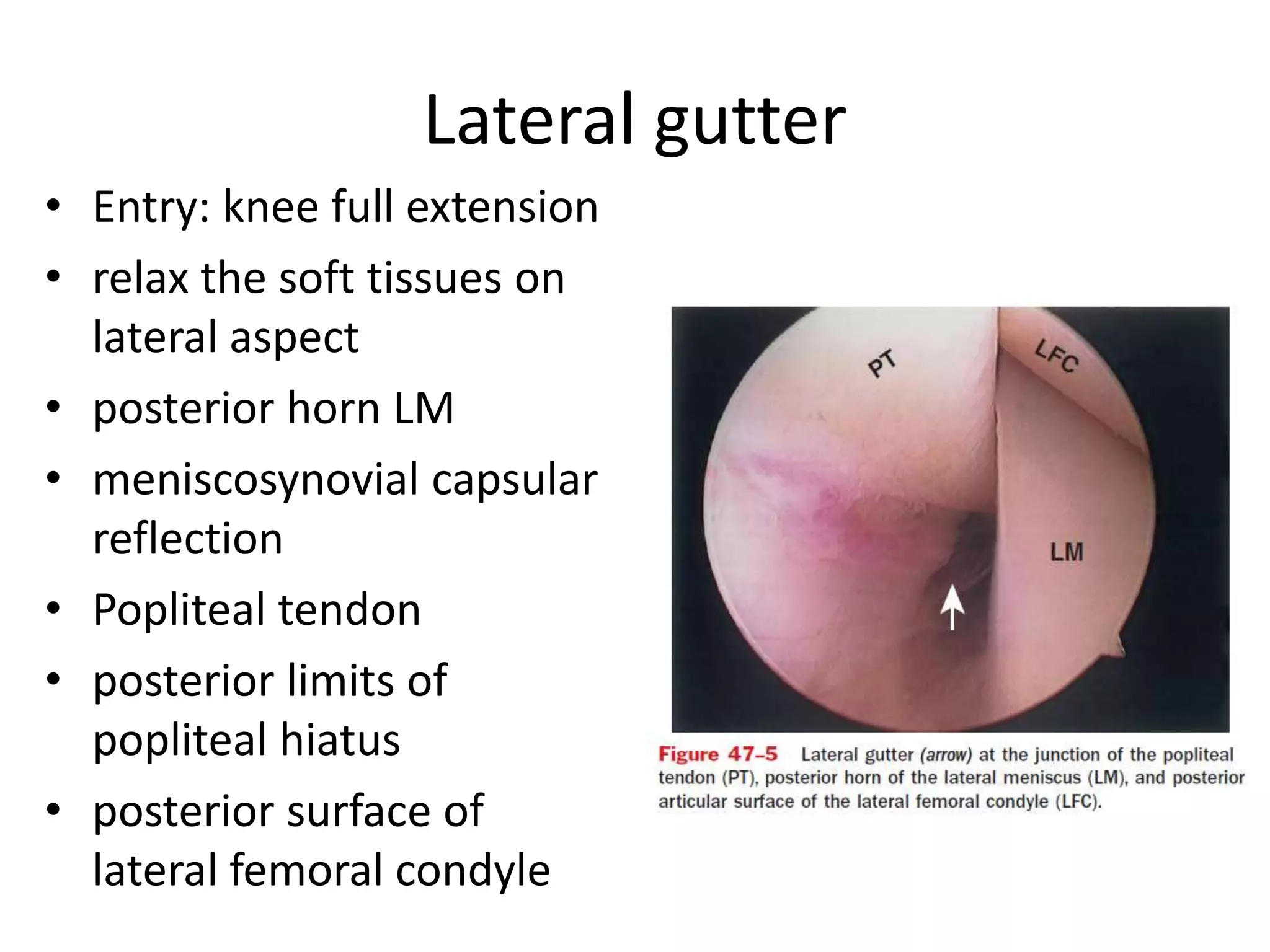
Lateral gutter
• Entry: knee full extension
• relax the soft tissues on
lateral aspect
• posterior horn LM
• meniscosynovial capsular
reflection
• Popliteal tendon
• posterior limits of
popliteal hiatus
• posterior surface of
lateral femoral condyle
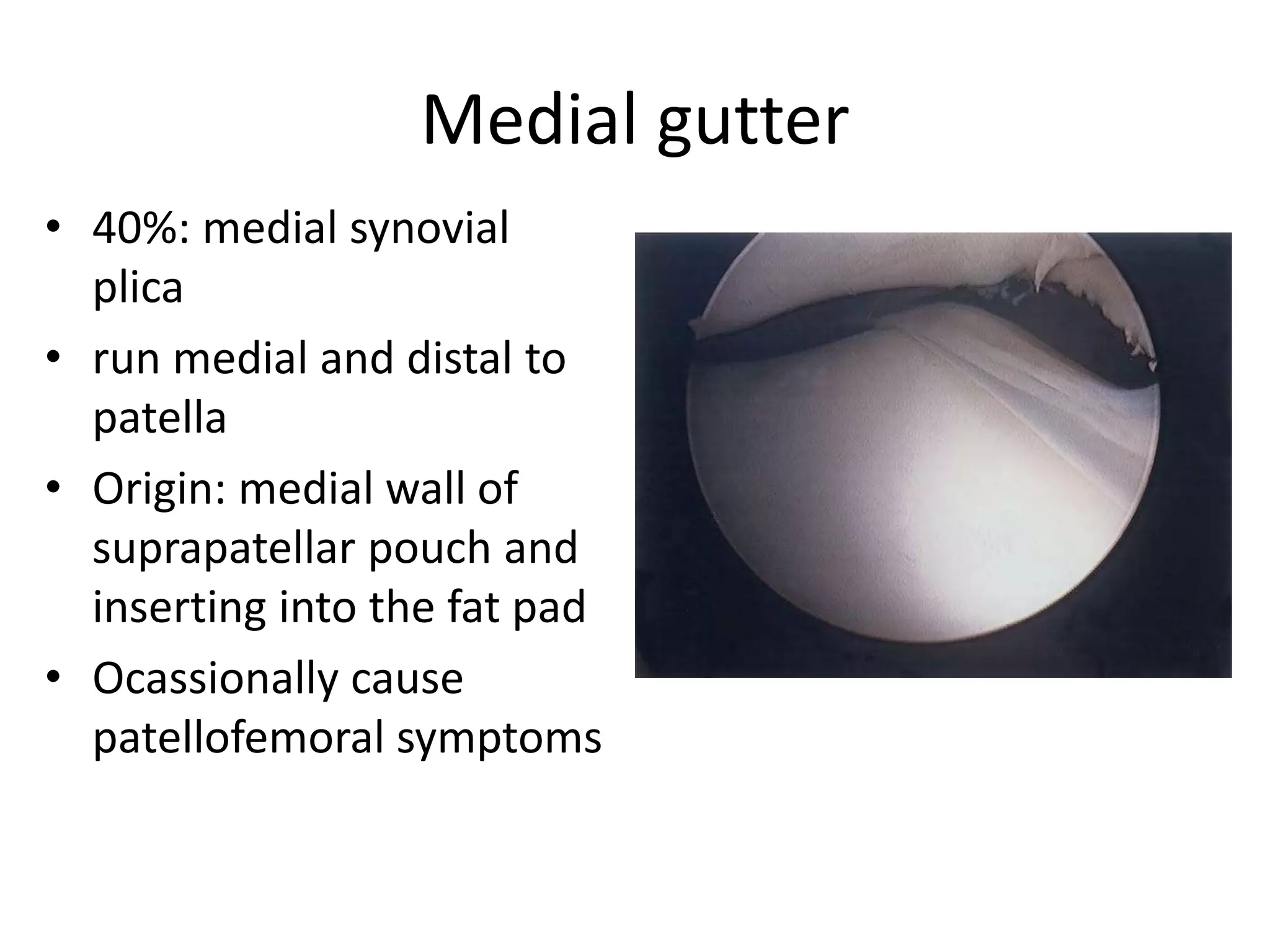
Medial gutter
• 40%: medial synovial
plica
• run medial and distal to
patella
• Origin: medial wall of
suprapatellar pouch and
inserting into the fat pad
• Ocassionally cause
patellofemoral symptoms
Medial compartment
To enter
• Leg holder: 30 deg flex,
valgus stress
• Lateral post: 90deg flex
over the side
To visualise
• Valgus stress, ER
Creating antero medial portal
• lens directed medially and anteriorly
• 18-gauge spinal needle inserted
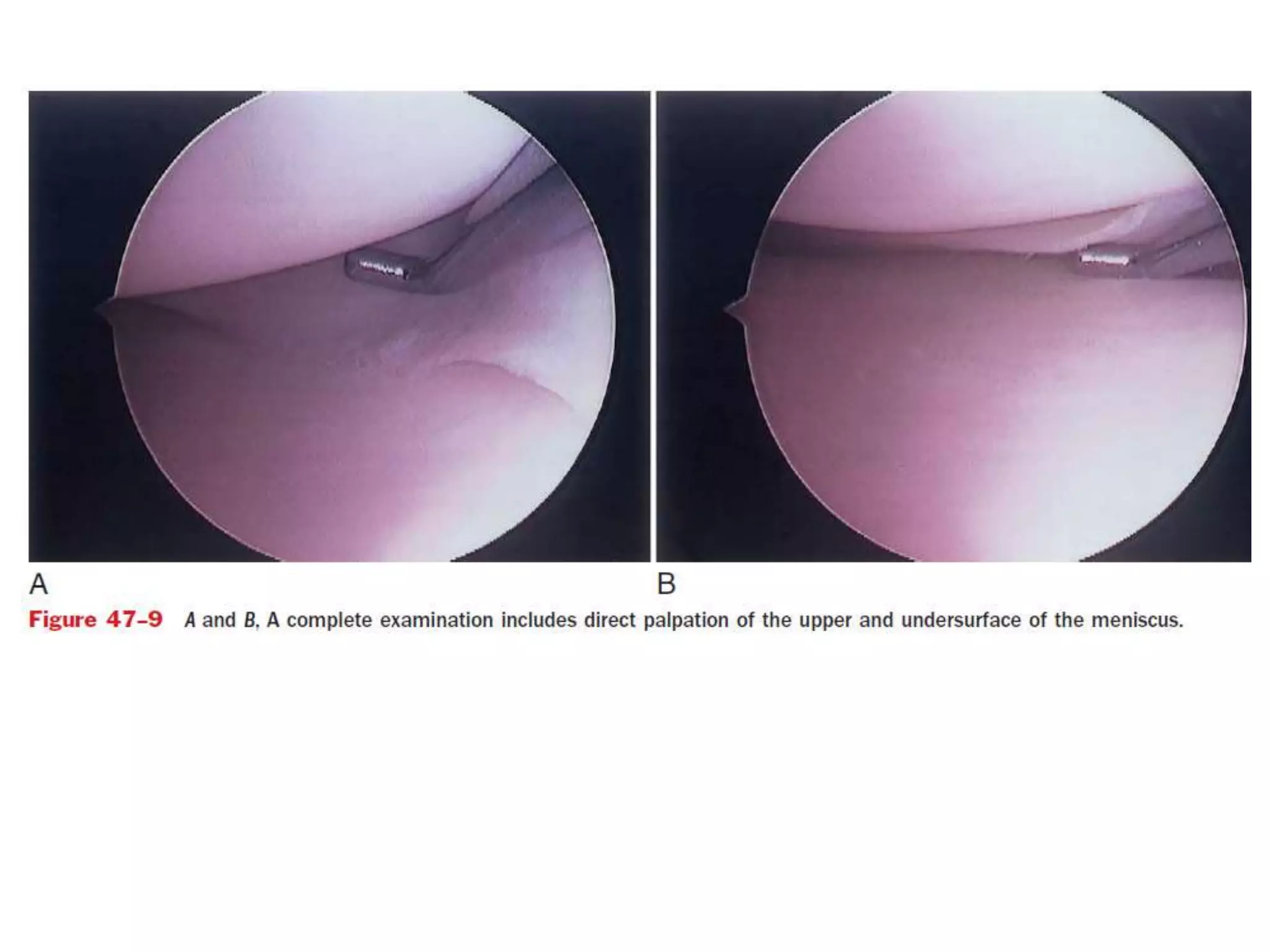
Medial meniscus examination
• Anterior, middle and
posterior
• Visual, probing
• wrinkling along the
length: peripheral
detachment
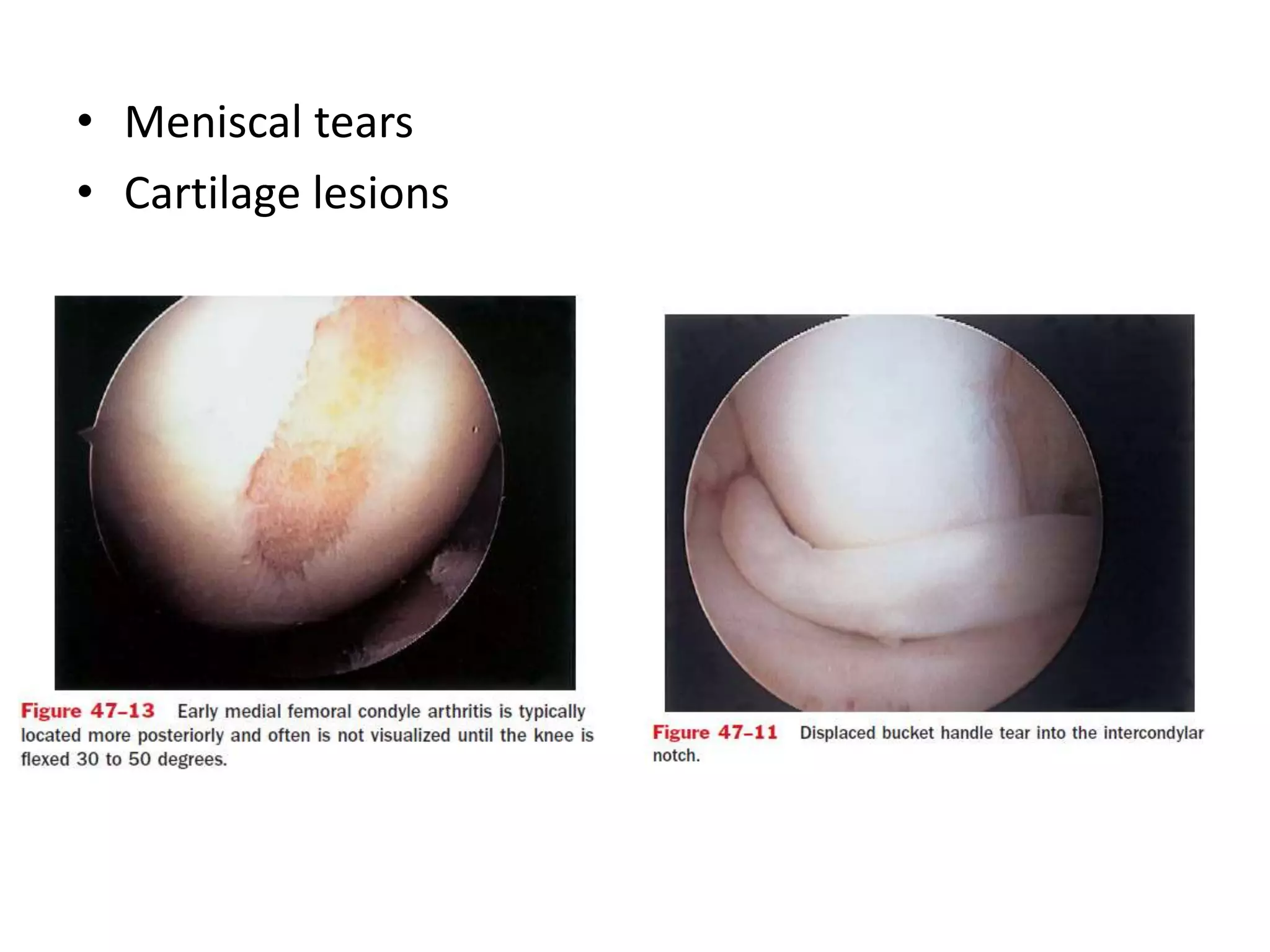
• Meniscal tears
• Cartilage lesions
Intercondylar notch
• infrapatellar fat pad,
• ligamentum mucosum
• medial and lateral tibial
spines
• attachments of both
menisci,
• ACL, PCL
• Humphry and Wrisberg
(meniscofemoral
ligaments)
• intermeniscal ligament.
ACL
• knee flexed 60 to 90
degrees
• rotate lens until medial
aspect of lateral femoral
condyle is visualized
• 10 o’clock on right, 2
o’clock on left knees
PCL
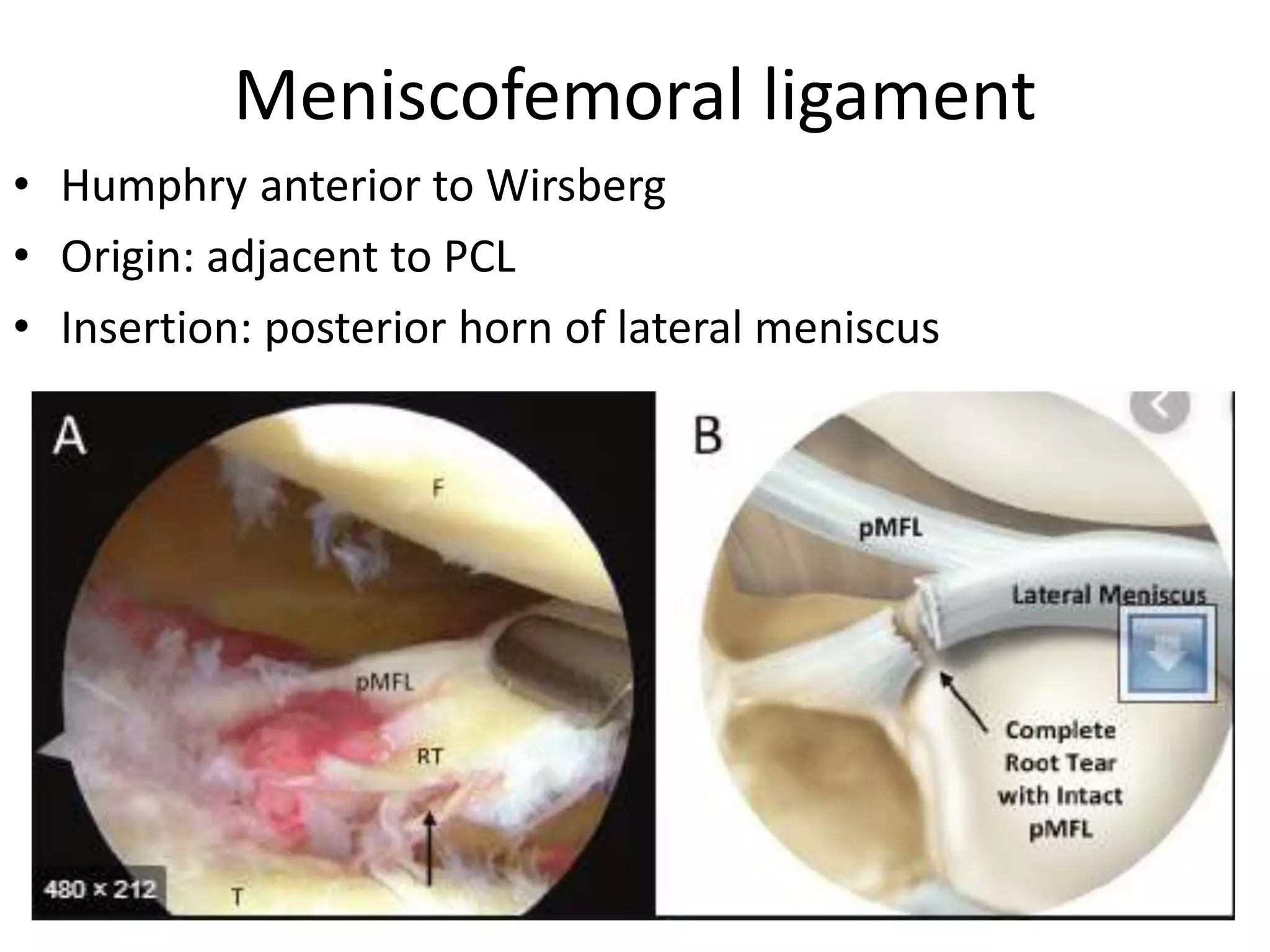
Meniscofemoral ligament
• Humphry anterior to Wirsberg
• Origin: adjacent to PCL
• Insertion: posterior horn of lateral meniscus
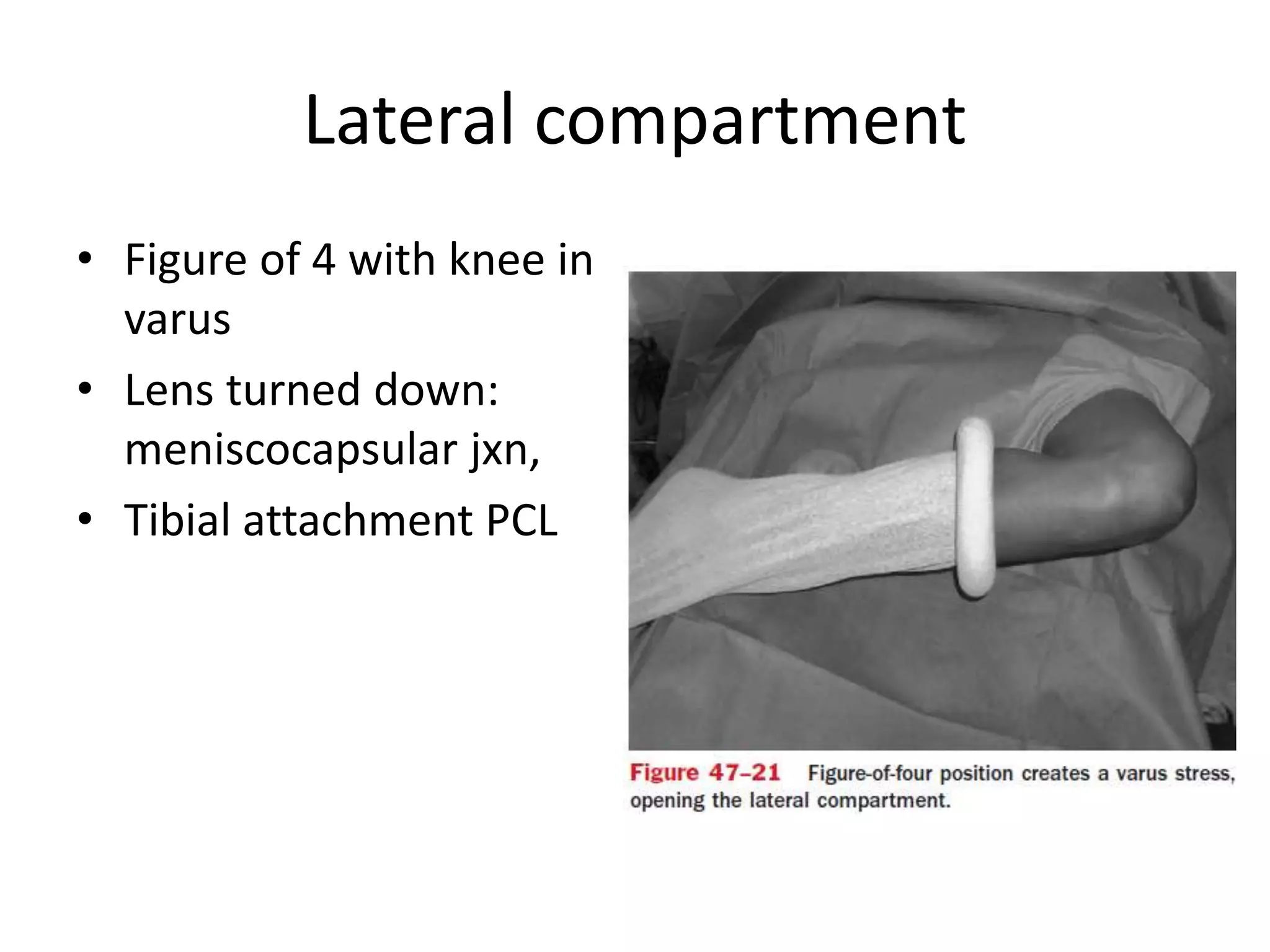
Lateral compartment
• Figure of 4 with knee in
varus
• Lens turned down:
meniscocapsular jxn,
• Tibial attachment PCL
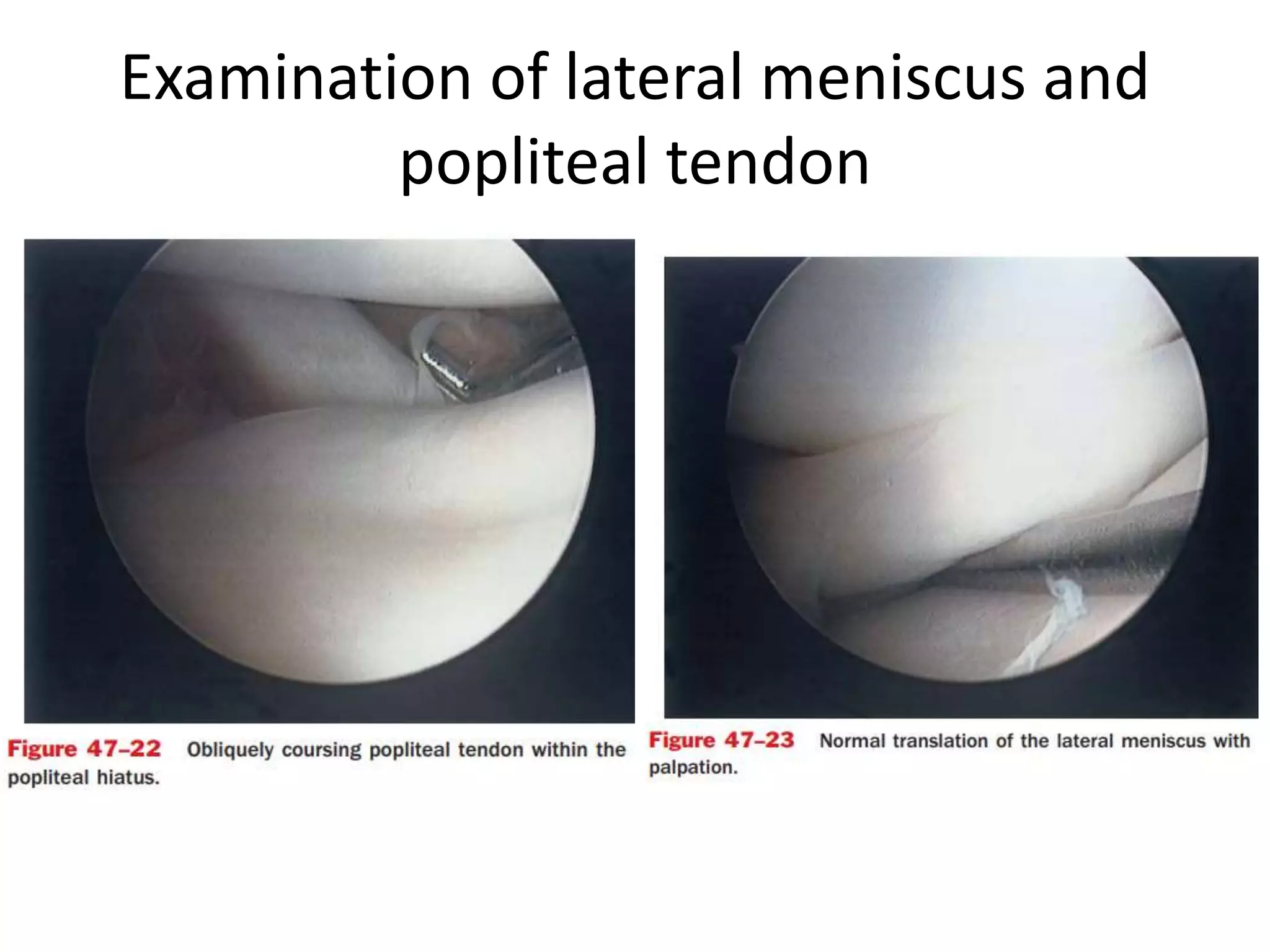
Examination of lateral meniscus and
popliteal tendon
Knee Portal Placement & Diagnostic arthroscopy

Knee Portal Placement & Diagnostic arthroscopy

  • 1.
    Knee: portal placement anddiagnostic arthroscopy Dr Asish Rajak Fellow Sports Medicine and Arthroplasty Grande International Hospital
  • 2.
    Indications: • Diagnostic arthroscopy:corroborate MRI • Removal of loose bodies • Synovial biopsy or synovectomy • Meniscal repair or resection • ACL and PCL reconstruction • Chondral defect repair, including microfracture • Osteochondritis dissecans • Knee debridement for osteoarthritis
  • 3.
    Patient positioning • Supineon table • Examination under anesthesia • Tourniquet: to be inflated after D/A • Leg holder/ lateral post
  • 4.
    • Leg holder: •Place patient distal on table for adequate knee flexion.
  • 5.
  • 6.
    Knee portals Standard portals •Anterolateral • Anteromedial • Posteromedial • Superolateral Accessory portals • Posterolateral • Proximal midpatellar medial and lateral • Far medial and far lateral • Central transpatellar
  • 7.
    Standard portals Antero lateral •viewing portal: arthroscope first inserted • most versatile • palpable lateral “soft spot” • 1 cm above LJL adjacent to lateral margin of PT • 1 cm inferior to inferior pole
  • 8.
    • almost allstructures visualised • Exception: tibial insertion of PCL, undersurface of anterior horn lateral meniscus Superior placement; • restricts access to patellofemoral joint and suprapatellar pouch • Access to posteromedial structures is difficult
  • 9.
    • Inferior placement:anterior horn of meniscus at risk of laceration • thickest infrapatellar fat pad • medial placement: penetration of patellar tendon
  • 10.
    Anteromedial portal • 1cm above medial joint line, • 1 cm inferior to tip of patella • adjacent to medial edge of patellar tendon • medial soft spot
  • 11.
    • made atsame time as anterolateral • or under arthroscopic visualization after localization with a spinal needle • primary working portal. • introduce instruments • alternative viewing portal
  • 12.
    Superolateral • Just lateralto quadriceps tendon • 2.5 cm superior to superolateral corner of patella
  • 13.
    • view dynamicsof patellofemoral articulation. • excision of medial plicae. • evaluation of patellar tracking, congruity, lateral overhang • Viewed from extension to varying degrees of flexion
  • 14.
    Posteromedial • triangular softspot • formed by posteromedial edge of femoral condyle and of tibia • 1 cm above posteromedial joint line • 1 cm posterior to posteromedial margin of femoral condyle.
  • 15.
    • Land marksdrawn before distention • Knee flexed to 90 degrees • Make portal after distention • repair or removal of displaced posterior horn meniscal tears • removal of posterior loose bodies
  • 16.
    Accessory portals Posterolateral • Behindlateral collateral ligament anterior to biceps tendon and CPN • joint fully distended fig of 4 position • LM posterior horn repair, total synovectomies, loose bodies removal
  • 17.
    Proximal Midpatellar Medialand Lateral Portals • just off the medial and lateral edges of midpatella • at broadest portion • view anterior compartment, lateral meniscocapsular structures, popliteus tunnel
  • 18.
    Central Transpatellar Tendon (Gillquist)Portal. • 1 cm inferior to lower pole in midline of joint through patellar tendon • With knee 90 deg flexion to keep tendon taut • ACL reconstruction procedures
  • 19.
    Accessory Far Medialand Lateral Portals • 2.5 cm medial or lateral to standard anteromedial and anterolateral portals • insert spinal needle under vision • enter above superior surface of meniscus • accessory instruments
  • 20.
    Diagnostic arthroscopy Making ofportal • number 11 blade • Aim: femoral notch Vertical: • Point blade superiorly, vertically: prevent injury to anterior horn of lateral meniscus
  • 21.
    Horizontal portal • bladeis oriented away from patellar tendon • Avoid injury to the fibers • penetrate capsule • Introduce sheath with a blunt trocar • twisting motion toward intercondylar notch • knee flexed 60 to 90 degrees.
  • 24.
    Suprapatellar pouch • Examinefrom medial to lateral and superior to inferior • Synovium: adhesions, plicae, loose bodies, crystals
  • 25.
    Patellofemoral compartment • Undersurfaceof patella: turn lens upwards • Trochlea: turn lens downwards • Patellofemoral tracking • Osteochondral deffects
  • 27.
    Lateral gutter • Entry:knee full extension • relax the soft tissues on lateral aspect • posterior horn LM • meniscosynovial capsular reflection • Popliteal tendon • posterior limits of popliteal hiatus • posterior surface of lateral femoral condyle
  • 28.
    Medial gutter • 40%:medial synovial plica • run medial and distal to patella • Origin: medial wall of suprapatellar pouch and inserting into the fat pad • Ocassionally cause patellofemoral symptoms
  • 29.
    Medial compartment To enter •Leg holder: 30 deg flex, valgus stress • Lateral post: 90deg flex over the side To visualise • Valgus stress, ER
  • 30.
    Creating antero medialportal • lens directed medially and anteriorly • 18-gauge spinal needle inserted
  • 32.
    Medial meniscus examination •Anterior, middle and posterior • Visual, probing • wrinkling along the length: peripheral detachment
  • 34.
    • Meniscal tears •Cartilage lesions
  • 36.
    Intercondylar notch • infrapatellarfat pad, • ligamentum mucosum • medial and lateral tibial spines • attachments of both menisci, • ACL, PCL • Humphry and Wrisberg (meniscofemoral ligaments) • intermeniscal ligament.
  • 37.
    ACL • knee flexed60 to 90 degrees • rotate lens until medial aspect of lateral femoral condyle is visualized • 10 o’clock on right, 2 o’clock on left knees
  • 40.
  • 41.
    Meniscofemoral ligament • Humphryanterior to Wirsberg • Origin: adjacent to PCL • Insertion: posterior horn of lateral meniscus
  • 42.
    Lateral compartment • Figureof 4 with knee in varus • Lens turned down: meniscocapsular jxn, • Tibial attachment PCL
  • 43.
    Examination of lateralmeniscus and popliteal tendon