Shot Types 
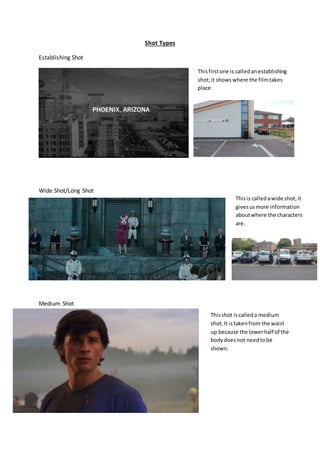
Establishing Shot 
Wide Shot/Long Shot 
Medium Shot 
This first one is called an establishing 
shot; it shows where the film takes 
place. 
This is called a wide shot, it 
gives us more information 
about where the characters 
are. 
This shot is called a medium 
shot. It is taken from the waist 
up because the lower half of the 
body does not need to be 
shown.
Close Up 
Medium Close Up 
Extreme Close Up 
This shot is called a close up. It zooms in 
on the main object/person to 
emphasise the importance of it. 
This is a medium close up 
shot. It is half way between 
close up and medium shot. It 
shows the face more clearly 
without getting 
uncomfortably close. 
Extreme close up. 
Shows emotions of 
the character or even 
object being shown.
Over The Shoulder 
Two Shot 
This shot is called the point of view 
shot because it makes the audience 
believe that they are in that 
position. 
This is called an over the 
shoulder shot. It is taken 
over the shoulder; this can 
help the audience place the 
characters in the setting. 
This is a two shot where it shows 
two people at one time within the 
same shot. 
Point of View
Shot Reverse Shot 
High Angle Shot 
Low Angle Shot 
This is called a shot reverse shot. 
This is where one character is shown 
looking at another character (often 
off-screen), since the characters are 
shown facing in opposite directions, 
the viewer assumes that they are 
looking at each other. 
A high angle shot is usually when the 
camera angle is located above the 
eye line. 
This low angle shot, anywhere below 
the eye line, looking up

Shot Types

  • 1.
    Shot Types EstablishingShot Wide Shot/Long Shot Medium Shot This first one is called an establishing shot; it shows where the film takes place. This is called a wide shot, it gives us more information about where the characters are. This shot is called a medium shot. It is taken from the waist up because the lower half of the body does not need to be shown.
  • 2.
    Close Up MediumClose Up Extreme Close Up This shot is called a close up. It zooms in on the main object/person to emphasise the importance of it. This is a medium close up shot. It is half way between close up and medium shot. It shows the face more clearly without getting uncomfortably close. Extreme close up. Shows emotions of the character or even object being shown.
  • 3.
    Over The Shoulder Two Shot This shot is called the point of view shot because it makes the audience believe that they are in that position. This is called an over the shoulder shot. It is taken over the shoulder; this can help the audience place the characters in the setting. This is a two shot where it shows two people at one time within the same shot. Point of View
  • 4.
    Shot Reverse Shot High Angle Shot Low Angle Shot This is called a shot reverse shot. This is where one character is shown looking at another character (often off-screen), since the characters are shown facing in opposite directions, the viewer assumes that they are looking at each other. A high angle shot is usually when the camera angle is located above the eye line. This low angle shot, anywhere below the eye line, looking up