Prof. U. Murali.
Shock
[Hypovolemic | Septic]
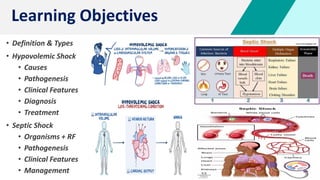
Learning Objectives
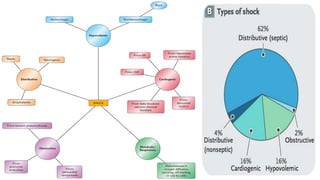
• Definition & Types
• Hypovolemic Shock
• Causes
• Pathogenesis
• Clinical Features
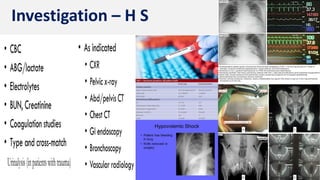
• Diagnosis
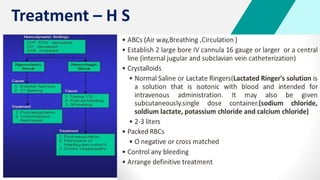
• Treatment
• Septic Shock
• Organisms + RF
• Pathogenesis
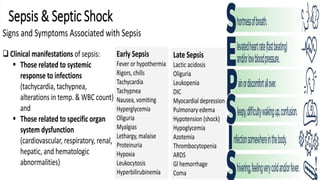
• Clinical Features
• Management
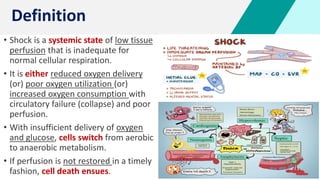
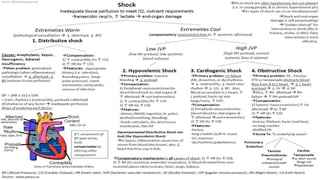
• Shock is a systemic state of low tissue
perfusion that is inadequate for
normal cellular respiration.
• It is either reduced oxygen delivery
(or) poor oxygen utilization (or)
increased oxygen consumption with
circulatory failure (collapse) and poor
perfusion.
• With insufficient delivery of oxygen
and glucose, cells switch from aerobic
to anaerobic metabolism.
• If perfusion is not restored in a timely
fashion, cell death ensues.
Definition
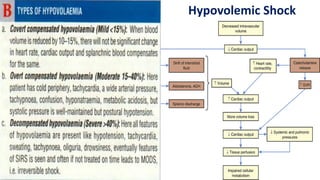
Hypovolemic Shock
Prof. U.Murali.
Hypovolemic Shock
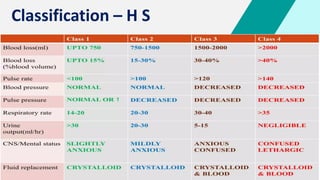
Classification – H S
Investigation – H S
Treatment – H S
Septic Shock
Prof. U.Murali.
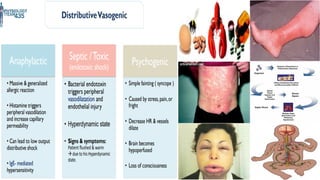
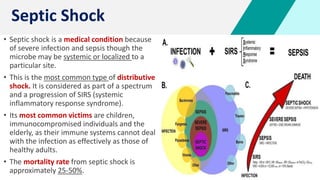
• Septic shock is a medical condition because
of severe infection and sepsis though the
microbe may be systemic or localized to a
particular site.
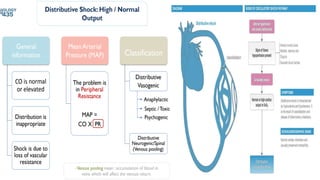
• This is the most common type of distributive
shock. It is considered as part of a spectrum
and a progression of SIRS (systemic
inflammatory response syndrome).
• Its most common victims are children,
immunocompromised individuals and the
elderly, as their immune systems cannot deal
with the infection as effectively as those of
healthy adults.
• The mortality rate from septic shock is
approximately 25-50%.
Septic Shock
• Septic shock may be due to gram-
positive organisms, gram negative
organisms, fungi, viruses or protozoa!
• Of the Bacteria’s involved - Gram –ve
bacteria ⅔ & Gram +ve ⅓.
• Gram-negative septic shock is called
as Endotoxic shock. It occurs due to
gram-neg bacterial infections –
commonly seen in strangulated
intestines, peritonitis, GIF, biliary &
urinary infections, major surgical
wounds, diabetic & crush wounds.
S S – Organisms
19
S S – Risk Factors
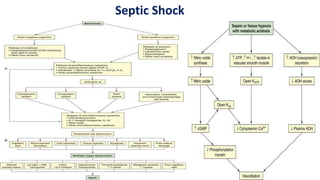
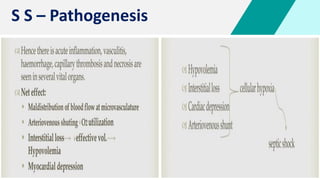
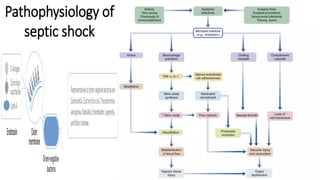
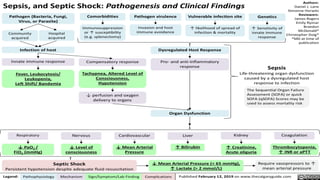
S S – Pathogenesis
Septic Shock
S S – Pathogenesis
S S – Stages
25
26
27
S S – Investigations
S S – Treatment
30
• Definition & Types of Shock.
• Aetiology of Hypovolemic & Septic Shock.
• Pathophysiology of both types of Shock.
• Organisms & Risk factors of Septic shock.
• Clinical features of both types of Shock.
• Classification of Hypovolemic Shock due to Blood loss.
• Stages of Septic Shock.
• Investigations & Treatment of Hypovolemic & Septic Shock.
To Summarize
References
• Define shock.
• Illustrate with flow-chart the pathophysiology of HS & SS.
• Classify Haemorrhagic shock.
• Mention the clinical features of Hypovolemic shock.
• Describe the management of Hypovolemic shock.
• Enumerate the risk factors of Septic shock.
• Explain the stages of Septic shock.
• Write the algorithm of Septic shock.
Question Time
Which of the following is the last to occur in
septic shock? –
◼ a) Tachypnoea.
◼ b) Hypotension.
◼ c) Coronary artery hypoperfusion.
◼ d) Renal hypoperfusion.
◼
Which of the following causes of shock is not
actually caused by hypovolemia? –
◼ a) Shock during administration of spinal anesthesia.
◼ b) Shock following trauma.
◼ c) Shock following a large burn.
◼ d) Shock in prolonged intestinal obstruction.
◼
An 81-year-old female resident of a nursing home presents to the ED with
altered mental status. She is febrile to 39.5°C, hypotensive with a
widened pulse pressure, tachycardiac with warm extremities. Categorize
the type of shock in the above patient –
◼ a) Anaphylactic shock.
◼ b) Hypovolemic shock.
◼ c) Cardiogenic shock.
◼ d) Septic shock.
◼
A 65-year-old male patient with history of HTN and DM presents to the ER
with abrupt onset of diffuse abdominal pain with radiation to his low back.
O/E, the patient is hypotensive, tachycardic, afebrile with cool but dry skin.
Categorize the type of shock in the above patient –
◼ a) Obstructive shock.
◼ b) Hypovolemic shock.
◼ c) Cardiogenic shock.
◼ d) Distributive shock.
◼
A patient presents with hypotension and clinical features of septic shock.
Despite insertion of a CVP line the resident doctor is unclear whether the
patient’s hypotension is caused by hypovolemia (or) by sepsis-induced
myocardial depression [MD]. Which of the following statements is true? –
◼ a) An IV fluid must not be given unless MD is absolutely excluded.
◼ b) The resident should rapidly administer 500 ml of fluid to differentiate
between hypovolemia & MD.
◼ c) The resident should first raise the pressor support & see if the patient
responds.
◼ d) MD is not a component of septic shock, and the resident should only
treat for hypovolemia.
Which of the following is the correct physiological
change during hypovolemic shock? –
◼ a) Increased cardiac output.
◼ b) Decreased vascular resistance.
◼ c) Decreased venous pressure.
◼ d) Increased venous saturation.
◼
A patient who is experiencing hypovolemic shock has decreased
cardiac output, which contributes to ineffective tissue perfusion. The
decrease in cardiac output occurs due to –
◼ a) An increase in cardiac preload.
◼ b) An increase in stroke volume.
◼ c) A decrease in cardiac preload.
◼ d) A decrease in cardiac contractility.
◼
THANK YOU
THANK YOU . . .
Shock - Septic + Hypovolemic - Causes & Management

Shock - Septic + Hypovolemic - Causes & Management

  • 1.
  • 2.
    Learning Objectives • Definition& Types • Hypovolemic Shock • Causes • Pathogenesis • Clinical Features • Diagnosis • Treatment • Septic Shock • Organisms + RF • Pathogenesis • Clinical Features • Management
  • 3.
    • Shock isa systemic state of low tissue perfusion that is inadequate for normal cellular respiration. • It is either reduced oxygen delivery (or) poor oxygen utilization (or) increased oxygen consumption with circulatory failure (collapse) and poor perfusion. • With insufficient delivery of oxygen and glucose, cells switch from aerobic to anaerobic metabolism. • If perfusion is not restored in a timely fashion, cell death ensues. Definition
  • 6.
  • 10.
  • 11.
  • 12.
  • 13.
  • 14.
  • 17.
    • Septic shockis a medical condition because of severe infection and sepsis though the microbe may be systemic or localized to a particular site. • This is the most common type of distributive shock. It is considered as part of a spectrum and a progression of SIRS (systemic inflammatory response syndrome). • Its most common victims are children, immunocompromised individuals and the elderly, as their immune systems cannot deal with the infection as effectively as those of healthy adults. • The mortality rate from septic shock is approximately 25-50%. Septic Shock
  • 18.
    • Septic shockmay be due to gram- positive organisms, gram negative organisms, fungi, viruses or protozoa! • Of the Bacteria’s involved - Gram –ve bacteria ⅔ & Gram +ve ⅓. • Gram-negative septic shock is called as Endotoxic shock. It occurs due to gram-neg bacterial infections – commonly seen in strangulated intestines, peritonitis, GIF, biliary & urinary infections, major surgical wounds, diabetic & crush wounds. S S – Organisms
  • 19.
    19 S S –Risk Factors
  • 20.
    S S –Pathogenesis
  • 21.
  • 23.
    S S –Pathogenesis
  • 24.
    S S –Stages
  • 25.
  • 26.
  • 27.
  • 28.
    S S –Investigations
  • 29.
    S S –Treatment
  • 30.
  • 31.
    • Definition &Types of Shock. • Aetiology of Hypovolemic & Septic Shock. • Pathophysiology of both types of Shock. • Organisms & Risk factors of Septic shock. • Clinical features of both types of Shock. • Classification of Hypovolemic Shock due to Blood loss. • Stages of Septic Shock. • Investigations & Treatment of Hypovolemic & Septic Shock. To Summarize
  • 32.
  • 33.
    • Define shock. •Illustrate with flow-chart the pathophysiology of HS & SS. • Classify Haemorrhagic shock. • Mention the clinical features of Hypovolemic shock. • Describe the management of Hypovolemic shock. • Enumerate the risk factors of Septic shock. • Explain the stages of Septic shock. • Write the algorithm of Septic shock. Question Time
  • 34.
    Which of thefollowing is the last to occur in septic shock? – ◼ a) Tachypnoea. ◼ b) Hypotension. ◼ c) Coronary artery hypoperfusion. ◼ d) Renal hypoperfusion. ◼
  • 35.
    Which of thefollowing causes of shock is not actually caused by hypovolemia? – ◼ a) Shock during administration of spinal anesthesia. ◼ b) Shock following trauma. ◼ c) Shock following a large burn. ◼ d) Shock in prolonged intestinal obstruction. ◼
  • 36.
    An 81-year-old femaleresident of a nursing home presents to the ED with altered mental status. She is febrile to 39.5°C, hypotensive with a widened pulse pressure, tachycardiac with warm extremities. Categorize the type of shock in the above patient – ◼ a) Anaphylactic shock. ◼ b) Hypovolemic shock. ◼ c) Cardiogenic shock. ◼ d) Septic shock. ◼
  • 37.
    A 65-year-old malepatient with history of HTN and DM presents to the ER with abrupt onset of diffuse abdominal pain with radiation to his low back. O/E, the patient is hypotensive, tachycardic, afebrile with cool but dry skin. Categorize the type of shock in the above patient – ◼ a) Obstructive shock. ◼ b) Hypovolemic shock. ◼ c) Cardiogenic shock. ◼ d) Distributive shock. ◼
  • 38.
    A patient presentswith hypotension and clinical features of septic shock. Despite insertion of a CVP line the resident doctor is unclear whether the patient’s hypotension is caused by hypovolemia (or) by sepsis-induced myocardial depression [MD]. Which of the following statements is true? – ◼ a) An IV fluid must not be given unless MD is absolutely excluded. ◼ b) The resident should rapidly administer 500 ml of fluid to differentiate between hypovolemia & MD. ◼ c) The resident should first raise the pressor support & see if the patient responds. ◼ d) MD is not a component of septic shock, and the resident should only treat for hypovolemia.
  • 39.
    Which of thefollowing is the correct physiological change during hypovolemic shock? – ◼ a) Increased cardiac output. ◼ b) Decreased vascular resistance. ◼ c) Decreased venous pressure. ◼ d) Increased venous saturation. ◼
  • 40.
    A patient whois experiencing hypovolemic shock has decreased cardiac output, which contributes to ineffective tissue perfusion. The decrease in cardiac output occurs due to – ◼ a) An increase in cardiac preload. ◼ b) An increase in stroke volume. ◼ c) A decrease in cardiac preload. ◼ d) A decrease in cardiac contractility. ◼
  • 41.