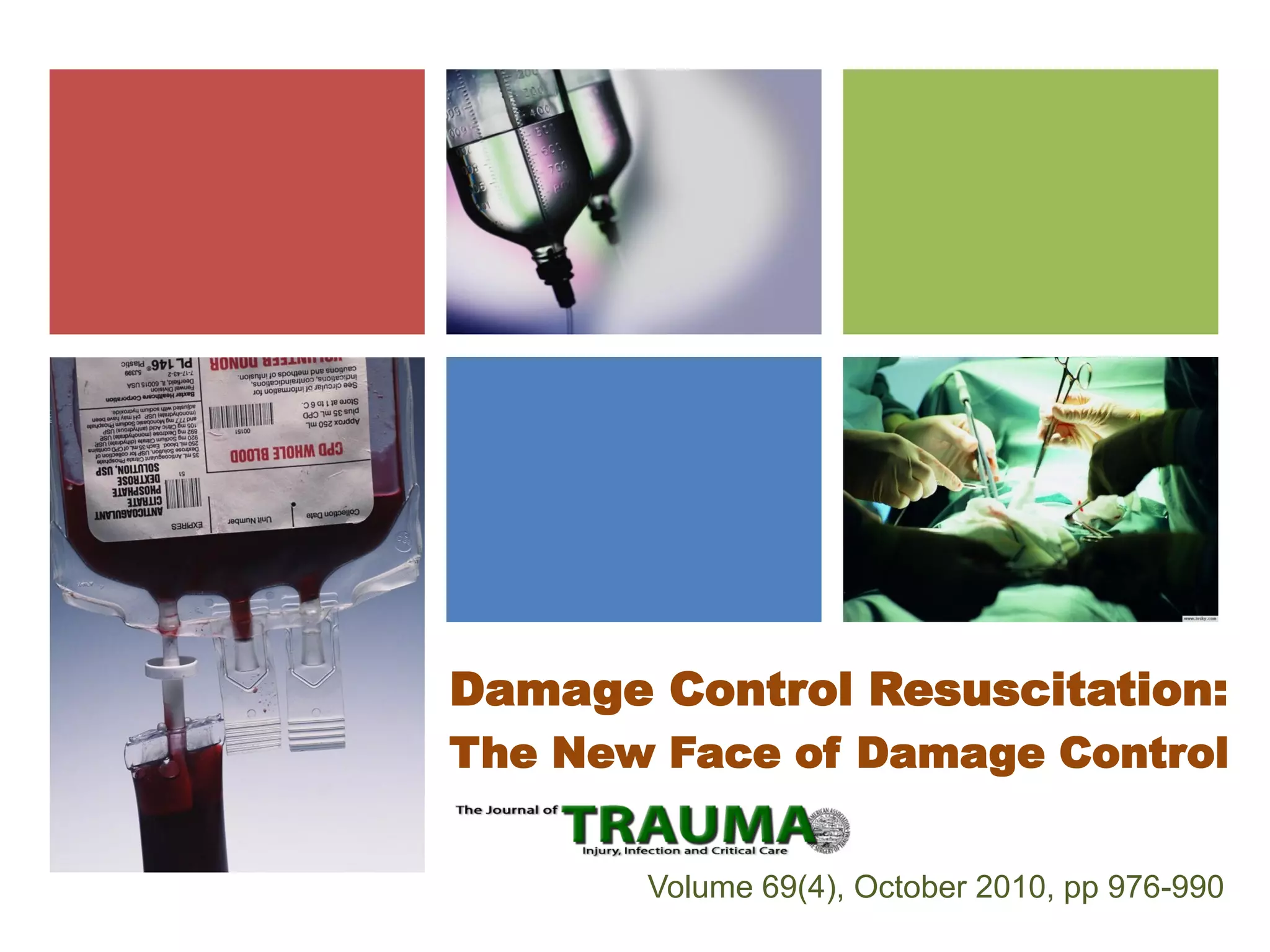
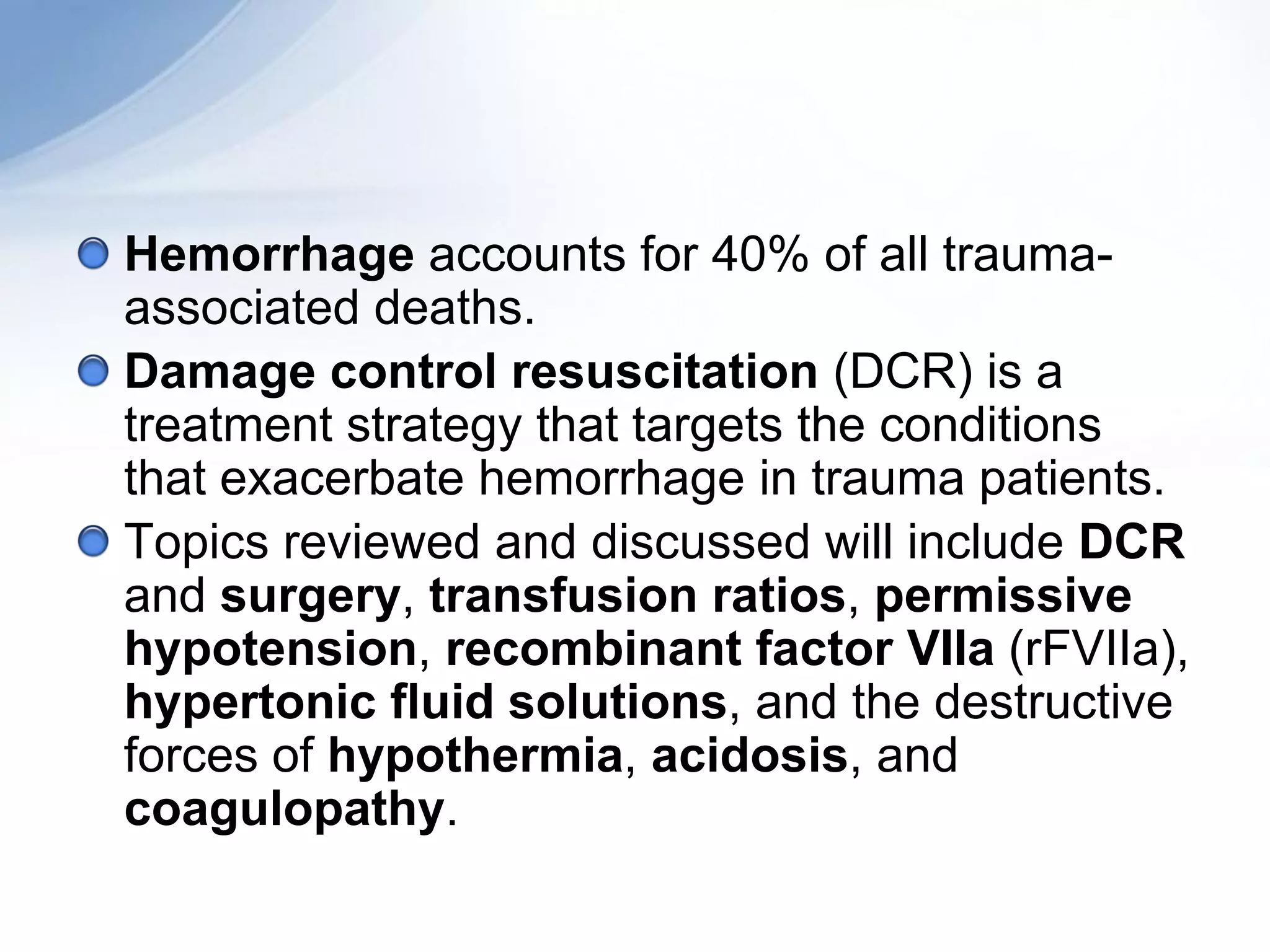
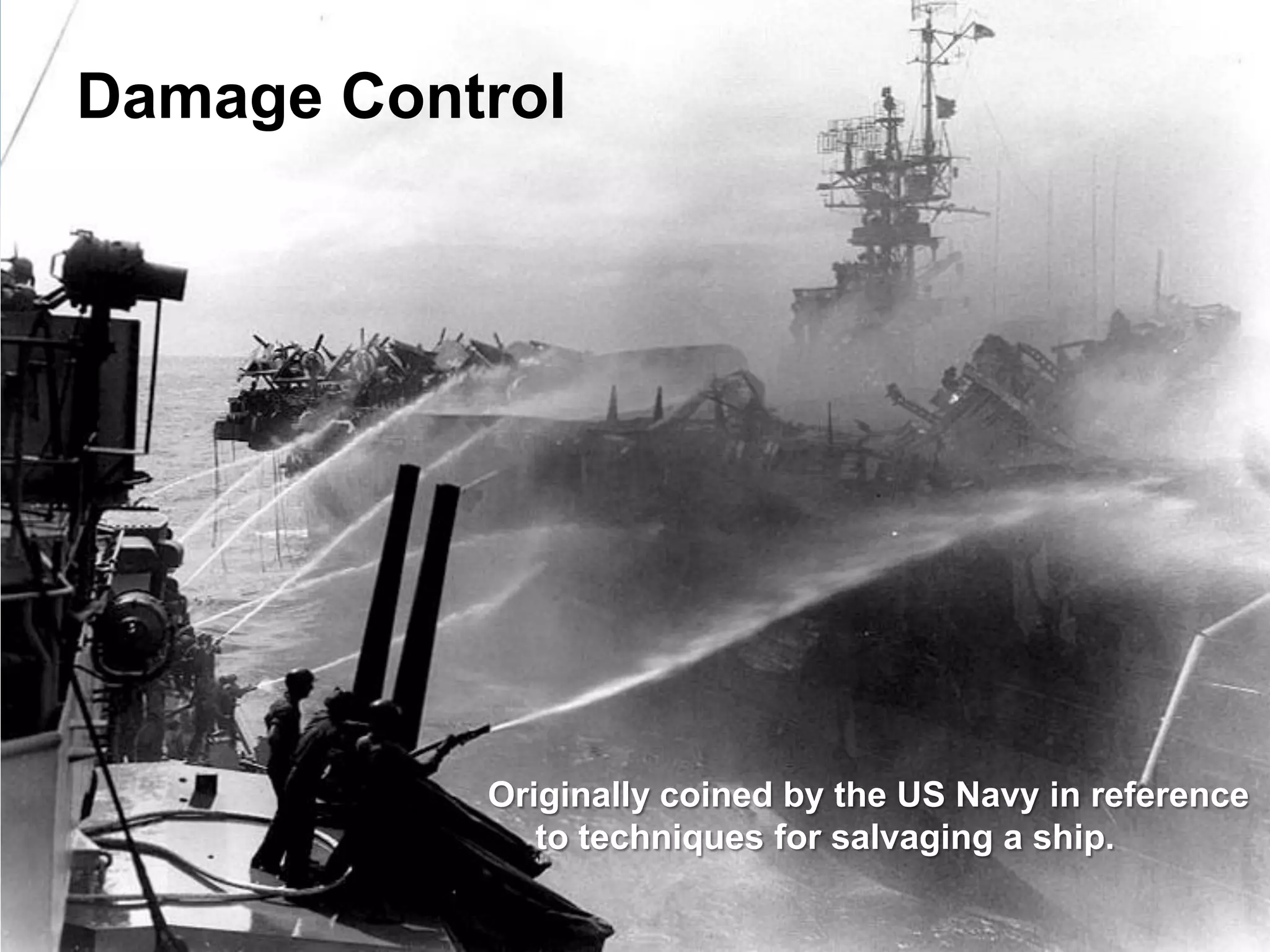
Damage Control Resuscitation:
The New Face of Damage Control


       Volume 69(4), October 2010, pp 976-990
Hemorrhage accounts for 40% of all trauma-
associated deaths.
Damage control resuscitation (DCR) is a
treatment strategy that targets the conditions
that exacerbate hemorrhage in trauma patients.
Topics reviewed and discussed will include DCR
and surgery, transfusion ratios, permissive
hypotension, recombinant factor VIIa (rFVIIa),
hypertonic fluid solutions, and the destructive
forces of hypothermia, acidosis, and
coagulopathy.
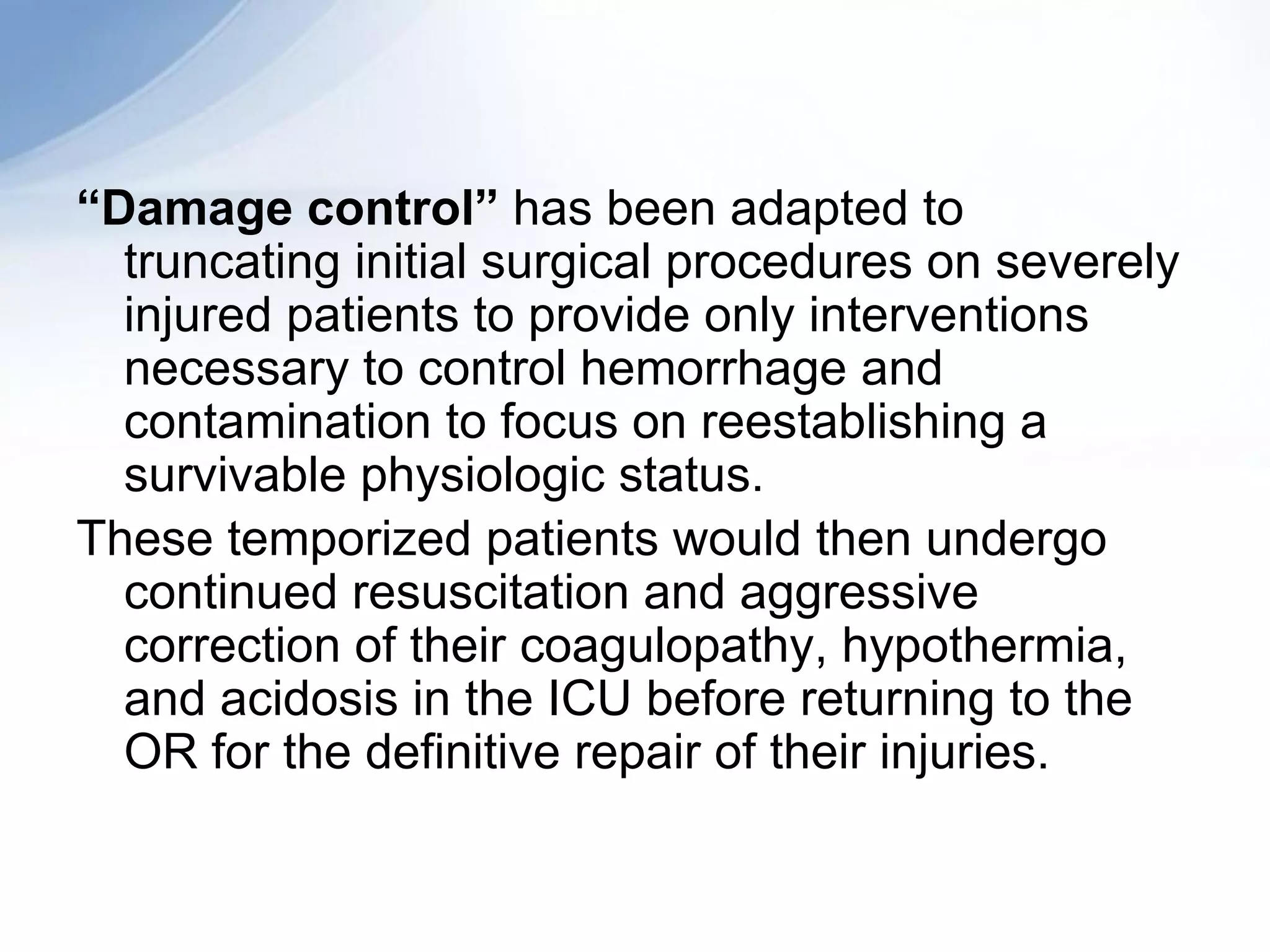
Damage Control


           Originally coined by the US Navy in reference
              to techniques for salvaging a ship.
“Damage control” has been adapted to
  truncating initial surgical procedures on severely
  injured patients to provide only interventions
  necessary to control hemorrhage and
  contamination to focus on reestablishing a
  survivable physiologic status.
These temporized patients would then undergo
  continued resuscitation and aggressive
  correction of their coagulopathy, hypothermia,
  and acidosis in the ICU before returning to the
  OR for the definitive repair of their injuries.
Discussions of damage control surgery usually
  center on the type and timing of surgical
  procedures.
Recently, methods of resuscitation of patients with
  exsanguinating hemorrhage have come under
  increasing scrutiny for their ability to adequately
  correct the acidosis, hypothermia, and
  coagulopathy seen in these patients.
DCR differs from current resuscitation
approaches by attempting an earlier and more
aggressive correction of coagulopathy and
metabolic derangement.
DCR centers on the application of several key
concepts, the permissive hypotension, the use
of blood products over isotonic fluid for volume
replacement, and the rapid and early correction
of coagulopathy with component therapy.
PERMISSIVE HYPOTENSION
 Keep the blood pressure low enough to avoid
 exsanguination while maintaining perfusion of
 end organs.
 Injection of a fluid that will increase blood
 pressure has dangers in itself.
 If the pressure is raised before the surgeon is
 ready to check bleeding, blood that is sorely
 needed may be lost.
Endpoint of resuscitation before definitive hemorrhage
  control was a systolic pressure of 70 to 80 mmHg,
  using a crystalloid/ colloid mixture as his fluid of choice.
                                   Cannon WB. JAMA. 1918;70:618.

“When the patient must wait for a considerable period,
  elevation of his SBP to 85 mmHg is all that is
  necessary … and when profuse internal bleeding is
  occurring, it is wasteful of time and blood to attempt to
  get a patient’s blood pressure up to normal. One should
  consider himself lucky if a systolic pressure of 80 to 85
  mmHg can be achieved and then surgery undertaken.”
               Beecher HK. U.S. Government Printing Office; 1952:6
Regardless of the victim’s blood pressure,
 survival was better in their urban “scoop and
 run” rapid transport system when no attempt
 at prehospital resuscitation was made.
 Immediate vs. delayed fluid resuscitation for hypotensive
 patients with penetrating torso injuries.
 N Engl J Med. 1994;331:1105–1109.
Trauma patients without definitive
  hemorrhage control should have a
  limited increase in blood pressure until
  definitive surgical control of bleeding
  can be achieved.
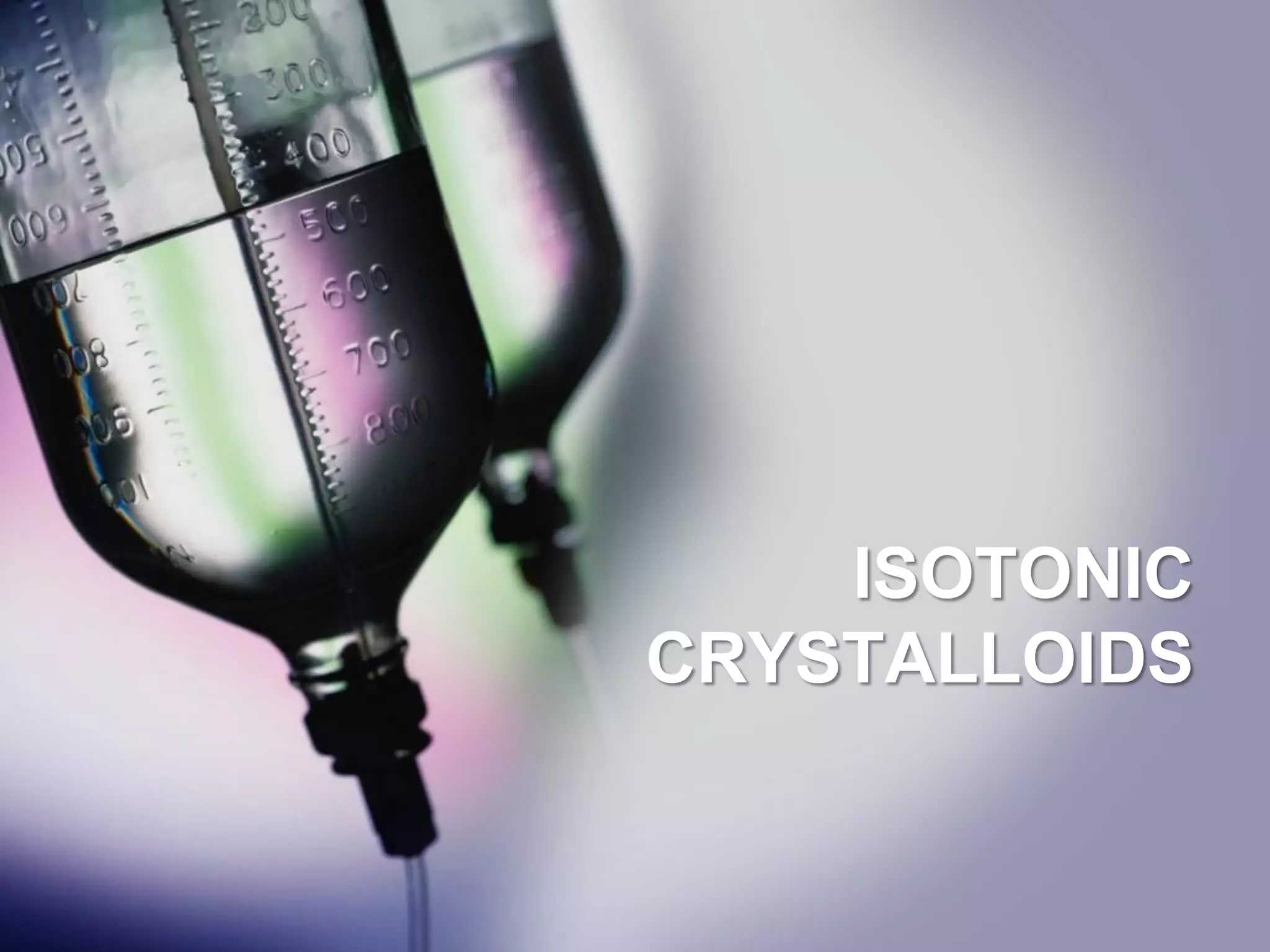
ISOTONIC
CRYSTALLOIDS
ISOTONIC CRYSTALLOIDS
Isotonic fluid administration in large boluses
  for acute hemorrhagic loss or severe
  traumatic injury requiring massive
  transfusion is the optimal therapy.
Crystalloids can cause dilutional coagulopathy
and do little for the oxygen carrying capacity needed
to correct anaerobic metabolism and the oxygen
debt associated with shock.
The use of unwarmed fluids can also be implicated
as a major cause for hypothermia.
Crystalloids have been associated with
hyperchloremic acidosis and the worsening of
trauma patients existing acidosis.
Isotonic, hypotonic, and colloid solutions given post-
injury have been shown to leak and cause edema
with only a fraction remaining within the
intravascular system.
HYPERTONIC
    SALINE
HYPERTONIC SALINE
HTS attractive for its ability to raise blood pressure
 quickly at much lower volumes of infusion than
 isotonic fluids and, thus, potentially easier to use
 and transport into combat.
HTS with dextran (HSD)
Risks and concerns associated with HSD
  Uncontrolled bleeding
  Hyperchloremic acidosis
  Central pontine myelinolysis (CPM)
  – Keeping serum Na <155 and not raising >10 mEq/d
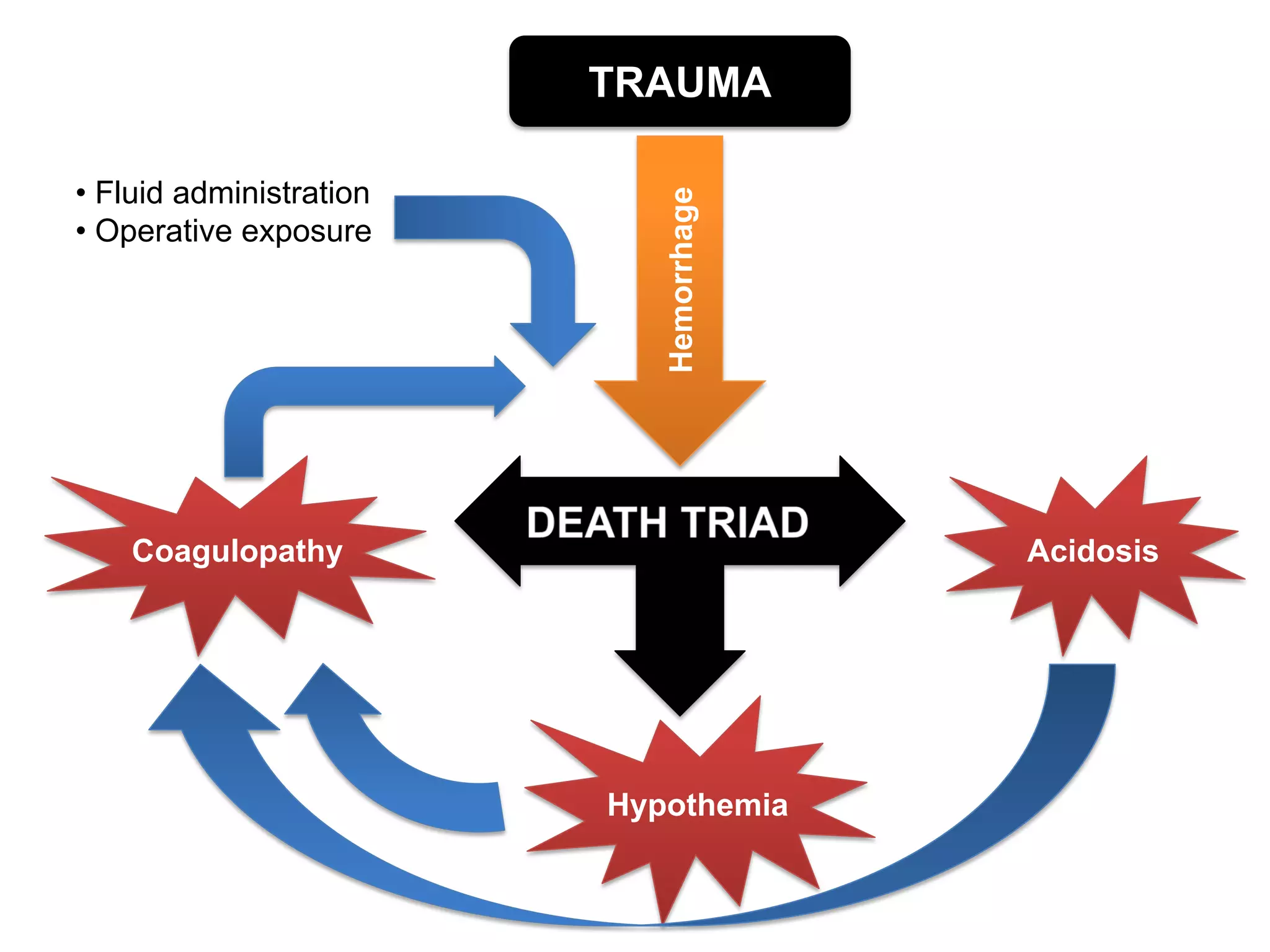
COMPONENTS OF COAGULOPATHY
TRAUMA

• Fluid administration


                            Hemorrhage
• Operative exposure


    Coagulopathy                         Acidosis


                         Hypothemia
Hypothermia
 Severe hypothermia is associated with a high
 mortality.
 Most cases of hypothermia
 – ER: resuscitation period
 – OR: exposure of the peritoneum
 Hypothermic patients were hypocoagulable with
 body temperatures < 34.0°C
Acidosis
 Metabolic acidosis is the predominant
 physiologic defect resulting from persistent
 hypoperfusion.
 Acidosis at pH < 7.2 is associated with
 decreased contractility and cardiac output,
 vasodilation, hypotension, bradycardia,
 increased dysrhythmias, and decreased blood
 flow to the liver and kidneys.
 Acidosis can also act synergistically with
 hypothermia in its detrimental effect on the
 coagulation cascade.
More sensitive measures of the adequacy of
cellular oxygenation are the base deficit and
serum lactate.
The base deficit and lactate serve as a useful
guide for the adequacy of resuscitation
efforts.
Lactate has been demonstrated to have the
best association with hypovolemic shock and
death and is a useful marker as an endpoint of
resuscitation.
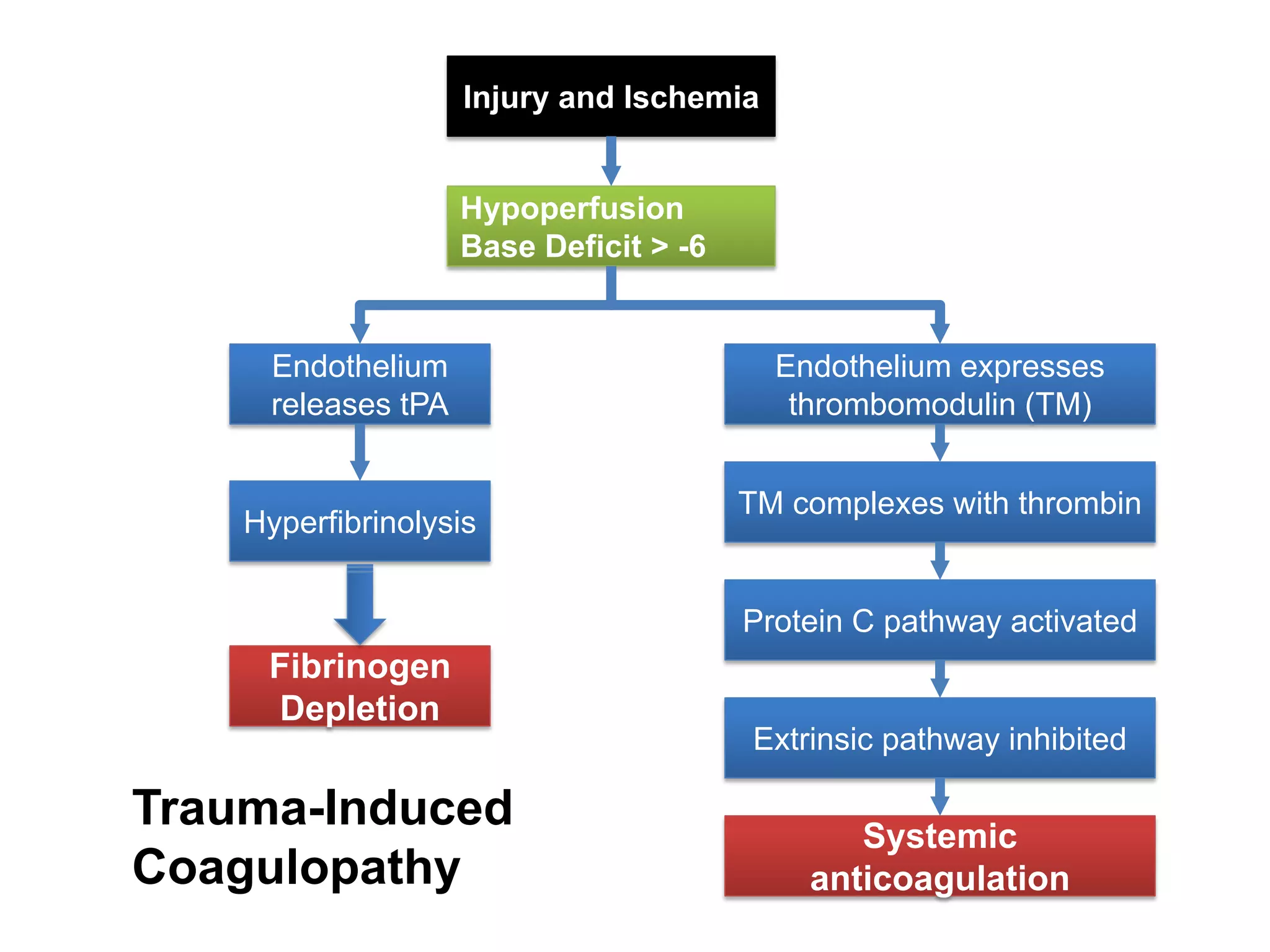
Injury and Ischemia


                     Hypoperfusion
                     Base Deficit > -6


      Endothelium                          Endothelium expresses
      releases tPA                          thrombomodulin (TM)


                                         TM complexes with thrombin
    Hyperfibrinolysis


                                         Protein C pathway activated
     Fibrinogen
     Depletion
                                         Extrinsic pathway inhibited

Trauma-Induced                                  Systemic
Coagulopathy                                 anticoagulation
TRAUMA-INDUCED COAGULOPATHY

The coagulopathy of trauma is one of the single
  most accurate predictors of prognosis in trauma
  and is one of the most significant challenges to
  any DCR effort.
In severely injured patients, coagulopathy can
be exacerbated during initial care, resuscitation,
and stabilization.
More than 5 units of pRBC will lead to a
dilutional coagulopathy, that prolongation of
the PT was a sentinel sign of dilutional
coagulopathy, and that this phenomenon occurs
early.
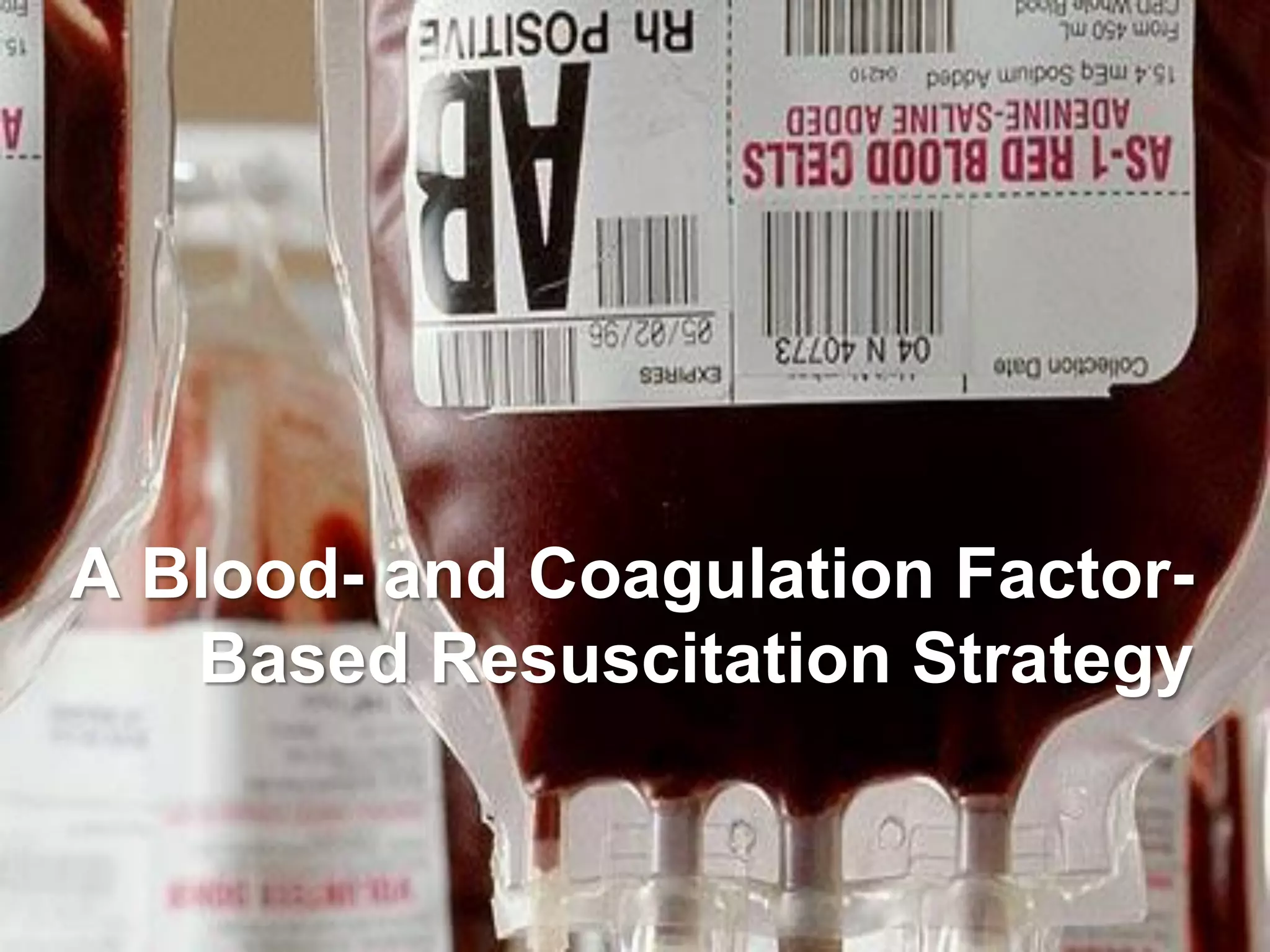
A Blood- and Coagulation Factor-
   Based Resuscitation Strategy
Early Identification of Shock
 The combination of altered mental status,
 cool/clammy skin, and an absent radial pulse
 is a well-established triad, indicating
 hypovolemic shock.
 When examining vital signs, the shock index
 (SI= HR/SBP) is a better indicator of shock than
 hypotension and is more sensitive than
 individual vital signs analysis.
 Laboratory findings indicative of hypoperfusion
 include bicarbonate, base deficit, and lactate.
ABC Scoring
1.    Penetrating mechanism
2.    Positive FAST
3.    SBP ≦ 90 mmHg on arrival
4.    Heart rate ≧120 bpm on arrival

     Score ≧ 2 is 75% sensitive and 86% specific for
     predicting massive transfusion

 Early prediction of massive transfusion in trauma:
 Simple as ABC (assessment of blood consumption)?
 J Trauma. 2009;66:346–352.
DAMAGE CONTROL
  RESUSCITATION
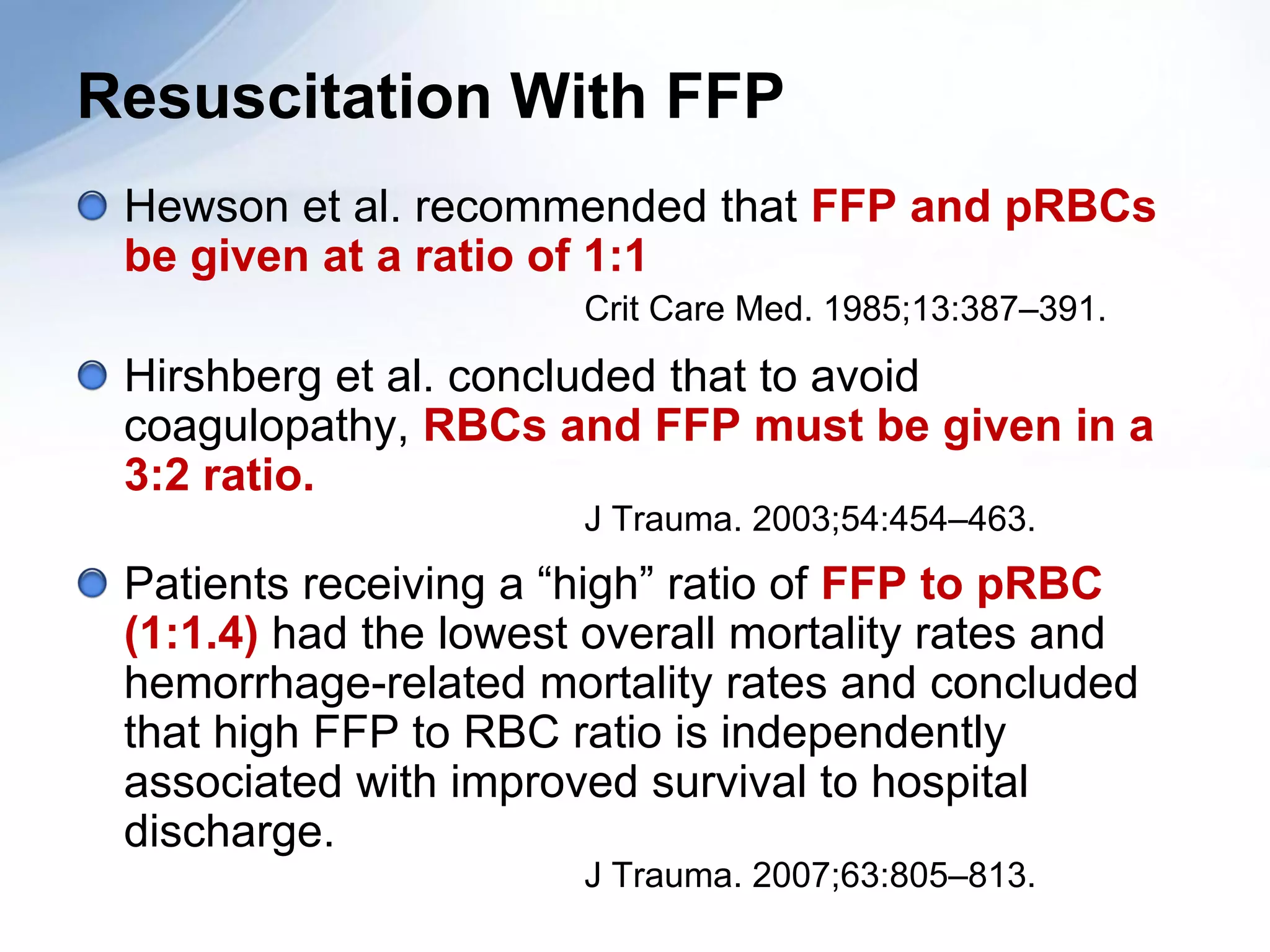
Resuscitation With FFP
 Hewson et al. recommended that FFP and pRBCs
 be given at a ratio of 1:1
                       Crit Care Med. 1985;13:387–391.

 Hirshberg et al. concluded that to avoid
 coagulopathy, RBCs and FFP must be given in a
 3:2 ratio.
                       J Trauma. 2003;54:454–463.
 Patients receiving a “high” ratio of FFP to pRBC
 (1:1.4) had the lowest overall mortality rates and
 hemorrhage-related mortality rates and concluded
 that high FFP to RBC ratio is independently
 associated with improved survival to hospital
 discharge.
                       J Trauma. 2007;63:805–813.
The optimal ratio of FFP to PRBC was 1:1
 and that this should be given early in
 the course.
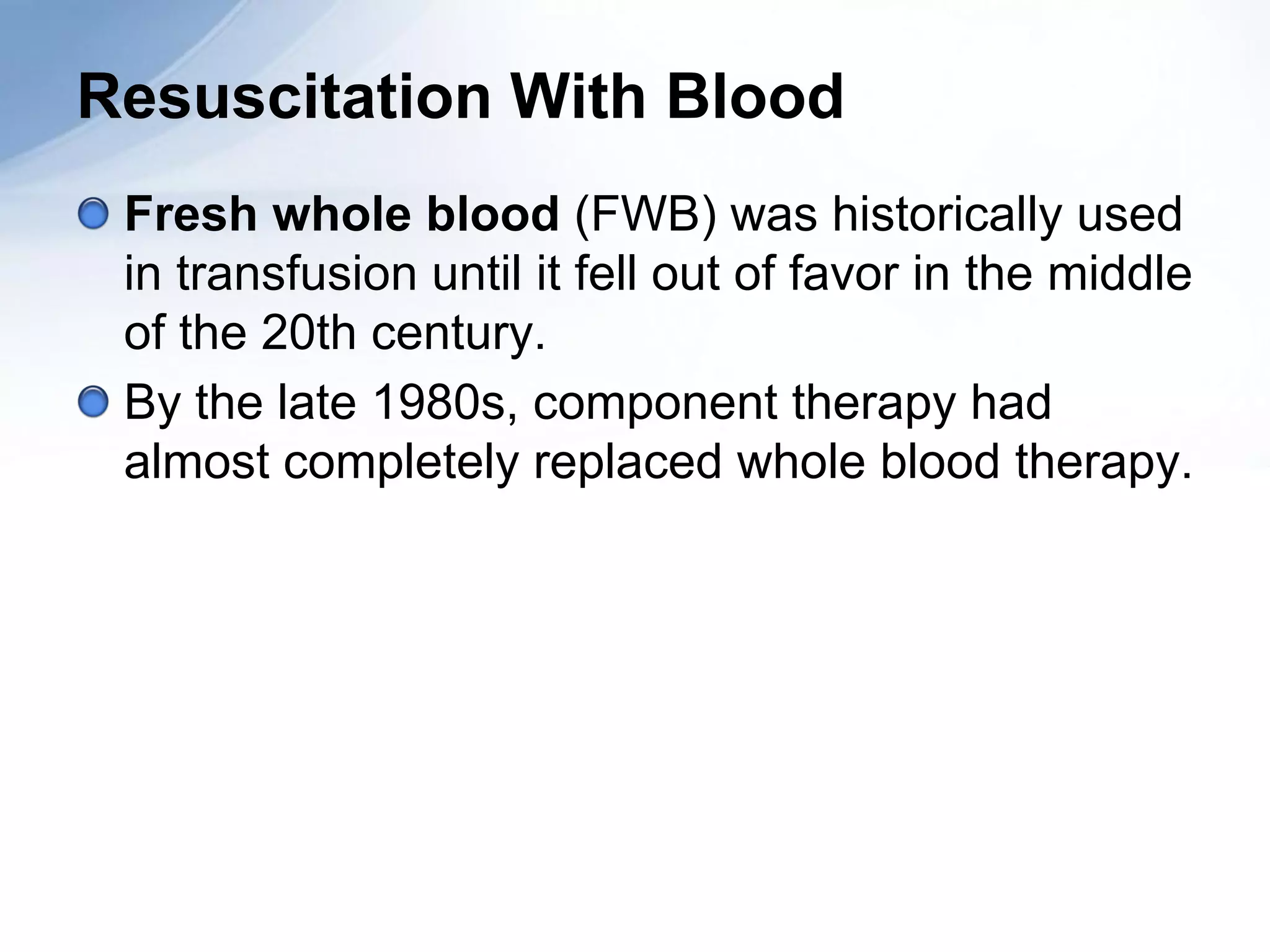
Resuscitation With Blood
 Fresh whole blood (FWB) was historically used
 in transfusion until it fell out of favor in the middle
 of the 20th century.
 By the late 1980s, component therapy had
 almost completely replaced whole blood therapy.
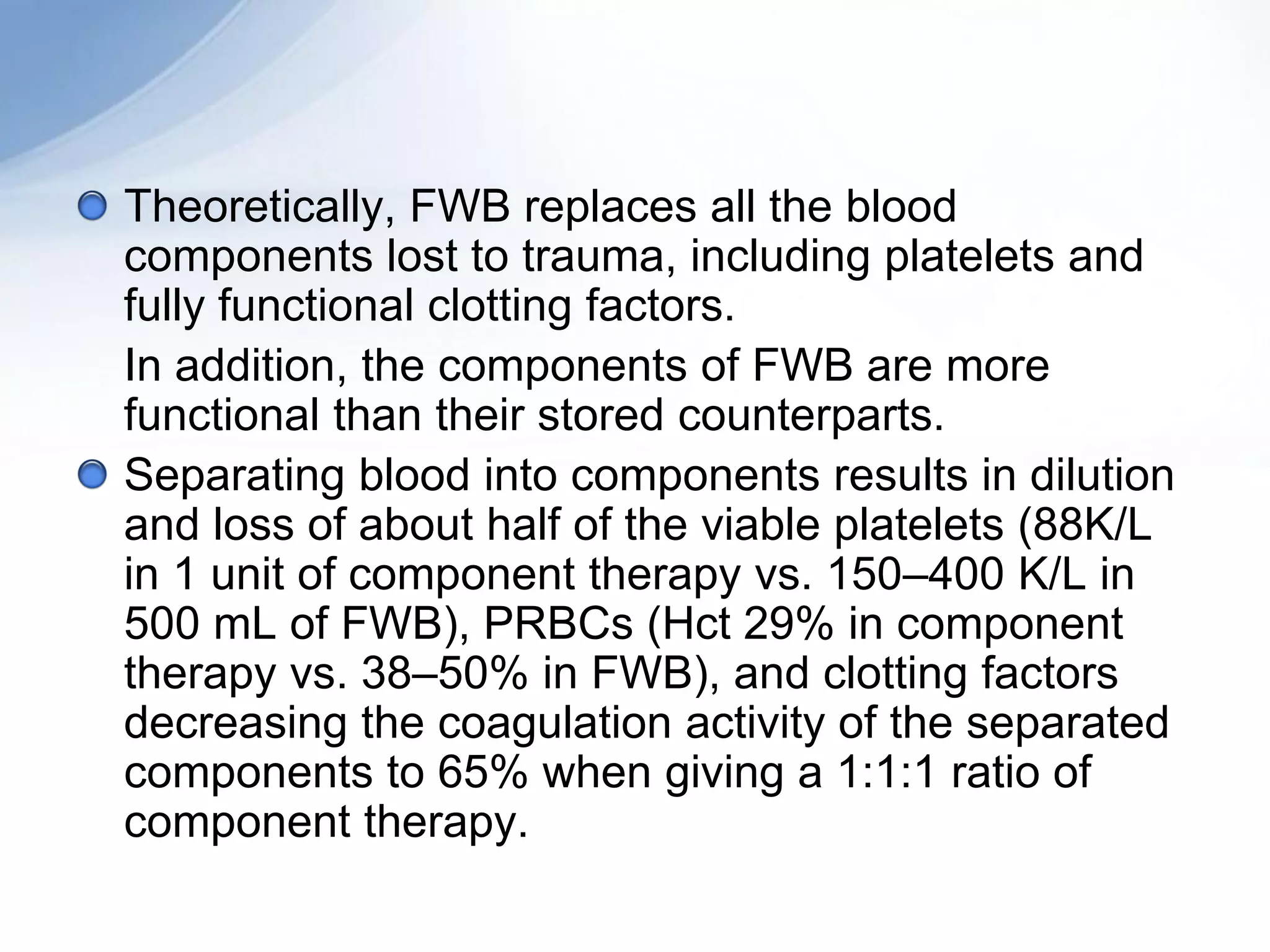
Theoretically, FWB replaces all the blood
components lost to trauma, including platelets and
fully functional clotting factors.
In addition, the components of FWB are more
functional than their stored counterparts.
Separating blood into components results in dilution
and loss of about half of the viable platelets (88K/L
in 1 unit of component therapy vs. 150–400 K/L in
500 mL of FWB), PRBCs (Hct 29% in component
therapy vs. 38–50% in FWB), and clotting factors
decreasing the coagulation activity of the separated
components to 65% when giving a 1:1:1 ratio of
component therapy.
FWB transfusion is currently primarily
 limited to the most severely injured
 military combat casualties.
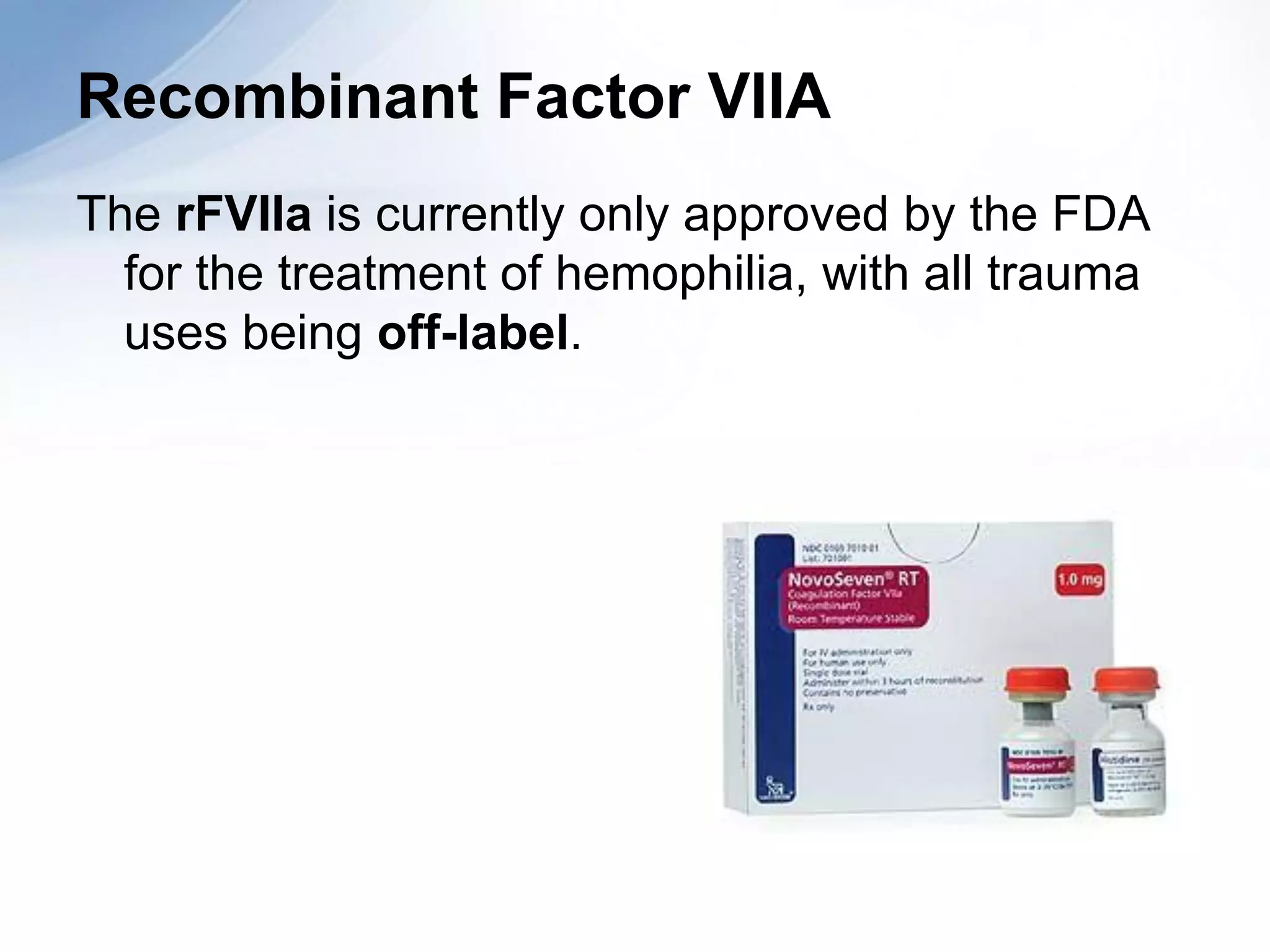
Recombinant Factor VIIA
The rFVIIa is currently only approved by the FDA
  for the treatment of hemophilia, with all trauma
  uses being off-label.
Recombinant factor VIIa as adjunctive therapy
 for bleeding control in severely injured
 trauma patients: two parallel randomized,
 placebo-controlled, double-blind clinical trials.
                      J Trauma. 2005;59:8–15; discussion 15–18.

  One arm of the trial evaluated its use in blunt trauma
  whereas the other assessed its utility in penetrating
  trauma. Although there was no change in mortality,
  the trial demonstrated a statistically significant
  reduction in transfusion required in the blunt trauma
  group, whereas the results for the penetrating trauma
  group showed no benefit.
Use of activated recombinant coagulation
 factor VII in patients undergoing
 reconstruction surgery for traumatic fracture
 of pelvis or pelvis and acetabulum: a double-
 blind, randomized, placebo-controlled trial.
                            Br J Anaesth. 2005;94:586–591.

 In a cohort of patients requiring pelvic surgery
 demonstrated no significant reduction in
 transfusion requirement.
rFVIIa seems to be safe and possibly
  decreases transfusion in blunt trauma.
rFVIIa has not shown any efficacy in
  penetrating trauma.
DAMAGE CONTROL
       SURGERY
DAMAGE CONTROL SURGERY
Victims of penetrating torso trauma or multiple
  blunt trauma with hemodynamic instability are
  generally better served with abbreviated
  operations that control hemorrhage allowing for
  subsequent focus on resuscitation, correction of
  coagulopathy, and avoiding hypothermia.
Three Phases of Damage Control Surgery

1. Initial operation with hemostasis and packing
2. Transport to the ICU to correct the conditions of
   hypothermia, acidosis, and coagulopathy
3. Return to the OR for definitive repair of all
   temporized injuries
                                Ann Surg. 1988;208:362–370
In the case of laparotomy, once a damage
control approach has been initiated, the initial
procedure is directed toward controlling surgical
bleeding.
Bleeding is controlled with either ligation of
vessels, balloon catheter tamponade, or packing.
Splenic and renal injuries are treated with rapid
resections, non-bleeding pancreatic injuries are
simply drained, and liver injuries are packed.
The treatment of hollow viscus perforations
includes either a simple suture closure or rapid
resection of the involved segment.
No anastomoses are performed, and ostomies
are not matured.
At the completion of this portion of the procedure,
the patient can either be transported to the ICU
or to the interventional radiology suite for
embolization of arterial hemorrhage that could
not be controlled during the open procedure,
such as pelvic fracture or liver trauma
involving the arterial circulation.
CONCLUSION
DCR focuses on early, aggressive
 correction of the components of the
 lethal triad, hypothermia, coagulopathy,
 and acidosis.
This strategy must start in the ER and
 continue through the OR and ICU until
 the resuscitation is complete.

Damage Control Resuscitation

  • 1.
    Damage Control Resuscitation: TheNew Face of Damage Control Volume 69(4), October 2010, pp 976-990
  • 2.
    Hemorrhage accounts for40% of all trauma- associated deaths. Damage control resuscitation (DCR) is a treatment strategy that targets the conditions that exacerbate hemorrhage in trauma patients. Topics reviewed and discussed will include DCR and surgery, transfusion ratios, permissive hypotension, recombinant factor VIIa (rFVIIa), hypertonic fluid solutions, and the destructive forces of hypothermia, acidosis, and coagulopathy.
  • 3.
    Damage Control Originally coined by the US Navy in reference to techniques for salvaging a ship.
  • 4.
    “Damage control” hasbeen adapted to truncating initial surgical procedures on severely injured patients to provide only interventions necessary to control hemorrhage and contamination to focus on reestablishing a survivable physiologic status. These temporized patients would then undergo continued resuscitation and aggressive correction of their coagulopathy, hypothermia, and acidosis in the ICU before returning to the OR for the definitive repair of their injuries.
  • 5.
    Discussions of damagecontrol surgery usually center on the type and timing of surgical procedures. Recently, methods of resuscitation of patients with exsanguinating hemorrhage have come under increasing scrutiny for their ability to adequately correct the acidosis, hypothermia, and coagulopathy seen in these patients.
  • 6.
    DCR differs fromcurrent resuscitation approaches by attempting an earlier and more aggressive correction of coagulopathy and metabolic derangement. DCR centers on the application of several key concepts, the permissive hypotension, the use of blood products over isotonic fluid for volume replacement, and the rapid and early correction of coagulopathy with component therapy.
  • 7.
  • 8.
    PERMISSIVE HYPOTENSION Keepthe blood pressure low enough to avoid exsanguination while maintaining perfusion of end organs. Injection of a fluid that will increase blood pressure has dangers in itself. If the pressure is raised before the surgeon is ready to check bleeding, blood that is sorely needed may be lost.
  • 9.
    Endpoint of resuscitationbefore definitive hemorrhage control was a systolic pressure of 70 to 80 mmHg, using a crystalloid/ colloid mixture as his fluid of choice. Cannon WB. JAMA. 1918;70:618. “When the patient must wait for a considerable period, elevation of his SBP to 85 mmHg is all that is necessary … and when profuse internal bleeding is occurring, it is wasteful of time and blood to attempt to get a patient’s blood pressure up to normal. One should consider himself lucky if a systolic pressure of 80 to 85 mmHg can be achieved and then surgery undertaken.” Beecher HK. U.S. Government Printing Office; 1952:6
  • 10.
    Regardless of thevictim’s blood pressure, survival was better in their urban “scoop and run” rapid transport system when no attempt at prehospital resuscitation was made. Immediate vs. delayed fluid resuscitation for hypotensive patients with penetrating torso injuries. N Engl J Med. 1994;331:1105–1109.
  • 11.
    Trauma patients withoutdefinitive hemorrhage control should have a limited increase in blood pressure until definitive surgical control of bleeding can be achieved.
  • 12.
  • 13.
    ISOTONIC CRYSTALLOIDS Isotonic fluidadministration in large boluses for acute hemorrhagic loss or severe traumatic injury requiring massive transfusion is the optimal therapy.
  • 14.
    Crystalloids can causedilutional coagulopathy and do little for the oxygen carrying capacity needed to correct anaerobic metabolism and the oxygen debt associated with shock. The use of unwarmed fluids can also be implicated as a major cause for hypothermia. Crystalloids have been associated with hyperchloremic acidosis and the worsening of trauma patients existing acidosis. Isotonic, hypotonic, and colloid solutions given post- injury have been shown to leak and cause edema with only a fraction remaining within the intravascular system.
  • 15.
  • 16.
    HYPERTONIC SALINE HTS attractivefor its ability to raise blood pressure quickly at much lower volumes of infusion than isotonic fluids and, thus, potentially easier to use and transport into combat.
  • 17.
    HTS with dextran(HSD) Risks and concerns associated with HSD Uncontrolled bleeding Hyperchloremic acidosis Central pontine myelinolysis (CPM) – Keeping serum Na <155 and not raising >10 mEq/d
  • 18.
  • 19.
    TRAUMA • Fluid administration Hemorrhage • Operative exposure Coagulopathy Acidosis Hypothemia
  • 20.
    Hypothermia Severe hypothermiais associated with a high mortality. Most cases of hypothermia – ER: resuscitation period – OR: exposure of the peritoneum Hypothermic patients were hypocoagulable with body temperatures < 34.0°C
  • 21.
    Acidosis Metabolic acidosisis the predominant physiologic defect resulting from persistent hypoperfusion. Acidosis at pH < 7.2 is associated with decreased contractility and cardiac output, vasodilation, hypotension, bradycardia, increased dysrhythmias, and decreased blood flow to the liver and kidneys. Acidosis can also act synergistically with hypothermia in its detrimental effect on the coagulation cascade.
  • 22.
    More sensitive measuresof the adequacy of cellular oxygenation are the base deficit and serum lactate. The base deficit and lactate serve as a useful guide for the adequacy of resuscitation efforts. Lactate has been demonstrated to have the best association with hypovolemic shock and death and is a useful marker as an endpoint of resuscitation.
  • 23.
    Injury and Ischemia Hypoperfusion Base Deficit > -6 Endothelium Endothelium expresses releases tPA thrombomodulin (TM) TM complexes with thrombin Hyperfibrinolysis Protein C pathway activated Fibrinogen Depletion Extrinsic pathway inhibited Trauma-Induced Systemic Coagulopathy anticoagulation
  • 24.
    TRAUMA-INDUCED COAGULOPATHY The coagulopathyof trauma is one of the single most accurate predictors of prognosis in trauma and is one of the most significant challenges to any DCR effort.
  • 25.
    In severely injuredpatients, coagulopathy can be exacerbated during initial care, resuscitation, and stabilization. More than 5 units of pRBC will lead to a dilutional coagulopathy, that prolongation of the PT was a sentinel sign of dilutional coagulopathy, and that this phenomenon occurs early.
  • 26.
    A Blood- andCoagulation Factor- Based Resuscitation Strategy
  • 27.
    Early Identification ofShock The combination of altered mental status, cool/clammy skin, and an absent radial pulse is a well-established triad, indicating hypovolemic shock. When examining vital signs, the shock index (SI= HR/SBP) is a better indicator of shock than hypotension and is more sensitive than individual vital signs analysis. Laboratory findings indicative of hypoperfusion include bicarbonate, base deficit, and lactate.
  • 28.
    ABC Scoring 1. Penetrating mechanism 2. Positive FAST 3. SBP ≦ 90 mmHg on arrival 4. Heart rate ≧120 bpm on arrival Score ≧ 2 is 75% sensitive and 86% specific for predicting massive transfusion Early prediction of massive transfusion in trauma: Simple as ABC (assessment of blood consumption)? J Trauma. 2009;66:346–352.
  • 29.
    DAMAGE CONTROL RESUSCITATION
  • 30.
    Resuscitation With FFP Hewson et al. recommended that FFP and pRBCs be given at a ratio of 1:1 Crit Care Med. 1985;13:387–391. Hirshberg et al. concluded that to avoid coagulopathy, RBCs and FFP must be given in a 3:2 ratio. J Trauma. 2003;54:454–463. Patients receiving a “high” ratio of FFP to pRBC (1:1.4) had the lowest overall mortality rates and hemorrhage-related mortality rates and concluded that high FFP to RBC ratio is independently associated with improved survival to hospital discharge. J Trauma. 2007;63:805–813.
  • 31.
    The optimal ratioof FFP to PRBC was 1:1 and that this should be given early in the course.
  • 32.
    Resuscitation With Blood Fresh whole blood (FWB) was historically used in transfusion until it fell out of favor in the middle of the 20th century. By the late 1980s, component therapy had almost completely replaced whole blood therapy.
  • 33.
    Theoretically, FWB replacesall the blood components lost to trauma, including platelets and fully functional clotting factors. In addition, the components of FWB are more functional than their stored counterparts. Separating blood into components results in dilution and loss of about half of the viable platelets (88K/L in 1 unit of component therapy vs. 150–400 K/L in 500 mL of FWB), PRBCs (Hct 29% in component therapy vs. 38–50% in FWB), and clotting factors decreasing the coagulation activity of the separated components to 65% when giving a 1:1:1 ratio of component therapy.
  • 34.
    FWB transfusion iscurrently primarily limited to the most severely injured military combat casualties.
  • 35.
    Recombinant Factor VIIA TherFVIIa is currently only approved by the FDA for the treatment of hemophilia, with all trauma uses being off-label.
  • 36.
    Recombinant factor VIIaas adjunctive therapy for bleeding control in severely injured trauma patients: two parallel randomized, placebo-controlled, double-blind clinical trials. J Trauma. 2005;59:8–15; discussion 15–18. One arm of the trial evaluated its use in blunt trauma whereas the other assessed its utility in penetrating trauma. Although there was no change in mortality, the trial demonstrated a statistically significant reduction in transfusion required in the blunt trauma group, whereas the results for the penetrating trauma group showed no benefit.
  • 37.
    Use of activatedrecombinant coagulation factor VII in patients undergoing reconstruction surgery for traumatic fracture of pelvis or pelvis and acetabulum: a double- blind, randomized, placebo-controlled trial. Br J Anaesth. 2005;94:586–591. In a cohort of patients requiring pelvic surgery demonstrated no significant reduction in transfusion requirement.
  • 38.
    rFVIIa seems tobe safe and possibly decreases transfusion in blunt trauma. rFVIIa has not shown any efficacy in penetrating trauma.
  • 39.
  • 40.
    DAMAGE CONTROL SURGERY Victimsof penetrating torso trauma or multiple blunt trauma with hemodynamic instability are generally better served with abbreviated operations that control hemorrhage allowing for subsequent focus on resuscitation, correction of coagulopathy, and avoiding hypothermia.
  • 41.
    Three Phases ofDamage Control Surgery 1. Initial operation with hemostasis and packing 2. Transport to the ICU to correct the conditions of hypothermia, acidosis, and coagulopathy 3. Return to the OR for definitive repair of all temporized injuries Ann Surg. 1988;208:362–370
  • 42.
    In the caseof laparotomy, once a damage control approach has been initiated, the initial procedure is directed toward controlling surgical bleeding. Bleeding is controlled with either ligation of vessels, balloon catheter tamponade, or packing.
  • 43.
    Splenic and renalinjuries are treated with rapid resections, non-bleeding pancreatic injuries are simply drained, and liver injuries are packed. The treatment of hollow viscus perforations includes either a simple suture closure or rapid resection of the involved segment. No anastomoses are performed, and ostomies are not matured.
  • 44.
    At the completionof this portion of the procedure, the patient can either be transported to the ICU or to the interventional radiology suite for embolization of arterial hemorrhage that could not be controlled during the open procedure, such as pelvic fracture or liver trauma involving the arterial circulation.
  • 45.
    CONCLUSION DCR focuses onearly, aggressive correction of the components of the lethal triad, hypothermia, coagulopathy, and acidosis. This strategy must start in the ER and continue through the OR and ICU until the resuscitation is complete.