Owen Gaffney
SHIFT Automotive
10 September, Berlin
@owengaffney
Potsdam Institute for Climate Impact Research
Stockholm Resilience Centre
You say you want a revolution
FROM MOORE’S LAW TO THE CARBON LAW
MYTH 1: We have all the time in
the world.
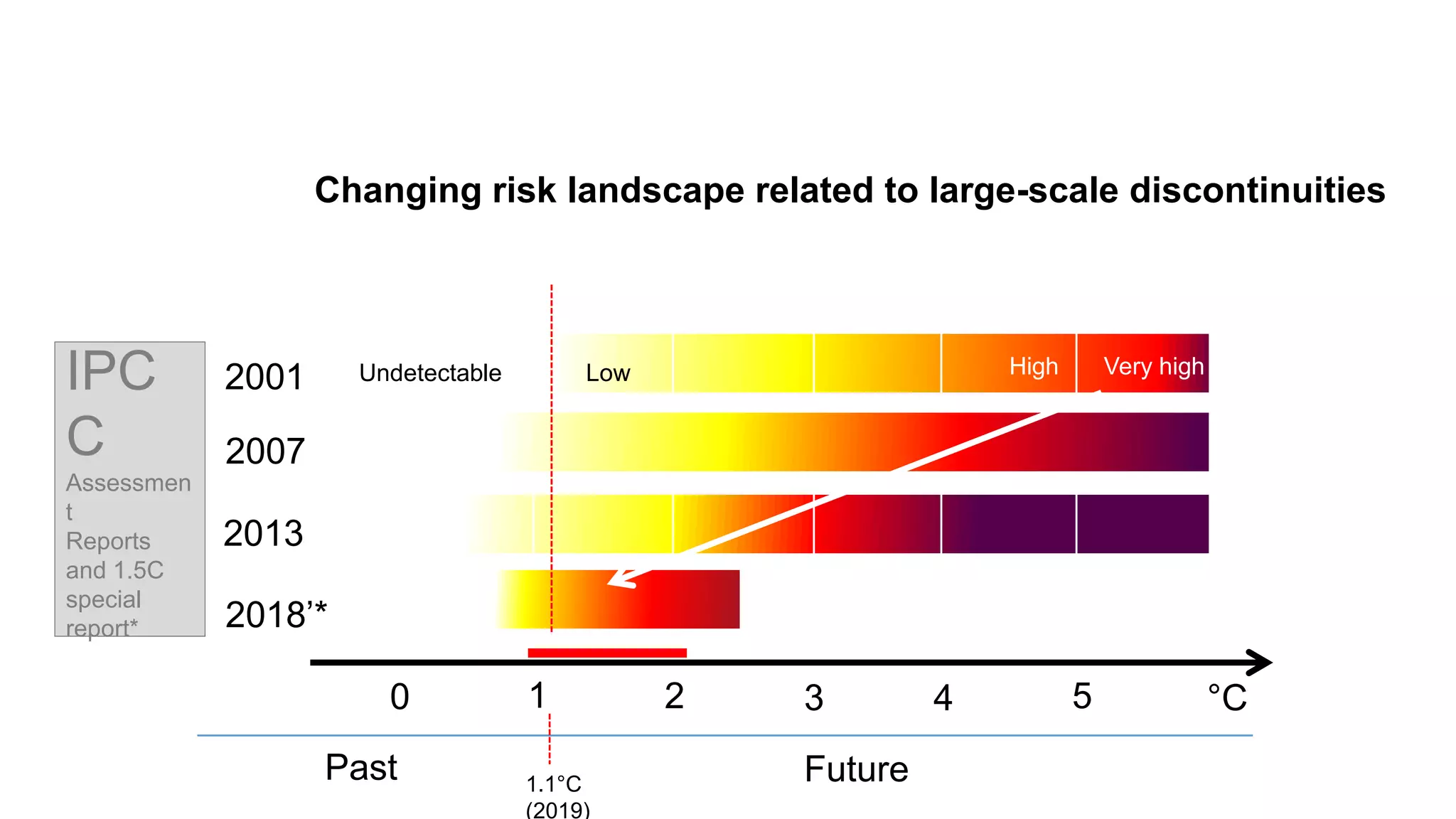
Unsafe Territory: Extreme Events in 2018/19
IPC
C
Assessmen
t
Reports
and 1.5C
special
report*
0 1 2 3 4 5 °C
Past Future
Changing risk landscape related to large-scale discontinuities
2001
2013
2018’*
2007
Undetectable Low High Very high
1.1°C
(2019)
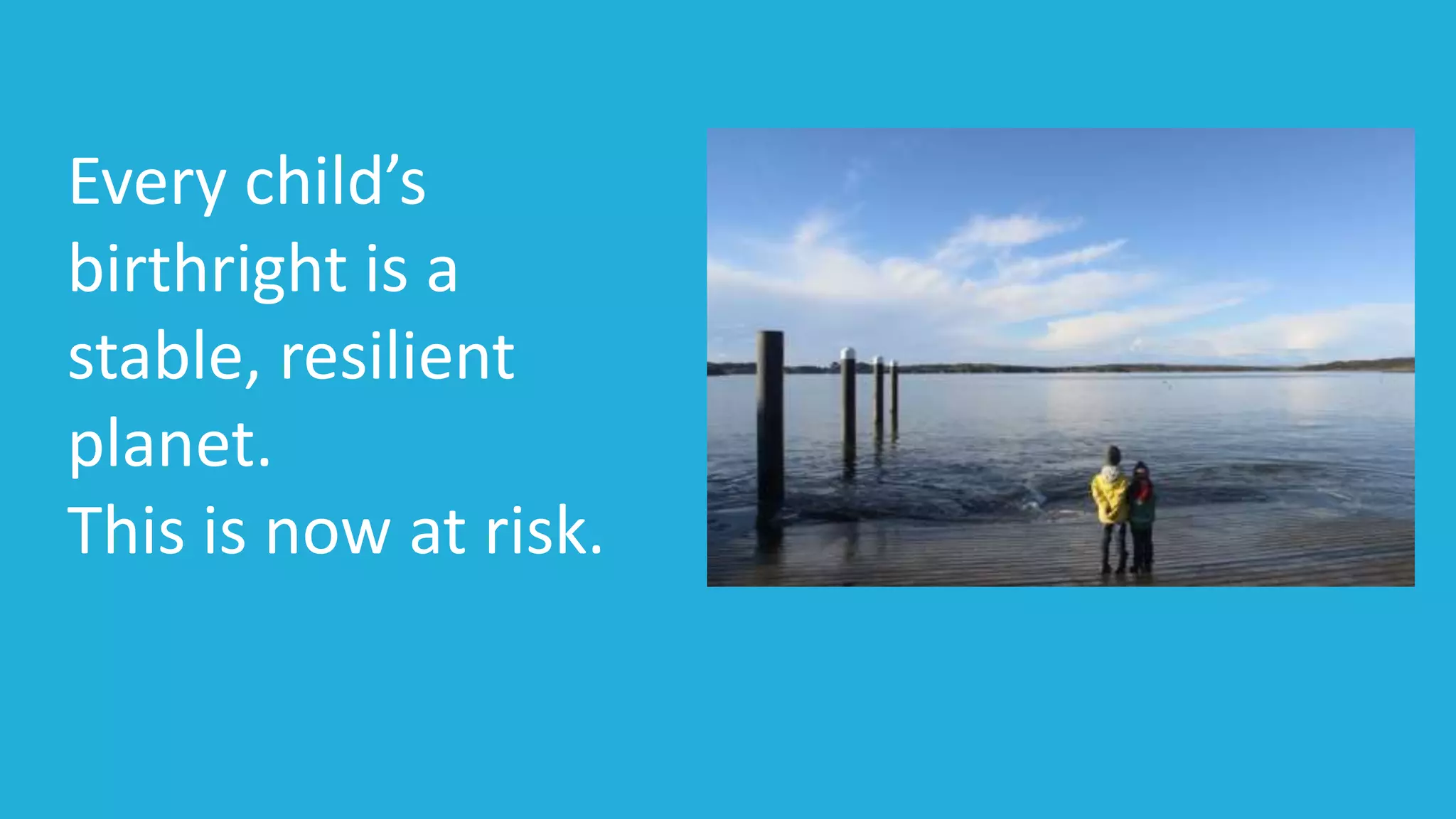
Every child’s
birthright is a
stable, resilient
planet.
This is now at risk.
IPCC 1.5SR 2018
Very high
“negative emissions”
Destabilising
Economic shift
Pathways for a 1.5°C planet
From Moore’s Law to the Carbon Law
0
10
20
30
40
50
60
2020 2030 2040 2050 2060
Year
GREENHOUSE GAS
EMISSIONS
(GTCO2)
LAND-USE
EMISSIONS
(GTCO2)
CO2 REMOVAL
(GtCO2)
Rockström, Gaffney, Rogelj, Meinshausen,
Nakicenovic, Schellnhuber. Science 24 March 2017
GIGATONNES
CO2e
Focus on the
immediate task
Focuses on
what is achievable
Many companies can (and should move much faster)
Simple to
communicate
Short-term
economic compass
Applies at
all scales
Carbon Law thinking: cut emissions 50%
New business
models required
(exponential not incremental)
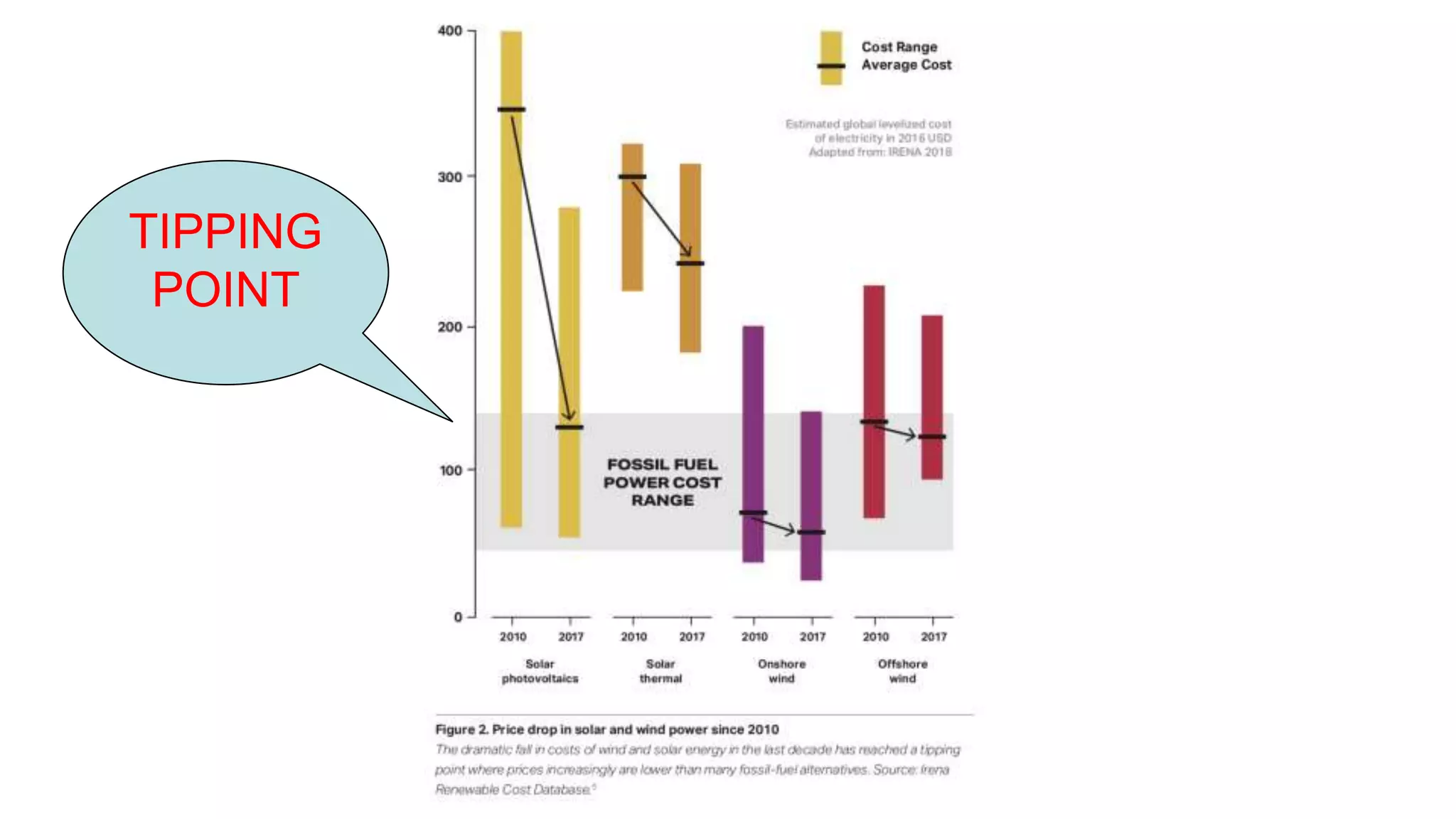
MYTH 2. It is too expensive
Rapid transition translates
to:$26 trillion in benefits by
2030
TIPPING
POINT
MYTH 3. It is too difficult.
15
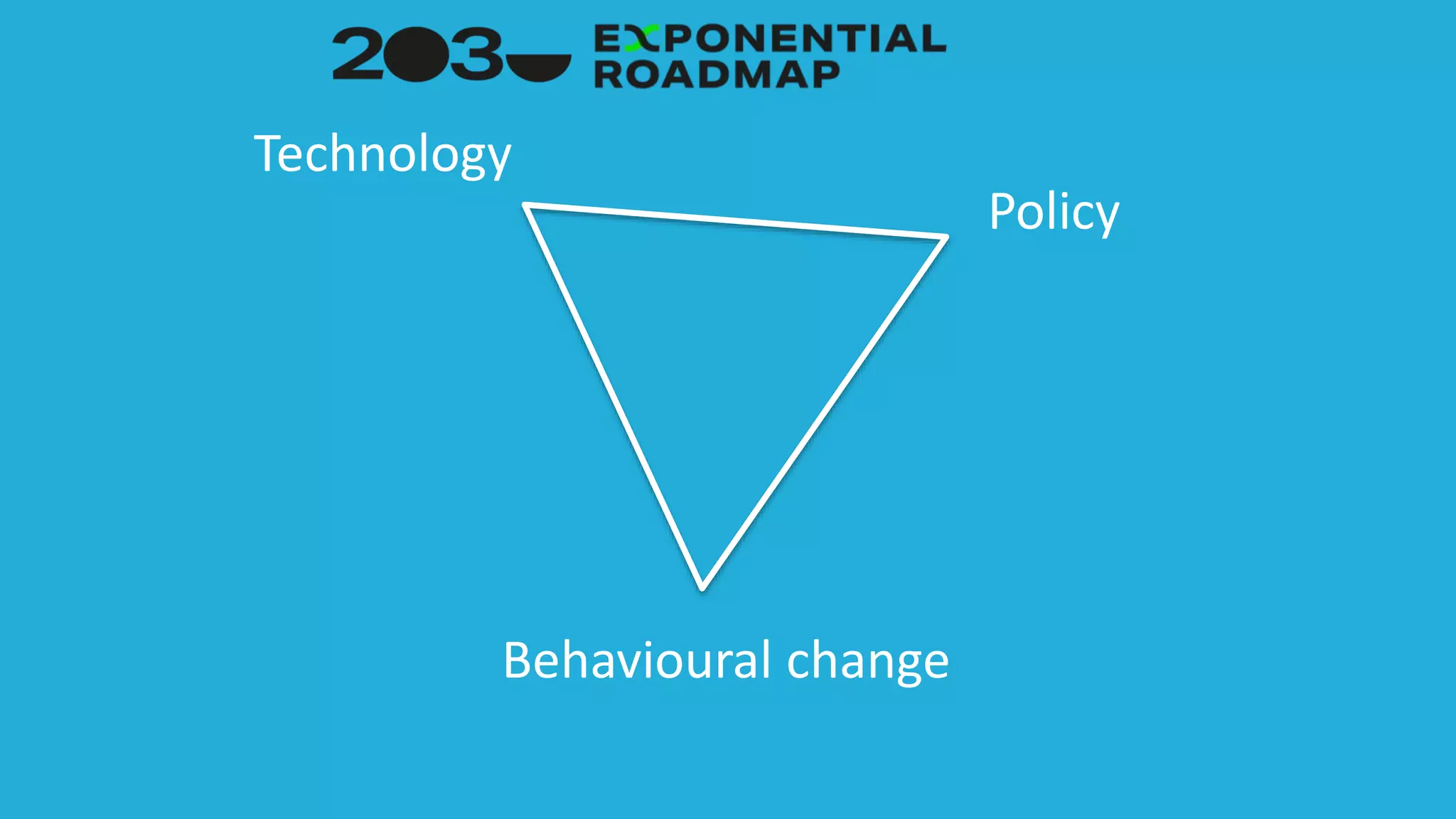
30 solutions to cut greenhouse gas emissions 50% by 2030
Technology
Policy
Behavioural change
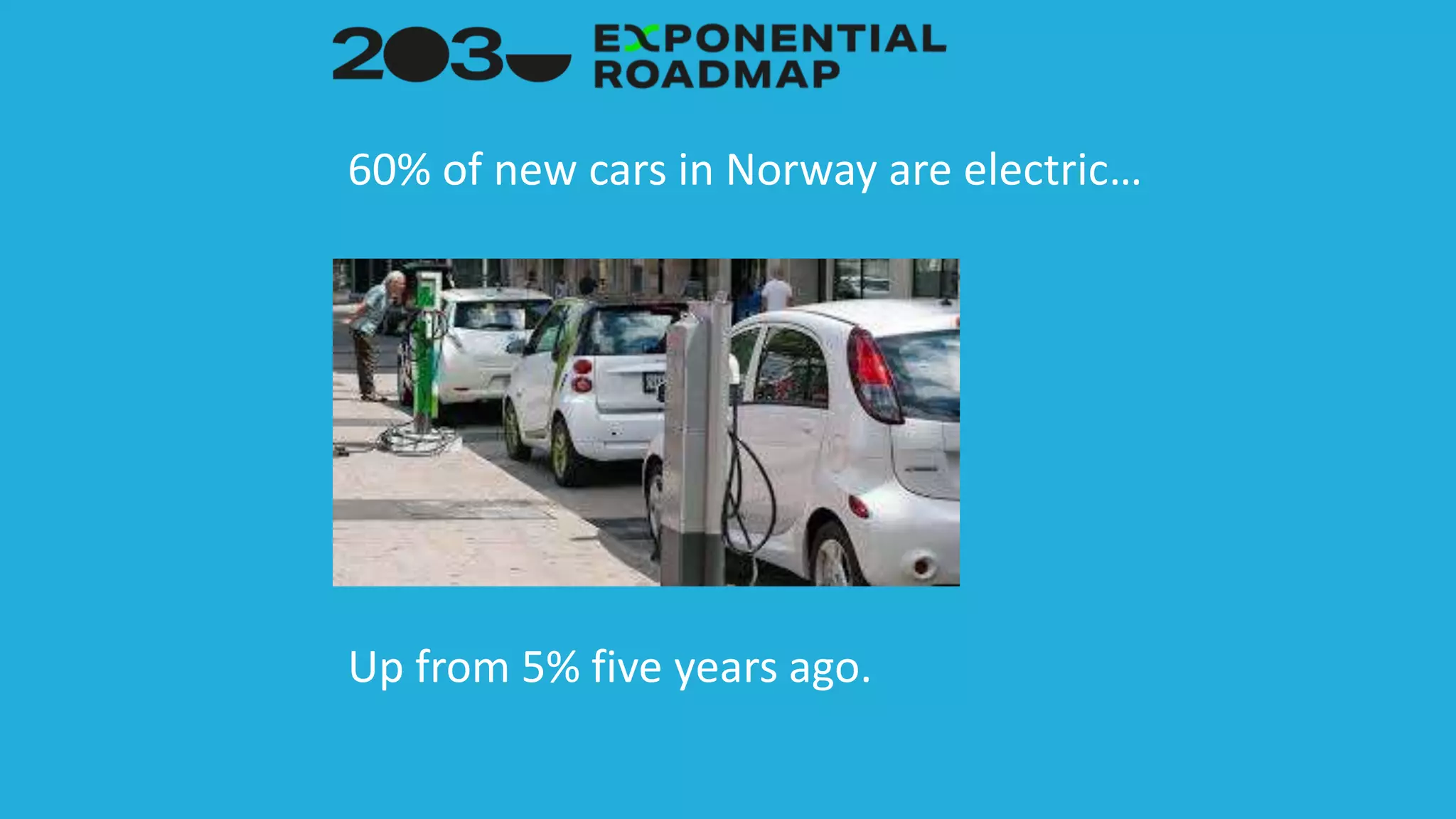
60% of new cars in Norway are electric…
Up from 5% five years ago.
20
Every 5 weeks China adds 9500 electric buses to its fleet…
…Equivalent to the entire London bus fleet.
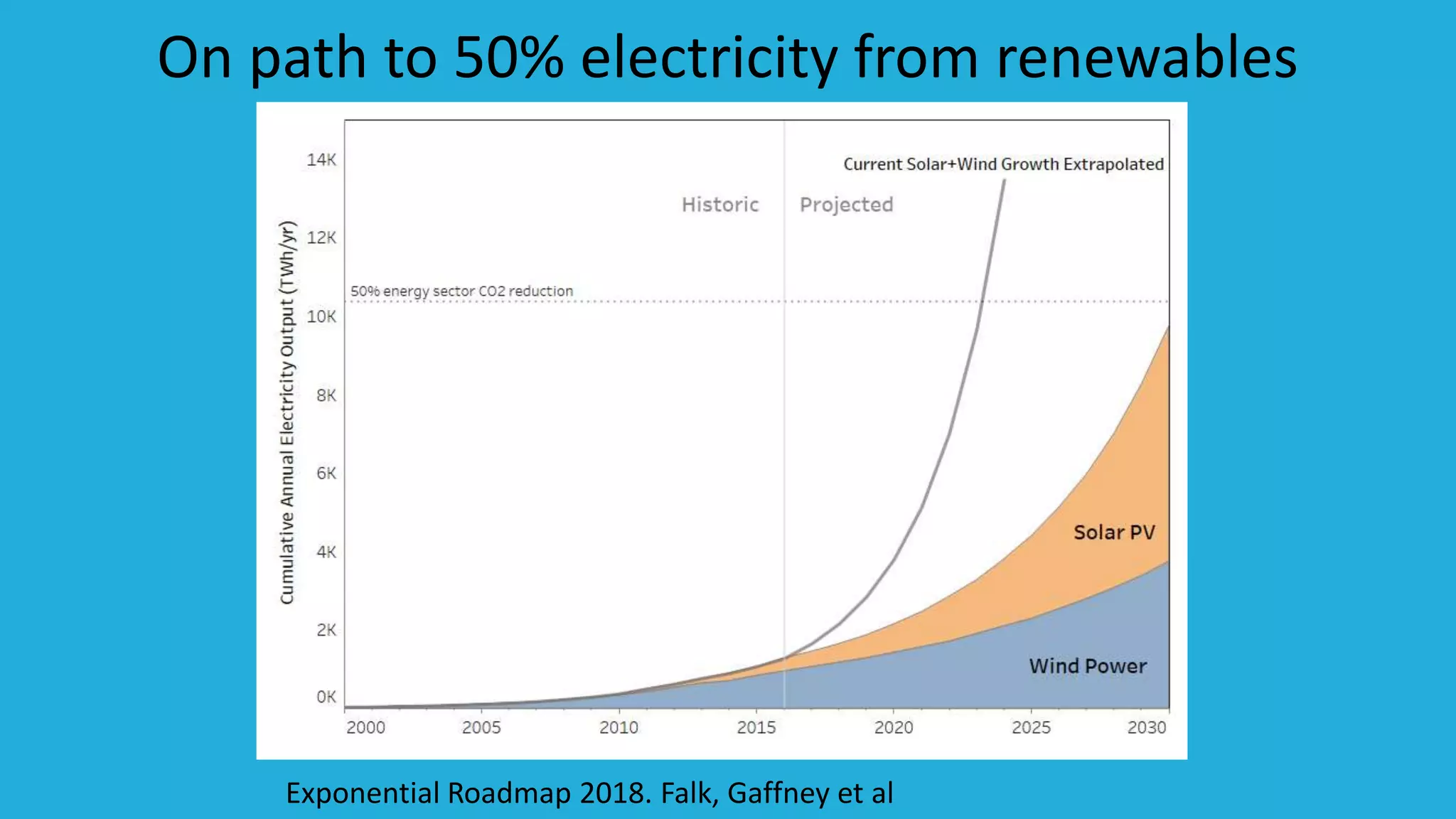
Solar cell growth (black) versus World Energy Outlook (WEO) predictions (coloured)
On path to 50% electricity from renewables
Exponential Roadmap 2018. Falk, Gaffney et al
24
2nd edition launched 19 September at the UN Climate Action Summit
Web: exponentialroadmap.futureearth.org
#exponentialroadmap
5th Avenue, New York 1900 and 1913
26
“Most people
overestimate what they
can do in one year and
underestimate what they
can do in ten years.”
Owen Gaffney
SHIFT Automotive
10 September, Berlin
@owengaffney
Potsdam Institute for Climate Impact Research
Stockholm Resilience Centre

Shift automotive to shift 4

Editor's Notes

  • #2 My journey – 15 years in ESS. Need to emphasise – incremental to exponential journet.
  • #10 Fold paper in half.
  • #11 So, we don’t have time, but we do have a plan.
  • #13 Countries Companies Maersk Scania
  • #16 About 25% of emissions are difficult to eliminate – these are in heavy industries, aircraft, shipping, long-distant overland transport. These are important – we need technology roadmaps to address this, but for the 75% of emissions we need society roadmaps to roll out. And cutting emissions 50% is actually technologically feasible and economically feasible. And will improve people’s quality of life.
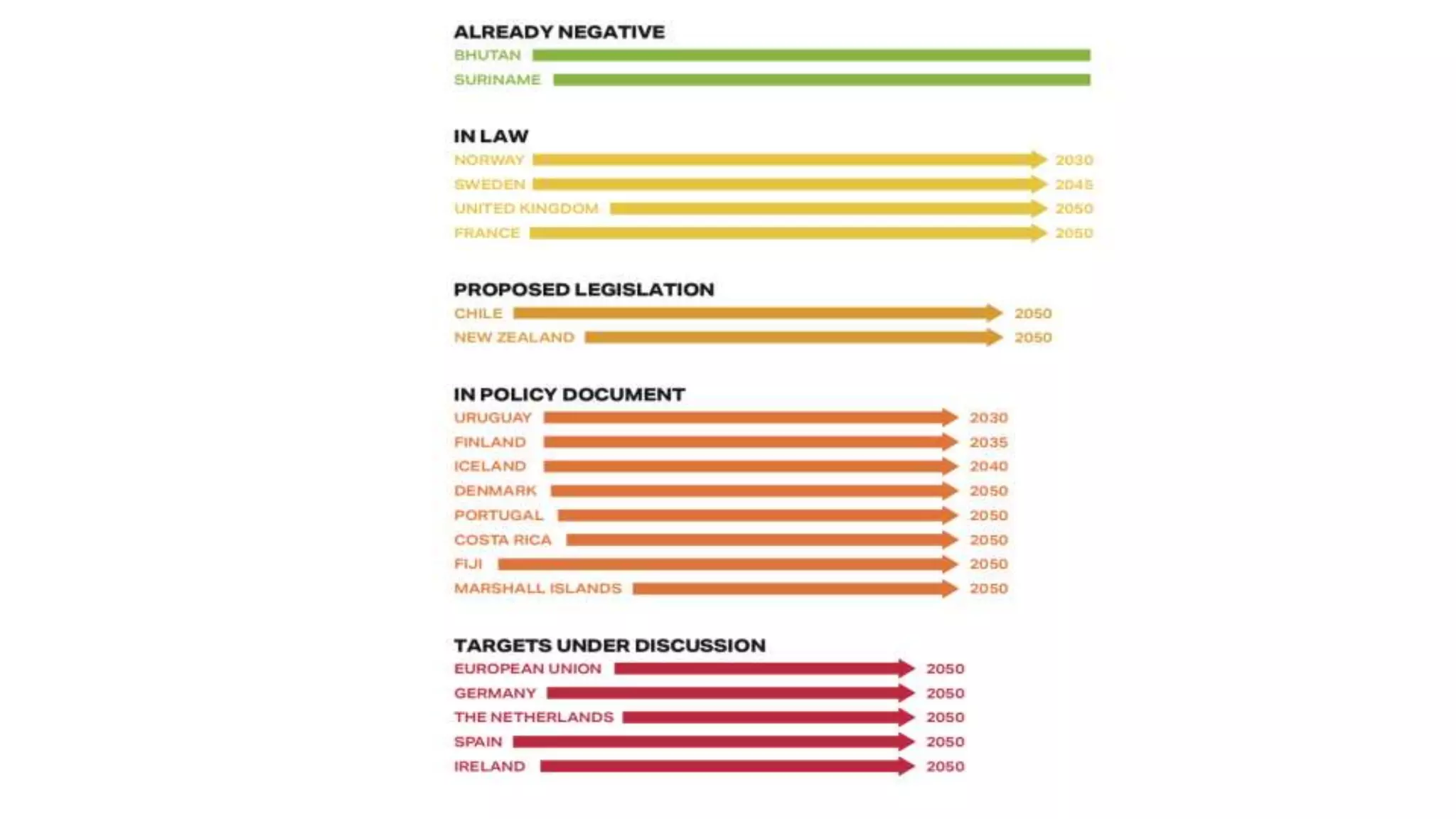
  • #17 2017 and 2019, eleven countries announced bans on new petrol/diesel vehicle sales, or the intention to introduce future bans, including France, Germany, UK, China, India, the Netherlands and Taiwan.5 Additionally, 27 cities have signed the Fossil Fuel Free Streets Declaration, committing to ban emitting vehicles by 2030
  • #18 The challenge is now scaling Barriers to scaling are falling monthly* The speed of change will surprise most *EVs can now beat all ICE cars on all performance metrics. Within a couple of years, they will beat on cost. 2017 and 2019, eleven countries announced bans on new petrol/diesel vehicle sales, or the intention to introduce future bans, including France, Germany, UK, China, India, the Netherlands and Taiwan.5 Additionally, 27 cities have signed the Fossil Fuel Free Streets Declaration, committing to ban emitting vehicles by 2030
  • #19 2017 and 2019, eleven countries announced bans on new petrol/diesel vehicle sales, or the intention to introduce future bans, including France, Germany, UK, China, India, the Netherlands and Taiwan.5 Additionally, 27 cities have signed the Fossil Fuel Free Streets Declaration, committing to ban emitting vehicles by 2030
  • #21 In 5 years, the city of Shenzhen converted its entire fleet of 16000 buses.
  • #22 People are missing the trends- No one more so than the International Energy Agency.
  • #24 The world is reaching four key tipping points that give us a strong indication we can reach the 2020 climate turning point:   [Click]   The first of these, that we’ve touched on a little already, is the citizen movement tipping point.   Over 1.5 million young people have been school striking for their futures. They’ve helped make climate change a mainstream, living room conversation over the last few months in ways that the climate NGO community has been unable to do for the last 30 years. As a result, a whole new generation around the world have become new spokespeople for the Paris Agreement, the science, and our target of 1.5.   Last month the Extinction Rebellion forced a further step change in awareness of the climate emergency in the UK. Again – completely shifting the conversation. April 2019 saw the most mentions of climate change in the UK media since the December 2015 Paris Agreement coverage.   It will soon be impossible to escape the loud howls of urgency coming from all corners of the globe.   [Click]   The second is the political momentum tipping point   Costa Rica has already launched its new decarbonization plan, with a bold set of strategies and actions to get the country to net zero emissions by 2050. In the US, the Green New Deal proposed by Alexandria Occasio Cortez has been a lightening rod in Congress, changing the conversation on what a response to climate change could look like. And the UK parliament did declare a climate emergency. Meanwhile, in nearly every country polls show climate is a major concern, and in some, the public sentiment is way ahead of the politics.   In Australia more than 60 percent of voters are seriously concerned about climate change. 70 percent want the government to set a high renewable energy target to put downward pressure on power prices and reduce emissions.   And it’s not just citizens: 92 percent of business and industry respondents to one survey said Australia’s current climate and energy policy is insufficient to meet the required targets.   [Click]   The third tipping point is the real economy   I’ve already covered the inexorable and hastening decline of coal thanks to exponential price shifts, the mass financial exodus from fossil fuels gathering pace in the financial sector, along with the exponential growth in renewables and the rapidly improving capacity of battery storage. Bill Clinton might now say: ‘it’s the real economy, stupid!   [Click]   And the fourth tipping point is what many are calling the fourth industrial revolution.   This includes artificial intelligence and machine learning, which can dramatically improve energy efficiency; the internet of things, based on smart connections and metering that can help control the grid, and the fact that companies operating in this realm are radically collaborating via the Step Up Declaration (I can tell you more about that another day ), to ensure that their technical and disruptive capacities can be utilized across all sectors for rapid decarbonization. That collaboration includes some of the most well known technology disrupters like Uber, Lyft and WeWork, as well as some of the more mainstream tech companies like Salesforce.
  • #25 About 25% of emissions are difficult to eliminate – these are in heavy industries, aircraft, shipping, long-distant overland transport. These are important – we need technology roadmaps to address this, but for the 75% of emissions we need society roadmaps to roll out. And cutting emissions 50% is actually technologically feasible and economically feasible. And will improve people’s quality of life.
  • #27 Myth buster We have time. It is too expensive It is too difficult.