Operate on the
assumption that each
student wants to be
successful
Make it a point to find
a way of relating to
each student in a
supportive manner
Be friendly but firm
with students
Treat each student
with kindness and
respect
Attempt to enhance the
self-concept of each
student by building on his
or her skills and optimism
When a student(s)
act inappropriately,
remain calm and
composed
Identify three to five
students during each
lesson who you can
praise individually for
successful work
Praise students as a
group for good work
Display a sense of
humor
During each passing
period between class
sessions be at the
doorway to greet and
chat with students
Be available to talk to
students before and
after school to help or
„just talk‟
Display respect and
dignity for each
student
To encourage
appropriate behaviour,
establish realistic
behaviour standards,
including consequences
Insist that students
are respectful of
themselves and
others
Through discussions
ensure that students
understand the
fairness/reasons for all
established standards
Keep a supply of „loaners‟
(pens/pencils/glue etc.)
on hand for students who
forget theirs & don‟t make
a big deal out of it
Communicate to
students that trivial
offenses will not be
escalated into major
issues
Be impartial and fair
when working with
students
Interact with all
students, not just a
select few
Give students a pleasing
greeting each day and
wish them a pleasant
afternoon/weekend/
vacation
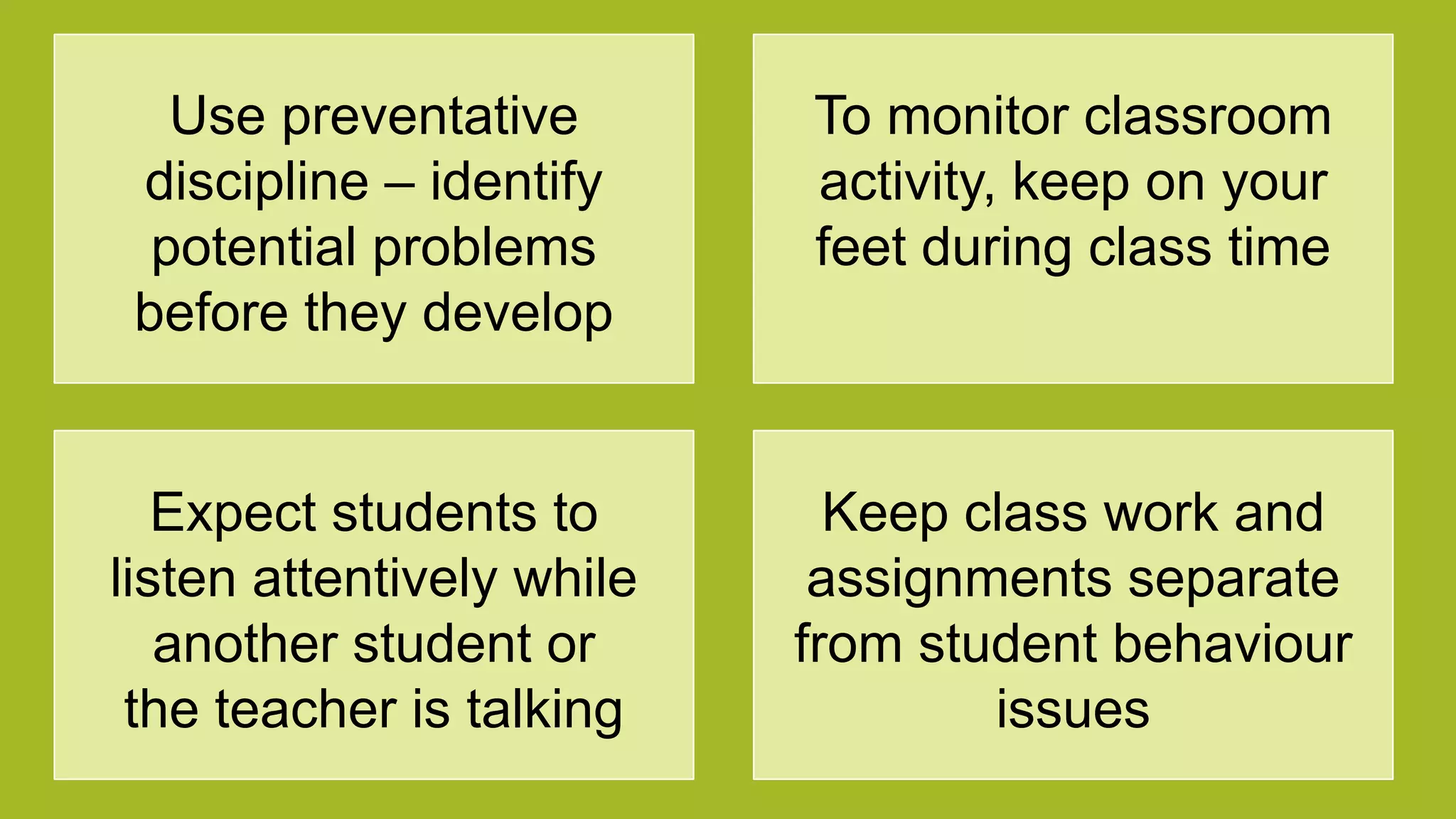
Use preventative
discipline – identify
potential problems
before they develop
To monitor classroom
activity, keep on your
feet during class time
Expect students to
listen attentively while
another student or
the teacher is talking
Keep class work and
assignments separate
from student behaviour
issues
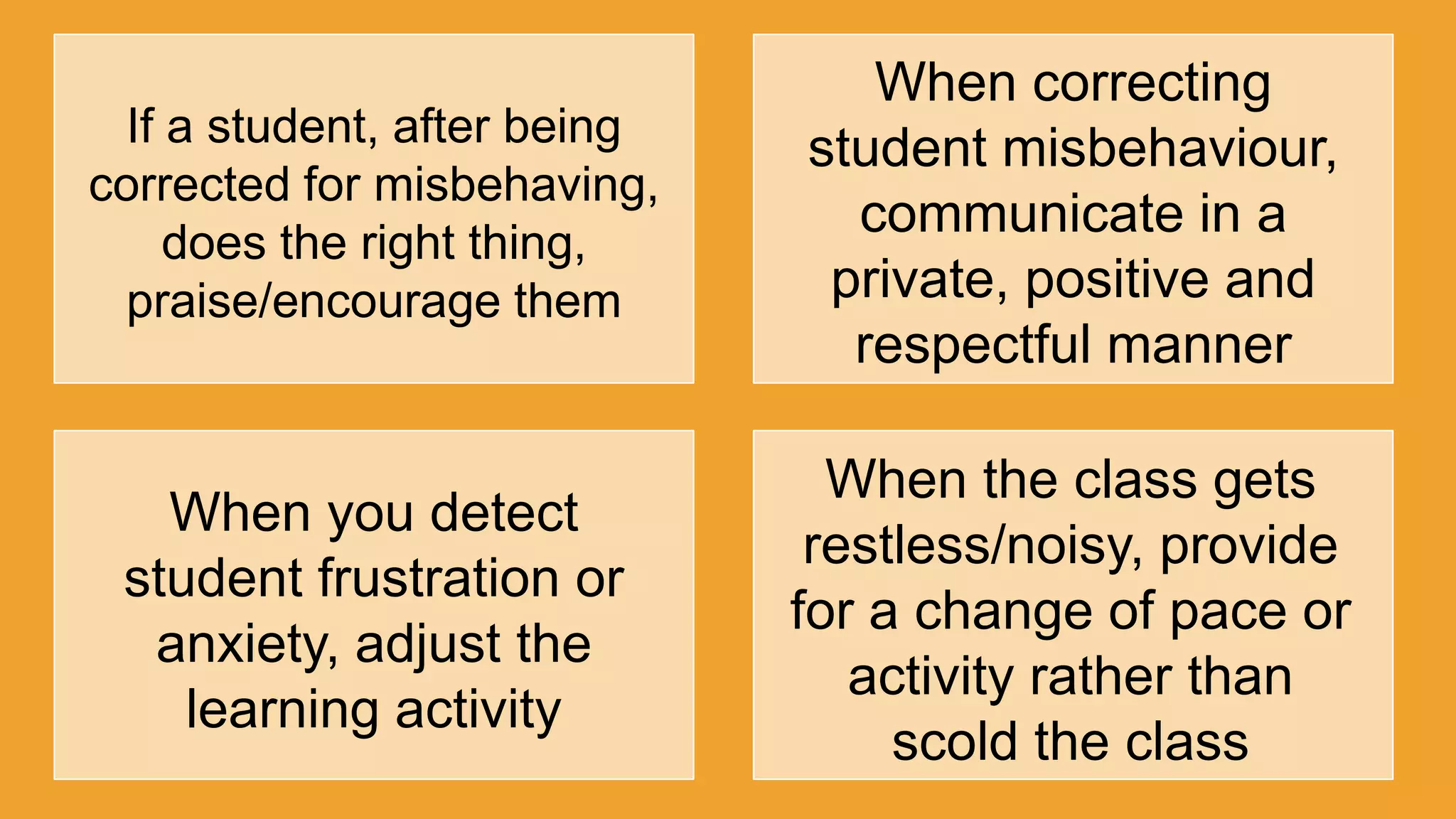
If a student, after being
corrected for misbehaving,
does the right thing,
praise/encourage them
When correcting
student misbehaviour,
communicate in a
private, positive and
respectful manner
When you detect
student frustration or
anxiety, adjust the
learning activity
When the class gets
restless/noisy, provide
for a change of pace or
activity rather than
scold the class
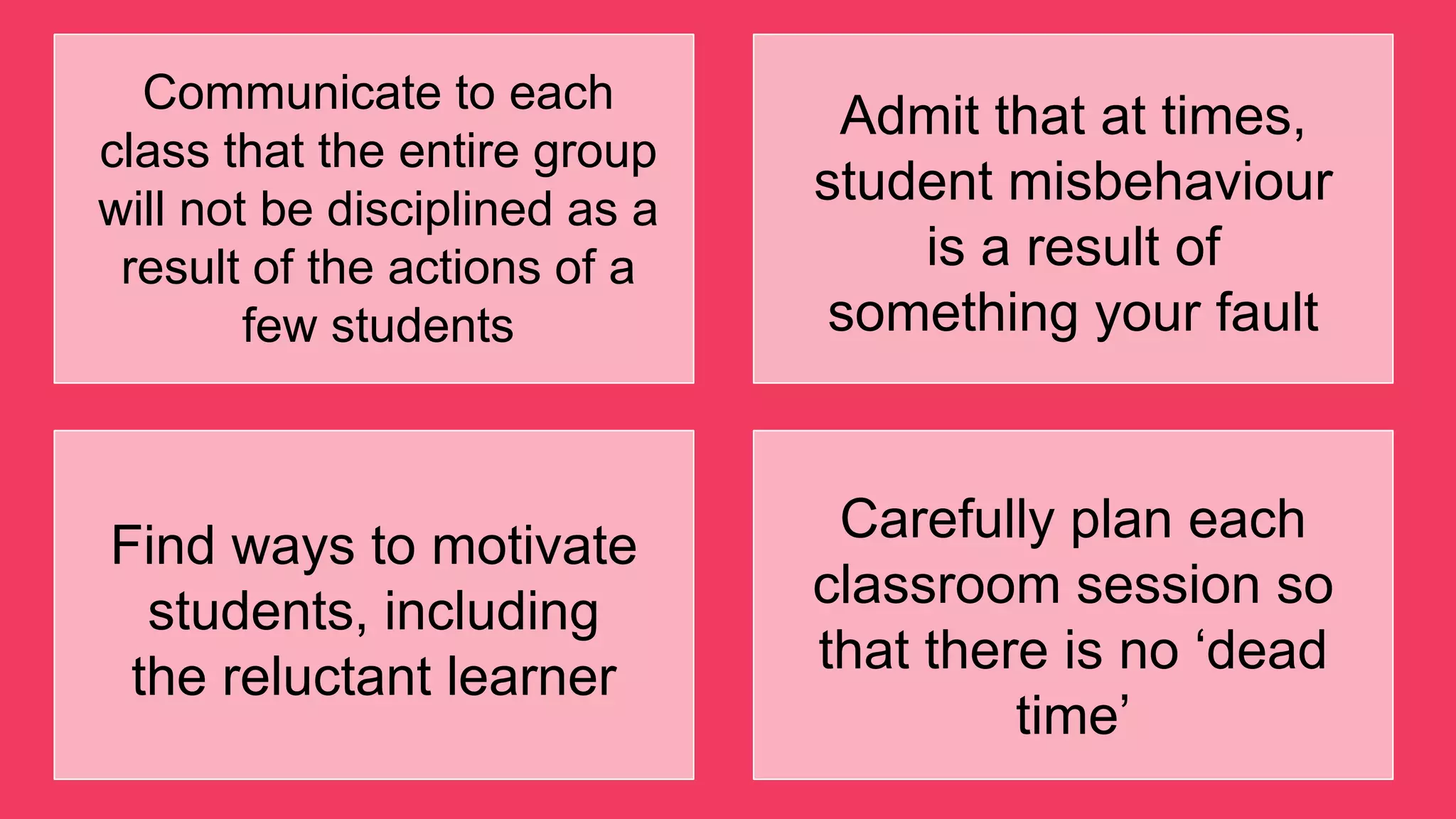
Communicate to each
class that the entire group
will not be disciplined as a
result of the actions of a
few students
Admit that at times,
student misbehaviour
is a result of
something your fault
Find ways to motivate
students, including
the reluctant learner
Carefully plan each
classroom session so
that there is no „dead
time‟
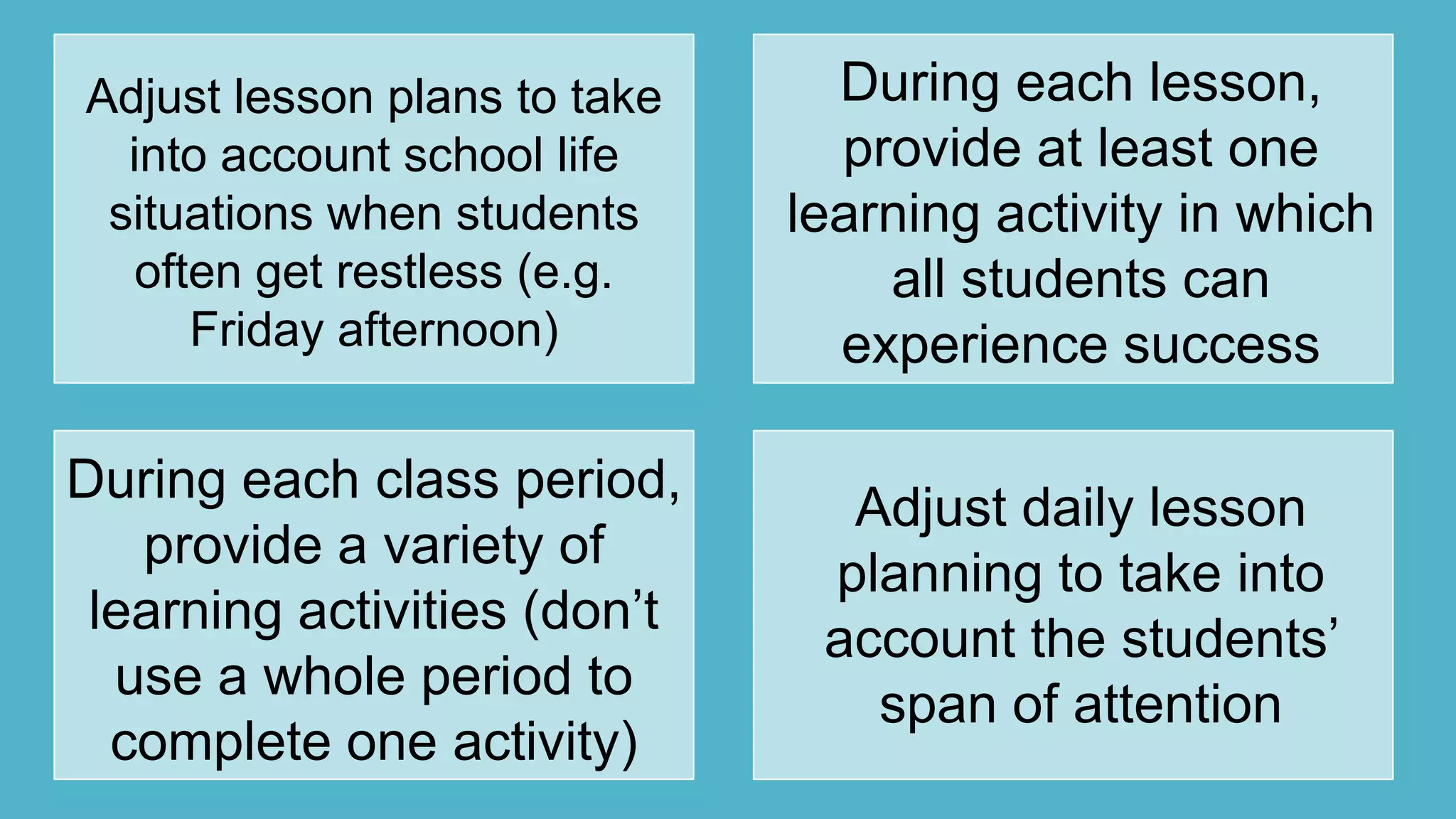
Adjust lesson plans to take
into account school life
situations when students
often get restless (e.g.
Friday afternoon)
During each lesson,
provide at least one
learning activity in which
all students can
experience success
During each class period,
provide a variety of
learning activities (don‟t
use a whole period to
complete one activity)
Adjust daily lesson
planning to take into
account the students‟
span of attention
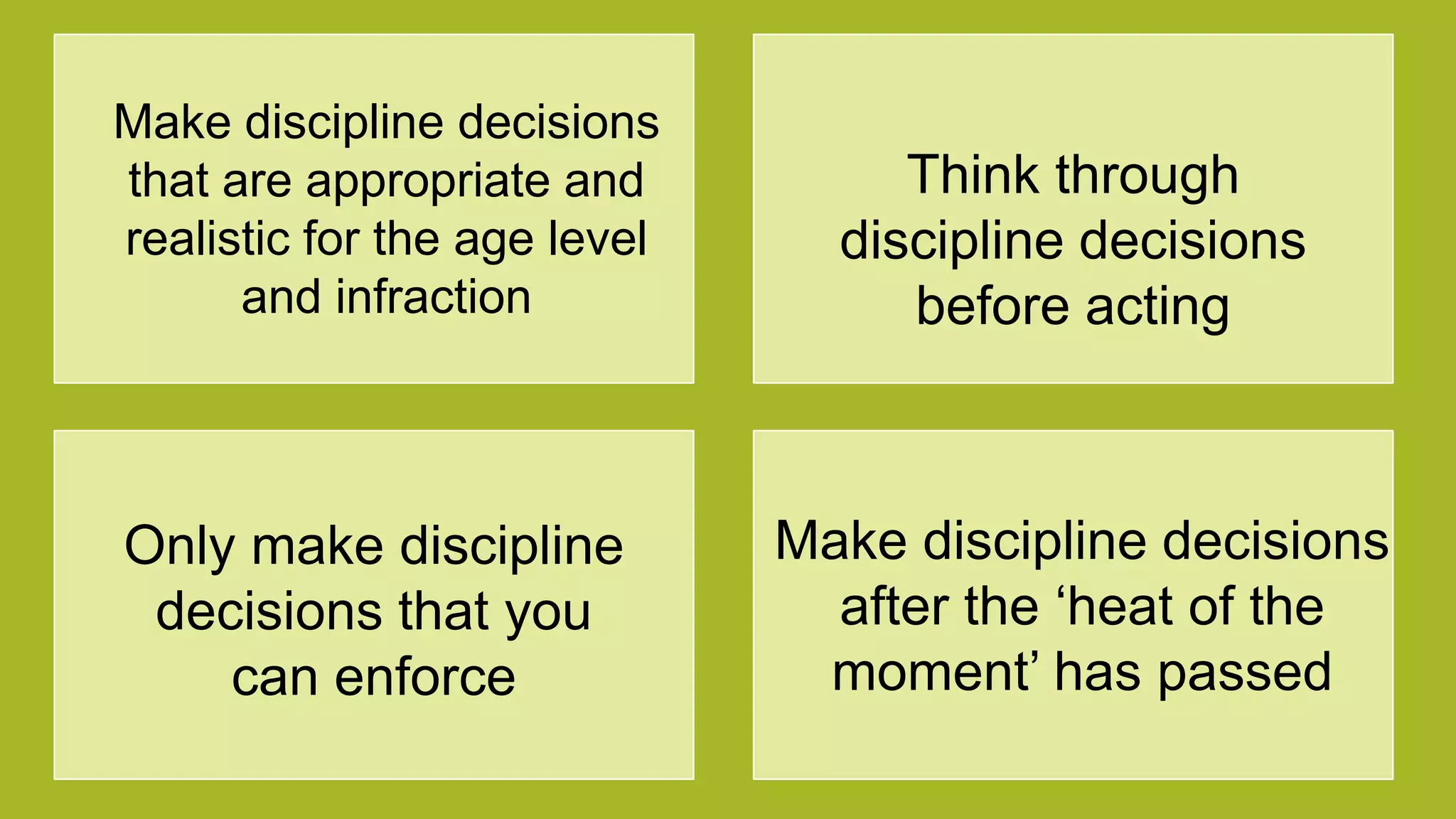
Make discipline decisions
that are appropriate and
realistic for the age level
and infraction
Think through
discipline decisions
before acting
Only make discipline
decisions that you
can enforce
Make discipline decisions
after the „heat of the
moment‟ has passed
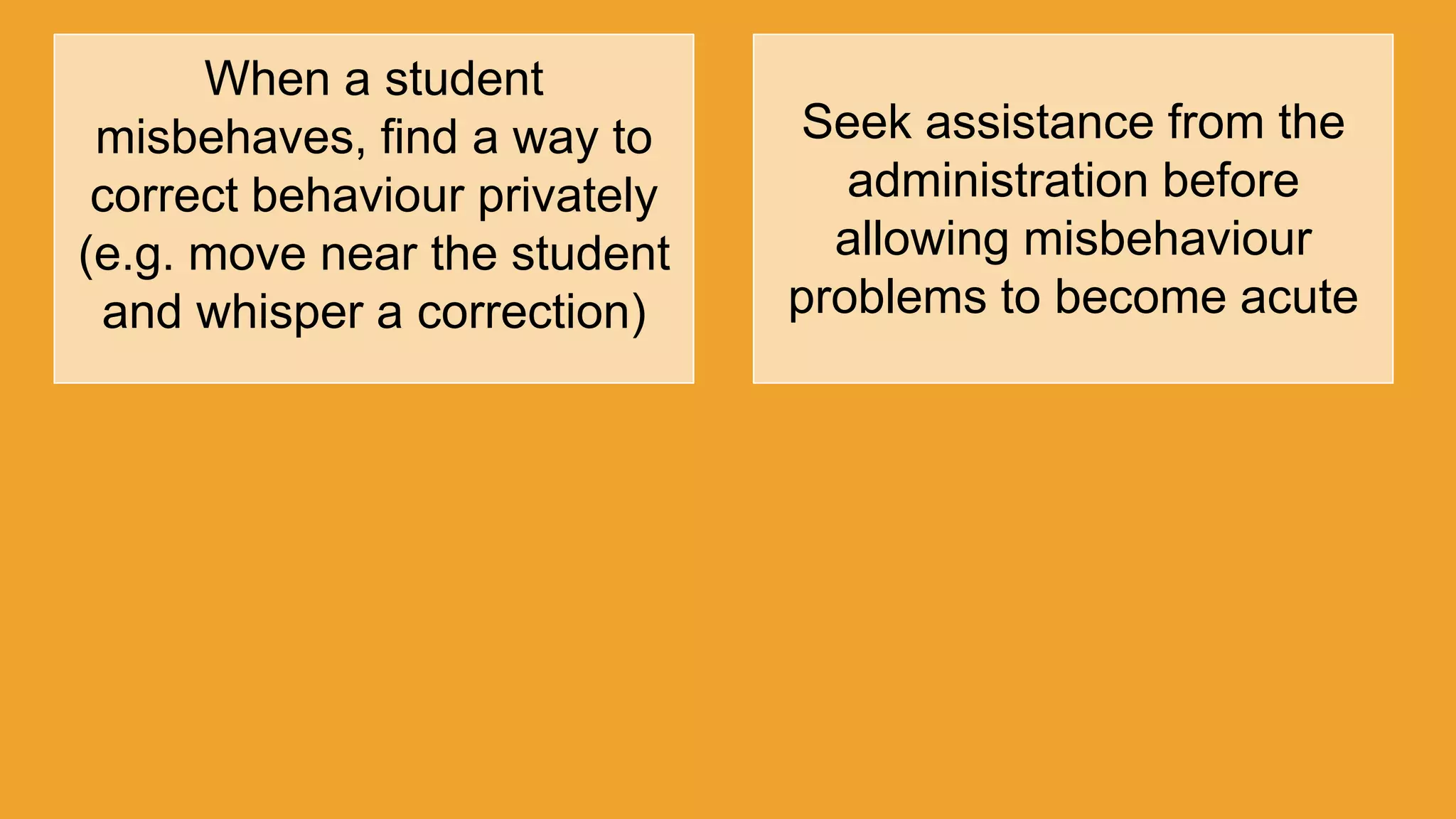
When a student
misbehaves, find a way to
correct behaviour privately
(e.g. move near the student
and whisper a correction)
Seek assistance from the
administration before
allowing misbehaviour
problems to become acute
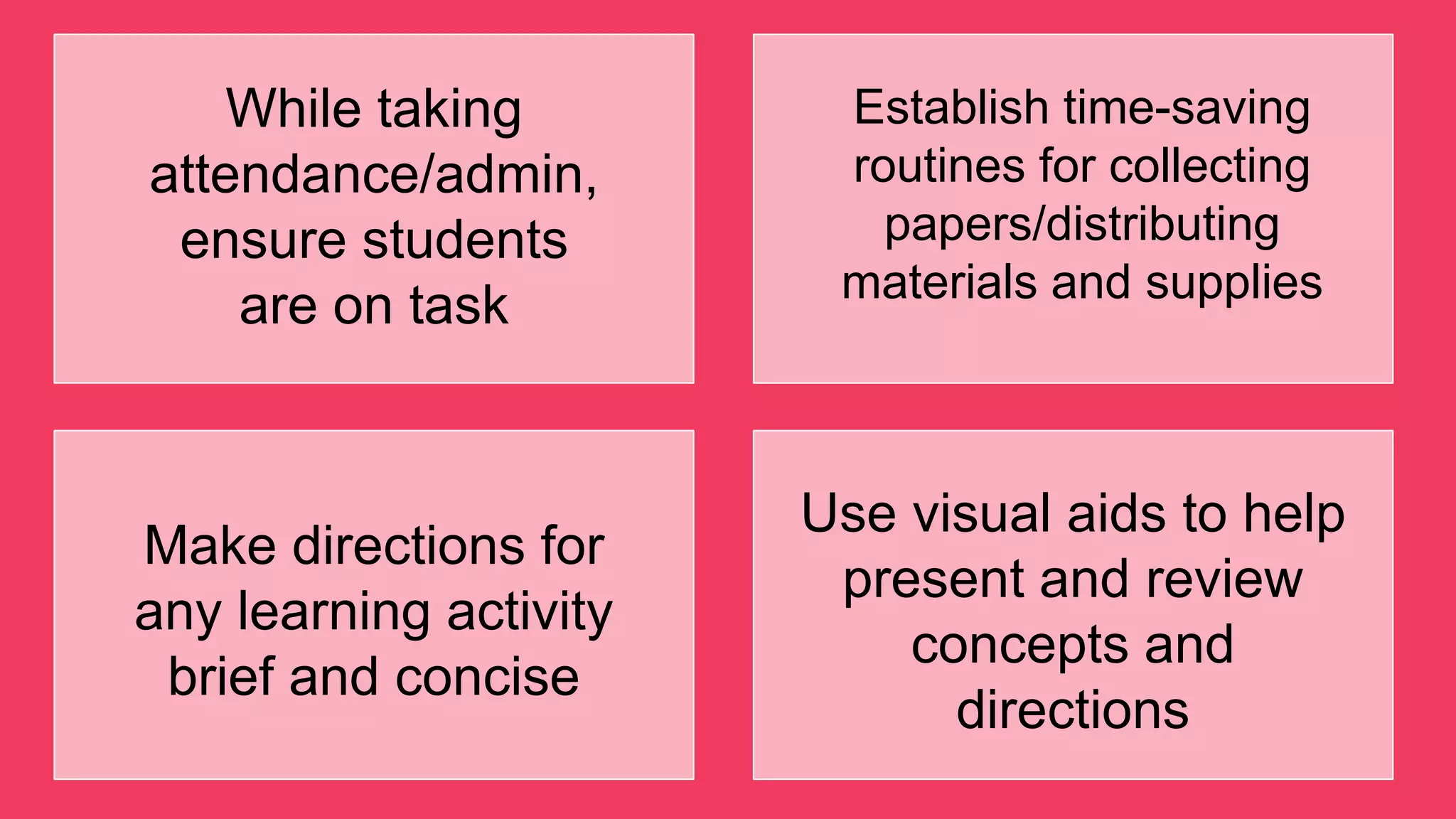
While taking
attendance/admin,
ensure students
are on task
Establish time-saving
routines for collecting
papers/distributing
materials and supplies
Make directions for
any learning activity
brief and concise
Use visual aids to help
present and review
concepts and
directions
After giving directions for
guided/independent practice,
move around the classroom
observing effectiveness of
directions and providing
assistance
Show sincere
enthusiasm for the
subjects you teach
Provide a neat
classroom that gives
students the idea of
orderliness
Present a professional
personal appearance in
the classroom
Insist that students
maintain high standards
in work and behaviour –
have realistic and
attainable standards
Use many different
teaching methods as
there is no „best‟ one
Homework
assignments must
have a purpose
To assist students with their
homework, teach students
how to study by showing
them a variety of study skills
Ensure that student
work is displayed in
the classroom
Provide ways of
giving students
responsibility
Be patient with students and
be willing to reteach
concepts that were not
understood when first taught
During each class,
summarize or have
students summarize
the day‟s learnings
The work that is
assigned to students is
within their capabilities
and power
Use pre-tests or other
procedures to
ascertain what
students already
know
Involve students in
setting learning goals
for each teaching unit
Ask students to
propose test questions
and other types of
evaluative activities
Involve students in peer-
teaching situations,
cooperative learning and
small group instruction
Limit the lecture method
of teaching – any
“teacher talks” are to be
<10 minutes long
Seventy-three suggestions

Seventy-three suggestions

  • 3.
    Operate on the assumptionthat each student wants to be successful Make it a point to find a way of relating to each student in a supportive manner Be friendly but firm with students Treat each student with kindness and respect
  • 4.
    Attempt to enhancethe self-concept of each student by building on his or her skills and optimism When a student(s) act inappropriately, remain calm and composed Identify three to five students during each lesson who you can praise individually for successful work Praise students as a group for good work
  • 5.
    Display a senseof humor During each passing period between class sessions be at the doorway to greet and chat with students Be available to talk to students before and after school to help or „just talk‟ Display respect and dignity for each student
  • 6.
    To encourage appropriate behaviour, establishrealistic behaviour standards, including consequences Insist that students are respectful of themselves and others Through discussions ensure that students understand the fairness/reasons for all established standards Keep a supply of „loaners‟ (pens/pencils/glue etc.) on hand for students who forget theirs & don‟t make a big deal out of it
  • 7.
    Communicate to students thattrivial offenses will not be escalated into major issues Be impartial and fair when working with students Interact with all students, not just a select few Give students a pleasing greeting each day and wish them a pleasant afternoon/weekend/ vacation
  • 9.
    Use preventative discipline –identify potential problems before they develop To monitor classroom activity, keep on your feet during class time Expect students to listen attentively while another student or the teacher is talking Keep class work and assignments separate from student behaviour issues
  • 10.
    If a student,after being corrected for misbehaving, does the right thing, praise/encourage them When correcting student misbehaviour, communicate in a private, positive and respectful manner When you detect student frustration or anxiety, adjust the learning activity When the class gets restless/noisy, provide for a change of pace or activity rather than scold the class
  • 11.
    Communicate to each classthat the entire group will not be disciplined as a result of the actions of a few students Admit that at times, student misbehaviour is a result of something your fault Find ways to motivate students, including the reluctant learner Carefully plan each classroom session so that there is no „dead time‟
  • 12.
    Adjust lesson plansto take into account school life situations when students often get restless (e.g. Friday afternoon) During each lesson, provide at least one learning activity in which all students can experience success During each class period, provide a variety of learning activities (don‟t use a whole period to complete one activity) Adjust daily lesson planning to take into account the students‟ span of attention
  • 14.
    Make discipline decisions thatare appropriate and realistic for the age level and infraction Think through discipline decisions before acting Only make discipline decisions that you can enforce Make discipline decisions after the „heat of the moment‟ has passed
  • 15.
    When a student misbehaves,find a way to correct behaviour privately (e.g. move near the student and whisper a correction) Seek assistance from the administration before allowing misbehaviour problems to become acute
  • 17.
    While taking attendance/admin, ensure students areon task Establish time-saving routines for collecting papers/distributing materials and supplies Make directions for any learning activity brief and concise Use visual aids to help present and review concepts and directions
  • 18.
    After giving directionsfor guided/independent practice, move around the classroom observing effectiveness of directions and providing assistance Show sincere enthusiasm for the subjects you teach Provide a neat classroom that gives students the idea of orderliness Present a professional personal appearance in the classroom
  • 19.
    Insist that students maintainhigh standards in work and behaviour – have realistic and attainable standards Use many different teaching methods as there is no „best‟ one Homework assignments must have a purpose To assist students with their homework, teach students how to study by showing them a variety of study skills
  • 20.
    Ensure that student workis displayed in the classroom Provide ways of giving students responsibility Be patient with students and be willing to reteach concepts that were not understood when first taught During each class, summarize or have students summarize the day‟s learnings
  • 21.
    The work thatis assigned to students is within their capabilities and power Use pre-tests or other procedures to ascertain what students already know Involve students in setting learning goals for each teaching unit Ask students to propose test questions and other types of evaluative activities
  • 22.
    Involve students inpeer- teaching situations, cooperative learning and small group instruction Limit the lecture method of teaching – any “teacher talks” are to be <10 minutes long