CLASSROOM MANAGEMENT −  DISCIPLINE PROBLEMS −  Nora Alejos Azkona
DISCIPLINE PROBLEMS Order is needed to facilitate learning. Discipline problems diminish: being skilful in lesson management establishing authority Nevertheless, misbehaviour occur even in the lessons of the most skilful teachers.
TYPES OF MISBEHAVIOUR Excessive talk or talking out of turn Being noisy (verbal, shouting, and non-verbal, playing drums with pencils) Not paying attention to the teacher Not getting on with the work Being out of their seat without good cause Bothering other pupils Arriving late for lessons
CAUSES OF MISBEHAVIOUR Children come to our lessons in a certain state of mind, in a good or bad mood   Compulsory activity -- Inability to do the work   Boredom   Prolonged mental effort   Low academic self-esteem   Emotional difficulties   Lack of negative consequences
Two key aspects  that diminish  discipline problems are: being skilful in lesson management establishing authority
1. LESSON MANAGEMENT key task: to elicit and sustain pupils’ productive involvement throughout the lesson.  Beginnings, transitions and endings are key areas of lesson management.
Beginings PUNCTUALITY MENTAL SET voice of curiosity and excitement: to elicit and maintain pupils’ interest  Involve kids targeting them A successful introduction to a lesson makes it easier to sustain learning as the lesson goes on.
Transitions Smoothly. Be sensitive. Individual or group iInstructions ?
Endings Can be useful for: including a few words of praise about the work they have done  review, conclusions and summary about what it was achieved setting homework Time   Exit
- Maintaining pupil’s involvement NOT just keeping them busy. Involvement is closely related to motivation, interest and adequateness of the tasks’ level. Therefore, we have to: set up educationally effective activities (purpose). stimulate intellectual curiosity and communicate enthusiasm. structure information well (lesson plan); signal and smooth transitions. give clear instructions (using flash cards, pictures, real material…), well paced and with examples. provide opportunities for pupils to talk; listen to what they have to say. …
- Pace and flow of the lesson  Not too fast Not to slow Avoid interruptions; postpone if possible When giving individual help to a pupil, periodically scan the classroom
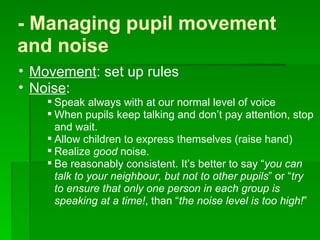
- Managing pupil movement and noise  Movement : set up rules Noise :  Speak always with at our normal level of voice  When pupils keep talking and don’t pay attention, stop and wait.  Allow children to express themselves (raise hand) Realize  good  noise. Be reasonably consistent. It’s better to say “ you can talk to your neighbour, but not to other pupils ” or “ try to ensure that only one person in each group is speaking at a time! , than “ the noise level is too high! ”
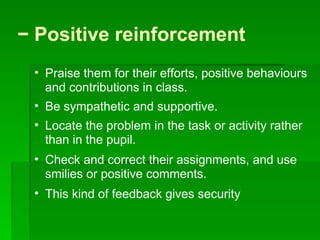
−  Positive reinforcement  Praise them for their efforts, positive behaviours and contributions in class.  Be sympathetic and supportive.  Locate the problem in the task or activity rather than in the pupil.  Check and correct their assignments, and use smilies or positive comments. This kind of feedback gives security
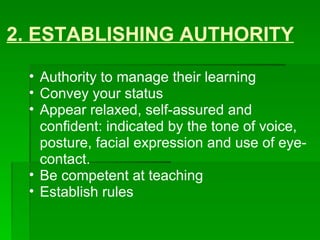
2. ESTABLISHING AUTHORITY Authority to manage their learning  Convey your status  Appear relaxed, self-assured and confident: indicated by the tone of voice, posture, facial expression and use of eye-contact. Be competent at teaching  Establish rules
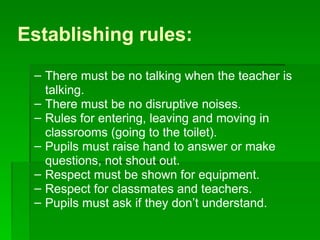
Establishing rules: There must be no talking when the teacher is talking. There must be no disruptive noises. Rules for entering, leaving and moving in classrooms (going to the toilet). Pupils must raise hand to answer or make questions, not shout out. Respect must be shown for equipment. Respect for classmates and teachers. Pupils must ask if they don’t understand.
−  Dealing with pupil misbehaviour effectively Prevention strategies Be friendly but firm .  Establish rules and stick to them.   Plan motivating lessons  (abilities and interests). Involve students .  Praise good behaviours and contributions . Don’t stay too long doing an activity .  Scan and circulate around the classroom.   Non-verbal language : eye-contact, moving towards them.
Give help  to kids when they are having difficulties. Change activities and pace . If a kid is misbehaving or showing disrespect, indicate it (non-verbal language).   Move pupils  if necessary
Managing pupil misbehaviour Investigating and counselling Reprimands Punishments
−  Positive teaching  Pupil behaviours that are rewarded are more likely to occur in the future, and behaviours that are not rewarded or are punished are less likely to occur.  Identify desirable behaviours to be promoted  Praising programmes

Classroom management discipline_problems

  • 1.
    CLASSROOM MANAGEMENT − DISCIPLINE PROBLEMS − Nora Alejos Azkona
  • 2.
    DISCIPLINE PROBLEMS Orderis needed to facilitate learning. Discipline problems diminish: being skilful in lesson management establishing authority Nevertheless, misbehaviour occur even in the lessons of the most skilful teachers.
  • 3.
    TYPES OF MISBEHAVIOURExcessive talk or talking out of turn Being noisy (verbal, shouting, and non-verbal, playing drums with pencils) Not paying attention to the teacher Not getting on with the work Being out of their seat without good cause Bothering other pupils Arriving late for lessons
  • 4.
    CAUSES OF MISBEHAVIOURChildren come to our lessons in a certain state of mind, in a good or bad mood Compulsory activity -- Inability to do the work Boredom Prolonged mental effort Low academic self-esteem Emotional difficulties Lack of negative consequences
  • 5.
    Two key aspects that diminish discipline problems are: being skilful in lesson management establishing authority
  • 6.
    1. LESSON MANAGEMENTkey task: to elicit and sustain pupils’ productive involvement throughout the lesson. Beginnings, transitions and endings are key areas of lesson management.
  • 7.
    Beginings PUNCTUALITY MENTALSET voice of curiosity and excitement: to elicit and maintain pupils’ interest Involve kids targeting them A successful introduction to a lesson makes it easier to sustain learning as the lesson goes on.
  • 8.
    Transitions Smoothly. Besensitive. Individual or group iInstructions ?
  • 9.
    Endings Can beuseful for: including a few words of praise about the work they have done review, conclusions and summary about what it was achieved setting homework Time Exit
  • 10.
    - Maintaining pupil’sinvolvement NOT just keeping them busy. Involvement is closely related to motivation, interest and adequateness of the tasks’ level. Therefore, we have to: set up educationally effective activities (purpose). stimulate intellectual curiosity and communicate enthusiasm. structure information well (lesson plan); signal and smooth transitions. give clear instructions (using flash cards, pictures, real material…), well paced and with examples. provide opportunities for pupils to talk; listen to what they have to say. …
  • 11.
    - Pace andflow of the lesson Not too fast Not to slow Avoid interruptions; postpone if possible When giving individual help to a pupil, periodically scan the classroom
  • 12.
    - Managing pupilmovement and noise Movement : set up rules Noise : Speak always with at our normal level of voice When pupils keep talking and don’t pay attention, stop and wait. Allow children to express themselves (raise hand) Realize good noise. Be reasonably consistent. It’s better to say “ you can talk to your neighbour, but not to other pupils ” or “ try to ensure that only one person in each group is speaking at a time! , than “ the noise level is too high! ”
  • 13.
    − Positivereinforcement Praise them for their efforts, positive behaviours and contributions in class. Be sympathetic and supportive. Locate the problem in the task or activity rather than in the pupil. Check and correct their assignments, and use smilies or positive comments. This kind of feedback gives security
  • 14.
    2. ESTABLISHING AUTHORITYAuthority to manage their learning Convey your status Appear relaxed, self-assured and confident: indicated by the tone of voice, posture, facial expression and use of eye-contact. Be competent at teaching Establish rules
  • 15.
    Establishing rules: Theremust be no talking when the teacher is talking. There must be no disruptive noises. Rules for entering, leaving and moving in classrooms (going to the toilet). Pupils must raise hand to answer or make questions, not shout out. Respect must be shown for equipment. Respect for classmates and teachers. Pupils must ask if they don’t understand.
  • 16.
    − Dealingwith pupil misbehaviour effectively Prevention strategies Be friendly but firm . Establish rules and stick to them. Plan motivating lessons (abilities and interests). Involve students . Praise good behaviours and contributions . Don’t stay too long doing an activity . Scan and circulate around the classroom. Non-verbal language : eye-contact, moving towards them.
  • 17.
    Give help to kids when they are having difficulties. Change activities and pace . If a kid is misbehaving or showing disrespect, indicate it (non-verbal language). Move pupils if necessary
  • 18.
    Managing pupil misbehaviourInvestigating and counselling Reprimands Punishments
  • 19.
    − Positiveteaching Pupil behaviours that are rewarded are more likely to occur in the future, and behaviours that are not rewarded or are punished are less likely to occur. Identify desirable behaviours to be promoted Praising programmes