

1
https://www.youtube.com/watch?v=-lxec5eAt78
2
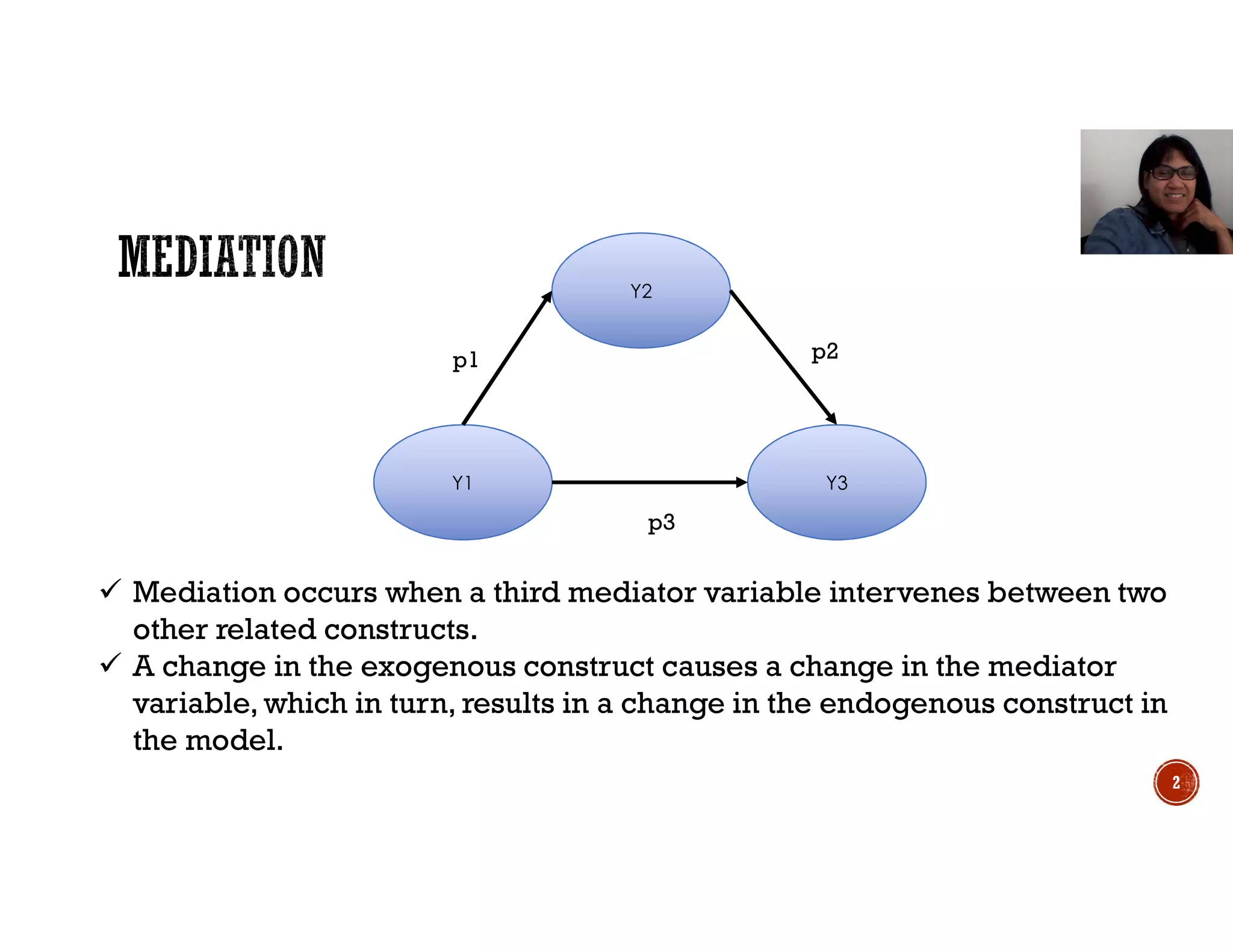
Y2
Y3Y1
p1 p2
p3
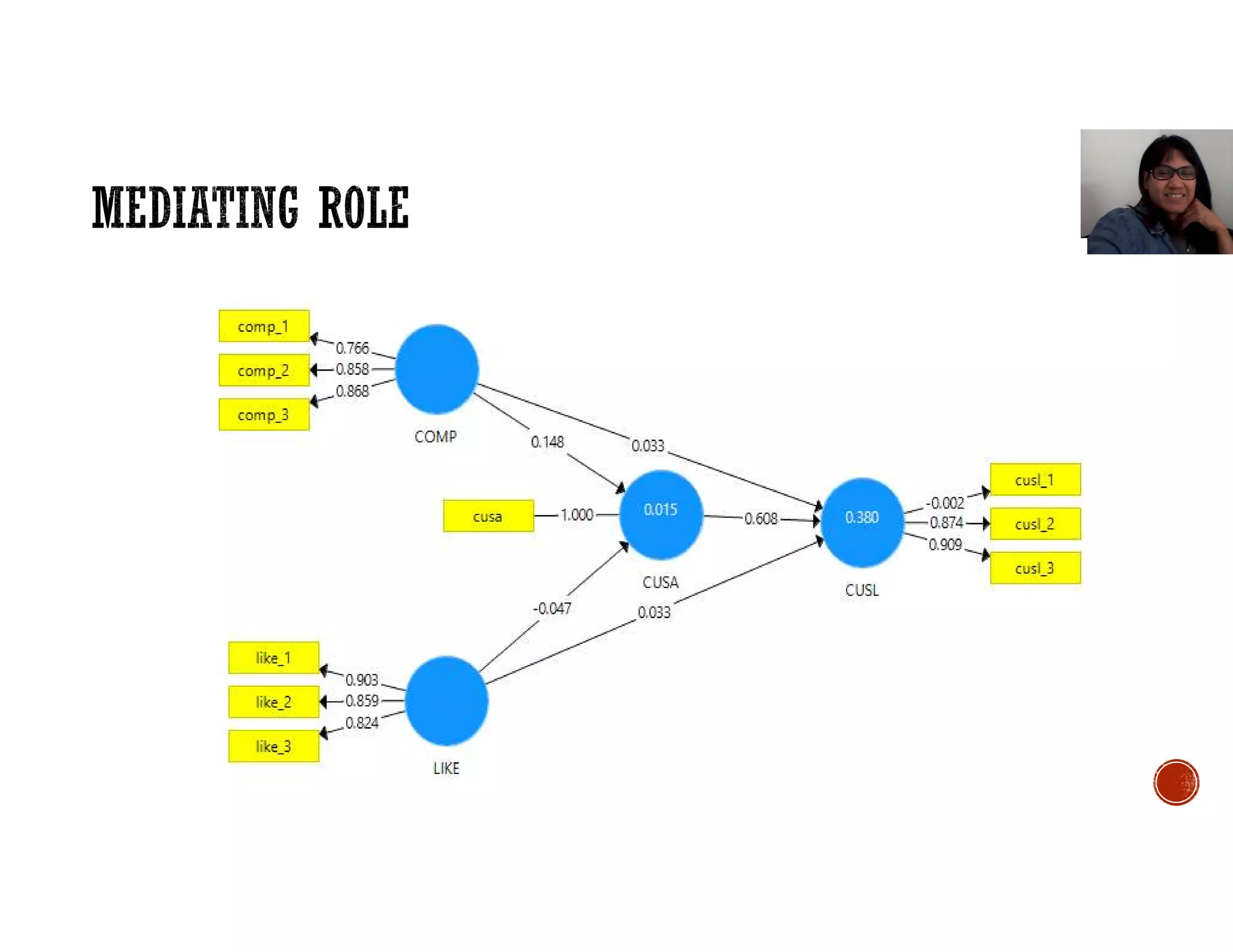
 Mediation occurs when a third mediator variable intervenes between two
other related constructs.
 A change in the exogenous construct causes a change in the mediator
variable, which in turn, results in a change in the endogenous construct in
the model.
3
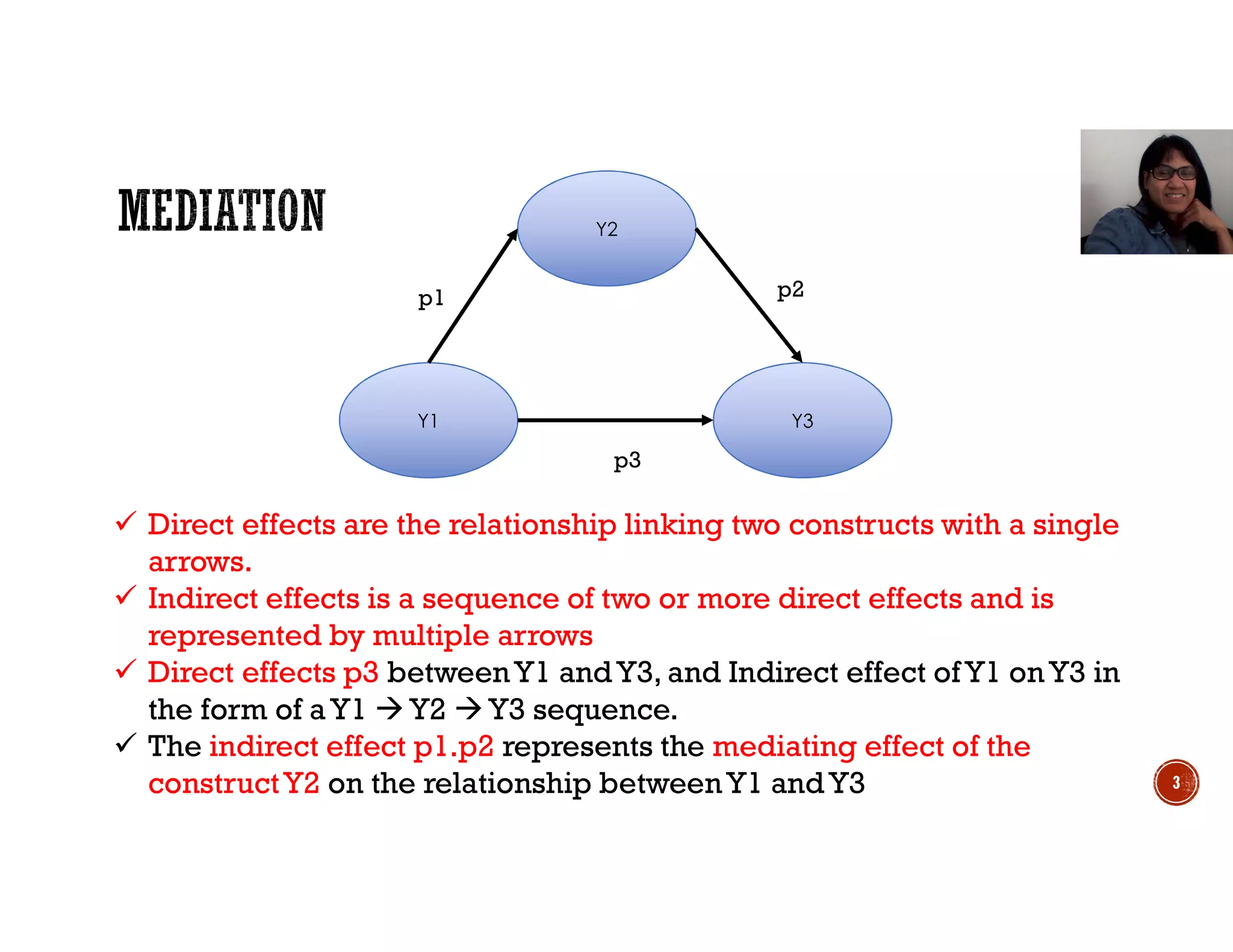
Y2
Y3Y1
p1 p2
p3
 Direct effects are the relationship linking two constructs with a single
arrows.
 Indirect effects is a sequence of two or more direct effects and is
represented by multiple arrows
 Direct effects p3 betweenY1 andY3, and Indirect effect ofY1 onY3 in
the form of aY1  Y2 Y3 sequence.
 The indirect effect p1.p2 represents the mediating effect of the
constructY2 on the relationship betweenY1 andY3
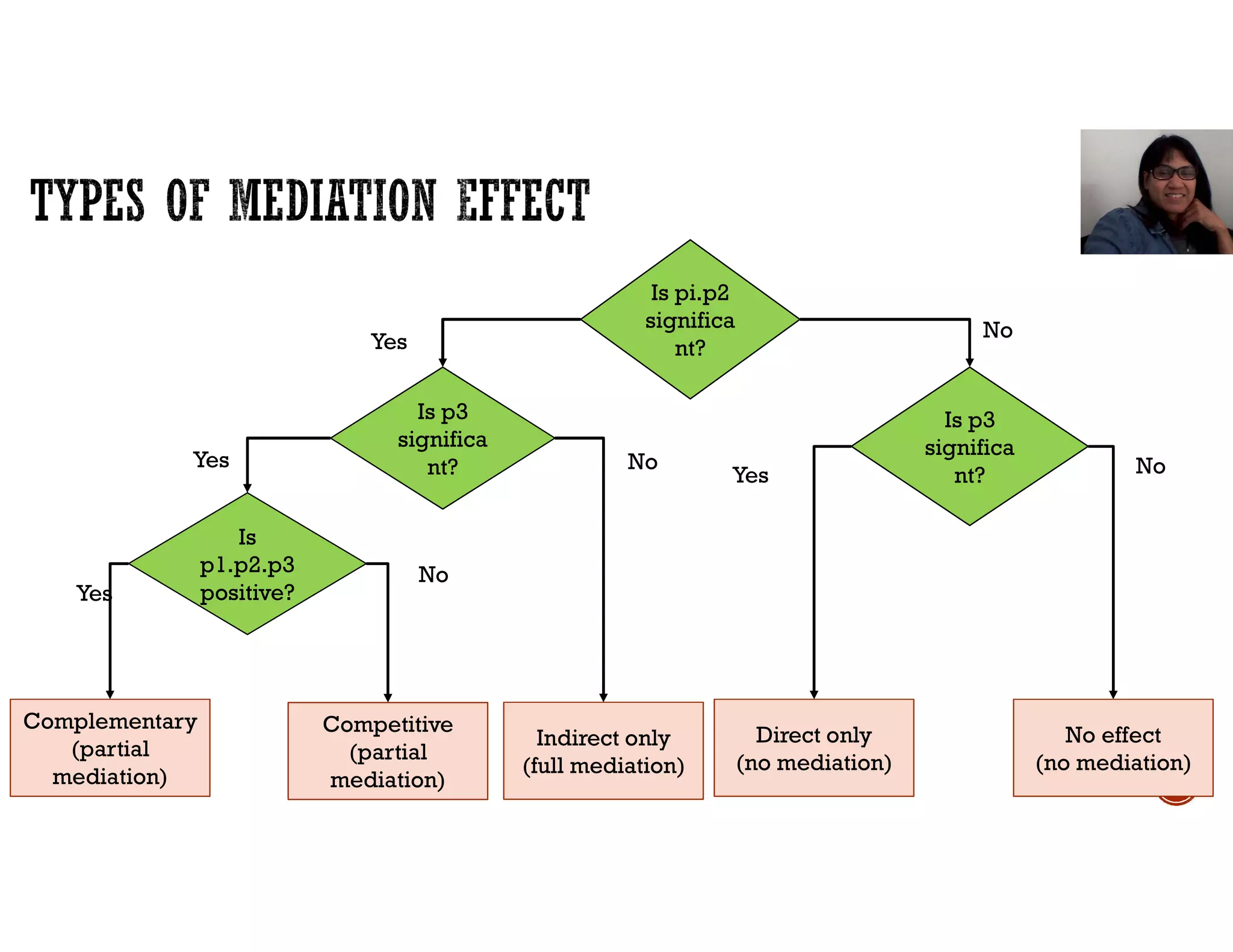
Is pi.p2
significa
nt?
Is p3
significa
nt?
Is p3
significa
nt?
Is
p1.p2.p3
positive?
Complementary
(partial
mediation)
Direct only
(no mediation)
Indirect only
(full mediation)
No effect
(no mediation)
Competitive
(partial
mediation)
No
No No
No
Yes
Yes
Yes
Yes
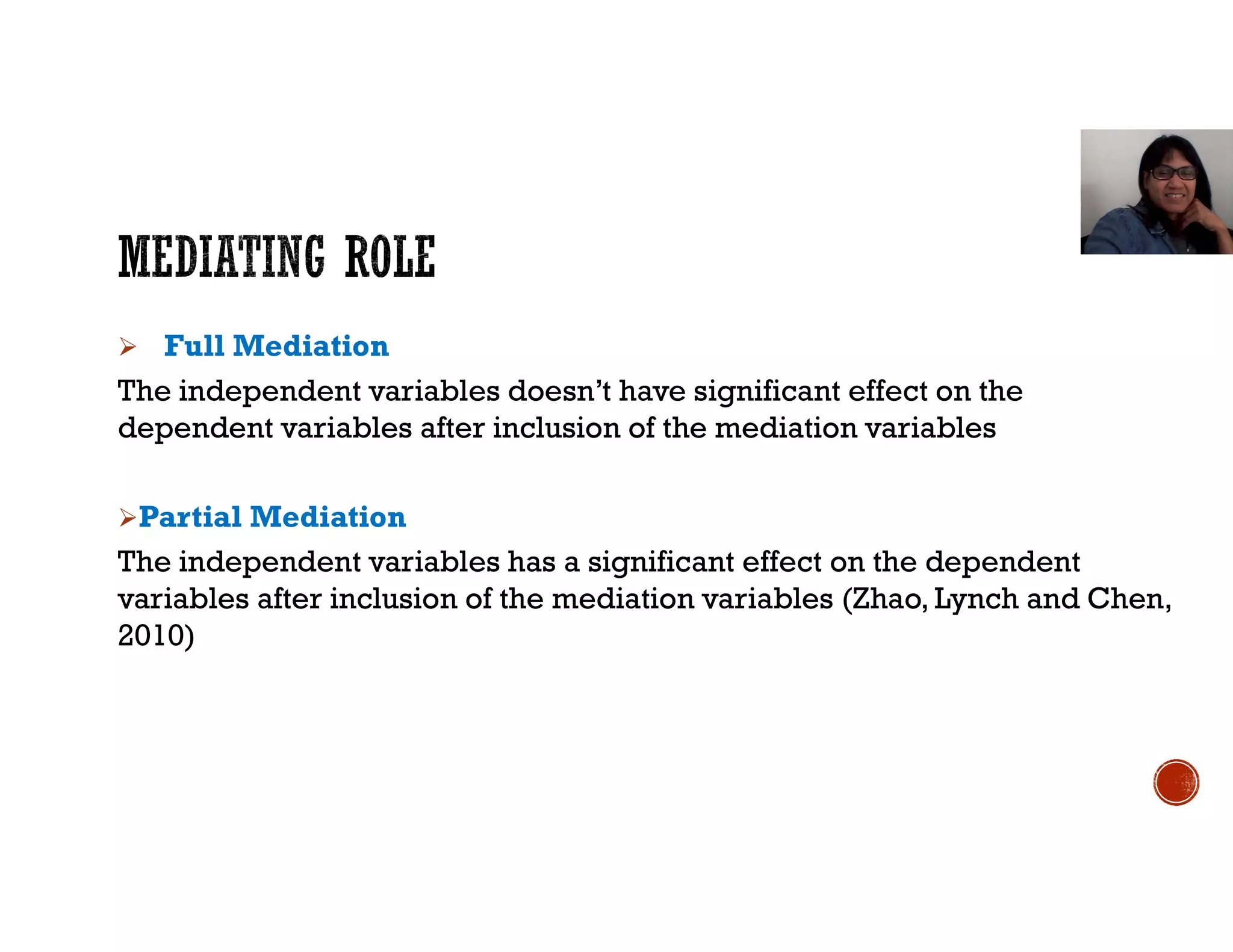
 Full Mediation
The independent variables doesn’t have significant effect on the
dependent variables after inclusion of the mediation variables
Partial Mediation
The independent variables has a significant effect on the dependent
variables after inclusion of the mediation variables (Zhao, Lynch and Chen,
2010)
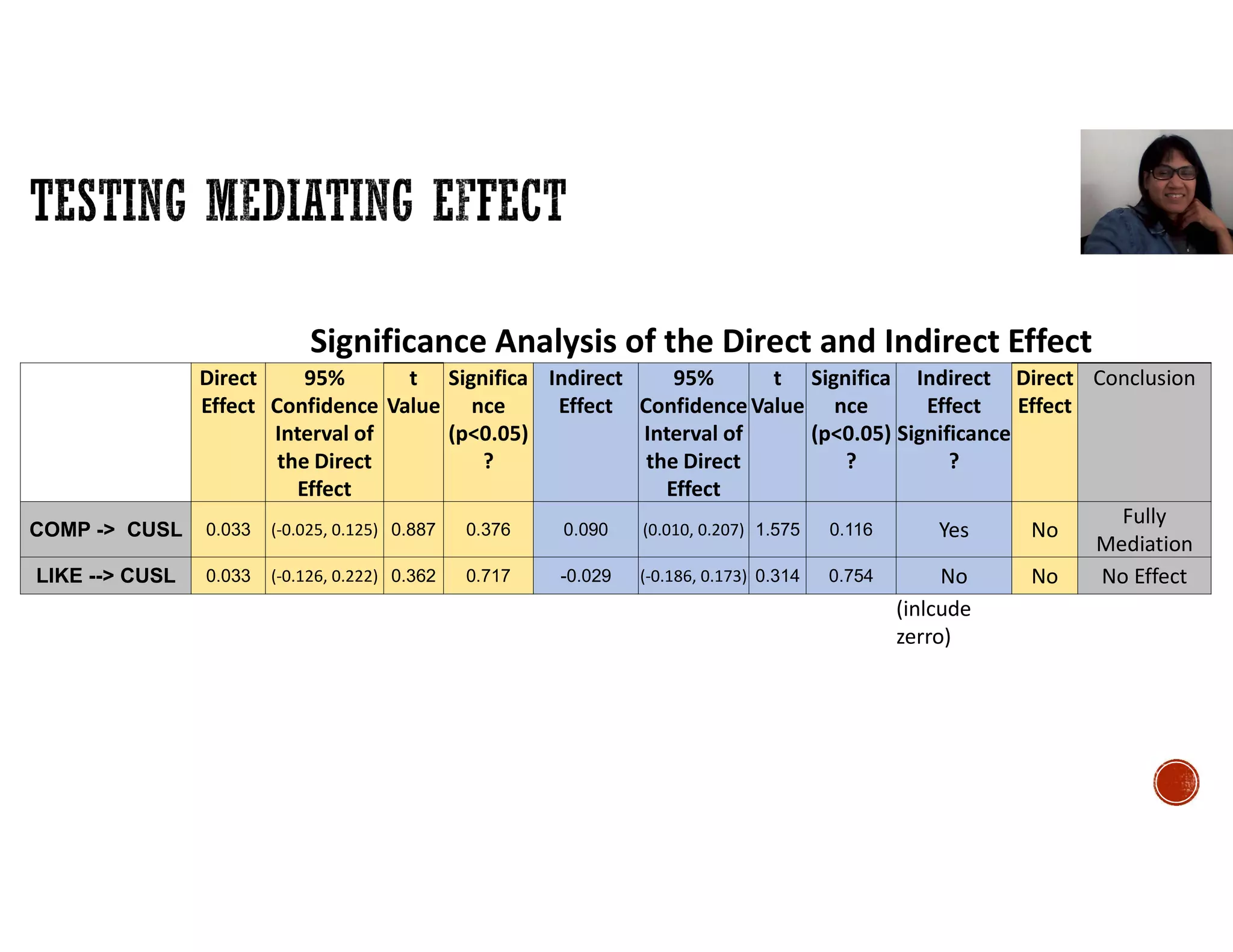
Significance Analysis of the Direct and Indirect Effect
Direct
Effect
95%
Confidence
Interval of
the Direct
Effect
t
Value
Significa
nce
(p<0.05)
?
Indirect
Effect
95%
Confidence
Interval of
the Direct
Effect
t
Value
Significa
nce
(p<0.05)
?
Indirect
Effect
Significance
?
Direct
Effect
Conclusion
COMP -> CUSL 0.033 (-0.025, 0.125) 0.887 0.376 0.090 (0.010, 0.207) 1.575 0.116 Yes No
Fully
Mediation
LIKE --> CUSL 0.033 (-0.126, 0.222) 0.362 0.717 -0.029 (-0.186, 0.173) 0.314 0.754 No No No Effect
(inlcude
zerro)
Customer
Satisfacti
on
Income
Customer
Loyalty
.
8
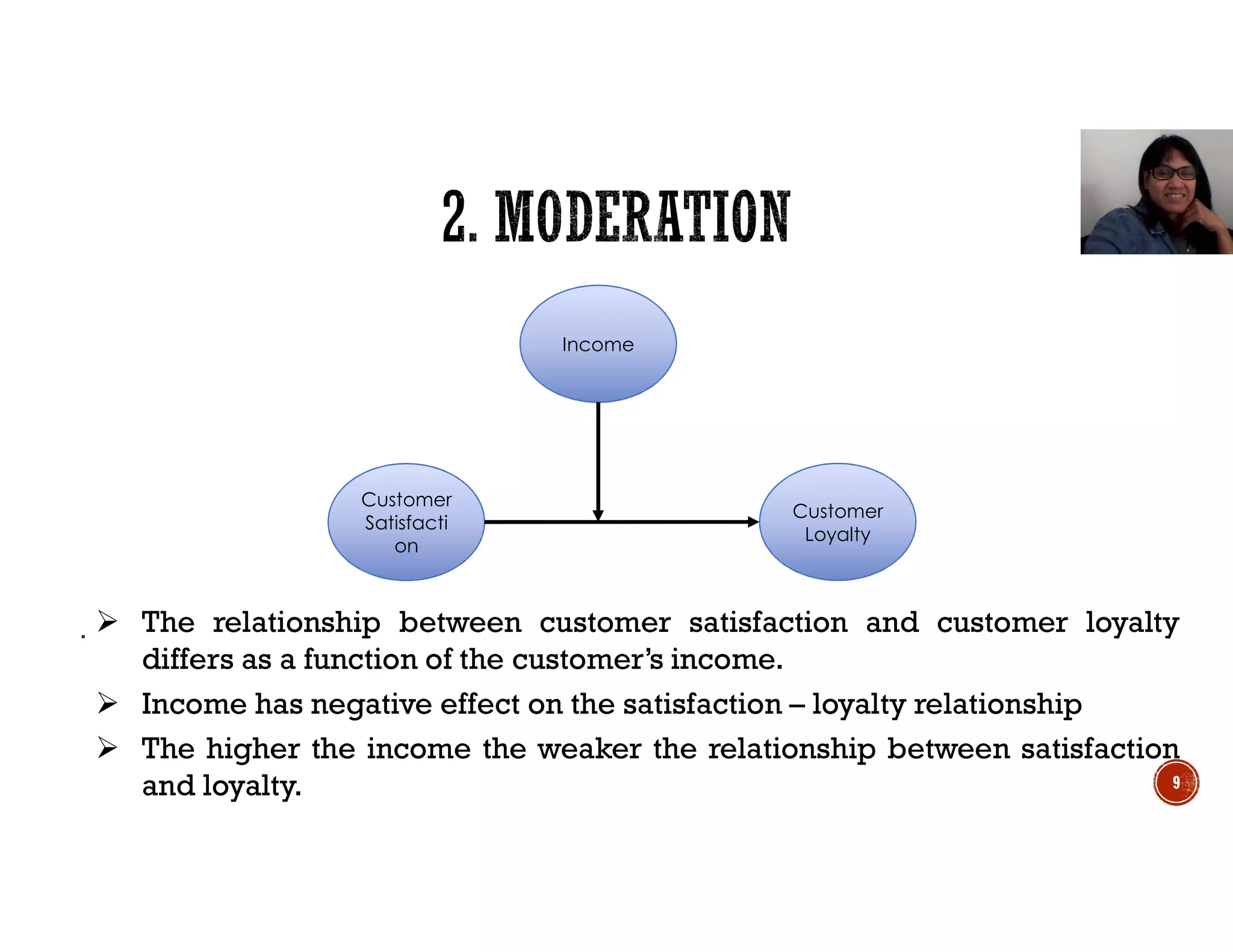
 Moderation describes a situation in which the relationship between two
construct is not constant but depends on the values of a third variable,
referred to as a moderator variable.
 The moderator variable changes the strength or even the direction of a
relationship between two construct in the model.
Customer
Satisfacti
on
Income
Customer
Loyalty
.
9
 The relationship between customer satisfaction and customer loyalty
differs as a function of the customer’s income.
 Income has negative effect on the satisfaction – loyalty relationship
 The higher the income the weaker the relationship between satisfaction
and loyalty.
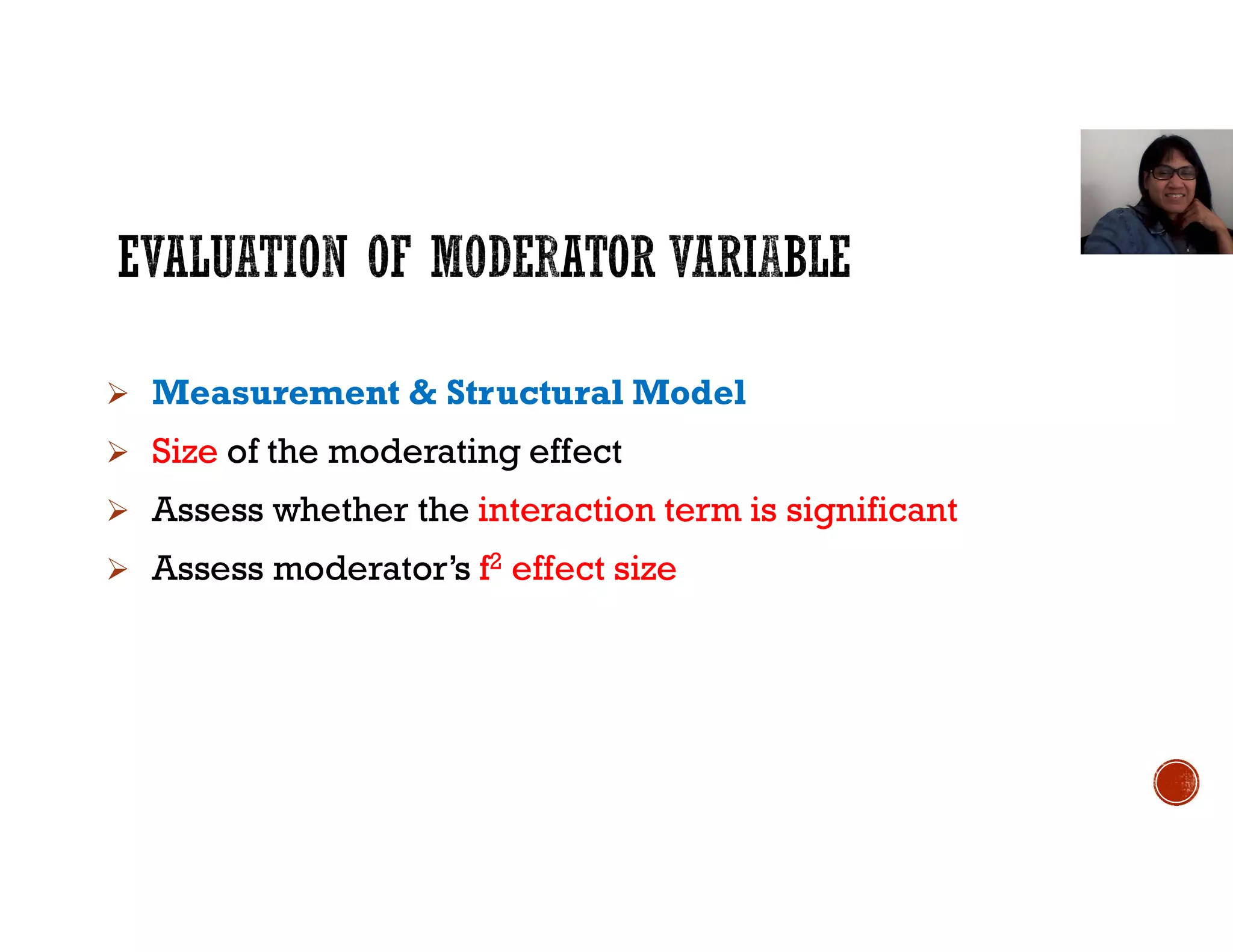
 Measurement & Structural Model
 Size of the moderating effect
 Assess whether the interaction term is significant
 Assess moderator’s f2 effect size
11
Contact Me
Firdha_beth@sbm-itb.ac.id

Session 5 Moderating and Mediation

  • 1.
  • 2.
    2 Y2 Y3Y1 p1 p2 p3  Mediationoccurs when a third mediator variable intervenes between two other related constructs.  A change in the exogenous construct causes a change in the mediator variable, which in turn, results in a change in the endogenous construct in the model.
  • 3.
    3 Y2 Y3Y1 p1 p2 p3  Directeffects are the relationship linking two constructs with a single arrows.  Indirect effects is a sequence of two or more direct effects and is represented by multiple arrows  Direct effects p3 betweenY1 andY3, and Indirect effect ofY1 onY3 in the form of aY1  Y2 Y3 sequence.  The indirect effect p1.p2 represents the mediating effect of the constructY2 on the relationship betweenY1 andY3
  • 4.
    Is pi.p2 significa nt? Is p3 significa nt? Isp3 significa nt? Is p1.p2.p3 positive? Complementary (partial mediation) Direct only (no mediation) Indirect only (full mediation) No effect (no mediation) Competitive (partial mediation) No No No No Yes Yes Yes Yes
  • 5.
     Full Mediation Theindependent variables doesn’t have significant effect on the dependent variables after inclusion of the mediation variables Partial Mediation The independent variables has a significant effect on the dependent variables after inclusion of the mediation variables (Zhao, Lynch and Chen, 2010)
  • 7.
    Significance Analysis ofthe Direct and Indirect Effect Direct Effect 95% Confidence Interval of the Direct Effect t Value Significa nce (p<0.05) ? Indirect Effect 95% Confidence Interval of the Direct Effect t Value Significa nce (p<0.05) ? Indirect Effect Significance ? Direct Effect Conclusion COMP -> CUSL 0.033 (-0.025, 0.125) 0.887 0.376 0.090 (0.010, 0.207) 1.575 0.116 Yes No Fully Mediation LIKE --> CUSL 0.033 (-0.126, 0.222) 0.362 0.717 -0.029 (-0.186, 0.173) 0.314 0.754 No No No Effect (inlcude zerro)
  • 8.
    Customer Satisfacti on Income Customer Loyalty . 8  Moderation describesa situation in which the relationship between two construct is not constant but depends on the values of a third variable, referred to as a moderator variable.  The moderator variable changes the strength or even the direction of a relationship between two construct in the model.
  • 9.
    Customer Satisfacti on Income Customer Loyalty . 9  The relationshipbetween customer satisfaction and customer loyalty differs as a function of the customer’s income.  Income has negative effect on the satisfaction – loyalty relationship  The higher the income the weaker the relationship between satisfaction and loyalty.
  • 10.
     Measurement &Structural Model  Size of the moderating effect  Assess whether the interaction term is significant  Assess moderator’s f2 effect size
  • 11.