Overview and Introduction to
A4NH Theme 1
Laurian Unnevehr
IFPRI
June 6, 2013
• Diet diversity is one important measure of diet
quality
• A healthy dietary diversity contributes to
improved nutrition
– ASF, F&V, legumes
• Diet quality improvement not uniform with rising
incomes
• Are there interventions that would improve diet
quality more rapidly and efficiently?
• Focus on value chains for nutrient rich foods
A4NH Value Chain Research Focus:
How to Promote Better Diet Quality?
Market Determinants of Diet Quality
• Income
– Diet quality improves through diversification
– Outcomes improve slowly– For 10% increase in GDP/cap, a
6% decrease in child stunting
• Prices
– Relative prices– eg., staples prices declining relative to
more nutrient rich foods
– Opportunity cost of time– eg., switch to more processed
foods with urbanization
• Preferences and cultural norms
– Shape pathway towards diet diversity, eg. ASF increases
with income vary widely
Market Failures in
Nutrition and Food Safety
• Consumer knowledge about nutrition, nutrient
content/ safety of foods is incomplete
• Supply constraints for nutrient rich foods--
perishability, seasonality, variable nutrient
content, food safety challenges
• Result: market incentives under reward improved
nutrition and food safety.
• Public underinvestment in nutrient rich foods
(focus on staple crops), and in public health
oriented food safety (focus on meeting standards
for high income market access)
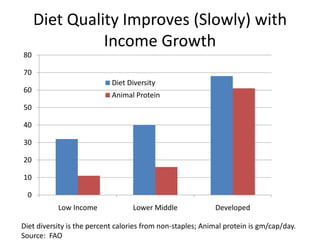
Diet Quality Improves (Slowly) with
Income Growth
0
10
20
30
40
50
60
70
80
Low Income Lower Middle Developed
Diet Diversity
Animal Protein
Diet diversity is the percent calories from non-staples; Animal protein is gm/cap/day.
Source: FAO
Bangladesh
Benin
Burkina Faso
Burundi
Cameroon
Central African Republic
Chad
Comoros
Congo, Dem Rep
Côte d'Ivoire
Eritrea
Ethiopia
Gambia
Ghana
Guinea
Guinea-Bissau
India
Kenya
Lesotho
Liberia
Madagascar
Malawi
Mali
Mauritania
Mozambique
Nepal
Niger
Nigeria
Pakistan
Rwanda
Sao Tome and Principe
Senegal
Sierra Leone
Sudan
Tanzania
Togo
Uganda
Zambia
Zimbabwe
10
15
20
25
30
35
40
45
50
55
60
100 300 500 700 900 1100
DietDiversificationIndex
GDP Per Capita (US $)
Dietary Diversification vs.
GDP Per Capita (2007)
y = 0.0086x + 30.366
R² = 0.0724
2005
87
38
52
5
53
85
130
24
Bangladesh: Food Group Shares of
Total Food Supply (kcal/capita/day)
Grains, Roots, and Tubers
Legumes and Nuts
Dairy Products
Flesh Foods
Eggs
Fruits and Vegetables
Sugars
Oils and Fats
Miscellaneous
1257
268
69
65
2
151
93
168
63
Tanzania: Food Group Shares of
Total Food Supply (kcal/capita/day)
Grains, Roots, and Tubers
Legumes and Nuts
Dairy Products
Flesh Foods
Eggs
Fruits and Vegetables
Sugars
Oils and Fats
Miscellaneous
Data Source: FAO Food Balance Sheets, 2009
1596
10056
515
75
285
63
468
90
China: Food Group Shares of
Total Food Supply (kcal/capita/day)
Grains, Roots, and Tubers
Legumes and Nuts
Dairy Products
Flesh Foods
Eggs
Fruits and Vegetables
Sugars
Oils and Fats
Miscellaneous
Data Source: FAO Food Balance Sheets, 2009
• Diet diversity is one important measure of diet
quality
• A healthy dietary diversity contributes to
improved nutrition
– ASF, F&V, legumes
• Diet quality improvement not uniform with rising
incomes
• Are there interventions that would improve diet
quality more rapidly and efficiently?
• Focus on value chains for nutrient rich foods
A4NH Value Chain Research Focus:
How to Promote Better Diet Quality?
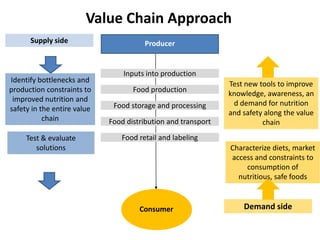
Inputs into production
Food production
Food storage and processing
Food distribution and transport
Food retail and labeling
Value Chain Approach
Consumer
ProducerSupply side
Test & evaluate
solutions
Demand side
Characterize diets, market
access and constraints to
consumption of
nutritious, safe foods
Test new tools to improve
knowledge, awareness, an
d demand for nutrition
and safety along the value
chain
Identify bottlenecks and
production constraints to
improved nutrition and
safety in the entire value
chain
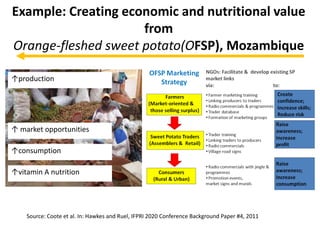
Example: Creating economic and nutritional value
from
Orange-fleshed sweet potato(OFSP), Mozambique
Source: Coote et al. In: Hawkes and Ruel, IFPRI 2020 Conference Background Paper #4, 2011
↑production
↑ market opportunities
↑consumption
↑vitamin A nutrition
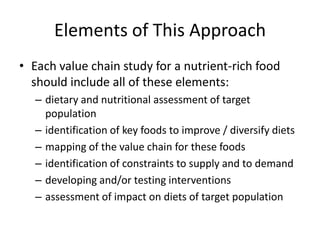
Elements of This Approach
• Each value chain study for a nutrient-rich food
should include all of these elements:
– dietary and nutritional assessment of target
population
– identification of key foods to improve / diversify diets
– mapping of the value chain for these foods
– identification of constraints to supply and to demand
– developing and/or testing interventions
– assessment of impact on diets of target population
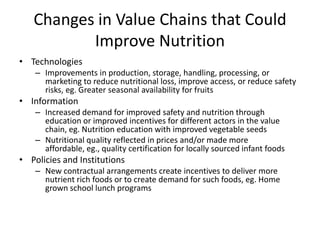
Changes in Value Chains that Could
Improve Nutrition
• Technologies
– Improvements in production, storage, handling, processing, or
marketing to reduce nutritional loss, improve access, or reduce safety
risks, eg. Greater seasonal availability for fruits
• Information
– Increased demand for improved safety and nutrition through
education or improved incentives for different actors in the value
chain, eg. Nutrition education with improved vegetable seeds
– Nutritional quality reflected in prices and/or made more
affordable, eg., quality certification for locally sourced infant foods
• Policies and Institutions
– New contractual arrangements create incentives to deliver more
nutrient rich foods or to create demand for such foods, eg. Home
grown school lunch programs
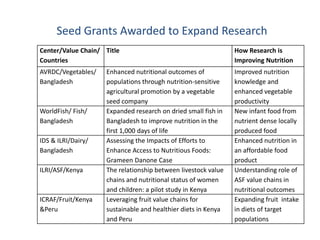
Center/Value Chain/
Countries
Title How Research is
Improving Nutrition
AVRDC/Vegetables/
Bangladesh
Enhanced nutritional outcomes of
populations through nutrition-sensitive
agricultural promotion by a vegetable
seed company
Improved nutrition
knowledge and
enhanced vegetable
productivity
WorldFish/ Fish/
Bangladesh
Expanded research on dried small fish in
Bangladesh to improve nutrition in the
first 1,000 days of life
New infant food from
nutrient dense locally
produced food
IDS & ILRI/Dairy/
Bangladesh
Assessing the Impacts of Efforts to
Enhance Access to Nutritious Foods:
Grameen Danone Case
Enhanced nutrition in
an affordable food
product
ILRI/ASF/Kenya The relationship between livestock value
chains and nutritional status of women
and children: a pilot study in Kenya
Understanding role of
ASF value chains in
nutritional outcomes
ICRAF/Fruit/Kenya
&Peru
Leveraging fruit value chains for
sustainable and healthier diets in Kenya
and Peru
Expanding fruit intake
in diets of target
populations
Seed Grants Awarded to Expand Research
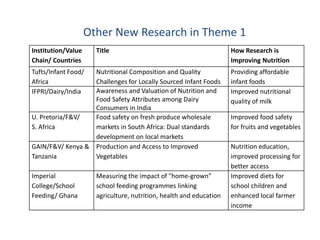
Other New Research in Theme 1
Institution/Value
Chain/ Countries
Title How Research is
Improving Nutrition
Tufts/Infant Food/
Africa
Nutritional Composition and Quality
Challenges for Locally Sourced Infant Foods
Providing affordable
infant foods
IFPRI/Dairy/India Awareness and Valuation of Nutrition and
Food Safety Attributes among Dairy
Consumers in India
Improved nutritional
quality of milk
U. Pretoria/F&V/
S. Africa
Food safety on fresh produce wholesale
markets in South Africa: Dual standards
development on local markets
Improved food safety
for fruits and vegetables
GAIN/F&V/ Kenya &
Tanzania
Production and Access to Improved
Vegetables
Nutrition education,
improved processing for
better access
Imperial
College/School
Feeding/ Ghana
Measuring the impact of "home-grown"
school feeding programmes linking
agriculture, nutrition, health and education
Improved diets for
school children and
enhanced local farmer
income
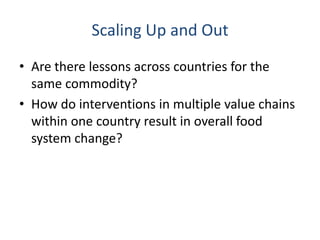
Scaling Up and Out
• Are there lessons across countries for the
same commodity?
• How do interventions in multiple value chains
within one country result in overall food
system change?
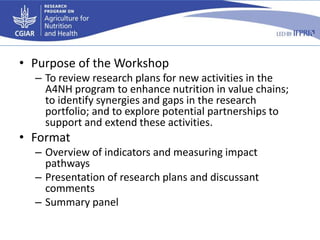
• Purpose of the Workshop
– To review research plans for new activities in the
A4NH program to enhance nutrition in value chains;
to identify synergies and gaps in the research
portfolio; and to explore potential partnerships to
support and extend these activities.
• Format
– Overview of indicators and measuring impact
pathways
– Presentation of research plans and discussant
comments
– Summary panel

Session 1. Unnevehr Introduction

  • 1.
    Overview and Introductionto A4NH Theme 1 Laurian Unnevehr IFPRI June 6, 2013
  • 2.
    • Diet diversityis one important measure of diet quality • A healthy dietary diversity contributes to improved nutrition – ASF, F&V, legumes • Diet quality improvement not uniform with rising incomes • Are there interventions that would improve diet quality more rapidly and efficiently? • Focus on value chains for nutrient rich foods A4NH Value Chain Research Focus: How to Promote Better Diet Quality?
  • 3.
    Market Determinants ofDiet Quality • Income – Diet quality improves through diversification – Outcomes improve slowly– For 10% increase in GDP/cap, a 6% decrease in child stunting • Prices – Relative prices– eg., staples prices declining relative to more nutrient rich foods – Opportunity cost of time– eg., switch to more processed foods with urbanization • Preferences and cultural norms – Shape pathway towards diet diversity, eg. ASF increases with income vary widely
  • 4.
    Market Failures in Nutritionand Food Safety • Consumer knowledge about nutrition, nutrient content/ safety of foods is incomplete • Supply constraints for nutrient rich foods-- perishability, seasonality, variable nutrient content, food safety challenges • Result: market incentives under reward improved nutrition and food safety. • Public underinvestment in nutrient rich foods (focus on staple crops), and in public health oriented food safety (focus on meeting standards for high income market access)
  • 5.
    Diet Quality Improves(Slowly) with Income Growth 0 10 20 30 40 50 60 70 80 Low Income Lower Middle Developed Diet Diversity Animal Protein Diet diversity is the percent calories from non-staples; Animal protein is gm/cap/day. Source: FAO
  • 6.
    Bangladesh Benin Burkina Faso Burundi Cameroon Central AfricanRepublic Chad Comoros Congo, Dem Rep Côte d'Ivoire Eritrea Ethiopia Gambia Ghana Guinea Guinea-Bissau India Kenya Lesotho Liberia Madagascar Malawi Mali Mauritania Mozambique Nepal Niger Nigeria Pakistan Rwanda Sao Tome and Principe Senegal Sierra Leone Sudan Tanzania Togo Uganda Zambia Zimbabwe 10 15 20 25 30 35 40 45 50 55 60 100 300 500 700 900 1100 DietDiversificationIndex GDP Per Capita (US $) Dietary Diversification vs. GDP Per Capita (2007) y = 0.0086x + 30.366 R² = 0.0724
  • 7.
    2005 87 38 52 5 53 85 130 24 Bangladesh: Food GroupShares of Total Food Supply (kcal/capita/day) Grains, Roots, and Tubers Legumes and Nuts Dairy Products Flesh Foods Eggs Fruits and Vegetables Sugars Oils and Fats Miscellaneous 1257 268 69 65 2 151 93 168 63 Tanzania: Food Group Shares of Total Food Supply (kcal/capita/day) Grains, Roots, and Tubers Legumes and Nuts Dairy Products Flesh Foods Eggs Fruits and Vegetables Sugars Oils and Fats Miscellaneous Data Source: FAO Food Balance Sheets, 2009
  • 8.
    1596 10056 515 75 285 63 468 90 China: Food GroupShares of Total Food Supply (kcal/capita/day) Grains, Roots, and Tubers Legumes and Nuts Dairy Products Flesh Foods Eggs Fruits and Vegetables Sugars Oils and Fats Miscellaneous Data Source: FAO Food Balance Sheets, 2009
  • 9.
    • Diet diversityis one important measure of diet quality • A healthy dietary diversity contributes to improved nutrition – ASF, F&V, legumes • Diet quality improvement not uniform with rising incomes • Are there interventions that would improve diet quality more rapidly and efficiently? • Focus on value chains for nutrient rich foods A4NH Value Chain Research Focus: How to Promote Better Diet Quality?
  • 10.
    Inputs into production Foodproduction Food storage and processing Food distribution and transport Food retail and labeling Value Chain Approach Consumer ProducerSupply side Test & evaluate solutions Demand side Characterize diets, market access and constraints to consumption of nutritious, safe foods Test new tools to improve knowledge, awareness, an d demand for nutrition and safety along the value chain Identify bottlenecks and production constraints to improved nutrition and safety in the entire value chain
  • 11.
    Example: Creating economicand nutritional value from Orange-fleshed sweet potato(OFSP), Mozambique Source: Coote et al. In: Hawkes and Ruel, IFPRI 2020 Conference Background Paper #4, 2011 ↑production ↑ market opportunities ↑consumption ↑vitamin A nutrition
  • 12.
    Elements of ThisApproach • Each value chain study for a nutrient-rich food should include all of these elements: – dietary and nutritional assessment of target population – identification of key foods to improve / diversify diets – mapping of the value chain for these foods – identification of constraints to supply and to demand – developing and/or testing interventions – assessment of impact on diets of target population
  • 13.
    Changes in ValueChains that Could Improve Nutrition • Technologies – Improvements in production, storage, handling, processing, or marketing to reduce nutritional loss, improve access, or reduce safety risks, eg. Greater seasonal availability for fruits • Information – Increased demand for improved safety and nutrition through education or improved incentives for different actors in the value chain, eg. Nutrition education with improved vegetable seeds – Nutritional quality reflected in prices and/or made more affordable, eg., quality certification for locally sourced infant foods • Policies and Institutions – New contractual arrangements create incentives to deliver more nutrient rich foods or to create demand for such foods, eg. Home grown school lunch programs
  • 14.
    Center/Value Chain/ Countries Title HowResearch is Improving Nutrition AVRDC/Vegetables/ Bangladesh Enhanced nutritional outcomes of populations through nutrition-sensitive agricultural promotion by a vegetable seed company Improved nutrition knowledge and enhanced vegetable productivity WorldFish/ Fish/ Bangladesh Expanded research on dried small fish in Bangladesh to improve nutrition in the first 1,000 days of life New infant food from nutrient dense locally produced food IDS & ILRI/Dairy/ Bangladesh Assessing the Impacts of Efforts to Enhance Access to Nutritious Foods: Grameen Danone Case Enhanced nutrition in an affordable food product ILRI/ASF/Kenya The relationship between livestock value chains and nutritional status of women and children: a pilot study in Kenya Understanding role of ASF value chains in nutritional outcomes ICRAF/Fruit/Kenya &Peru Leveraging fruit value chains for sustainable and healthier diets in Kenya and Peru Expanding fruit intake in diets of target populations Seed Grants Awarded to Expand Research
  • 15.
    Other New Researchin Theme 1 Institution/Value Chain/ Countries Title How Research is Improving Nutrition Tufts/Infant Food/ Africa Nutritional Composition and Quality Challenges for Locally Sourced Infant Foods Providing affordable infant foods IFPRI/Dairy/India Awareness and Valuation of Nutrition and Food Safety Attributes among Dairy Consumers in India Improved nutritional quality of milk U. Pretoria/F&V/ S. Africa Food safety on fresh produce wholesale markets in South Africa: Dual standards development on local markets Improved food safety for fruits and vegetables GAIN/F&V/ Kenya & Tanzania Production and Access to Improved Vegetables Nutrition education, improved processing for better access Imperial College/School Feeding/ Ghana Measuring the impact of "home-grown" school feeding programmes linking agriculture, nutrition, health and education Improved diets for school children and enhanced local farmer income
  • 16.
    Scaling Up andOut • Are there lessons across countries for the same commodity? • How do interventions in multiple value chains within one country result in overall food system change?
  • 17.
    • Purpose ofthe Workshop – To review research plans for new activities in the A4NH program to enhance nutrition in value chains; to identify synergies and gaps in the research portfolio; and to explore potential partnerships to support and extend these activities. • Format – Overview of indicators and measuring impact pathways – Presentation of research plans and discussant comments – Summary panel

Editor's Notes

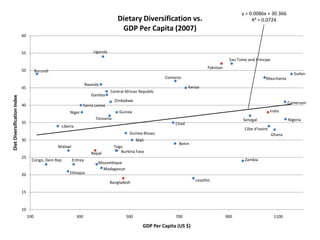
  • #5 Given the many market failures that can arise in nutrition, it is not surprising that improvements in diet and in nutritional outcomes do not track perfectly with development and rising incomes.
  • #7 Wide variation at low income levels.
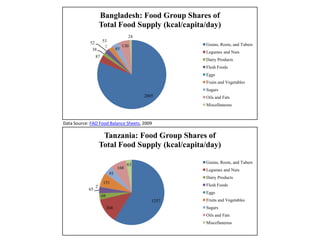
  • #8 These two low income countries have different patterns of dietary diversity and show how there can be wide variation.
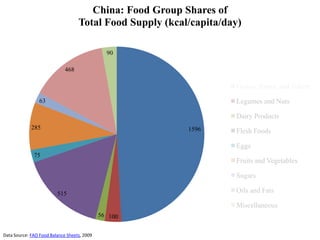
  • #9 At the middle income level of development, China shows growth in “unhealthy” diet diversity along with “healthy” diet diversity, leading to rising rates of overweight.
  • #14 Note how they address MARKET FAILURES