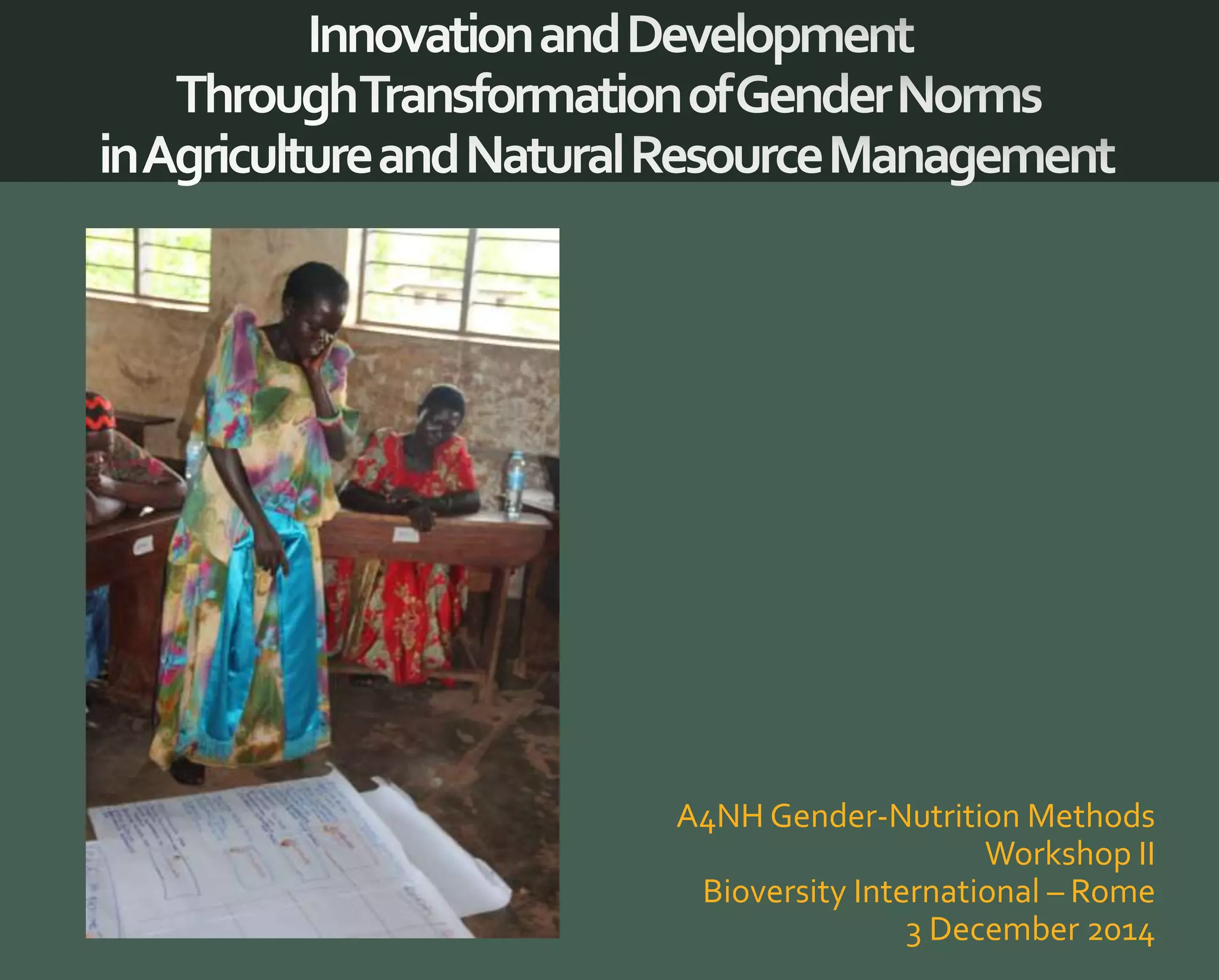
A4NH Gender-Nutrition Methods 
Workshop II 
Bioversity International – Rome 
3 December 2014
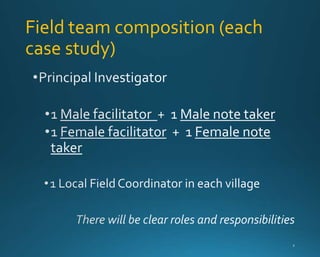
Field team composition (each 
case study)
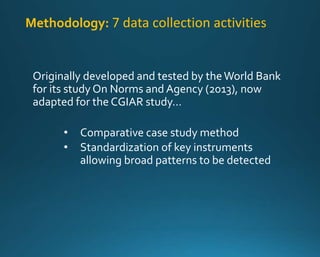
Methodology: 7 data collection activities 
Originally developed and tested by the World Bank 
for its study On Norms and Agency (2013), now 
adapted for the CGIAR study… 
• Comparative case study method 
• Standardization of key instruments 
allowing broad patterns to be detected
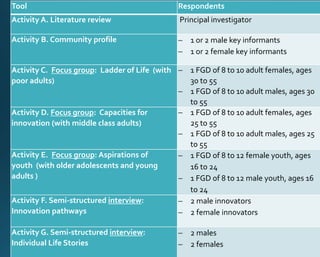
Tool Respondents 
Activity A. Literature review Principal investigator 
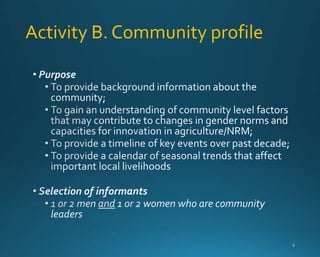
Activity B. Community profile  1 or 2 male key informants 
 1 or 2 female key informants 
Activity C. Focus group: Ladder of Life (with 
poor adults) 
 1 FGD of 8 to 10 adult females, ages 
30 to 55 
 1 FGD of 8 to 10 adult males, ages 30 
to 55 
Activity D. Focus group: Capacities for 
innovation (with middle class adults) 
 1 FGD of 8 to 10 adult females, ages 
25 to 55 
 1 FGD of 8 to 10 adult males, ages 25 
to 55 
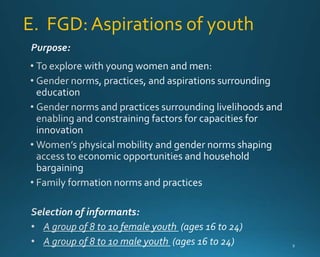
Activity E. Focus group: Aspirations of 
youth (with older adolescents and young 
adults ) 
 1 FGD of 8 to 12 female youth, ages 
16 to 24 
 1 FGD of 8 to 12 male youth, ages 16 
to 24 
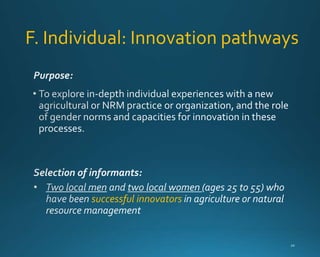
Activity F. Semi-structured interview: 
Innovation pathways 
 2 male innovators 
 2 female innovators 
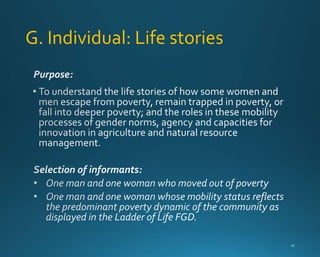
Activity G. Semi-structured interview: 
Individual Life Stories 
 2 males 
 2 females
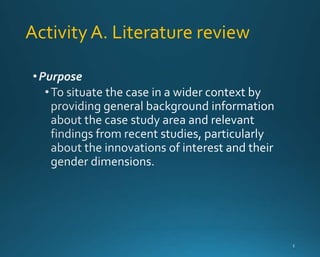
Activity A. Literature review
Activity B. Community profile
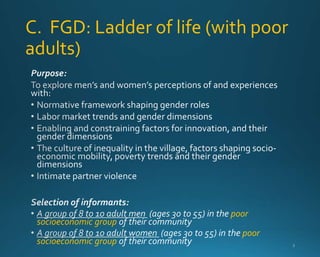
C. FGD: Ladder of life (with poor 
adults) 
poor 
socioeconomic group 
poor 
socioeconomic group
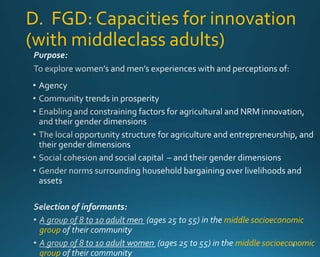
D. FGD: Capacities for innovation 
(with middleclass adults) 
middle socioeconomic 
group 
middle socioeconomic 
group
E. FGD: Aspirations of youth
F. Individual: Innovation pathways 
successful innovators
G. Individual: Life stories
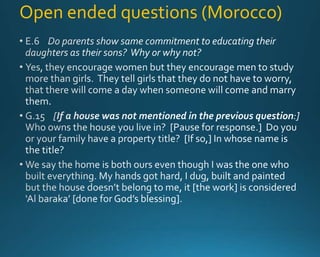
Open ended questions (Morocco)
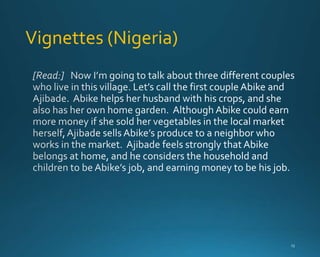
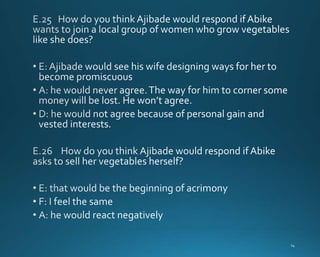
Vignettes (Nigeria)
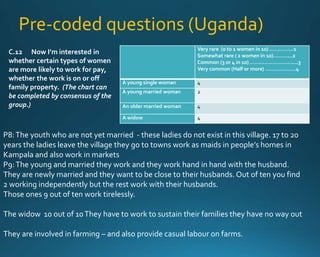
Pre-coded questions (Uganda) 
Very rare (0 to 1 women in 10) ……………1 
Somewhat rare ( 2 women in 10)………...2 
Common (3 or 4 in 10) ………………………...3 
Very common (Half or more) ……………….4 
A young single woman 4 
A young married woman 2 
An older married woman 4 
A widow 4 
C.12 Now I’m interested in 
whether certain types of women 
are more likely to work for pay, 
whether the work is on or off 
family property. (The chart can 
be completed by consensus of the 
group.) 
P8: The youth who are not yet married - these ladies do not exist in this village. 17 to 20 
years the ladies leave the village they go to towns work as maids in people’s homes in 
Kampala and also work in markets 
P9: The young and married they work and they work hand in hand with the husband. 
They are newly married and they want to be close to their husbands. Out of ten you find 
2 working independently but the rest work with their husbands. 
Those ones 9 out of ten work tirelessly. 
The widow 10 out of 10 They have to work to sustain their families they have no way out 
They are involved in farming – and also provide casual labour on farms.
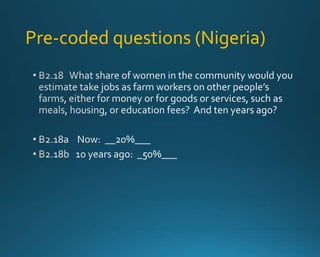
Pre-coded questions (Nigeria)
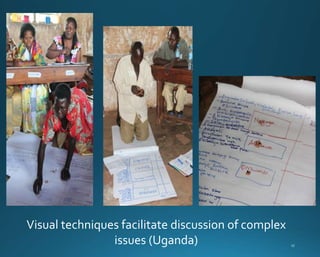
Visual techniques facilitate discussion of complex 
issues (Uganda)
How will the results be used? 
•To reinforce the ongoing integration 
of gender research into CRPs 
•To improve targeting and design of 
new technologies for impact on 
gender equity 
•To recommend strategies for 
transformative interventions in 
scaling out agricultural innovations

Training Session 4 – Najjar – Intro to Global Study on Innovation in Ag II

  • 1.
    A4NH Gender-Nutrition Methods Workshop II Bioversity International – Rome 3 December 2014
  • 2.
    Field team composition(each case study)
  • 3.
    Methodology: 7 datacollection activities Originally developed and tested by the World Bank for its study On Norms and Agency (2013), now adapted for the CGIAR study… • Comparative case study method • Standardization of key instruments allowing broad patterns to be detected
  • 4.
    Tool Respondents ActivityA. Literature review Principal investigator Activity B. Community profile  1 or 2 male key informants  1 or 2 female key informants Activity C. Focus group: Ladder of Life (with poor adults)  1 FGD of 8 to 10 adult females, ages 30 to 55  1 FGD of 8 to 10 adult males, ages 30 to 55 Activity D. Focus group: Capacities for innovation (with middle class adults)  1 FGD of 8 to 10 adult females, ages 25 to 55  1 FGD of 8 to 10 adult males, ages 25 to 55 Activity E. Focus group: Aspirations of youth (with older adolescents and young adults )  1 FGD of 8 to 12 female youth, ages 16 to 24  1 FGD of 8 to 12 male youth, ages 16 to 24 Activity F. Semi-structured interview: Innovation pathways  2 male innovators  2 female innovators Activity G. Semi-structured interview: Individual Life Stories  2 males  2 females
  • 5.
  • 6.
  • 7.
    C. FGD: Ladderof life (with poor adults) poor socioeconomic group poor socioeconomic group
  • 8.
    D. FGD: Capacitiesfor innovation (with middleclass adults) middle socioeconomic group middle socioeconomic group
  • 9.
  • 10.
    F. Individual: Innovationpathways successful innovators
  • 11.
  • 12.
  • 13.
  • 15.
    Pre-coded questions (Uganda) Very rare (0 to 1 women in 10) ……………1 Somewhat rare ( 2 women in 10)………...2 Common (3 or 4 in 10) ………………………...3 Very common (Half or more) ……………….4 A young single woman 4 A young married woman 2 An older married woman 4 A widow 4 C.12 Now I’m interested in whether certain types of women are more likely to work for pay, whether the work is on or off family property. (The chart can be completed by consensus of the group.) P8: The youth who are not yet married - these ladies do not exist in this village. 17 to 20 years the ladies leave the village they go to towns work as maids in people’s homes in Kampala and also work in markets P9: The young and married they work and they work hand in hand with the husband. They are newly married and they want to be close to their husbands. Out of ten you find 2 working independently but the rest work with their husbands. Those ones 9 out of ten work tirelessly. The widow 10 out of 10 They have to work to sustain their families they have no way out They are involved in farming – and also provide casual labour on farms.
  • 16.
  • 17.
    Visual techniques facilitatediscussion of complex issues (Uganda)
  • 18.
    How will theresults be used? •To reinforce the ongoing integration of gender research into CRPs •To improve targeting and design of new technologies for impact on gender equity •To recommend strategies for transformative interventions in scaling out agricultural innovations

Editor's Notes