Chapter 3: Separation Techniques
You will learn about:
• Pure substances
• Methods of purification:
- Chromatography
- Filtration
- Crystallization
- Distillation
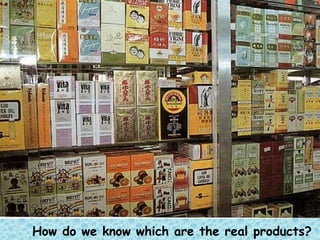
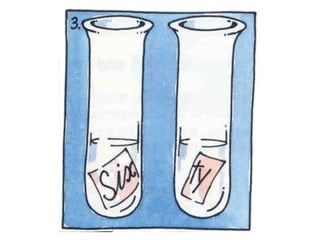
How do we know which are the real products?
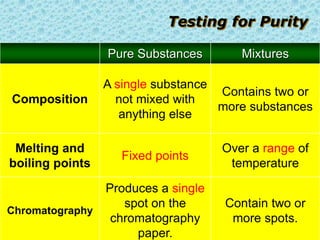
Pure Substances Mixtures
Composition
A single substance
not mixed with
anything else
Contains two or
more substances
Melting and
boiling points
Fixed points
Over a range of
temperature
Chromatography
Produces a single
spot on the
chromatography
paper.
Contain two or
more spots.
Testing for Purity
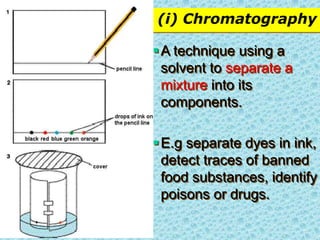
A technique using a
solvent to separate a
mixture into its
components.
E.g separate dyes in ink,
detect traces of banned
food substances, identify
poisons or drugs.
(i) Chromatography
1
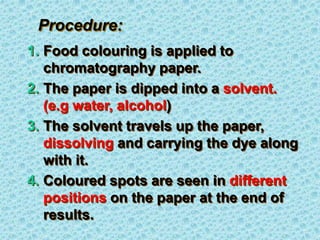
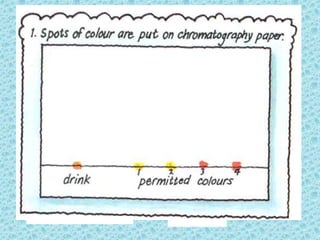
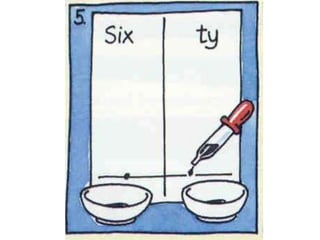
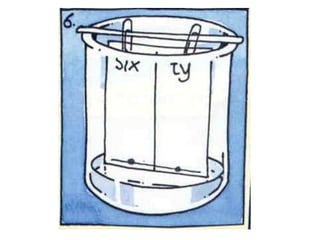
1. Food colouring is applied to
chromatography paper.
2. The paper is dipped into a solvent.
(e.g water, alcohol)
3. The solvent travels up the paper,
dissolving and carrying the dye along
with it.
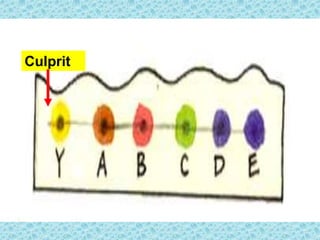
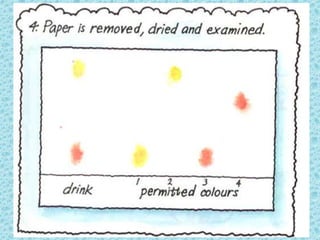
4. Coloured spots are seen in different
positions on the paper at the end of
results.
Procedure:
Culprit
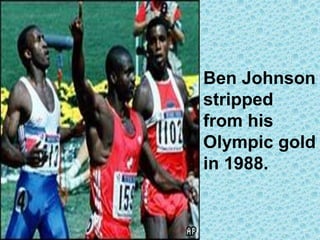
Ben Johnson
stripped
from his
Olympic gold
in 1988.
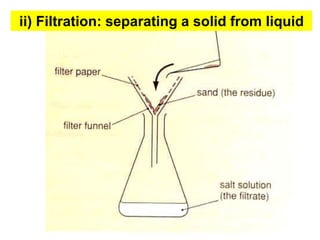
ii) Filtration: separating a solid from liquid
1. A mixture is poured into the filter funnel
lined with filter paper.
2. Liquid particles are small enough to go
through the pores of the filter paper but
the solid particles are too large to go
through.
3. Collect the filtrate that passes through
the filter paper in a conical flask. The
solid that remains in the filter paper is
called residue.
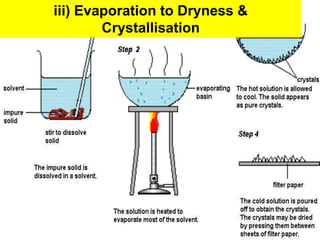
iii) Evaporation to Dryness &
Crystallisation
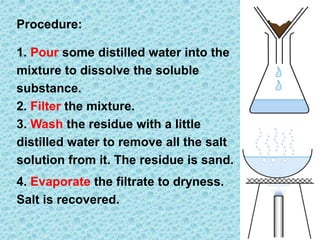
1. Pour some distilled water into the
mixture to dissolve the soluble
substance.
2. Filter the mixture.
3. Wash the residue with a little
distilled water to remove all the salt
solution from it. The residue is sand.
4. Evaporate the filtrate to dryness.
Salt is recovered.
Procedure:
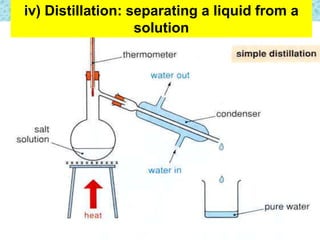
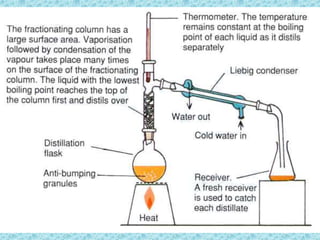
iv) Distillation: separating a liquid from a
solution
Procedure:
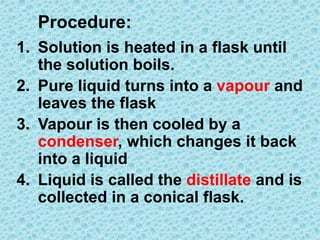
1. Solution is heated in a flask until
the solution boils.
2. Pure liquid turns into a vapour and
leaves the flask
3. Vapour is then cooled by a
condenser, which changes it back
into a liquid
4. Liquid is called the distillate and is
collected in a conical flask.
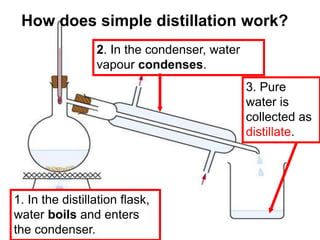
2. In the condenser, water
vapour condenses.
1. In the distillation flask,
water boils and enters
the condenser.
How does simple distillation work?
3. Pure
water is
collected as
distillate.
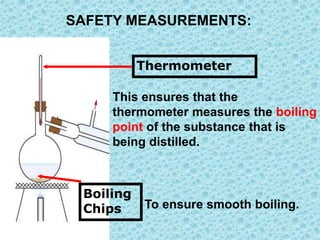
SAFETY MEASUREMENTS:
This ensures that the
thermometer measures the boiling
point of the substance that is
being distilled.
Thermometer
Boiling
Chips To ensure smooth boiling.
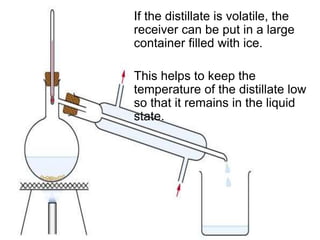
If the distillate is volatile, the
receiver can be put in a large
container filled with ice.
This helps to keep the
temperature of the distillate low
so that it remains in the liquid
state.
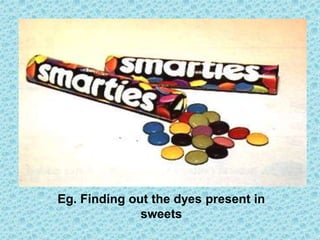
Eg. Finding out the dyes present in
sweets
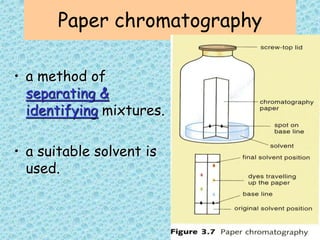
Paper chromatography
• a method of
separating &
identifying mixtures.
• a suitable solvent is
used.
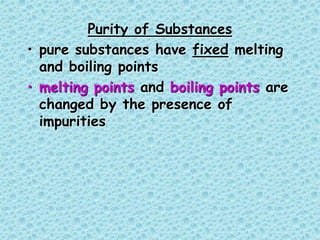
Purity of Substances
• pure substances have fixed melting
and boiling points
• melting points and boiling points are
changed by the presence of
impurities
Separation Techniques (1).ppt

Separation Techniques (1).ppt

  • 1.
    Chapter 3: SeparationTechniques You will learn about: • Pure substances • Methods of purification: - Chromatography - Filtration - Crystallization - Distillation
  • 2.
    How do weknow which are the real products?
  • 3.
    Pure Substances Mixtures Composition Asingle substance not mixed with anything else Contains two or more substances Melting and boiling points Fixed points Over a range of temperature Chromatography Produces a single spot on the chromatography paper. Contain two or more spots. Testing for Purity
  • 4.
    A technique usinga solvent to separate a mixture into its components. E.g separate dyes in ink, detect traces of banned food substances, identify poisons or drugs. (i) Chromatography 1
  • 5.
    1. Food colouringis applied to chromatography paper. 2. The paper is dipped into a solvent. (e.g water, alcohol) 3. The solvent travels up the paper, dissolving and carrying the dye along with it. 4. Coloured spots are seen in different positions on the paper at the end of results. Procedure:
  • 10.
  • 11.
  • 12.
    ii) Filtration: separatinga solid from liquid
  • 13.
    1. A mixtureis poured into the filter funnel lined with filter paper. 2. Liquid particles are small enough to go through the pores of the filter paper but the solid particles are too large to go through. 3. Collect the filtrate that passes through the filter paper in a conical flask. The solid that remains in the filter paper is called residue.
  • 14.
    iii) Evaporation toDryness & Crystallisation
  • 15.
    1. Pour somedistilled water into the mixture to dissolve the soluble substance. 2. Filter the mixture. 3. Wash the residue with a little distilled water to remove all the salt solution from it. The residue is sand. 4. Evaporate the filtrate to dryness. Salt is recovered. Procedure:
  • 16.
    iv) Distillation: separatinga liquid from a solution
  • 17.
    Procedure: 1. Solution isheated in a flask until the solution boils. 2. Pure liquid turns into a vapour and leaves the flask 3. Vapour is then cooled by a condenser, which changes it back into a liquid 4. Liquid is called the distillate and is collected in a conical flask.
  • 18.
    2. In thecondenser, water vapour condenses. 1. In the distillation flask, water boils and enters the condenser. How does simple distillation work? 3. Pure water is collected as distillate.
  • 19.
    SAFETY MEASUREMENTS: This ensuresthat the thermometer measures the boiling point of the substance that is being distilled. Thermometer Boiling Chips To ensure smooth boiling.
  • 20.
    If the distillateis volatile, the receiver can be put in a large container filled with ice. This helps to keep the temperature of the distillate low so that it remains in the liquid state.
  • 21.
    Eg. Finding outthe dyes present in sweets
  • 22.
    Paper chromatography • amethod of separating & identifying mixtures. • a suitable solvent is used.
  • 25.
    Purity of Substances •pure substances have fixed melting and boiling points • melting points and boiling points are changed by the presence of impurities